By Wes Cannon
Manufactured housing community owners and operators are in a unique moment. Demand for affordable housing remains strong. Occupancy is steady. Well-run communities continue to produce durable, reliable cash flow.
But today, long-term success is determined by what happens after the deal closes.
Manufactured housing is operationally different from other real estate asset classes. You’re managing homes across multiple vintages. Infill timelines directly impact NOI. Contractor markets are fragmented. Capital decisions often require balancing short-term returns with long-term community health. Small execution gaps, such as deferred maintenance, inconsistent rehab quality, and delayed infill, can rather quietly compound into meaningful financial drag. Most operators don’t struggle because they lack effort. They struggle because execution disciplines don’t scale as fast as acquisitions.
Large institutional owners solve these challenges with layered staffing models, proprietary systems, and formal process controls. Those systems work at massive scale. However, these same systems can be expensive, slow, and unrealistic for independent and mid-sized operators.
Is there any good news? Yes. You don’t need institutional solutions to achieve institutional-level results.
What follows is a practical, right-sized execution framework designed specifically for manufactured housing portfolios. It applies the most valuable lessons from institutional platforms — without importing the overhead or rigidity often associated with larger organizations.
The goal is to create clarity, control, and predictability across CapEx, rehabs, and infill — so operators can scale confidently and protect NOI.
The Six Disciplines That Matter Most in Manufactured Housing Operations
Execution-Ready Scoping Anchored in Home Vintage and Community Reality
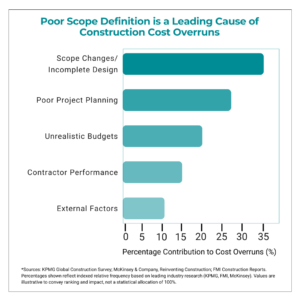
In manufactured housing, scoping isn’t just paperwork — it’s capital allocation.
A 1978 home behaves differently than a 1998 home. Neither performs like a new infill unit. When operators apply blanket rehab assumptions across all vintages, they risk overspending in some cases and under-investing in others.
Execution-ready scoping starts with asking the right questions:
- How old is the home?
- What condition is the infrastructure in?
- What rent strategy are we pursuing?
- What makes this specific community unique?
When scopes are grounded in real-world conditions instead of assumptions, budgets become tighter, timelines shrink, and change orders decrease. Precision at the front end protects NOI on the back end.
Standardized Scopes and Pricing with Built-In Flexibility
Standardization creates consistency. Defined scopes and clear unit pricing reduce ambiguity, make bids comparable, and allow a contractor’s performance to be measured objectively.
But standardization shouldn’t become rigidity.
Every home and community has nuances. Smart operators create consistent frameworks — but allow room to adjust based on asset condition, rent comps, and long-term hold strategy.
Standardization provides control. Flexibility protects profitability. The operators who balance both are the ones who scale without friction.
Documentation-Driven Accountability
In fragmented contractor markets, documentation is leverage.
Clear photo evidence. Defined milestones. Structured reporting. These are simple practices — they dramatically reduce disputes and accelerate decision-making. They also tie payments directly to verified progress.
In manufactured housing, where projects span multiple communities and secondary markets, visibility matters. But visibility alone isn’t enough. Accountability must be objective and repeatable.
When documentation becomes a habit, rather than an afterthought, it protects capital, improves vendor accountability, and reduces risk across the portfolio.
Scalable Field Oversight Without Operational Bloat
Many manufactured housing portfolios stall — not because acquisitions slow down, but because oversight fails to scale.
Owners either spend too much time traveling between communities or add internal layers that increase overhead without meaningfully improving outcomes. Neither approach is sustainable.
Scalable oversight means defining clear supervision standards, consistent quality controls, and straightforward accountability without building unnecessary bureaucracy.
The goal isn’t complexity. It’s disciplined execution that scales.
Asset-Level KPIs That Protect and Grow NOI
Portfolio-level metrics are important, but they often hide inefficiencies at the community level.
Infill cycle time. Cost per rehab. Scope variance. Rework frequency. These asset-level metrics provide clearer insight into what’s really happening operationally.
In manufactured housing, every pad matters. Every home vintage impacts NOI differently. Operators who measure performance at the asset level improve forecasting, tighten capital deployment, and identify leakage before it compounds.
Measurement isn’t about reporting for reporting’s sake. It’s about protecting yield.
Systems That Preserve Institutional Memory
Manufactured housing portfolios are long-term assets. Yet renovation history often lives in email threads, text messages, or someone’s memory.
That’s a risk.
When scope history, photos, costs, and service records are captured at the home level, knowledge compounds over time. Turnover becomes easier. Underwriting improves. Capital planning gets smarter.
Institutional memory isn’t overhead, it’s an asset. And in long-duration portfolios, that asset grows more valuable every year.
Discipline Without Drag
Manufactured housing doesn’t need institutional complexity to perform at an institutional level.
It needs disciplined execution — applied consistently and scaled intelligently.
Operators who right-size their systems can grow predictably without sacrificing agility. The most successful portfolios aren’t always the largest — they’re the most disciplined.
Acquisition creates opportunity. Execution determines outcome.
At BuildCore, we’ve built our platform around these principles: execution-ready scoping, standardized pricing frameworks, scalable field oversight, and purpose-built systems designed specifically for residential portfolios.
Our goal isn’t to replace operator expertise. It’s to strengthen it by providing structure, visibility, and disciplined execution that allow owners to scale confidently without importing unnecessary overhead.
In a sector where small operational gaps compound quickly, disciplined execution isn’t optional. It’s the differentiator.
Wes Cannon is co-founder and COO of BuildCore, a national construction platform supporting single-family, multifamily, and manufactured housing operators. With more than 20 years of experience in residential development and community-level execution, he brings practical, field-tested leadership to renovation, infill, and CapEx strategy. Cannon is passionate about helping operators scale responsibly through disciplined systems, accountability, and execution frameworks tailored to the realities of manufactured housing portfolios. He can be reached at wes@mybuildcore.com.
MHInsider is the leader in manufactured housing news and is a product of MHVillage, the top marketplace for manufactured housing.