Amie Hacker pictured here with industry colleague Barry Noffsinger.
Amie Hacker, of Clayton Homes
The five honorees in the 2024 MHInsider Industry Awards will receive an engraved “Crystal Home” award.
Amie Hacker, vice president of real estate and acquisitions for Clayton, is the former owner and principal at Parkplace Homes and Boardwalk Properties. In addition to dedicating much of her career to becoming Kentucky’s top manufactured home retail sales organization, she is a leader in creating change toward the sale of more energy efficient homes. Hacker is the past chairperson for the Kentucky Manufactured Housing Institute, and currently serves as secretary. She also has served as treasurer and vice chairperson for the institute’s political action committee. Hacker has been a trustee for the Manufactured Housing Institute’s board of directors, helping to lead the national organization and its efforts in Washington, in addition to working with the organization’s education Institute.
The Advocacy Award honors efforts toward outreach and education that reach beyond professional position or title
What do you believe are Leadership Award winner Amie Hacker’s greatest achievements?
“True leadership is inspiring and helping individuals reach their potential while assuring the organization achieves its goals. True achievements are things done successfully by attitude, effort, courage and/or skill. Amie’s career is the epitome of these. Her career started with a successful repo business that led to more successful retail, community, and insurance businesses. Along the way she learned each aspect of the manufactured housing business while forming strong relationships. Fighting unfair zoning issues became a specialty. She makes each organization better while inspiring and encouraging individuals. Amie has served as a role model for women in the industry and has devoted a lot of time advocating for qualified diversity in the industry.” — Credit Human National New Markets Catalyst Barry Noffsinger
What are the award winner’s personal skills or character traits that you feel have contributed most to these successes?
“It all comes down to Amie’s inclination to genuinely connect and collaborate. Because she is a natural leader, Amie has been tapped to serve on the National Retailers Council’s Board of Governors, including as chair. Amie’s path to success is realized through her inclination to foster relationships and build collaboration and trust. I can always rely on Amie to provide inspiration and encouragement, no matter the challenge. Amie is a great listener who really makes an investment in learning and understanding others. She has been integral to supporting the industry’s success, whether it was leading a board or participating in an advocacy effort. She leads and inspires through example.” — MHI CEO Lesli Gooch
Dave Hegemann, of London Computer Systems/Rent Manager
The five honorees in the 2024 MHInsider Industry Awards will receive an engraved “Crystal Home” award.
Dave Hegemann coded and built what would become Rent Manager in the middle and late ‘80s as a way for his father’s mobile home park and campground to operate more efficiently.
Hegemann’s effort expanded to a series of communities in the area of London, Ohio, hence the company name. Rent Manager is among the most dominant property management software solutions in the space, not just for manufactured housing but for multi-family, commercial, self storage, and other areas of property management.
The Influencer Award honors individuals who by their presence and authentic implementation of ideas have created widely held business practices and wholesale improvement for the industry
What do you believe are Influencer Award winner Dave Hegemann’s greatest achievements?
“When I think of Dave’s highest achievements, the very first accomplishment that comes to mind is the success of Rent Manager. To imagine that an award-winning solution came from a desire to help his father succeed is remarkable. Now, thousands of manufactured housing professionals use his software and attend an industry-leading conference, and more than 500 employees work to accomplish his vision.” — Brittany Christerson, chief operating officer of LCS/Rent Manager
What are the award winner’s personal skills or character traits that you feel have contributed most to these successes?
“Dave has an incredible knack for seeing the big picture while staying attuned to the finer details that matter most. His forward-thinking approach, combined with a natural ability to inspire those around him, has been key to our success in the manufactured housing industry. He drives innovation not just through vision, but by ensuring that the entire team feels empowered to push boundaries.” — Tony Little, chief technology officer of LCS/Rent Manager
The five honorees in the 2024 MHInsider Industry Awards will receive an engraved “Crystal Home” award.
Jim Scoular, of Iseman Corp., a longtime South Dakota retailer, and Jimsco Homes, a community owner and operator, was instrumental in the reimagining and long-term success of the RV/MH Hall of Fame, serving on the board and donating resources for the Scoular Manufactured Housing Museum, a moniker that Jim is quick to point out as a tribute to his family, particularly his father Ralph, a hall of fame inductee in 1998.
He is a decades-long member of the state association in South Dakota, was a member of the governor’s task force on taxation and titling of manufactured homes, helped establish the current framework of the SDMHA, and contributed to the formation of setup and installation standards for homes in South Dakota. He joined his father in the hall in 2006, and is the recipient of the hall’s Darryl Searer Spirit Award.
The Leadership Award honors individuals who have earned the highest levels of industry achievement through their corporate or organizational leadership approach
What do you believe are Leadership Award winner Jim Scoular’s greatest achievements?
“My father exemplifies leadership through action and inspires others through thoughtful coaching. His distinctive leadership approach empowers individuals, unlocking their potential even when they may not yet see it themselves. By fostering success and driving projects beyond conventional limits, he has led teams to achieve remarkable and unforeseen outcomes. His compassion, generosity, and unwavering dedication to people are the hallmarks of his leadership and have always been his most defining qualities.” — Jeff Scoular, son and real estate manager at Jimsco
What are the award winner’s personal skills or character traits that you feel have contributed most to these successes?
“Jim has proven to be one of the most passionate and determined individuals that I have worked with in my career. His commitment to excellence and his dedication to the needs of the RV/MH Hall of Fame is unparalleled. He is always willing to step up and go the extra mile by giving his time and his treasures to ensure that the hall will be around for years to come. He is truly an inspiration.” — Al Spencer, president of Dakotaland Homes and RV/MH Hall of Fame inductee
The five honorees in the 2024 MHInsider Industry Awards will receive an engraved “Crystal Home” award.
Charles “Chuck” Fanaro, founder of DWG Corporation, transformed the landscape of manufactured housing and senior community living in the late 1980s and early 1990s with his development of Saddlebrook Farms in Grayslake, Ill. Fanaro introduced a unique concept that combined manufactured housing, land leasing, and essential community services tailored to the needs of his target demographic.
Saddlebrook Farms stood out for its innovative use of high-quality HUD-code homes, placed on specially designed floating slabs and often positioned parallel to streets. He acquired Hi-Tech Housing to gain greater control over supply and to a process for interior drywall and eight-foot sidewalls, features many builders avoided because of concerns about cost and shipping damage. In addition to interior enhancements, Fanaro elevated exterior features with lap siding, attached garages, landscaping, and custom driveways. Saddlebrook Farms has grown into a thriving community with nearly 2,000 occupied homesites, offering a premier living experience for seniors.
The Legacy Award honors manufactured housing professionals whose overall career contributions are certain to create meaningful and lasting industry improvement and excellence
What do you believe are Legacy Award winner Charles Fanaro’s greatest achievements?
“Fanaro demonstrated that it is possible to elevate both the quality of life for residents and reduce their cost of living through a thoughtful and innovative approach to manufactured housing. He achieved this by integrating three key components: One, a carefully designed land plan featuring cul-de-sacs and curvilinear streets, enhanced with attractive landscaping and water features; two, high-quality factory-built homes that are virtually indistinguishable from site-built homes due to improved engineering and construction techniques; and three, a strong emphasis on community amenities, services, and effective management. His approach resulted in a mutually beneficial outcome for the developer, the resident, and the surrounding community.”
What are the award winner’s personal skills or character traits that you feel have contributed most to these successes?
“Charles’s success can be attributed to a combination of his visionary leadership, perseverance, and strong moral compass. When faced with numerous challenges — ranging from local resistance to obstacles in securing support from manufacturers, lenders, and consumers — he remained committed to his vision. His deep understanding of the target market, unwavering belief in the potential of his concept, and dedication to delivering results set him apart. He built a strong team, filled the community with residents who valued the offering, and consistently upheld his personal values of fairness, integrity, and reliability.” — Mary Ann Andersen, head of operations, sales, and marketing for DWG Corp. (now a division of Hometown America)
Scott Roberts, of Roberts Communities and Roberts Resorts
Scott Roberts, of Roberts Communities and Roberts Resorts
The five honorees in the 2024 MHInsider Industry Awards will receive an engraved “Crystal Home” award.
Scott Roberts is a second-generation owner of communities and RV resorts, running the organization founded in 1968 by his parents Bob and Barbra Roberts. Under his direction, the company has grown from four properties to nearly 30 communities and resorts with more than 10,000 homesites in Alabama, Arizona, California, Colorado, and Texas.
Roberts has invested approximately $80 million into 3,000 sites within the last eight years. About 700 of those are developed for RVs and park models, with the balance being affordable manufactured homes. Roberts Resorts continues to diversify its portfolio of properties, some like Village Farm and Village Camp, with high-end amenities. The latest Village Camp, in Flagstaff, Ariz., is a ground-up community with more than 400 sites in an area known for its skiing, hiking, biking, dining, and shopping.
The Visionary Award honors those who have brought to market the coolest concept or product, the idea that makes the job easier, the offering better, the customer experience more meaningful
What do you believe are Visionary Award winner Scott Robert’s greatest achievements?
“Scott has always had a long-term vision for attainable home ownership. It really is in his DNA, having grown up in MHC communities and having had a father who not only owned 20-plus communities in the ’90s, but who also was one of the first operators to be vertically integrated by owning a manufacturing factory and transporting his own homes. He has shown his vision by deciding early to have ‘homeowners only’ communities rather than moving toward rentals to fill homesites. He invested in 2010 when the stability of the housing market continued to be a matter of question. He purchased three rental properties in central Texas — 1,200 sites and 50 percent occupied — that are now Oak Ranch, a community with 1,050 spaces just a mile and half from the Tesla gigafactory in Austin.” — Roberts Communities Executive Vice President of Sales Ernesto Iglesias
What are the award winner’s personal skills or character traits that you feel have contributed most to these successes?
“Scott Roberts is a true visionary. Industry professionals seek his expertise as to how to design and develop a quality looking manufactured home community, along with questions regarding the operational aspects of our existing communities. He takes time to explain how each of our job functions helps contribute to families that may not be able to afford their own home. He has provided mentorship to many people, not only sharing his successes, but he is sure to point out mistakes, some costly. He has created afterschool programs for kids and there are always special events at each one of his communities. These are all things that don’t boost the bottom line, but that is one way that Scott gives back to the community.” – Roberts Communities Senior Vice President and Head of Acquisitions Bob Pence
Propane Council Partners With Southern Living To Share The Benefits Of Propane In Unique Environments
As the housing industry continues to evolve, so do the challenges facing builders. With increasing scarcity for land and buildable lots, growing environmental concerns, and a rising focus of living off the grid and off natural gas lines, the flexibility to build anywhere has become a critical factor in home construction. Among the innovative solutions to these challenges is propane — an efficient, reliable, and eco-friendly energy source. Propane is increasingly being recognized for its ability to power homes in diverse and sensitive environments.
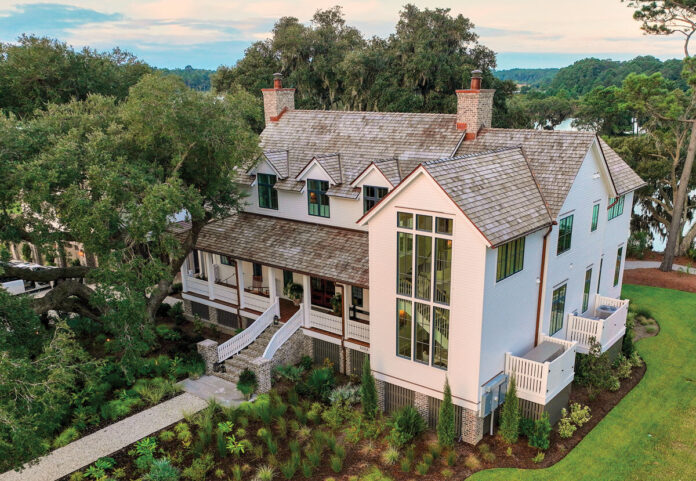
A prime example of propane’s versatility is its role in the 2024 Southern Living Idea House, nestled along the Kiawah River in South Carolina. This 4,400-square-foot residence not only showcases modern home design but also demonstrates how propane supports residential construction in remote, eco-sensitive areas. It allows homebuilders the freedom to build in locations where some energy sources are unfeasible.
One of the greatest challenges in homebuilding is finding land that is both available and buildable, while housing demand continues to grow. Single-family housing starts are expected to rise by 9 percent in 2024, with continued growth projected through 2025 and 2026. Notably, 58 percent of those houses are in new residential developments, including areas available for manufactured land and home packages, which may be off-grid and lack access to natural gas, similar to this project near the Kiawah River.
Propane is increasingly becoming the solution to these challenges. PERC president and CEO Tucker Perkins shares that residential consumption accounts for 50 percent of the propane used in the U.S.
“Homeowners today are prioritizing energy sources that are both reliable and eco-friendly. For this reason, we’re seeing more builders incorporate the use of propane in the residential construction space,” Perkins said. “Propane checks all the boxes — it’s clean, efficient, and resilient, making it a smart choice for builders and homeowners.”
The area around the Kiawah River is also part of a highly sensitive ecosystem, meaning it was critical that the home’s energy source would not pollute air, soil or waterways. Propane’s clean properties produce significantly fewer greenhouse gas emissions in a variety of applications compared to other energy sources. It is non-toxic, non-poisonous, and won’t contaminate soil or water. Propane is recognized as a clean alternative fuel under the Clean Air Act.
“We’re the visitors here, nature was here first,” Dillard said. “Our job was to not impact that in any negative way, so using clean energy that would allow homeowners to enjoy living here was extremely important.”
The 2024 Southern Living Idea House operates on a 1,000-gallon buried propane tank, powering a variety of applications including the water heater, space heater, fireplaces, indoor and outdoor kitchens, pool heater, and its backup generator. The underground tank also offers aesthetic benefits and minimizes environmental disruption to the surrounding ecosystem.
“Propane allows homeowners to enjoy modern amenities while respecting the ecological values of the area,” Dillard said. “It’s an energy solution that doesn’t interfere with the natural beauty of the region.”
Research by the Propane Education & Research Council (PERC) shows that propane appliances produce 52 percent less greenhouse gas emissions compared to electric equivalents. And with the recent HUD code update, manufactured housing residents can now enjoy more of these benefits, allowing gas-fired tankless water heaters to be installed and shipped from the factory to homes.
Those benefits shine through in the Southern Living Idea Home. With more than 10 propane appliances in the home, Perkins says the home is projected to provide a 13 percent reduction in CO2 equivalent emissions compared to an all-electric home.
“When building in environmentally sensitive areas like coastal South Carolina, it’s crucial to use an energy source that does not harm the ecosystem,” Perkins said. “Propane supports high energy demands without sacrificing comfort, efficiency, or reliability.”
Building in hurricane-prone areas like South Carolina presents even more challenges. In August, Hurricane Debby hit the East Coast, leaving many without power. Propane’s reliability and resilience offer significant advantages in regions prone to extreme weather.
Will King, president of High Cotton Homes, has seen firsthand how propane’s versatility has made itself indispensable in disaster-prone areas.
“As a former firefighter and now builder, I’ve seen the devastation natural disasters can cause. And having lived through events like the 2011 tornadoes in Birmingham, I know how crucial it is to have reliable energy sources in place when the power grid goes down,” King said. “Whether it’s powering standby generators or prepping homes with transfer switches, propane gives homeowners the resilience they need to withstand extended power outages safely.
“What’s even more impressive is that a propane-powered generator can activate within seconds of a power outage,” he said. “It truly provides power when families need it most.”
As more homeowners seek to build in off-grid locations, propane will continue to play a pivotal role in supporting energy independence. The dream of building and living anywhere is no longer reserved for rustic cabins or off-grid minimalists — homes can now thrive wherever homeowners choose.
For those interested in learning more about how propane is shaping the future of residential construction, a live podcast recording was held Sept. 16 and featured Perkins alongside builders Dillard, King, and Matt Blashaw. The discussion covered the growing trends and insights of off-the-grid homes and the role that propane plays in making these homes both sustainable and resilient. To access the full discussion and learn more about the future of off-grid living, listen to the Path to Zero podcast episode at propane.com/ environment/podcast.
Bryan Cordill is the director of residential business development at the Propane Education & Research Council. He can be reached at bryan.cordill@propane.com.
Clayton, the industry’s largest builder, announced it is using Oracle Fusion Cloud Applications Suite to streamline business processes and support its mission to provide attainable, sustainably-built housing to U.S. individuals and families.
The integrated suite of cloud applications to manage finance, planning, and supply chain processes provides efficiencies for Clayton resulting in reduced costs and enhanced decision-making. Clayton has more than 60 home building and component manufacturing facilities, over 380 company sales locations, and a product portfolio that includes a comprehensive range of modern manufactured and site-built housing. Its vertically integrated solutions include home building, retail, and financing business units.
Clayton’s complex operations made it difficult for leadership to gain timely insights and slowed decision-making, Clayton said in a corporate statement.
The unified business platform is expected to streamline complex finance and accounting processes, improve operational visibility, and support the company’s dynamic supply and demand planning needs.
“The housing industry has endured numerous headwinds recently with rising interest rates and material inflation. Now, more than ever, we need to stay focused on enterprise-wide productivity, improvements, cost reduction, and driving value for our customers,” Clayton CFO Jim Stariha said. “Oracle Fusion Applications Suite has enabled us to standardize intricate finance and supply chain processes on a single integrated cloud platform and take advantage of advanced capabilities to reduce working capital, increase productivity, expand insights, and improve decision-making as we make home building more sustainable and homeownership more attainable.”
With Oracle Fusion Cloud Enterprise Resource Planning, or ERP, Clayton has been able to increase efficiency and insights, reduce costs, and improve financial controls by consolidating financial data from its business units into a single chart of accounts and general ledger. It has helped Clayton further streamline planning, budgeting, and reporting to accelerate its financial close process.
Additionally, Oracle Fusion Cloud Supply Chain & Manufacturing, or SCM, has helped Clayton improve supply and demand planning and increase the efficiency of home building and logistics operations so it can quickly respond to changing market conditions, the company stated.
“To stay competitive in the housing market, Clayton needed to consolidate systems, streamline processes, and embrace automation,” Oracle Executive Vice President of Applications Development Steve Miranda. “With Oracle Fusion Applications, Clayton can take advantage of an integrated applications suite with embedded AI to help improve the speed and accuracy of processes, increase overall efficiency, and bring new housing innovations to market that help make homeownership a reality for more people in America.”
MHBuyersGuide.com is a product of MHVillage and MHInsider magazine.
Manufactured housing professionals who provide the industry with much-needed services and supplies are invited to MHBuyersGuide.com’s claim listing page during the month of November to ensure inclusion in the 2025 print edition of MHInsider’s annual print directory, with an updated design and new listing and advertising options.
MHInsider, the leader in manufactured housing news, launched the new online buyer’s guide and supplier directory based on listings compiled through the year for print edition of the directory. However, manufactured housing industry organizations that have yet to claim or create a new listing are missing the opportunity to manage their message free of cost in this vital industry resource.
“MHBuyer’s Guide provides retailers and manufactured home community operators with a place to review and consider who they might hire or buy from to satisfy their business needs,” MHInsider Publisher Patrick Revere said. “While nearly 400 listings are available to consider, many providers have yet to take advantage of refining listing language, adding in a new business unit, or showing a new logo or photo.
“Industry service and mobile home supply professionals can claim an existing listing, or create a new one,” Revere said. “MHBuyer’s Guide also has a premium listing opportunity, as well as advertising options available.”
There is no cost to claim or create a listing, and MHInsider offers the premium listing at MHBuyersGuide.com for $299.
What Comes With a Listing on MHBuyersGuide?
A basic, free listing on MHBuyersGuide includes the business name, logo, short description, and phone number. A premium listing provides the following added features:
A contact form for sales leads
Link to your website
Image gallery
Embedded Youtube video
Links to social media profiles
A map of the business location
Manufactured housing professionals can browse listings and search more than a dozen categories that include wholesale inventory, finance, insurance, industry events, associations, and services.
MHInsider and MHBuyersGuide both are operated by MHVillage, the #1 marketplace for manufactured homes and mobile homes for sale and rent, and are operated in association with Datacomp, the national leader in mobile home appraisal, inspection, and community data.
For more information, to request a media kit, or to explore home listing and advertising opportunities call (877) 406-0232 or visit www.mhbuyersguide.com/advertise.
How a ‘Lonnie Deals’ Homebuyer Turned Community Owner Gained Long-Term Outlook, Business Expansion
15 years ago, what many manufactured housing professionals know as “Lonnie Deals” kept Kirby Horton and his colleagues busy. They would buy distressed homes, fix them up and sell them.
“We kept going and kept growing,” The Firm founder and owner Kirby Horton said. “Owning the community was a big step from renovating old homes, but it was sustainable.”
Horton said even then it was about buying properties that needed help, putting time, money, love, and labor into them before finding an institutional buyer that would be a good fit for the community.
“We would re-do the infrastructure, replace homes, and sell,” Horton said.
That was when interest rates were low and the numbers for repeating a succession of transactions made sense. In the new higher-rate climate, the sales volume has slowed and The Firm has committed to holding on to the parks it has.
“There is a big disconnect between the owners of the park and what these investors want to buy,” Horton said. “It’s hard to see something today for what it was worth even three years ago… It’s a matter of catering up.”
‘Good Parks’
The industry needs quality infill, Horton said. “You have to judge multiple factors when bringing in homes, including size and position of the home, setbacks, prep work, setting the home, and finishing it so that it’s move-in ready,” he said. “You have to be careful not to do something that’s going to sacrifice affordability.”
The Firm bought and made available 109 homes in September of 2022. It had been at 600 homes per year, Kirby said, and in the new environment found it was down to placing about 90 per year.
“We were all staffed up, we have all of the equipment and know-how, but we no longer need this experience and these services as much as others do,” Horton said he realized. “We can take a lot of burden off the park manager.”
So now The Firm, in addition to owning and operating several parks, also is taking on clients that need expertise in how to revitalize properties and turn them into “good parks”.
“Honestly, we thought we were going to start slow…” Horton said. “But the phone has been ringing.”
Flexible Management Services
Horton said The Firm can work 50/50 with community staff accomplishing community milestones like repairing water or sewer disruptions, has local teams in Arkansas, Georgia, and Indiana. The traveling culture has caught on pulling out and fixing or replacing broken windows, managing trees and landscaping, providing guidance for the sales team, or setting up resident programs.
“It’s almost like third-party management,” he said. “We can do all of the things that park management is too busy to do, or we can take over and do everything.”
The Firm has a staff of 50 professionals that operate in Texas and to the east. They have experience with properties in Houston and Dallas, northeast to the Carolinas, and down to Tennessee, Georgia, Alabama, and Mississippi.
Horton said The Firm has local teams in Arkansas, Georgia, and Indiana.
The traveling culture has caught on among its employees. The Firm owns a pair of RV parks where employees can stay between jobs.
“A lot of employees have taken to RVing,” Horton said. “Most of the employees have fifth wheels so they jump in and go to stay on site until the job is done and then they’re off to the next location.”
“FHFA’s new data resource on manufactured homes provides relevant, up-to-date information on an important but less-understood segment of the housing market,” FHFA Director Sandra L. Thompson said. “In a housing market with elevated home prices, manufactured housing remains an affordable option. This new data should help advance discussions on responsible efforts to expand homeownership opportunities.”
Pricing data for manufactured homes will be updated quarterly and included along with the flagship FHFA HPI® — released monthly and quarterly — featuring publicly available data series on trends in single-family home prices.
The new data release for manufactured homes includes purchase-only as well as all-transactions house price indexes, the latter combining purchase and refinance data. Both measure quarterly changes in prices since 2000, on a national scale, based on repeat-sale transactions for individual homes.
Key Findings in Inaugural MHPI
House price indexes for manufactured homes increased by 7.9 percent between the second quarters of 2023 and 2024. They increased by 3.2 percent in the second quarter of 2024 compared with the first quarter.
In the second quarter of 2024, the median price of manufactured homes for sale was $231,000. This represents an increase of $1,000 from the second quarter of 2023.
A data series on median manufactured home prices list the national median prices in dollars for every quarter since the beginning of 1985.
The FHFA said the new price indices and data on median prices are still in development and may undergo changes in the future.
The FHFA HPI is a collection of publicly available house price indexes that measure changes in single-family home values based on data that extend back to the mid 1970s from all 50 states and more than 400 American cities. It incorporates tens of millions of home sales and offers insights about house price fluctuations at the national, census division, state, metro area, county, ZIP Code™, and census tract levels.
Oct. 6-8 at Avalon Hotel in Alpharetta, Ga.
Manufactured housing community owners have never had more information available to them — or more decisions to...
The Midwest Manufactured Housing Federation has announced that attendee registration is now open for the 2027 Louisville Manufactured Housing Show, returning to the Kentucky...
HUD’s Innovative Housing Showcase, MHI’s Homes on the Hill and Annual Meeting Begin Sept. 22
Two of the country’s largest builders of manufactured homes will...