With Tips from ‘How to Win with Internet Marketing for Manufactured Housing’
Are you keeping up in the digital marketing race for manufactured housing? In a digital age that waits for no one, the manufactured housing industry often finds itself lagging behind other segments and playing catch-up. This lag can be the thin line between getting a future homeowner on board or not getting one at all. In his book, “How to Win with Internet Marketing for Manufactured Housing,” Brandon Meek, an industry professional since 2007, reveals new approaches to putting a community on the digital map and converting leads into buyers.
Winning Strategy for Online Success
Meek’s book emphasizes that it is crucial to coordinate different online tools and platforms to achieve desired marketing results. Online marketing is a complex process that needs:
Chat widgets for a convenient conversation
Visible and easily accessed contact information
Featured reviews and feedback
Clear, detailed photographs and videos
Fast loading
Mobile-friendly design
A clear, strong call to action
These features make a site easy to use so that it can be most effective in turning visitors into customers.
What is the Future of Digital Marketing in MH?
The author expects some big shifts in the industry marketing of manufactured homes. The marketing is becoming sharper and better organized. Ноwever, even though there’s a lot of chatter about AI in marketing, he reassures us it is actually here to assist us and nоt to take over the job of marketers. Моreover, he firmly believes that AI саn speed things up and bring new ideas.
Still, text messages remain the best way to communicate in a snap, while emails can create better connections with potential buyers. Quick conversations through chat widgets or social media plus fast responses are also critical. Having a robust online presence is more important than ever as people look for homes across various digital platforms.
How Can You Jumpstart Your Digital Marketing?
Create your home listings on main industry directories and sites, like MHVillage, that are visited by potential buyers who are already aware of the benefits of manufactured housing. Video marketing is another strategy that Meek recommends to increase exposure and generate leads. For instance, record simple videos with a cell phone and use them to present available homes on social media platforms, especially YouTube. Remember to optimize them for local search results and make them a part of any marketing campaigns that have already been launched.
Ready to Transform Your MH Marketing?
Meek’s bооk encourages community operators and managers to improve their marketing tactics. It doesn’t matter if you’re starting from scratch or want to enhance what you already have. The potential of digital marketing is incredible. To take your marketing efforts to new heights and make a real impact, don’t miss the practical strategies from “How to Win with Internet Marketing for Manufactured Housing,” available for purchase on Amazon.
In a White House statement released Aug. 13 on allowing more housing types under HUD Code:
“Enabling more housing types to be built under the HUD Code. HUD anticipates finalizing a rule to update its Manufactured Home Construction and Safety Standards. Manufactured housing provides an essential path to increasing overall housing supply and offers significant savings over site-built housing. The HUD Code creates economies of scale for manufacturers, resulting in significantly lower costs for buyers. In addition to making changes that will increase the quality, energy efficiency, and resilience of manufactured homes, the new rule, if finalized, would enable duplexes, triplexes, and fourplexes to be built under the HUD Code for the first time, extending the cost-saving benefits of manufactured housing to denser urban and suburban infill contexts.”
HUD’s Challenge to Governors, Mayors
At the same time HUD announced the launch of a $250 million “Legacy Challenge” for transformative housing investments. Communities that receive direct annual awards through the Community Development Block Grant program to leverage low-cost, low interest loans for transformative housing investments. This program is a key lever that enables communities to take on legacy projects that will transform and revitalize neighborhoods. Up to $250 million in funding will be made available through the Section 108 Loan Guarantee to make transformative housing-forward changes in local communities across America.
HUD Acting Secretary Todman stated that “I’m challenging our nation’s mayors and governors to use this unique funding mechanism to build new housing.”
The funding can be used to make transformative changes in local communities through:
Adaptive reuse, including commercial-to-residential conversion
Preservation and rehabilitation of existing units
Infrastructure to support housing production such as utility installation or upgrades
Eligible housing uses within mixed-use or transient oriented development projects
Revolving loan pools to support local housing development
For communities that express interest by Nov. 1, 2024, HUD will offer additional repayment flexibilities, up to three years of interest-only payments, and waivers to streamline program requirements. HUD will invite applicants to participate in a technical assistance cohort and provide tools to support application development. On Aug. 29, 2024, HUD will host a kickoff webinar to share more about the Legacy Challenge.
Advanced Technology Allows Manufactured Housing Professionals to Create Inventory Objects
Justine Natalie, of Dynamic MH Solutions
By Justine Natalie
In manufactured housing, technology continues to shape how properties are marketed, managed, and sold. At the forefront of this evolution, HubSpot is more than a sales and CRM offering. For industry purposes it also is a comprehensive tracking tool for home inventory, new home setups, and home remodels.
By integrating these functionalities seamlessly, retail sales operations in communities or home sales centers can transform the way operators in the manufactured housing industry to better connect with their customers.
The Latest Version of HubSpot — Create an Inventory Object
At the core of this transformation is HubSpot’s Sales Hub Enterprise version, which enables the creation of custom objects and the association of these objects to build a robust ecosystem tailored to the specific needs of manufactured housing operators.
One standout feature is the ability to connect every piece of park-owned inventory to its corresponding community, allowing for the aggregation of essential data such as Fund, Division, Region, City, State, and Community Manager directly into the inventory object.
This level of integration goes beyond traditional CRM functionalities, allowing operators to gain deeper insights into their inventory and customer interactions. One notable success story lies in the seamless association of new or existing contacts in HubSpot with the homes they express interest in. Whether it’s through the company website, phone calls, drive-up visits, or targeted Facebook ads, the sales team can effortlessly match potential buyers with their preferred homes.
While this process currently involves manual intervention, Dynamic MH Solutions is actively exploring HubSpot plugins to automate the contact-to-inventory association, streamlining operations and enhancing efficiency. By linking contacts to specific pieces of inventory, operators can access a wealth of data that informs decision-making processes. For instance, identifying which homes generate the most interest provides invaluable insights into customer preferences. Is it the size, price, location, or condition of the home that drives interest? By dissecting these patterns, operators can fine-tune their strategies, whether it’s ordering new homes, allocating resources for remodeling existing ones, or determining optimal price points for the market. The ability to harness data in this manner empowers operators to make informed decisions that drive business growth and customer satisfaction. Dynamic MH Solutions is committed to partnering with operators to optimize their HubSpot environments, tailoring them to unique needs and maximizing their potential.
Detailed Records of Specific Objects
In addition to revolutionizing customer interactions and sales processes, we are able to extend the power of HubSpot to streamline the management of new home setups and used home remodels within manufactured housing communities. Utilizing custom inventory objects, operators can meticulously track the entire process of setting up a » new home, from initial lot preparation to final installation. This includes detailed records of the various tasks and resources involved in readying the lot for the new home, ensuring a smooth transition for both operators and residents. Moreover, Dynamic MH Solutions has developed a robust system for tracking the complexities of remodeling used homes within MH communities.
By creating a comprehensive framework within HubSpot, operators can efficiently manage every aspect of the remodeling process, from planning and budgeting to execution and completion. This level of granularity empowers operators to enhance the value of their properties while providing residents with upgraded living spaces that meet their evolving needs. By leveraging HubSpot beyond its traditional CRM functionalities, operators can unlock a wealth of insights that drive smarter decision-making and elevate the customer experience. The combination of HubSpot’s robust capabilities with Dynamic MH Solutions’ expertise in reshaping technology in the manufactured housing industry provides the ability for owners and operators to streamline operations and enhance customer support.
Justine Natalie is the co-founder and owner of Dynamic MH Solutions, launched in July 2021 to specialize in manufactured housing industry consulting, third-party management of communities, and HubSpot development of sales operations. With a bachelors of science from Colorado State University, Natalie brings a strong educational background and a wealth of experience in her role as a small business owner. She has spent the last eight years working in different aspects of the manufactured housing industry and with a strong focus on sales operations, training, HubSpot development and administration, and overall business management.
Determining if a potential resident meets the criteria “This critical component of the resident screening process to live in a community can be a painstaking process, but it doesn’t have to be. Gone are the days of traditional income verification practices when an applicant had to provide several documents to prove financial status. Not only can these documents — pay stubs, W-2 forms, income tax returns, bank statements — take time to track down, but they can also include inaccurate information and have the potential to be altered. This can lead to higher eviction rates and decreased NOI in the long run. Further, it’s very time-consuming for property managers and staff to thoroughly review and approve financial documents for every application.
Benefits of an Automated Income Verification Process
Income verification is an essential step for all property management companies.
“This critical component of the resident screening process enables companies to make informed decisions based on accurate financial data,” Business Development Manager Mike Niebauer said. “That’s why many communities are transitioning to automated income verification methods. This typically involves technology that quickly collects financial information from each applicant’s financial institution. The benefits of using automation in place of an intensely manual process are clear and far-reaching.”
Increase Accuracy and Speed
Automated verification processes can increase the accuracy of the information since the data is coming directly from a bank, credit union, or other lender. As a result, documents no longer need to be manually verified and human error is reduced. This can help operators make better decisions for a community, and in minutes rather than several days or weeks.
Reduce Fraud Capability
Migrating to an automated verification process also delivers greater confidence in the validity of the data. Because the records come straight from a verified source, the likelihood of receiving falsified documents or inflated income to qualify for a home is greatly diminished. Moreover, the process helps identify reliable prospects and may reduce the likelihood of late payments and costly evictions in the future.
Lessen Potential Friction
While requesting financial records from prospective residents is a necessary part of the screening process, it’s not the most pleasant conversation to have when there are questions or concerns about the provided documents. An automated approach eliminates a source of friction in the application process so that a community manager can focus on the most important task — welcoming a new resident to the community.
Income Verification Solution in Rent Manager
Rent Manager property management software aims to deliver all the resources needed to efficiently manage a community. To better equip manufactured housing professionals in navigating the leasing process, Rent Manager partnered with consumer reports and verification services provider AmRent to streamline income verification efforts. With its new feature, powered by AmRent, customers can safeguard and simplify the resident screening process without leaving the software. Quickly and securely obtain insight into an applicants’ financial status by reviewing bank transactions, and track deposit and payment trends.
Compatible with more than 10,000 financial institutions, income verification in Rent Manager enables manufactured housing professionals to operate with confidence and make educated decisions for a community. Further, this helpful tool provides a user-friendly solution for applicants to submit their bank statement snapshots for review.
The process involves three easy steps:
Step One: Send the Prospect a Secure Link
Once the process is started, Rent Manager will automatically send the applicant a secure link via text or email message.
Step Two: The Applicant Provides Bank Account Information
Using the provided link, the applicant logs into their bank account, grants permission for access, and chooses which accounts to include in the account snapshot.
Step Three: View the Applicant’s Banking Activity
Once the process is finished, a read-only report of the applicant’s recent financial is sent to the Rent Manager system for you to review.
Rent Manager’s new income verification feature can help identify the right applicants for a community and is a great addition to a community’s resident screening strategy.
Vanessa Perry is a content developer for London Computer Systems, a developer of business-critical software whose flagship product is Rent Manager property management software, a fully customizable program with features including a double-entry accounting system, short-term rental resources, metered utilities tools, home asset tracking capabilities, intuitive mobile apps, more than 450 insightful reports, and an API that integrates with the best proptech providers on the market.
Leverage InsurTech Breakthroughs to Enhance Community Protection
By Dallas Wong
Dallas Wong of CoverTree
In the dynamic landscape of manufactured home communities, mitigating risk isn’t just about safeguarding profits; it’s about ensuring the integrity and longevity of the entire community. However, traditional insurance solutions often fall short in meeting the complex needs of communities, leaving property owners vulnerable to unforeseen liabilities.
The Importance of Tenant Legal Liability Coverage
At the core of effective community management is the ability to safeguard a property against liability risks — particularly those arising from resident actions. Incidents such as fires, water damage, and more can result in substantial repair costs and potential lawsuits. In many cases, residents may not possess adequate personal insurance to cover these liabilities, thereby shifting the financial burden onto the owners or operators of the community. A Tenant Legal Liability (TLL) policy is designed to safeguard the interests of community owners/operators. It provides insurance coverage for the property where a resident lives, protecting the community’s investment. However, it’s essential to note that TLL insurance does not extend coverage to residents themselves.
CoverTree’s Maple Program is a new, proprietary offering tailored to ensure that manufactured home community operators are not left vulnerable to these risks. The program protects against certain types of property damages to homes and community property caused by residents, providing a crucial safety net that helps maintain financial stability, operational continuity, and maintenance.
The Maple Program includes an innovative Tenant Legal Liability policy for communities combined with their proprietary risk management platform to automate the monitoring of resident insurance statuses across your portfolio. The Maple Program is tailored to bridge the gaps in insurance coverage and protect against the financial and legal ramifications of resident negligence. It offers a proactive approach to risk management that every property owner should consider.
Key Benefits of TLL Coverage
1. Comprehensive Risk Management: TLL insurance policies have become a critical tool in the risk management strategy for many manufactured home community operators. The Maple Program specifically targets the risks posed by the negligence of residents, offering coverage that fills in where typical renters’ insurance might fall short, thus protecting investments and ensuring smoother operational management.
2. Cost-Effectiveness: The cost associated with recovering from tenant-caused damages can quickly escalate, particularly in densely populated communities. The program provides an economical solution by covering these potential expenses, reducing the need for extensive capital reserves to handle unexpected damages.
3. Enhanced Community Standards and Appeal: A community that is well protected and well managed attracts higher-quality residents, and retains them longer. By implementing a solution like CoverTree’s Maple Program, community operators can promote a safer, more responsible living environment. This not only enhances the reputation of the community but also contributes to long-term resident satisfaction and retention.
4. Legal and Financial Security: TLL coverage shields operators from potential legal action that could result from tenant negligence, thereby safeguarding your financial and legal standing. A TLL policy will pay a claim before a commercial general liability insurance plan and will reduce the overall commercial risk, likely resulting in a discount on CGL.
Implementing Tenant Legal Liability Insurance in a Community
Integrating a TLL program into a community’s risk management plan requires a proactive approach. CoverTree specializes in collaborating with community operators to tailor the coverage options to fit specific needs. Here are a few steps to effectively implement and maximize the benefits of the Maple Program:
Partnership: We formalize how we’ll work together. We determine needs and goals and create a custom program that works for the portfolio. Lease Integration: Incorporate TLL coverage requirements into the leasing agreements. Create and distribute a privacy policy and notice to residents. Clearly communicate these requirements during the onboarding process to ensure understanding and compliance.
Data Collaboration: Share applicable resident data with CoverTree to initiate the TLL program. Residents and their insurance statuses will be available on an exclusive platform. And community operators get access to proprietary data dashboards to view a variety of metrics about residents and the associated insurance.
Education: Educate employees about the importance of resident insurance and how it protects the community and an employees role in running the community. Encourage team members to maintain personal homeowners or renters insurance so that they have coverage that protects their home and belongings.
For owners and operators of manufactured home communities, the introduction of Tenant Legal Liability insurance represents a strategic enhancement to risk management practices. By adopting the program, operators not only protect assets from unforeseen resident-caused damages but also improves the overall management and appeal of a community to investors. In an industry where reducing risk contributes directly to operational success and expansion capabilities, a robust approach to liability insurance is not just beneficial — it’s essential.
Dallas Wong serves as the implementation manager at CoverTree Manufactured Home Insurance where her dedication and expertise make an impact on the lives of more than 70,000 residents in 500-plus manufactured home communities across the nation. Through her work at CoverTree, Wong is securing futures and fostering peace of mind for community operators, individuals, and families.
Earning Ways to Get Attainable Housing in Cities Everywhere
If there is an issue everyone in the manufactured housing industry can agree is the single largest, most complex, and most critical to solve, it’s zoning.
Zoning, handled nationwide at the local level in every small government — no matter how big or small — being viewed and addressed by the lone form of housing regulated entirely out of Washington, D.C. makes for, what one could say, an “interesting spectacle.”
There are more than 330 cities across the U.S. with population above 100,000, from New York city to Davenport, Iowa. Many of the cities and surrounding rural areas the manufactured housing industry serves are closer to half the size of Davenport, like Maple Grove, Minn., Temple, Texas, or Pine Bluff, Ark. Manufactured housing communities often find themselves zoned out of cities and towns that are opposed to adding or expanding the use of manufactured housing. Sometimes draconian zoning prohibits replacing homes within communities and causes communities to lose homesites, ultimately causing a loss of affordable housing in the city or town.
So, it’s easy to see the challenge. Each of these locales has its own book of rules. And to know the rules well, and the public servants who administer them and manage projects, it’s very helpful to be on the ground. Be a business owner. Be a voter.
The likelihood of manufactured housing community operator having reliable boots on the ground in Kennewick and Oak Lawn at the same time is highly unlikely and probably unmanageable.
So what’s the solution?
There are a few remedies bounding around. One major aspect of the work on the ground nationwide is to avoid feeling overwhelmed with the need to be perfect. If one thing is certain, understanding all the local laws and helping to fix a few along the way will take time, plenty of time.
Seeding is a good idea. It’s a start, it can be comprehensive in its own way, and if the folks in Florissant, Mo., miss out perhaps their neighbors in Independence can show them the way.
The leadership at the Manufactured Housing Institute has seen and understood for some time the need for a national zoning effort. The organization has provided a playbook for professionals who want to how to approach boards and inspectors offices. In recent months, a firm paid for by a matching grant MHI received, has been attending conferences and meetings nationwide to get a better understanding of the landscape, to set parameters and do research, and to help form a more comprehensive, strategic approach to zoning.
Mind you, this is not a plan for “national zoning”. Local control is real and will remain. The effort is to understand local zoning to find ways to work within it, and to help local housing officials understand how and why the manufactured housing industry makes sense on multiple fronts.
In early 2024, this publication provided insight on another national zoning effort, called the National Zoning Atlas, that enlists academics, nonprofits, housing professionals, students, advocates, and pretty much all-comers to adopt or claim a city or town to study and feed information into the NZA website, which is a growing clearinghouse of local zoning, its efficacy, and its impediments.
The U.S. is short an estimated 3-5 million homes, depending on who you ask, and many of those much needed homes are in the window of affordability, which these days is anything less than $300,000. As a country, the nation’s average home price is likely to exceed $500,000 within the year.
And the reason those prices are so high is not because of corporate want, inflation, interest rates or any of the other market forces people in housing and in need of housing talk about so readily. All of those marks matter, but THE reason homes cost too much is because of supply and demand — there are too many people looking for a place to live amid far too few homes.
Still, the market is easing. Inflation continues to be stubborn and rates likely will stay high through the year, but consumers are coming to terms with the new cost of money, the same way business owners are settling in. As inflation recedes and rates tick down homeowners will be more ready to move, and renters will be more ready to move up. The economy will carry on. And in the years to come, with the actionable information manufactured housing community operators accumulate from Tucson to Tulsa to Taunton, Mass.,the industry will have found better ways in each place along the way to serve our customers.
A few years ago, my 87-year-old parents decided that it was time to downsize and move closer to family, and there were a lot of discussions about where to live and what type of community they wanted to live in. They chose a senior living community close to my youngest sister, and we have all agreed that it was one of the wisest decisions they could have made. They have new friends with whom they dine and do different activities, and even though at 93, they still say they “don’t want to live with old people,” moving to a senior living community was the right choice for everyone. Today’s seniors are healthier and wealthier, and they will have the opportunity to live long, full lives.
Visiting senior living communities and learning about what is available and the costs for a community like theirs has really stepped up my interest in manufactured housing in 55+ communities. When I think about all that we can offer, for a lot more value, are we missing out on marketing more to this 55+ buyer?
The great thing about manufactured housing communities is that there is something for everyone, from the most modest community with no amenities or added services to a community like Pueblo El Mirage by Roberts Resorts that is truly resort-style living. This 55+ community just west of Phoenix has an 18-hole golf course, 26 pickle ball courts, and a resort-style pool. Their calendar is full of activities and clubs to keep residents as busy as they choose to be.
This year, over 4.1 million Americans will turn 65, which is over 11,200 people a day. There are over 2.3 million more people over 70 in the country than in 2019, and since 2019 Americans over 70 have become $14 trillion wealthier, holding 30 percent of the country’s wealth.
Changing the way that you think about added services and how you market to 55+ buyers can create a real estate footprint with added ongoing revenues
Traditional senior living communities have noticed these trends, and many communities are changing their apartments and amenities to try to attract more of these customers. But, by offering apartments that have housekeeping, dining, and other services as optional, they have been able to attract a resident who is still out and about, possibly traveling every chance that they get and possibly even going to the office every day. So what can manufactured housing communities offer that these customers might not be able to get anywhere else? The opportunity to own your own home while not having the expense of owning and maintaining the land that it is sited on. Owners can still take advantage of services offered by the community, which could be a big draw for many clients. Here are some ways that you can set your 55+ community apart from the competition.
Aging In Place
According to AARP, aging in place is a big business that will continue to expand in the years to come. People want their independence, but also want to know that there are services and staff nearby when needed. Health and wellness is a huge concern for all seniors, and the licensing hurdles for assisted living communities can be overwhelming in some states. There are new, innovative ways to help residents get the care that they need without ever leaving their community.
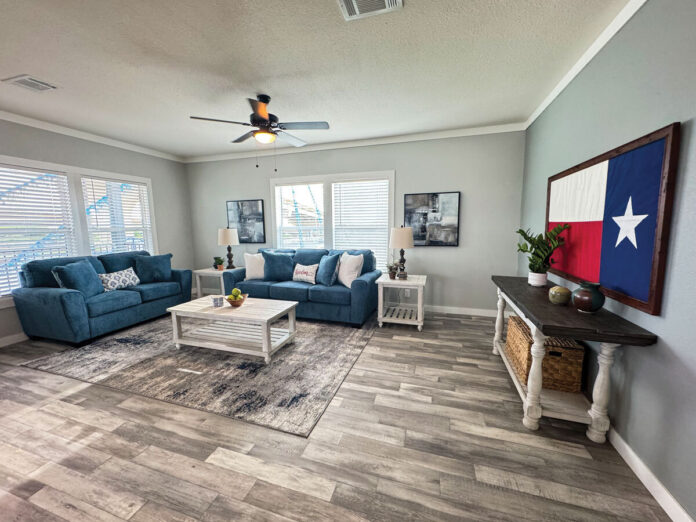
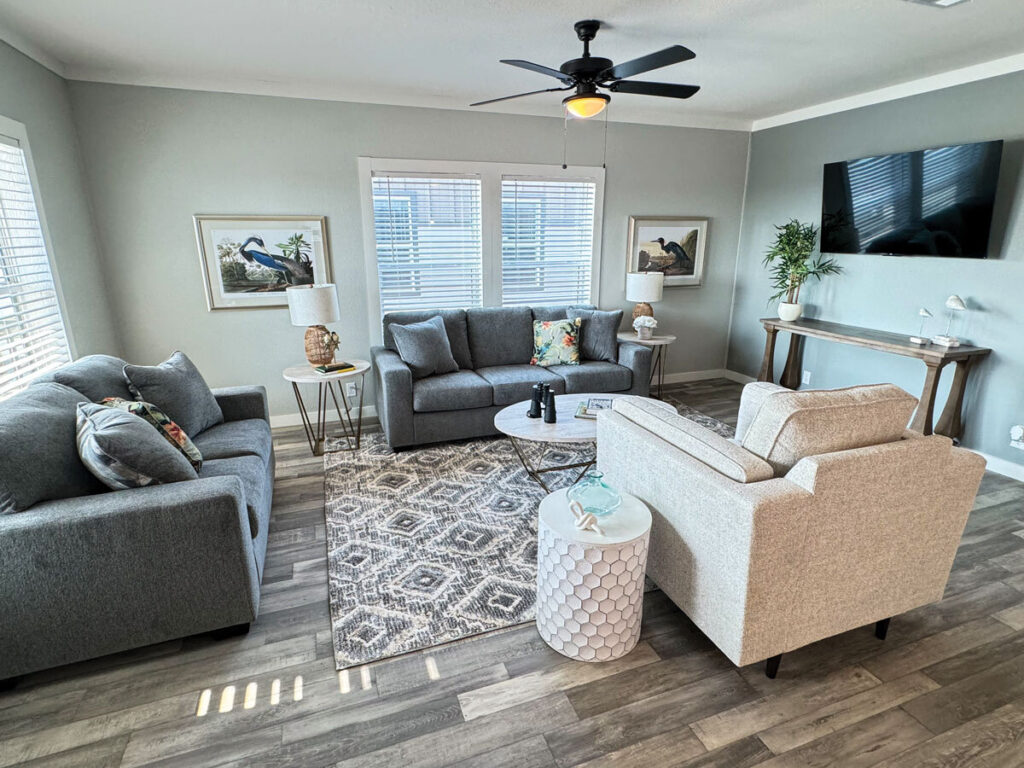
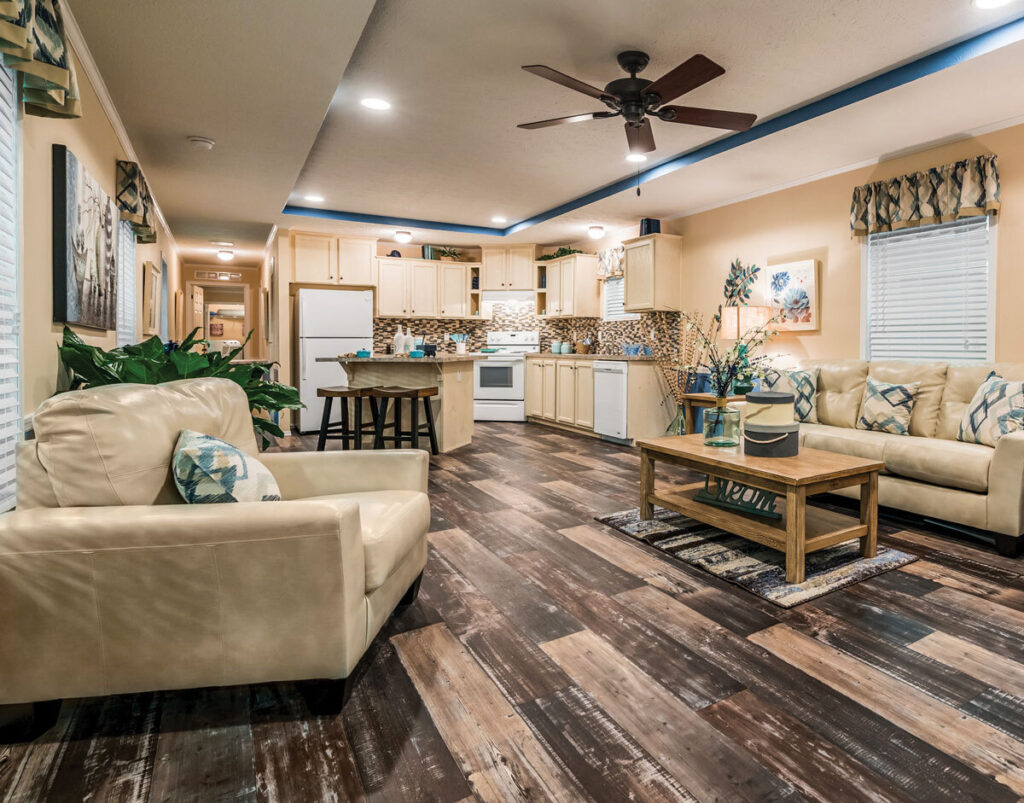
The interior of a new manufactured home in a 55+ community.
Insurance companies are realizing that offering plans that even include food, social support, and wellness are making more sense, and keeping their insured healthier. Companies like Kroger and Amazon are tapping into this new opportunity — Kroger now has in-store health clinics in 35 states. There will be a lot more of this to come. Think about how this might be a growth area for your community as well.
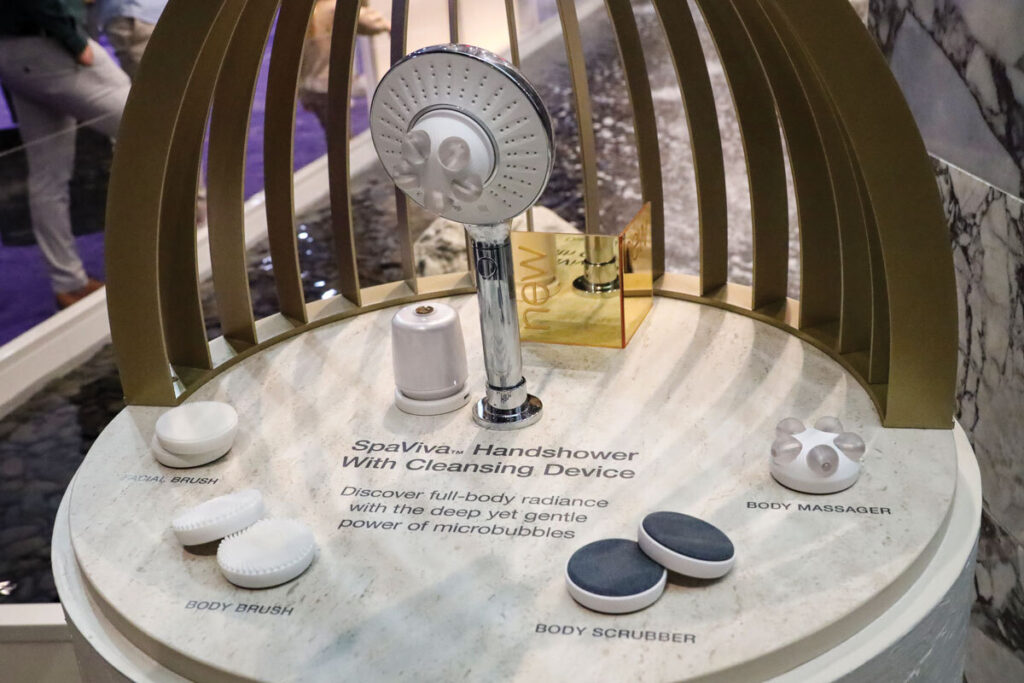
Make sure that your homes are designed for this important niche that you are marketing to. The residents may not want grab bars when they move in, but it is important to think ahead and make sure that the walls are blocked in strategic areas to accommodate these safely. Hallways and doorways should be wide enough to easily allow wheelchair access. A separate, larger shower is a must, preferably barrier-free. At the recent Kitchen and Bath Industry Show, TOTO shared how important cleanliness is for seniors and how having the proper height toilet can help with mobility. These features no longer need to have an institutional look — they can be as beautiful as they are practical. Homes should be as close to ground set as possible, allowing residents easy access to their new homes.
Move In Services
What services does your community offer to make sure that moving into your community is seamless and a positive experience? Partner with Realtors®, downsizing specialists, movers, and estate sale companies that can help make downsizing and moving into your community a great experience.
Maintenance/Construction Providers
Residents always have something that needs to be fixed or replaced, big or small. Have a list of some third-party contractors for whom you have received referrals that can help your residents with these projects. A staff maintenance person may be available to make certain simple modifications, but if you can refer someone, that will take you and your community out of the day-to-day challenges that maintaining a home can bring.
Third-Party Care Providers
What many communities are learning is that by partnering with a third-party agency, they can provide home health care, and their residents can stay in their homes longer while getting the help that they might need.
Remember when doctors made house calls? The trend is reappearing in retirement communities where a nurse practitioner or physician will come to the community to see residents, and the visit is billed directly to the resident. Telehealth is another popular way to keep residents healthy without ever leaving home. Physical therapy is another popular third-party service where the therapist can come and train the resident right in your community health and wellness center.
Concierge Services
One of the wonderful indulgences when staying at a luxury resort is having your own concierge available to get you reservations at that restaurant that you have always wanted to try or to get you tickets to the hottest play on Broadway. Why not offer that same service in your community? Have a staff member who is available to residents during specific hours to help them with whatever their needs are and to help them f ind people who can perform special tasks for them that they can’t, or don’t want to, take care of themselves. Dog walkers, personal shoppers, dry cleaning and laundry services, and grocery deliveries are some of the tasks that come to mind for which someone would be happy to pay a premium.
Building a relationship oriented team isn’t only about offering concierge services. If you have an entire staff that creates relationships with your residents they can help identify issues that are happening in the community before they become larger problems. Constant communication with your residents not only builds trust but also creates referrals for your sales team.
Food Delivery Services
Make an arrangement for a local food delivery service to deliver meals for your residents. This can be through the local restaurant themselves or through a service like Uber Eats or Favor. Having this service in place for residents makes it easy for them to enjoy a delicious meal without ever leaving the community, but you don’t have the expense and liability of operating a restaurant. You could even have evenings with local restaurants where they could offer a special meal in your clubhouse or deliver it directly to the residents at an affordable price.
Food Truck Friday
Create an area in your community where food trucks come on specific days and have different dishes available for sale. This is a fun and easy way to offer dining services to your residents.
Transportation
Scheduling an Uber or Lyft may be second nature to us, but to some seniors it is a foreign concept. Many cities now have car services just for seniors who understand the senior living opportunities and can make a trip to the doctor’s office or to the post office stress-free. Identify one of these companies in your area, and share them with your residents.
Wellness Checks
Offering a plan for how residents can have someone know that they are OK every day without sacrificing their independence is a big benefit of living in a community. It might be something as simple as turning on a specific light in their home daily or having them call the front desk. This can provide peace of mind for family members as well.
Online Marketing
Having a robust, easy-to-understand website is critical in today’s market. We have all gotten used to having information at our fingertips, and if we can’t find what we need immediately, we move on to the next source. Silver Point Senior Living, a New Senior Living Management company, shared that over 85 percent of all of their inquiries come from digital / web-based leads. Does your website accurately reflect your community and the people who live there, or are you using stock photography that shows something different?
What the customer will experience when they visit your community?
What is the process for receiving an inquiry to tour your community? Do you track your speed-to-lead timeline? When there is a gap in connecting potential residents to a qualified salesperson, the customer can lose interest and move on to your competitors. If you don’t have the resources to have someone on staff to handle leads and inquiry calls, consider using a resource like MHVillage that can help you capture more leads and turn them into sales.
The best way to capture online demand is to add the personal touch of your sales team and community. Differentiate yourself from your competitors, and follow up with a handwritten thank you note. It is a small touch that won’t be forgotten.
Have you looked at your community’s reviews on Google and on social media platforms like Facebook? This is where potential customers often start their search and rely on reviews before moving forward to your website.
Most 55+ customers are on a different timeline than what we see in many all ages communities. Many would like to consider this the last move that they will be making and want to be sure that the decision that they make is the right decision. Get creative in your approach. Constant communication with your residents before and after the sale is critical.
Changing the way that you think about added services and how you market to 55+ buyers can create a real estate footprint with added ongoing revenues.
By creating trust and transparency with your residents at the beginning of the sales process, you can have fewer issues when they move in and are actively part of your community.
New Look Communities
The perception of what manufactured housing can offer is changing, especially when it comes to community living. One of the questions that buyers always have when they visit a retail center is “where can I find land” to site my home. Companies like The Reserve Communities are now giving them attractive, affordable options.
The Reserve at Copano Bay is a beautiful example of this approach. If you have not heard of Rockport, Texas, you will soon. This city is located on the Copano and Arkansas bays, just minutes from the Gulf of Mexico. Rockport is surrounded by state and national parklands, fishing piers, and sandy beaches, but it still offers an affordable coastal lifestyle that is getting harder to find. Nearby Corpus Christi has an international airport along with a wealth of health services, shopping, and cultural offerings. It is also a popular haven for seniors trying to escape the Florida crowds or harsh northern winters.
Stonetown Capital has been investing in manufactured housing since 2018 and started The Reserve and some of the best bird watching in the country.
What makes this community particularly enticing to potential buyers is that not only will there be an all-ages area, but The Reserve will also have 250 homesites in a gated area that will be a 55+ community. This area is called Costa Palms and offers its own community center, green spaces, and bay views. Both places will offer community-led activities, walking paths, and a community pier ideal for fishing or just enjoying the view and seasonal breezes. With aging in place being such an essential topic to homebuyers, homeowners can live in a 55+ community but still have their Communities to build new land-lease communities that could offer resort locations with amenity-rich facilities and services available to all residents. With over 700 home sites at The Reserve at Copano Bay, potential residents can tour model homes that are staged and available in the community, built by some of the nation’s finest homebuilders, including Cavco In-Neighborhood, Clayton, and Skyline Champion. The temporary sales office is located in a Cavco-built home that is a model that customers can purchase. Customers can experience the quality offered in today’s manufactured homes. When complete, the beautiful new community center and sales office will be overlooking Copano Bay, which has family living nearby. Offering this way to have independence while still having family and friends nearby is a trend we expect to see more of in the coming years.
Other Reserve communities are open or coming soon. The Reserve on Sleepy Hollow in Conroe, Texas has just opened, The Reserve at Flores Valley in San Antonio, and The Reserve on McKinney in Denton, Texas are under construction. It’s exciting to see the impact that communities like these are making on how people think about manufactured home lifestyles and how this can possibly change the entire direction of our industry.
This year’s MH FacTOURy Summit has announced that attendee registration is now open for the two-day event hosted at the RV/MH Hall of Fame from Aug. 20-21, 2024.
The event brings two days of factory tours and educational seminars to Elkhart, Ind. Hundreds of manufactured housing industry professionals will have the chance to tour the region’s leading manufactured home building facilities, meet with factory representatives, see the latest manufacturing innovations, and foster new and ongoing business relationships.
“We’re excited to welcome our colleagues back to Elkhart for yet another year of factory tours and educational seminars,” Indiana Manufactured Housing Association – Recreation Vehicle Indiana Council Executive Director Ron Breymier said. “This is our third year hosting the event in Elkhart, and we expect it to be yet another success for both the MH FacTOURy Summit and the RV/MH Hall of Fame.”
The MH FacTOURy Summit is targeted towards retailers and community owners, property managers, sales personnel, marketing team members, and new employees in the manufactured housing industry. By attending, industry professionals can take advantage of new ways to stay ahead of the competition, build and maintain a high performing sales team, and understand the latest industry trends and buyer preferences.
The RV/MH Hall of Fame Induction Ceremony will precede the summit, on the evening of Monday, Aug. 19. The ceremony will honor 10 manufactured housing and RV veterans for their industry service and enshrined in the Hall of Fame.
Exhibit and Sponsorship Opportunities Available For This Year’s MH FacTOURy Summit
Exhibit and sponsorship opportunities are also open for the 2024 MH FacTOURy Summit. These are ideal ways to increase company exposure and show everything it has to offer.
Sponsors can sign up for exclusive opportunities throughout the event to boost their brand visibility among manufactured housing professionals across the country.
For more information regarding exhibit and sponsorship opportunities, please contact Sue Bartee at (317) 247-6258 ext. 14 or email info@imharvic.org.
Visit www.mhfactourysummit.com today to register for the MH FacTOURy Summit or to learn more about the event. The MH FacTOURy Summit is an industry conference for manufactured housing professionals and is not open to the general public.
In February of 2024, I attended a subcommittee in the capacity of executive director and lobbyist for the Iowa Manufactured Housing Association. Despite large Republican majorities in the statehouse in Des Moines, the bill discussed by the three-legislator panel would allow cities and counties in Iowa to implement their own rent control requirements. While the bill failed to advance beyond the committee, this was a stark reminder that rent control is a live issue as state legislators seek ways to address housing affordability. Despite a failing rent control experiment right up the road in St. Paul, Minn., landlords and their associations will continue to see these types of measures introduced by both Republicans and Democrats.
In recent years, state legislatures across the country have taken up measures to either directly enact or allow local governments to adopt rent control measures. These legislative efforts aim to cap rent increases and, by extension, curb the escalating housing costs that have become a pressing issue for many Americans. While the sponsors of these measures often have these positive intentions, rent control distorts the rental property market, discourages investment, and does not solve the housing affordability issue.
The Rise of Rent Control Legislation
Rent control policies are not a new concept, having been part of the housing regulation landscape in various forms and capacities over the decades. However, the recent wave of legislation marks a significant shift, with states and municipalities considering or enacting laws that are more comprehensive and stringent than in the past. These laws typically limit the rate at which rents can be increased annually, tying them to inflation rates or other economic indicators, in an effort to make housing more affordable and prevent displacement. Rent control measures are not just a blue state issue. While most of the media attention has focused on rent control measures in states like Washington and Delaware, legislators across the country — including in red states like Iowa — are introducing and advancing rent control bills. Challenges for Landlords For manufactured housing community owner/operators, rent control presents several key challenges:
1. Reduced Ability to Manage Property Economics: The most immediate impact of rent control is the limitation it places on landlords’ ability to adjust rents in response to market conditions. At a minimum rent control can reduce property owners’ ability to react to inflation spikes, changing market dynamics in high-demand areas, or other unforeseen events, including unanticipated maintenance issues. Over time, this can erode the profitability for owner-operators and deter future investment in the sector. For smaller operators, rent control can make it impossible to have a profitable business.
2. Maintenance and Upgrades: With capped rental income, MHC owner/operators may find it increasingly difficult to allocate funds for maintenance and upgrades to their properties. This could lead to a decline in the quality of housing stock over time, as well as reduced incentive to invest in energy efficiency and other improvements that benefit residents, the environment, and help make housing more efficient and attainable.
3. Administrative Burdens: Rent control regulations often come with a complex web of administrative requirements, including registration, reporting, and compliance measures. These can impose significant burdens on MHC owner/operators, especially smaller operators, in terms of both time and financial resources. Compliance issues, especially for new rent control requirements, could create significant risk for owner/operators who fail to adequately meet their requirements.
4. Market Distortions: Rent control can lead to market distortions, including a decrease in the availability of rental units and MHC lots as landlords convert properties to uses not subject to rent control. This can exacerbate the affordability issues that rent control seeks to address, leading to unintended consequences such as increased competition for a dwindling supply of rental units.
5. Investment Deterrence: The prospect of rent control can act as a deterrent to investment in rental housing, both for existing properties and new developments. This is particularly concerning given the ongoing housing supply shortages in many areas. A reduction in investment can hinder the development of new rental units, further straining housing markets and limiting options for potential residents.
Navigating the Path Forward
For MHC owner/operators, the challenge lies in engaging constructively with policymakers, residents, and other stakeholders to address housing affordability while also ensuring the viability and sustainability of the rental market.
The first line of defense is state manufactured housing associations. This industry is well-positioned with strong associations across the country. While lobbyists are not magicians, a well-equipped association with a professional lobbying team, politically engaged members, and strong grassroots program can educate lawmakers on why rent control is a failed policy and how increasing the housing supply is the most economically sound path to addressing rent affordability.
Additionally, it is also critical for policymakers interested in manufactured housing to understand this sector is in transition. While “sale to an out-of-state investment group” will continue to be a key talking point for those advocating for rent control, these transactions often lead to situations where residents see much needed investment in their communities. This increases the value of their homes and often makes their communities nicer places to live and raise families.
The trend toward rent control legislation reflects a misguided attempt to address affordability and stability in the housing market. Community owner/operators in both red and blue states must be vigilant. They must communicate with policymakers either individually or through their state manufactured housing association to convey the message that rent control will lead to fewer housing opportunities, less investment in existing communities, and economic uncertainty for housing providers.
Andrew T. Conlin, a seasoned advocate with over 15 years of experience in government affairs, legislative policy and public affairs, is the executive director of the Iowa Manufactured Housing Association. He is a graduate of Purdue University with a dual degree in history and political science.
The corporate headquarters for Credit Human in the Pearl District near downtown San Antonio.
The San Antonio-based credit union Credit Human is headquartered near the Pearl District a short walk from downtown, and provides neighbors and visitors alike a destination area where children may take their first spring steps or where former college pals might meet to drink “rose all day.”
Its neighbors, local employers, include a brewery and a bookstore. The office development, including the parking garage, was developed in partnership with Pearl-developer Silver Ventures and serves both employees and the public for events and local attractions. And it’s all based on furthering the idea of creating a sustainable place, like the building itself.
Credit Human’s headquarters, at 1703 Broadway, likely is on a list of the nation’s most green commercial buildings, and certainly is the leader in the manufactured housing industry. It is certified LEED Platinum and has an official Energy Star score of 86.
“Credit Human’s commitment to environmental stewardship includes a goal to reduce green house gas emissions by 50 percent by 2025,” Credit Human Sustainability Programs Manager Beth Keel said. “We’ve already far surpassed that goal and have reduced GHG emissions by 72 percent across the organization. We achieved that by selling inefficient buildings, leasing, and building more efficient units, like the new headquarters.”
The interior entry way to the Credit Human headquarters.
Top of the Building
On its roof is a comprehensive hood of solar panels — 2,912 of them — that produce a megawatt of energy each day, about 40 percent of the building’s energy needs.
“It’s the largest solar project on a highrise building in America,” One80 Solar CEO Patrick Attwater said. “During the day we’re going to actually produce more power than the building needs, send some of that power back to the grid, get credits for it, and use those credits later when the building needs it.”
The battery packs for solar energy at the Credit Human HQ in San Antonio.
The building has a tight envelope that conserves energy, recognized by the EPA as 40 percent tighter than building codes require. It also uses significantly less potable water than most buildings, 97 percent less than structures of its size and type. This is accomplished by capturing rainwater and condensate, as much as 140,000 gallons, in large tanks situated around the building and below surface on the property.
“Water is precious to San Antonio,” Credit Human CEO Steve Hennigan said. “Traditionally a building like this probably would use about 4.4 million gallons of water per year. So the way to you want to look at that is (by asking) what would the environmental footprint of that 3-acre lot produce as far as water, and how much of that water can we capture, reclaim, and use? And what would the gap left be after that?”
Turns out not much.
Credit Human uses the captured water to flush toilets and send makeup water to the cooling towers outside. The building conserves about 100 million gallons of water annually.
Geothermal wells, 150 of them, pull energy from the earth to heat and cool the building. It has a highly efficient HVAC system that uses variable refrigerant flow, all lights and power outlets power off when not in use, and half of the parking garage’s spots are wired for electric vehicle charging.
The social staircase at the center of Credit Human’s headquarters.
Credit Human team members use sit-stand workstations, and to keep movement through the space, the building has a large, central “social staircase” that serves as a meeting point and incentive for getting in those extra steps. Many of the architectural aesthetics for the building are achieved through the use of reclaimed wood and other existing materials from downtown buildings. Throughout the building is the work of local artists, including the building’s tile work and other finishes.
In the cafeteria, employees sort their waste for recycling and composting leftover food. The food is either digested in a biodigester or sent to a local composting company.
“Credit Human’s going to be a place where people can come… to do really great, purpose-driven work and in the process of doing that almost seamlessly and unconsciously have an impact on the planet,” Credit Human Senior Manager Amy Hartman said.
More than 1,500 manufactured housing professionals are expected in Las Vegas April 7-9 as the Manufactured Housing Institute’s Congress and Expo returns to the...
With more homes, more exhibitors, and more buzz than ever before, the 2026 Biloxi Show is expanding, and fast.
The Biloxi Manufactured Housing Show &...