The Biloxi Manufactured Housing Show and Expo is now in its fourth year, and has cemented itself as a primary attraction for industry professionals looking to keep up on the latest in new home offerings.
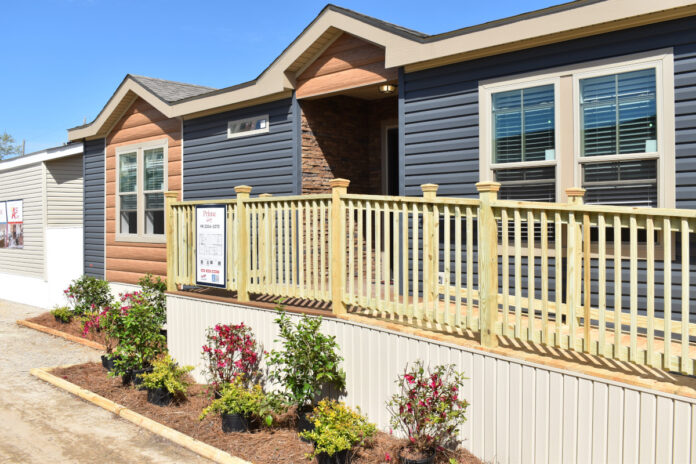
Held March 17-19 at the IP Casino Resort, The Biloxi Show features homes from 16 brands — including several manufacturers that have offerings from multiple home building locations.
Attendance was exceptional, and streams of manufactured housing professionals toured the nearly 50 homes in the outdoor village, and visited nearly 100 service and supply exhibitors from all parts of the industry including lenders, product suppliers, insurance providers, agency and software offerings, and transport and setup professionals to engage with on the expo floor.
“We’re excited about the Biloxi Show,” Boo Haughton of Regional Builders Group said. “We’ve got some new product there. We are going brought a double wide, a new single wide, and then a concept house.
“The Biloxi Show means a lot to every manufacturer in North Alabama, especially us,” he said. “We get to display everything new, new product line, new color choices, new everything.”
Featured speakers include Theresa Payne, deputy assistant secretary at HUD, and Mike Price, the senior policy analyst from FHFA on industry progress and vision. MHI CEO Lesli Gooch reviewed 2024 and provided a state of the industry discussion, and MHVillage’s Darren Krolewski covered effective social media strategies.
“2025 was the greatest year yet in Biloxi, the mix of homes, the number of exhibitors and the quality of educational sessions with expert speakers provided a great experience for anyone who attends,” Mississippi Manufactured Housing Association Executive Director Jennifer Hall said.
MMHA works with the Alabama Manufactured Housing Association each year to host the event.
In addition to the many attendees and exhibitors at the show, the associations each year coordinate on a plan to host public officials from the area, providing insight for those stakeholders in elected seats or policy positions.
“Each time we host a group of public officials, the reaction we get is the same. There is always that ‘Wow’ factor, and the amazement of what we can do with our homes,” Hall said. “We hear a lot of our public officials say ‘I had no idea you could get these features in a manufactured home’, and that’s what we’re looking to accomplish. We need people to see our industry’s capabilities, and when they do, they become fans. They advocate for us.”
Manufacturers Showing Homes in Biloxi
Avery Cabin Company Champion Chariot Eagle Clayton Destiny Homes Fleetwood Franklin Homes KABCO Builders Legacy Housing Live Oak Homes New South Quality Homes Palm Harbor Regional Builders Group Sunshine Homes Timber Creek Housing TRU
“MHI consistently emphasized the need for additional time to ensure a smooth and cost-effective transition for manufacturers, suppliers, retailers and community operators,” the Manufactured Housing Institute stated in response to the new deadline. “By securing this delay, MHI has successfully eased the burden of what would have been an unrealistic timeline for compliance, allowing businesses to properly adjust designs, modify supply chains and ensure regulatory compliance without unnecessary disruption.”
The industry embraces the updates, and wants to ensure they’re effectively administered.
The updates from September include changes complex engineering specifications, electrical codes, and construction requirements. Originally, the industry was asked to be ready for changes in March.
“MHI’s efforts, combined with strong engagement from manufacturers and key stakeholders, resulted in a unified industry voice that resulted in this necessary extension, ensuring a more practical and achievable transition period,” MHI stated.
In its communication, MHI said remains committed to protecting the affordability and accessibility of manufactured housing while ensuring that regulatory changes support — rather than hinder — industry growth and innovation.
“We will continue working closely with policymakers to advocate for reasonable, well-structured regulations that uphold safety and quality without imposing undue burdens on manufacturers and consumers,” MHI stated. “As we move forward, MHI encourages all members to stay engaged and proactive in the regulatory process, and we will provide ongoing updates and guidance to help you navigate the extended compliance timeline successfully.”
In a follow-up announcement to the new schedule, HUD announced it has agreed that future changes to the code would come with implementation dates to further clarify and ease updates for industry professionals.
The requirement to create the Duty To Serve (DTS) Underserved Markets Plans by Fannie Mae and Freddie Mac was established by Congress in the Housing and Economic Recovery Act of 2008. Both agencies are required to develop ways to improve mortgage access for very low-, low-, and moderate-income families across the three underserved markets. These markets include: Manufactured housing, rural housing, and affordable housing preservation.
As we begin 2025, let’s look at the Fannie Mae and Freddie Mac three-year Plans for 2025 through 2027 and summarize their proposals for manufactured housing.
Fannie Mae Plan
The Fannie Mae plan begins with an overview of the market, pointing out most buyers continue to rely on chattel or personal property loans to finance MH homes.
They identify several areas of focus for their strategic planning, including continuing to support energy-efficient MH home construction, broadening MH eligibility for two-to-four-unit homes as an infill housing solution, and addressing the stability of renters by promoting use of voluntary rent restrictions within MH communities to address workforce housing needs.
Challenges continue in the MH market including how units are titled, which determines how they can be financed, the declining number of MH communities, and the fact that fewer MH homes are being constructed, with the lowest level of production since 2016 — less than 90,000 new homes built in 2023.
As part of its three-year Plan, Fannie Mae set the following targets for purchase money mortgages for MH units: 2025 ………6,300 loans 2026 ………6,800 loans 2027 ………7,400 loans
For comparison, in 2023, Fannie Mae purchased 5,689 purchase money mortgages.
Another objective is to expand the adoption of conventional financing for manufactured homes by addressing the risks of MH lending through updates to their products and processes. This would include adding MH appraisal data to the Collateral Underwriter® (CU) system which helps lenders manage collateral risk as part of their underwriting and QC process.
In the plan, Fannie Mae noted that in 2018, MH units became eligible for the HomeStyle® Renovation and Energy products, but there has been barely any origination of either for MH units. They plan to research why these products have not been utilized more, and determine best practices and possible enhancements to grow this business.
Fannie Mae also wants to increase loan purchases of manufactured housing community units owned by government entities, nonprofit organizations, or residents. And increase purchase of MH loans in communities with rent restrictions, such as Community Land Trusts.
Freddie Mac Plan
Regarding the Freddie Mac plan, it wants to continue moving the single-family manufactured housing market forward in several significant ways.
Increase number of loan purchases secured by manufactured homes titled as real property.
Continue manufactured housing financing offerings and enhance them to expand market support, as appropriate, based on industry feedback and with consideration for safety and soundness.
Integrate a curriculum into their Develop the DeveloperSM program to educate real estate developers on using manufactured homes in new housing developments and as infill. This will increase the number of knowledgeable developers and will lead to increased supply of affordable homes for sale, especially in rural areas.
In the past three years, Freddie Mac had a baseline average of 5,957 loans purchased including 6,248 loans in 2023.
Regarding the goal on purchase loans, it has specified the following targets for the next three years: 2025 ………6,550 loans 2026 ………6,800 loans 2027 ………7,100 loans
Freddie Mac plans to focus on product enhancements to encourage small balance mortgage lending on manufactured homes, based on research completed in 2023. In 2025, it plans to gather feedback from 10 industry participants on this issue, and determine possible product features if needed to support this type of lending product.
As part of their plan, they want to continue to work with communities that have special challenges because the borrowers own the home, but rent the pad on which it sits. Freddie Mac did research on MHCs and claimed to have found issues with tenant protections, which they documented in a white paper in 2019. In 2021, they made a decision to require tenant protections for all future transactions and in the next three years, they plan to encourage the broad adoption of these tenant protections while maintaining sound lending standards. They hope that this requirement will result in tens of thousands of additional pad renters benefiting from protections that they claim typically exceed those provided by state or local law every year.
Finally, to help address affordability challenges, Freddie Mac plans to establish a new loan product that provides more favorable financing to borrowers that agree to the preservation of affordable pad lease rents as a condition of the Freddie Mac loan agreement. This could institute a new market standard for rent preservation that presently does not exist for MHCs.
FHFA Announcement on The GSE Plans
On Nov. 25, 2024, FHFA issued a press release in which FHFA Director Sandra L. Thompson stated:
“These new Plans underscore the commitment of FHFA and the Enterprises to ensure that the housing finance system responsibly supports borrowers and renters across the country. It is critical that innovative ideas for addressing liquidity needs in underserved markets be implemented and scaled up in rural communities and other areas facing access and affordability challenges.”
The release mentions manufactured housing as well, stating: “Both Enterprises’ DTS Plans also enhance their programs for manufactured housing communities to better support owners that voluntarily limit rent increases for leased pads.”
Under the current DTS and FHFA regulations, Fannie Mae or Freddie Mac could modify the plans if future events affect its ability to achieve their initial objectives. MHInsider will continue to monitor the status and progress of these plans in the coming years.
Berkshire Bank Product Manager Raymond Leech has worked in the mortgage industry for more than 30 years, having developed and managed construction and renovation mortgage products, as well as working on FHFA Duty To Serve efforts involving manufactured housing, rural housing, and affordable housing.
The nation’s largest utility management provider has continued to grow, this time with the addition of a bulk internet management provider.
Conservice, which in 2021 purchased an ESG service provider, has about 75 percent market share in utilities management. This time the expansion is in the internet services space, an offering that has come to be just as vital to residents as traditional utilities like running water and electricity.
Onboard, based in Salt Lake City, Utah, was purchased by Conservice in 2024. Onboard’s team of telecom experts leverage initiate, deploy, support, and manage bulk internet packages for property owners and their residents.
“Managing and supporting bulk internet programs is a natural expansion of Conservice’s utility management services,” Mike Doucette, Onboard’s head of business development, said. “Affordable connectivity offerings attract and retain residents, while property owners can see increased NOI with offerings tailored and managed by Onboard.”
In a bulk model, the property owner may pay $35 per unit to provide the service to each resident while Onboard works closely with the owner to ensure the offering is priced appropriately – and competitively — in each market to the resident. Among the internet providers Onboard partners with are several of the nation’s largest along with regional and local options.
To begin the process, Onboard secures from an owner a letter of authorization to speak with providers on their behalf.
What differentiates the Onboard product from its competitors, Doucette said, is the reputation for high-quality client relationships and detail in excellent service — all qualities that Conservice has championed for nearly 25 years.
“After the contract has been signed, how do you get your residents excited and informed about the offering? That’s where Onboard truly shines, by continuing to manage and support the program long after deployment,” Doucette said. “That includes driving residents to a custom branded portal to sign up, implementing drip marketing campaigns to drive awareness, and ensuring owners stay ahead of evolving industry regulations.
“It’s a comprehensive white glove service that is backed and enabled by our tech platform,” he said.”We’re thrilled to now be part of the Conservice family, and together our services can revolutionize properties’ technology and utility management.”
If you’re staring at empty spaces or empty homes, you have a problem to solve. Where are your buyers?
Before you start putting up lender banners, blindly boosting Facebook marketplace posts, sending mailers to existing residents, hosting fish fries, or any other promotional endeavor, you need to ask yourself “Why?”.
Why don’t I have interest in that shiny new multi-section home? Why can’t we sell more affordable homes in a housing affordability crisis?
If you’re a business owner, manufactured housing or otherwise, there are three reasons that buyers in your market are not purchasing your product:
Buyers don’t know you exist
Buyer’s don’t want what you’re selling, and/or
Buyer’s don’t trust you
It may be one of these, any mix of them, or a little of each. Let’s look at each possibility, and examine some solutions.
Buyers Don’t Know You Exist
If no one knows you’re there, you’ve got a marketing problem. Marketing is how businesses get attention — it is how they become known.
All businesses have to market. Some use word of mouth, some advertise on various media platforms, while others employ guerrilla marketing tactics.
Do your buyers know you exist?
This is the key question in determining whether your marketing is working, or not. The first step is to define what buyer you’re asking about.
For most community operators and retailers, your buyers are in the lower to lower-middle income brackets, and between the ages of 25 and 44. For most markets, this is the $40 to $70k per-year household income brackets.
Do most of those in your market area in that category know you exist? If the answer is yes, your marketing is working. If the answer is no, you need to turn up the volume.
Buyers Don’t Want Your Product
There is an important distinction I need to make here… when I say buyers don’t want your product, I don’t mean that they don’t need it. Your sales and marketing will create the want, and in our industry’s case, market conditions create the need. It’s no secret that every community in the United States needs more housing.
The problem is that there’s not enough want. How do we make a prospective homebuyer want to purchase a manufactured home? Good marketing piques a buyer’s interest, and a good sales strategy turns that interest into want.
To see if you’re creating the “want”’ from your market, look at your conversion rate for all leads (phone, web, walk ups). How many prospects that expressed interest in purchasing a home bought one? There is no ideal conversion rate. All industries, sectors, and sales organizations differ.
However, I can tell you that 0.1 percent is way too low and 100 percent is too high. The problem with a low conversion rate is clear. And too high of a conversion rate usually means that your marketing is ineffective and only those that are very eager to buy are inquiring.
Take a look at pricing and understand that if slim margins are associated, the sales process will prove to be unsustainable. If it’s too low, you need to look at your sales system.
Is the sales team working to earn that appointment (8-10 touchpoints per lead)? Do they know the ins and outs of the home and the community so that they can feature-benefit both? Are they asking the right questions during the sale to learn what problem a new home in your community can solve for your prospective buyer?
Our industry is in a place now where there is plenty of need, but there’s not a whole lot of want. Marketing and sales systems must both work to create the desire to purchase and live in a manufactured home.
Buyers Don’t Trust You
Conversation creates rapport, rapport builds relationships, relationships build trust, and trust closes deals. If you’re in sales, you’ve likely heard some sort of variation of that mantra. It’s what every new salesperson learns in their 101 sales training class. Your salespeople aren’t just in the manufactured housing business, they’re in the relationship business.
The more trust they build, the more homes they will sell. To create more trust in your sales process, you need to take an honest look at that process and determine what you can change to make the process more transparent and of more benefit to the customer.
Buyers trust things that are transparent and things that clearly benefit them.
Here are some examples of changes that we’ve helped retailers and community operators make to improve their transparency:
Clear Pricing
If a customer visits your website, sales center, or office, can they easily determine prices? In today’s e-commerce, and the abundance of information, buyers do not trust sellers who are unclear on pricing. It makes them feel as if the seller is hiding something, and if buyers think a seller is hiding something, they are not going to trust them.
Consistent Pricing
Does your pricing vary from customer to customer? A cash price and a financed price? There are circumstances under which pricing changes, if it’s connected to an associated valued service or expansion of the offering. But today’s buyer has come to expect a consistent price for a product.
Clear Agreements
As a document becomes longer, more complex, and full of “legalese”, the less a customer will trust the business asking for their signature. Yes, there are certain elements of an agreement that must be present, but there also are elements that you can remove. Perhaps you had one bad apple that caused your attorney to go overboard and add lengthy language to an agreement to cover a situation that will likely never happen again? Try and read your agreements from the perspective of a buyer – do they create trust, or dispel it?
Next Steps
As we all know, the manufactured housing industry is in a tremendously advantageous position for growth. The nation’s growing affordability housing crisis shows no signs of slowing, and we have the perfect solution. But to do that, we need to change and grow. We need to create more awareness and more trust. We need to show the millions of prospective home buyers the value, and durability of our product.
David Finney founded Bild Media in 2019 to help independent dealers and manufacturers tell their market about the incredible quality and value that a manufactured home offers. He has over a decade of industry experience in marketing and business development at 21st Mortgage Corp. Finney has owned multiple local businesses, and is very aware of the struggles of owning a business, and what it takes to market and advertise in a community.
Manufactured home communities are a unique and valuable asset class, offering a steady income stream and long-term appreciation. However, many owners may not be fully aware of the hidden financial benefits their properties can offer.
Cost segregation, a tax strategy that accelerates depreciation and increases cash flow, is particularly effective for this asset class. By understanding how this strategy works and why it applies so well to manufactured housing communities, owners can uncover significant tax savings, offset income, and maximize the value of their investment.
What is Cost Segregation?
Cost segregation is a tax planning tool that allows property owners to reclassify components of their property into shorter depreciation categories. Instead of waiting the typical 27.5 or 39 years to recover costs, components such as land improvements or certain structural features can be depreciated over much shorter periods — Five, seven, or 15 years, for example.
Two key elements enhance the effectiveness of cost segregation:
Bonus Depreciation: Current tax laws allow a significant portion of qualifying assets to be fully depreciated in the year they are placed in service. For community owners, this means substantial upfront tax savings.
Accelerated Depreciation: Even without bonus depreciation, reclassifying assets into shorter depreciation schedules can significantly increase annual deductions, improving cash flow year after year.
Why Manufactured Home Communities Are Ideal for Cost Segregation
Land-lease communities are uniquely suited for cost segregation due to their high proportion of shorter-life depreciable assets. Here’s why:
Land Improvements: A significant portion of a community’s value often lies in land improvements, which have a 15-year depreciation schedule. These include infrastructure like roads, sidewalks, driveways, and parking lots — components that make up a substantial part of a community’s value.
Movable Homes: Unlike traditional residential structures, park-owned movable homes can be classified as 5-year assets. Additionally, utility hookups including water, sewer, electrical, as well as items like signage and furnishings, are also categorized as short-life assets, yielding significant first-year tax benefits when combined with bonus depreciation.
Missed Opportunities: Many CPAs mistakenly classify all park assets under longer depreciation schedules, leaving significant tax savings on the table. Proper cost segregation ensures these misclassifications are corrected, unlocking potentially hundreds of thousands of dollars in missed deductions.
Benefits for Small and Large Investors
Cost segregation isn’t a one-size-fits-all strategy. It offers tailored benefits depending on the investor’s profile:
Smaller Investors: For those filing as individuals or small business owners, cost segregation can offset not only passive income but also active income under certain conditions. This creates an opportunity to reduce personal tax liabilities while increasing available cash flow.
Institutional Investors: Larger operators with LP investors can leverage cost segregation to enhance cash flow and provide significant tax benefits to their limited partners. This added value can strengthen relationships with investors and boost the property’s overall ROI.
Lookback Studies: Capturing Missed Opportunities
What if your property wasn’t recently purchased? Cost segregation isn’t limited to new acquisitions. Lookback studies allow owners to retroactively capture missed depreciation from previous years without the need to amend previous tax returns. This means that even long-held communities can still benefit from this strategy, often resulting in sizable tax refunds.
Case in Point: A Community in Wichita
To illustrate how cost segregation can create substantial tax savings, let’s examine a real-world example:
In October 2024, a community in Wichita, Kan., was acquired for $1,444,000. The property included 41 homesites. Twenty-three were tenant-owned homes, 15 park-owned homes, and there were three vacant sites. The land was valued at $216,600, leaving the remaining $1,227,400 eligible for depreciation.
Here’s how cost segregation unlocked immediate tax savings for the owner:
47 percent (5-year property): Assets like park-owned movable homes, utility hookups and other short-life property components such as signage and certain furnishings.
34 percent (15-year property): Land improvements, including roads, sidewalks, driveways, landscaping, and parking areas.
19 percent (27.5-year property): Longer-life assets like community buildings, leasing offices, or permanent structures on the property.
Impact of Cost Segregation: With a cost segregation study and the benefit of 60 percent bonus depreciation, the first-year depreciation deduction totaled $625,532. Without cost segregation, the owner would have been limited to a first-year deduction of just $9,304 under traditional depreciation schedules.
This substantial tax savings provided a significant boost to the owner’s available cash flow, creating opportunities to reinvest in the property, fund other acquisitions, or improve their overall financial flexibility.
Value for Properties of All Sizes, Configurations
Whether the community includes just a few units or is a large-scale operation, cost segregation can deliver significant benefits. Because so much of the property qualifies as depreciable assets — movable homes, infrastructure, and land improvements — the strategy proves valuable across all price points.
For instance, a $500,000 mobile home park could yield proportional tax benefits just as compelling as a $10 million property. The key is understanding how to categorize assets correctly and maximize their depreciation potential.
Consult Your Advisor
By exploring opportunities like lookback studies and properly classifying movable homes and land improvements, owners can make smarter tax decisions that drive long-term profitability. If so, consult with a CPA or tax advisor to evaluate eligibility and ensure the property is maximizing tax savings under current regulations.
Eden Markowitz is a cost segregation expert with Madison Specs. He has a proven track record of helping real estate investors maximize their tax savings through strategic planning. Eden’s deep expertise in accelerated depreciation helps his clients unlock substantial financial benefits. His commitment to delivering outstanding results and maintaining strong client relationships underscores his role as a trusted advisor in the real estate industry.
Scott Turner, nominated for the role of HUD secretary, answers questions during a Senate committee hearing.
Senate Votes 55-44 to Approve, Mostly Along Party Lines, With One No-Vote
On the heels of the Senate Banking Committee’s approval of Scott Turner with a 13-11 vote to serve as secretary of the Department of Housing and Urban Development, the Senate with limited debate confirmed Turner 55-44-1.
Each the committee and Senate vote went along party lines, with a small number of committee members initially voting against the nomination because the nominee’s FBI background check had yet to come in. In the time between the committee and Senate vote, members were given the opportunity to review the background check.
All 55 Republicans in the chamber voted for Turner, joined by two Democrats. One Democrat withheld.
In the committee hearing, Turner was asked for his thoughts about manufactured housing.
The Manufactured Housing Institute, the national advocacy group for the industry, worked with senators on the committee, as well as with Turner, to ensure that manufactured housing was raised as a topic during the hearing. As a result, Turner’s opening remarks and written statement included references to manufactured housing and the senators asked about the industry.
“As a country, we’re not building enough housing,” Turner stated. “We need millions more homes of all kinds, single family, apartments, condos, duplexes, manufactured housing — you name it — so individuals and families can have a roof over their heads and a place to call home.”
During the committee hearing, Committee Chair Sen. Tim Scott (R-SC)talked about updating the definition of a manufactured home in federal law to remove the requirement that all manufactured homes must be built with a permanent chassis. The chairman called this update to the law “incredibly important” and, in response, Turner committed to looking at how HUD can reduce regulatory burden and make it less cumbersome to build manufactured homes.
Sen. Jim Banks (R-IN)cited the HUD rulemaking finalized last year that would impose “extreme climate standards” on HUD-financed properties as driving up costs. Turner said that he will review any regulation that proves burdensome to the development of affordable housing.
In response to a written question for the record from Sen. Katie Britt (R-AL) about manufactured housing, Turner said he will commit to reviewing the process for updating the HUD Code to ensure that it is efficient and transparent. He emphasized the importance of a streamlined HUD Code to maximize the availability of manufactured housing as a source of attainable housing across the country.
“If confirmed, I will prioritize the availability and affordability of manufactured housing, including eliminating costly delays and undue regulatory burdens,” Turner had said. “I will also commit to meeting with the builders who run factories across the country that produce this important source of affordable housing.”
MHI joined 22 housing organizations to express strong support for Turner to serve as HUD Secretary. Turner served in the first Trump administration as executive director of the White House Opportunity and Revitalization Council, and has a background in housing and community development.
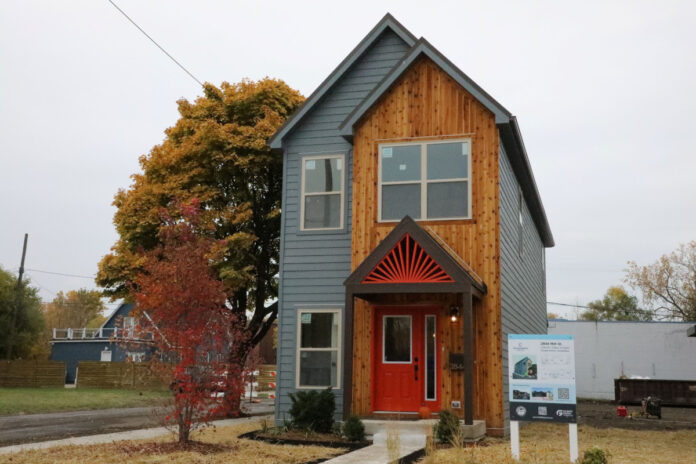
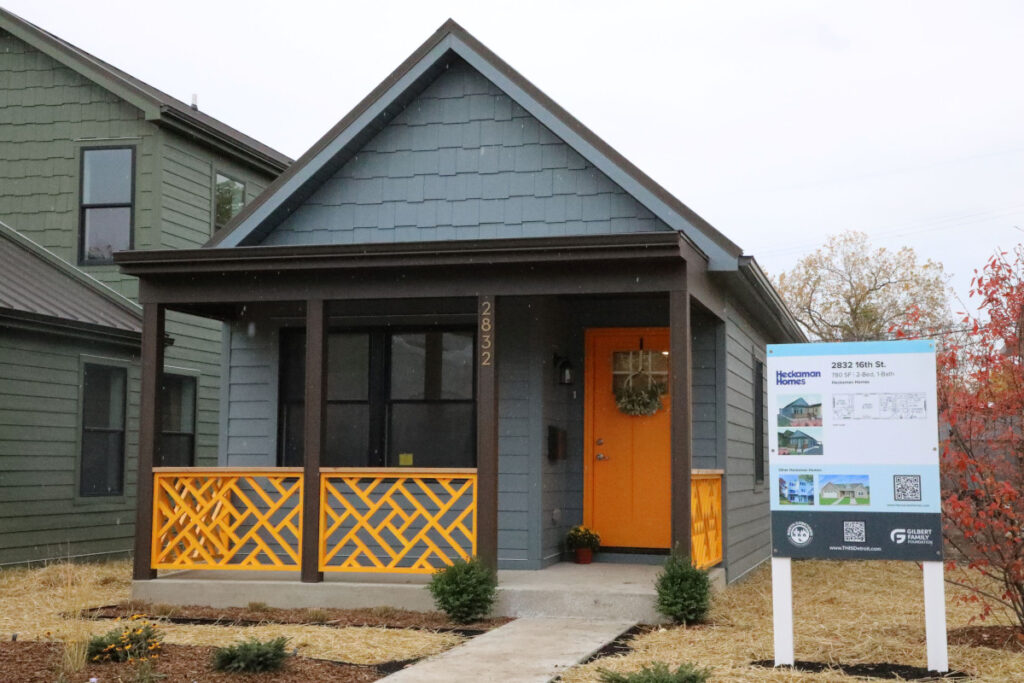
Champion Homes played a pivotal role in a landmark infill project in the North Corktown neighborhood of Detroit that has produced seven factory-built manufactured and modular homes for the area.
The project, launched by the North Corktown Neighborhood Association in partnership with Champion, the Gilbert Family Foundation, Enterprise Community Partners, InnovaLab, ManufacturedHomes.com, and a pair of other manufacturers, demonstrates the value and potential of factory-built housing in an area that has long suffered from a lack of modern, affordable living.
That’s a pain point that Tricia Talley, the executive director of the NCNA, has long experienced after seeing sky-high rents in her area.
“We began this project in August of 2023,” Talley said. “People have been expected to pay $1,200, $1,500, even $1,800 for a one-bedroom apartment, which keeps them from qualifying for a mortgage.”
It’s a problem that Gilbert Family Foundation Executive Director Laura Grannemann expressed similar frustrations about, particularly as it relates to Detroit’s aging housing infrastructure.
“Eighty percent of homes in the city of Detroit were built before 1960,” Grannemann said at the Tomorrow’s Housing Innovation Showcase on Friday, Oct. 25. “So, this is an urgent situation not just for innovation, but for the lived experience of Detroit residents across the city. We believe that everyone in the city deserves a stable home.”
The NCNA began to explore how to bring accessible housing to a plot of land managed by the Open Space Community Land Trust on 16th Street within view of the famous, newly revitalized Michigan Central Station.
With financial support from GFF through Enterprise Community Partners, Talley and her team got to work envisioning how the land could be used for more cost-effective single-family dwellings. “It’s about re-imagining what home ownership could be in a community like North Corktown,” Talley said at the unveiling of the homes. “We’re not just displaying homes. We’re showcasing a vision for a more accessible, sustainable, and vibrant future.”
Once conversations started between Talley and the Gilbert Family Foundation, David Allen and his team at InnovaLab came in to get things off the ground.
“The fact that we only do factory-built housing, and that we only serve clients in the government and nonprofit space, really set us apart for this project,” Allen, president of InnovaLab, told the MHInsider.
The seven homes brought in by Allen’s team include four modulars and one HUD-code home from Champion Homes, which is based in Troy, Mich., a modular produced by Indiana’s Heckaman Homes, and a Ritz-Craft manufactured home out of Pennsylvania.
“It is so important to continue getting these homes into the contiguous neighborhoods in the metropolitan areas,” Byron Stroud, director of business development for Champion Homes, said. “That’s where you’re going to see the real impact.”
Allen said a project of this scale normally would take InnovaLab about 60 days to complete.
“We put together all seven homes in 45 days, which was a challenge, but our team came through on a truncated timeline,” Allen said.
“We have a vast amount of land with no density in Detroit,” Talley said. “With these types of home models, we can support anyone that wants to come back to Detroit in an affordable way.”
As someone who hasn’t attended the Louisville Housing Show for a few years, being there this year has turned me into someone who wouldn’t think of missing it again.
The three things that really stood out to this Lifestylist® were innovation, education, and appreciation. It truly feels like as an industry, we are coming together like we never have before.
This year, Ken Corbin and the show committee did an exceptional job juggling standing-room-only seminars that featured the presenters that we all come to hear, and some new faces that offered a fresh perspective on the industry. They also gave a great reason to stay until the end of the show — Ken saved some of the best until last with the Mastering Sales and Marketing seminar. This fast-paced seminar featured David Finney, Patrick Revere, César Mascorro Jr, Frank Guido, Paige Twilley-Webster, and Scott Stroud sharing ideas faster than I could write them down. A note to the show management: please do a recording of the seminars next year that could be shared or purchased — there was so much great information that needs to be archived and it would be great to have those recordings somewhere.
With almost 50 homes on display, there were more innovative ideas featured than I have seen in ages. It was exciting to see some of our homes have updated appliances by LG and Samsung, kitchens with fantastic space planning, finishes, and storage, attached garages like consumers have been wanting, and a bath by Franklin that truly stole the show.
New this year was the VIP pass that included breakfast, snacks and beverages, and best of all, a quieter place that you could rest after walking so many houses, and meet with potential customers, or long lost friends.
Our industry truly has come a long way, and I can’t wait to see what the show committee has planned for next year! I’ll see you all at Louisville 2026!
What follows is a series of photos and descriptions of home features shown at Louisville 2025 that most jumped out at me. All photos are from Lisa Stewart, of Lisa Stewart Photography.
Champion Bay Springs
Butler Pantries are becoming very popular again, especially when they have a wine refrigerator built-in underneath.
With the rise in costs for doing on-site construction, homes that have attached garages that ship as part of the homes are gaining in popularity.
Athens Tiny House
Adding functional space in a hallway for a desk, bar area, or coffee bar add value to the home.
Cavco Atmos
Consumers are looking for homes that have new ideas in them like this Cavco primary suite that offers a backlit mirror utilizing LED lighting. LED lighting is more energy efficient, a cleaner color of light and has come down lately in price. Be ready to see more innovative ways of using this great new feature in the upcoming years.
Cavco Hemos
Get ready to see more upgrade requests for appliances, including built-in microwave ovens.
Cavco Millennium
Consumers are looking at ways to create living spaces outside the home. This fantastic patio offers a fireplace, entertainment center, and a hydraulic lifted window that makes it easy to entertain all year long.
Cavco Pegasus Model
Painted cabinets are very popular right now, especially in earthy colors like this sage green. We will continue to see interest in hardwood looking flooring, and butcher block styled countertops. Heavier graining in both is also gaining in popularity.
Clayton Pulse
Industrial styled windows with black steel frames continue to be popular. Clayton brought that popular look into the bath areas creating these wonderful shower enclosures.
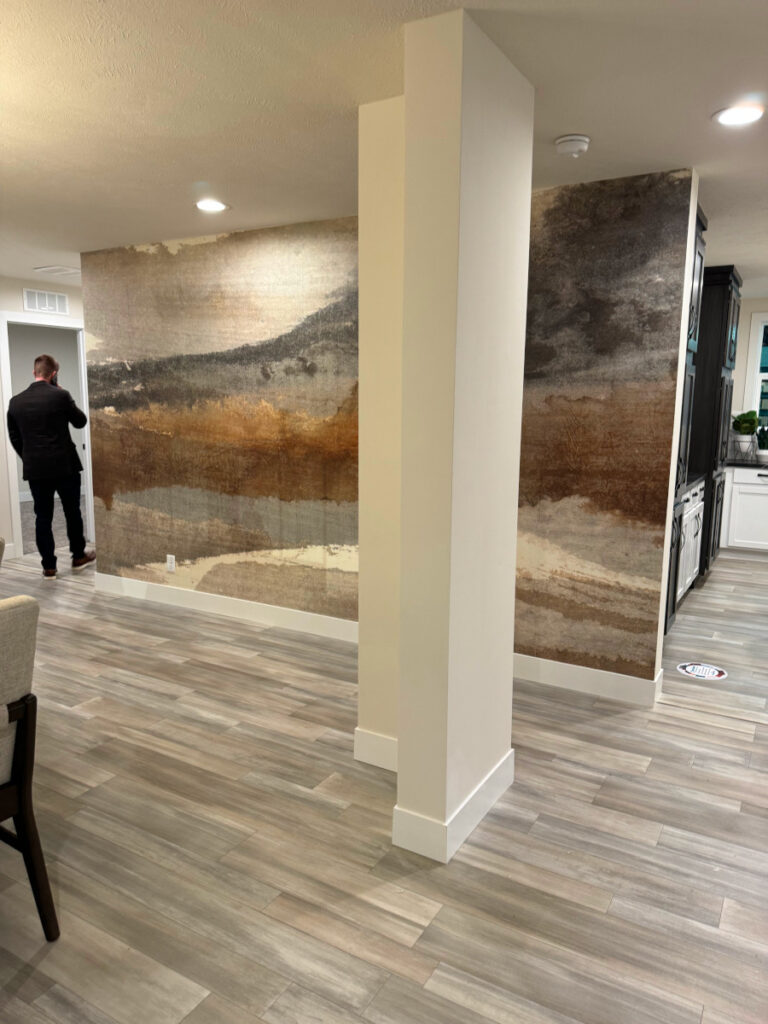
Clayton Stratford Place
This dramatic wall in this model truly made a statement. Be ready to see more bold statements like this throughout 2025 and 2026.
More companies in our industry are listening to consumers and offering higher end options like this Samsung refrigerator.
Franklin Homes
An LG induction cooktop that is complemented by a plumbed pot filler made this kitchen a cooks dream.
This European-styled bath area tin this Franklin home stole the show. With multiple shower heads, and architectural free-standing tub, and room to dry off, this bath might not be for everyone, but it sure was a memory point for this builder and the people touring the home.
The 2025 Louisville Manufactured Housing Show has announced its expanded lineup of educational seminars for the three-day event taking place Jan. 15-17, 2025 at the Kentucky Exposition Center in Louisville.
This year’s Louisville Show will offer an “All-Star” lineup of speakers, consultants, and educators who will share valuable information on how to help grow your business.
Now in its 64th year, the show hosted by the Midwest Manufactured Housing Federation is the precursor to the spring and summer selling seasons. The show once again will bring together thousands of manufactured housing professionals under one roof and offer them the chance to connect with top industry leaders, gain valuable insights, and see the future of manufactured housing up close.
“We’ve made the 2025 Louisville Show all about bringing our attendees MORE, and that includes our educational sessions,” MMHF President Eric Oaks said. “We’ve expanded the educational programming with more content than ever to help you capitalize on the opportunities for manufactured housing in 2025 and beyond.”
Read below for the full schedule of educational seminars:
Wednesday, Jan. 15
8:00 a.m. – State of the Industry: Our Business in 2025 and Beyond
9:00 a.m. – The Road Ahead: Outlook on the Economy and Its Impact on Manufactured Housing
10:00 a.m. – Perspectives on Financing: Chattel Lending
11:00 a.m. – Elevating the Customer from King to Emperor
Thursday, Jan. 16
8:00 a.m. – Expanding Attainable Homeownership Through National Advocacy
9:00 a.m. – The Shape of Housing to Come: How Multi-Residential Homes, ADUs, and Expansion of the HUD Code Is Opening New Doors for Manufactured Housing
10:00 a.m. – Perspectives on Financing: Land/Home Lending
11:00 a.m. – Innovation is Building: Developing with Manufactured Homes
Friday, Jan. 17
8:00 a.m. – Community Management Insights: How to Increase Results, Reduce Expenses, and Get More Done in Less Time
9:00 a.m. – Building Smart, Building Better: A Discussion of Emerging Trends with the Nation’s Leading Manufactured Home Builders
10:00 a.m. – Designed to Sell: Discover the Latest Home Design Influences and Consumer Preferences
11:00 a.m. – Mastering Sales and Marketing: Tips and Tactics to Automate Your Marketing, Get More Leads, and Close More Business
Speakers for each individual seminar, along with seminar descriptions will be made available at TheLouisvilleShow.com/Seminars at a later date.
“We made sure to pack this year’s seminar lineup with the topics our attendees care about most, from the latest in home design trends, to the market’s economic outlook, to sales and marketing,” MHVillage Co-President and show manager Darren Krolewski said.
The Louisville Show is the premier event of its kind in the Midwest where industry professionals can view dozens of the latest model homes from the top manufacturers in the industry. Attendees at the Louisville Show can tour more factory-built homes than any other indoor event in the nation. And, they can discover the newest products and services from over 100 exhibitors and gain the insights they need to stay ahead of the competition.
Oct. 6-8 at Avalon Hotel in Alpharetta, Ga.
Manufactured housing community owners have never had more information available to them — or more decisions to...
The Midwest Manufactured Housing Federation has announced that attendee registration is now open for the 2027 Louisville Manufactured Housing Show, returning to the Kentucky...
HUD’s Innovative Housing Showcase, MHI’s Homes on the Hill and Annual Meeting Begin Sept. 22
Two of the country’s largest builders of manufactured homes will...