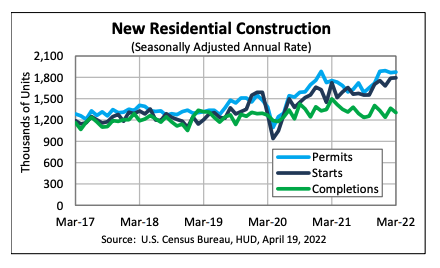
Privately‐owned housing units authorized by building permits in March were at a seasonally adjusted annual rate of 1.873 million. This is 0.4 percent above the revised February rate of 1.865 million and is 6.7 percent above the March 2021 rate of 1.755 million. Single‐family authorizations in March were at a rate of 1.147 million, 4.8 percent below the revised February figure of 1.205 million. Authorizations of units in buildings with five units or more were at a rate of 672,000 in March.
Housing Starts
Privately‐owned housing starts in March were at a seasonally adjusted annual rate of 1.793 million, 0.3 percent above the revised February estimate of 1.788 million is 3.9 percent above the March 2021 rate of 1.725 million.
Single‐family housing starts in March were at a rate of 1.200 million, 1.7 percent below the revised February figure of 1.221 million. The March rate for units in buildings with five units or more was 574,000.
Housing Completions
Privately‐owned housing completions in March were at a seasonally adjusted annual rate of 1.303 million, 4.5 percent below the revised February estimate of 1.365 million is 13 percent below the March 2021 rate of 1.497 million. Single‐family housing completions in March were at a rate of 1 million, 6.4 percent below the revised February rate of 1.068 million. The March rate for units in buildings with five units or more was 292,000.
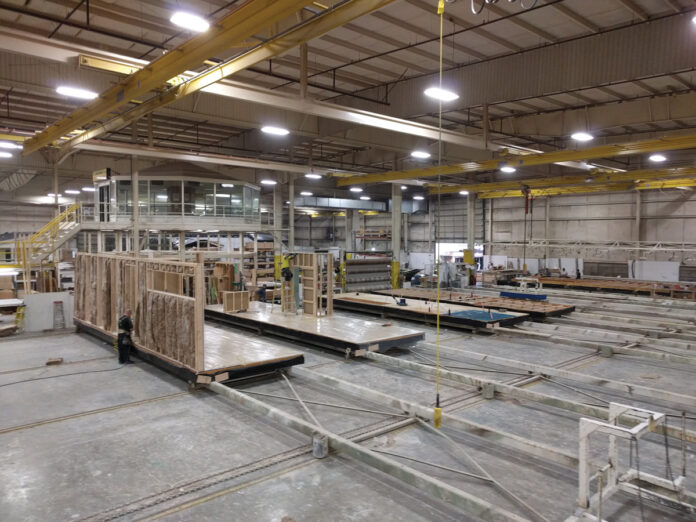
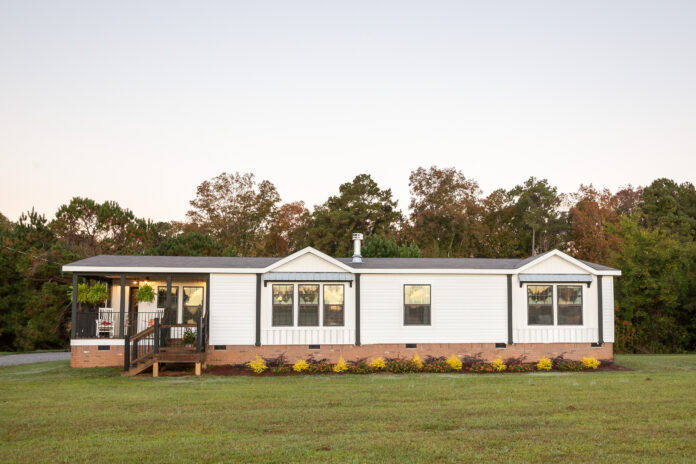
A Cavco Industries home building facility. Photo courtesy of Cavco.
A 37-minute drive on I-74 in North Carolina near the South Carolina line connects a pair of home building facilities recently acquired by two of the largest manufactured home builders in the country.
To the south, in Robeson County, Champion Homes has confirmed it will begin operating out of a former Fleetwood Homes facility with plans for more than $13 million in upgrades.
The two companies are leaders in manufactured housing, each with a large and growing presence across the United States.
“In Pembroke we found a site that met our facility needs, had access to strong workforce assets and was capable of serving a growing regional housing market. We are appreciative of North Carolina’s leaders who were willing to work closely with Champion to address our objectives for this expansion,” Champion Homes Executive Vice President of Sales and Business Development Wade Lyall was quoted as saying in The Robesonian, a local news outlet.
Champion Home Builders is a division of Skyline Champion Corporation, the largest publicly traded manufactured home and modular builder in North America with approximately 8,100 people, nearly 70 years of homebuilding experience, and 40 manufacturing facilities.
“On behalf of the Robeson County Board of Commissioners, it gives me great pleasure to welcome Champion Home as an industrial partner to Robeson County,” Wixie Stephen, chairperson of the Robeson County Board of Commissioners, state for the paper. “This investment will provide a brighter future for citizens of Robeson County in both tax base and jobs.”
Cavco Industries Converts Factory
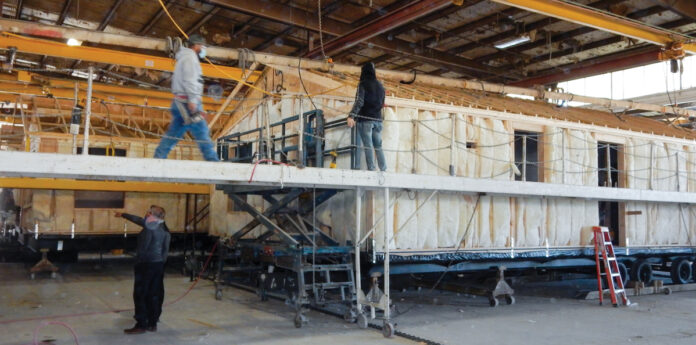
Cavco President and CEO Bill Boor said the seller, Volumetric Building Companies, currently produces multi-family residential and commercial projects in the facility but intends to move that production closer to their markets in the Northeast. VBC’s work will wind down during the summer, at which time Cavco will begin re-tooling and renovations to allow its homebuilding operation on the site to begin before the end of the year.
“Demand for our homes, and affordable homes in general, continues to be very strong. With the addition of this new facility, which will bring our total number of homebuilding production lines to 27, we are expanding access to much-needed affordable housing solutions and strengthening our position in the region,” Boor said. “This is a great opportunity to quickly bring new capacity online with an in-place and capable workforce.”
Cavco is headquartered in Phoenix and designs and produces factory-built housing products primarily distributed through a network of independent and company-owned retailers. Its brands include Cavco, Fleetwood, Palm Harbor, Nationwide, Fairmont, Friendship, Chariot Eagle, Destiny, Commodore, Colony, Pennwest, R-Anell, Manorwood, and MidCountry homes.
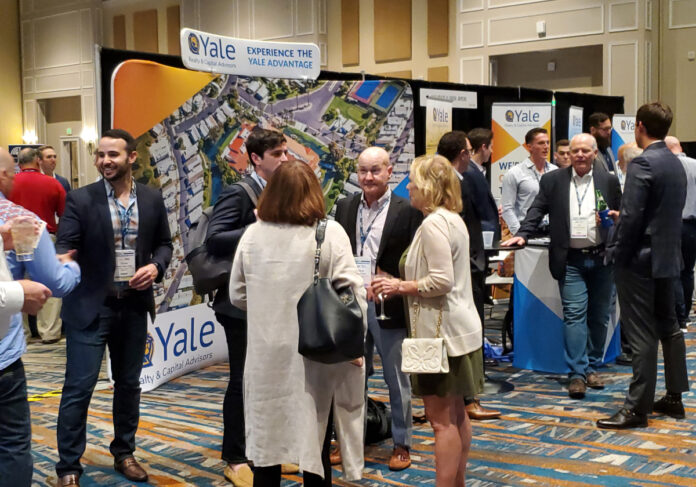
Yale Realty & Capital Advisors was awarded MHI's Excellence in Manufactured Housing for Community Lender/Broker of the Year in 2022.
Industry Advocate Names Annual Honorees of Excellence in Manufactured Housing Awards
MHI’s 2022 Congress and Expo in Orlando, in addition to staging homes, hosting exhibitors, and providing industry education also delved out the annual Excellence in Manufactured Housing Awards to top performers in six categories. The awards honor manufactured housing professionals for leadership and dedication in all areas of the industry. The MHI awards are chosen by peers and an independent panel of experts.
Excellence in Manufacturing
Manufacturer of the Year — Three Plants or More: Clayton Homebuilding Group
“We are honored to receive the Manufacturer of the Year award from the Manufactured Housing Institute,” Keith Holdbrooks, president of Clayton Home Building Group, said. “We truly believe in our purpose of opening doors to a better life and strive to live out this purpose every day through focusing on team member and customer experience, giving back to the communities in which we serve and helping the environment thrive for future generations. Ultimately, these actions lead to a beautiful, high-quality home for our homeowners.”
In 2021, the company released a series of videos called Behind the Build to highlight sustainability efforts in the build process. Additionally, the company published its first lifestyle magazine, Opening Doors, designed to celebrate team member and customer stories while connecting the reader to the builder.
Manufacturer of the Year — Two Plants or Less: Adventure Homes
Leadership in Sustainability: Clayton Homebuilding Group
Excellence in Design
Manufactured Home Design — Single Section: Champion Home Builders
Manufactured Home Design — Multi Section: Champion Home Builders
Modular Housing Design — Single Section: Champion Home Builders
The 2022 honors marked the third consecutive year Champion has won an “Excellence” award from MHI.
“One of our core operating principles is to take pride in our innovation and craftsmanship, and our team lives this daily. Regardless of the size or price point of the home, we continue to create thoughtful designs with the floor plans and amenities that homebuyers are looking for,” Mark Yost, president and CEO of Skyline Champion Corporation, said. “It is with great honor that we accept this recognition on behalf of our team. We are committed to providing customers with a range of affordable housing options and delivering excellence in housing design and construction.”
Excellence in Home Supply
Supplier of the Year: Blevins
Excellence in Lending
Lender of the Year — National: 21st Mortgage Corporation
Lender of the Year — Regional: Credit Human
Lender of the Year — Floorplan: 21st Mortgage Corporation
Excellence in Retail
Retail Sales Center of the Year — East: UMH Properties
2022 marks the consecutive years for UMH winning both the Operator of the Year award, and the Retail Sales Center of the Year Award. This year’s retail award was for UMH’s work at the Port Royal Sales Center in Belle Vernon, Pa.
“UMH is proud to receive these two awards. We have built an operating platform that delivers exceptional results year after year,” UMH Properties President and CEO Sam Landy said. “We continue to acquire, improve, and expand our communities which increases access to quality affordable housing in each market that we serve. I would like to thank our managers, maintenance staff, regional managers, vice presidents, directors and officers and all other staff members for our outstanding achievements.”
Retail Sales Center of the Year — West: Clayton Homes
Paradise, Calif., just 15 minutes away from the company’s Oroville sales center, was the location of devestating 2018 fires. Two team members lost their homes, and Paradise also is the hometown of Home Center Manager Dustin Youngdahl. The home center teamed up with two nonprofit organizations to provide homes at no cost to 43 residents who lost their homes. It was the combination of these factors that led to the facility winning the Retail Sales Center of the Year award in the west region.
“I expect our home center will continue to help rebuild Paradise for the next 20 years,” said Youngdahl.
Excellence in Community Operations
Community Operator of the Year: UMH Properties
Land-lease Community of the Year — East: Flagship Communities
Flagship won the award for its work on Waterford Pointe, a 317-home community in Evansville, Ind.
In 2005 an F-3 tornado ripped through Waterford Pointe. The tornado struck during the night and by the time the sun rose, 150 of the community’s more than 300 homes were destroyed. Flagship acquired the community in 2016 to bring the community to life again.
“We are proud of our Waterford Pointe community and the effort that our staff has put into the turnaround that has occurred since the devastating tornado,” Flagship CEO Kurt Keeney said. “The satisfaction of our residents at Waterford along with our community partners have made it a wonderful place for families and seniors to reside. We thank MHI and its leaders for this great honor.”
Land-lease Community of the Year — West: Verde Ranch Estates
Community Lender/Broker of the Year: Yale Realty & Capital Advisors
Community Impact Project of the Year: Five Points Neighborhood Initiative by Cavco
MHInsider magazine posed the question to a diverse group of community owners and operators “What do you feel are the most important community amenities and why?” We received lists and detailed explanations on varying approaches to creating the best possible community assets for owners and residents from pet parks to RV parking and storage.
Stephanie Martin Lamberson is in sales and marketing strategy for Sun Communities, and previously worked for Carefree Communities and Cove Communities.
“From my experience dog parks are one of the more affordable and popular community amenities we can offer. The cost to us is generally fairly inexpensive, in some cases we purchase pet equipment other than doggy bag stations, but generally we can utilize a lot or area of the community that wouldn’t normally be viable for placing a home because of slope or lot size for instance,” Lamberson said. “We turn it into an amenity that most people in the community with a dog can utilize. I would say they are equally as popular in all age and 55+ properties.”
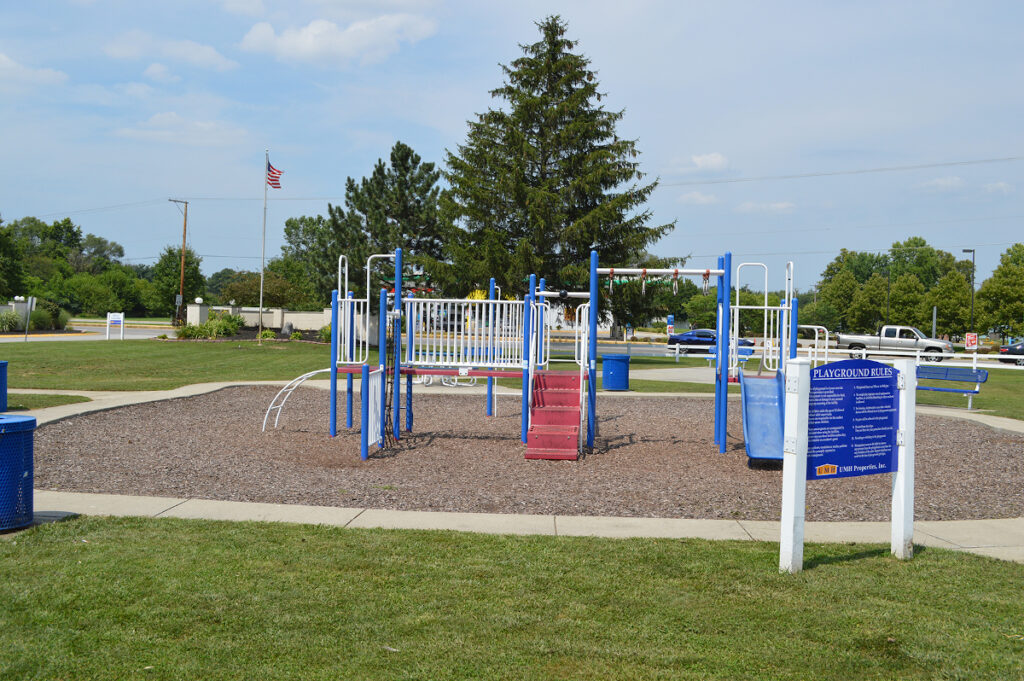
This UMH Properties community has a new, safe, and fun place for children to play. Photo courtesy of UMH Properties.
Residents Volunteers, Community Programs
Another very popular and viable option is to create activities programs, she said.
“In our 55+ communities, these often are volunteer-run, and some communities have a paid activities staff generally based on the size of the community,” Lamberson said. “But most programs are run by passionate volunteers who want to share their love for a card game, craft, social activity or sport with others.
“Having well-rounded activities programs at our 55+ properties is one of the best things we can offer our residents,” she said. “It keeps people active, and excited and gives them something to look forward to whether it is a daily or weekly activity.”
Other amenities Sun finds important to its communities include the community clubhouse, the fitness center, and the pool.
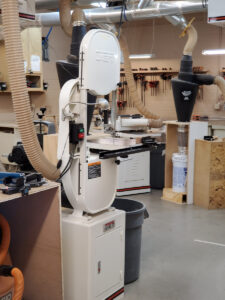
Voyager RV Resort in Tucson, Ariz., has myriad craft and activities rooms including a full woodshop.
“Those features are built when we remodel or develop a property from the ground up and are generally required to have in all of our new developments,” Lamberson said. “And recently we have added pickleball courts, when feasible, mostly in active adult 55+ properties.”
Steven Blank, of Blank Family Communities, pointed to the playground setup and a basketball court.
“It adds a large draw for families,” Blank said. “It’s cost-efficient and adds to the aesthetics of the community.
“Also, a clubhouse with space for parties legitimizes the community as much as a community pool, which can be heavy maintenance, but people like them,” he added.
Jennifer Ludovice, vice president of public relations for Equity LifeStyle Properties, said at ELS communities pickleball is a favorite amenity among residents, along with clubhouses as a gathering space for social activities, and swimming pools, fitness centers, and dog parks.
“Woodworking seems to be a growing interest in activities and crafting,” she said. “The opportunity for social interaction among residents is highly valued, whether in small crafting or activity groups or gatherings for community-wide events.”
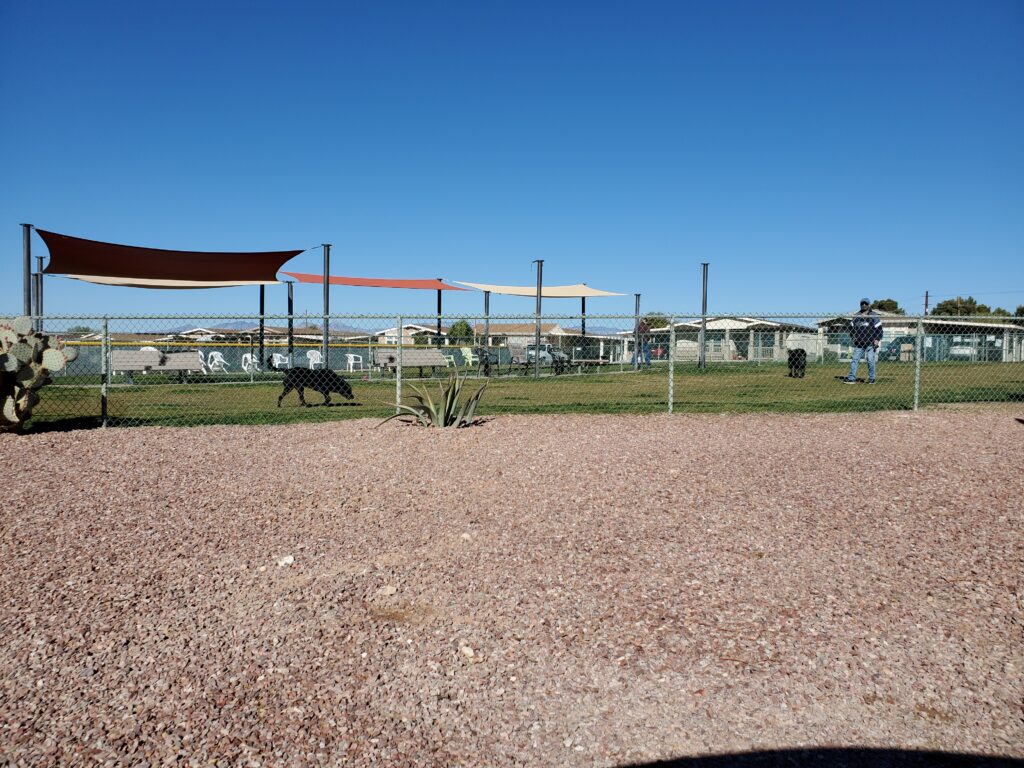
Dog parks in manufactured home communities have proven to be one of the most highly valued, and easy-to-operate resident amenities.
Look for High Value, Low Maintenance
Christine Lindsay is vice president of sales for UMH Properties.
“I think having amenities helps set our communities apart from others in the area,” Lindsay said. “It also increases the value of the home selling price and rent price. Many of our residents choose our communities because of the amenities that we offer. Some low maintenance amenities that are great to have include…”
Dog parks
Community bicycles
Basketball courts
Walking trails
Fitness center
Pavilion picnic/outdoor lounge area
Pickleball court
Shuffleboard court
Bocce Ball court
Business center
Playground
“Of course, swimming pools, hot tubs, and splash pads are a huge plus, but do require ongoing maintenance,” Lindsay said.
Her colleague, Ayal Dreifuss, is vice president of the rental division at UMH Properties. He said the value a resident may derive from any community amenity can be regarded in a pair of ways: For homeowners and for renters.
“Of course, it’s always nice to have a swimming pool and a clubhouse in your community, and as a selling point for homeowners it’s a great way to show investment in the community. For renters, it’s not needed as much,” Dreifuss said. “I think most renters are asking for a nice, house in a safe neighborhood at a price they can afford… amenities would just be something they appreciate, not something they would typically ask for.
“For a homeowner, I think all amenities, in general, are very important, even if you personally don’t use the swimming pool, for example, it’s always nice to look at and feels like it adds value to your personal investment,” he said.
Innovative Community Offerings
Vanessa Jasinski, of Yes Communities, concurred with many of her colleagues in community operations and sales throughout the industry, endorsing playgrounds and indoor and outdoor common spaces for all-ages communities, and the clubhouse pickleball courts and other activities at 55+ properties.
However, there was one notable exception in the Yes Communities approach.
“We are testing out a golf simulator at Holly Hills in Michigan,” Jaskinski said. “We have had requests and heard that it would be great to have one in the clubhouse, and have created a specific place for it that’s still under construction. It’s a perfect addition for cold weather climates.”
Maria Horton is the director of marketing and a regional manager for the Newport Pacific Family of Companies, which owns and helps operate manufactured home and RV communities.
“At some communities, like The Meadows in Irvine, there are craft rooms, a library, a machine shop, a styling salon, basically anything that piques or furthers the hobbies or interests of residents,” Horton said. “This is first-class, it’s done really well. It’s a non-profit client, Jamboree, and we manage the property for them. It’s a beautiful place, a beautiful clubhouse foyer, office for the staff, everything is very, very nice.”
But for every property decisions have to be made, she said, about what residents really want and what the market will support.
“For instance, tennis is still a thing, too, even with all the emphasis now on pickleball,” she added. “And of course everyone should have pet areas. Walking trails and paths are very important, too, and work well if you have room for them. And the need for high-quality access to the internet with both wireless, most importantly for work and school, but also there should be a place where residents who don’t’ have a computer can come sit and contact family, do research, or read the news.”
Congress and Expo Features ‘The Neighborhood’ of New Homes, Keynote Panel with Top Builders
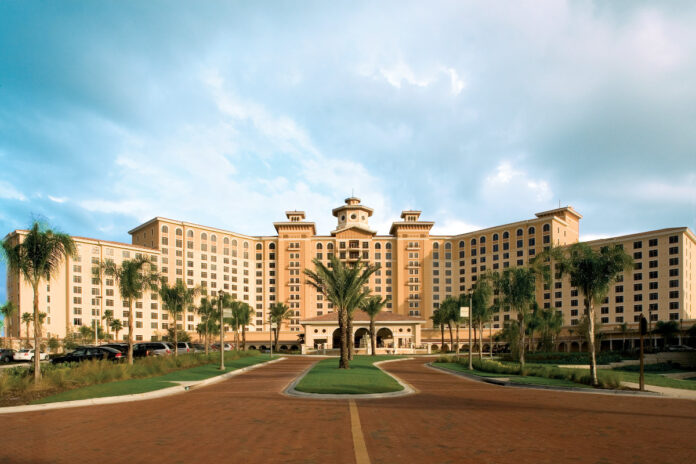
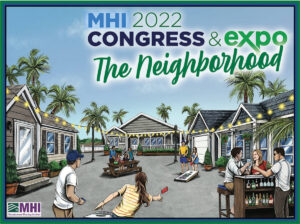
Manufactured housing professionals nationwide have waited more than two long years for an opportunity to see new homes on display, and the 2022 Congress and Expo in Orlando — April 11-13 at Rosen Shingle Creek resort — will provide that opportunity with “The Neighborhood”, sponsored by Clayton and Skyline Champion. The small but impressive collection of new homes will provide an outdoor gathering area where builders can show homes, answer questions, and learn what community owner/operators and retailers are looking to purchase.
“‘The Neighborhood’ is a new feature for the 2022 Congress & Expo,” MHI President Mark Bowersox said. “It’s a nicely designed outdoor area to feature staged manufactured homes, outdoor seating, games, and daily activities.
“Each day there will be special events for attendees in ‘The Neighborhood’, providing a fun and interactive way to catch-up with industry peers,” he said. “This is your go-to spot for a relaxing outdoor break during your busy meeting schedule.”
Riding the Wave
The manufactured housing industry had a stellar year in 2021, and consumer demand continues to surge. What does that mean for this year and the future of the industry? MHI has organized an opening keynote panel moderated by Craftsman Homes President and MHI Chairman Leo Poggione. He will be joined by leadership from the three top builders in the industry.
Bill Boor, president and CEO of Cavco Industries
Kevin Clayton, CEO of Clayton Homes
Mark Yost, CEO of Skyline Champion Corporation
Among the other industry areas to be discussed at Congress and Expo are manufactured housing appraisal, business technology, community development, community ownership, marketing and sales, financial services, legal Issues, professional and personal development, research trends, retail-specific, marketing and sales, and tax and finance. In addition, MHI will honor a collection of industry organizations with its Excellence in Manufactured Housing Awards.
April JLT Reports for mobile home rent comps in Alabama and Georgia have been published and are available purchase, including immediate download. Datacomp is the national leader in manufactured home and mobile home valuation and community data.
JLT Market Reports provide detailed research and information on communities in 186 housing markets throughout the United States. These include the latest rent trends and statistics, marketing programs, and a variety of other useful management insights.
Datacomp maintains and provides the JLT Market Reports and is the nation’s #1 provider of market data for the manufactured housing industry. JLT Market Reports are recognized as the industry standard for manufactured home community market analysis.
The April 2022 manufactured housing market data published in JLT Market Reports for Alabama and Georgia include information from four markets on 67 “All ages” and “55+” manufactured home communities.
Altogether, the reports from Alabama and Georgia manufactured home communities include data representations for 15,561 homesites.
Regional Trends in Manufactured Housing Community Rent, Occupancy
South region manufactured home communities show a year-over-year 4.5% increase in average adjusted rent.
South region manufactured home communities show a year-over-year 0.5% increase in occupancy rate.
What’s in JLT Market Reports?
Each JLT manufactured home community rent and occupancy report from Datacomp has detailed information about investment-grade communities in the major markets. The detailed information includes:
Number of homesites
Occupancy rates
Average community rents, and increases
Community amenities
Vacant lots
Repossessed and inventory homes, and much more
JLT Market Reports also include management insights that rank communities by the number of homesites, occupancy rates, and highest to lowest rents. Established reports show trends in each market with a comparison of April 2022 rents and occupancy rates to April 2021, as well as a historical recap of rents and occupancy from 1996 to the present date in most markets.
The April 2021 JLT Market Reports for Alabama and Georgia manufactured home communities are available for purchase and immediate download online at the Datacomp JLT Market Report website, or they may be ordered by phone in electronic or printed editions at (800) 588-5426.
Each fully updated report for mobile home communities is a comprehensive look at investment grade properties within a market, enabling owners and managers, lenders, appraisers, brokers, and other organizations to effectively benchmark those communities and make informed business decisions.
Tim Taylor has worked alongside the National Center for Construction Education and Research for more than a decade, but just at the beginning of this year, he came on in a newly formed position to conduct research and provide solutions to repair the vital craft and trade work that for decades has been ill-supported.
NCCER, based in Alachua, Fla., dates back to the early 1990s when leading contractors came together to standardize training and provide industry-recognized credentials. Over time, NCCER has expanded to become the industry’s source for training, assessments and certification. NCCER continues to evolve beyond the construction and maintenance industries both domestically and globally. Today, NCCER develops curricula for over 70 craft areas that have been used in all 50 states and in 20 countries.
Taylor is the organization’s new director of research, heading up the continued effort to build a safe, productive, and sustainable workforce of craft professionals as well as expanding its comprehensive workforce development system and curricula selection.
He had been at the University of Kentucky, in the civil engineering department, with a focus on the craftworker shortage in his research, innovating, providing solutions that other groups, like NCCER, would carry out. In 2018 he and NCCER published “Restoring the Dignity of Work”.
“We do some really cool things here,” Taylor said of NCCER. “I’ve worked with them for a long time and some of the programs are new even to me, it’s very exciting.”
Extended Research, Work in the Trades
Taylor said his mindset and that of the staff and partners at NCCER is to address the problems that affect as many people as possible, including the trade workers, their families, and the families they build for and help support.
“In my mind, the craft worker shortage is the number one challenge we have in construction,” Taylor said. “We look at this from the standpoint of how to study the trades, and we want to study the questions that construction professionals care about.”
Revisiting Questions of the Past
One solution to the craft shortage that has been put forward in the past is the idea of multi-skilling. Multi-skilling is when craft professionals gain training and experience in multiple trades. In a recent research project, the group re-asked a 20-year old question around the reasons for multiskilling and found that the answers had changed. In the late 1990s tradespeople said they were getting added training, additional certificates, or taking advantages of other career development opportunities because they might be able to earn additional hours, get paid overtime, or would be kept on a job site longer through the phasing of a project.
In 2022, “I don’t want to move,” was the answer, Taylor said.
NCCER found that with many households enjoying a dual income, it made it more difficult to pull up and leave if a job moved from one part of the state to another, or to a different state altogether. A second certification, another skill, might mean the difference between a contract job and full-time employment, or extended full-time employment.
“They need to stay on in a geographic region,” Taylor said.
Another observation NCCER plans to address is the demographics of its entry-level workers versus the typical age of a college student. The average age of a college student is 20, and the average age of a construction trades apprentice is 28.
“There is something happening in that time in between,” Taylor said. “We’re missing 8-10 years that are important in getting tradespeople moving into and up in the industry.” More information on NCCER and its research efforts can be found at www.nccer.org. NCCER’s plan for restoring the craft workforce is available at https://www.nccer.org/news-research/research/rt335
MHInsider is a product of MHVillage and is the source for all of your manufactured housing news. Check back regularly for updates on industry trends, events, and more!
A Quarterly Overview of Manufactured Housing Industry Real Estate Investment Trusts
The research team at Hoya Capital Real Estate is excited to continue our quarterly column published in partnership with MHInsider to provide insight and commentary on publicly-traded manufactured housing stocks. Every quarter, we’ll publish an update to discuss the stock performance, earnings results, and major news and events reported by manufactured housing real estate investment trusts, or MH REITs.
Overview of MH REITs
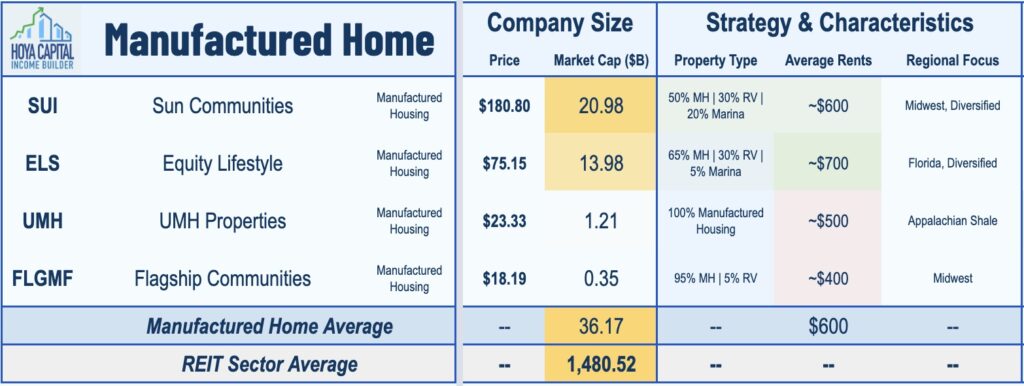
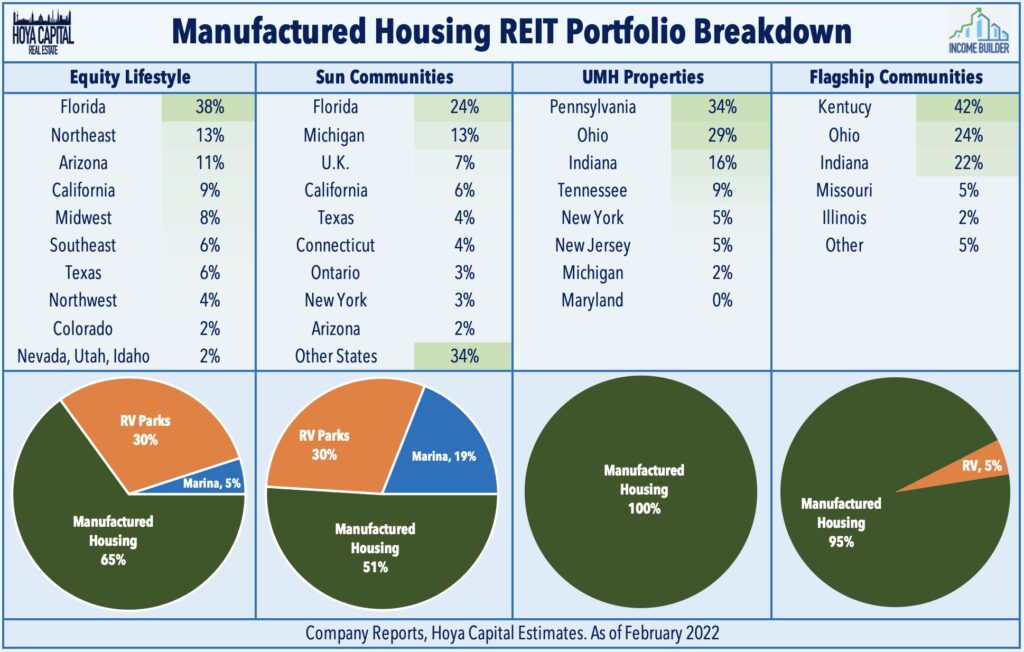
There are three U.S. exchange-listed Manufactured Housing REITs that collectively account for roughly $35 billion in market value: Equity LifeStyle (ELS), Sun Communities (SUI), UMH Properties (UMH). Additionally, newly-listed Flagship Communities (FLGMP) trades on the Toronto Stock exchange.
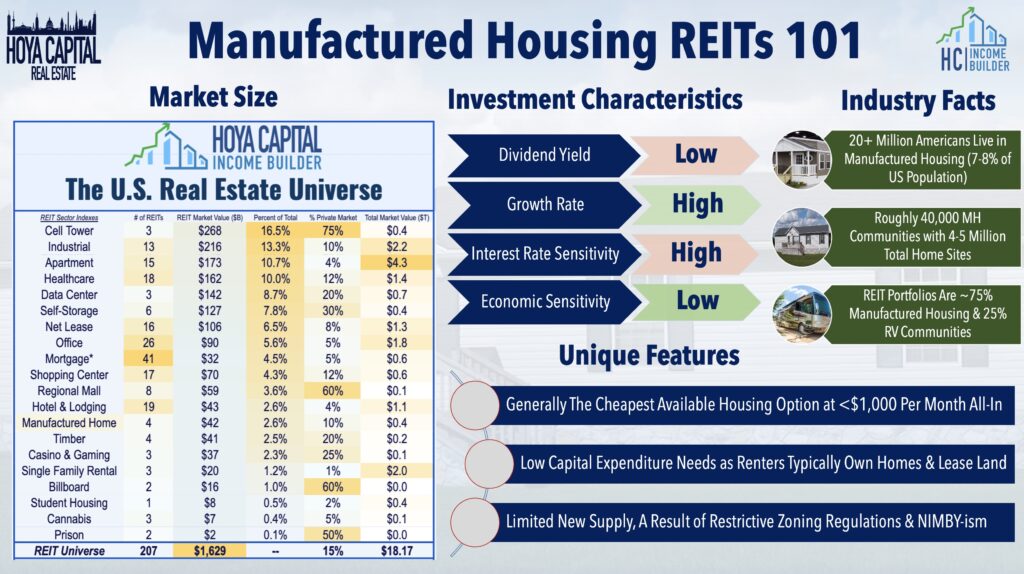
Manufactured Housing REITs collectively own roughly 350,000 manufactured housing and RV sites across the United States with a portfolio skewed toward higher-end communities with a more “retiree-oriented” demographic than the all-ages community.
Through a series of acquisitions, Equity LifeStyle and Sun Communities have recently expanded into boat marinas as well while the smaller UMH Properties and newly-listed Flagship Communities continue to focus primarily on traditional manufactured housing communities.
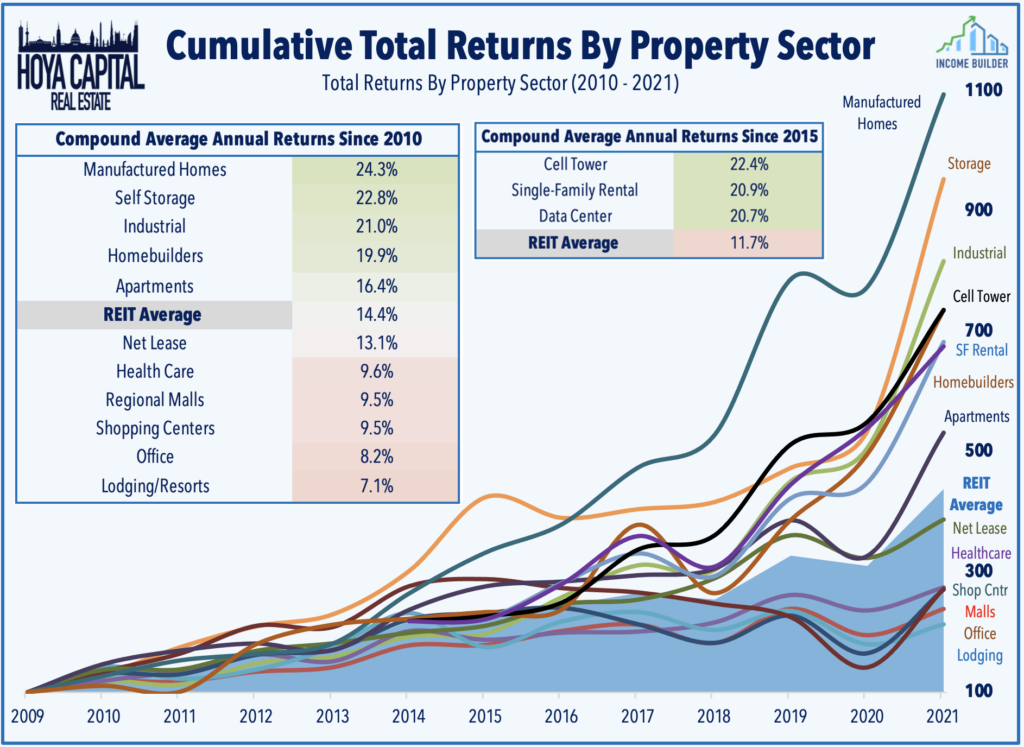
Manufactured housing REITs have emerged over the past decade from relative obscurity into several of the largest publicly-traded owners of real estate in the world. Beneficiaries of the lingering housing shortage across the United States resulting from a decade of underbuilding, manufactured housing REITs have been the single-best performing REIT sector since the start of 2010, delivering an incredible 24.3% annual compound total returns from 2010 through 2021.
With total returns of 42.0%, Manufactured housing REITs outperformed the broad-based Equity REIT Index for a remarkable ninth-straight year in 2021, the longest streak of outperformance for any property sector since the dawn of the “Modern REIT Era” in the early 1990s.
From an investment perspective, despite their high growth rates, MH REITs are a traditionally defensive and countercyclical sector due to the “sticky” nature of MH demand and cash flows. While these REITs are not known for their high dividend yields, these REITs have delivered some of the strongest rates of dividend growth of any REIT sector.
Recent MH REIT Fundamental Performance
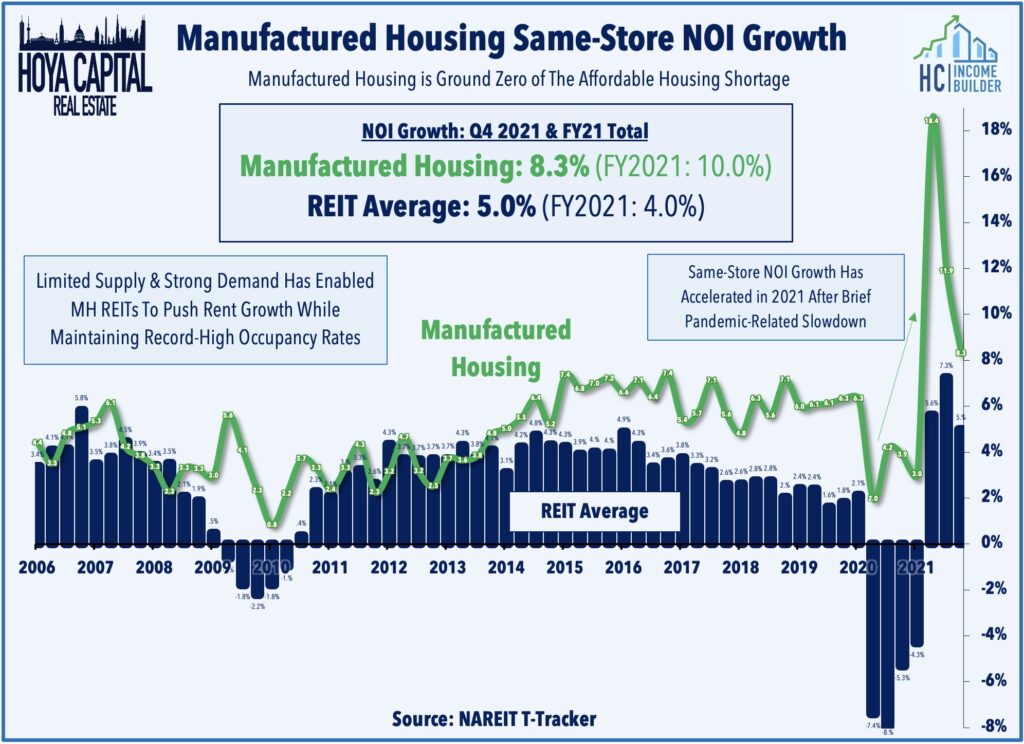
Symptomatic of the lingering housing shortage in the United States, rents are soaring at the fastest pace on record in essentially every segment of the residential rental market across the country. Interestingly, manufactured housing renters have so far escaped the double-digit rates of rent growth seen in apartment and single-family rental markets, as MH REITs raised rents by just 3.9%, on average, in 2021 which was only a bit higher than the average annual increase of 3.5% over the past decade.
Manufactured Housing REITs still managed to deliver their strongest year on record across nearly all critical earnings metrics. Driven by strong performance in their RV segment and occupancy increase in their core manufactured housing parks, the three major MH REITs – ELS, SUI, and UMH – delivered same-store NOI growth of 10% for full-year 2021 and these REITs are expecting NOI growth of another 8% in 2022 at the midpoint of their initial financial outlook.
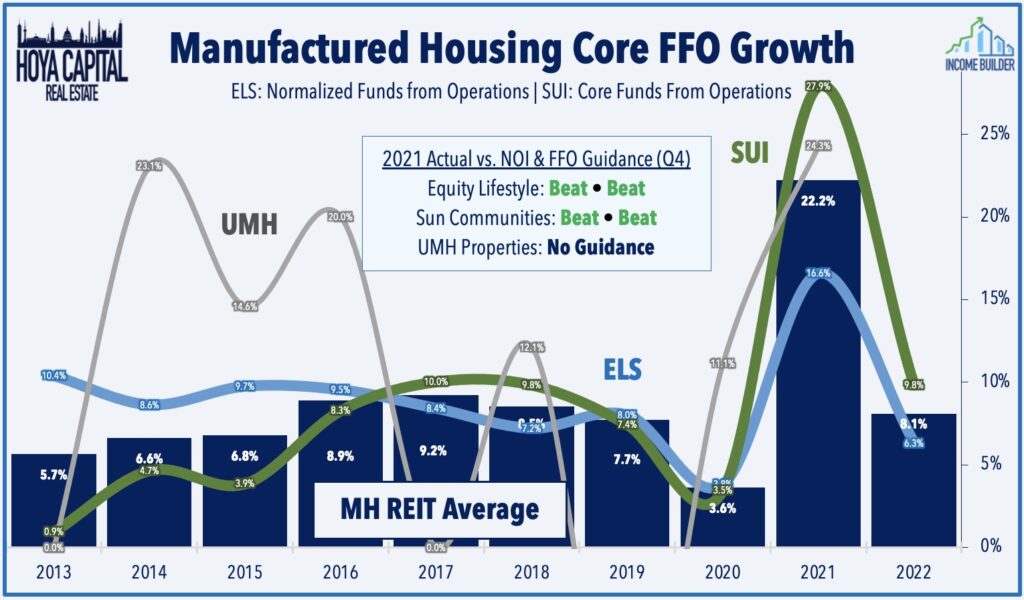
Growth in funds from operations (“FFO”) – the earnings per share “equivalent” for REITs – is driven by the combination of same-store “organic” growth and by external growth through acquisitions and new development. Manufactured housing REITs delivered incredible FFO growth of over 22% in 2021, which was significantly above their earlier estimates and was the strongest year of FFO growth on record for all three of these REITs. The initial outlook for 2022 calls for average FFO growth of 8.1%, but these REITs have historically provided conservative estimates in their initial outlook and raised their growth targets throughout the year, so another year of double-digit earnings growth is certainly achievable.
Utilizing a strong cost of equity capital, these REITs have continued to grow externally by adding units to existing sites and by growing via acquisitions and site expansions. MH REITs acquired $2.15 billion worth of properties in 2021 – the largest full-year total on record. The most significant deal in 2021 was Sun Communities’ $1.3B purchase of Park Holidays, which is the second largest owner and operator of holiday communities in the UK, with 40 owned and operated communities and an additional two managed communities. The acquisition, which is expected to be accretive to 2022 Core FFO per share, will represent approximately 7% of the Company’s properties and 8% of its total real estate asset value.
Manufactured Housing Industry Data Points
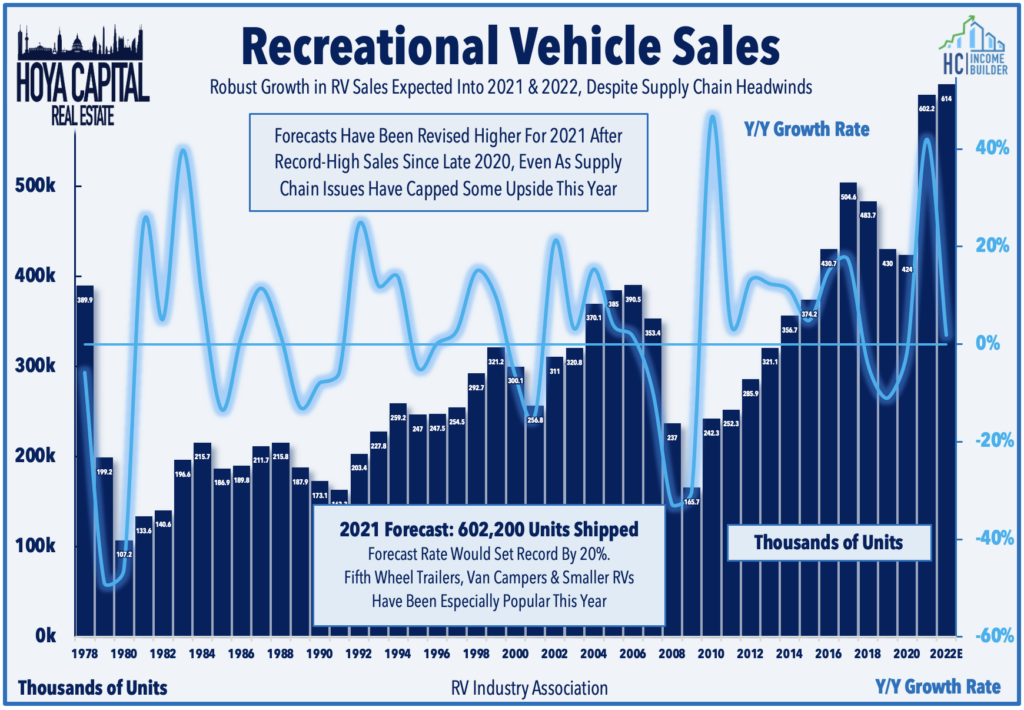
MH REITs’ amplified focus on analogous asset classes – RV parks and marinas – was perfectly-timed, providing an added external growth tailwind as the “Work-From-Anywhere” era has fueled soaring RV, boat, and vacation home sales. The RV Industry Association (“RVIA”) reported in January that despite supply chain issues and labor shortages, 2021 was the best year on record for shipments of recreational vehicles with shipments of 600,240 RVs last year — beating 2017’s record by 19 percent. The RVIA sees the momentum continuing into 2022, predicting another record year with 614,000 shipments anticipated by the end of the year.
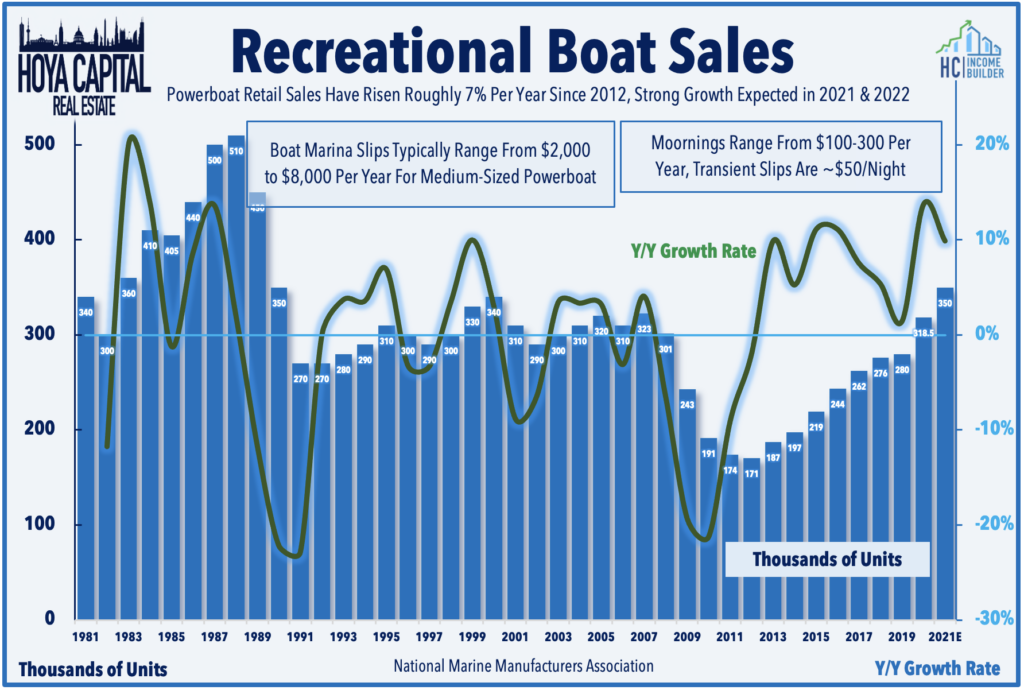
The National Marine Manufacturers Association (“NMMA”), meanwhile, reported last month that following record sales in 2020, powerboat sales exceeded 300,000 units for only the second time in 15 years. As of early January, the NMMA is projecting new boat sales to exceed the 300,000 unit mark for a third straight year and surpass 2021 totals by as much as 3%. Sun Communities has been the most active of the four MH REITs in growing their marina business, which now accounts for nearly 20% of its annual revenues. Marinas offer substantial operating parallels to the RV business and SUI is now the largest owner of marina slips in the United States, followed closely behind by Equity LifeStyle.
MH REITs Key Takeaways
While the share prices of MH REITs have uncharacteristically lagged through the first two months of 2022 as the sector has been pressured by concerns over rising rates, inflation, a broader rotation from growth into value, the long-term fundamental outlook for the sector remains highly promising given the lingering undersupply of housing units across the United States and these REITs’ position as leading providers of affordable housing.
Consistent with the trends across the residential REIT sectors over the past twelve months MH REITs delivered their strongest year on record in 2021 across essentially every critical earnings metric, and the momentum is expected to continue into 2022. Low supply and strong demand have driven stellar fundamental performance for MH REITs over the past half-decade, and shareholders have been rewarded with a record-setting nine consecutive years of outperformance relative to the REIT sector average.
MH REITs REPORT Terms Defined
FFO (Funds From Operations): The most commonly accepted and reported measure of REIT operating performance. Equal to a REIT’s net income, excluding gains or losses from sales of property and adding back real estate depreciation.
AFFO (Adjusted Funds From Operations): A non-standardized measurement of recurring/normalized FFO after deducting capital improvement funding and adjusting for “straight line” rents.
NOI (Net Operating Income): Typically reported on a “same-store” comparable basis, NOI is a calculation used to analyze the property-level profitability of real estate portfolios. NOI equals all revenue from the property, minus all reasonably necessary operating expenses.
Hoya Capital Disclosures
I am/we are long ELS and SUI. I am not receiving compensation for it. It is not possible to invest directly in an index. Index performance cited in this commentary does not reflect the performance of any fund or other account managed or serviced by Hoya Capital Real Estate. Nothing on this site nor any published commentary by Hoya Capital is intended to be investment, tax, or legal advice or an offer to buy or sell securities. Information presented is believed to be factual and up-to-date, but we do not guarantee its accuracy and should not be considered a complete discussion of all factors and risks. A complete discussion of important disclosures is available on our website www.HoyaCapital.com.
Tammac, a Wayne, Pa.-based business, has made a strong re-entry into manufactured housing lending, with a goal of providing $700 million in financing over the next three years.
“We have a long history and are ready to offer a full-spectrum offering to the manufactured housing community and retailer networks,” Tammac Senior Vice President and National Sales Manager George Ewing said. “We are presently active in 17 states including Texas and Florida and we will be expanding into South and west of the Mississippi this year. We will then be targeting expansion in the Midwest and on the west coast.
“There is a need in every community for affordable housing and we are committed to helping families own a home of their own,” Ewing said of the estimated three-million-unit home shortage in the country.
New Investor Piques Industry Interest
Tammac has been in business for 46 years and returns after slowing originations due to the Great Recession.
“When the credit crisis hit, the decision was made to pause lending and focus on servicing the existing portfolio of loans. A private equity group based in Philadelphia, Pa., purchased the company in late 2018, re-energizing Tammac’s origination and growth strategy” Ewing said.
Tammac Vice President of Lending Operations Christine Bowers has more than 25 years of experience in underwriting.
“We want to see every application from any individual who has the intent and ability to buy a home,” Bowers said. “We’re looking to do as much for the buyer as possible and help them attain their goal of affordable homeownership.”
Responding to the Market
Tammac lends to both individuals and manufactured housing community investors. They consider the stability, ability, collateral, and history of every lending opportunity they are presented.
“We are flexible and nimble, and can quickly respond to market changes and needs,” Bowers said. “Our approach can be seen as aggressive, but we describe it as logically aggressive. We want to make an impact in the marketplace to help homebuyers.”
Opening New Headquarters
A new headquarters recently opened in Wayne, Pa., a jaunt down the Pennsylvania turnpike from Tammac’s legacy office in Wilkes-Barre.
“Proximity to a national transportation hub and access to the talent to augment today’s team, will bring new vibrance to our traditional customer-centric philosophy. We’re in the midst of really shaking things up and innovating the industry. We will now have the right facilities to buttress that goal,” Ewing said.
“Even with our 46 years of experience, we consider Tammac a ‘start-up” because of all of the advances in our vision and technology,” Ewing said. “Our new headquarters embodies this with its “open” office concept” and the space is technologically-enabled and truly state of the art”.
The company seeks to create an employee-centric culture, part of which is providing perks such as a popcorn machine, snow cone maker, dartboard, cornhole toss, and complimentary snacks and beverages, available for all team members.
Tammac’s mantra is “All in All the Time”, which underscores the importance of commitment and dedication to their internal and external customers.
“We want to ensure that customer success in achieving affordable homeownership is maximized, while we all have lots of fun making it happen. We want fun, excitement, and pride to be palpable across the Tammac work environment,” Ewing said.
Clayton Home Centers in the South provide a multi-state system of retail locations for a variety of homebuyer preferences and business throughout the Pandemic continues to grow in both the land and community segments.
Eric Boehm, a regional vice president for Clayton Homes, oversees 29 home centers throughout Alabama, Mississippi, and the panhandle of Florida.
“You have a lot of people who are looking to rural settings,” Boehm said. “There are a lot of places to go in Alabama, and Mississippi, especially, and still in the panhandle as well.
“It all comes together and is a very viable option,” he said of the diverse offerings manufactured housing provides.
“Our region’s community business has started to grow slightly, too,” the Clayton exec said. “Pools, community centers, paved streets, people are looking for that more often.”
The business region-wide settles into thirds, land-home, land-in-lieu, and chattel. The region has also seen an increase in all-cash purchases.
Boehm concedes that there are pain points.
“We’ve all waited on refrigerators and stoves, waited on windows, but you roll with that,” Boehm said. “The morale is great; the culture is strong. We have fantastic employees who can really get things done.
“Customers have been really good too,” he said. “They may love a smooth top stove or a certain range hood, and they’ll take a coil top or a similar hood if you provide the overall experience that they want. Each time they leave happy, we make sure that happens.”
The living room in Clayton’s Hampton Bay model. All photos courtesy of Clayton Homes.
Homebuyers Seek Open Space, High-End Finishes
When it comes to floorplans, buyers are looking for a home that flows and fits the needs of their families.
“We are selling a lot of open floorplans with the kids’ rooms on one end of the home and a primary suite tucked away on the other side of the home,” Boehm said. “These are floorplans that are great for gatherings, and each one of our homes has an element of customization. The list grows as you get into the upper-end homes.”
Most customers are looking for hardwood or linoleum flooring throughout the home, with a small segment of buyers asking to upgrade to carpet in the bedroom.
Sourcing Homes in Alabama
Nearly everything the Clayton Home Centers sell in the three states comes from homebuilding facilities in north Alabama. They sell Southern Homes from Russellville, Tru from Hackleburg and Lynn, Southern Estates, Southern Energy from Addison, Buccaneer from Hamilton and Epic from Addison.
“A lot of the people who are buying homes from us live out in the country, they have dogs, many people hunt and fish, they play sports,” he said. “Hard flooring is a lot easier to maintain.”
DuraCraft cabinets come in each Clayton home and upgrades within that line are among the other primary options customers enjoy.
“DuraCraft has the look and feel of a very high-end cabinet,” he said. “But it’s very light, very durable, and will last for years and years.
“If I’m the customer, I want to know if I’m buying a home that it’s very energy efficient, too,” he added. “A lot of our customers were asking for additional energy features like digital thermostats, that can be controlled from anywhere. A lot of people were asking for energy-efficient homes, and it was loud and clear.”
All Clayton Built® homes come with an ecobee smart thermostat. Additionally, Clayton Homes® in many markets offers an EnergySmart® Home package, which includes a variety of energy-efficient upgrades such as upgraded insulation, low-E windows and a dual element water heater.
“They are very efficient, and it’s very residential,” Boehm said. “Our customers come in and they really like what they see, it flows beautifully. You can be in the kitchen at the stove or sink and still be able to watch TV and keep an eye on the kids.”
The Emma Jean has a large kitchen with a center island and plenty of individualized options.
Home Choices and Settings
The mix of homes sales is nearly an even mix between single-section and multi-section, with multi-section homes tipping the scales just slightly. Boehm’s retail centers sell some modular homes, but it’s predominantly HUD code.
“It’s a very similar demographic from state to state in the region and down into the panhandle of Florida,” Boehm said. “There are some cost differences when you get down into the coastal regions for setup largely because of wind zone requirements.”
However, despite added costs for wind zone regulations, rising material costs, or the added time it may take to get a manufactured home, homebuyers in the region are undeterred, largely due to the increasing demand for affordable housing.
“The time frames are reasonable because our building group has worked really hard to fill on allocation what we need,” Boehm said.
“There are some different factors, run rates, but we’ve been able to keep our customers supplied with a product, keep them happy, and keep the homes moving,” he said. “This is one of the most challenging times I’ve been through, don’t get me wrong. But the problem is one we can deal with when there is huge demand, and you know you can meet it. That’s better than the opposite problem.”
The Steady Growth of CrossMod
CrossMod, the HUD code home that is made for R1 residential developments and supported by lending programs offered through Fannie Mae and Freddie Mac, have been slow to develop, but the 29 Clayton home centers in the South, and throughout the country, remain committed to it.
“It’s taken some time to build up that business, but it’s taking shape,” Boehm said. “There is a ton of interest and it evolves as we learn how to set the home and build the on-site additions.
Oct. 6-8 at Avalon Hotel in Alpharetta, Ga.
Manufactured housing community owners have never had more information available to them — or more decisions to...
The Midwest Manufactured Housing Federation has announced that attendee registration is now open for the 2027 Louisville Manufactured Housing Show, returning to the Kentucky...
HUD’s Innovative Housing Showcase, MHI’s Homes on the Hill and Annual Meeting Begin Sept. 22
Two of the country’s largest builders of manufactured homes will...