The Manufactured Home Sales Process with Ken Corbin

A New Attitude Selling Consumers on Community, Lifestyle
What a difference a year makes! When we were getting for Louisville and an exciting 2020, I don’t think any of us predicted that the world would change as much as it has. With 2020 now in our rearview mirror, what do we need to consider with our factory-built homes and communities to stay relevant with the new buyers we are beginning to see?
Factory-built housing has often been considered the housing of the future, and it is looking like the future may be here today. More than ever, the stigmas that have followed communities and factory-built housing are melting away, and consumers are giving us a fresh look with open minds. It’s now up to us to show them why we should be their first choice for a new home and why community living is now more relevant than ever.
‘we need to think like our buyers and remember what is important to them…’
Marketing and retaining new buyers takes a fresh approach. Hanging out a sign doesn’t attract buyers — they are driving as little as possible. And we don’t want people just popping into our sales offices — we need appointments to create a safe selling and leasing experience for all of us.
Reconsider Your Community Services, Activities
How many of you have thought about the type of wifi and internet access that you offer? Every day buyers are “cutting the cord” with their traditional phone and cable companies. Instead, they have a mobile phone as their primary phone and switch to streaming internet-based entertainment like Netflix and YouTubeTV. Perhaps 2021 will be a year where buyers and renters are more concerned about what your internet and mobile access is and are more than willing to pay for it. With many schools offering virtual learning, it can be a strain on an older internet service when three kids are learning on different computers in the same home at the same time.
Rethinking the services that your community offers should start with upgrading the internet that your community offers so you can compete with apartment communities that often offer basic service as part of their rent. One of the bonuses is that if you can get your homeowners to switch from dish-type services to streaming, you can also get rid of all of those unsightly receivers that so many people have on the outside of their homes.
ZOOM and other services like that are here to stay at least for a while. Having ZOOM available for your residents makes it possible to offer activities that they can engage in from the safety of their own homes while socializing with their neighbors. The beauty of these is that you can make events invitation only and know who is participating. Book clubs, cooking enthusiasts, wine tastings, a gardening club… all of these are ways to engage your residents in a new and cost-effective manner. Reach out to local businesses to host a chat to educate your residents or let them know about the services they offer. We are all in this together, and we need to support our local businesses.
New Relationship with ‘Home’

Buyers now look at the homes they want to buy or purchase differently. Since many of us are spending more time at home, the kitchen has a renewed sense of priority. Ample dining space gives us a place to enjoy a meal together or gather to do homework. Consumers are curious about new cooking innovations like air frying, sous vide, and pressure cooking in an InstantPot device. These need countertop spaces to use them and cabinets to store them in. Smart technology is here to stay and has become much more affordable.
Again many of these products use wifi to connect and talk. Have you re-evaluated where you have plugs located in your homes? Do some have USB connections, so it’s easy for you to recharge your devices?
ZOOM rooms are also a feature that will be trending. Since we are the housing of the future, it was interesting that some homes at The Louisville Show in 2018 featured smaller rooms that could be closed off from the rest of the house. Barn doors or other features made these areas that could be closed off. These, to me, are the ideal rooms for someone to work out of their homes, home school, or to participate in ZOOM conferences. Something to keep in mind that will also be trending is soundproofing. There is nothing worse than being on a call and hearing a conversation going on in another room. Carpeting is an excellent sound absorber, and we may want to think about having that in these rooms or using more area rugs and curtains.
Healthy, Safe Communities and Homes
Touchless items are also going to continue to rise in importance. With this virus not going away any time soon, keeping surfaces clean and sanitized will be critical in keeping your community safe. Changing out locks, faucets, light switches, and other areas touched by many people to smart, touch-free solutions will help keep everyone safe and let your community know that you care.
Having a video-enabled doorbell is now a priority, not a luxury. Knowing what is going on around your home and knowing that a delivery driver is at the front door is now affordable. RING also includes an almost neighborhood watch service where you are alerted if anything happens in your area. It is an excellent service, and I am much more comfortable knowing what is going on around me.
We are all craving community and interacting with people more than ever. Our land-lease communities offer that without our residents having to share hallways, elevators and stairs, and other areas that are hard to keep clean and safe. There is nothing like living in a home without connecting walls with someone else and having a yard and garden of your own. Our communities offer what many people want: Community.
There are exciting times ahead of us, but it will take much education, marketing, and good old common sense to keep us ahead of the competition. With things changing so quickly and consumers having almost any information that they want readily available to them, we need to think like our buyers and remember what is important to them.
Read more design tips from The Lifestylist Suzanne Felber, including a five-step process toward designing a healthier home.
HUD Delays Implementation of Final Rule 120 Days to July 12, 2021

In January, the U.S. Department of Housing and Urban Development finalized and published the most significant update to the HUD Code in roughly 10 years. Changes were to go into effect Mid-March, but have been delayed 120 days to July 12 given the current challenges operating with continued COVID-related precautions and restrictions in place. HUD said in its Federal Notice on the postponement that it wanted to “provide sufficient time for affected stakeholders and manufacturers to implement the new and amended requirements.”
Following years of research, seeking input from the industry, and negotiating potential changes on Capitol Hill, revisions to the HUD Code change the construction and safety standards for manufactured homes in a dozen sections of the code, from data plates to home ventilation.
Here, MHInsider provides a brief summary of the changes and will point to the public record for further reading and contemplation.
HUD Final Rule Published
The final rule issued by HUD on the construction and safety of manufactured homes was published in the Federal Register and takes into consideration industry recommendations including public comment through March 31, 2020. Changes have been considered by a multitude of industry leaders, including those on the Manufactured Housing Consensus Committee and at the Manufactured Housing Institute. The published final rule is made available with public comments that drove the changes, arranged by section.
HUD Code Sections with New Language
Data Plate – 3280.5
Language changes implemented for the home’s data plate will provide information on whether a structure is able to handle the load of an accessory dwelling unit or another kind of attachment.
Interior Passage – 3280.108
Modifications to this section provide instruction for the use of doors and closures on single-section homes regarding small space areas such as closets and pantries.
Stairways – 3280.114
Changes the requirements for rise and run on interior stairways.
Smoke Alarm Requirements and Carbon Monoxide Detectors – 3280.209 and 3280.211
The smoke alarm section was altered to note the acceptance of dual smoke and carbon monoxide devices, and a commenter’s observation has been brought to the record regarding the distinction between alarms and detectors.
Factory Constructed or Site-Built Attached Garages – 3280.212
The reconsidered section provides clarity for fire protection standards on garages that come from the factory or are attached on-site versus unattached garages.
Factory Constructed or Site-Built Attached Carports – 3280.213
Revisions to the section take into consideration the same fire standards noted in the previous section, but for carports as opposed to garages.
Condensation Control and Installation of Vapor Retarders
The rewritten section clarifies the difference between mating walls and fire separation walls in regard to the use of a vapor sheet. It also states that any wall between adjoining sections of a home must be considered an exterior wall pursuant to subpart K.
Water Distribution Systems – 3280.609
HUD updated exterior water pipe turn down requirements to within six and 24 inches above ground, which public comment showed would be beneficial in reducing the likelihood of injury while continuing to protect against back flow.
Gas Piping System – 3280.705
The phrase “hard pipe” in the section was eliminated to make way for flex and easy-off connectors.
Venting, Ventilation, and Combustion Air – 3280.710
Updates references for the exhaust of fuel burning appliances to be in regard to “habitable room”.
Specific Requirements for Designing the Transportation System – 3280.904
Among the changes, the most impactful is the requirement to check the weight of the home when at a level position poised for transport.
MHI chimed in following the department’s publication to the Federal Register. Sent to members, the statement commends Secretary Carson for his efforts.
“Keeping the manufactured housing construction code up-to-date is critical for ensuring the industry can efficiently produce homes with innovative features and amenities consumers want. We appreciate Secretary Carson’s support throughout his time at HUD and for recognizing the quality, value and affordability that manufactured homes offer,” it stated.
Karl Radde is the general manager of Southern Comfort Homes in Bryan, Texas. He said he read through the HUD Code changes as well as industry comments, and feels the updates help clarify the standards for manufactured housing professionals.
“I read the complete publication this morning and while I am now primarily a pre-owned retailer, I believe the changes made will have a positive impact on the industry,” he said. “Ending the eternal debate on homes built for garage attachments that while not prevalent in my market area, are certainly useful and necessary in other markets, is a huge step. The other changes allowing for combination Smoke/Carbon Monoxide detectors give more clarity to the code.”
Radde said HUD’s comments responses regarding preemption and opportunity zones indicate to him that the department believes in the product we offer as an industry and that “we are truly a viable source for affordable and attainable housing in all parts of the country.”
Cavco Industries President Bill Boor welcomed the changes to the HUD Code.
“Even beyond the changes themselves, getting this done represents the productive approach in recent years. HUD and the manufactured housing industry have a shared commitment to very effective standards for safety and quality in our homes,” Boor said. “Technology, homeowner needs, and evolving markets require changes to those standards. After many years of difficulty making adjustments to the code, this is a big step forward and indicates we’ll be able to do better making timely and smart updates going forward. That’s what’s needed for our industry to best contribute to high quality, affordable housing.
The industry’s largest builder, with a better than 40 percent market share in manufactured housing, is Knoxville, Tenn.-based Clayton Homes.
“We believe the final rule is an excellent first step toward updating the Manufactured Home Construction and Safety Standard, improving manufactured home safety, expanding consumer amenity options, and eliminating obsolete regulations. The result of the proposed rule will allow more families to live in safe, affordable homes with the modern amenities that they desire,” Clayton Home Building Group Vice President of Engineering John Weldy said.
MHInsider, the premier source of manufactured housing news, will continue to update readers on what the new HUD Code final rule means for the industry, and the customers who buy and live in new manufactured homes.
Marcia Fudge Confirmed as HUD Secretary

Marcia L. Fudge has been confirmed in as the 18th Secretary for the U.S. Department of Housing and Urban Development.
Fudge took the oath this March 10 after the U.S. Senate voted positively on her confirmation. She now leads a federal department with influence over a half dozen federal agencies and bureaus, as well as management and enforcement over the HUD Code, which defines construction and safety standards for manufactured homes.
Federal housing bodies that Fudge now oversees include:
Federal housing bodies that Fudge now oversees include:
- Offices of Housing, Community Planning and Development
- The Federal Housing Administration
- Public and Indian Housing
- Fair Housing and Equal Opportunity
- Policy Development and Research
- Field Policy and Management
- Government National Mortgage Association (Ginnie Mae)
- Lead Hazard Control and Healthy Homes
- Faith-Based and Neighborhood Partnerships
“The past year has reminded us just how important it is to have a safe and stable place to call home,” Fudge said in her comments following confirmation. “But, right now, for millions of Americans, that sense of security and peace of mind is out of reach.
“Our country has an immense responsibility and profound opportunity to address the housing crisis facing so many people… to provide relief for those struggling to pay their rent or mortgage as a result of the pandemic, to ensure every American experiencing homelessness has a roof over their head, to revitalize our communities—and help more Americans achieve their dream of homeownership, to break down the barriers of injustice that still limit the futures of far too many young people,” she said.
The Manufactured Housing Institute worked with Fudge directly as well as through her former colleagues in Congress, including those representing Ohio, to gauge and test the new secretary’s commitment to manufactured housing. During Senate hearings on Fudge’s appointment, she characterized manufactured housing as an “outstanding option” and said that she is “100% supportive” of looking at incorporating manufactured housing into the Department’s affordable housing strategies.
“MHI is pleased that Rep. Marcia Fudge has been confirmed as Secretary of the U.S. Department of Housing and Urban Development,” MHI CEO Lesli Gooch said. “Throughout her confirmation process, Secretary Fudge has expressed her strong support for manufactured housing and her commitment to incorporating manufactured housing into the department’s affordable housing strategies, just like her predecessor. We look forward to keeping the momentum going as we work with Secretary Fudge to update FHA’s financing programs, finalize the outstanding updates to the HUD Code and create a streamlined process for future revisions, and encourage her to exercise HUD’s preemption authority when local building standards and zoning policies exclude manufactured housing.”
Lisa Rice, president and CEO of National Fair Housing Alliance, said her organization is looking forward to working with Fudge, Congress, and the new administration to continue work on the disparate impact in the housing sector affecting protected groups and furthering fair housing for all Americans.
“Housing segregation remains the primary driver of inequality in the U.S., where neighborhoods of color are less likely to have well-resourced schools, living wage jobs, healthcare facilities, full-service groceries, fitness centers, green spaces, and bank branches, but more likely to have hazardous and toxic facilities, and polluted land, air, and water,” Rice said in a statement upon Fudge’s confirmation. “We are glad that Secretary Fudge and the Biden-Harris Administration understand these structural barriers to housing equity and intend to be partners in implementing fair housing priorities that ensure everyone has access to decent, affordable housing in healthy, vibrant, well-resourced communities free from discrimination.”
American Financial Resources Now Provides Conventional Financing for Singlewides
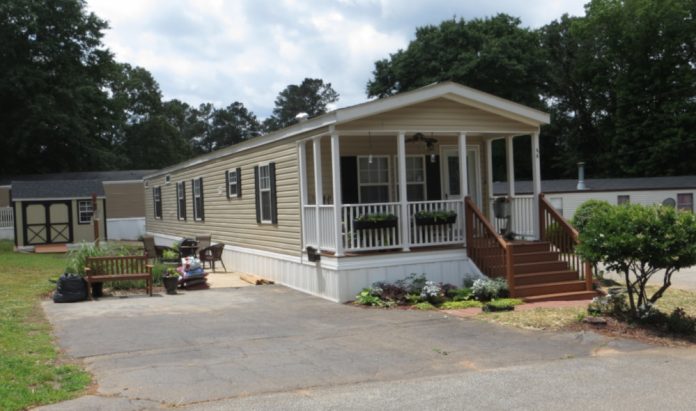
American Financial Resources, Inc. now offers conventional financing for singlewide manufactured homes, in addition to their existing financing for singlewides from the Federal Housing Administration and the U.S. Department of Veterans Affairs.
“AFR has been financing manufactured homes for more than 10 years, so we are experienced in this growing segment of the housing market,” American Financial Resources Executive Vice President and Chief Operations Officer Bill Packer said. “With our growing portfolio of loan options for manufactured homes of all sizes, including singlewides, we can help our partners bring more families home.”
One of the few lenders that offers financing for singlewides, AFR offers a comprehensive suite of manufactured home programs and financing options, including FHA, VA, USDA, Fannie Mae MH Advantage®, and Freddie Mac CHOICEHome®.
Providing an affordable solution for families nationwide, more than 22 million people in the U.S. live in manufactured homes, according to the Manufactured Housing Institute.
Scholarships Offer College-bound Students Unique Career Paths

Students enrolling in accredited colleges or universities in the 2021-22 academic year are invited to apply for scholarships from the Tim DeWitt HARVEST Education Foundation, which supports careers in the recreational vehicle, manufactured housing, self-storage industries.
While the foundation offers support for students entering those specific fields, scholarships do not require recipients to pursue careers in those industries. The deadline for submitting scholarship applications is April 9, 2021.
Last year, 18 college-bound students received scholarships of between $500 and $1,250. The foundation has awarded more than $373,000 in financial aid for college-bound students since 1991.
“The Tim DeWitt HARVEST Education Foundation has given almost 650 scholarships in its 30 years of existence,” said Bill Sheffer, executive director of MMHA/RVCA and Self-Storage Association of Michigan. “Our membership and staff are proud to have helped so many students work toward advanced education. In offering these scholarships, we are introducing students to career opportunities they might not have realized are available in the RV, camping, manufactured homes, and self-storage businesses.”
The scholarships provide a unique career path for students while providing the industries “new critical thinking and fresh perspectives,” Sheffer said.
Apply for the Tim DeWitt HARVEST Education Foundation scholarships at www.marvac.org, www.michhome.org, or www.selfstoragemichigan.org. For further information, contact Beth Monicatti Blank at All Seasons Communications.
New Cavco Park Model Facility Comes to Arizona
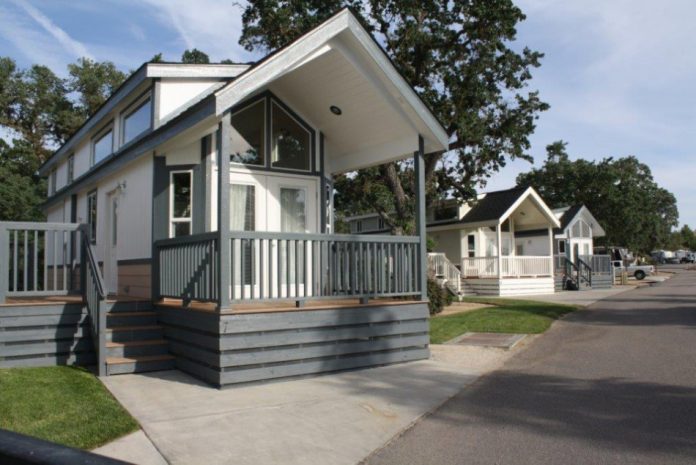
Cavco Industries has purchased a newly constructed building in Glendale, Ariz., for the production of park models, RVs, cabins, and cottages.
The final buildout at the facility continues through the year, and Cavco expects new park model production in Glendale to begin in late 2021 or early 2022. The new production facility will create 200 new jobs in the area.
All of the new models made in the 118,000 square-foot-facility will be built under American National Standards Institute “ANSI” standards. Each of the models is a seasonal dwelling typically used in resorts and other properties in the outdoor hospitality industry.
New Facility Also Increases Volume for Manufactured Homes
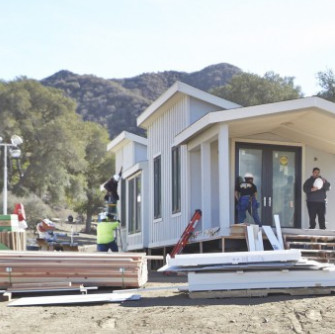
Cavco Industries President and CEO Bill Boor said the Glendale facility improves operating efficiencies and output in the RV lines, allowing the company to expand regional production. The move also provides the opportunity to revert one of the two lines at Cavco’s Goodyear, Ariz., from park model production to a full focus on HUD code manufactured homes.
“Not only will it allow us to better serve our park model customers with a dedicated facility, but it will also create additional capacity for HUD code homes at our Goodyear factory to serve the Southwest region of the U.S,” Boor said.
Cavco Industries is a home builder and national supplier of manufactured homes and modular homes.
Tim Gage is national vice president of the park models and specialty product division with Cavco.
“The new facility will feature state-of-the-art production processes and full-factory air conditioning, creating a highly efficient and employee-friendly workplace,” Gage said. “Cavco has a long history of developing innovative products and close customer relationships in the park model market. With the transition into the new, dedicated Glendale facility, we will be able to take those customer relationships to a new level.”
JLT Market Reports for Manufactured Home Communities in the Northeast Show Steady Growth in Occupancy, Rent
Updated Maryland, New Hampshire, New York JLT Reports Available Now
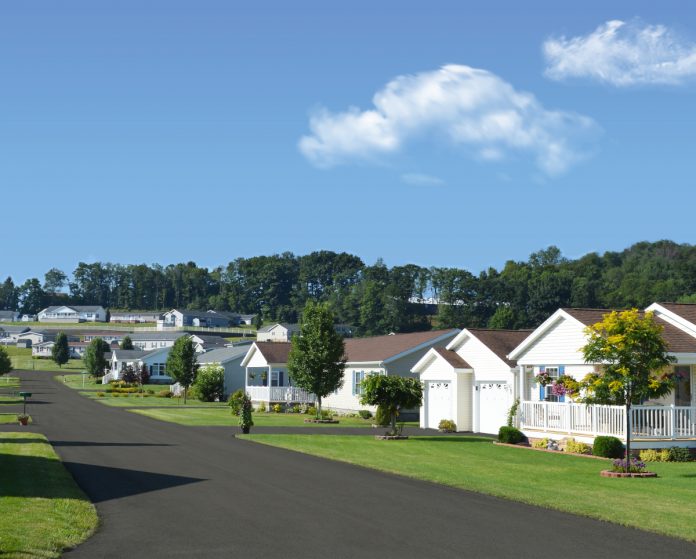
Manufactured home communities in the northeastern United States show sustained growth in rent and occupancy, according to updated reports published by Datacomp, the industry leader in manufactured home appraisal and market data.
Rent and occupancy trends for manufactured home communities in Maryland, New Hampshire, and New York are available for order, including immediate download.
JLT Market Reports provide detailed research and vital information on communities in 186 major housing markets throughout the United States. Along with the latest rent trends and occupancy statistics, the manufactured home community market reports include information on home types, amenities, community infrastructure, as well as other management insights.
Datacomp is the nation’s top provider of manufactured housing data, and JLT Market Reports are recognized as the industry standard for manufactured housing community market analysis.
March 2021 JLT manufactured housing market data includes information on 227 “All ages” and “55+” manufactured home communities and 39,564 homesites in Maryland, New Hampshire, and New York.
Manufactured Housing Community Data in the Northeast
- The Northeast region 55+ communities experienced an adjusted rent increase of 3% and an increase in occupancy of 0.6%
- The Northeast region all-ages communities experienced an adjusted rent increase of 3% and an increase in occupancy of 0.3%
“The manufactured housing community market in the northeast is extremely steady and growing,” Datacomp Co-President and Chief Business Development Officer Darren Krolewski said. “Rents in the region are up across the board, and only a single state in the region showed a dip in year-over-year community occupancy.”
More About JLT Market Reports
Each JLT manufactured home community rent and occupancy report from Datacomp has detailed information about investment-grade communities in the major markets. The detailed information includes:
- Number of homesites
- Occupancy rates
- Average community rents, and increases
- Community amenities
- Vacant lots
- Repossessed and inventory homes, and much more
JLT Market Reports also include management insights that rank communities by the number of homesites, occupancy rates and highest to lowest rents. Established reports show trends in each market with a comparison of March 2021 rents and occupancy rates to March 2020, as well as a historical recap of rents and occupancy from 1996 to present date in most markets.
The March 2021 Maryland, New Hampshire, and New York JLT Reports for manufactured home communities are available for purchase and immediate download online at the Datacomp JLT Market Report website, or they may be ordered by phone in electronic or printed editions at (800) 588-5426.
Each fully updated report for mobile home communities is a comprehensive look at investment-grade properties within a market, enabling owners and managers, lenders, appraisers, brokers, and other organizations to effectively benchmark those communities and make informed business decisions.
Create a Manufactured Home Virtual Open House

MHInsider strongly encourages readers to follow guidelines provided by local, state, and national authorities (including the CDC) regarding COVID-19 safety procedures.
Prospective manufactured home buyers understand that shelter in place, social distancing, and other COVID-19 mitigation efforts eventually will subside.
Until then, there are a few ways retailers and leasing offices can sustain the interest in available manufactured homes. Among them, broadcasting live virtual open houses that showcase a community or the home.
What follows is a step-by-step guide to assist in setting up and hosting a manufactured home virtual open house.
Prepare
Many of the tools required by live virtual open houses are readily available. Here are four of them.
A Capable Smartphone
 If the smartphone used for your live broadcast is relatively recent — produced within the last couple of years — it should be able to capture a quality video image. This device can be an iPhone from Apple, Pixel from Google, or a similar Android device. Note that an iPhone is required for live tours using FaceTime, a topic that is covered later in this feature.
Strong, Reliable Bandwidth
 Many factors can influence the bandwidth needed for a broadcast. That said, a general rule of thumb is to aim for nothing less than 5Mbps.
Ideally, you want about 10Mbps. A site such as Speedtest.net can help you determine your current internet speeds.
A Wireless Mic
 Viewers need to be able to hear the host during an open house. Use a wireless mic that clips on to the lapel, for instance. The goal is to allow the host to move without being tethered to the camera.
Apple’s AirPods are one such option many people seem to have already.
Virtual Open House Game Plan
Broadcasting on Facebook, YouTube, Instagram, Twitch, or any other similar platform requires careful planning. If the goal is to sell something, “winging it” won’t cut it.
Hosts must understand where the virtual open house is going to start, how it will progress, community or home features to highlight, and all the detail for each step along the way.
Facebook recommends a live stream of no less than 20 minutes, so there will be plenty of time to cover everything, including Q&A. A test run or two would be helpful in getting the game plan set for your manufactured home virtual open house.
Broadcast Your Manufactured Home Virtual Open House for Guests to See All You Offer
Facebook Live and Apple’s FaceTime are two of today’s most popular live video platforms; the number of Facebook Live viewers in the U.S. has risen by 50% since January 2020, while users make 15-20 million FaceTime calls per day among the 100 million or so iPhone in the U.S.
Instructions for broadcasting manufactured home virtual open houses from both platforms follow.
Android users may consider Google Duo as a FaceTime alternative.
Use Facebook Live for a Manufactured Home Virtual Open House
A virtual open house with Facebook Live allows offices to promote a mobile home to many prospective buyers at the same time.
- Open the Facebook app on your smartphone
- Tap “Live” at the top of the screen
- Allow Facebook to access the device’s microphone and video capabilities
- Tap the camera icon at the top of the screen to switch between selfie and standard modes
- Tap the “Start Live Video” button
A two-person streaming team is ideal, with one person operating the camera (smartphone) and the other person acting as host. A gimbal is recommended to help keep the phone and recorder stable. This will help in creating a smooth video file.
Finally, make sure that the smartphone is in your preferred mode — landscape or portrait — before you begin the Facebook Live broadcast. Modes cannot be switched during filming.
HOW TO PROMOTE A FACEBOOK LIVE TOUR: Promote the Virtual Open House on Facebook Events, as well as any and all other social media platforms, and your website. It may be a good idea to do an email blast to your followers, as well. Once the tour is over, host it on MHVillage for free.
Use FaceTime for a Virtual Mobile Home Open House
FaceTime is a great application for one-on-one virtual mobile home open house.
- Open the FaceTime app on your iPhone
- Tap the “+” icon at the top of the screen
- Enter the client’s name or contact info (if it isn’t already in the device’s contact list)
- Tap the “Video” button
- After a brief introduction, tap the camera icon to switch from selfie mode to standard mode
HOW TO PROMOTE A FACETIME TOUR: During conversations with clients, via email, and in a prominent post on the business website’s home page.
Leverage Your Virtual Open House on MHVillage
MHVillage now provides a way for its customers to upload a Facebook Live video of a virtual open house on our site for presentation to a wider, and audience of manufactured home buyers.
Other recent and relevant articles on MHInsider blog for manufactured housing professionals include 4 Protective Measures to Keep Residents Safe from Coronavirus and Title Company Provides Drive-through Closing for COVID-19 Measures.
Bookmark MHInsider for all of your manufactured housing news including how the latest COVID-19 developments impact the manufactured housing industry.
Skyline Champion Acquires ScotBilt Homes
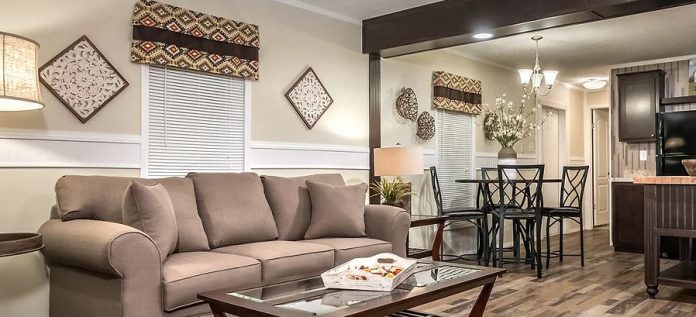
Skyline Champion Corporation has aquired ScotBilt Homes, a company that last year shipped more than 1,600 homes from a pair of manufacturing facilities in Georgia to markets in Alabama, Florida, Georgia, North Carolina, and South Carolina.
Prior to the acquisition, ScotBilt had been owned by SHI Group Holdings.
“We are excited to welcome ScotBilt Homes and its almost 400 employees to the Skyline Champion family,” Skyline Champion President and CEO Mark Yost said. “We believe ScotBilt is an excellent fit given our compatible company cultures and shared values. While working with founder Sam Scott and his team during this transaction, we learned that their work ethic mirrors our core operating principles. Sam Scott has been a pioneer in the manufactured housing industry for more than 50 years and we are fortunate to benefit from the high quality and unique home designs for which ScotBilt is known.”
The transaction accomplishes several objectives for Skyline Champion, Yost said. It provides a strong presence in the vital mid-south region, and helps to balance the company’s national distribution.
“Their efficient manufacturing facilities produce a streamlined product offering,” Yost said. “We expect this transaction to generate solid returns with meaningful shareholder value creation from day one, supported by ScotBilt’s attractive client base, and margin profile.”
Scott said he and his family feel they have found the right partner in carrying on the ScotBilt tradition.
“We wanted a partner who we could trust would operate the company in a manner consistent with how we’ve done business since our founding in 2004,” Scott said. “The customers who value the reputation of our brand will continue to receive the high-quality products they have grown to expect. I am confident that we have aligned with a great company that will leverage the culture and brand integrity that has set us apart from our competitors.”
Bookmark MHInsider for all of your manufactured housing industry news. Visit MHVillage to list manufactured homes, advertise your business, or find communities, and get other manufactured housing industry data.
EVENTS

SECO26: Practical Education for Community Owners
Oct. 6-8 at Avalon Hotel in Alpharetta, Ga.
Manufactured housing community owners have never had more information available to them — or more decisions to...

2027 Louisville Manufactured Housing Show Opens Attendee Registration
The Midwest Manufactured Housing Federation has announced that attendee registration is now open for the 2027 Louisville Manufactured Housing Show, returning to the Kentucky...
Cavco, Champion Head to the Hill with Housing Innovation, Focus on Multigenerational Living
HUD’s Innovative Housing Showcase, MHI’s Homes on the Hill and Annual Meeting Begin Sept. 22
Two of the country’s largest builders of manufactured homes will...