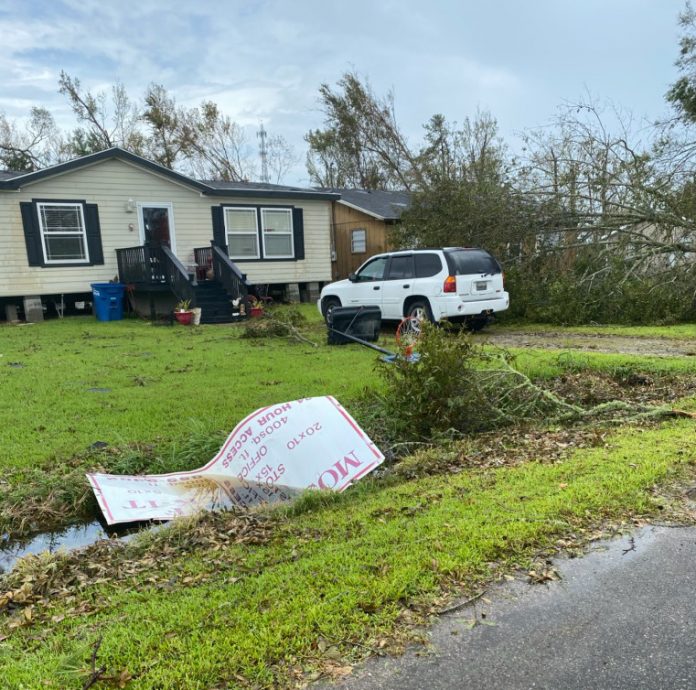
Susan Rice's 2007 Deer Valley Home in Lake Charles, La., stands with a few disrupted roof shingles and a bit of torn skirting after Hurricane Laura.
Susan Rice returned from her daughter’s home in Baton Rouge, a mind-numbing two-hour car ride through the devastation left behind by Hurricane Laura. She drove with “a pit in the stomach” feeling she likely lost her home — Again.
“I was on I-10, and the minute you get off you start seeing all of the destruction,” Rice said. “ You get a pit in the stomach. The mom and pop little businesses, that’s their income. Now they have none.
“I was broken-hearted to know that so many people were going to lose their homes,” she said. “I prayed over my house all night long. That’s probably what saved it, the Lord heard my prayers.”
Hurricane Laura made landfall overnight on Aug. 27, ripping through East Texas and western to central Louisiana with winds as high as 150 miles per hour. The storm was the strongest to hit the area in about a century, and was one of the strongest ever storms to make U.S. landfall, according to the National Weather Service.
The storm killed at least 16 people, most of them in Louisiana, officials said.
Upon leaving Louisiana, Hurricane Laura moved across Arkansas, downgraded to a tropical depression headed toward the lower Ohio Valley.
One Manufactured Home in Moss Bluff
“When I left my house before the storm, I felt like I was going to lose my home again,” Rice said. “That’s devastating, it just crushes you. You know you may come back to nothing.”
In September of 2005, Rice’s former home on that same spot along Ryans Road in an area known as Moss Bluff was destroyed by Hurricane Rita. The home she bought in 2007 to replace her “very old” site-built home was a new three-bedroom, two-bath manufactured home from Deer Valley.
“I upgraded on the cabinets and the siding, which is Hardie Plank. It’s very, very sturdy,” Rice said. “Knowing that it is built to withstand a category 3, that did give me just a bit of hope. And it went through a category 4, so it’s certainly sturdy.
“I am blessed,” she said. “It really is a miracle.”
Devastation in Louisiana
Rice’s experience evacuating Lake Charles and returning to her home amid the destruction was documented briefly among the accounts of many other Louisianans in a New York Times story on Hurricane Laura.
She said her friend’s aunt lost her home in the storm, and so too did her grandaughter’s grandparents from the other side of the family. She said only one of the three routes into her neighborhood were passable when she returned.
The Moss Bluff area is strewn with downed trees from the powerful gulf storm.
“There are trees all over the road and fallen on people’s homes. It’s so sad. I’m so sad for the people who’ve lost their homes, and you’re also happy because you still have yours,” she said. “I had one little leak and my daughter is helping me out. She is sending a maintenance guy with a generator, and a roofer is coming to do an inspection next week. I really lucked out.”
If she ever had to buy a new home again, Rice said, she’d return to R&R Mobile Homes in DeRidder, La., and get another new Deer Valley.
Durable Homes from Deer Valley
Deer Valley builds manufactured and modular homes from its facility in Guin, Ala., and sells the homes through a 15-state retail network.
Deer Valley Homes President and General Manager Chet Murphree said he is pleased but not surprised the company’s homes, even ones as old as the Rice home, are able to stand up to the largest storms.
“I received another homeowner testimony of how his family’ home stood fast against Laura,” Murphree said. “We are known for the heaviest built standard manufactured homes In the southeast with fastening systems that exceed the stability of stick-built homes. The installation is paramount as well.
“The Rice home, I expect was set to Wind Zone 3 specifications that ensure they withstand continual high-speed winds,” he said. “I also agree with Mrs. Rice that our sovereign creator always has a hand. God Bless Mrs. Rice and her family.”
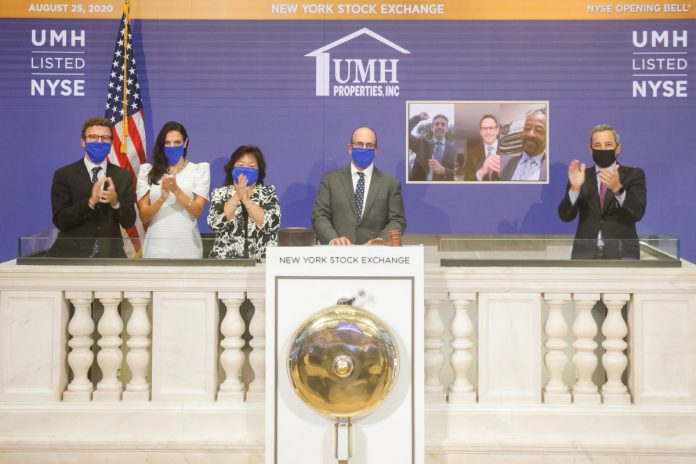
UMH Properties, Inc. (NYSE: UMH) Rings The Opening Bell.
The New York Stock Exchange welcomes executives and guests of UMH Properties, Inc. (NYSE: UMH) today, Tuesday, August 25, 2020, as it rings the Opening Bell in celebration of its commitment to providing quality affordable housing with the Federal National Mortgage Association (Fannie Mae) and Wells Fargo Bank.
(NYSE Bell Ringer: Chris Taylor, Vice President, NYSE Listings and Services)
Photo Credit: NYSE
UMH Properties, Inc., and its lender Wells Fargo have closed on a deal that represents a groundbreaking approach to affordable housing finance through Fannie Mae.
UMH Properties, Wells Fargo, and Fannie Mae rang the bell to open the New York Stock Exchange Tuesday, Aug. 25.
The public equity real estate investment trust that owns and operates a portfolio of 123 affordable manufactured home communities with about 23,200 developed homesites, leases homesites to owners of manufactured homes and, owns homes that are rented out at affordable rates and terms.
UMH Properties acquires communities with a significant vacancy, upgrades the communities and implements a rental program.
Historically, these communities did not qualify because of the lower occupancy rates and the high percentage of rental units. This expanded access to financing from Fannie Mae will allow UMH to expand its footprint and further the effort to provide affordable housing.
“The larger concentration of rental homes provides the owner with the flexibility to make the best decision for individual sites, choosing between land leases to new homebuyers and rentals of units it owns,” UMH Properties President Sam Landy said. “This innovative loan product will allow us to pass these savings on to our customers.”
Find and complete acquisitions, with financial and physical inspections to improve community operations and benefit the residents
Make property improvements and institute better management
Create more efficiencies in rent collection and resident communication
Sell or rent homes in the communities
Landy said the Fannie Mae funding allows UMH to provide the rental market a $750 per month, three-bedroom, two-bath, manufactured home on a 5,000 square-foot lot. For homebuyers, siting their own manufactured home through UMH Sales and Finance, Inc. at a rate as low as 5.99%.
“This type of pricing is only possible due to Fannie Mae’s acceptance of rental homes in manufactured housing communities,” Landy said.
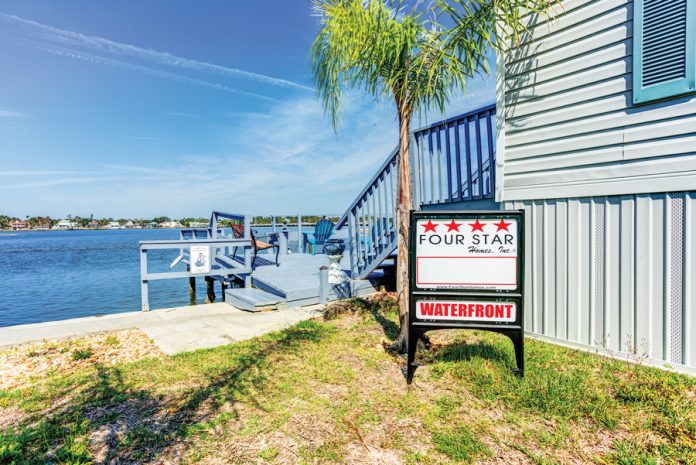
The presence of Four Star Homes in Central Florida manufactured home market can’t be overstated.
Four Star has eight retail locations in a 12-county area. It has more than 25 people on staff and employs about 200 sales agents. The agency lists approximately eight of 10 homes that sell in Central Florida each year.
“People just know Four Star. If you’re going to buy or sell a mobile home, that’s where you go if you’re in Central Florida,” owner Karen Rearden said.
And from a historical perspective, too, the Rearden family business has a name that precedes itself.
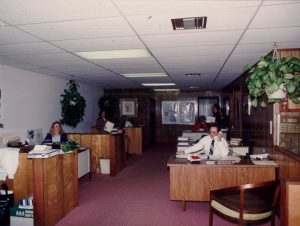
The original Four Star Homes office in 1982.
Four Star Homes Inc. was started by Karen Rearden in 1982. At the time, she was employed with a mobile home brokerage that most people today identify as a leader in home insurance; Foremost Insurance, of Grand Rapids, Mich.
“The division was Foremost Home Brokers,” Karen Rearden said. “I ran the Port Orange office in the early 1980s, and then I got a call. I was told Foremost was getting out of the brokerage business, and that I could have the phones, the office, the files…
“I’m thinking what do I have to lose? I doubled my income in the first quarter,” she said.
Karen Rearden changed Foremost to Four Star and used the same colors in the new company’s branding. The goal was the make the transition effortless, keep Four Star on the forefront for home sellers and buyers the way Foremost had been.
“People really didn’t notice much difference,” Karen Rearden said. “It was amazing how smooth it was.”
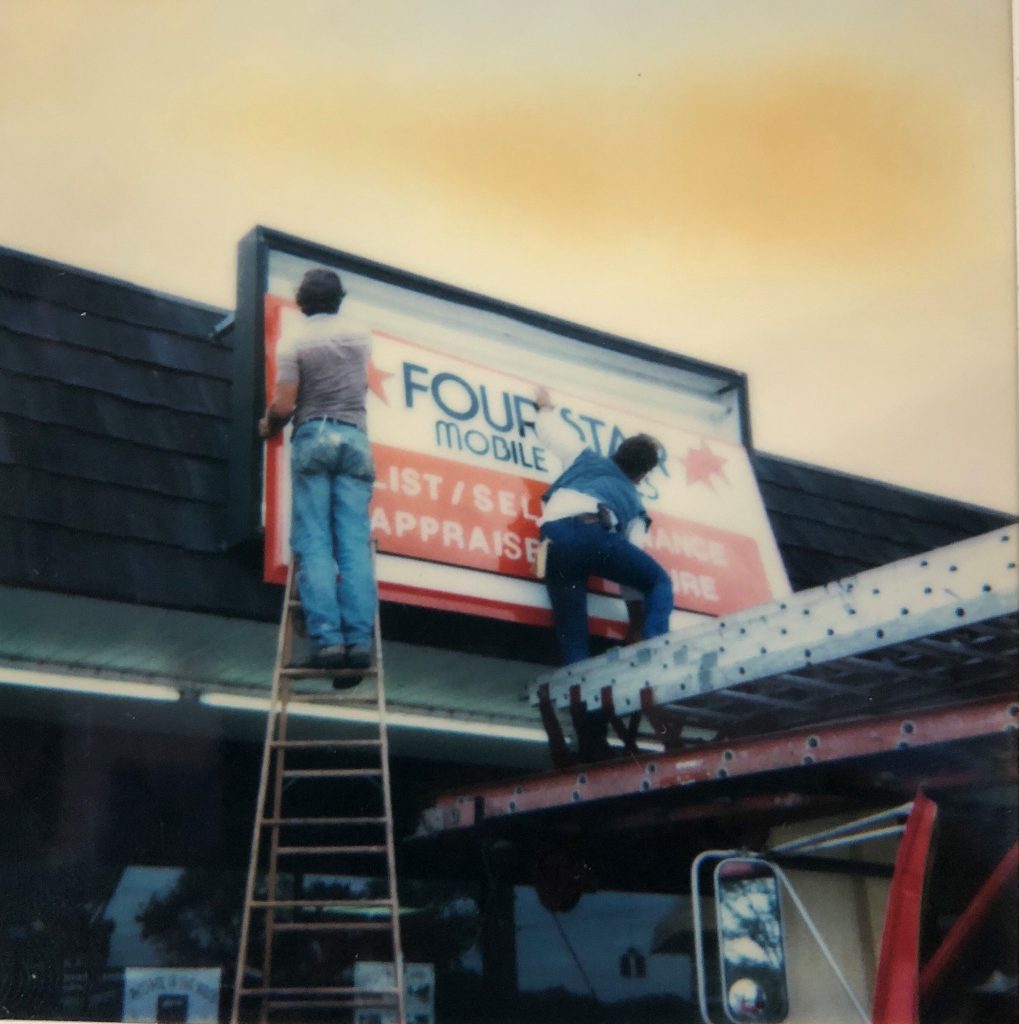
Installation of the first Four Star Homes sign in 1982.
Single Mom Raising Two Boys
When Karen Rearden turned the former brokerage into a family business, she had two young boys to raise. As often is the case, Matt and John grew up in the business. The first office and the ones to follow would make somewhat of a second home. Certainly, the business dealings and shop talk rubbed off in ways that may be immeasurable.
“They used to have a big three-ring binder and Polaroids taped to a page. If you were an agent you’d come in and look at a hot sheet and flip through the binder,” Matt Rearden recalls. “Has a lot changed?”
Today, John Rearden is a pastor, and Matt Rearden is their mother’s business partner at Four Star. He is an attorney and worked for large corporations and organizations, including a stint with NASCAR.
“I was in two publicly traded companies and traveled the world and did some fun stuff, but some things changed here,” he said of Four Star and the Central Florida manufactured housing market. “In the last five years the brokerage business has really taken off, so I came back to help out.”
Karen focuses on sales and operations. Matt works on finances, business planning, and marketing.
Together they built a proprietary database called Four Start Direct, a web portal that staff and brokers can access for listings, leads, and other information.
“All of our agents can see all of our listings, and they can do it from any device. There’s a lot of development and upgrade time,” Matt Rearden said. “But people ask us how we’ve been able to scale, and I say it’s all about training and the system. Four Star Direct makes it easy to do that.”
Manufactured Home Sales in Central Florida
Four Star serves customers within about 70 miles of each location.
“We’ve gotten more structure since Matt came on board, and we’ve expanded our marketing efforts,” Karen Rearden said.
There were many years when business activity was good, but it was difficult to find sales agents and office staff. The tone today is different, she said.
“We have people walking in the door who want to work for us now,” Karen Rearden said. “A lot of our agents came to us because they bought a home and liked what we do. Maybe it’s a second career, children are out of the house, and they quickly adopt our company. We do have a family feel,” she said. “We mean our buyers, but sellers and agents too.”
Matt Rearden said everyone knows Four Star sells manufactured and mobile homes.
“But people are our business, and that’s the way it has always been,” he said.
Building relationships across generations creates familiarity and loyalty that cannot be conjured up in a conference room. Success like Four Star’s is the product of prolonged care, determination, and diligence.
“I feel if you take care of the people, the people will take care of the business. I know they’re kids, and the birthdays, and whatever difficulties might be taking place,” Karen Rearden said. “We’re there for all of it, and that’s one of my favorite parts about doing what we do.”
The Four Star Business Model
Most of the markets Four Star operates in are places they’ve been for 20 years or more. The business as a whole is better than 50% repeat business.
“If they purchased the home through us, chances are they’re going to list with us when they sell,” Karen Rearden said.
Four Star lists homes that sell for anywhere between $2,200 and $232,000. Agents can provide information and access to home finance options, but most buyers are cashing in a retirement account or other investments and have no need for financing. About 70% of Four Star home sales are in cash, and transactions tend to close in two weeks.
The Four Star agents build relationships with Central Florida manufactured home community owners, operators, and residents. This helps when an agent is picking up a Four Star listing in a given community. They have details on the amenities, lifestyle, and culture of a community. And sometimes they’re asked to run a smaller sales operation from the community.
“One of the biggest challenges is to educate the customer on the value of their home,” Karen Rearden said. “I have a saying: ‘Price right, half sold’. You have to be armed with good data and price the home correctly to sell quickly.”
MHInsider and Fannie Mae collaborated on answering some frequently asked questions associated with the MH Advantage® financing program and qualifying homes. From the program’s basics to how appraisal work is managed, Fannie Mae’s Starla Sand, a national evaluation analyst, provided the answers for our FAQ on MH Advantage financing.
What is MH Advantage?
MH Advantage is an innovative homeownership option that pairs affordable mortgage financing with specially designed manufactured housing. Think of MH Advantage qualifying homes as a cross between a traditional manufactured home and a site-built home, designed to be indistinguishable from site-built houses from the exterior view (that is, designed with characteristics typical of site-built homes). You may have heard the term CrossModTM referring to these new modern manufactured homes, and while not all CrossMod homes are eligible for MH Advantage financing, many features of the two are consistent.
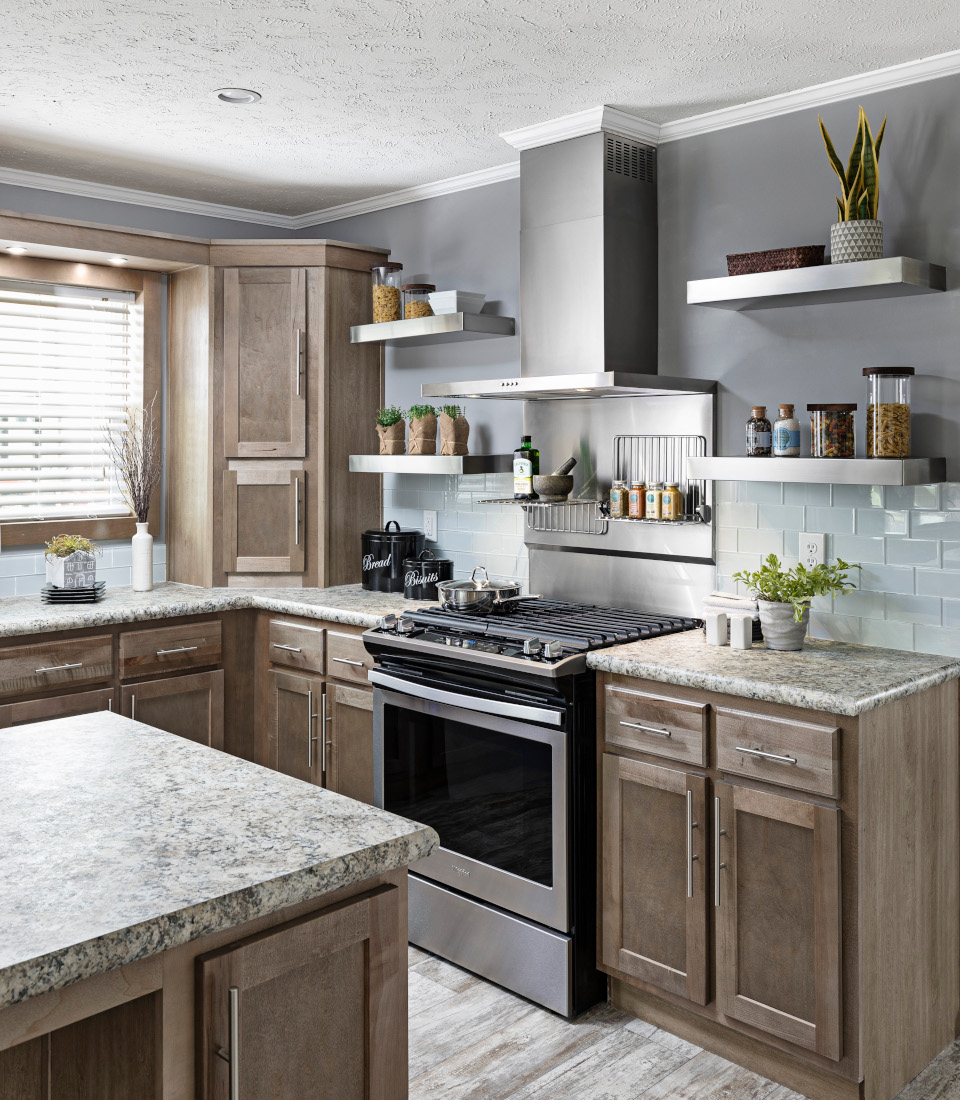
Exterior features of manufactured homes that qualify for MH Advantage include higher pitch rooflines, larger eaves, and lower-profile foundations typically not found on standard manufactured homes. In addition, the exteriors feature attractive, durable siding materials, roof dormers, covered porches, garages, and carports. The similarity with site-built does not end on the outside. The interior has high-quality finishes, including drywall, kitchen cabinets with fronts of solid wood or veneered wood, and various material options for counters, sinks, and tubs seen in new site-built homes.
What are the differences between standard manufactured housing finance and MH Advantage financing?
Fannie Mae purchases mortgages secured by manufactured housing titled as real estate using our standard MH or MH Advantage underwriting guidelines. MH Advantage financing offers terms similar to those traditionally offered for site-built homes, including down payments as low as 3%. MH Advantage homes are also built to blend into stick-built neighborhoods. Standard MH financing, for manufactured homes that don’t qualify for MH Advantage, provides conventional mortgage financing for more traditional manufactured homes.
When appraising a property, how would an appraiser distinguish between a standard MH and MH Advantage?
There are two ways for an appraiser to know that a home is MH Advantage-eligible. If an MH Advantage-qualifying home has already been built, the home will have an MH Advantage sticker near the HUD Data plates and HUD Certification Labels.
In the case of a home that has been ordered but hasn’t been built yet, it will be the responsibility of the lender to let the appraiser know that the home will be financed by an MH Advantage mortgage. We have a number of resources available at the Fannie Mae website that lenders can share with appraisers to help them get an accurate valuation for the property.
Regardless of the situation, it’s always a good idea to make a note in the appraisal that it’s for an MH Advantage home.
What is the MH Advantage manufacturer sticker, and where can it be found?
The MH Advantage sticker will be affixed to homes designed to meet MH Advantage eligibility criteria for easy identification by retailers, lenders, and appraisers. It is typically found inside the home next to the HUD Data plate. The sticker indicates that the structure of the home has been constructed to meet the MH Advantage requirements and makes it so that an appraiser can simply verify the presence of the sticker rather than verifying that many of the individual requirements for the structure of the house have been met. It greatly simplifies the appraisal process.
This sticker allows for the home to be financed by MH Advantage at both the retail point of sale and when it is sold to a new consumer. Many people don’t realize that the sticker applies to resale, too. Even if the original purchase is financed some other way, the MH Advantage sticker means that when a buyer is ready to sell, that home is still eligible for affordable MH Advantage financing.
What is the biggest challenge in appraising MH Advantage-eligible homes?
MH Advantage is relatively new, so the industry is unfamiliar with the product, what makes it unique, and its appraisal requirements.
What is being done to overcome that challenge?
Fannie Mae is committed to educating and training appraisers and appraisal management companies on this new property type.
We have collaborated with McKissock, the nation’s largest appraiser Continuing Education (CE) provider, to create Appraising Today’s Manufactured Homes, a 7-hour CE course that explains Fannie Mae’s appraisal policies concerning MH with a deep dive and case studies on MH Advantage appraising.
Appraisers can visit our appraisers page. It includes newsletters on appraisal topics, online help and training, and other resources. Questions can be submitted using the “Contact Fannie Mae about Appraisal Topics” link on the Appraisers page, which allows appraisers to get answers to their specific questions.
We’ve also developed a landing page dedicated to MH appraisal at the Fannie Mae website. The page includes an MH Advantage Appraisal Training tutorial, MH Advantage Appraiser Requirements checklist, Q&As, and other relevant resources.
We offer regular in-person and online training sessions to lenders, AMCs, and appraisal groups.
We have a presence in industry events where we conduct presentations with Q&As.
Since the MH Advantage qualifying home is a cross between a traditional manufactured home and a site-built home, what appraisal form should be used? And, are manufactured home sales an appraisal requirement?
Since it is a manufactured home, appraisals must be completed using the 1004C form (manufactured home form). However, unlike a standard MH appraisal, two manufactured home sales are not an appraisal requirement.
How can an appraiser pick comparable sales when they appraise an MH Advantage eligible home?
The known challenge is that there are few or no MH Advantage sales currently available in many locations for sales comparison purposes. Based on our Selling Guide requirements, appraisers must use MH Advantage Homes for the comparable sales when available. If MH Advantage sales are not available, an appraiser can supplement with the best and most appropriate sales, which may include site-built homes, standard manufactured homes, or modular homes. The goal is to ensure an accurate appraisal that reflects the market value, condition, and marketability of the property.
What is not permitted to be used as comparable sales?
Appraisers are not permitted to create comparable sales by combining a vacant land sale with the contract purchase price of a home. However, a created sale can be added as additional support for value – slotted in as additional sale in the sales comparison approach section or in the addendum.
Are there appraisal requirements that are specific to MH Advantage?
Yes, for MH Advantage appraisals, the appraisers are required to provide photos of the HUD Data plate, HUD Certification Label, MH Advantage sticker, as well as the driveway, sidewalks, and detached structures located on the site. For purchase transactions, the appraiser must analyze the sale contract and manufacturer’s/retailer’s invoice for new manufactured homes, and they must provide a summary in the appraisal report and complete the cost approach.
What are the most common deficiencies with Manufactured Home Appraisals?
There are some cases where appraisers do not properly assess the quality of the subject property. As a result, appraisers have either used older, lesser quality MH sales or superior quality site-built homes, both without proper adjustments. This can result in an appraisal that does not accurately reflect the market value of the property.
How can appraisers overcome this?
The appraiser is responsible for determining if sufficient information exists to value the property. The appraiser should review plans, specs, and other documents to understand the exterior/interior features, characteristics, and quality of the home. It is good practice to visit manufacturer websites to view photos, videos, or virtual depictions or visit a dealer lot or model home.
What are the MH appraiser qualifications?
To qualify to complete this type of appraisal assignment, an appraiser must possess the knowledge and experience to understand the unique construction process of manufactured homes fully.
Is MH Advantage found primarily in rural markets, or are there subdivisions with MH Advantage?
We are seeing the MH Advantage qualifying homes getting some traction in rural markets and subdivisions. The same general appraisal requirements for new subdivisions apply for MH Advantage. The appraiser must select one comparable sale from the subject subdivision or project and one comparable sale from outside the subject subdivision or project. The third comparable sale can be from inside or outside the subject subdivision or project, provided it is a good indicator of value for the subject property. Two of the sales must be verifiable from reliable data sources, other than the builder.
Starla Sand is a national review appraiser for the Risk, Eligibility, and Valuation team in the Loan Quality Center at Fannie Mae, and she leads the MH/MHA appraisal training courses for appraisers, lenders, and real estate professionals. Starla is also active in the Affordable Housing space, working to provide affordable housing for low- to moderate-income homebuyers. With more than 28 years of experience as an appraiser, national reviewer, realtor, and educator, she brings insightful knowledge to share with the real estate industry. Starla has a bachelor’s degree in business from Wayne State College, Wayne, NE.
Information about the new MH Appraisal course
Fannie Mae has collaborated with McKissock, the nation’s largest appraiser continuing education provider, to create Appraising Today’s Manufactured Homes, a 7-hour CE course that explains Fannie Mae’s appraisal policies concerning MH with a deep dive and case studies on MH Advantage appraising.
U.S. Department of Housing and Urban Development (HUD) Secretary Ben Carson today announced new flexibilities states and local government can use in order to best utilize Community Development Block Grant (CDBG-CV) funds appropriated by the CARES Act, as well as other federal funds, to support their communities in the wake of the coronavirus outbreak. To date, HUD has provided over $3 billion in CDBG-CV funds nationwide to help communities combat coronavirus and alleviate economic hardship. HUD is also providing flexibility to communities who want to utilize their existing, non-CARES Act federal dollars to support their coronavirus recovery efforts.
“As communities recover from the impacts of the coronavirus outbreak, HUD is providing States and local units of governments with the flexibility they need to effectively target funds to those efforts that need it most,” said Secretary Carson. “In combatting the novel coronavirus, we have to be responsive to challenges as they arise.”
After President Trump signed the CARES Act into law, HUD acted immediately to allocate its first wave of funding – over $3 billion to assist communities and non-profits – to help protect the homeless and Americans with compromised immune systems, as well as assist Tribal communities in their COVID-19 response efforts.
Key new flexibilities available to communities in administering their CDBG-CV funds include:
States may carry out activities directly or pass funds through to local governments in both rural and urban areas throughout the state. (Some funds must be set aside for rural areas.)
Economic development rules updated and streamlined so grantees can move quickly to help small businesses, and
Emergency payments to a provider or landlord on behalf of a family or individual, usually limited to 90 days, may extend for up to six months.
The Notice also contains waivers and alternative requirements to expedite submissions across multiple grant programs so states and local governments can quickly realign existing resources to respond to COVID-19.
For more information on HUD’s response to the novel coronavirus pandemic and the actions the Department has taken, please visit Hud.gov/coronavirus. Homelessness service providers and Public Housing Authorities across the Nation have jumped into action to assist those they serve during this unprecedented time. Read more about their stories featured in HUD’s Neighbors Helping Neighbors campaign, here.
MHInsider is a publication of MHVillage and is the premier source of manufactured housing news with a national audience of manufactured housing professionals dedicated to producing and delivering high quality, affordable, off-site built housing.
MHInsider Industry Award winners receive a personalized, engraved "Crystal Home" award.
In Recognition of the Highest Achievements in Manufactured Housing
Commendable teamwork abounds in the manufactured housing industry, including from the organizations that honor great work in building communities, homes, and services that aid in the effort of high quality, attainable, affordable housing.
MHInsider Industry Awards is a bit different than most award programs in that it keeps to the personal feel of our industry magazine. We built the publication on telling compelling stories from the industry. Often those stories have been about family connections as much as corporate strategy. So when it came to the annual awards program we wanted to launch, it was clear that we should honor individuals for the highest achievements in manufactured housing.
Each MHInsider Industry Award winner profile is like an introduction, a small bio, and a peek into what drives the recipient to achieve at such heights.
Our 15-member editorial board listed below assisted with selecting candidates for the 2020 MHInsider Industry Awards, and we pared the candidate list back from more than 60 individuals based in 20 states to a shortlist of 16 nominees for five awards. We employed the volunteer efforts of more than a dozen state and regional manufactured housing industry association directors to conduct a vote on the safe, and secure voting platform eBallot.
So congratulations to all of the nominees and winners. Thank you for your dedication to high quality, affordable housing.
Each of the MHInsider 2020 Industry Award winners will receive the personalized “Crystal Home” award chosen by our team.
2020 MHInsider Industry Awards
Advocacy Award
Honors efforts toward outreach and education that reach beyond professional position or title. The 2020 nominees for the MHInsider Advocacy Award were Stacey Epperson, of Next Step Network, Amie Hacker, of Parkplace Homes, and Mark Yost, of Skyline Champion Corporation. Read about the winner of the 2020 MHinsider Advocacy Award.
Influencer Award
Honors individuals who by their presence and authentic implementation of ideas have created widely held business practices and wholesale improvement for the industry.The 2020 MHInsider Influencer Award nominees were Kevin Clayton, of Clayton, Steve Schaub, of Yes Communities, and Mike Sullivan, of Newport Pacific. Read about the winner of the 2020 MHInsider Influencer Award.
Leadership Award
Honors individuals who have earned the highest levels of industry achievement through their corporate or organizational leadership approach. Nominees for the 2020 MHInsider Leadership Award were Steven Adler, of Murex Properties, Wally Comer, of Adventure Homes, and Todd Su, of Advantage Homes. Read about the 2020 MHInsider Leadership Award winner.
Legacy Award
Honors manufactured housing professionals whose overall career contributions are certain to create meaningful and lasting industry improvement and excellence. Nominees for the 2020 MHInsider Legacy Award were Jim Clayton, of Clayton, John Crean, of Fleetwood Enterprises, Art Decio, of Skyline Corporation, and Chuck Fanaro, of DWG Corp. Read about the winner of the MHInsider Legacy Award.
Visionary Award
Honors those who have brought to market the coolest concept or product, the idea that makes the job easier, the offering better, the customer experience more meaningful. 2020 nominees for the MHInsider Visionary Award were Cody Pearce and Todd Kopstein, of Cascade Financial, Curt Hodgson and Kenny Shipley, of Legacy Housing, and George Port of Manufactured Housing Resources. Read about the winners of the 2020 MHInsider Visionary Award.
The MHInsider Magazine Editorial Board
George Allen, EducateMHC Paul Barretto, MHInitiatives Paul Bradley, ROC USA Barry Cole, Manufactured Housing Insurance Services Kevan Enger, Capstone Stacey Epperson, Next Step Network Suzanne Felber, The Lifestylist Dawn Highhouse, MHVillage/Datacomp Maria Horton, Newport Pacific Family of Companies Darren Krolewski, MHVillage/Datacomp John Neet, MAI Karl Radde, Southern Comfort Homes Patrick Revere, MHInsider/MHVillage TC Sheppard, UMH Properties Joe Stegmayer, Cavco
2020 MHInsider Industry Awards Honorary Judges
Ken Anderson, Arizona Jim Ayotte, Florida Amy Bliss, Wisconsin Frank Bowman, Illinois Ron Breymier, Indiana Joan Brown, Washington Mark Brunner, Minnesota Randy Grumbine, Virginia Jennifer Hall, Mississippi JD Harper, Arkansas Deanna Fields, Oklahoma Brad Lovin, North Carolina Jess Maxcy, California Marla McAfee, Tennessee DJ Pendleton, Texas Leo Poggione, Nevada
MHInsider is a publication of MHVillage and is the premier source of manufactured housing news with a national audience of manufactured housing professionals dedicated to producing and delivering high quality, affordable, off-site built housing.
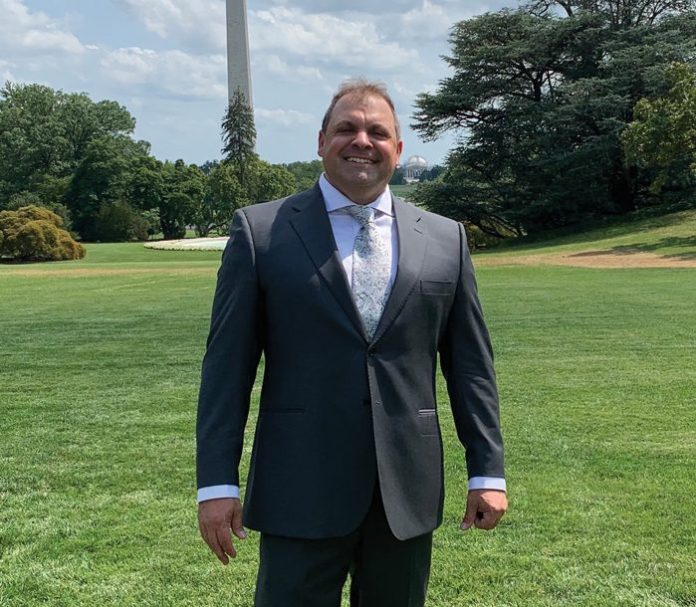
Skyline Champion Corporation CEO Mark Yost stand on the White House lawn in late July 2020 following meetings with President Trump on removing excessive industry regulation.
Mark Yost, CEO of Skyline Champion Corporation
MHInsider Advocacy Award Winner
Mark Yost, the winner of the MHInsider Advocacy Award, is the CEO of Skyline Champion Corporation and was nominated for the award on the merit of his industry representation in Washington, including a July meeting at the White House that resulted in progress on peeling back excessive regulatory requirements that drive up the cost of housing. He also presented for the industry at the Innovative Housing Showcase in June of 2019, and testified in Congress regarding HUD code updates and associated legislation including the HUD Modernization Act. Prior to being CEO, Yost served as Champion’s CFO for more than six years.
The 2020 MHInsider Industry Awards nominees for the Advocacy Award included Stacey Epperson, of Next Step Network, and Amie Hacker, of Parkplace Homes. The MHInsider Advocacy Award honors efforts toward outreach and education to advance factory-built housing that move beyond professional position or title.
What do you view as the biggest accomplishment of your career?
To be honest, I don’t think of myself having one. I do not think of things that are accomplished as big events. I think of accomplishments really being rooted in small and daily things you do compounding over time and working with great people that are the foundation for accomplishments.
What work or life skill do you give the most credit for your achievements?
It is a combination of two really big skills that I think of as two sides of a coin. Critical thinking and emotional intelligence. I have always loved problem solving, originally looking to work in or be a professor of either quantum or particle physics because of the understanding of how small things work together so well to create everything around us. I think of emotional intelligence in the same way, we are a wonderful team of people, each with our unique gifts and traits, and when they are together in the right environment and let to do what they are best at, amazing things happen. I often hear the saying that people are our greatest asset, but people are the company, period. Everything else is an asset.
MHInsider Advocacy Award Nominee Stacey Epperson
Next Step founder and president built sustainable housing protocols for Kentucky and to work as a pilot-model for similar efforts in other states. The partner network nationwide to promote how factory-built housing can be not just an affordable purchase but a high quality, and sustainable, efficient home. In addition to her fieldwork, Epperson has led and collaborated in thought leadership within the industry including in the co-authorship of a recent white paper on off-site built homes. She holds a Masters of Public Administration from Western Kentucky University and attended the University of Kentucky Patterson School of Diplomacy and International Commerce. She also serves as an appointed adviser to the Department of Housing and Urban Development’s (HUD) Manufactured Housing Consensus Committee, the Urban Institute’s Next 50 Initiative and the Aspen Institute Expanding Prosperity Impact Collaborative (EPIC).
MHInsider Advocacy Award Nominee Amie Hacker
Amie Hacker is the owner and president of Parkplace Homes and Boardwalk Properties. In addition to leading the effort to be the state of Kentucky’s top retail sales organization, as well as maintaining great service and business ethics, she is a leader in creating change toward the sale of more energy-efficient homes. She is the chairperson for the Kentucky Manufactured Housing Institute, as well as treasurer and vice chairperson for the association’s political action committee. She is a trustee for the Manufactured Housing Institute’s Board of Directors, helping to lead the national organization and its efforts in Washington, and also works on the board for the organization’s Education Institute.
MHInsider is a publication of MHVillage and is the premier source of manufactured housing news with a national audience of manufactured housing professionals dedicated to producing and delivering high quality, affordable, off-site built housing.
Adventure Homes President Wally Comer who created the new HUD code homebuilder on the heels of the Great Recession credits his father for staying inspired each day.
Wally Comer, President of Adventure Homes
MHInsider Leadership Award Winner
Wally Comer, the winner of the MHInsider Leadership Award, could have retired or gone into consulting, but he founded Adventure Homes during troubled times, taking over a defunct plant, creating jobs, and building award-winning homes. Ten years later, Comer and his team run one of the most successful manufactured housing facilities in the country. Adventure has won numerous Manufacturer of the Year awards from MHI, as well as many other accolades, including Comer’s 2019 induction into the RV/MH Hall of Fame. Adventure works to build what the customer wants, and has worked equally as hard to get factory-built homes into urban areas where they had previously had been zoned out.
The 2020 MHInsider Industry Awards nominees for the Leadership Award also included Steve Adler, or Murex Properties, and Todd Su, of Advantage Homes. The MHInsider Leadership Award honors individuals who have earned the highest levels of industry achievement through their corporate or organizational leadership approach.
What do you view as the biggest accomplishment of your career?
Perhaps my biggest accomplishment was the creation of Adventure Homes. Adventure is a business dream come true for me. It’s one thing to shoot for the stars, it’s amazing when you actually hit one! I am incredibly proud of our company. I call it ours because there are so many people who have played a significant role in our success.
What work or life skill do you give the most credit for your achievements?
My father never achieved the level of success that I enjoy today. He worked hard his entire life and never complained, never missed a day of work never spoke badly of anyone. He was my hero. Out of college I made a promise to myself that I would work every day without compromise. There is not a day I go to work that I don’t think about him. He didn’t know it at the time by he was my inspiration. He is the reason for my success.
MHInsider Leadership Award Nominee Steven Adler
Steven Adler founded Murex Properties in 2004 after holding leadership positions in three other large corporate community ownership groups. Murex is based in Florida, operates 55+ communities in four states, and provides management and business services for other community owners. He has served as president of the National Communities Council, has been honored for his high industry achievements by MHI and FMHA, and in 2020 enters the RV/MH Hall of Fame.
MHInsider Leadership Award Nominee Todd Su
Todd Su owns Advantage Homes with 13 sales centers in California. He has done much to advance affordable housing and serves as chairman of the California Manufactured Housing Institute. In addition to running a leading home sales organization, he and his team give back to the communities they serve, having provided more than 7,000 backpacks to young students, as well as emergency kits and water to devastated flood victims. Adventure Homes also donated a new home to victims of a fire. Su took a 12-year old Make a Wish Foundation recipient to an NBA Sacramento Warriors game to meet her idols. He talks to and reads to residents with failing vision and donates to procedures that can assist those with visual impairment.
MHInsider is a publication of MHVillage and is the premier source of manufactured housing news with a national audience of manufactured housing professionals dedicated to producing and delivering high quality, affordable, off-site built housing.
Fleetwood Enterprises Founder John Crean for more than four decades led one of the largest and most successful manufactured home and RV makers in the country.
John Crean, Founder of Fleetwood Enterprises
MHInsider Legacy Award Winner
John Crean, the winner of the MHInsider Legacy Award (posthumously), founded Fleetwood Enterprises in 1951 and built it into one of the most successful manufacturers of RVs and mobile homes. Based in Orange County, Calif., Fleetwood by 1998 when Crean retired had become a Fortune 500 company at better than $3 billion in annual sales, manufacturing in 17 states and Canada. That year, Fleetwood sold more than 135,000 RVs and manufactured homes. Fleetwood built more than a million homes under the leadership of John Crean, who passed away in 2007. He was a veteran of the Navy and Merchant Marines.
Crean and his wife Donna gave generously within Orange County and elsewhere, including at times donating half of their annual earnings.
The 2020 MHInsider Industry Awards nominees for the Legacy Award were Jim Clayton, of Clayton, Art Decio, of Skyline Corp., and Chuck Fanaro of DWG Corp. The MHInsider Legacy Award honors manufactured housing professionals whose overall career contributions are certain to create meaningful and lasting industry improvement and excellence.
On John Crean’s Career
In 1965 Fleetwood had nine factories and less than a decade later the company was operating 70 plants. The company, at its height, was the largest manufactured home and RV maker in the world.
Observations from a Colleague
“John started off slow, making 10 floors a week and made sure it could be profitable that way, and then the growth began. There was no debt and very thoughtful growth with the operating profits on hand. John understood how to pace the business, and always was very generous to his employees, which is why he had a strong team. There was a good training program, and it ended up preparing a lot of people including those who went to other companies or started their own successfully, as well.”
– Gordon Collins, Fleetwood Marketing Executive and colleague of John Crean.
MHInsider Legacy Award Nominee Jim Clayton
Jim Clayton founded a mobile home retail center that would evolve into one of the largest homebuilding groups in the country, including a 42% stake in new manufactured home sales. The Knoxville-based company is a leading Tennessee employer that guides retail and homebuilding centers throughout the nation. Its leadership has been a central voice in advocacy for affordable housing, and its philanthropic efforts in housing, education, and the sciences have left an indelible mark. Clayton’s legacy is Clayton the company, but the founder has a story of his own. An author, and skilled guitar player, Clayton has performed at the Grand Ol Opry.
MHInsider Legacy Award Nominee Art Decio
Julius Decio founded Skyline in 1952 and by 1957 his son Art had taken the helm and would not only lead his father’s company into a top-selling mobile home and RV manufacturer, but the Decio influence would be central to the post-war development of Elkhart, Ind., into an RV and manufactured housing powerhouse. Art Decio grew Skyline to 25 companies with 3,500 employees in 12 states. He was featured in Time magazine in 1965 and served as president of the MHMA. The RV/MH Hall of Fame in Elkhart denotes on his induction credentials that he “built his company from a small family organization to the largest home manufacturing company in the industry. A marketing pioneer responsible for many inroads to the acceptance of manufactured housing. Pioneered the regional production and marketing concept.”
MHInsider Legacy Award Nominee Chuck Fanaro
Chuck Fanaro of DWG Corporation changed the face of manufactured housing and community living in the late ’80s and early ’90s with the envisioning of and development and marketing for Saddlebrook Farms in Grayslake, Ill. He was a retired trader in his mid-50s who had resources and wanted to create an enterprise that would bring jobs, opportunity, and offer housing that buyers want and need. Saddlebrook Farms reimagined what community living could be. Fanaro bought Hi-Tech Housing, the Indiana factory that supplied his homes, so he could control the availability, as well as design and material choices that were otherwise unavailable. He chose enhanced interiors, but moreover used exterior elements like lap siding, installed garages, landscaping, driveways, sidewalks, and curb cuts in a way that brought on a new era in community development.
MHInsider is a publication of MHVillage and is the premier source of manufactured housing news with a national audience of manufactured housing professionals dedicated to producing and delivering high quality, affordable, off-site built housing.
Cody Pearce, president of Cascade Financial, started the business to provide increased access to loans for affordable homes.
Todd Kopstein and Cody Pearce, CEO and President of Cascade Financial
MHInsider Visionary Award Winners
Cody Pearce, co-winner of the MHInsider Visionary Award, shares the honor with Cascade CEO Todd Kopstein. These leaders of the Arizona-based lender developed the first securitized pool of home loans in the manufactured housing industry in more than 15 years. Round one is valued at $175 million with a second larger round coming that could receive a credit rating and further shore up financing for factory-built housing.
A combination of manufactured housing industry knowledge at Cascade with Kopstein’s deep background on Wall Street and with securities provides the potential for a major breakthrough in affordable home finance that will be beneficial for all manufactured home lenders, builders, community owners, and homebuyers.
The 2020 MHInsider Industry Awards nominees for the Visionary Award included Curt Hodgson and Kenny Shipley, of Legacy Housing, and George Porter, of Manufactured Housing Resources. The MHInsider Visionary Award honors those who have brought to market the coolest concept, the idea that makes the job easier, the offering better, the customer experience more meaningful.
Q&A with Cody Pearce
What do you view as the biggest accomplishment of your career?
For 21 years I have had the honor of working with many incredible team members.George Dover and I started Cascade in 1999 and slowly built a strong foundation.When Wayne Bond, Ryan Stum, and Gerron Dover became our partners in 2006, Cascade began to really grow.Now I look at the talented executive team that we have and more importantly the individual team members at Cascade who work day in and day out serving the American Dream through affordable homeownership and I am humbled and grateful to each of them.Building Cascade shoulder to shoulder with so many great people is my biggest career accomplishment.
What work or life skill do you give the most credit for your achievements?
I enjoying connecting with other people. I believe that the ability to connect with anyone at any level has allowed me to succeed where I otherwise might not have.
MHInsider Visionary Award Nominees Curt Hodgson and Kenny Shipley
Kenny Shipley and Curt Hodgson turned a startup into the country’s fourth-largest builder of manufactured homes (and tiny homes) with only three factories in Texas and Georgia. The company built its own network of independent retailers, mostly with handshakes and honored promises. With controls on process and design, the company offers more than 80 floorplans from tiny home and one-bedroom, to five-bedroom/multisection homes. The two took the company public in 2019, and have been a darling of the Street trading under LGH with steady early growth and a surprising recovery through the coronavirus economy that included a voluntary early repayment of a $6.5 million government PPP loan that garnered the company further national attention.
MHInsider Visionary Award Nominee George Porter
George Porter has spent more than 35 years in the manufactured housing industry. In 1990, he formed a training company called Manufactured Housing Resources to teach proper installation practices. Porter’s guidance has been accepted in nearly every U.S. state and is used by most manufacturers of HUD code homes. Porter penned a pair of books on the subject and has written hundreds of articles for industry trade publications. He has presented to more than 10,00 professional installers in the U.S. and Japan. He is the national authority on manufactured home installation and participates in nearly all government programs concerning installation practices.
MHInsider is a publication of MHVillage and is the premier source of manufactured housing news with a national audience of manufactured housing professionals dedicated to producing and delivering high quality, affordable, off-site built housing.
Oct. 6-8 at Avalon Hotel in Alpharetta, Ga.
Manufactured housing community owners have never had more information available to them — or more decisions to...
The Midwest Manufactured Housing Federation has announced that attendee registration is now open for the 2027 Louisville Manufactured Housing Show, returning to the Kentucky...
HUD’s Innovative Housing Showcase, MHI’s Homes on the Hill and Annual Meeting Begin Sept. 22
Two of the country’s largest builders of manufactured homes will...




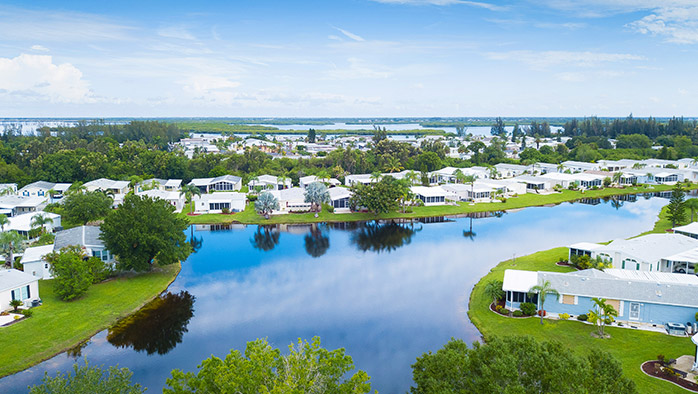
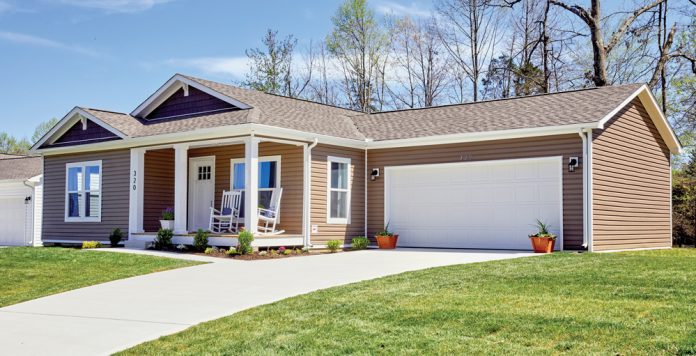
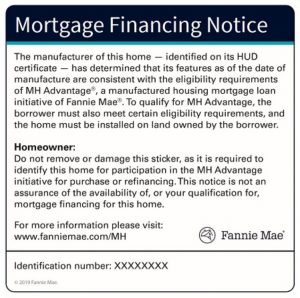 The MH Advantage sticker will be affixed to homes designed to meet MH Advantage eligibility criteria for easy identification by retailers, lenders, and appraisers. It is typically found inside the home next to the HUD Data plate. The sticker indicates that the structure of the home has been constructed to meet the MH Advantage requirements and makes it so that an appraiser can simply verify the presence of the sticker rather than verifying that many of the individual requirements for the structure of the house have been met. It greatly simplifies the appraisal process.



 MHInsider Industry Awards is a bit different than most award programs in that it keeps to the personal feel of our industry magazine. We built the publication on telling compelling stories from the industry. Often those stories have been about family connections as much as corporate strategy. So when it came to the