Home Blog Page 59

Mortgage Applications Trend Up Despite Challenging Economy

mortgage applications trend up
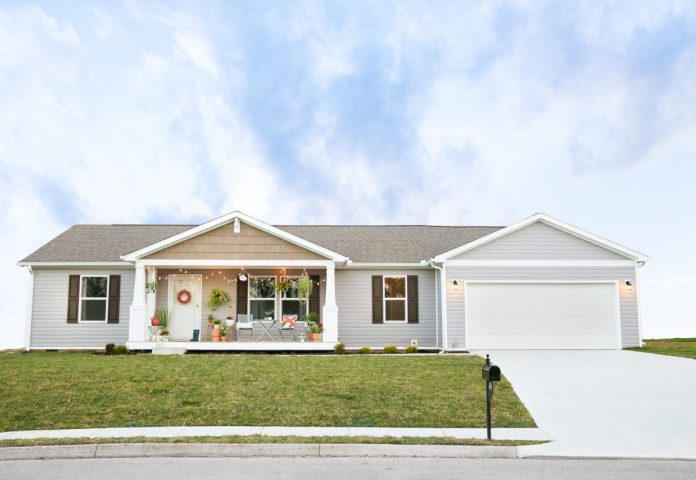
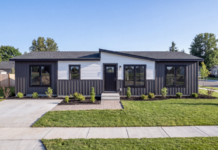
Photo courtesy of Skyline Champion Corporation.

Mortgages Bankers Report Shows Highest Volume in 11 Years

The Mortgage Bankers Association in its weekly report of mortgage application volume stated the number of applications nationally has continued to increase since mid-March when economic restrictions due to the coronavirus began.

Moreover, mortgage applications are at their highest level in 11 years, and for the second week of June 2020 were 21% higher than the same week last year.

Rising numbers in mortgage applications amid greater than usual economic concerns shows that consumer confidence has remained high. Buyers remain buyers, and new consumers are entering the market.

The Market Composite Index increased by 8% week-to-week. Refinance applications rose 10% week-to-week and were up 106% year-over-year.

“Purchase applications increased to the highest level in over 11 years and for the ninth consecutive week. The housing market continues to experience the release of unrealized pent-up demand from earlier this spring, as well as a gradual improvement in consumer confidence,” MBA’s Associate Vice President of Economic and Industry Forecasting Joel Kan said. “Mortgage rates dropped to another record low in MBA’s survey, leading to a 10% surge in refinance applications. Refinancing continues to support households’ finances, as homeowners who refinance are able to gain savings on their monthly mortgage payments in a still-uncertain period of the economic recovery.”

The survey has been conducted since 1990 and includes more than 75% of the nation’s retail residential mortgage applications.

Clayton’s University Partnership Expands Homebuilding Science

research program UT clayton's university partnership

Clayton Home Building Group and the University of Tennessee’s Department of Industrial Systems and Engineering are implementing workforce changes developed from more than two years of research.

The research project began in early 2018.

Clayton’s university partnership broadens the corporate and industry commitment to making homes more attainable by incorporating advanced automation and robotics into the off-site construction process that improves efficiencies and reduces cost.

“Our country is experiencing a widespread need for quality, affordable housing solutions,” President of Clayton Manufacturing Rick Boyd said. “At the same time, we are continuously researching ways to reduce labor stress for our valued team members.”

UT team clayton's university partnership
Clayton’s university partnership brought in (from left) Abhay Bajpai, Cory Chumley, Marty Mansfield, Dr. Rupy Sawhney, Carla Arbogast, Hari Arawind, Kshitij Sharma, Prashanth Balasubramanian, and Vaikrant Pandav to study work habits, find efficiencies, and create a healthier and more productive work environment. Photos courtesy of Clayton Homes.

Automation Assists Employees, Benefits Homebuyers

Boyd said automating processes and integrating robotics into the existing production reduces physical burden, but also enhances safety and improves efficiency.

“By testing and incorporating the latest available technology into our construction processes, we hope to deliver innovative and attainable solutions to more home buyers,” he said.

UT engineering faculty and students conducted research during multiple three-week periods at Clayton Rutledge in East Tennessee, one of the company’s 40 off-site home building facilities in the U.S. By using wearable activity trackers and analyzing hours of video, the students compared value-added to non-value-added tasks for each team member throughout the day. They then considered potential time-saving solutions and offered them to the workforce.

“My experience with Clayton had a positive impact on two aspects of my life— problem-solving and relationship management,” UT graduate research assistant Abhay Bajpai said. “Through our research and collaboration, we were able to understand the production process, as well as provide solutions to problems and constraints they were experiencing. The relationships we built with the team members were crucial in our methods for an overall sustainable process improvement.”

camera mount clayton's university partnership
UT engineering students mount a camera to map Clayton team member activities during the workday.

Following the Science of Homebuilding

The National Institute of Building Sciences states that 57% of activities in construction are wasteful and non-value-adding, while 62% add value in manufacturing. As a result of the partnership, changes to improve productivity and team member experience were implemented at several Clayton home building facilities. One of the recommended practices, kitting, involves bundling all materials for a specific space in the home and delivering them at the most accurate time during the building process.

Kitting improves efficiency. Additionally, it encourages physical distancing between team members, which is helpful in reducing the likelihood of virus transmission.

Clayton’s university partnership has delivered meaningful results for manufactured housing, and the research continues, UT Industrial and Systems Engineering Professor at Rupy Sawhney said.

“Not only were we able to create an algorithm and methodology unique to Clayton and the manufacturing industry… that research is now expanding,” Sawhney said. “Several of our staff and students have subsequently developed and published major reports and studies.”

The reason they did this is to help find a better balance for the American workforce between productivity and health and wellness. Sawhney said American workers are very productive, but highly stressed.

Zone-based manufacturing, Sawhney said, is the novel breakthrough his group made during the partnership.

“This basically came from what we saw at Clayton, which was a recommendation toward creating zones within a home where there will be a more strategic work effort on this part of the floor plan. And that’s what led to kitting, where all the materials can be delivered all together and at the right time for a particular zone. We believe through this we can transform productivity and improve the health and wellness of the workforce.”

2020 Industry Trends in Manufactured Housing

2020 trends in manufactured housing

MHInsider magazine, the premier trade journal for the manufactured housing industry, in May published the second annual State of the Industry edition. A central component to the edition is the visual treatment of manufactured housing industry data we and our industry partners provide. The data infographic on manufactured housing industry trends provides a quick, graphic overview of the state of the industry.

2020 Trends in Manufactured Housing

— 2020 Industry Trends in Manufactured Housing infographic by Merit Kathan

Bookmark the MHInsider homepage and check back regularly for manufactured housing news!

How Coronavirus Will Impact Manufactured Housing Landscape

manufactured housing community impact coronavirus
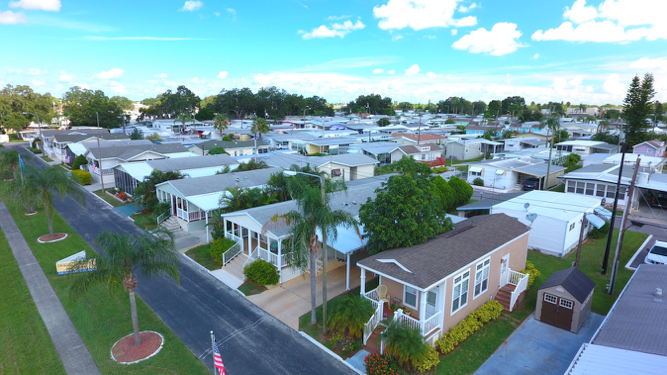
Mobile Home Community
Kevan Enger, a seller-focused broker for manufactured housing communities.

Over the last several years, the mobile home category has boomed. The convergence of multiple supply- and demand-side market conditions coincided with a historic generational shift to create an unprecedented sellers’ market. This seller’s market had extended beyond expectations and was long-believed to be in its eleventh inning.

Will coronavirus prompt a game-over call?

The Pre-Coronavirus Landscape

By supplementing available market intelligence with our own national data and empirical analysis we have created a moving picture of the community segment. Over the 2018-2019 period, our data shows strong demand for mobile home park communities. That demand continued to drive prices up and push cap rates down.

The market was hot

For the most part, larger parks in large MSAs were in the highest demand. Hot markets such as California, Arizona, and Florida had the greatest price gains. Cap rates in these markets approached 3% for group buys of larger parks in February of this year, while we were still seeing smaller deals in the 9% range. Our sales data shows an average cap rate reduction of approximately 38 basis points. 

Occupancy good and improving 

Our reports show an approximate 4.8% increase in occupancy over the last two years for the properties we were marketing. A broader view of the category at the market level revealed a slightly lower increase in occupancy but confirmed the upward trend. 

According to MHInsider’s 2019 State of the Industry edition, national occupancy rates for manufactured home communities reached 93% for the 12-month period between May 2018 and May 2019.

All-ages communities came in at 91% while 55+ communities reported an average 96% occupancy rate. The data revealed an uptick of approximately 1% for the national metric over the same period. Breaking it down, all-ages communities registered an increase of 1.2%, while the 55+ communities gained of 0.5% in occupancy.  

The occupancy metric is interesting because mobile home parks have historically been a multi-generational hold with limited change over the years.

As larger and more sophisticated groups have entered the market, we’ve seen a lot more streamlining and efficiency in the space both on the back and front end of the business. This increase in efficiency contributed to a reduction in vacancy rates particularly in the sunbelt. 

Increasing curb appeal within the go-to-market trend helps push occupancy rates up. In addition, the national lack of affordable housing combined with more appealing models of manufactured homes has contributed to a boost.

Sales Volume at Historical Highs

fannie mae building mh community impact coronavirus lendingThe big driver in the category has been the significant sales volume increase.

According to a recent Fannie Mae report, 2018 mobile home community sales volumes reached approximately $9.3 billion, highest since the end of the Great Recession in June 2009 — an important point we’ll revisit in the post-pandemic section. 

The report notes much of the volume was driven by large transactions and private investors, including privately-owned companies with about 70% of the purchase volume. 

In addition, institutional buyers accounted for 10% of the volume, but the top spot in acquisition share belonged to Fort Worth-based institutional fund TPG Capital with acquisitions of $387 million. 

TGP was followed closely by Yes! Communities, a private REIT based in Denver with $376 million in acquisition volume. Internally, our empirical analysis reflects a similar pattern with approximately 75% of our sales going to private investors and groups that include privately-owned companies and/or developers. 

Deal Velocity Acceleration

Other trends were in transaction velocity and market players. We see a marked decrease of approximately 26.6% in days on market. Much of this was due to the large number of buyers entering the market and the heightened interest in the category. 

A higher number of buyers speeds up the process and increases the competition. For example, last year we averaged approximately 12 qualified offers a deal. This allowed us to find the right buyer, at the right price, much faster.  

As a result, our internal velocity metric increased by approximately 100% year-over-year.

And then, coronavirus called a time-out.

Rent control housing availability impact

The Post-Coronavirus Outlook

As we looked ahead to 2020, we saw a few trends developing and were on alert for other factors that could play a role. 

What no one foresaw was a global pandemic. 

Before the COVID-19 crisis, one of the biggest swaths of uncertainty was around the impact the election, politics, and fiscal policy could have on interest rates. Buyers had been on the favored side of rates.

Perhaps in anticipation of potential changes on the horizon or even the awareness of the seller market’s 11th inning feel, our information was showing an increase in sales volume.

Six weeks into the year, we had already produced 40% of our 2019 volume and we fully expected this rate of increase to continue with the potential that it would begin to level off toward the end of the year.

The New Challenges

Approximately a month into the crisis in the United States, the fundamental yet short-term challenges were:

  1. Lack of financing options

The lack of financing options has already started and it is one of the biggest challenges we will encounter. Acquisitions of manufactured home communities are primarily financed by agencies such as Fannie or Freddie, banks, and the CMBS market. 

The CMBS market is at a standstill and will remain so well into summer. Banks also hover on pause with stricter parameters for future deals and backing off ones in process. 

The apparent outliers are Fannie and Freddie and their favorite child — affordable housing. Recent quotes from the agency are more favorable when compared to those given to multi-family. While agency financing typically calls for less flexible parameters, parks that qualify could jump ahead of the pack in deal velocity. 

  1. Bottlenecks across the board

With the country on pause, bottlenecks have formed across the transaction chain. This includes everything from financing and physical inspections to environmental studies and surveys.

As we move forward bottlenecks will ease but continue to create delays if more sporadically through the second quarter. 

Collections, an area that was expected to be a bottleneck, has so far materialized smoother than anticipated. Owners we’ve spoken with reported better than expected collections for the months of April and May.

  1. Uncertainty

In the face of uncertainty, people tend to wait. We sit squarely in the middle of this phase. We will see uncertainty get factored into deals across the spectrum higher rates and revised resident agreements. This uncertainty is expected to begin to clear out as we move through the rest of this quarter and into Q3 and Q4. 

Perhaps our MVP and pinch hitter in this and any crisis is our affordable housing status. As affordable housing, we are recession-resistant and become a more attractive option during challenging economic periods.

Networking Roundtable Resets for 2021

2020 networking roundtable postopone

Manufactured Housing Event To Be Held Aug. 12 in Nashville

The Networking Roundtable for manufactured housing professionals that has operated for nearly 30 years in varying locales will be postponed.

Organizers Susan McCarty and Erin Smith of EducateMHC said the decision to postpone was difficult, but best for the health and safety of everyone involved.

“As one of the longest-running manufactured housing Industry events, the Networking Roundtable unites land-lease community owners and operators from around the country to gather for hands-on, timely education on key manufactured housing industry issues,” Smith stated.

The 2020 dates for the 29th Annual Networking Roundtable in Nashville were to be Sept. 2-4. Nearly every manufactured housing tradeshow, conference, and meeting since March has been canceled or made a virtual meeting out of concern regarding the spread of the coronavirus.

There are over 50,000 land lease communities, representing an impact of over $1 trillion dollars to the U.S. economy, Roundtable founder George Allen said.

“This gathering represents a level of enthusiasm, deal-making and progressive-thinking found nowhere else,” Allen said.

Information on registration for the 2021 Networking Roundtable is available through the EducateMHC website.


Bookmark MHInsider for manufactured housing industry news, as well as updates on manufactured housing industry trade shows, events, and meetings.

MHI Offers New Webinar for Professionals on How to Develop with Manufactured Housing

develop with manufactured housing webinar

The Manufactured Housing Institute will provide industry professionals with a new interactive webinar series that kicks off with the topic “Developing with Manufactured Housing”.

MHI will hold the first webinar on June 17 from 2:30 to 4:30 eastern standard time. The manufactured housing webinar is open to anyone who would like to participate at the cost of $35. However, the webinar is free for MHI members who enter the registration code “MHIMEMBER” when signing up.

Skyline Champion Corporation and Genesis Homes are the sponsors for the webinar.

MHI developed the webinar from its annual full-day development seminar that coincides with the Congress & Expo. Scheduled for April in Las Vegas, Congress & Expo was canceled due to concerns about the spread of the coronavirus. The event will return April 6-8 2021 at the MGM Grand in Las Vegas.

Agenda for Developing with Manufactured Housing Webinar

Industry planning and development professionals Roderick Knoll, Emeka Nnadi, and Donald Westphal will join MHI staff to lead webinar participants through the program.

“Our faculty will provide industry knowledge for builders and developers who are considering factory-built housing to save time and money on their projects,” MHI President Mark Bowersox said. “The two-hour webinar will deliver a virtual opportunity to explore a wide spectrum of topics.”

An overview of the agenda includes discussions on:

  • Manufactured housing industry overview
  • The development process and site selection
  • Pro forma cash flow for manufactured housing developments
  • Land-lease case study (including on rental homes)
  • Impacts of and responses to COVID-19

Check the MHI website for more information on its new educational webinar series, and register for the “Developing with Manufactured Housing” webinar before June 12.

Industry Professionals Team on Comprehensive White Paper

New Clayton Home Affordable Housing Whitepaper
The exterior of a new Clayton home built to fit into most residential neighborhoods

The Value of Manufactured Homes

Audrey Eason author affordable housing whitepaper
Audrey Eason, of Clayton.

Communicating something you’re passionate about can be a difficult task. This is particularly true when your topic spans multiple industries and is based on places that tens of millions of Americans call home.

This is precisely the task Audrey Eason of Clayton and Stacey Epperson of Next Step have completed with a white paper entitled “Off-Site Built Homes: An Evolving Industry that Meets Today’s Affordable Housing Needs”.

Stacey Epperson author affordable housing whitepaper
Stacey Epperson, of Next Step.

Epperson and Eason began having a conversation and conceptualized what the white paper might be in 2018.

“It’s not a secret that off-site built housing is a great solution for affordable housing,” Eason said. “The real opportunity was to create a document that aggregates information about the important role off-site built housing plays in the industry. It’s about making something that’s accessible and easy to use when talking with the public or even a developer who’s not considered off-site housing.”

What the White Paper Covers

The white paper on off-site built homes includes information on manufactured homes and modular homes. It focuses on the current prevalence of factory-built dwellings, how they fit the changing marketplace demands, and the sustainability of new homes.

“We wanted to touch on everything, but something that really spiked our interest when talking with Next Step was about the opportunity for appreciation. Manufactured housing appreciates over time in a way that mimics site-built homes,” Eason said. “That’s why we wanted to highlight that particular point.”

In mid-2018, the Federal Housing Finance Agency published in its quarterly Home Price Index report a pilot report on manufactured housing that showed the factory-built product does appreciate in value in a manner that is similar to standard site-built homes.

“Each time I speak, particularly outside of the industry, I am asked about appreciation,” Epperson said. “We have information now that’s so solid and recent, that we really can capture people’s attention.”

New clayton home affordable housing whitepaper
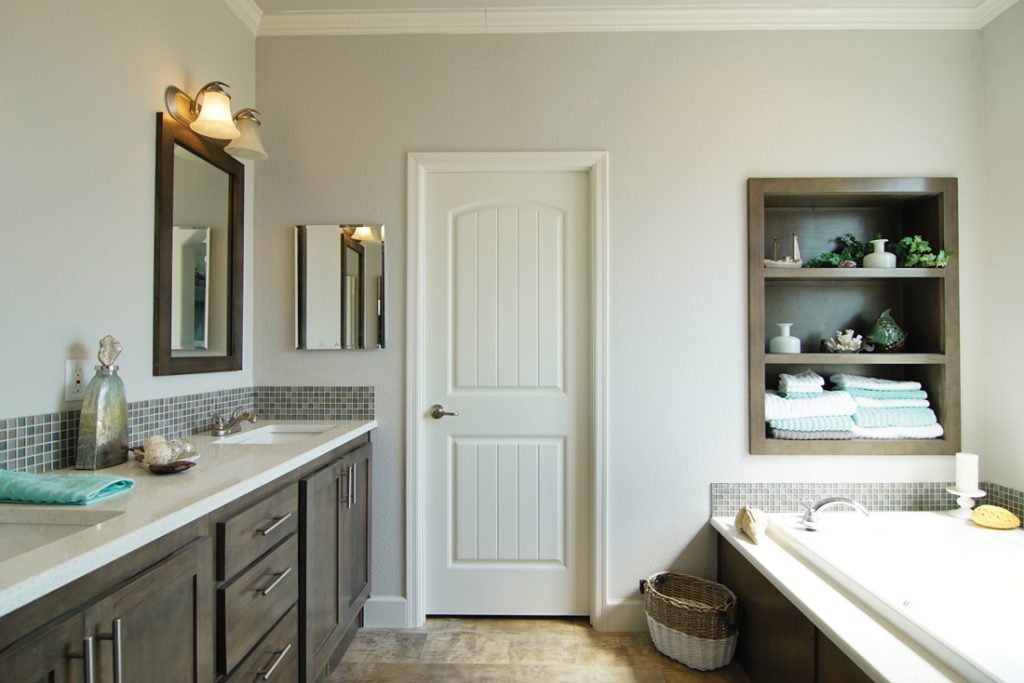
The interior of a new Clayton home.

The Case for Urban Infill?

Clayton and Next Step, which are long-time collaborators on a series of initiatives, are working together to organize a schedule of presentations at event within and outside the manufactured and modular industries.

Eason and Epperson said they felt with the development of CrossMod™ homes that can be placed seamlessly in many urban areas alongside all variety of site-built homes that the timing was particularly good to reframe the conversation.

“I really see the opportunity with CrossMod because it aligns so well with what Next Step has been preaching for a long time, specifically about the benefits of a permanent foundation, energy-efficient features, and consumer-friendly financing,” Eason said.

“We believe and have proven that you can go into suburban areas with this product, build a great product and help improve the neighborhood,” Eason added. “It takes some time because there initially is a little bit of ‘not in my back yard’ sentiment for affordable housing specifically surrounding manufactured housing. But it’s great to go through the process and watch how people’s impressions can change.”

Where is The White Paper Going?

U.S. Department of Housing and Urban Development Secretary Ben Carson and his staff received a copy of the “Off-Site Built Homes: An Evolving Industry that Meets Today’s Affordable Housing Needs” white paper during a tour of a home building facility in Alabama earlier this year.

“We’ll take it on the road with our different stakeholders across the country,” Epperson said. “We participated with the Aspen Institute this year and played a role in an affordable housing research project they are working on.

“The change I’m seeing nationally right now with funders, think tanks, thought leaders, the conversation has shifted,” she said. “The door has opened to really engage deeply on making manufactured housing more available.”

New JLT Reports for Iowa, Neb., S.C., Va. Manufactured Home Communities

JLT Reports for Iowa, Nebraska, South Carolina, Virginia

Datacomp today announced the publication of its June 2020 JLT Reports for mobile home rent comps, occupancy, and other vital data from Iowa, Nebraska, South Carolina, and Virginia manufactured home communities.

JLT Market Reports provide detailed research and information on communities in 184 major housing markets throughout the United States. These include the latest rent trends and statistics, marketing programs and a variety of other useful management insights.

Datacomp publishes the JLT Market Reports and is the nation’s #1 provider of market data for the manufactured housing industry. JLT Market Reports are recognized as the industry standard for manufactured home community market analysis.

June 2020 manufactured housing market data published in JLT Market Reports for Iowa, Nebraska, South Carolina, and Virginia include information on 178 “All ages” and “55+” manufactured home communities.

Altogether, the reports from Iowa, Nebraska, South Carolina, and Virginia manufactured home communities include data representations for 32,781 homesites.

Regional Trends in Manufactured Housing Community Rent and Occupancy
  • Midwest region manufactured home communities show a year-over-year 1.3% increase in occupancy and a 3.6% increase in adjusted rents. 
  • Northeast region manufactured home communities show a year-over-year 0.2% increase in occupancy and a 2.9% increase in adjusted rent.
  • South region manufactured home communities show a year-over-year 0.8% increase in occupancy and a 4.3% increase in adjusted rent.

“Occupancy for manufactured home communities in the four states was very stable year-over-year, and the reports show moderate increases in adjusted average rent in nearly every market,” Datacomp Co-President and Chief Business Development Officer Darren Krolewski said. “Occupancy was down slightly in one Iowa market, and rent was flat in one Virginia market.”

More About JLT Market Reports

Each JLT manufactured home community rent and occupancy report from Datacomp has detailed information about investment grade communities in the major markets. The detailed information includes:

  • Number of homesites
  • Occupancy rates
  • Average community rents, and increases
  • Community amenities
  • Vacant lots
  • Repossessed and inventory homes, and much more

JLT Market Reports also include management insights that rank communities by number of homesites, occupancy rates, and highest to lowest rents. Established reports show trends in each market with a comparison of June 2020 rents and occupancy rates to June 2019, as well as a historical recap of rents and occupancy from 1996 to present date in most markets.

The June 2020 JLT Market Reports for manufactured home communities in Iowa, Nebraska, South Carolina, and Virginia are available for purchase and immediate download online at the Datacomp JLT Market Report website, or they may be ordered by phone in electronic or printed editions at (800) 588-5426.

Each fully updated report for mobile home communities is a comprehensive look at investment grade properties within a market, enabling owners and managers, lenders, appraisers, brokers, and other organizations to effectively benchmark those communities and make informed business decisions.

Triad Approved Freddie Mac Mortgage Seller, Servicer

Triad Approved

ECN Capital Corp. today announced that its wholly-owned subsidiary, Triad Financial Services, Inc., has been approved by Freddie Mac as a qualified mortgage seller and servicer.

“We are thrilled to partner with Freddie Mac in support of its mission to empower homeownership,” Triad President Michael Tolbert said.

“Manufactured housing provides a vital solution to affordable housing in the U.S.,” said Mike Dawson, vice president of strategy and policy for Freddie Mac’s Single-Family Business. “We’re excited to partner with Triad Financial to help increase borrower access to quality, yet affordable homes in markets that have traditionally been underserved for those seeking homeownership.”

Freddie Mac’s CHOICEHome® is an affordable mortgage initiative that offers conventional site-built financing for real-property factory-built homes, that are built to the HUD code and have the features of a site-built home. When a factory-built home meets certain prescribed specifications, it is granted certification and is eligible for CHOICEHome financing.

“This partnership with Freddie Mac will allow Triad to scale its real property lending solutions to help meet the nation’s affordable housing needs,” ECN Capital CEO Steven Hudson said.

A Hundred Years Later, Rinnai Corporation Continues to Lead

rinnai tankless water heater

A century ago, advertisements in magazines and newspapers implored homeowners to install the latest and greatest appliance: gas-powered water heaters.

One ad says a gas water heater “stops ALL waiting and fussing when you want HOT WATER.” Another declares: “Just turn the faucet and enjoy an inexhaustible supply of hot water.”

No coal, ashes, or dust with these modern marvels. Hot water on demand without compromise — what will engineers think of next?

It turns out the answer is, “Something even better.”

A Tankless Task

Technology marches on in every industry, including the home appliance industry.

Leading that march? Georgia-based Rinnai Corporation, manufacturer of the number-one selling brand of tankless gas water heaters in the United States and Canada.

Founded 100 years ago, Rinnai’s leadership lineage reaches back to the debut of gas-powered water heaters. The company’s role in producing tankless water heaters stretches back nearly as far. In 1921, Rinnai & Co launched their first tankless water heater product.

To put that in perspective, World War I had ended just three years prior.

The quality and reliability of their tankless water heater products assured Rinnai’s leadership in the field from that point on. It’s a position the company retains to this day.

Water Heaters Get Smart

When it comes to today’s homes, “smart” is in.

Programmable thermostats started the trend. But now there are smart light bulbs, smart window shades, even smart toilets. It only makes sense, then, that something as essential to comfort as water heaters join the club.

Rinnai offers tankless water heaters with both Amazon Alexa and Google Home support. As a result, water heater control is as easy as saying, “Alexa, tell Rinnai I want to take a shower,” or “OK Google, tell Rinnai I need hot water.”

Rinnai also provides a mobile app for both iOS and Android devices that allows for even greater control, including built-in schedules for multiple on/off recirculation periods throughout the day and a vacation mode users can activate remotely.

“Tankless is what we’re known for, and we’re continuing to drive changes, making installation easier and creating these user interfaces for a product that’s not really known for that,” said David Federico, brand director for Rinnai America. “We’ve taken that to the next level for control with an app… for instance, when your kid is showering you can set the water at 97 degrees, and when you need to wash dishes you bring it up to 120 degrees.”

The interface also provides error alerts for plumbing problems that otherwise may go undetected for long periods of time, Federico said.

Consumer spending on smart home systems tops $100 billion, so it’s a strong market for the company. As for what the future holds …

The Next Hundred Years

Rinnai’s plans for the future include continuing to offer homeowners with solutions that promote comfort and health. They anticipate achieving that through technologies that continue to emerge and evolve.

If the past is any indication, homeowners will one day look back on this period with the same nostalgia that arises from reading yesteryear’s ads touting the amazing properties of gas water heaters. Maybe something like, “Can you believe there was a time when you couldn’t talk to your house and have it turn on the shower for you?”

Rinnai and Manufactured Homes

New product trends in Louisville 2019
NXT Homes, a line from Clayton Homes on display at The Louisville Show.

Tankless Heaters Considered for New HUD Code

For some, technology can move too fast.

That’s the case when it comes to mobile home manufacturing and tankless water heaters, such as those provided by Rinnai.

The reason: many manufactured housing professionals see the rules laid out by the U.S. Department of Housing and Urban Development (HUD) as antiquated in the era of tankless water heaters, smart home technology, and other advancements in home manufacturing.

The result is that while tankless water heaters can be installed in manufactured homes, HUD-approved installation is limited to aftermarket providers. Such a guideline prevents a new home from all of the latest options available.

Fortunately, HUD is aware of the issue and is working to revise the HUD code to include provisions for new technologies.

EVENTS

manufactured housing, manufactured housing industry events, affordable housing, fair housing, michigan

Michigan Manufactured Housing Association Meets Sept. 16-18 in Mt. Pleasant

Three Days for Manufactured Housing Professionals at Soaring Eagle in Mid Michigan Soaring Eagle Casino and Resort is the venue for the 2026 Michigan Manufactured...
Manufactured Housing, Manufactured Housing Industry, MH Professionals, MHInsider

2026 RV/MH Hall of Fame Members Inducted

Annual Induction Dinner in Elkhart Honors Five MH Veterans On Monday, Aug. 17, 2026, five new members of the RV/MH Hall of Fame from the...
manufactured housing industry events factory tours education rvmh hall of fame elkhart

2026 MH FacTOURy Summit Opens Registration

Attendee registration is now open for this year’s MH FacTOURy Summit, the annual two-day event hosted at the RV/MH Hall of Fame, from Aug....