Mark Bowersox, president of MHI, welcomes attendees at the NCC Fall Leadership Forum in 2024.
Manufactured home community owners and operators, as well as other industry professionals, are meeting Nov. 5 — Nov. 7 in downtown Chicago for the annual NCC Fall Leadership Forum.
The event for community owners and operators is hosted annually by the Manufactured Housing Institute, the national advocate for the industry, to discuss the top challenges and opportunities for industry professionals involved in the land-lease business.
The NCC Fall Leadership Forum, being held at the Westin on Michigan Avenue, is the Manufactured Housing Institute’s major annual executive-level meeting for members. Manufactured housing industry professionals in attendance will include:
Community owners Community managers Home manufacturers Industry service providers Brokers Lenders Consultants
The forum offers new ideas, examines new trends, and provides perspective for manufactured housing industry professionals doing business with communities. Organizers have put together two nights and 1.5 days of programming geared toward executives who need a limited time from the office and a high-impact meeting agenda.
The event will begin in the afternoon on Wednesday, with onsite registration at 4:30 and a welcome reception at 6 p.m. The event then kicks off at 8 a.m. Thursday morning with a sponsored breakfast and programs that will include an industry update from MHI and industry experts discussing topics ranging from local and regional trends to expanding and upgrading communities, and the latest regulatory topics. The programming continues Friday morning, with additional discussions about growing the market for manufactured housing and manufactured home communities.
From left, Occupi’s Chief Legal Officer Josh Hornady, Co-founder and CEO Taylor Peake, and Co-Founder and COO Emily Hart.
Pardon… the emerging tech company with local roots may seem like a cute little cartoon character facing a big problem to solve — more on that later — but Occupi comes from an informed place in the man- ufactured housing industry and has applied the latest in tech advances to how homes get filled and monthly payments get made.
Company co-founder Taylor Peake was a community owner long before she started Occupi. She owns parks in Walker County, Alabama, in the area where she grew up, including the community she lived near as a child. She bought that first one from her parents about 10 years ago.
“It’s really difficult to strike a balance between what meets the residents’ needs and what is efficient for the management team,” Peake said. Some of the challenges are obvious on the surface, but difficult in practice — especially around rent payments. “In the communities we serve, we have received a lot of local feedback,” Peake said. “I actually set up myself as a resident in my community and went through the process of submitting an application and walk-in cash payment to experience the process from both sides.”
In many cases, you have to find a local brick-and-mortar store, like Walgreens or another national chain, that has arrangements with payment services, allowing for residents to send money. “In some cases you have to wait in a pharmacy line,” Peake said.
Digital payment sources, particularly app-driven payments, are on the rise. Companies like Block, Inc., which owns Cash App, are making major strides. Today, 60 percent of U.S. mobile phone users take advantage of payment apps, transferring better than $7,000 per year, on average.
“The fees are lower, the service is better, and it is convenient,” Peake said.
Collect Rent Without Knocking on Doors
Peake purchased her second and third communities during the COVID pandemic, compounding the difficulty of communicating with residents, meeting their needs, and completing transactions. Most small to midsize operators in multi-family or manufactured housing community operations faced challenges never seen, never thought of, in the spring of 2020.
“USPS disruptions during Covid made paying and receiving rent via money order even more of a hassle than usual. During the pandemic, the postal service was unreliable and created a major hurdle,” Peake said. “Money orders, cashier’s checks, they were just vanishing.”
The Occupi Technology
Occupi’s software facilitates an easy screening process for applicants and enables multiple payment options in a central hub for renters, including Cash App, Chime, SoFi, Venmo, and PayPal, alongside traditional ACH and card payments.
Many tenants and residents are “underbanked or unbanked”, or simply prefer alternate means to get paid, keep revenue, and pay bills. Many of the Occupi customers have more than one employer, and little free time to run errands, go to the bank, or manage a character code while waiting to complete an in-person transaction. For walk-in or slip payments, the property managers are creating a character code to associate the payment with the resident’s account.
Instead, Occupi is identifying the resident’s account inside of the community’s property management system and (with their permission) associating the resident with their cash wallet or favorite alternative payment method. Using Cash App as an example, the resident can utilize Cash App’s cash deposit locations to quickly deposit cash or employer checks without the cumbersome slip or character code process.
“We see many residents paying rent after hours, when traditional financial solutions or walk-in payment locations are closed,” Occupi co-founder Emily Hart said.
Max Rykov, director of growth for Occupi, comes from the nonprofit housing sector in Alabama and Tennessee. He is was new to the company and new to the industry in 2025, but accustomed to the difficulty of a smooth application and monthly payment process. “It’s such a big issue,” Rykov said. “I assumed that this approach would have already existed. The future of payment will be via app-based solutions.”
Build the Idea, the Brand Emerges
Peake and Hart spent much of 2023 working on the big idea. They booked meetings with TransUnion. They reached out to all of the app-based payment services. They talked with residents, friends, and colleagues in the housing sector and in the tech space.
“It’s a lot of conversation and partnership,” Hart said. “That’s probably why no one else has done this. “We launched the service in 2024 on Taylor’s properties,” she said. “We took a lot of feedback, and, again, looked at what worked and what didn’t… We felt really good about our product.”
Occupi’s fast application process incorporates the use of tax IDs rather than solely Social Security numbers. This innovation opens the application process to legal residents who are not yet citizens. When they made the app available to the wider market, the Occupi team signed up 1,000 doors in two weeks. To date, Occupi has facilitated more than $385,000 in transaction volume. Hart said the application is largely invisible to property owners because it operates in conjunction with owners’ existing software, but also can be used as a standalone product.
“That’s something that fits well for smaller operators using only QuickBooks or Xero,” Hart said
The Origins of the Octopus
Hart has a marketing background and in recent years has been primarily in product development. When it came to naming the company, she wanted an active verb, she said.
“I found myself saying a lot ‘Is this unit vacant or occupied?’ I liked that. ‘Occupied.’ Occupy as a company name was already taken, but Occupi with an ‘i’ was there. And I felt like it worked.”
At bedtime several days later, she was struck by her son’s favorite companion, a plush beanie octopus that he called “Octi”.
“We should do an octopus!” She recalls exclaiming. Not so good for bedtime, but great for marketing.
“We went with an ocean color palette and Octi, the Occupi octopi, and it stuck,” she said.
Take the Product to the Industry
With roots in Alabama, it makes sense Occupi would make its debut at the Biloxi Manufactured Housing Show and Expo. The manufactured housing industry is a complex business. Products designed for other industries, or for other sectors of housing, often feel clunky when applied to the space.
Occupi is one of the very few novel fintech solutions designed for manufactured housing. It takes into account the varying models, from “on land” to scattered site, to community, and full-rentals versus land lease, and the varying utility options and fees associated. There’s no charge to property owners to implement Occupi, and a nominal flat fee is added to each payment, which can either be covered by the property owner or passed to the resident.
Full bonus depreciation is back, which will likely fuel an uptick in demand for manufactured housing communities. Despite high interest rates and a softening of almost every major real estate asset class, communities remain a highly sought-after investment.
With inherently less competition than multifamily, it would seem from the outside that a manufactured housing community would be easy to source and acquire. However, as anyone reading this article understands, this is not always the case. The market seems saturated with smaller communities in secondary and tertiary markets.”
There are operators who have been successful in purchasing small communities, but as a management company with an operation of about 15,000 home sites, we see some recurring trends we would like potential owners and investors to understand.
Challenge #1 — Infrastructure
The core of a land-lease community is land. Sounds obvious, but it is surprising the number of people who purchase a community and pay little to no attention to the infrastructure beneath the ground. Small communities, some of which were built in the 1950s by mom-and-pop operators, were often built with water, sewer, and sometimes electric infrastructure that was not intended to last 75 years. When purchasing a community, it is standard practice to hire a plumber and have them scope the sewer lines to determine their condition. The most common sewer main material at that time was clay tile; if clay tile is properly maintained, it can remain useful for a long time, but once it begins to have root intrusion or sections that collapse, that trend will continue. Do not underestimate how much sewer main repairs will cost.
Water mains are trickier to understand in due diligence, as you cannot scope them with a camera. If there are leaks, they are rarely visible to the naked eye. The first step is to understand the size and material of the main. Some older communities have 1.5 to 2-inch diameter mains, and small mains typically mean low water pressure for residents. Next, look at a master water bill and note the total usage of the community. If usage is over 125 gallons per resident, per day, the community likely has leaks. Do not fall into the trap of thinking that installing submeters will fix your water problem. Submeters are great and will accurately track how much water each resident is using, and allow you to recapture it. If there are leaks before the meter, that water is still lost — unable to be recaptured — leading to consistently higher expenses and lower recapture percentages.
Challenge #2 — Market and Business Model
When did location, location, location stop being the core of a real estate investment? Do not fool yourself into purchasing a community that does not meet the fundamentals of a good investment. We see people purchasing communities in tertiary markets with no tangible value proposition. If a resident can purchase a single-family home for under $150,000 or rent a 2-bedroom apartment for under $800 per month, a large majority will choose that over a new manufactured home in a community. Attainability is the cornerstone of our business; the market requires less expensive housing, and a manufactured home should sell for around a third of the price of the average single-family home.
Let’s look at another scenario, where the community is full and there is no need to infill homes. When looking at a property to buy, take into careful consideration the quality of the houses, even if they are owned by residents. Because… residents move out, no matter what your favorite podcast may say. When a resident moves out, what is the physical quality of that home? Will it need to be demolished, or can it be renovated and resold? In either case, vacancy loss and home attrition costs need to be built into the business model.
Challenge #3 — Staffing and Management
Manufactured housing communities are easy to manage. Pay a resident $500 a month and they will mow the grass and collect the rent! That may have been the business model years ago, but it is not the case anymore. Even if the community does have a sweetheart deal in place with a resident, make sure that when purchasing the community, you adequately buffer expenses in the event they leave. If they do, your operational costs for the community will likely increase significantly. Finding part-time labor for a small community is difficult and landscaping/maintenance costs have increased exponentially in recent years. MHC management is a labor-intensive process. Having a small community doesn’t mean a small workload. Often, a 50-site community will need the same workforce as a 100-site community, with half the revenue to support it.
Purchasing a small community can and should be a successful venture. There are many operators nationwide that do it efficiently and profitably. To be successful, please ensure that the community has viable infrastructure, a clear value proposition to the market, and can operate efficiently over time.
Annual Event Held in Partnership with The Novi Home Show
Manufactured housing professionals in Michigan have the opportunity to see new homes and to talk with exhibitors Oct. 10-12 at the MMHA Manufactured Housing Showcase within the Novi Home Show being held at the Suburban Collection Showplace.
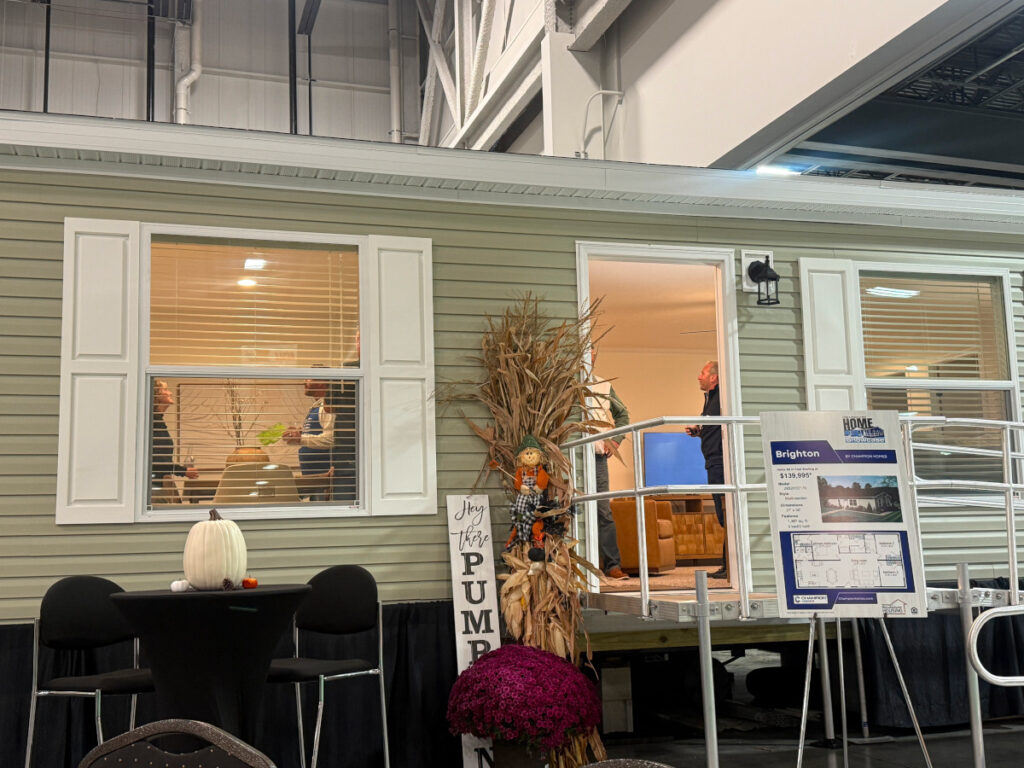
There will be four new manufactured homes on display and open for attendees to tour. Each home is decorated and furnished. Representatives from manufacturers, manufactured home communities, and retailers will be on hand to lead tours through the model homes, according to the MMHA, and answer questions about manufactured home living and community and private property placement options.
Tickets for the event can be purchased online in advance, offering a $3 cost discount and allowing attendees to skip the event line. Tickets the venue are $12, $10 for seniors, and children 12 and younger get free admission.
The Suburban Collection Showplace is located near Detroit, at 46100 Grand River Avenue in Novi. Show hours are Friday from noon to 7 p.m., Saturday from 10 a.m. to 7 p.m., and Sunday from 10 a.m. to 5 p.m.
The home show is a public event, and is expected to draw thousands of attendees.
“Our manufacturing partners are crucial in demonstrating the value of manufactured housing to the general public,” MMHA CEO John Lindley said. “We’re excited for our fellow industry professionals and legislative and government officials to see for themselves the newest in manufactured housing developments.”
About the Michigan Manufactured Housing Association
Michigan Manufactured Housing Association (MMHA) is a nonprofit trade association representing the manufactured and modular housing industry in Michigan. MMHA works to improve the image of manufactured housing by educating consumers, media and government about the quality, affordability, design and beauty of the homes. It also works to protect the interests of the industry and the owners of manufactured homes. For more information, please visit www.michhome.org.

‘Simplification’ Means Eliminating Duplicative Forms of Oversight, Bringing Down the Cost of Housing
Congresswoman Erin Houchin, R-Indiana, and Congressman Mike Flood R-Nebraska, with a short statement on Sept. 17, introduced the “Affordable Housing Opportunities Made Easier through Simplification (Affordable HOMES) Act”, legislation that eliminates unnecessary federal red tape driving up the cost of manufactured housing and pricing families out of the American dream.
“Families across Indiana and across America are feeling the strain of a housing crisis that continues to drive up costs and limit options,” Houchin said. “Manufactured homes are a vital pathway to affordable housing, yet Washington bureaucracy has only made it harder for families to access them. The Affordable HOMES Act is a commonsense solution to get government out of the way, lower costs, and give more families the opportunity to achieve the American dream of homeownership.”
“America is in the midst of a housing crisis and the federal government needs to cut red tape to help build more homes,” Flood said. “The Department of Energy’s regulation of energy efficiency standards for manufactured housing has created burdensome confusion that drives up the cost of manufactured homes. Removing the Department of Energy’s statutory mandate to regulate manufactured homes is a commonsense step that not only brings much-needed clarity but also enhances regulatory efficiency. Thank you to Rep. Houchin for her leadership in addressing this issue and for helping ensure our government gets out of the way of more people living the American dream.”

The Midwest Manufactured Housing Federation announced today that attendee registration is now open for the 2026 Louisville Manufactured Housing Show, returning to the Kentucky Exposition Center in Louisville, KY. from Jan. 14-16.
As the precursor to the spring selling season, the Louisville Show provides manufactured housing professionals from across the country the support needed for a strong sales year.
“The Louisville Show is the industry’s chance to tour the latest model homes on display and connect with fellow manufactured housing professionals,” MMHF President Eric Oaks said. “We’ve been proud to help maintain the Show’s 60+ year legacy by making it one of the biggest industry celebrations each and every year.”
The Louisville Show, held at the Kentucky Exposition Center, draws thousands of industry professionals to tour over 40 model homes from the nation’s leading manufacturers—the largest indoor display of factory-built homes in the Midwest.
Attendees can also learn from industry leaders as they share their insights for 2026 and beyond. Topics covered during the educational seminars at the 2025 Show ranged from state of the industry to builder/developer trends to financing to community management.
“Last year was a resounding success for the Louisville Show, and we’re keeping the momentum moving forward for 2026,” Byron Stroud, 2026 Louisville Show Chairman, said. “This year’s Louisville Show will be a can’t-miss event for any manufactured housing professional looking to gain an edge in the industry.”
For information about attendee registration, sponsorship opportunities, hotel block announcements, and other updates regarding the Louisville Show, visit TheLouisvilleShow.com.
Those interested in exhibiting at the event are urged to visit TheLouisvilleShow.com/Exhibitors or call (616) 888-8030 today, as exhibitor booths are quickly selling out.
The Louisville Show is an industry trade event not open to the general public. For more information about the event, go to TheLouisvilleShow.com.
Softening Labor Market Leads to Easing, Reducing Balance Sheet
The Federal Reserve on Sept. 17, 2025 lowered interest rates by a quarter point, the first such move since December 2024.
Mortgage rates have been coming down, down to their lowest rate in about three years, all in anticipation of the cut may be warranted.
The Federal Reserve board is meeting this week. As talks concluded, Chairman Jerome Powell held a press conference with the updated number and the board’s rationale behind the cut.
“You can think of this, in a way, as a risk management cut,” Powell said.
Revised employment numbers in recent months, bringing the monthly average of jobs added to about 71,000, have incentivized the rate cut, which may have happened even if the labor market had remained steady.
Powell said some inflationary pressure could be related to higher tariffs. He questioned whether the impact would show up as a singular event or if the impact will endure and drive more inflation over time.
“Their overall impact on the ecomomy remains to be seen,” he said. “That is a risk to be assessed and managed.”
First Trust Advisors Economists Brian S. Wesbury and Robert Stein stated in a Sept. 15 newsletter to subscribers that the Federal Reserve is “almost certainly going to cut rates on Wednesday – we think by a quarter percentage point – and will be inclined to cut rates further in the fourth quarter, likely by another half a point total.”
Powell added that conversation among the board governors during the week had little momentum toward a half-point cut.
In September of 2024, the Fed cut rates a half point, and followed with two more quarter-point cuts by the end of the year. The Fed’s goal is to get inflation down to 2 percent with continued growth in the labor market. The price of goods and services in August was about 2.9 percent year-over-year, and employment has been unsteady.
Recent numbers show 22,000 jobs added in August, less than a third of what was anticipated, and revised June numbers show a loss of 13,000 jobs. The U.S. economy hadn’t lost jobs in a month in more than four years. Unemployment is up to 4.3 percent, its highest rate since 2021.
The front exterior profile of a new Clayton CrossMod home, available at Harvest Meadows in Knoxville, Tennessee.
Harvest Meadow Provides Blueprint for Scaling New, Attainable Home Inventory
A new 264-home neighborhood in Knoxville is a showcase for the effectiveness of CrossMod® homes in a partnership between Clayton and Cook Bros. Homes, turning it into the largest neighborhood of its type in the nation.
Clayton is a leading national builder based in Knoxville, and Cook Bros. is a local developer. However, both entered the Harvest Meadow partnership with a mind toward expanding the concept.
“It’s an honor to celebrate this important milestone showcasing how off-site construction and developer partnerships can provide attainable, energy-efficient homeownership for more home buyers,” Clayton CEO Kevin Clayton said. “We look forward to scaling this innovative process and embracing local industry partnerships as we develop neighborhoods like Harvest Meadow in more markets across the country.”
CrossMod® is a registered trademark of the Manufactured Housing Institute to denote homes that are built to the HUD code to combine the speed and cost-efficiency of off-site construction with traditional site-built home features.
Home prices in Harvest Meadow, for instance, will start as low as in the $300,000s, offering a more affordable alternative to the national median new home sales price of more than $400,000.
A Unique Approach
Clayton and Cook Bros. have partnered to open a new CrossMod neighborhood in Knoxville, Tennessee. Photos courtesy of Clayton.
The unique approach at Harvest Meadows enables builders to deliver high-quality, energy-efficient homes more effectively and at a lower cost, making homeownership more attainable for families nationwide.
The homes appraise alongside site-built and other CrossMod homes, and can qualify for conventional financing, creating opportunities for homeowners to build equity and longterm wealth through homeownership.
Clayton points to a 2024 FHFA study showing that modern manufactured homes classified as real property, like CrossMod®, are proven to gain in value year over year. Since 2020, they have appreciated at a rate on par with site-built homes.
“The efficient way these homes are built means builders and developers can achieve price points and scale that might not have otherwise been possible,” Andrew Bryant, Clayton’s business development manager for CrossMod® initiatives, said. “With streamlined offsite construction, builders can achieve economies of scale — savings that can be passed directly to the homebuyer. And because the majority of the home construction takes place in a climate-controlled environment, production time » and costs are significantly reduced, allowing homes to be delivered and completed at an efficient pace.”
The interior living and dining space in a new CrossMod home from Clayton.
The homes in Harvest Meadow are all eBuilt®, meaning they are built to meet strict energy efficient performance guidelines set by the U.S. Department of Energy’s Zero Energy Ready Home Manufactured Home requirements. They are estimated to help homeowners save up to 50 percent annually on energy costs, which equates to more than $900 on average per year for the homes at Harvest Meadow.
The homes will incorporate advanced features to maximize energy savings for homeowners, including: *Solar-ready design *Lux® low-E windows with argon gas *All LED lighting *ecobee smart thermostat *Rheem® hybrid heat pump water heater *SmartComfort by Carrier® HVAC system *ENERGY STAR-certified appliances
The interior of a new Redbud CrossMod home from Clayton, at Harvest Meadows in Knoxville, Tennessee, a partnership with Cook Bros.
Local Officials Attend Ribbon Cutting
A recent ribbon-cutting ceremony at Harvest Meadow involved several area officials, including Knox County Mayor Glenn Jacobs.
“It is exciting to witness local builders and developers working together to introduce innovative ways to increase new affordable housing supply, addressing a critical need right here in our community,” Mayor Jacobs said.
There are more than a dozen homes in the neighborhood, and more will be brought in and placed throughout the year.
As demand for new housing continues to grow, developments like Harvest Meadow represent a scalable solution that allows builders and developers to deliver quality homes at a more efficient pace, offering homes that provide long-term value and a lower cost of ownership over the life of the home through annual energy savings.
“We are very fortunate when we can partner with talented developers, like the Cook Bros. of Knoxville, to provide a local solution to efficiently increase new home supply and help develop a beautiful new neighborhood,” Clayton said. “By embracing energy-efficient, attainable homeownership, the 264 homes in this neighborhood will represent a unique solution for families that blends the efficiencies of off-site construction with the aesthetic of site-built features.”
The headquarters for the U.S. Department of Housing and Urban Development in Washington, D.C.
Bi-Partisan Effort Aims to Clarify Regulatory Framework
U.S. Reps. Mike Flood, R-Nebraska, and Emanuel Cleaver, D-Missouri, on Sept. 10, introduced the “Streamlining Manufactured Housing Standards Act.” This legislation clarifies that only the U.S. Department of Housing and Urban Development has the authority to establish energy efficiency and safety standards for manufactured housing.
“America has been grappling with a housing crisis and cutting red tape is one of the key tools to helping home builders create more housing,” Flood said. “Manufactured homes have historically been built to a HUD code, and in order to make manufactured homes a cost-effective option for consumers we must ensure that HUD has primary authority over all manufactured housing standards.
In a statement on the bill, Flood thanked Cleaver for helping to lead the effort.
“I look forward to working together to move this legislation through our committee and the full House,” he said.
Background on DOE Energy Rules in Manufactured Housing
A 2023 suit against the U.S. Department of Energy, brought by the Manufactured Housing Institute and the Texas Manufactured Housing Association, remains in the courts. In May of 2024, a large portion of the complaint was allowed to continue, and a section regarding the consideration of enforcement policies was dropped.
“American families are drowning under a national housing affordability crisis that is limiting economic opportunity and sowing pessimism in the future,” Cleaver said. “By clarifying HUD’s important role in maintaining home energy efficiency standards, we will ensure that federal experts in housing are the ones overseeing quality projects that enable the construction of manufactured housing nationwide. I’m proud to introduce this bipartisan legislation with Chairman Flood as we seek to lower housing costs by streamlining the regulation of quality, affordable homes in communities that need them most.”
The center of the complaint is based on HUD’s role as the sole regulator for manufactured housing. In essence, the department should be able to work with and consider priorities from other bodies without being mandated to comply with rules written outside of HUD.
Advocates and industry professionals have expressed concern that, in this case and far too often, rules are written for other asset classes in the housing sector and then are crudely applied to manufactured housing.
MHI CEO Lesli Gooch has a conversation with Congressman Emanuel Cleaver, center right, and his staff on Monday, Sept. 8, during the 2025 Innovative Housing Showcase.
MHI Applauds Efforts to Streamline Regulatory Framework for Manufactured Housing
“For more than 50 years, our industry has partnered with HUD to help millions of Americans achieve the dream of homeownership,” MHI CEO Lesli Gooch said. “The Streamlining Manufactured Housing Standards Act reaffirms HUD’s sole authority over our construction standards, preserving the integrity of this long-standing partnership. Manufactured housing is the only form of housing built to a federal construction code, and we do it at scale — delivering quality homes across the country at attainable prices.
“We commend Chairman Flood and Ranking Member Cleaver for their bipartisan leadership in protecting the regulatory efficiency that is central to this partnership. Regulatory efficiency, combined with factory-built efficiency, is the formula that makes manufactured housing the most affordable quality homeownership option available,” Gooch said. “This bill preserves the regulatory side of that equation and strengthens a vital housing solution for families nationwide.”
Flood is a member of the Housing Financial Services Committee and the chair of the Housing and Insurance Subcommittee. He serves as the Chair of the Republican Main Street Caucus, and has introduced numerous pieces of legislation shaping housing policy, including the recent “Unlocking Housing Supply Through Streamlined and Modernized Reviews Act.”
Fannie Mae Indicates Similar Plan for MH Advantage®
Freddie Mac, a government-sponsored entity that provides a secondary market for home loans, announced recently that its CHOICEHome® program will include financing for single-section homes with features that meet a pre-determined criteria.
“Under President Trump, U.S. Federal Housing is committed to delivering affordable homeownership and finding ways to grow our nation’s housing supply,” Freddie Mac Chairman William J. Pulte said. “Modern single-section factory-built homes can offer high-quality alternatives at a lower price point. Freddie Mac’s expansion of the CHOICEHome program helps make more homes accessible to more Americans through the conventional mortgage market.”
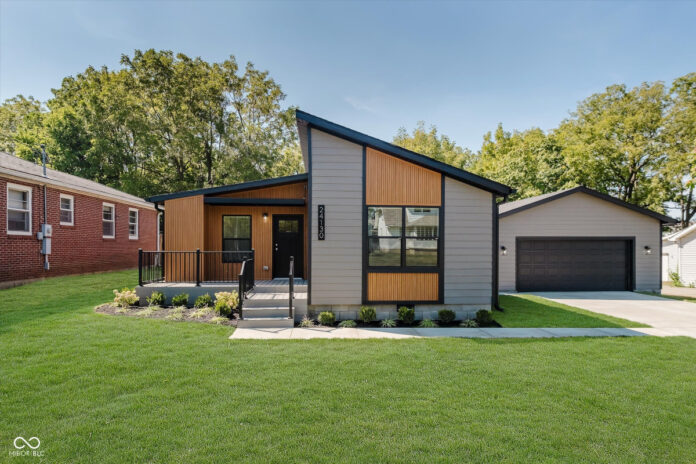
Freddie Mac ensures that CHOICEHome financed manufactured homes meet specific construction standards, which include features such as permanent foundations, energy-efficient designs, pitched roofs, attached garages, and enhanced durability and comfort of the home. These features also make for easier integration with existing neighborhoods that include site-built homes, including urban infill.
CHOICEHome mortgage brings conventional loan financing to modern factory-built homes that are built to exceed federal standards called for by the U.S. Department of Housing and Urban Development. This financing typically offers a more affordable option than traditional site-built homes. The mean price of the newly accepted single-section home is around $200,000, including land in most markets, while a standard single-family site-built home can, on average, exceed $500,000.
MHI Applauds Freddie Mac’s Program Extension
The Manufactured Housing Institute applauded Freddie Mac for expanding its CHOICEHome program to include single-section CrossMod homes as a “pivotal step” toward unlocking greater access to attainable housing nationwide.
CrossMod homes combine the best of on-site and factory construction and have gained popularity in recent years due to the many advantages they offer over conventional manufactured homes. High-end, energy-efficient, and affordable, CrossMod factory-built housing appeals to underserved homebuyers who value homes built to rigorous federal standards for quality, safety, and durability, as well as curb appeal features like pitched roofs and garages. With manufactured homes costing up to 50 percent less per square foot than site-built homes, CrossMods present a compelling path to quality homeownership and are attainable for buyers of nearly every budget.

“Freddie Mac’s inclusion of single-section CrossMod homes in the CHOICEHome program is a meaningful advancement for increasing the supply of attainable housing in the country,” MHI CEO Lesli Gooch said. “These homes are ideally suited for infill development and smaller lots, helping communities meet growing demand with innovative, efficient housing solutions. MHI has consistently advocated for this change, recognizing that expanding financing options for single-section CrossMods will unlock new opportunities for homeownership and support the evolving needs of today’s housing market.”
Freddie Mac’s existing financing options include financing for multi-section factory-built homes with a 3 percent down payment option. As of today, Freddie Mac will include the same financing option for single-section, or single-wide, modern factory-built homes for the first time. Freddie Mac’s counterpart, Fannie Mae, posted to its MH Advantage landing page that plans are underway to include single-section homes in its program as well.
“We join the entire industry in celebrating Freddie Mac’s significant effort to add the single-section home design to their CrossMod mortgage program,” Clayton CEO Kevin Clayton said. “This important update will now provide attainable, energy-efficient homeownership to many more deserving families, helping to make these homes available in established neighborhoods and narrow urban lots.”
Freddie Mac Executive Vice President and Head of Single-Family Acquisition Sonu Mittal said support for modern single-section factory-built homes will play an important role in creating and promoting affordable housing in markets that need additional supply to help first-time homebuyers.
“Lenders can leverage our existing CHOICEHome mortgage offerings to finance these homes, and we are ready to purchase these loans now,” Mittal said.
More than 1,500 manufactured housing professionals are expected in Las Vegas April 7-9 as the Manufactured Housing Institute’s Congress and Expo returns to the...
With more homes, more exhibitors, and more buzz than ever before, the 2026 Biloxi Show is expanding, and fast.
The Biloxi Manufactured Housing Show &...