The MHInsider asked industry professionals to share with us the coronavirus impact on manufactured housing, and more than 600 people responded.
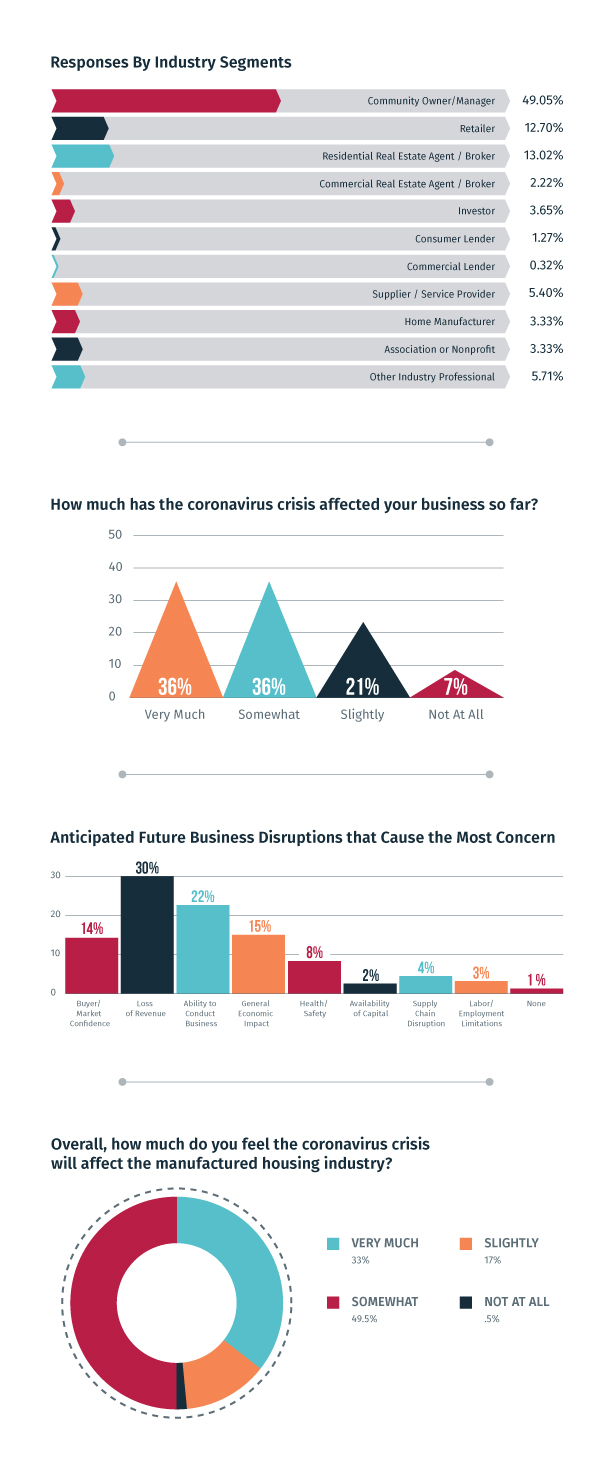
Responses came from all segments of the manufactured housing industry, with a majority provided by community owners and managers, retailers, and real estate brokers.
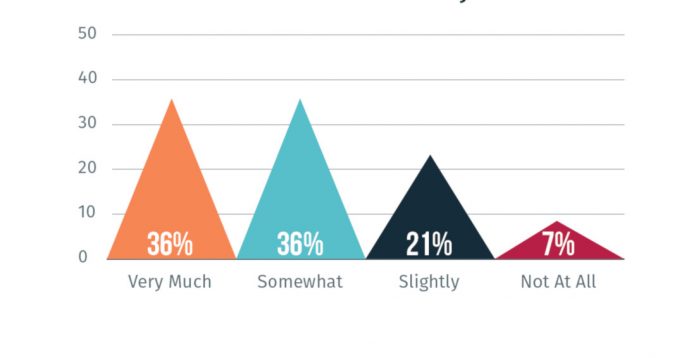
About half of respondents said stay-at-home orders will have a somewhat negative affect, and about a third said COVID-19 and prevention measures will continue to have a significant impact on their business in the months to come.
Slightly less than 7% of respondents said their business was unaffected by the coronavirus.
Infographic Responses from MHInsider Survey of Industry Professionals on the Impact of Coronavirus Measures
‘Put Your Flags Out’ On A New Scale at Ohio Community
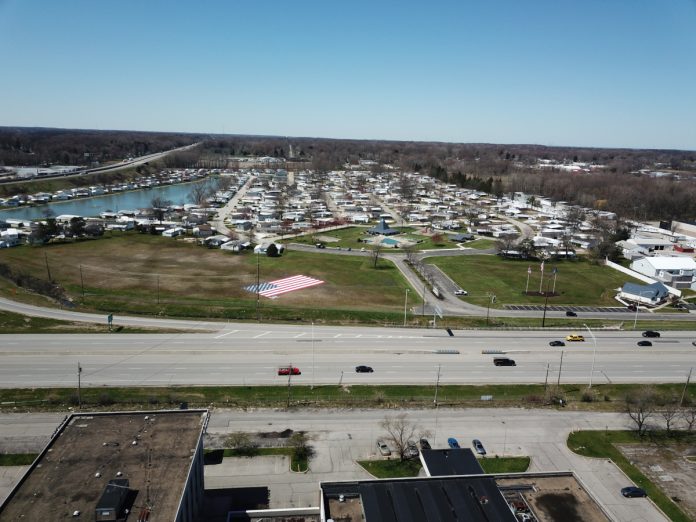
The patriotic rally cry to “put your flags out” is captivating in any climate, but particularly during periods of strife or national crisis. Pikewood Manor Community Manager Shawn Hopkins got to thinking about what type of flag might fit the COVID crisis.
A “BIG ONE” turned out to be the answer.
“We had just put some big flags out, but we have a big yard over there, so I thought we could put another really big flag out there,” Hopkins said.
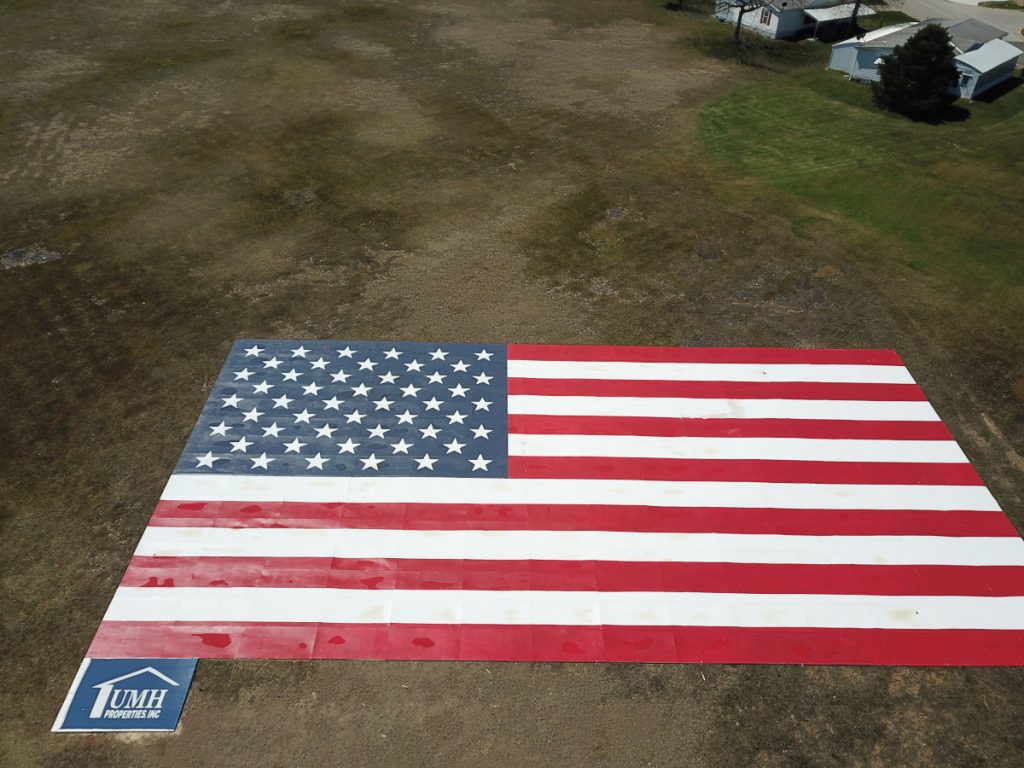
Hopkins and five volunteers from the community and the nearby Avon Ford plant in Elyria, Ohio, laid out 6,800 square feet of plywood and painted an American flag that faces Route 57 and the I-80 turnpike.
Pikewood Manor in Elyria, Ohio put out a 114-foot American Flag. Photos courtesy of UMH Properties
‘Each American a Soldier’
It’s a salute to all passersby, each American a soldier in the fight against coronavirus.
“I wanted to do it in this pandemic, and we have veterans here,” Hopkins said. “That’s the reason behind the music on the video we made, because this is like a war. Everyone feels that.”
More than $7,800 worth of supplies for the giant American Flag at Pikewood Manor came from donations provided by Loews, Carter Lumber, R.E. Michel, and Abraham Miller Excavating. Hopkins and UMH Properties Assistant Vice Presidents of Sales Bob VanSchuver finished the project with their own contributions.
Lance and Nick Dlugosz, Jason Layne, Tony Schuster, and Harry Hatten joined Hopkins in the field.
“We had six people out there,” Hopkins said. “We could have had a lot more people. There were plenty willing to help but we’re doing this for COVID, you can’t really have too many people out there.”
“But this is right on Route 57 and the turnpike, so it’s a very well-traveled route, and a lot of people are seeing it,” he said. “The feedback from residents was phenomenal. They’ve shared it, and they’ve said mostly they’re very proud to live here. In the first two hours, we had 2,000 views of the video.”
A Historical Overview of Terminology in Manufactured Housing
My earliest memory of mobile housing occurred when I was 5 years of age, living in southern New Jersey.
On the way home from the shore one summer evening we stopped for gas. While there, a half dozen or so small house-like trailers pulled off into the woods across the street from the service station, and their owners started hacking down brush and small trees. I asked my father what was going on and he said, “Oh, they’re making a trailer camp for the night or maybe next couple days.” That was 70 years ago, and much has changed, especially housing trade terminology.
One of the earliest and most persistent trade terms, extending back 50 years, has been “D&R deliveries”. Ever since the early 1970s, our industry has been known, sad to say, for this style of drop and run for trailers, mobile homes, and manufactured homes.
1974-1976 is when HUD-code and manufactured housing replaced mobile homes
In this same time frame, “syndicators” of mobile home park limited partnerships ushered in the initial consolidation of individual properties into portfolios.
During the early 1980s, “newlywed & nearly dead” became the truism describing folk buying mobile homes, then and now. In 1985, as the term manufactured housing became increasingly commonplace, the Manufactured Housing Association for Regulatory Reform (MHARR) was birthed by a former executive and members of the Manufactured Housing Institute (MHI).
The ALLEN REPORT debuted in 1989, today identifying 500+/- portfolio owners/operators of land-lease communities throughout North America. But prior to applying that apropos property label, terminology had to evolve from trailer camp to mobile home parktomanufactured home community. Also during this time frame Gub Mix, association director in three western states, hosted the first Manufactured Housing Congress – continuing to this day, as an annual MHI event.
Changing Definitions and Acronyms in Manufactured Housing Terminology
MHI’s Manufactured Housing Educational Institute (MHEI) launched the Accredited Community Manager (ACM) training program in 1991. And in 1992, the first Industry Standard Chart of Operating Expenses, and related Operating Expense Ratios (OERs) made their appearance, just in time for the Real Estate Investment Trust (REIT) wave of 1994 and 1995.
But not before the now-retired Martin Newby, of Newby Management, formalized the concept and processes for resident relations within the realty asset class, which in turn, took steps in 1996 to form the National Communities Council (NCC), now a division of MHI. This same year, David Helfand, former CEO of REITs Equity LifeStyle Properties and ARC, suggested the term owners/operators be used to describe the breadth of ownership and management of 50,000+/- communities comprising this unique income-producing property type.
In 1998 we saw 372,943+/- new HUD-code homes shipped, a sort of mini-renaissance for the industry; one in which so-called Developer Series Homes (think “big box = big bucks”) were all the rage for a short while. And during the same year, the ABC classification of communities methodology replaced the long defunct, since 1976, Woodall STAR system of property quality measurement and reporting.
‘Be a stud, sell a HUD’
During 2001, the Manufactured Housing Manager (MHM) professional property management and certification program was launched after a 13-year hiatus. The following year, as the shipments of new HUD-code homes started to tank, “Be a stud, sell a HUD!” became the widespread rallying call for the industry.
In the year 2009, the industry’s nadir shipment year, Community Series Homes materialized during a meeting of 100+ HUD-code housing manufacturers and community owners at the RV/MH Hall of Famein Elkhart, Ind. Landscape and community design consultant Don Westphal suggested during the International Networking Roundtablelater that year the CSH name. And that same year, George Porter, following a personal epiphany related to installation standards, researched, codified and introduced frost-freefoundations to the manufactured housing industry. During this same period, when the industry was struggling to survive, the term “hudular” enjoyed short-term popularity, describing new homes easily fabricated to manufactured or modular building codes.
Toters and Transporters
A year later, some common trade terms underwent significant change.Rental homesite, or just plain homesite, replaced lot, pad, space, and stall in the minds of many. Transporterreplaced toter. And homeowner/site lessee, rather than tenant or resident, clearly labeled the unique homeownership/ground-lease status of those living in land-lease communities. During 2011, longtime industry consultant William Carr popularized the terms independent (street) retailer and company stores, supplanting the trite term “dealer”.
While land-lease communities, as a contemporary label, has been mentioned a couple times in this evolution of trade terminology, it wasn’t until 2012 it achieved formal status. Why? Well, no longer are just mobile homes and manufactured homes sited therein, but now also modular homes, park model RVs, RVs for a season, stick-built homes fabricated on-site to imitate manufactured homes, and most recently, various types of Accessory Dwelling Units (ADUs) and tiny homes.
During 2018, the National Association of Manufactured Housing Community Owners (NAMHCO) was formed to lobby nationally on behalf of land-lease communities of all sizes, an especially timely and important initiative given the recent threat of national rent control.
A New Series home. Photo courtesy of Clayton Homes.
Present Day Manufactured Housing Terminology
Finally, we currently are experiencing a rush of new trade terms within the housing manufacturing segment of the industry. Think CrossMod® or “new type” manufactured homes, per MHI, produced for Fannie Mae’s MH Advantage® and Freddie Mac’s CHOICEHome℠ real estate-secured finance programs. In the meantime, land-lease community owners/operators selling, and “seller-financing” of new HUD-code homes on-site, relied on cash transactions, lease-options, and leasing of homes as rental units have occurred as they anxiously await Duty to Serve (DTS) programs at both Government Sponsored Enterprises (GSEs) to make personal property financing or chattel capital once again available for home-only loans within properties, and loans on the secondary market.
So, what will the next decade hold for us, relative to evolving trade terminology? Well, that’s anyone’s guess.
But asking me, I’ll be bold to say most of our new HUD-code home sales will come from polar ends of the pricing spectrum — the high end (via GSE DTS programs) and low end (within land-lease communities) with little else between. And communities per se? I Don’t see much change there — unless it becomes, once again, easy to develop raw land into new land-lease communities for affordable housing. And, we successfully fend off present day efforts to effect national rent control.
About George Allen
George Allen has owned and fee-managed land-lease communities since 1978. He’s a former MHI Person of the Year and a member of the RV/MH Hall of Fame. Allen can be reached at gfa(at)aol.com.
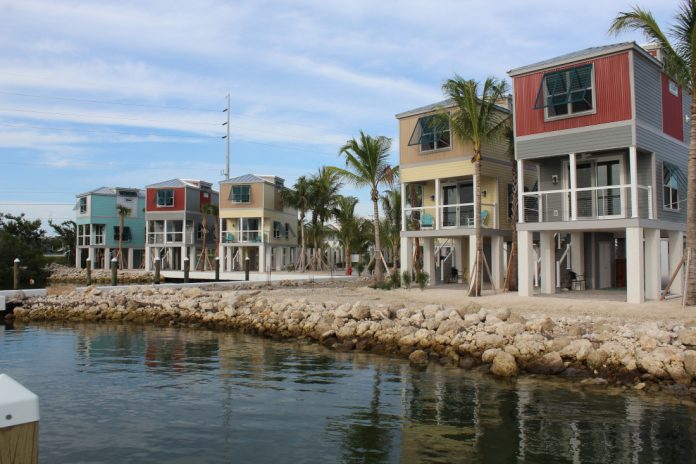
Ocean Breeze on Marathon Key offers waterfront homes with elevated views. Photos courtesy of Sun Communities.
Ocean Breeze on Marathon Key has seen its fair share of large storms, but following the destruction of Hurricane Irma in September of 2017 the community was rebuilt with a new aesthetic, and one that will help fend off the high winds and flooding of the future.
“Unfortunately we lost everything in the storm, but it’s an opportunity to redevelop,” Ocean Breeze sales associate Michelle Meszaros said.“We worked with Nationwide and we designed these homes alongside them to meet all the new standards that were put into effect after Irma.”
The new factory-built homes, constructed to local modular specifications within a stackable HUD-code envelope, are upon foundational pilings and are built to withstand high winds and flying debris.
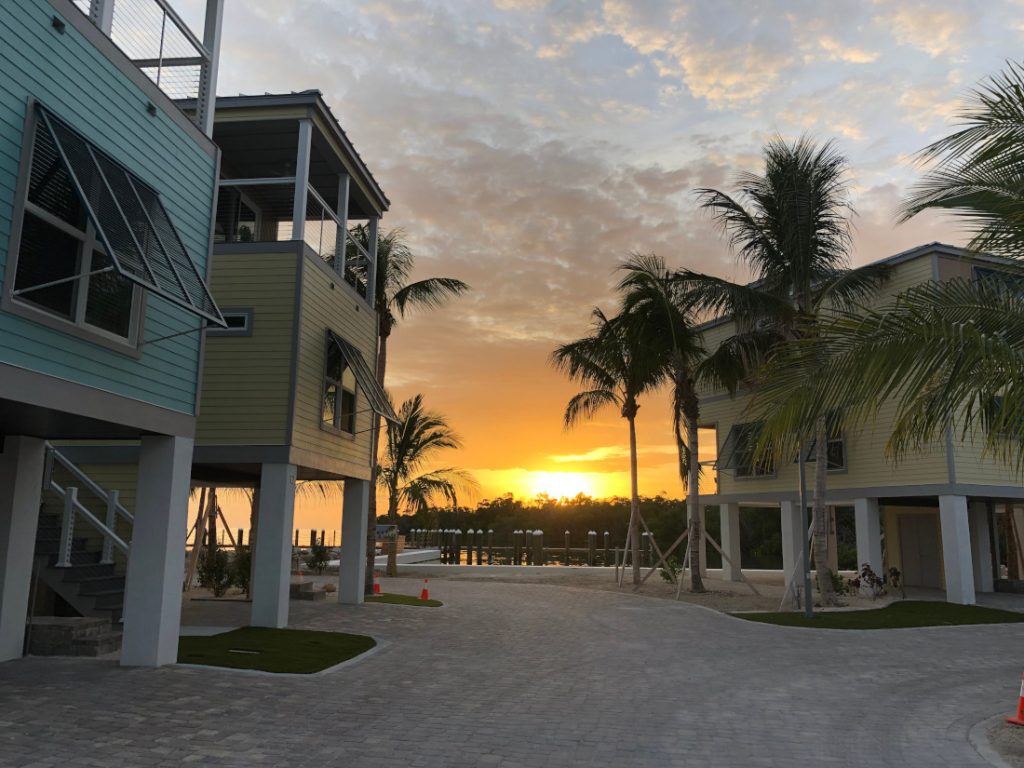
The sunset at Ocean Breeze.
What Makes the New Ocean Breeze More Durable?
“In a lot of cases, the homes will be more wind resistant than a concrete block structure,” Meszaros said. “They’re made to withstand sustained winds of up to 180 miles per hour.
“With the Bahama shutters, you can open the windows and bring them inside the home to protect the window and the interior, including the occupants,” she said. “Many storm shutters will protect from a palm tree coming through or something like that, but the glass will still break. And it’s expensive to replace a window. This shutter protects the glass from outside debris.”
Each home has a metal roofing system and Hardie Board siding, which is a durable concrete-fiberboard that comes in a variety of textures and colors. Both upgraded materials help protect the home during a storm. And each is much less likely than standard materials to dislodge and create a further hazard for the community.
“It holds up really well to the hot Florida sun,” Meszaros said of the Hardie board. “It doesn’t fade like other siding might, so you don’t have to get up to paint it nearly as often.”
The community had 16 new homes in place at the beginning of 2020 and had plans for another 15 homes during the first quarter. All of the homes have high ceilings and plenty of natural light.
Isla Vista Model
Ocean Breeze has a seaside hammock garden.
960-square feet
2 bedroom
2 bath
Porch
Bahama shutters
Stainless steel farmhouse sink
Granite countertops
Covered parking
Second-floor sky deck
“The homes are meant to be very low maintenance,” she said. “We have beautiful Trex decking and also the stairway that goes up in the second level is made by Trex. And there are beautiful, nautical looking stairway rails, with posts and guy-wires.”
Likewise, all of the exterior hardware and components of the homes, as well as the community buildings and common areas, are made from non-corrosive materials. Rebar and concrete foundations are drilled and anchored into the corral below. Brick and paver driveways go under each home and throughout the community.
With Ocean Breeze rebuilt to withstand heightening forces of Atlantic storms, Sun Communities, the Michigan-based owner, can let the property be as it was intended — an enchanted seaside resort in the middle Keys.
Much Needed New Housing in Central Florida Keys
Beyond the durability of the revamped land-lease community, the new homes it provides are much-needed affordable housing in a resort area known for its multi-million dollar dwellings.
“If you talk about the Keys, our homes are affordable,” Meszaros said. “You can’t even purchase a home on the canal for under $1 million. Right next door to us there’s a developer putting in $6.5 million homes. Ocean Breeze is very affordable for the Keys.”
Waterfront homes at Ocean Breeze will sell for $390,000, with homes in the $200s at the interior. Interior monthly site rent is $1,100 and $1,350 at the water. Former residents of Ocean Breeze are provided special pricing if they opt to return.
“Some of them are coming back. We offered them the rebuilt community, brand new homes, and all the amenities, fully insured, at 5% below cost,” she said. “We are pleased that some people did come back.”
Common areas include an open-air pavilion on the boardwalk. It has comfortable seating, including couches, a TV and a grill. The harbor has been dredged, and a new dock system with 14 boat slips was put in. Sun Communities also installed a sunset deck with mature coconut palms and a hammock garden.
“There’s a lot of fishing and snorkeling, obviously, so it really is a beautiful place to be,” Meszaros said.
“It’s one of the great spots because you’re right in the middle,” she said of Marathon Key. “It’s often called the heart of the Keys. There’s shopping and retail, medical access. People don’t realize here that you can get to a grocery store in 10 minutes whereas in other spots it may take you an hour to go to the store.”
The Manufactured Housing Institute Honors Recipients with Annual Professional Awards
MHI has announced the 2020 award winners for its Excellence in Manufactured Housing, honoring organizations in the areas of manufacturing, retail, community, supply, lending, and design.
Excellence in Manufactured Housing awards manufactured housing professionals from every corner of the industry, chosen by peers and an independent panel of experts for leadership and dedication.
“This year we had over 100 entries from industry partners who are thinking outside of the box to improve the manufactured housing industry,” said MHI President Mark Bowersox. “This year’s award winners show the dedication and expertise that this industry needs as we push forward. On behalf of MHI, I’d like to congratulate all of this year’s winners.”
Winners of 2020 Excellence in Manufactured Housing Awards
Manufacturer of the Year Awards
• Manufacturer of the Year – Two Plants or Less: Adventure Homes
• Manufacturer of the Year – Three Plants or More: Clayton Home Building Group
Retail Sales Center of the Year Awards
• Retail Sales Center of the Year – East: UMH Properties, Sunny Acres Sales Center in Somerset, Pa.
• Retail Sales Center of the Year – West: Family Homes in Chino, Calif.
Land-Lease Community Awards
• Community Operator of the Year: Hometown America Communities
• Land-Lease Community of the Year – East: Beach-Cove Properties, Inc.
• Land-Lease Community of the Year – West: Oak Tree Ranch in Ramona, Calif., Hometown America Communities
Parke Place Estates in Elkhart, Ind., a UMH Properties community.
Communities Work with Residents Who Need Time, Help to Pay
While reports come in from various sectors of the housing market that up to a third of renters have yet to pay April rent, early feedback from the manufactured housing industry shows a more promising trend.
Much more inquiry is warranted and underway, but owners and operators who oversee tens of thousands of homesites in nine states report that more than 90 percent of residents in their communities paid April rent during the first week of the month.
“As of the end of the week 86.6% of April rent has been paid, and we’re allowing anyone who has lost their job because of the virus, they don’t have to pay their rent extending into May as needed,” Landy said. “Thereafter, when things get going again, we’re going to allow residents to pay the back rent through 25% installments each of the following months, as needed.
“We’re making it as solvable as we can for the resident and there won’t be any real receivable issues for us,” he said. “We’re pretty confident about that.”
UMH Properties owns more than 115 manufactured home communities in Indiana, Maryland, Michigan, New Jersey, New York, Ohio, Pennsylvania, and Tennessee. Those properties include residents who pay lot rent to UMH, as well as 18,000 residents who rent a home at an average cost of $700 per month.
A Positive Sign from Manufactured Housing Communities
Holiday Village in Nashville, Tenn. Photo courtesy of UMH Properties.
Manufactured home owners historically have had a more difficult time than other buyers in obtaining home financing, because they generally have been considered a higher risk for those who extend and secure home loans.
“The fact that 82% paid today is a good illustration of what we’ve been saying all along,” Landy said. “This is a very stable housing stock with good customers who care about where they live.”
“You can do better in the short-term not looking for black swan events, but we’ve always been cautious in that way, which allows you to weather a time like this,” Landy said. “Clearly we have the staying power to get through this and maintain our dividend and perhaps be able to trade at a premium given the stable nature of our organization.”
Landy said sales have continued through the company website and UMH is conducting remote closings.
“So, it’s painful because we are concerned about our residents, and from operations, we’re a growth company and it’s hard to grow in this kind of limited environment, but we have no concerns about maintaining our value, paying the dividends, and getting back to normal business as soon as it makes sense.”
April Rent at Five California Communities
On the other side of the country, Newport Pacific’s Maria Horton manages four communities in Southern California. She said even among communities with the area’s most affordable rent, residents have paid April rent or have communicated when and how they would pay. Of 479 homesites in the parks she oversees, 448 residents — or 93.5% — had paid during the first week of April.
While April has seen unprecedented changes in the market, and produced a great amount of uncertainty for residents and owners, May rents could be more of a concern.
“We want people to pay as soon as they can, but right now residents can pay any time during the month without a fee,” Horton said.
“I have a park I manage where the owners sent a letter to residents to let them know they’d be eligible for a raffle of a $500 gift card if rent was paid prior to April 10,” she said. “They’re also providing $25 gift cards for those who successfully set up online payment for the first time. And these incentives likely will carry through to May.”
A resident at Garden West Estates in Gardena, Calif., wears a mask while walking her dog. Photo courtesy of Newport Pacific.
Social security recipients who receive checks at a later date in the month and notify the office of the date of receipt for payment of their rent also will be entered in the drawing if rent is paid in full, Horton said.
Outside of rent collection, business continues if not face-to-face. Horton is making remote appointments and conducting regular drive-throughs of the manufactured home communities she oversees.
“We are calling and checking in on people all the time to see if there’s anything they need,” Horton said. “People come out little by little to walk their dogs for instance, and they wear their masks. There’s less activity in the senior parks, but people seem to be doing well.”
Georgia Owner Expands Assistance Program
David Roden owns Mountainview Estates in Ross, Ga. He has 75 homesites occupied and said he’s given residents until the 15th of the month to pay in April. All but five residents were able to pay April rent, and the others have indicated when and how they will pay.
“We are very pleased with our residents and their willingness to work with us and communicate to us their needs and problems so we can work out a solution with them,” Roden said. “We expect more non-payments in May, but if the stimulus checks come in, I may be surprised.”
Roden and other southeast community owners involved in the annual SECO event have expanded a program that was initiated to help armed forces veterans in need of assistance. Roden said the Veterans Assistance Fund has been expanded to include health care workers who are on the front lines fighting coronavirus.
“We believe they are the real heroes at this time, the ones who have stepped up to save lives,” Roden said.
MHI Notifies Members, Industry 2020 Congress & Expo Canceled, Planning Begins for 2021
The Manufactured Housing Institute sent a message to members and the industry as a whole that out of safety and health concerns, the 2020 Congress and Expo is canceled.
MHI’s Congress and Expo is a keystone among manufactured housing industry events and meetings. The annual event had been scheduled for April 6-8 at the MGM in Las Vegas. Congress & Expo will be held at the same venue on those same dates in 2021.
It previously had postponed the event and had been looking for alternate 2020 dates.
“After weeks of monitoring the COVID-19 situation MHI has made the decision to fully cancel the 2020 Congress & Expo,” the statement read. “This was a difficult decision to make but our highest priority is the health and safety of our attendees, exhibitors and staff.”
The statement said MHI will roll 2020 registration to the 2021 event. Those who registered for the show and have no plans to attend in 2021 can get a refund. All registration refund requests must be received by May 5, 2020.
“As we navigate these unprecedented times, we want our attendees, members and industry professionals to know that we are here to help each of you,” the statement said. “We look forward to the future and we are confident that the 2021 MHI Congress & Expo will be the best one yet!”
JLT Market Reports from Datacomp with updated information on rent and occupancy trends for manufactured home communities in Alabama and Georgia are available for order, including immediate download today.
Datacomp’s JLT Market Reports provide detailed research and vital information on communities in 184 major housing markets throughout the United States. Along with the latest rent trends and occupancy statistics, the manufactured home community market reports include information on home types, amenities, community infrastructure, as well as general management insights.
Datacomp is the nation’s top provider of manufactured housing data. JLT Market Reports are recognized as the industry standard for manufactured housing community market analysis.
April 2020 JLT manufactured housing market data includes information on 69 “All ages” and “55+” manufactured home communities in Alabama and Georgia.
Altogether, the reports include data representations for 15,702 homesites, including those in a new report for Birmingham, Ala.
Market Trends from April 2020 JLT Rent & Occupancy Market Reports
Birmingham, Ala. adjusted rent for all-ages communities increased by 4.53% between 2018 and 2020.
Occupancy in those communities during that time rose to 92%.
Savannah, Ga. adjusted rent for 55+ communities increased by 3.98% between 2018 and 2020.
Occupancy in those communities dipped a single percentage point in that time.
More About JLT Market Reports
Each JLT manufactured home community rent and occupancy report from Datacomp has detailed information about investment-grade communities in the major markets. The detailed information includes:
Number of homesites
Occupancy rates
Average community rents, and increases
Community amenities
Vacant lots
Repossessed and inventory homes, and much more
JLT Market Reports also include management insights that rank communities by the number of homesites, occupancy rates, and highest to lowest rents. Established reports show trends in each market with a comparison of April 2020 rents and occupancy rates to April 2019, as well as a historical recap of rents and occupancy from 1996 to present date in most markets.
The April 2020 Alabama and Georgia JLT Reports for manufactured home communities are available for purchase and immediate download online at the Datacomp JLT Market Report website, or they may be ordered by phone in electronic or printed editions at (800) 588-5426.
Each fully updated report for mobile home communities is a comprehensive look at investment-grade properties within a market, enabling owners and managers, lenders, appraisers, brokers, and other organizations to effectively benchmark those communities and make informed business decisions.
Set up your new virtual open house and virtual home tours today!
A Real Homebuying Experience in the Virtual World
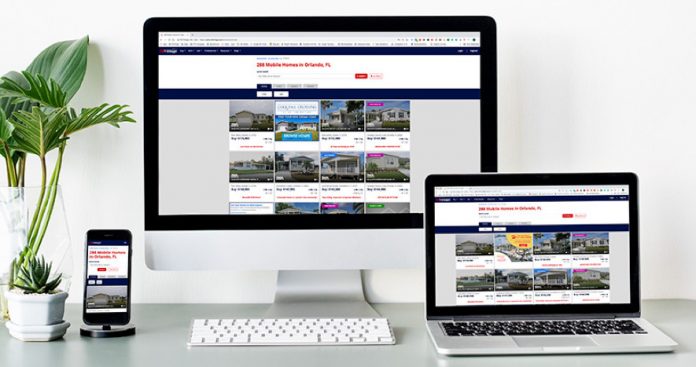
MHVillage, the top marketplace for mobile and manufactured homes, is making all virtual home tours available for free, and has added virtual open houses to its home selling toolkit.
Home sellers nationwide — in communities and street retail settings — have experienced a dynamic shift in face-to-face customer contact. Many have had to alter or temporarily shut down operations.
The consumer/retailer interaction has changed dramatically during what could be prolonged measures to help slow the rate of coronavirus infections.
MHVillage has specialized in the digital home buying experience since 2004.
Today, the company announces a wide expansion of its virtual home tour application, as well as a new tool that allows manufactured housing professionals to hold a virtual open house.
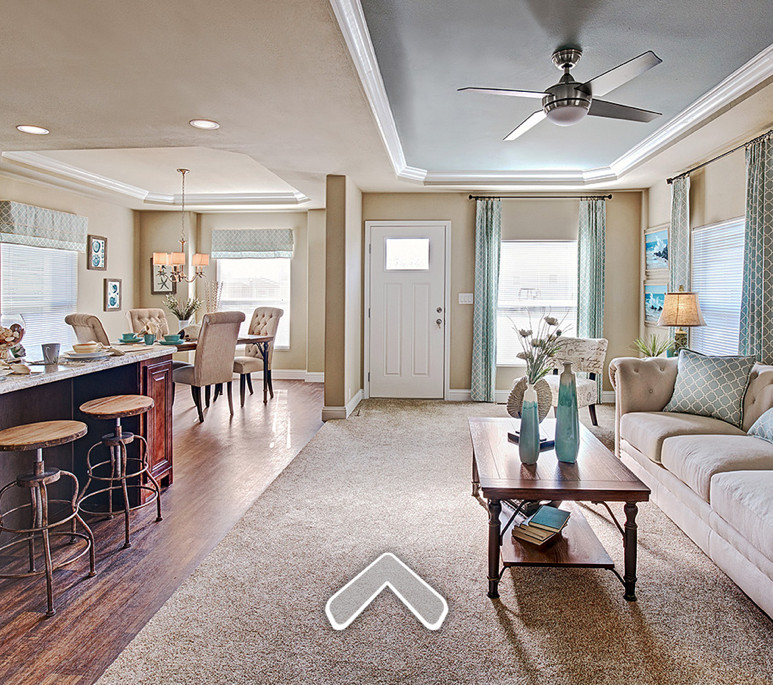
“Virtual home tours on MHVillage have always been available to sellers using premium home listings. We now will open up that option to all home listing categories, free of charge,” MHVillage Co-President and Chief Business Development Office Darren Krolewski said. “Additionally, with the Virtual Open House, we’ve created a new product that marketers and sales professionals can use to show a home, develop the buyer interest, and have the conversations they’ve relied on to be successful in person.”
Each virtual experience helps fill the pipeline by providing MHVillage home sellers a customer lead with the buyer’s name and contact information. The lead form allows home sellers to understand what home or community the customer is interested in as well as the ability to quickly be in touch to further the sales process.
Get MHVillage’s Virtual Home Tour for free.
How to Implement Virtual Home Tours, Virtual Open Houses
Sign in to your MHVillage account dashboard, go to your home listings, and click Edit Listing. The field to enter a Virtual Tour is on the Contact page of your listing. Then follow instructions to link your YouTube video, or Matterport, VPix, 3DVista files from your website.
Virtual home tours are available for free to all listing categories at no additional cost
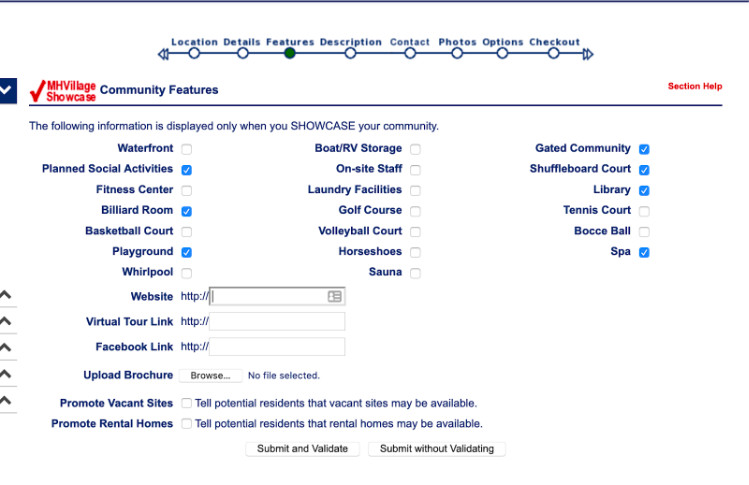
You also can add a virtual tour of your community. Just add the link in the Features section of your community, go to your account, click to view your communities and click Edit Community.
Set Up Your Own Virtual Open House
The MHVillage Virtual Open House works in much the same way as a traditional Open House, by scheduling the dates through your MHVillage account. MHVillage customers can log in, choose a listing, and click to add an Open House. On that page, you will see a checkbox for making it a Virtual Open House. In the description section of the Open House, you can add a link to your Facebook account for a Facebook Live event. Or add a link to your website to set up a virtual appointment or offer other relevant information.
List a home for sale today, and use the new and expanded virtual applications at MHVillage to continue serving your customers and selling homes.
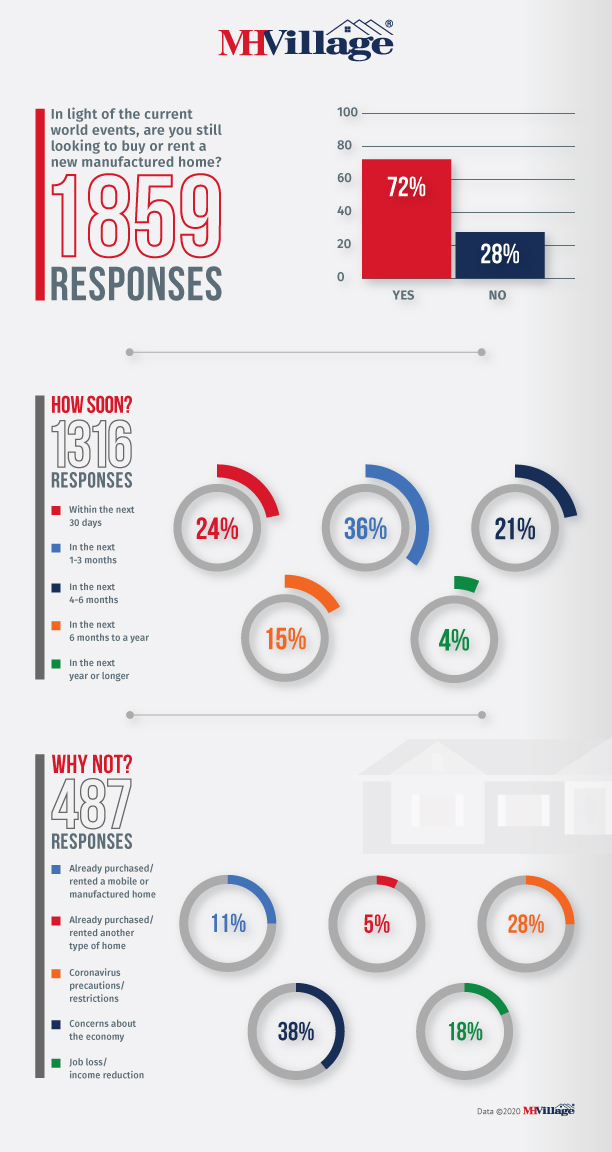
Original research and data from MHVillage show a great majority of manufactured home buyers remain in the market to buy a home. Of 1,859 self-identified manufactured home buyers who responded, 72% said they continue their search to rent or buy a manufactured or mobile home. More than 16% of the respondents halted the search to buy a manufactured home because they’ve already made the home purchase.
For the survey, MHVillage contacted more than 49,000 homebuyers nationwide. More than 13% of those who opened the survey form participated in the manufactured home buyer survey.
For all the results, see the buyer infographic the MHVillage team created with data from the survey.
Oct. 6-8 at Avalon Hotel in Alpharetta, Ga.
Manufactured housing community owners have never had more information available to them — or more decisions to...
The Midwest Manufactured Housing Federation has announced that attendee registration is now open for the 2027 Louisville Manufactured Housing Show, returning to the Kentucky...
HUD’s Innovative Housing Showcase, MHI’s Homes on the Hill and Annual Meeting Begin Sept. 22
Two of the country’s largest builders of manufactured homes will...


 The patriotic rally cry to “put your flags out” is captivating in any climate, but particularly during periods of strife or national crisis. Pikewood Manor Community Manager Shawn Hopkins got to thinking about what type of flag might fit the COVID crisis.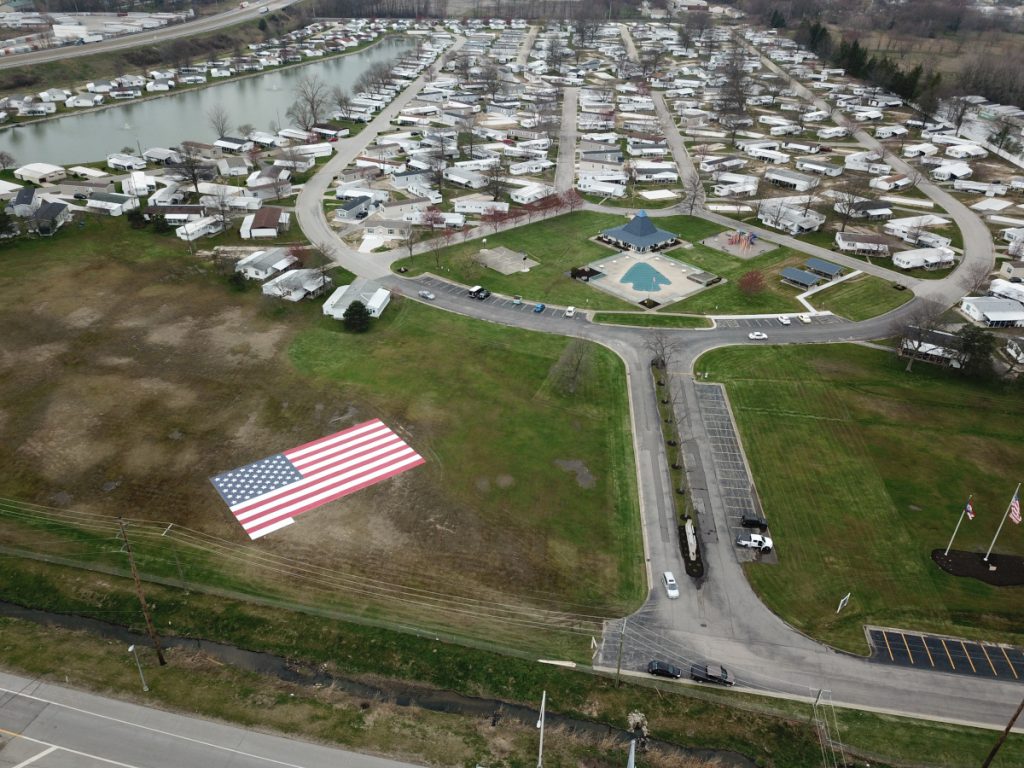
 MHI’s Manufactured Housing Educational Institute (MHEI) launched the Accredited Community Manager (ACM) training program in 1991. And in 1992, the first Industry Standard Chart of Operating Expenses, and related Operating Expense Ratios (OERs) made their appearance, just in time for the Real Estate Investment Trust (REIT) wave of 1994 and 1995.
 A year later, some common trade terms underwent significant change.







 — infographic design by Merit Kathan