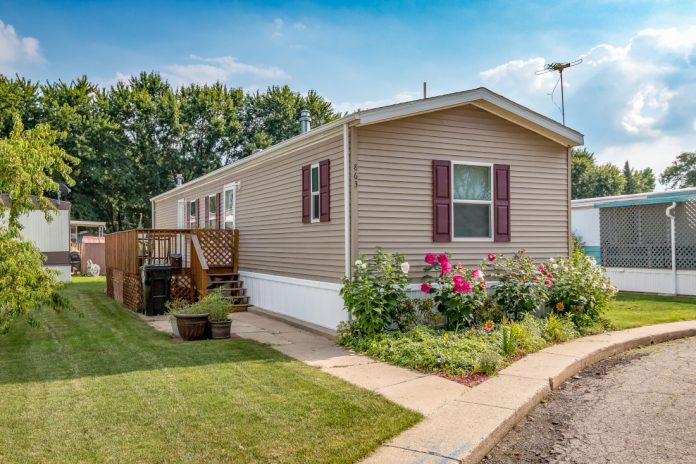
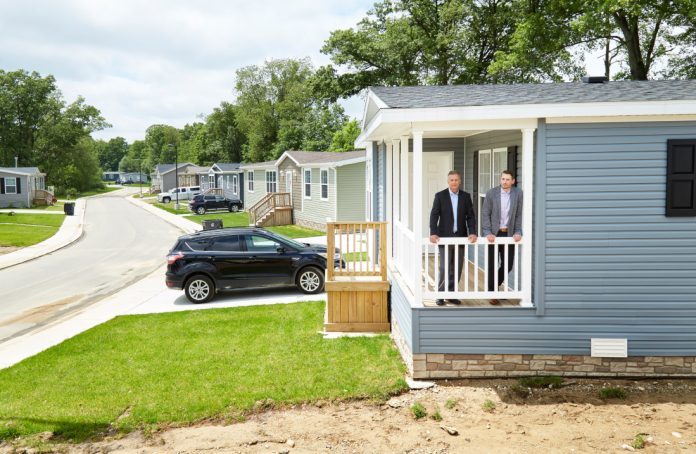
Legacy Title in Blaine, Minn., offers drive-thru closings for homebuyers and real estate transactions.
During Busy Time for Homebuying, Legacy Title Clients Use Curbside, Drive-thru Closing
Legacy Title, a full-service title insurance and real estate closing company is using a safe and unconventional way to close real estate transactions during the coronavirus outbreak.
On the heels of Governor Tim Walz ordering Minnesotans to stay at home until April 10, except for essential duties, the advent of a drive-thru service at Legacy Title’s Blaine location is being met with open arms and even accolades from competitors.
Connie Clancy, president of Legacy Title, said the idea came out of necessity.
“We recognized immediately that this situation would cause a shift in the traditional way of doing closings and began implementing changes,” Clancy said. “We started with separating parties into different closing rooms, offering curbside service and then saw the opportunity to offer the drive-thru option and acted quickly to make it happen for our customers.”
Since commencing this innovative service customers have sung its praises.
“They are relieved and appreciate the ability to close safely from their car,” said Executive Closer Carmen Jorgensen.
“We began offering drive-thru service on March 23. We have had several closings in this drive-thru already and have it booked for the next several days,” Jorgensen said.
Busy Time for Residential, Real Estate Transactions
Clients who are refinancing or purchasing a manufactured home depend on the ability to close on a transaction while the rates remain favorable. Many of these pending refinances will allow consumers to potentially save hundreds of dollars per month in mortgage payments, which is very valuable especially now.
“All of our 12 locations have curbside closing services available, but this drive-thru concept is unique,” she said. “We are taking many precautions to ensure we are always keeping a safe distance and using best practices to ensure everyone remains healthy and safe.”
Safe, Convenient Closings
While closings usually are very close gatherings with all parties around a table, this new and necessary concept allows for the same transaction to be completed without putting clients and Legacy Title employees in potentially harmful situations.
“Some of our clients need to have their children with them because school is closed. Doing this in the drive-thru ensures we are adhering to the social distancing orders all of us have been given,” Jorgensen said. “A few clients told us they were considering canceling their closing for safety reasons until they found out about this convenient option.”
Clancy recognizes in the present constant state of change that teamwork and collaboration are critical.
“Is this the new normal? Probably not. But it is the right thing to do right now,” she said “Closings are usually celebrations. But even in difficult situations, essential business like this must happen. Whether someone is buying, selling or refinancing we recognize the importance of their investment and want to continue to make this experience as positive as possible for all involved.”
Sean Geehan was at a father-daughter weekend at Miami University in Oxford, Ohio, when he was struck by a notion that would stick with him and change the course of his career.
That was the spring of 2016.
“I couldn’t get a hotel room and started doing some research on apartments, or hotels around colleges in rural areas and I didn’t see much,” he said. “I came across modular, and felt like it would be a great solution. “But it became clear we wouldn’t want to get into apartments or hotels, and we really wanted to get into residential, which continues to be the real need.
“I worked on this for a year and a half before I even told my wife,” he said. “My background is in technology, and merger and acquisitions. I have no background in building, so I needed to do my research. I didn’t want everyone to think I’m a fool, which they probably still did.”
Geehan found some investors and began to put a team together that would provide the much-needed trades and industry experience.
“None of us were in modular two years ago,” Geehan said. “We were at 15 people at the end of 2019, and we’re bringing on another 10. We want to continue with all on-staff labor.”
Slate Homes launched at the end of 2018, closed its first deal a year ago, and did three more projects through 2019.
In 2020, Slate Homes is in full production.
What Type of Home Does Slate Build?
Slate produces limited-run modular homes that fit the aesthetic of the neighborhood or area where the new homes will be placed. The first home for Slate was infill for an empty parcel in Walnut Hills, a neighborhood in Cincinnati.
Slate also is working on 11 duplexes for a resort town in Colorado, with the capacity to do another 40 duplex homes as needed.
The cost of construction is about $450 per square foot and sell for $1,200 to $2,000 per square foot, depending on the market.
“It’s not just Aspen and Vale, it’s Basalt, Winter Park and other resorts,” Geehan said. “They just can’t get any labor to build homes, and when you do it’s very pricey. It’s a commute and you have to bring the materials in. So they’re looking at what we do, and it meets the need. We’re having a lot of success with it.”
The company also is working with developers on residential infill projects in Detroit. The Ford Innovation Center is ramping up, with the hiring of 5,000 new employees.
“So we’re working with a developer who’s buying land right around there to put in a good mix of ‘build to rent’ homes and others that are being built to sell,” Geehan said. “We have our own interior designer. Customers can come to our main office and sit down, look through the floor plans, material options and all of our offerings.”
Finding the Balance
The company sells to developers who are interested in thoughtful design and have a strategy that brings affordable homes quickly to the market.
“I wanted to do a more high-end home, and saw some of the stuff that’s being done out west,” Geehan said. “We started to think about how to do mid-to-high-end finishes in batches of 40 or 50 homes.”
The moderate-sized runs are enough to build in needed efficiencies but maintain the custom-look of each home.
“For us, everything is a smooth finish. You’re not going to find popcorn ceilings or seams. It’s almost like we’re putting up a custom home but we’re building 20 or 30 of them,” he said. “That middle layer is where we play. How do we take something we can run 25 times that will have the features that really draw people in. Cedar with a solid stain, maybe a different color Hardie Board and other features that are eye-catching and pleasing.”
The strategy started with a conversation Geehan had with his nephew, Travis Wilson, who is a high-end home builder and now serves as senior vice president of construction for Slate Homes. Wilson oversees all of the building and site work.
“What if we could take the assembly-line mentality and apply it to what you do?” Geehan recalls asking Wilson. “It’s all the detail like Amish custom cabinets and high-end control systems throughout.”
The strategy seems to have worked. Slate had its 2020 calendar year filled in the first month of last year.
“And we’ll be looking to add a second production facility probably in mid-2021 or early 2022,” Geehan said.
Even in the best of times, the level of responsibility on manufactured home community operators is a grand task. However, the global outbreak of coronavirus/COVID-19 adds to the equation considerably.
Help ensure the safety of residents with the following protective measures.
1. Communicate
Communication is critical during crises. Whether through email bulletins, park signage, or other means, keeping park residents up to date with can help ease uncertainty and fear.
Current guidelines, for example, recommend no gatherings of more than 10 people and that everyone maintains a distance of at least three feet. (Such guidelines may vary state-to-state; make sure you’re aware of your state’s recommendation.) Signs posted in or around clubhouses, pools, and play areas can help remind people of this recommendation.
2. Clean Common Areas
To the best of your abilities, ensure clean surfaces in all common areas. The following list covers disinfectants that are effective in killing the coronavirus: Novel Coronavirus (COVID-19)—Fighting Products
The Centers for Disease Control Control (CDC) shares guidelines about how to use such disinfectants to combat COVID-19: Clean & Disinfect
3. Leverage Available Resources
An increasing number of sites provide signs that encourage good hygiene and other safety practices.
This site offers downloadable elements for digital signs that work just as effectively when printed.
You may consider printing or otherwise distributing the informative document, “The President’s Coronavirus Guidelines for America 15 Days to Slow the Spread.” It is available as a download here.
If you need to communicate with park employees, here is a sample letter you can use to address the virus and related issues.
4. Look Out for Seniors and Others
COVID-19 does not discriminate between potential victims. However, experts consider anyone over the age of 60 as well as those with certain pre-existing conditions especially vulnerable.
In many communities, residents looking out for one another is a way of life. However, there may be some residents without friends, family members, or neighbors available to check on them. If you’re aware of any such residents, outreach as simple as a phone call can make a tremendous difference.
If possible, adding any essential items they need to your work-related shopping list will help them. Residents should shelter in place and away from settings where they can more easily become infected.
Most organizations today understand the importance of having a dedicated digital marketing program. Many companies realize the value that a well-optimized website and online presence have as a modern sales tool.
However, it is worth a reminder that the biggest advantage digital marketing can offer a business is measurement. The ability to track, monitor, and evaluate the performance of any effort is what allows you to eliminate as much guesswork in your operation as possible. From a marketing perspective, a large part of this is getting to know your customers on a deep level.
This means understanding what their needs are, where they spend their time, what topics resonate with them, and how they interact with your brand. To strategically invest your time and money in the right areas, you need to know what’s working, what’s not, and why.
This is where web analytics comes in.
What Are Web Analytics?
Web analytics can seem overwhelming for anyone who is unfamiliar with the terminology, metrics, or what to look for in the marketing results. The sheer amount of available information can feel like a sea of data points that you’re unsure about jumping into.
However, when you can make sense of it, the data will help you better understand your web traffic and gain deeper insights into what your customers care about.
Quick Tip:
When choosing an analytics tool for your business, go with Google Analytics. Google Analytics is the industry standard for web measurement platforms. It’s a highly capable and effective tool that’s free for all businesses. If you’re just starting out, it is an ideal solution to get up and running quickly. There are dozens of authoritative, free resources readily available to help you learn more about the platform at any level.
But before you spend too much time looking in your analytics account and drawing conclusions, it’s crucial that you begin with a correct understanding of what these numbers represent and how they differ from one another.
Let’s start by defining a handful of basic but fundamental metrics for measuring web traffic in Google Analytics.
Sessions
Users
Pageviews
Sessions
When looking at sessions, think total visits, not people.
Every time someone visits your website a session begins. It starts immediately when the first page loads and ends after there has been 30 minutes of inactivity.
If a user leaves your site, then returns again one hour later, a new session begins. One person can log multiple sessions on a website, so it is common for sessions to be significantly greater than users when looking at analytics.
Sessions are a useful metric for understanding how your website traffic is changing from month to month, or during key periods throughout the year. When you have marketing campaigns running at certain times, sessions can help you evaluate how these efforts are impacting traffic.
Users
When looking at users, think individual people, not visits.
Usersrefer to the number of new and returning visitors to a website. It’s best to think of users as individual people, but there are a few nuances to be aware of.
Any time a new person lands on your site, Google Analytics assigns them a unique ID that gets stored in a cookie in their web browser (like Google Chrome). When they return to your site using the same browser and device, they are recognized as a returning visitor.
It’s important to know that users are tracked separately on different devices. So if the same person visited your site on a desktop and smartphone, it is tallied as a new user.
Users are an optimal way to measure unique web traffic. However, like most things in digital marketing, a single metric only offers so much intel when analyzed by itself. Users are helpful for understanding how many people visited your site in a given time period, but it’s best to look at users alongside sessions, pageviews, and other engagement metrics to really get a sense of the biggest factors driving your traffic.
Pageviews
More straightforward than the above metrics, a pageview is counted every time a page on your website is viewed, as you may have guessed. If someone lands on the homepage, goes to the About page, Contact page, then back to Home, that’s four views. If they reloaded the About page five times, it’s counted as five pageviews. Pageviews are counted very generously in analytics and will always be much higher than both users and sessions.
Hits
To be honest, there won’t ever be much to infer with hits as a metric for traffic. Hits are irrelevant for measuring web traffic. Hits represent too many actions, often repetitive or misleading actions. Some marketers reach for the biggest number and showcase hits as a measure of site visits or users. This is a hasty and inflated representation of actual traffic. Equating hits to a metric like sessions is misguided and ill-advised. Hits always will be much greater in volume than users, sessions, or pageviews.
Hits may be a good measure of overall server usage, but it doesn’t tell you much about your audience.
Platform Comparisons:
Google Analytics vs Webalizer vs AWStats
If you have yet to adopt a traffic measurement tool, there are several platforms for your business to consider. As mentioned, Google Analytics is by far the most widely used tool today. We recommend it against a few others for key reasons.
Alternative analytics platforms like Webalizer and AWStats are known to overestimate traffic data and report inflated numbers. This is because these programs collect data differently than Google Analytics.
Webalizer and AWStats are “Server-side” analytics platforms, meaning they gather data from a website’s server logs to report traffic. Instead of only showing activity from actual human visitors, the data contained in these log files includes activity from both humans and bots. The server responds to human visitors, but also to automated requests made by bots. These requests can include anything like image files, graphics, audio files, and HTML pages.
This significantly skews the data and thus shows much higher numbers than the more refined results from Google Analytics.
Overall, platforms like Webalizer lack cookies to recognize real, unique visitors, so they use data from server logs to give it’s best guess at how many actual people visited the site. Server-side collection is an inferior way to measure website traffic, especially for any sites that receive a sizable volume.
Getting Onboard with Analytics
In this article, we really just scratch the surface of what is possible with web analytics. If all of this sounds new or vaguely familiar to you, it’s a topic worthy of further investigation. Strengthening your knowledge of analytics will provide new insights about customers, how they shop, and how they buy. Without a professional analytics program, you won’t truly have the information you need to adapt your marketing strategy. Sure, you can make changes to your website, run new campaigns, continue creating content, but if done blindly the success of your efforts will be limited.
Luis Vela, vice president of Q10 Lutz, attended the National Communities Council Fall Leadership Forum in Chicago, and took time with MHInsider to talk about his career in finance.
Luis Vela Looks Back on his 40-plus Years in the Manufactured Housing Industry
Luis Vela retired for 18 months.
“I had been running the midwest real estate office for PNC Bank. I was supposed to retire at 67 and worked until 72,” Vela said. “One day I realized it just wasn’t for me. People who retire need a big hobby, like rebuilding MGs or building something. And I don’t have that.
“I’m a deal junky,” he said.
Born on the Road
Maybe part of the reason Vela has business deals in his blood is that he was born on a business trip – in South America.
His father, Walter A. Vela, worked for Sunoco, then known as Sun Oil, in charge of marketing, and then with General Motors, in the capacity as director to the Latin American Free Trade Association (LAFTA).
“We went from Rio to San Paulo, to Buenos Aires to Lima, to Caracas and many other equatorial locales all prior to the age of 13,” Vela said. “We’d move every three to six months.”
Education, Army, and Wall Street
In the United States by high school, Vela was a Champion singles tennis player and played varsity tennis at Michigan State University for 1954 through ’58, where he earned his bachelor’s degree in general business and economics. Next, he went to graduate school at Columbia University in New York City where he earned a master’s degree in finance. He also was in the Reserve Officers’ Training Corps (ROTC), and joined the U.S. Army as a 2nd lieutenant.
Vela trained at Fort Campbell in Kentucky and transferred from the infantry to the Finance Corps in Indianapolis. It’s a place many of the enlisted call “the little Pentagon”.
Vela later was promoted to a 1st lieutenant.
“We wrote all the payroll for the Army. We also could write up to seven checks a month for each soldier… house payment, car payment, insurance payments,” Vela said.
He worked on Wall Street for IBM, and was on the team that brought magnetic ink coding to checking accounts in the banking and finance industries.
“That’s my claim to fame,” Vela said with a smile.
“It was a lot of fun to work in New York City. There’s just a tempo there that’s unlike any other place.”
Coast to Coast
Vela moved west, to Sonoma, Calif., and served as the chief financial officer for Hy-Lond Enterprises, with 34 extended care nursing facilities throughout California, Idaho, Oregon, Utah, and Washington.However, in 1972 he was badly injured in a horseback riding accident.
He looked at the best options for his own rehabilitation care, and for a good place to recover, and decided to go to Florida. While there, Vela began work with American Community Systems as vice president of real estate in the development of Colonies at Margate, in Margate, Fla. He also worked with Intercoastal Communities with Ned Allen and Richard Kearns, as executive vice president and CFO.
“That’s how I got my start in MH,” Vela said. “We had seven MH retirement communities.”
“He has taught me a lot in finance. He’s a legend. He was doing deals when this industry was selling 500,000 homes.” — Community owner and friend John Rogosich
During this time, Vela worked huge deals with the Sun Communities, Inc. REIT, in obtaining a Fannie Mae Credit Facility.
“We started with $50 million and got it up to $392 million outstanding,” he said.
“We also did a whole bunch of mobile home parks in Arizona during the 1980s, in Tucson, Mesa, Apache Junction,” Vela said. “At one point, Phoenix had 80,000 park models, and it seems all of them were being bought by people coming down from Canada. These park models all had a certain kind of look. A lot of people would extend their park model with a screened porch.
“It was a good look.”
Vela then took the position of senior vice president of acquisitions with Chateau Properties, Inc., a newly formed public REIT. From there, Vela went on what many call “a rocket ride”.
“In my time, we grew the portfolio from 14,500 to 75,000 homes,” Vela said. “We were just behind Sam Zell’s MHC REIT, now called Equity LifeStyle Properties, in going public.
During his time with Green Tree Financial, Vela worked on providing loans for new parks, including construction loans and mezzanine and bridge real estate community expansion loans while serving as vice president of national community financing.
“That was running $8 to $10 billion per year,” Vela said. “But then the economy tanked. We were in 2007, 2008 and were looking for a way to wade through.”
The answer, it seemed, was a merger with Conseco Inc., of Alpharetta, Ga.
Green Tree merged with Conseco, a publicly held insurance company based in Indiana and traded on the New York Stock Exchange.
“We thought if we could get each of these two large, public ‘middle-income customer’ organizations together that we would be successful and get to the other side,” he said. “It didn’t work.”
At the time, Green Tree became the fifth largest corporate bankruptcy in U.S. history, right after Enron.
“Some of the finance and business books still blame us for the 2007 to 2009 sub-prime recession,” Vela said.
Q10 National Production (2018)
Loan origination – $4.6 billion
Servicing volume – $9.9 billion
Locations – eight member companies, with 14 offices in 12 states
At Home in Naples
Luis “Lou” Vela of Q10 Lutz.
Vela now resides in Naples, Fla., continues his work with Q10 Lutz Financial Services, and is a licensed mortgage and real estate broker in the state of Florida.
His son is Luis R. Vela is an orthopedic surgeon and serves as Oregon State University baseball’s team physician. He has a pair of daughters, Meg, in Denver, a graduate of the University of Denver, with a 19-year-old daughter and 18-year-old twin boys, and daughter Dodie, in Orlando, who went to Auburn University and works in the wellness field.
Vela’s wife Lynne is a former flight attendant who worked as an actor in TV commercials.
Q10 Capital, the parent company to Q10 Lutz, is among the nation’s largest servicer of commercial loans, totaling $4.6 billion in loans in 2018. Vela serves as vice president. Q10 does most of its volume in multi-family financing, with a presence in retail, office, industrial. The manufactured housing assets make up about 6% of Q10’s volume.
“We represent nearly all of the major insurance companies, large national and regional banks, and CMBS lenders,” Vela said. “Q10 Capital does about $55 billion annually in commercial loan originations.
“I’m not restricted to lending in one region, so that’s very good,” Vela said. “If I meet someone who needs help, no matter where they are based, I can help them.”
Coronavirus Precaution Causes Cancellation of Tunica Show
Board members for the South Central Manufactured Housing Institute met via conference call Friday afternoon and agreed to cancel the 2020 Tunica Show.
The SCMHI members said in a statement later that day the discussion was about continuing or not with the show, in light of the many public advisories associated with the spreading coronavirus.
“The board has decided that, out of an abundance of caution and in compliance with the public health recommendations being issued by the states of Mississippi and Alabama as well as our national government in Washington, D.C., this year’s Tunica Show will be canceled,” the statement said.
SCMHI board members expressed deep regrets about the need to cancel the show.
“The health and well-being of our participants and attendees must be our first priority,” the statement said. “We apologize for any inconvenience this decision may have caused, but ask for your understanding during this time as our nation’s leaders work to prevent the spread of this deadly virus.”
JLT Market Reports from Datacomp with updated information on rent and occupancy trends for manufactured home communities in Maryland, New Hampshire, and New York are available for order, including immediate download today.
JLT Market Reports provide detailed research and vital information on communities in 183 major housing markets throughout the United States. Along with the latest rent trends and occupancy statistics, the manufactured home community market reports include information on home types, amenities, community infrastructure, as well as management insight.
Datacomp is the nation’s top provider of manufactured housing data. JLT Market Reports are recognized as the industry standard for manufactured housing community market analysis.
March 2020 JLT manufactured housing market data includes information on 192 “All ages” and “55+” manufactured home communities in Maryland, New Hampshire, and New York.
Altogether, the reports include data representations for 35,661 homesites, including a new report for Orange and Ulster counties in New York.
State-by-State Trends from March 2020 JLT Rent & Occupancy Market Reports
Maryland adjusted rent for all-ages communities increased by 3.6% year-over-year
Occupancy in those communities from year-to-year rose to 99%
New Hampshire adjusted rent for 55+ communities increased by 2% year-over-year
Occupancy in those communities from year-to-year rose slightly by four homesites
New York adjusted rent for all-ages communities increased by 3% year-over-year
Occupancy in those communities from year-to-year rose slightly by eight homesites
“Among the manufactured home communities in the northeast region of the country published in our March reports, state-to-state trends for adjusted rent continue as we’ve seen them at about 3%,” Datacomp Co-President and Chief Business Development Officer Darren Krolewski said. “Additionally, most markets within the three-state report were stable with only a few down-trending in occupancy, most notably among 55+ communities.”
More About JLT Market Reports
Each JLT manufactured home community rent and occupancy report from Datacomp has detailed information about investment-grade communities in the major markets. The detailed information includes:
Number of homesites
Occupancy rates
Average community rents, and increases
Community amenities
Vacant lots
Repossessed and inventory homes, and much more
JLT Market Reports also include management insights that rank communities by the number of homesites, occupancy rates and highest to lowest rents. Established reports show trends in each market with a comparison of March 2020 rents and occupancy rates to March 2019, as well as a historical recap of rents and occupancy from 1996 to present date in most markets.
The March 2020 Maryland, New Hampshire, and New York JLT Reports for manufactured home communities are available for purchase and immediate download online at the Datacomp JLT Market Report website, or they may be ordered by phone in electronic or printed editions at (800) 588-5426.
Each fully updated report for mobile home communities is a comprehensive look at investment-grade properties within a market, enabling owners and managers, lenders, appraisers, brokers, and other organizations to effectively benchmark those communities and make informed business decisions.
Over the past five years, the manufactured housing industry has been one of the hottest multi-family housing investments. An influx of community investors/owners has caused consolidation among operators in the country while increasing their market share. In 2015, the largest 50 operators owned and managed 500,000 sites while, in 2018, the largest 50 operators owned and managed 700,000 sites.
Times have changed.
I’ve seen this industry’s evolution firsthand from the vantage of virtually every job in the business. Today, as president of Blank Family Communities, a third-party property management company based in Michigan, and over a career that dates back 15 years. My family successfully owned and operated Franklin Communities for 35 years before selling their 2,500 site Michigan portfolio in August of 2018.
‘Boots on the Ground’
Steven Blank walks a property in Michigan.
I was taught and learned a “boots on the ground” approach to operating, and that it takes industry knowledge, people skills, accountability and follow-up to be profitable in the near- and long term.
I have operated with three of the top 10 largest operators in the country and have consulted, acquired and/or sold with another 50 operators. I have seen the good, the bad, and the ugly.
With industry consolidation comes new players with new ideas. After attending the Michigan Manufactured Housing Association (MMHA) expo in Novi, Mich., and speaking to several longstanding operators, I realized that there is a disconnect between new and traditional operators’ views on how to be successful.
At the same time, our industry is being moved forward by state and national associations that have everyone’s best interests at heart. That’s a very good thing as the fights we are all are facing need to be faced together.
I have operated and seen methodologies, strategies and approaches to our industry on both sides of the old-new equation and I firmly believe that bridging the gap between the two needs to occur.
The Old Way
Ronald and Steven Blank talk details of the property during a visit to a manufactured home community.
How many times have you heard, “There’s no need to reinvent the wheel?” That comment is a long-time staple of our industry, which has had relatively the same business model for the past 50 years: Having a community that is filled with resident-owned homes and residents who pay monthly site rents in exchange for community maintenance, and operating the land on which the home sites reside. The maintenance on the land traditionally is low compared to the revenue that is brought in, so the community, if well if occupied, is a great investment and source of cash flow.
This scenario is becoming less and less common as it is no longer easy to sell manufactured homes, post-recession. Moreover, many MH loans, in the Midwest and other major pockets across the country, require community owner recourse. The recession also created the need for communities to pivot their business model to also include rental homes. The impact of this business model shift cannot be understated.
It changed the landscape of the industry.
In the past, bringing in and selling a new home was simple. There was little liability to the community owner. With recourse loans and rental homes, the community owner is never free of liability as they have a financial stake in the success and/or failure of the residents.
The days of passively collecting rent from manufactured home communities at scale are over – unless you already have a stabilized portfolio.
This shift has made the refined operation of communities much more critical and labor-intensive. The result is that there are a dramatically reduced number of communities that can be operated efficiently with a passive management style.
Today’s Value-Add Approach
Value-add is the most common buzz word I hear in the industry today. I believe the term has lost some of its merit. Because manufactured housing communities lost occupancy and revenues during the recession, many communities currently being purchased still have vacancies, deferred maintenance needs and in some cases are below market rent. Ideally, when purchasing such a community, an operator will infill the community with new homes, sell some and rent the rest. They will revitalize the community by completing deferred maintenance, and, once value is added and the resident base is happy, the rents are raised, sometimes incrementally, to market value. In this situation, you now have a stabilized asset that will yield positive cash flow – if the operating system can sustain the new changes.
Focus on the the Operation
The biggest difference between the new companies and the traditional players is their operating structure and the stability of their portfolios – meaning, many communities acquired and owned by traditional operators paid significantly less aggressive capitalization rates. New players need to be more efficient with their value-add and operations, as the profit margins on communities purchased today will be lower due to the high capitalization rates that have become the norm.
Along with acquisition advantages, old school operators documented operating systems and continually trained and supported corporate and field staff, all of whom contributed to these companies enjoying sub 5% delinquency and high occupancy numbers. Newer companies, on the other hand, focus far too much on the acquisition and not enough on the operation. That’s simply not a great recipe for long-term success.
As an industry, we are facing more attention and scrutiny than ever. As such, it is important that all of us make sure that we are operating our communities profitably and efficiently while providing value to our residents. That way, we can remain the most viable form of affordable housing in America and continue to gain popularity across wider demographics.
HUD Secretary Ben Carson will speak at MHI's annual Congress & Expo in April.
U.S. Housing and Urban Development Secretary Ben Carson to Keynote April 8 in Las Vegas
For the third consecutive year, U.S. Housing and Urban Development Secretary Ben Carson will be the keynote speaker at the annual Congress and Expo organized by the Manufactured Housing Institute.
Carson, an outspoken proponent of manufactured housing since taking the cabinet leadership position three years ago, will make his remarks at MGM Grand at 9:45 a.m. on April 8, MHI announced.
“We’re extremely honored that Secretary Carson will be joining us for a third consecutive Congress and Expo. It’s been very exciting to see the progress HUD has made toward reducing regulatory barriers and elevating manufactured housing within the department under his administration,” MHI CEO Lesli Gooch said. “Secretary Carson has been a champion for our industry and has demonstrated a commitment to supporting initiatives that create more affordable housing.
“Whether he’s touring the country visiting manufacturing facilities on a bus or joining us for Congress and Expo, Secretary Carson has taken every opportunity to interact with and better understand our industry,” Gooch said. “We appreciate his efforts, involvement, and recognition of the potential solution manufactured housing presents to creating more quality, affordable housing opportunities across the country.”
More Information on HUD Secretary Ben Carson
HUD Secretary Ben Carson.
Carson is the 17th HUD Secretary with his swearing-in on March 2, 2017. For nearly 30 years, Carson served as director of pediatric neurosurgery at the Johns Hopkins Children’s Center, a position he assumed when he was 33 years old.
He has received dozens of honors and awards in recognition of his achievements including the Presidential Medal of Freedom, the nation’s highest civilian honor. He also is a recipient of the Spingarn Medal, the highest honor bestowed by the NAACP.
The Manufactured Housing Institute works to create an increasingly cooperative and productive regulatory environment for manufactured housing, working closely with Carson, HUD and other agencies and offices in Washington.
The 2020 Congress & Expo runs April 6-8 and is open for attendance by manufactured and modular housing professionals.
‘YIMBY Act’, ‘Small Dollar Mortgages’ Support Move to Senate
The U.S. House of Representatives on March 2 voted unanimously to pass the “Yes In My Backyard Act,” as well the “Improving FHA Support for Small Dollar Mortgages Act of 2020”.
The Manufactured Housing Institute has worked side-by-side with a non-partisan group of lawmakers as well as nearly 20 affordable housing advocacy and consumer protection organizations to urge action on the affordable housing bills.
“The YIMBY Act is bipartisan legislation, introduced by Reps. Heck (D-WA), Hollingsworth (R-IN), Clay (D-MO), Foxx (R-NC), Quigley (D-IL), and Herrera Beutler (R-WA), that is intended to eliminate local land use policies preventing the development of affordable housing,” MHI stated in a housing alert distributed the day following the vote.
H.R. Bill 4351 calls for “allowing manufactured homes in areas zoned primarily for single-family residential homes”. The YIMBY Act creates a reporting requirement under the existing Consolidated Plan Reporting that would require localities that receive Community Development Block Grant (CDBG) funds to report the extent to which they are implementing specific pro-affordability and anti-discriminatory housing policies.
‘Small Dollar Mortgages’
H.R. 5931, the “Improving FHA Support for Small Dollar Mortgages Act of 2020” requires the Federal Housing Administration to review its policies and identify barriers to supporting mortgages under $70,000, as well as report to Congress within a year regarding a removal plan for any barriers.
During Committee discussion, Rep. Al Lawson, D—Fla., requested clarification that the legislation also would be applicable to manufactured home loans. Rep. William Lacy Clay, D—Mo., who authored the bill, confirmed that manufactured home loans would be included in the review. Rep. Steve Stivers, R—Ohio, added that the legislation would be a positive step forward for manufactured housing financing.
Oct. 6-8 at Avalon Hotel in Alpharetta, Ga.
Manufactured housing community owners have never had more information available to them — or more decisions to...
The Midwest Manufactured Housing Federation has announced that attendee registration is now open for the 2027 Louisville Manufactured Housing Show, returning to the Kentucky...
HUD’s Innovative Housing Showcase, MHI’s Homes on the Hill and Annual Meeting Begin Sept. 22
Two of the country’s largest builders of manufactured homes will...



 Clancy said that the industry is in the midst of its strongest March ever with the recent drop in interest rates.
 “I worked on this for a year and a half before I even told my wife,” he said. “My background is in technology, and merger and acquisitions. I have no background in building, so I needed to do my research. I didn’t want everyone to think I’m a fool, which they probably still did.”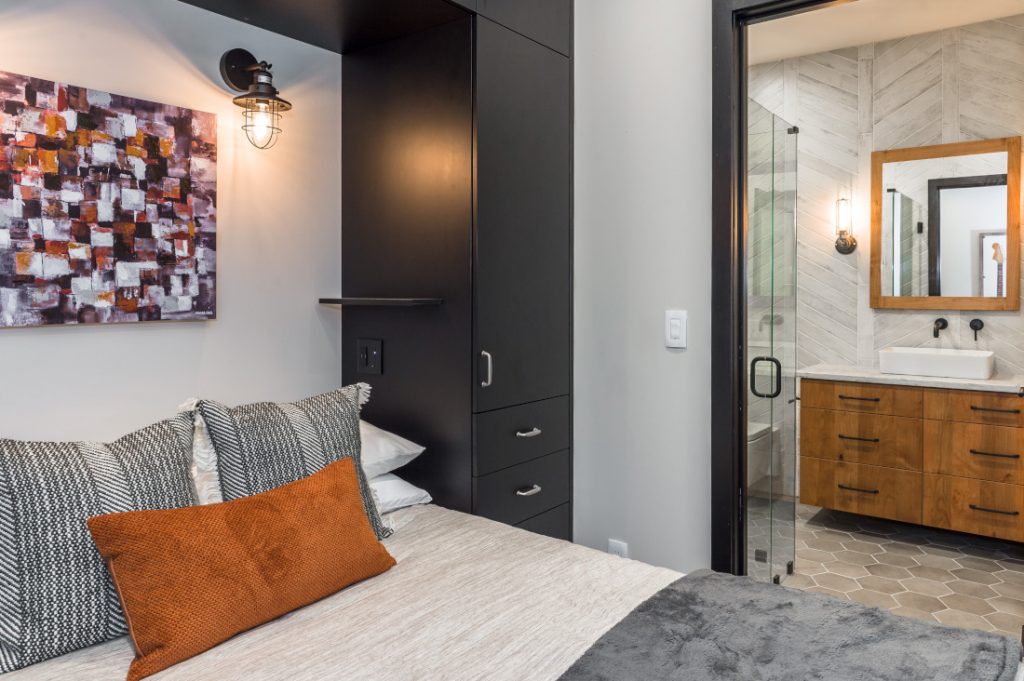
 “It’s not just Aspen and Vale, it’s Basalt, Winter Park and other resorts,” Geehan said. “They just can’t get any labor to build homes, and when you do it’s very pricey. It’s a commute and you have to bring the materials in. So they’re looking at what we do, and it meets the need. We’re having a lot of success with it.”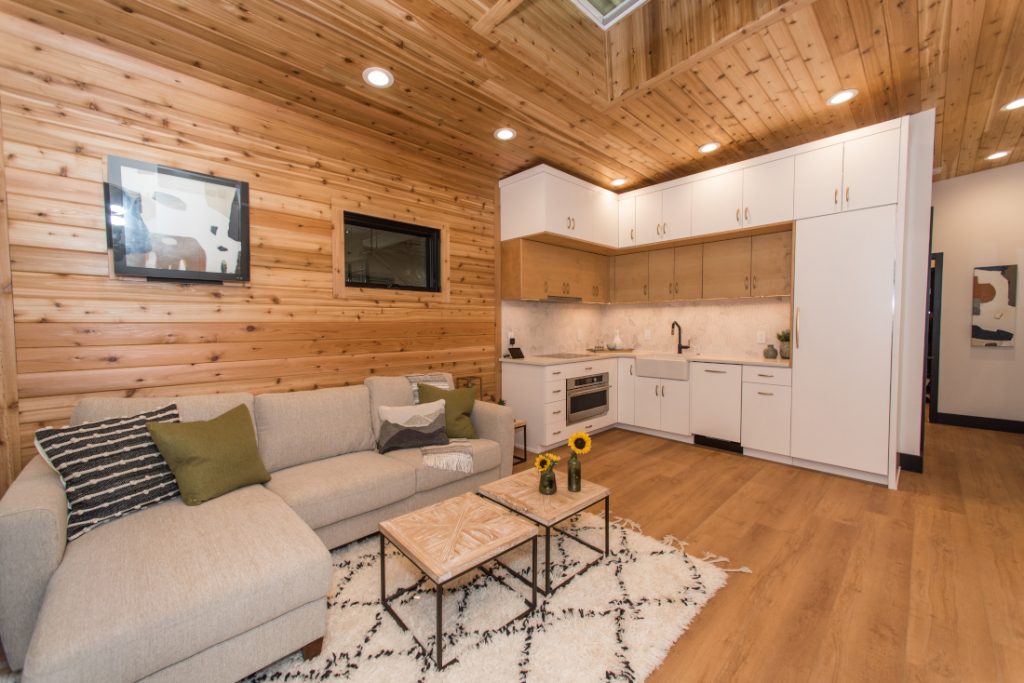

 An increasing number of sites provide signs that encourage good hygiene and other safety practices.

 When choosing an analytics tool for your business, go with Google Analytics. Google Analytics is the industry standard for web measurement platforms.