A secure gateway provided by Metron Sustainable Services hangs on a pole above a community with sub metered water utitlities
Submetering Brings Better Tracking, Cost-recovery and Water Usage Practices to Benefit Communities
Submetering of water utilities in manufactured home communities has been an increasingly relevant investment for property owners, particularly for communities handed down to younger generations or acquired for investment portfolios.
What is Water Submetering?
Submetering involves the installation of a water meter for each home in a land-lease community. This enables property owners to bill residents directly and more accurately for the use of household water.
Submetering Trend Grows in MH Communities
Sherry Armijo of Metron Sustainable Services assembles the meter’s “brain”, which is encased in a protective gel to keep out moisture
“Submetering is pretty much all we do. All of our services relate to it,” he said.
Metron works in 30 states, including all of the western states.
Its parent company installs meters on a contract basis for large metro areas. Minogue said his group primarily services manufactured housing communities. A substantial amount of its business comes from a contract to serve residents at RV Horizons’ properties.
“There are a couple of things that really distinguish us, and what’s most important is our quality of data and an hourly report on the web portal we make available customers,” he said. “The other thing about our system is that we don’t need power on-site or web service on the property, and that’s different from a lot of what’s in the market today.
“For a lot of owners, particularly in remote areas, they don’t have the resources to manage that type of on-site infrastructure,” Minogue said. “Many of these communities don’t have general management on site even, or perhaps one person who resides in the community.”
Metron fabricates and assembles much of its product in Colorado, and has devised a way to protect “the brain” of the system from moisture.
“If you have a hollow cavity, there’s micro-condensation on the electronics. We found this way of filling it with the inert gel and baking it in a microwave oven,” he said. “We have meters in Houston and Florida, and with the recent storms, we only lost five meters.”
Submetering Quick Facts
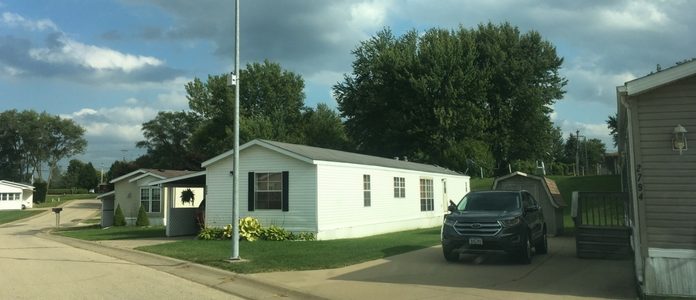
A submeter “in the wild”.
Average cost per home of submeter installation: $300
Average return on investment for property owner: Within 1 year
Typical ongoing costs associated: (Zero through 10 years) $200
Average replacement: Between 10-20 years
– Infinity Billing Services
All Types of Properties Benefit from Submetering
Apex is based in Columbus, Ga. The company has been in business for a dozen years. It serves multi-family, manufactured housing, master planned communities, as well as commercial retail and athletic facilities.
“The changes can be dramatic in utility usage and costs,” national sales manager for Apex Billing Solutions Jacqueline Causey Schroeder said. “Individual water use really is too volatile to accurately track and charge as part of rent from month to month. And rent isn’t something that you want moving around in cost.”
Apex operates up and along the Eastern Seaboard as well as in the Midwest.
Apex’s Vice President of Sales Zach Beck said manufactured home communities comprise a large part of the company’s customer base.
“One of the primary differences with MH communities is that everything is above ground. This leaves the systems more vulnerable to weather damage and they can become recipients of incidental damage or vandalism,” Beck said. “With today’s technology, we can dial into someone’s home and figure out problems and solve them a lot faster and more efficiently than we’ve been able to previously.
“We create reports that verify rates and tariffs are being applied properly,” he said. “And we’re able to fish out if there are any abnormalities in billing and get it fixed before it affects a customer’s bottom line.”
The submetering technologies fit right in with other environmentally friendly measures, such as low-flow toilets and aerator faucet adapters that keep costs under control.
Infinity Billing Services provides submetering for manufactured home communities in the Midwest and in the Carolinas and Georgia. Steve Francis, the owner and president of Infinity, said submetering simplifies the billing process with a minimal initial investment.
“A lot of property owners don’t send a bill for rent every month, they just expect residents to know that payment is due,” he said. “The reason most communities submeter today is because it creates an avenue for accurate recovery of costs. You end up seeing a 15 to 30 percent reduction in usage.”
“Suddenly it’s a considered cost that translates into people using less water, and residents who are more inclined to fix leaks,” Francis said.
Francis said Infinity bills about 12,000 of its customers’ residents, most of whom are in Michigan, Ohio and Wisconsin.
This has become all the more important in recent years, with the consistent national rise in water rates.
A new account typically will receive a two-month trial run before billing begins, Francis said. Residents pay for water within three weeks of initial billing.
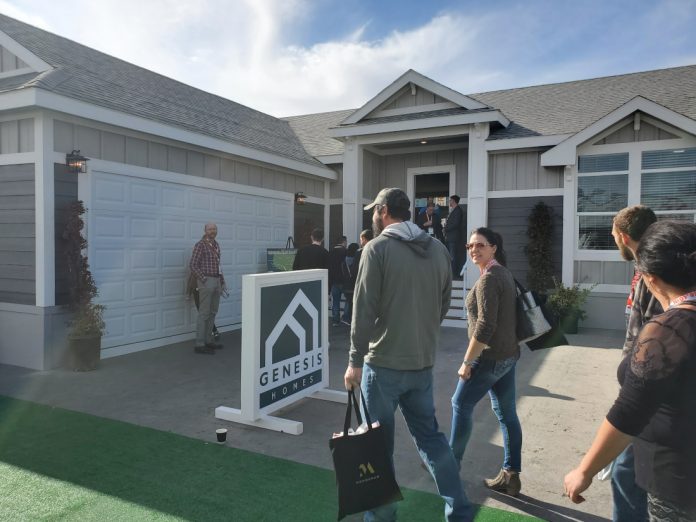
A few of the more than 100,000 people attending the International Builder's Show in 2020 take a peek at The Sequoia, one of several models available from the Genesis line of homes by Champion.
First Manufactured Home in International Builder’s Show
The opening day of IBS in Las Vegas proved to be a historic day for manufactured housing. And it’s one that throngs of builders, developers and other housing professionals are enjoying.
Bruce Thompson of URBANEER, center, talks with developers interested in the option rich ADU. In the background is a bed that folds into the wall.
Skyline Champion Corporation earned the first-ever entry to North America’s largest builders show for a manufactured home. The National Association of Homebuilders held its first IBS gathering in 1944.
The company and its partner in ADU construction, URBANEER, are greeting thousands of curious and inspired building professionals in their recently reintroduced line of Genesis Homes.
“We had people showing up before 8 a.m. today before the show even opened. We weren’t turning them away,” URBANEER’s Chris Moore said. “We’ve had developers in asking questions… how many modules does it come in, can I get it with the kitchen appliances, that type of thing.”
With about 100 floor plans per plant, and homes that can be built to manufactured or modular specifications, the answer typically is “yes”.
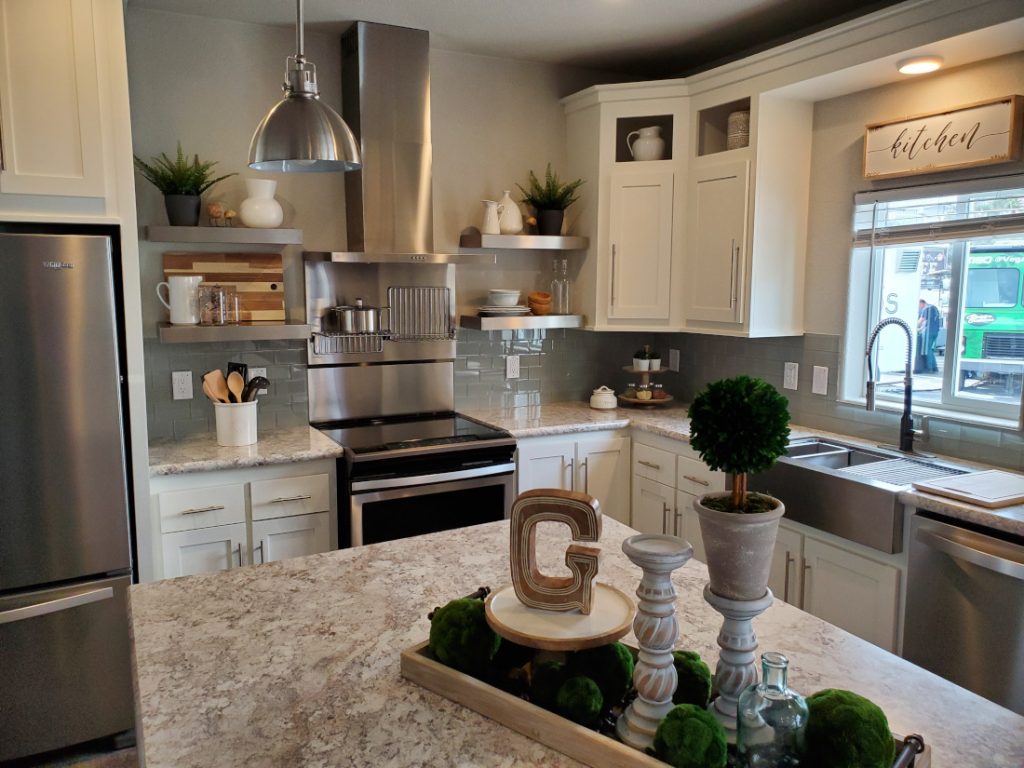
The kitchen in The Sequoia, with stainless appliances including a farm sink and pot-filler faucet.
Genesis Homes Are About Options, Quality, Affordability, Aesthetics, Speed to Market
The Sequoia on display comes from a plant in Chandler, Ariz. However, the Genesis models are available nationwide. The three-bedroom, two-bath house has 1,459 square feet of living space. It has an attached garage, a premium kitchen with stainless steel appliances, large windows, and energy-efficient features.
A new decking system from Oliver Technologies connects the model home in Las Vegas with the Genesis 510, an accessory dwelling unit that can be placed in the backyards of existing homes. The Genesis 510 comes from a home building facility in Corona, Calif.
“It’s a tremendous opportunity for us to be here, get this type of exposure, and show a great number of people what we can do,” said Wade Lyall, executive vice president of business development for Skyline Champion. “The response has been tremendous. It’s day one of the show and I feel like we’re really turning some heads already.”
Factory Built Homes at International Builder’s Show
Visitors to Genesis models in the outdoor village at IBS marvel at URBANEER’s moveable walls.
About 100,000 people will attend IBS. The Las Vegas Convention Center has four floors in three wings filled with everything from engineered lumber to designer bathtubs. It is among the largest trade shows in the country, akin to the Consumer Electronics Show.
Bruce Dowling of Bayview Homes in Annapolis, Md., came to the show for many reasons. But he was intent on visiting the off-site built homes in the outdoor Village at the convention center.
“On the eastern shore of Maryland, there’s a lot of modular construction going in, and there’s plenty of room on those parcels to bring in a smaller second home for the backyard,” he said. “We build custom homes in the area, and this is a really good option for some of our customers.”
Many housing markets across the U.S. cannot meet demand. This is especially true for homes priced in the middle of the market. Factory-built homes can meet the demand for quality and affordability. And the inclusion of Genesis Homes at IBS 2020 is yet another signal that the market is warming to the efficiencies of off-site construction.
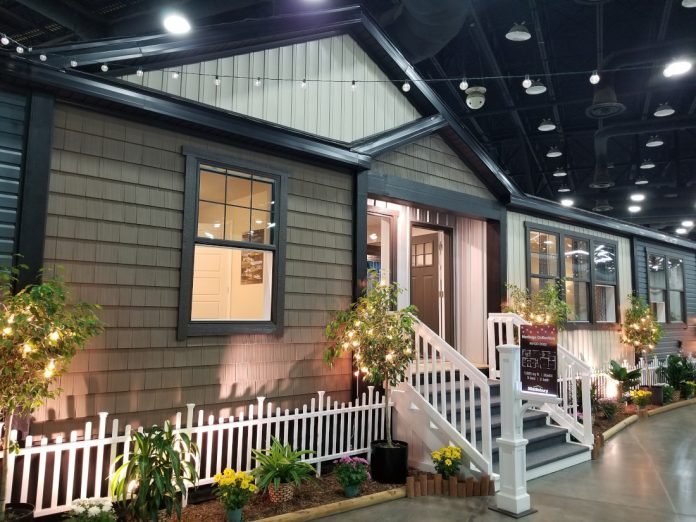
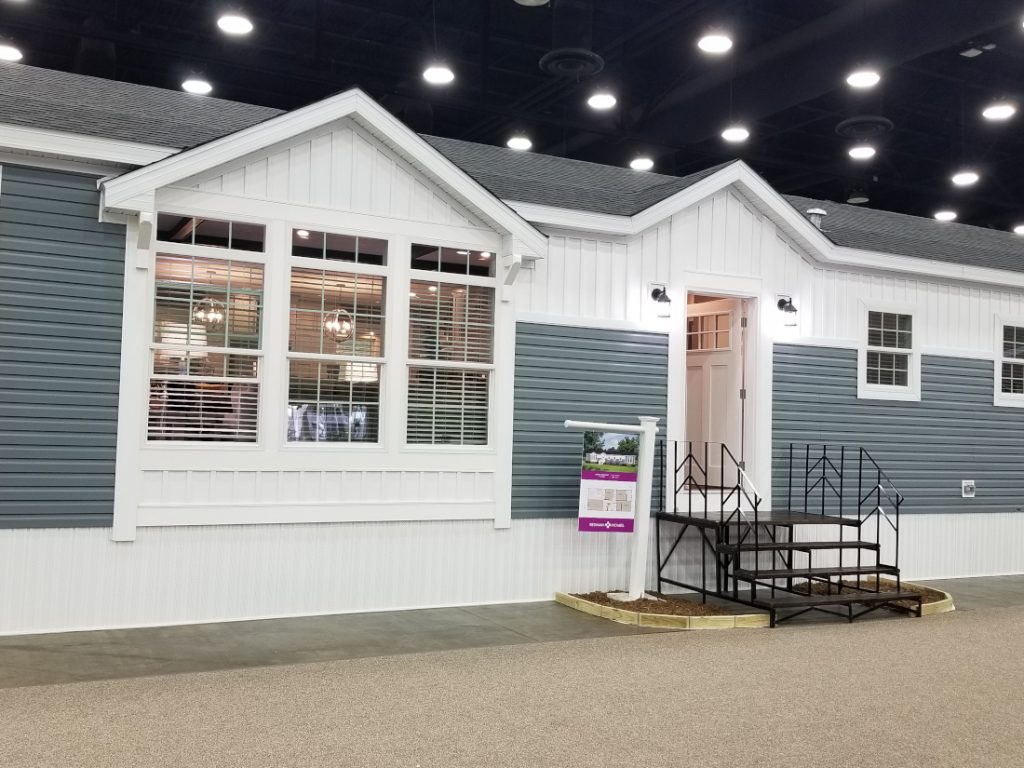
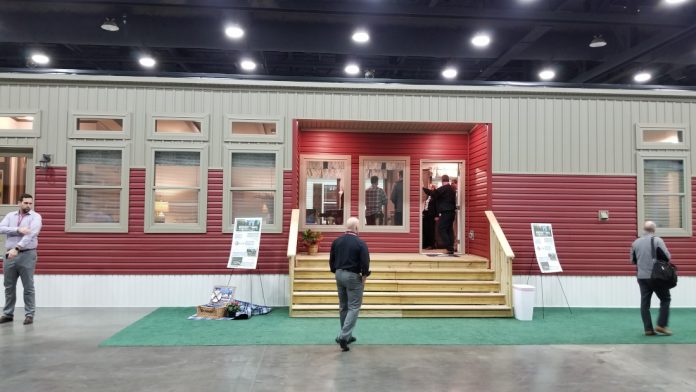
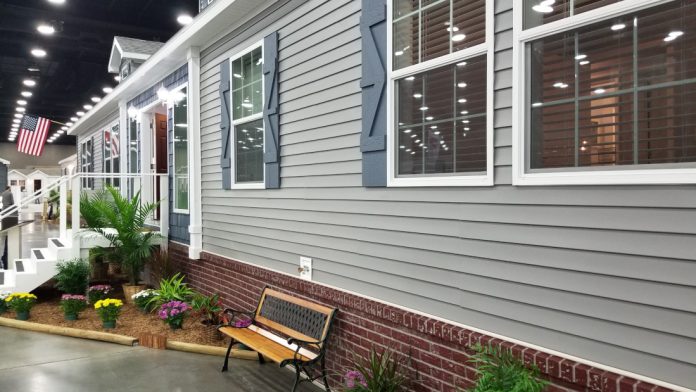
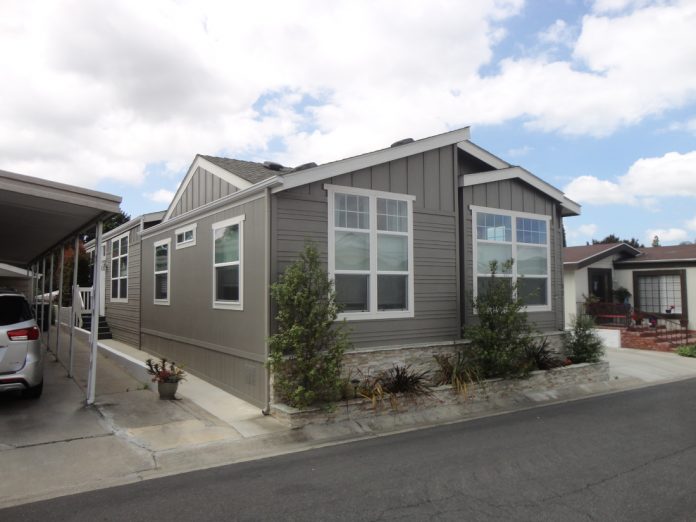
The exterior of a model home from Clayton, on display in Louisville, that would qualify as a CrossMod with the potential for conventional financing.
What Is A CrossMod™ Home?
The Louisville Show proves to be the ideal place to role out CrossMod™ homes, an offering the industry has come together and embraced.
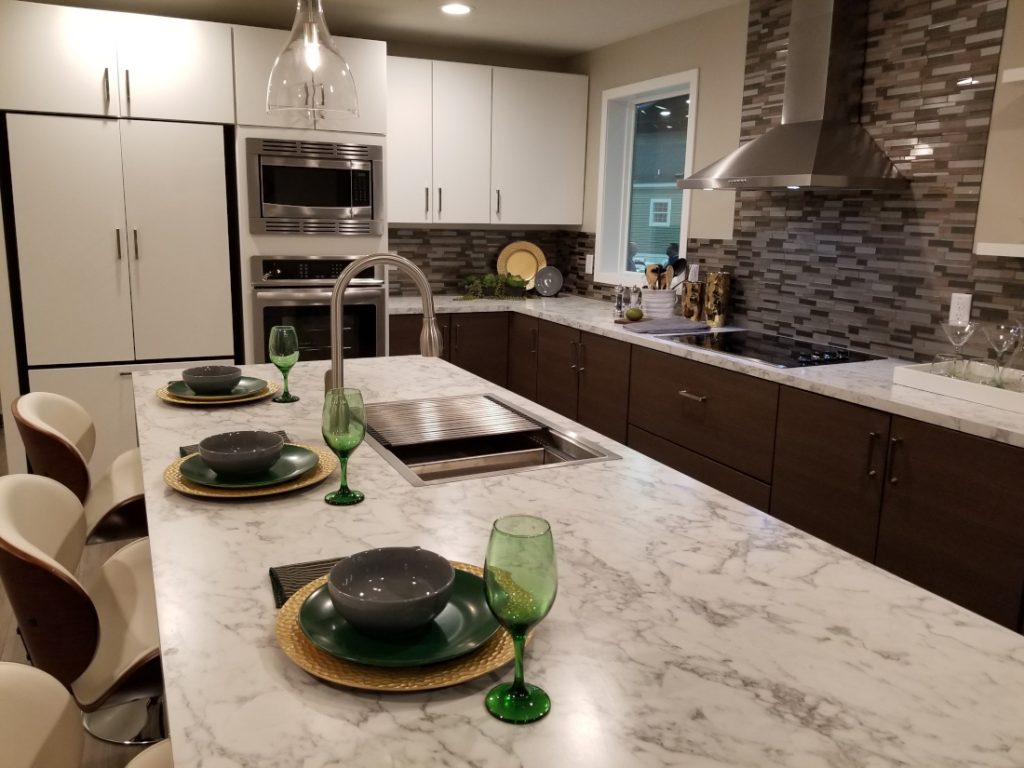
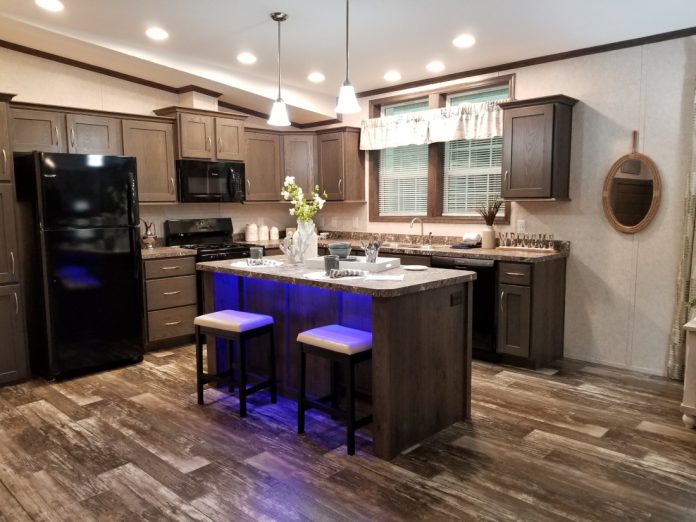
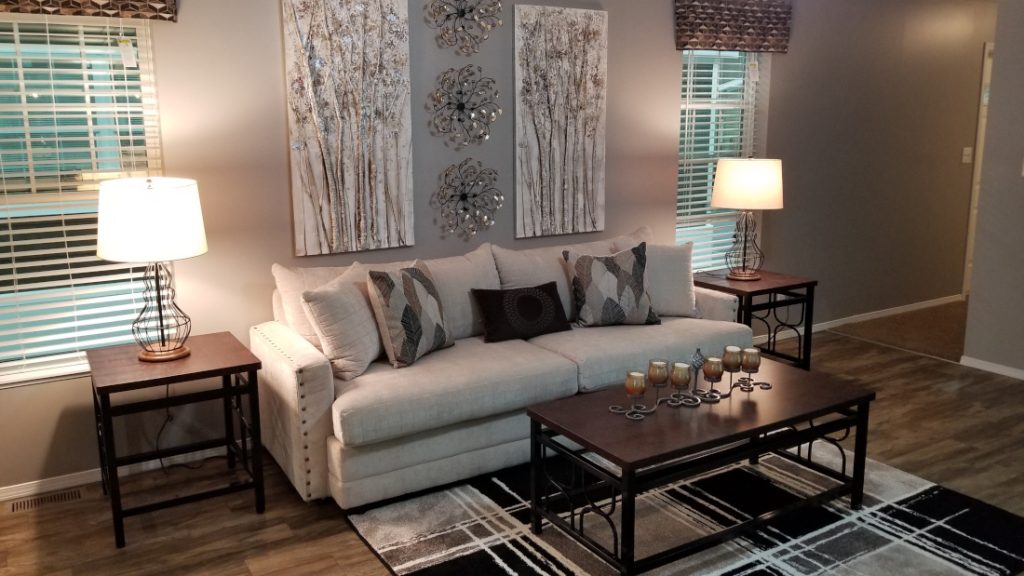
The kitchen in a new home from Clayton includes cabinet-matching covers for the refrigerator.
Several builders are manufacturing CrossMods as a matter of providing factory-built homes that are flexible and rich with features that customers value. CrossMod homes are built to meet HUD code and implement many favorable features buyers appreciate in standard site-built construction.
Zach Pfeiff is a customer success manager for Clayton Homes in Albuquerque, N.M.
“We’ve had a lot of people coming through, most of them with a curiosity about the CrossMod homes,” Pfeiff said. “Once they understand what it all means, there’s a lot of excitement.”
How Did CrossMod Come to Be?
The Manufactured Housing Institute partnered with a market research firm that did a survey of industry customers. What the partnership discovered is that 9 percent of respondents would consider buying a manufactured home.
But 46 percent of those same respondents would consider a CrossMod.
The Features that Make a CrossMod
CrossMod™ is an industry-wide term, registered by MHI, that captures and expands on many of the new home features that Fannie Mae and Freddie Mac look for when providing conventional financing for manufactured homes with MH Advantage® and CHOICEHome℠, respectively.
CrossMod Homes at The Louisville Show
The 2020 Louisville Show featured several of the CrossMod homes, including new models from Adventures Homes, Clayton Homes, and Skyline Champion Corporation.
The exterior of a Dutch Housing model from Skyline Champion, shown during The Louisville Manufactured Housing Show.
Dutch Housing from Skyline Champion Corporation
A CrossMod model from Dutch Housing.
“It meets all the cosmetics and structural specifications,” Skyline Champion Director of Business Development Steve Payne said. “Champion has become very engaged in the support and promotion of these new programs.
“It’s been a long time since you’ve been able to buy a manufactured home without bias in the area of lending,” he said.
Skyline Champion is the largest public builder of manufactured homes. The company has home building facilities nationwide to serve customers throughout the contiguous states.
Large windows in the living area of a new Adventure home on display during the 2020 Louisville Show.
Adventure and the CrossMod Home
The master bath in a new model from Adventure Homes.
Adventure Homes displayed a new CrossMod at The Louisville Show, too.
The home garnered an impressive volume of steady foot traffic and created a buzz throughout the trade show.
Stay tuned for developing information on CrossMod homes and how they’ll be certified by MHI.
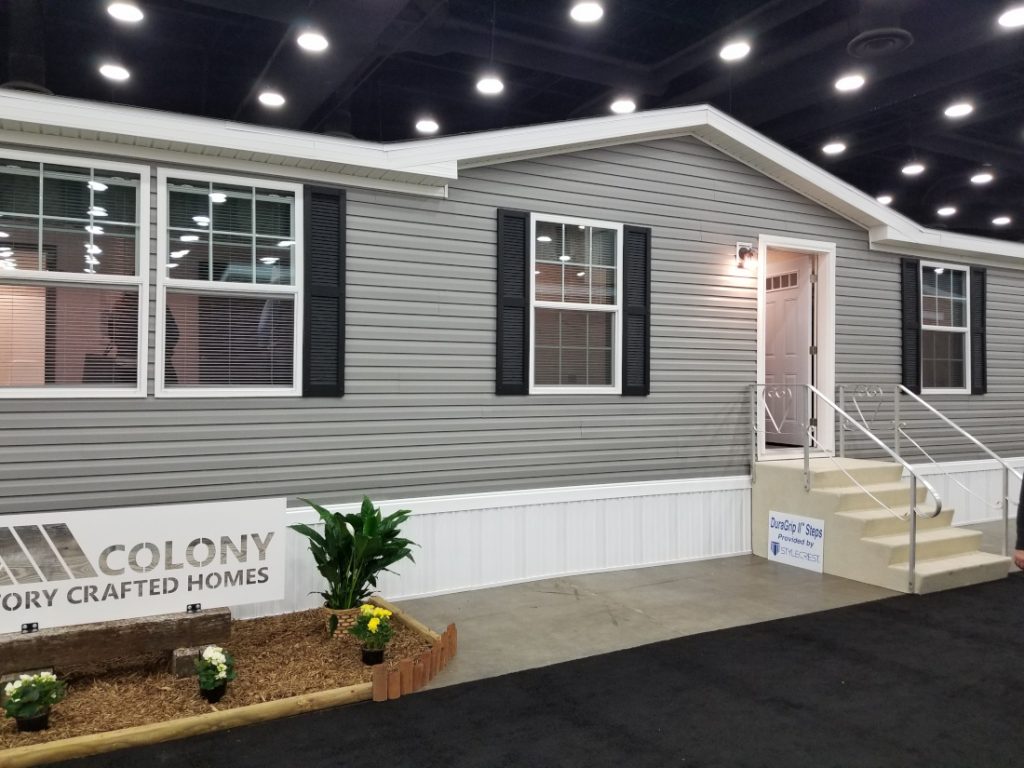
A new offering from Colony Homes of Shippenville, Pa., on display at the 2020 Louisville Show.
Colony Homes General Manager John Bowser knows what goes into a well-built home, having spent many years in management at Universal Forest Products.
His experience working with engineered lumber for roof trusses brought him to the Commodore-owned, Pennsylvania-based builder.
“Our houses have so many different options,” Bowser said. “We’ll add or change anything you can think of as long as it doesn’t slow down our line.”
Colony has been building homes for 30 years. Add a ceramic shower, shiplap accent wall, stone on the fireplace, or dormer kits, for instance, and the Shippenville, Pa., factory still can produce seven floors per day, as it has for decades.
The Beacon, a Multi-Section Home from Colony
The Commodore family of brands brought several homes to The Louisville Show, running Jan. 15-17 at the Kentucky Exposition Center. One of those homes is the Beacon, a larger floor plan in the Prestige line — 28 by 56 feet — with four bedrooms and two baths.
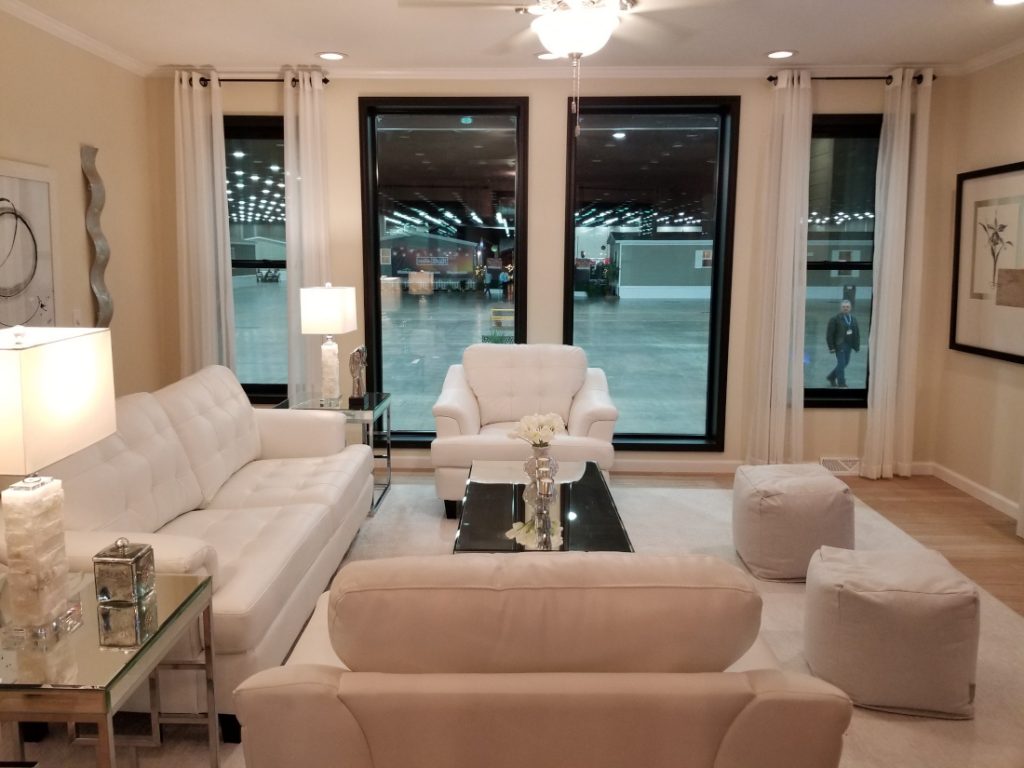
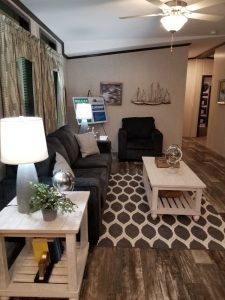
The living room of a new home from Commodore-owned Colony Homes.
“This is a value house,” Bowser said. “We’re selling more of this model than anything else we do.
“We can remove one of the bedrooms and replace it with a hobby room, or if you want to make it into a modular, put drywall in it,” Bowser said.
The home is designed for placement on homeowner land. However, some manufactured home communities with larger lots can take the home as well. Colony Homes provides its factory-crafted homes to 14 states in the northeast.
“Every year in July we have a home show with Commodore and PennWest right in the parking lot of the Shippenville plant,” Bowser said. “We get seven or eight homes set up, and have all the dealers come out. We find a lot of success doing that, and this home was received very well.”
The Louisville Show Runs Through Friday
The 2020 Louisville Manufactured Housing Show started Wednesday and runs through Friday. The show is open to industry professionals only.
Dennis Hill, whose company Show Ways Unlimited, organizes the event, said a tally of registrations midday on Wednesday came in at 3,377 manufactured housing industry professionals.
“That’s a count we did at 1 p.m. on the first day and we were only a couple of hundred registrations shy of last year’s entire three-day tally,” Hill said. “And last year was a record year, so we’re very happy with that. It’s clear that the industry is finding the value we provide here.”3
A new model home from Commodore draws attention at The Louisville Show.
Louisville Manufactured Housing Show Kicks Off – Kentucky Expo Center Jan. 15-17
The Louisville Show kicks off today and continues through Friday with an enthusiastic crowd of manufactured housing professionals ready and eager to experience the latest trends, opportunities, and experiences at their doorstep.
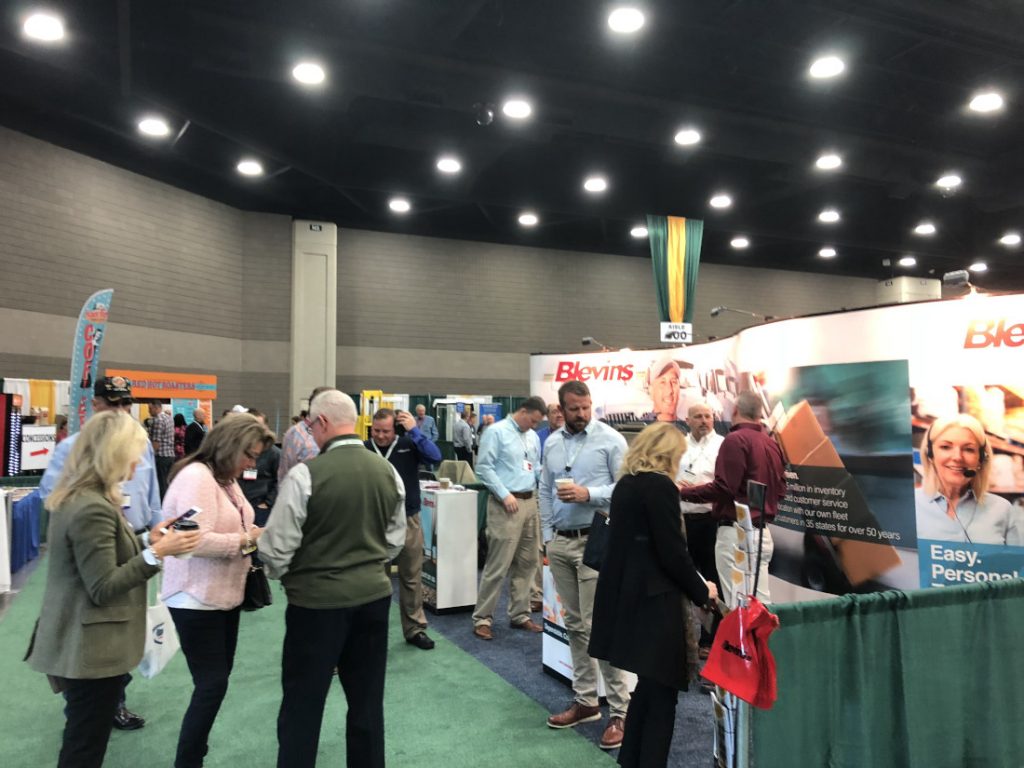
More than 50 model homes, a fantastic conglomeration of service and supplier exhibitors, and education opportunities galore await more than 3,500 attendees for the annual show.
For the past 60 years, The Louisville Show has presented cutting edge home designs, tech specialists and a top network of suppliers in the manufactured housing industry. In 2019, The Louisville Show attracted a record-breaking number of industry professionals, reaching 3,564 attendees from 1,156 companies.
The 2020 Louisville Show experienced the event’s earliest ever sellout of service and supply exhibitor space.
The 2020 Louisville Show is Live!
The Louisville Show takes place in the south wing of the Kentucky Exposition Center, which sits immediately adjacent to Louisville International Airport and across the street from the primary lodging for the show. Register now for the 2020 Louisville Show.
As an industry trade event, the 2020 Louisville Show is open only to manufactured housing industry professionals. The show is not open to the public. For all the show details, visit The Louisville Show website.
The Louisville Show Seminars
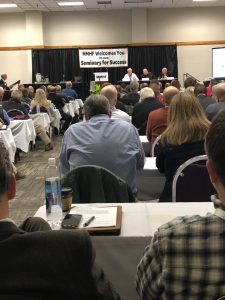
The 2020 Louisville Show will have expanded seminar space with the newly renovated south wing of the Kentucky Expo Center.
Wednesday, Jan. 15
8-9 a.m. — State of the Industry
9-10 a.m. — Leadership vs Management
10-11 a.m. — Internet Marketing
Thursday, Jan. 16
8-8:45 a.m. — Issues Eating Companies Alive
8:45-9:30 a.m. — Manufacturer Panel – 2020 Top Trends
9:30-10:30 a.m. — Growing Your Business
Friday, Jan. 17
8-8:45 a.m. — Chattel Financing in Today’s Market
8:45-9:45 a.m. — Fannie Mae, Freddie Mac & Duty to Serve.
Trade Magazine Editor Named Publisher, Associate Vice President of MHVillage
Patrick Revere, MHInsider publisher, and MHVillage associate vice president.
MHVillage, the leading marketplace to buy, sell, and rent manufactured homes, has announced the promotion of Patrick Revere to the role of publisher for the MHInsider magazine and blog, as well as associate vice president of publishing for the organization.
Revere joined MHVillage as a content marketing specialist in April of 2017.
“We launched the MHInsider magazine two years ago, and it quickly became the premier publication for manufactured housing industry professionals,” MHVillage Co-President and Chief Business Development Officer Darren Krolewski said.
“Patrick’s work on the editorial side of the magazine has been crucial to the growth and success of the publication,” Krolewski said. “We’re certain that under his direction as publisher the magazine and the MHInsider blog will continue to evolve and provide still greater value to the industry.”
Revere’s professional background is in print news, language, and marketing communication.
About the MHInsider Magazine
The MHInsider is an 84-page, full-color, high-quality print magazine that publishes six times annually. It has a controlled circulation of more than 39,000 readers nationwide. Each edition of the MHInsider carries manufactured housing professional news features, industry trends, and manufactured housing industry trade show and event details. Contributing writers include a host of industry experts writing about community ownership and management, home building, legislative happenings, finance, housing law, sales, design and much more.
“MHVillage has a wide array of contact points within its national customer base,” MHVillage Vice President of Marketing Mark Dollan said. “The assignment of designated leadership and staff toward a focused segment of the customer base keeps with our strategy to continually learn more about our audience and work pointedly toward satisfying specific needs.
“In the new role, Patrick and his team will have more time and opportunity to serve the needs of manufactured housing professionals who value relevant and timely industry news and information that can help them grow their business,” Dollan said.
MHVillage, in May of 2019, was honored with the Manufactured Housing Institute’s award for Industry Supplier of the Year. A significant portion of the application and award criteria was based on the development and publication of the MHInsider magazine. In addition, that same month MHInsider won a Communicator Award of Distinction for writing in print.
The Kentucky Exposition Center’s South Wing is the venue for the 2020 Louisville Show. Shuttles are available from the airport to the host hotel and between the host hotel and venue, all conveniently located immediately adjacent to each other. The proximity of the airport, hotel, and venue make The Louisville Manufactured Housing Show extremely convenient and easy to attend.
Host Hotel for The Louisville Show
Crowne Plaza Louisville Airport will be the host hotel for The Louisville Show. Many of the visiting industry professionals will stay at Crowne Plaza, and the hotel hosts networking events for the show as well.
More About The Louisville Manufactured Housing Show
The Louisville Show is organized by the Midwest Manufactured Housing Federation, a coalition of representatives from the state associations of Illinois, Indiana, Kentucky, Michigan, and Ohio. Register for the show today!
MHVillage/Datacomp at The Louisville Show
MHVillage and Datacomp will attend the 2020 Louisville Show, contributing as a sponsor, providing news coverage, programming and participating in educational presentations, and working the booth at spaces 115/117 in the service and supply area. Drop, say hi, and learn about what we’re up to in 2020!
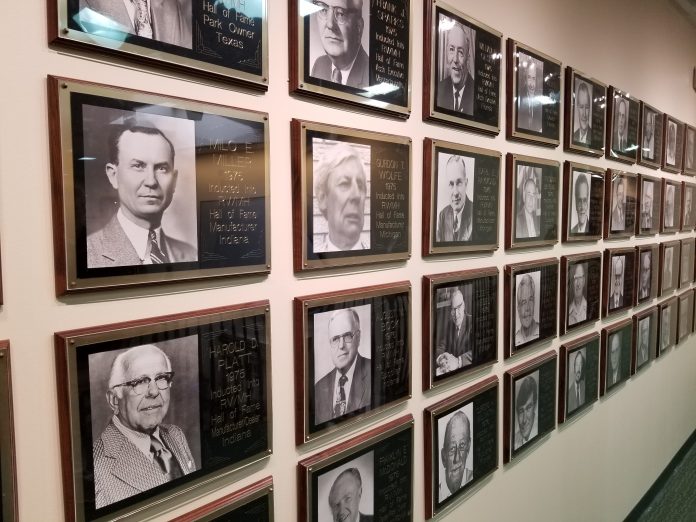
“Congratulations to the ten new honorees,” Foundation President Darryl Searer said. “All of them have had or are having outstanding careers and are richly deserving of this high honor.”
Searer also applauded the work of the RV/MH Hall of Fame nominating committee.
“I was especially impressed with the committee’s work for the diversity of this year’s class— not only in the inductees’ regions within the U.S. but also the diversion of nominees by industry segment, such as suppliers, manufacturers, dealers, association executives.”
The RV/MH Hall of Fame 2020 Inductees
Manufactured Housing Inductees
Steven P. Adler, Manufactured Home Community Owner/Operator, Florida
Community owner/operator Steven P. Adler is president and owner of Murex Properties, LLC. Murex owns and manages 15 communities in Arizona, Florida, Oregon, and Texas. Adler has selflessly promoted the advancement of manufactured housing communities as an active member and leader of MHI and the Florida Manufactured Housing Association. He has spent a career developing, acquiring, and managing some of the finest manufactured home communities in the country.
While these accomplishments exemplify Adler’s entrepreneurial spirit, business acumen, and industry leadership, they do not tell the full story. Adler has been a staunch industry advocate for more than three decades. While serving in numerous leadership positions at MHI and FMHA, it is how he continues to serve that defines him. Adler is a doer, a leader, not just a participant. His prints are on most initiatives that have advanced the professionalism of manufactured home communities in recent decades.
Burt Dickman, Manufactured Home Communities, Indiana (Deceased)
For more than 60 years Burt Dickman demonstrated his hard-working talents as a visionary of the highest moral character. Dickman always remained committed to providing affordable housing. Working full time at another job he and his wife manually installed utility lines and lots at their first small mobile home park.
As demand grew, Dickman’s foresight to purchase land beside a proposed interstate highway grew into West Edge Park, a community of convenience offering city utilities and walking distance to businesses, industries, parks, and recreation. An “ethical man knows what is right … a moral man does what is right” that aptly describes Dickman’s character. Tough decisions, including financial, were made with the true moral character Dickman possessed.
Ron Dunlap, Association Executive, Virginia
Ron Dunlap could be defined as a man who could be counted on to serve above and beyond the call of duty whether it was in Vietnam where he earned a bronze star, in his volunteer work for the Habitat for Humanity, or in his passion to help others through his work with the Virginia Manufactured and Modular Housing Association. As executive director and president of VAMMHA, Dunlap is known as someone who, in addition to representing his members, also would take his time to help homeowners and others who had problems or issues that need attention. Virginia is one of the more favorable places for the manufactured and modular housing industry because of Ron Dunlap.
He led the legislative efforts that produced the favorable zoning treatment Virginia now has. Without his efforts, homeowners would face county-by-county fights every day. But Virginia now has statewide protections that provide association members and customers with certainty and clarity. These efforts were by no means a slam dunk. Lesser lobbyists would have failed. Dunlap did not. And, Virginia is better for it.Dunlap is a member to the VAMMHA Hall of Fame and was recognized for his contributions by receiving a Virginia House Joint Commendation upon his retirement.
George Porter, Manufactured Housing Resources, Delaware
George Porter, since 1990, has been manufactured housing’s “go-to guy” in all matters regarding new home installation on rental homesites in land-lease communities and on developed land. His pioneering principles positioned Porter as housing installation expert used by state manufactured housing associations, MHI, and HUD to research and prepare industry-standard manufactured housing installation, manuals, and to teach installers nationwide.
In 2007, he headed the effort to prove the effectiveness of frost-free foundations.Porter is a true pioneer and continues as a recognized expert in installation matters throughout the entire manufactured housing industry.In 2008 George was named “Man of the Year” by the Journal of Manufactured Housing.
Jerry Ruggirello, Manufactured Home Community Owner/Operator, Michigan
Jerry Ruggirello, president of AJR Development and AJR Home Sales, has been recognized numerous times from associations, groups, and politicians for his time spent bettering his community and industry.Ruggirello has served on far too many committees to list. However, some of his involvement has helped avoid government overreach with key landlord-tenant issues such as ad valorem taxes and rent control.
His peers and industry professionals often credit Ruggirello with the thriving status of the MH industry in Michigan today.An example of his ambition and innovation, Ruggirello made the decision to display a manufactured home into the 2014 Suburban Collection Showplace at the Novi Home Show. This is a Home Builder Association show that Ruggirello realized was hosting a captive audience. By putting a brand new sectional home inside of the show, tens of thousands of homebuyers learned about the new MH product. The response was good.The MH Showcase in October 2019 featured five homes, one park model, and more than a dozen retailer/operator/supplier booths, and his communities have received numerous awards.
The RV/MH Hall of Fame will induct its latest members Aug. 3.
Recreational Vehicle Inductees
Mark Beecher, RV Retail Finance, South Dakota
Mark Beecher started not one, but two major lending institutional RV indirect programs for the industry via John Deere Credit and Bank of the West. He started both operations from infancy and grew them into huge operations ranking in the top four in the industry. Along the way, Beecher developed numerous relationships with manufacturers, dealers, RVDA, and RVIA members. He pioneered numerous innovative lending programs such as the VIB pre-approval program, 240-month terms for larger loans, lucrative participation and bonus programs, and back-end programs.
Beecher also was heavily involved in RVDA and RVIA. Without the creative mind behind John Deere Credit and Bank of the West, the industry probably wouldn’t have enjoyed the sales success and profitability of the past 28 years. Beecher is also living the RV Lifestyle as the proud owner of a 42-foot diesel pusher motorhome, traveling the U.S. and Canada.
Garth W. Cane, RV Service Technician; Professor, Cobourg, ON, Canada
Garth Cane has contributed tirelessly to the Canadian RV industry and the community for more than 65 years, as a sales associate, RV service tech, RV tech trainer, RV TV host, magazine tech editor, and RV seminar presenter at shows and rallies throughout North America. Cane was the first professor to teach the RV Apprenticeship Program at Mohawk College in Ontario. A professional engineer, he was highly instrumental in the creation of the apprenticeship program. He also serves as a board member on the Recreational Vehicle Safety & Education Foundation.
The foundation provides professional and objective RV education with a focus on consumer safety and lifestyle enhancement. Cane, semi-retired for 20 years, continues to serve as one of the finest ambassadors of the RV lifestyle.
David Fought, RV manufacturer, Indiana
David Fought studied to be an engineer and began as a draftsman at Starcraft RV in 1970. By 1991, when Starcraft RV was sold to Jayco, he had worked his way up to vice president of operations. Fought, being the consummate innovator, ventured out on his own with an idea. He and some partners soon after founded SunnyBrook RV, where they built and marketed the light aluminum superstructure that revolutionized the “towables” industry. After selling SunnyBrook in 1996, he started another successful RV company named DRV and then purchased Cruiser RV.
Fought’s vision for lighter weight products, along with fully loaded high-end luxury convenience and comfort features, lives on today in Cruiser RV. In January of 2015, Dave sold Cruiser and Doubletree RV to Thor Industries. Having a remarkable track record in creating successful companies is a difficult task. Fought’s earned industry respect, and being a man of his word, are the intangibles that contributed to his success. There are several aspects that set Fought apart from others not only in the industry. As an individual, he goes the extra mile and puts forth the needed effort every step of the way. Fought is hard working and extremely efficient. He is a leader by example, a hands-on role model, and his work ethic is a good representation of true character.
Jeff Pastore, RV Dealer, Ohio
Jeff Pastore often mentions the four most important things in his world are: his faith, his family, his friends, and the business. Pastore has been with Hartville RV Center, Inc., since it opened in 1972. At that time, Pastore was just 10 years old but began helping out in small ways around the dealership where he learned the ropes. As time went on, each year he took on more and more responsibility. He worked part-time at the dealership while in high school. Pastore attended Kent State University and worked at the dealership full-time all while working on his degree in business and marketing. Pastore now is the vice president and general manager of Hartville RV Center. He always has been a dedicated volunteer in service to the RV Dealers Association for more than 20 years, serving as chairman and in many other committee-level capacities.
Pastore always has the dealer in mind when it comes to decisions that are made or various avenues that are pursued. In fact, he guided dealers through one of the hardest times in RVDA history. He led the association through the steps needed to keep going with calm confidence. Pastore has a “volunteer mentality”, takes time to mentor those who need the advice and wisdom he can offer, and has exhibited incredible honesty and integrity in every aspect of life and business.
Dave Schutz, Supplier, Indiana
Many people have had successful careers in the RV industry but not many have had successful careers and have demonstrated so much breadth of service to the industry for so many years as did Dave Schutz, and with such notable integrity. As senior vice president of RV OEM sales in North America for Dometic Corporation, Schutz’s high character, long and successful career, and his lengthy list of activities in service to the U.S. and Canadian RV industries help define who he is.
For several years, Schutz has demonstrated consistent and continuing volunteer service to the industry at all levels of participation from boards of directors, to serving on many different “in the trenches” committees for the enhancement of the industry.He has been recognized by RVIA for his contributions to the industry by earning the association’s Special Award for making extraordinary contributions to the industry’s overall success, along with supporting other industry initiatives.
About the RV/MH Hall of Fame 2020 Induction Ceremony and Dinner
The Class of 2020 will be honored at the RV/MH Hall of Fame during the annual induction ceremonies and dinner on Monday, Aug. 3, 2020, in Elkhart, Ind.Friends and relatives of the inductees can make reservations for the induction dinner and ceremonies by visiting the RV/MH Hall of Fame website.
Residential technology firm URBANEER and its new partner Champion Homes have teamed with Arlington, Va.-based Backyard Cottages to bring the Capitol Area ADUs to backyards throughout the district and surrounding areas.
Accessory dwelling units, Or ADUs, gained approval for Arlington County in May. ADUs are small, flexible, independent residences that can be placed in residential backyards. ADUs often are used as:
A manageable and nearby home for an aging relative
A guesthouse
Or as an investment opportunity that fills a middle-market housing need in high-cost metro areas
Smart Homes in Capitol Area Backyards
Pierce Tracy is the CEO of Backyard Cottages. He said the company in the spring will provide D.C. area homeowners and homebuyers the opportunity for technology-rich small homes. The effort will begin with the URBANEER 510 by Genesis, a 510-square-foot ADU. The home also will be on display at the International Builder’s Show in Las Vegas, Jan. 21-23.
Backyard Cottages is a subsidiary of Classic Cottages LLC, one of Northern Virginia’s premier single-family custom home builders.
“There is an immediate need for new, affordable housing stock in the D.C. area, and we see this detached ADU sector as a large, new opportunity to help serve that need in this region for years to come,” Tracy said. “The URBANEER 510 model will be unlike other ADU options on the market. Our ability to showcase one of the first units built in the country next spring will provide an opportunity for our local residents to see the innovation and quality of these units first-hand.”
The new URBANEER 510 will be unveiled at the International Builders Show, held in Jan. 21-23 in Las Vegas.
URBANEER is based in Grand Rapids, Mich. The company is operated by current and former technology industry professionals. The goal is to infuse a new type of residential option with modern amenities at an affordable price.
“URBANEER and Champion Home Builders have defined Living 2.0 – smarter, compact, affordable living solutions that will relieve the pressure on housing in and near city centers,” said URBANEER lead investor Raul Fernandez, vice chairman and owner of Monumental Sports and Entertainment. “URBANEER’s technology and design transform 500 square feet into 800 square feet of smart living for consumers. URBANEER, Skyline Champion, and BackyardCottages are changing the way we live, work, and play.”
How Do Capitol Area ADUs Work?
The ADU’s flexibility provides value to the homeowner as a family’s needs change over time. The Genesis brand, from URBANEER and Champion Homes, features moveable walls with wireless technology, fold-down beds, energy-efficiency features and other space- and cost-saving smart designs.
ADUs placed in Arlington County backyards will have to meet a variety of standards, including having:
A separate entrance
Its own kitchen and bathroom
No more than three residents
No more than 750 square feet in floor space
A successful fire-safety regulation inspection
“We look forward to bringing our offsite construction method to this space and we are extremely excited to be working with these two exceptional partners,” said Wade Lyall, executive vice president of business development for Skyline Champion Corporation.
URBANEER has patents on its movable wall with wireless power and reconfigurability of space. An URBANEER space incorporates technology to support wellness, security, and connectivity for the occupant. Its homes incorporate these elements into the architecture specifications, which are then shared with Champion for manufacturing and sale to builders and developers as part of its Genesis brand.
“Champion Home Builders is the perfect partner to help URBANEER realize its vision to offer all types of consumers a line of compact, configurable and connected homes,” Bruce Thompson, URBANEER co-founder and CEO said. “We have been working on our fully integrated compact designs for over six years with engineers, architects, industrial designers, manufacturers, and environmental psychologists and are thrilled to see them beginning to be offered in Virginia.”
Datacomp has published its January 2020 JLT Market Reports for manufactured home community rent and occupancy in Arizona, Georgia, Nevada, New Mexico, North Carolina, and Utah.
JLT Market Reports provide detailed research and information on communities in 181 major housing markets throughout the United States. These include the latest rent trends and occupancy statistics, as well as a variety of other useful management insights.
Datacomp is the nation’s #1 provider of market data for the manufactured housing industry. JLT Market Reports are recognized as the industry standard formanufactured home community market analysis.
January 2020 manufactured housing market data published in JLT Market Reports for Arizona, Georgia, Nevada, New Mexico, North Carolina, and Utah include information on 392 “All ages” and “55+” manufactured home communities.
Altogether, the reports on the six states’ manufactured home communities include data representations for 92,602 homesites. The report for the Phoenix metro area is the largest single market report among all of the JLT publications, with 186 communities and 45,055 homesites represented.
“Average adjusted rent in the six states increased by an average of 3.7%, with rents coming in flat in only a single market in New Mexico,” Datacomp Co-President and Chief Business Development Officer Darren Krolewski said. “Occupancy also increased in nearly every market represented in the January 2020 reports, with slight occupancy decreases in three Arizona markets, and in one market each for the states of New Mexico, North Carolina, and Utah.”
More About JLT Market Reports
Each JLT manufactured home community rent and occupancy report from Datacomp has detailed information about investment-grade communities in the major markets. The detailed information includes:
Number of homesites
Occupancy rates
Average community rents, and increases
Community amenities
Vacant lots
Repossessed and inventory homes, and much more
JLT Market Reports also include management insights that rank communities by the number of homesites, occupancy rates and highest to lowest rents. Established reports show trends in each market with a comparison of January 2020 rents and occupancy rates to January 2019, as well as a historical recap of rents and occupancy from 1996 to present date in most markets.
Each fully updated report for mobile home communities is a comprehensive look at investment-grade properties within a market, enabling owners and managers, lenders, appraisers, brokers, and other organizations to effectively benchmark those communities and make informed business decisions.
Oct. 6-8 at Avalon Hotel in Alpharetta, Ga.
Manufactured housing community owners have never had more information available to them — or more decisions to...
The Midwest Manufactured Housing Federation has announced that attendee registration is now open for the 2027 Louisville Manufactured Housing Show, returning to the Kentucky...
HUD’s Innovative Housing Showcase, MHI’s Homes on the Hill and Annual Meeting Begin Sept. 22
Two of the country’s largest builders of manufactured homes will...





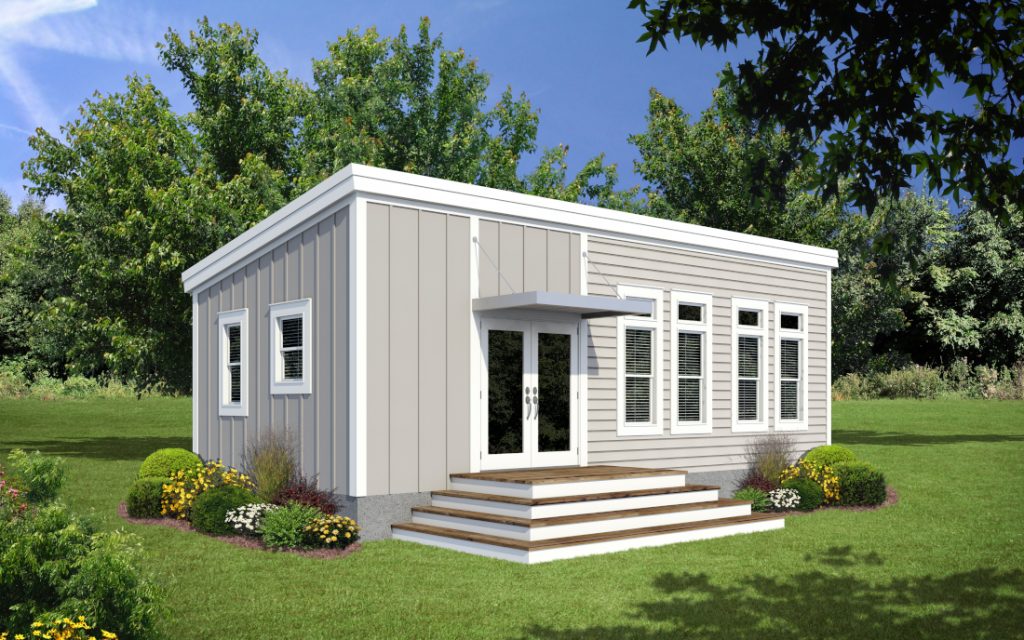
 A new decking system from Oliver Technologies connects the model home in Las Vegas with the Genesis 510, an accessory dwelling unit that can be placed in the backyards of existing homes. The Genesis 510 comes from a home building facility in Corona, Calif.




 Each JLT