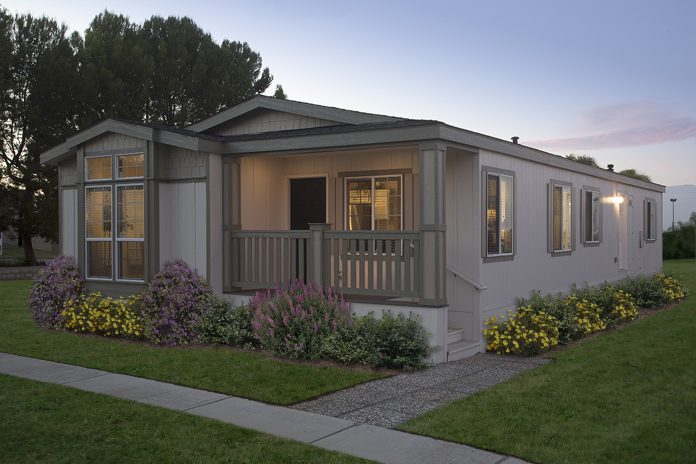
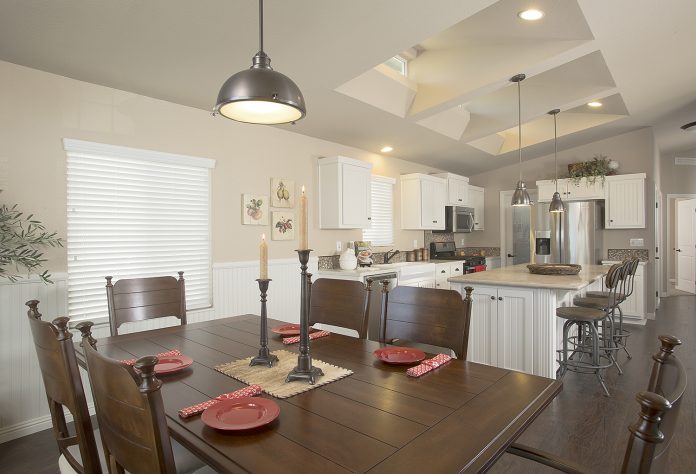
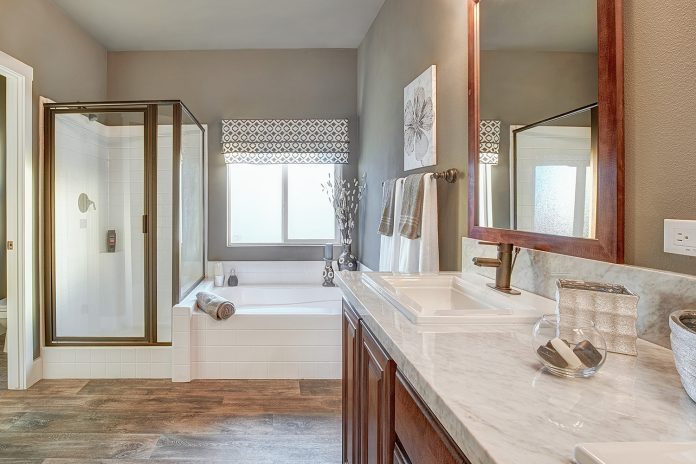
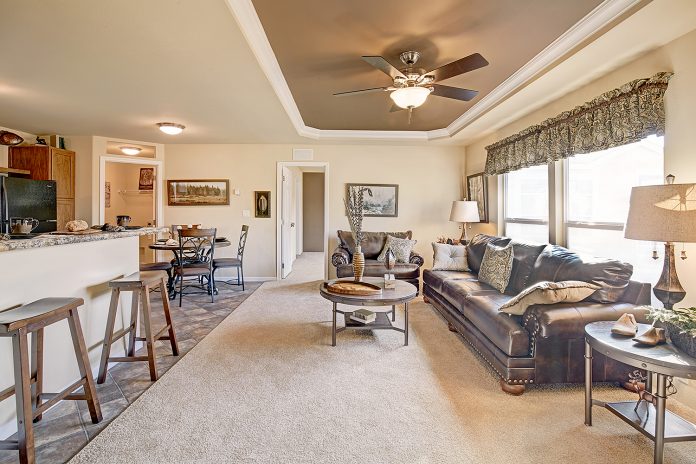
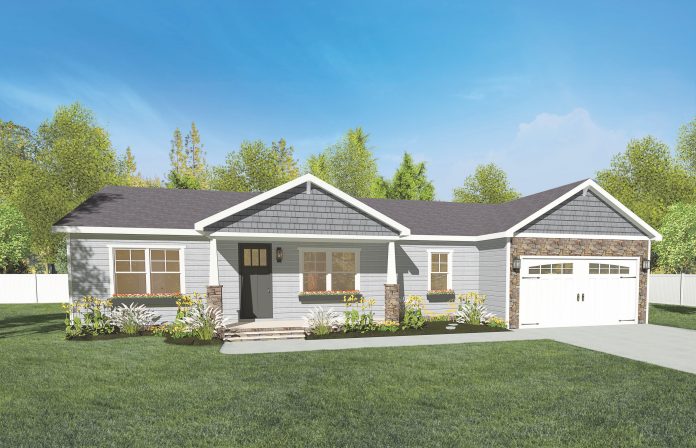
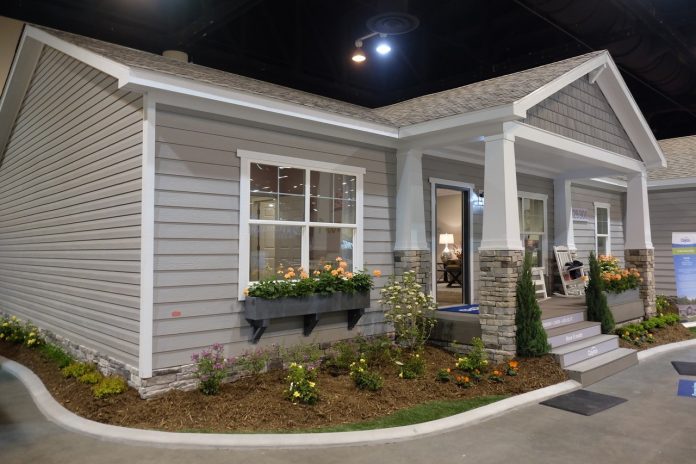
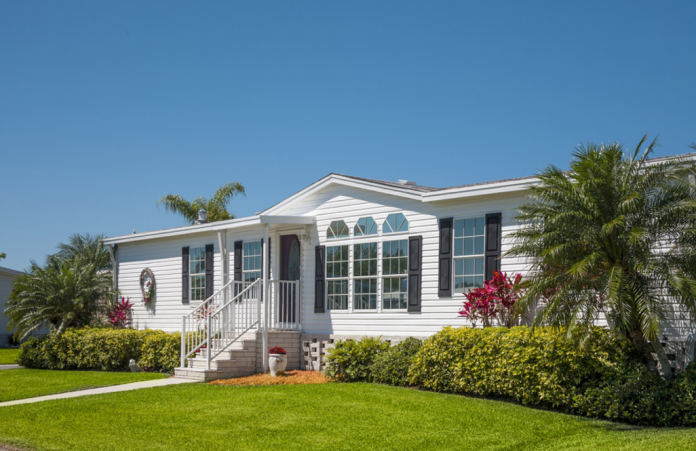
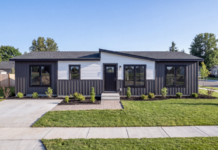
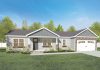
Skyline Champion Corporation will show its Athens Park Models at the Tiny House and Simple Living Jamboree in Austin Aug. 23-26.
Several Manufactured Home Builders in Tiny House Industry to Attend 2018 Tiny House and Simple Living Jamboree in Austin, Texas, Aug. 23-26
The flow of manufactured home builders in the tiny house industry is increasing year by year, as evidence by increased attendance at the Tiny House and Simple Living Jamboree, which this year is launching a new “Industry Days” to the front of its public show.
Approximately 75 homes will be on display. These include park models, small modular homes and tiny homes on wheels, often called “THOWs”.
The event takes place August 23-26 at the Travis County Expo Center. The first two days will be the first-ever industry only event for tiny home professionals. The Jamboree opens to the public for the weekend.
Manufactured Home Builders at Tiny House and Simple Living Jamboree
Dungan has made his name as an architect by building large, custom residences — something he continues and that’s about as far off as you can be from the tiny house.
“When I was approached by Clayton I had no background with tiny homes, but when they showed me a few things I thought it might be a challenge to design something that is small and still has a good feel,” Dungan said. “It’s a fascinating thing to watch this industry evolve and attract so many people from other places that you might not have guessed would be entering this arena.”
Dungan said he put together five designs for Clayton, and two have been built.
“It really can work, and work very well,” he said of tiny spaces. “I’ve been in a tiny home with five or six other people, and it felt really relaxed and inspiring. The homes have come out very nicely.”
In addition to the design and build disciplines, the exhibitor’s floor will have several service and product suppliers that cross sectors from manufactured housing to tiny houses and RVs.
More than 1,500 people will attend the new Industry Days at the Tiny House Jamboree, according to Jon Fontane of Reed Exhibitions. However, another 10,000 could be in attendance for the general public on the weekend.
The Tiny House & Simple Living Jamboree offers a special discount code to MHInsider readers. At point of purchase, just enter “MHVillage”.
Manufactured Home Builders Among the Many to Converge on Tiny Spaces
There has been a convergence in the tiny structure space. This coincides with a more organized and professional approach from independent builders and “hobbyists” in establishment of accepted building codes, education, and work on zoning requirements.
Tiny House Jamboree Programming for Industry Days
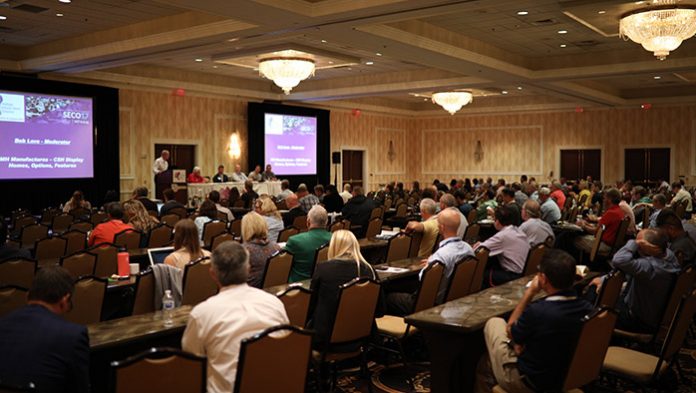
Dick Grymonprez, director of park model sales for Athens, will serve on an event-opening panel with several other builders, developers, product and services providers, including yours truly from MHInsider.
Dick Grymonprez, director for park model sales for Skyline Champion Corporation.
Grymonprez spent 37 years in manufactured housing and the RV industry, working exclusively in RV for the last 14 years.
While Skyline Champion builds large numbers of manufactured homes, it also builds park model RVs, built to the ANSI Code, in 13 locations nationwide.
Grymonprez said the “tiny home craze” has helped the business, which sells its park models through Titan Factory Direct.
“We’re bringing three beautiful park model RVs for attendees to see,” Grymonprez said. “We want to let ourself be known as an attractive part of the mix when it comes to tiny spaces.”
Byron Fears, Creative Designer & Builder SimBLISSity Tiny Homes, will moderate the opening panel.
Another presence on the panel from manufactured housing will be Ernesto Iglesias, who has been in in the manufactured home industry for more than 25 years. He is vice president of sales and marketing for Roberts Communities. Based in Austin, he is a primary player in the development of Village Farm, a tiny house community, and with ongoing management of Austin’s Original Tiny Home Hotel.
Darin Zaruba, founder of the Jamboree and CEO of Zinc Homes, said builder and product exhibitors at the 2018 Jamboree will get automatic first-year membership into the new Tiny Home Industry Association.
The Tiny Home Industry Association will exhibit at space 304, and talk with attendees interested in how the organization will professionally advocate for the tiny home lifestyle and the emerging industry by supporting its people, product and policies.
The association already has an interim board of directors. When the membership rolls grow, a call for votes will determine the new full-time board and will result in committee assignments to address industry needs like land development, code and safety, builder and product interests, marketing and other areas of intent.
General Public Sessions at the Jamboree
Among the special guests for the weekend general public days will be Zack Giffin, co-host of Tiny House Nation, He has a knack for creating unique space-saving furniture for tiny houses.
There also will be performances from street artists, including tiny food connoisseur Tom Brown, a miniature objects artist who works with a one-sixth scale kitchen. He makes tiny food with more than 100 tiny tools, and will do a series of live demonstrations and tastings.
General admission tickets for the weekend are available for between $15 and $45, plus taxes and fees. Industry days show tickets for professionals are available for $40 to $150.
Buy tickets and book lodging now while access is available.
August 2018 JLT Manufactured Home Reports Include Information on 813 communities from 18 major markets
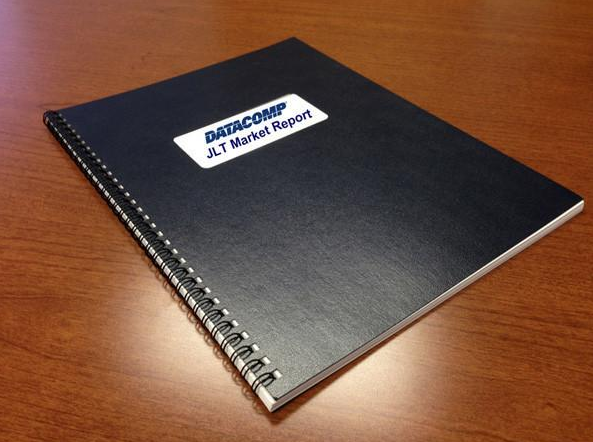
Datacomp, publisher of JLT Market Reports and the nation’s #1 provider of market data for the manufactured housing industry, today announced the publication of its August 2018 manufactured home community rent and occupancy reports for select California markets.
Recognized as the industry standard for manufactured home community market analysis for more than 20 years, JLT Market Reports provide detailed research and information on communities located in 140 major housing markets throughout the United States, including the latest rent trends and statistics, marketing programs and a variety of other useful management insights.
Datacomp’s data published in the August 2018 JLT Manufactured Housing Community Market Reports includes information on 813 “All ages” and “55+” manufactured home communities located in 18 major markets in the state. Altogether, the reports include data representations for more than 160,906 homesites.
“In the August JLT reports, we’re seeing occupancy increases in most markets and increases in adjusted rents across the board,” Datacomp Co-President Darren Krolewski said. “California is a primary market for the manufactured housing industry, and one where affordable housing is exceeding demand in comparison with most other major markets nationwide.”
2018 JLT Manufactured Home Community Market Reports Issued Each Month For New Markets; Each Market Updated Annually
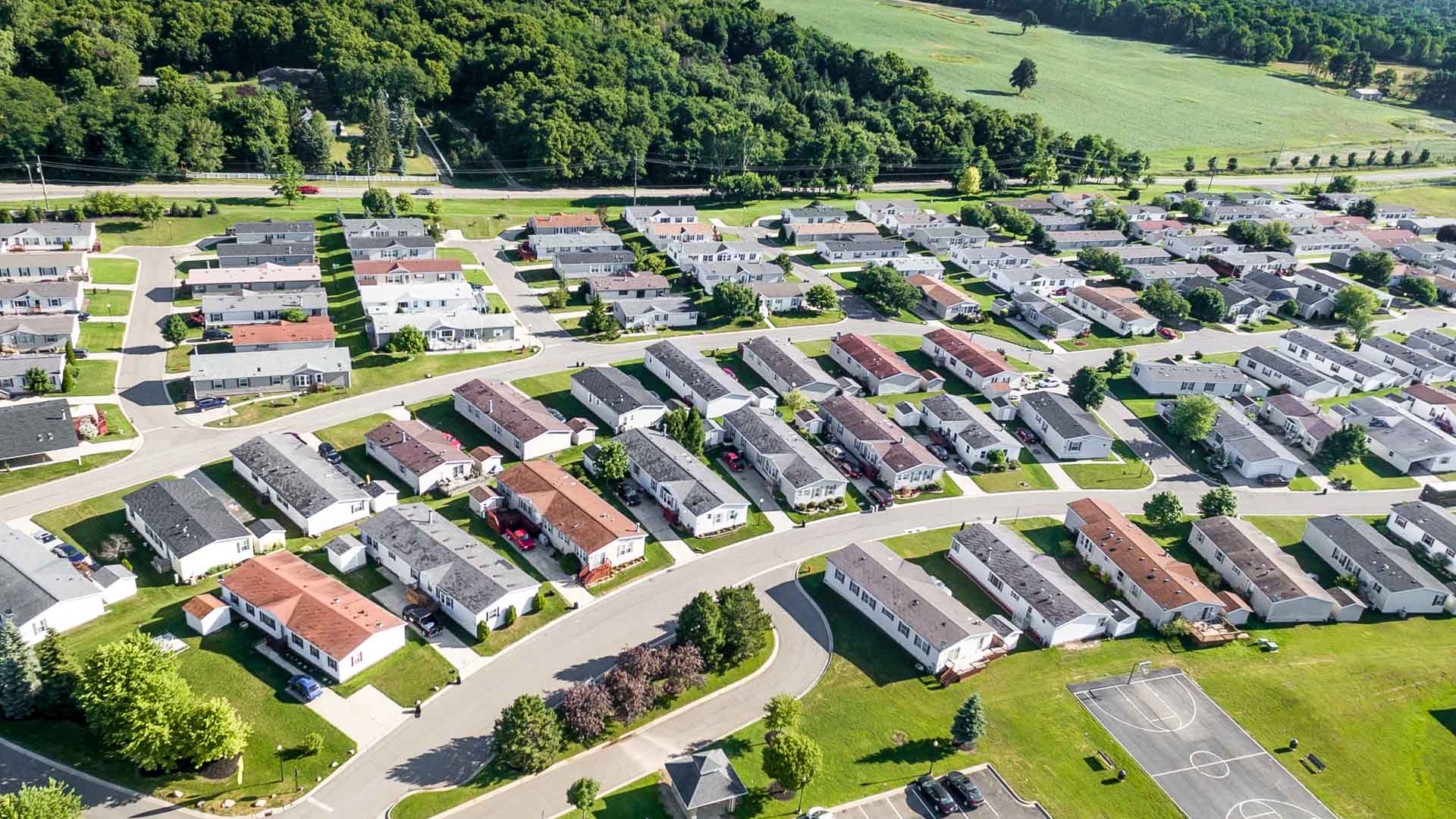
Northville Crossings, a Sun Community in Michigan
Each JLT manufactured home community rent and occupancy report published by Datacomp includes detailed information about investment grade communities in the major markets, including number of homesites, occupancy rates, average mobile home community rents and increases, community amenities, vacant sites, and repossessed and inventory homes.
JLT Market Reports also include management insights that rank communities by number of homesites, occupancy rates and highest to lowest rents. Established reports show trends in each market with a comparison of August 2018 rents and occupancy rates to August 2017, as well as a historical recap of rents and occupancy from 1996 to present date in most markets.
The August 2018 JLT Market Reports for select California markets are available for purchase and immediate download online at the Datacomp JLT Market Report website at www.datacompusa.com/JLT, or they may be ordered by phone in electronic or printed editions at (800) 588-5426. Each fully updated report for mobile home communities is a comprehensive look at investment grade properties within a market, enabling owners and managers, lenders, appraisers, brokers and other organizations to effectively benchmark those communities and make informed decisions.
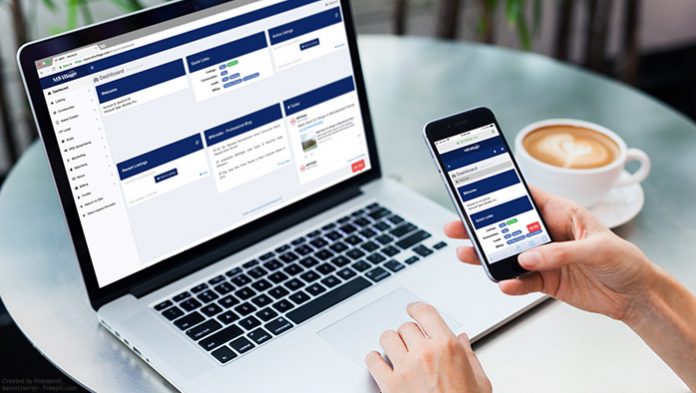
Recently we have released a new MHVillage account dashboard design to match the mobile version which we released in 2016. We recognized the need to streamline our design to better match the increased traffic from mobile devices. This streamline design is compatible with all screen sizes which will eventually be the design for every page on our site!
How Does It Work?
The new dashboard offers almost all of the features you have come to know with your MHVillage account with the exception of a few features that are offered to larger companies who manage multiple accounts (those features are coming soon though!).
There are also still several pages on MHVillage that you will recognize since we haven’t updated all of the pages just yet. Here are some guides to get you started:
At First Glance
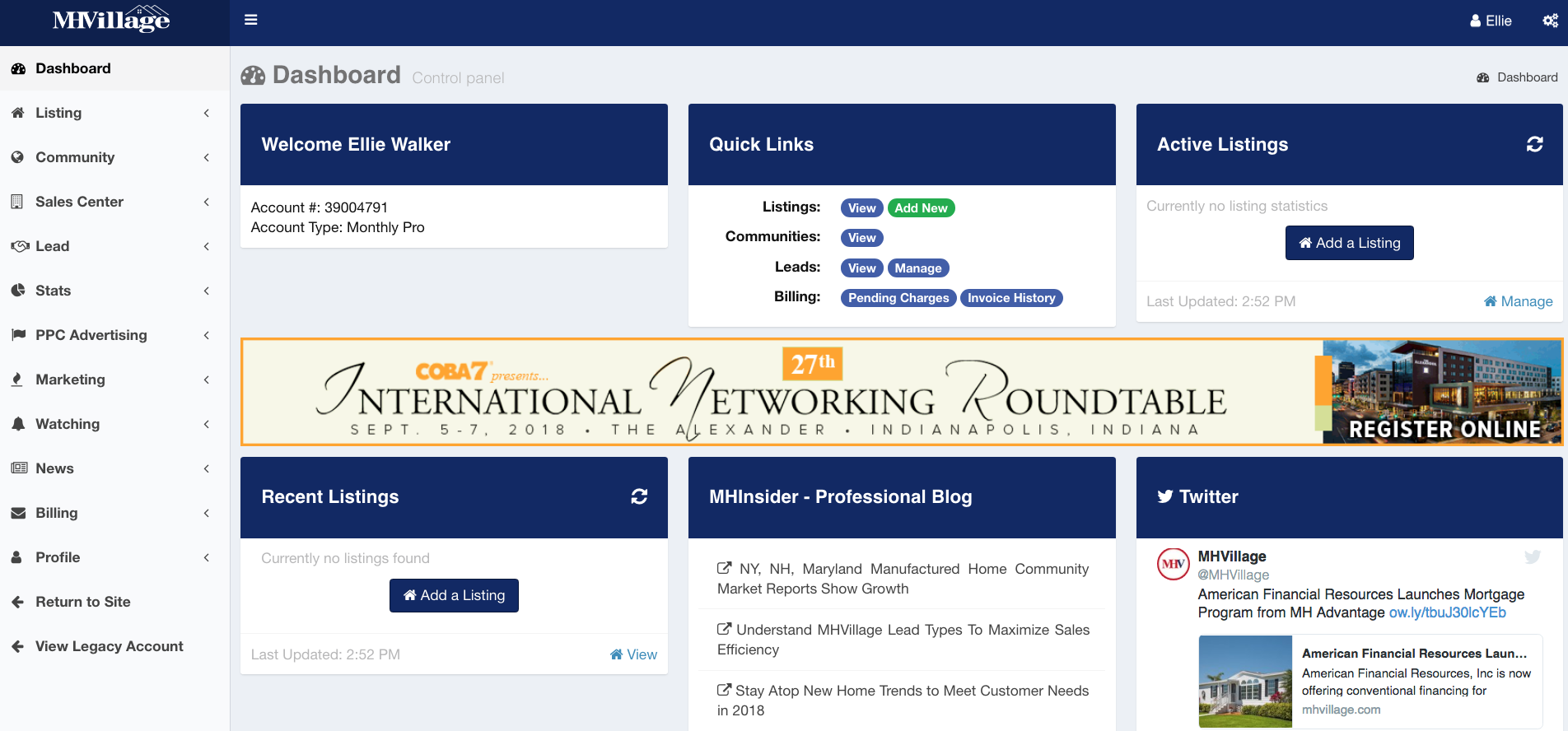
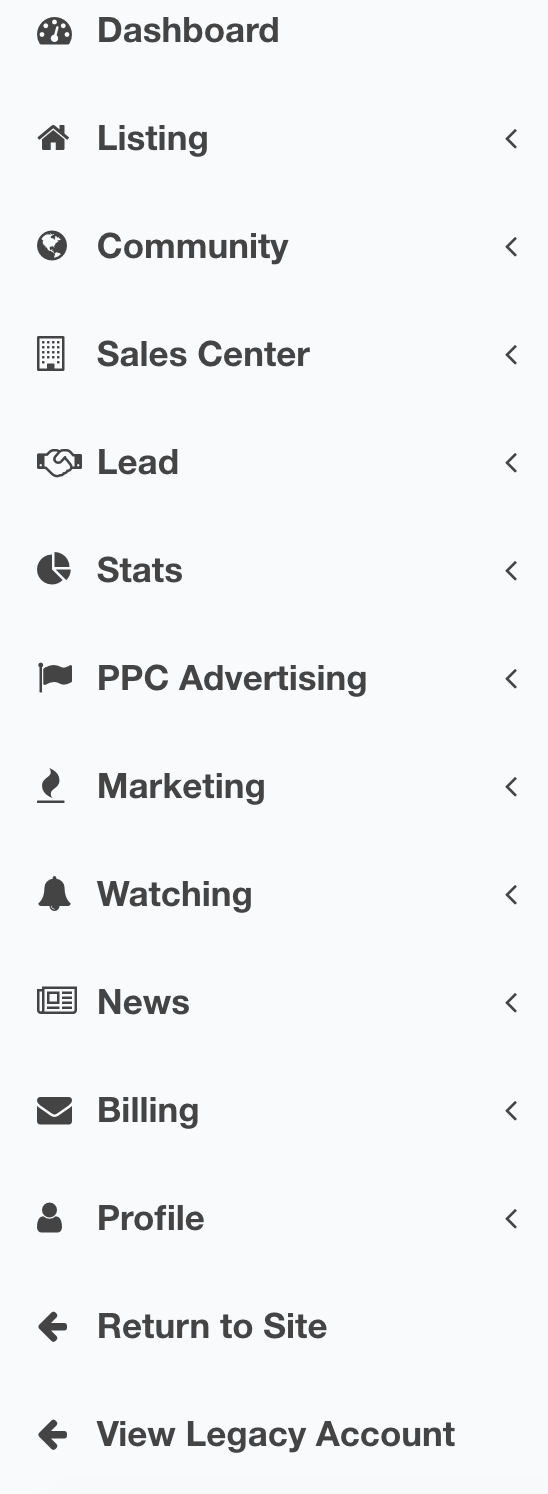
All of the features you are used to seeing are provided within menus offered on the left side of your screen. (If you are using a smaller screen like a tablet or phone you would want to select the icon with the three stacked lines to the right of our logo to open/close the menu on the left).
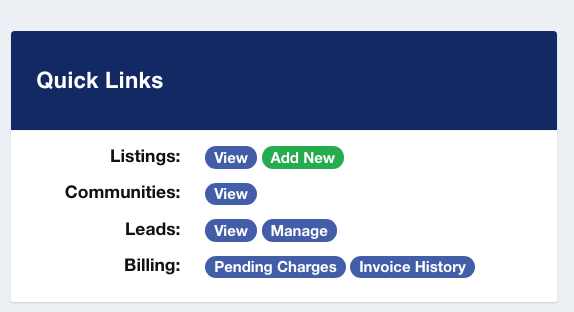
In addition to the navigation on the left, we also offer most of the tools you will need in a “Quick Links” section right in the center:
This section is useful if you need to quickly enter or view a listing or manage any of these sections of your account.
Breaking Down The Menu
As you click each option on the left it will open a sub-menu with options for action. Depending on the type of professional you are (Retailer, Community Manager etc.) You may not need to use every option we offer. However, you are able to reach all of the tools you are accustomed to on MHVillage via this menu.
The “Dashboard” option at the top will get you back to you starting Dashboard at any time and then the rest of your account is sorted out by category.
Homes
Your home listings will be accessible by choosing the “Listing” option. From here you can either “View” your existing homes or you can start a new one. We also have any of your past Book Values or Reports stored in this area too!
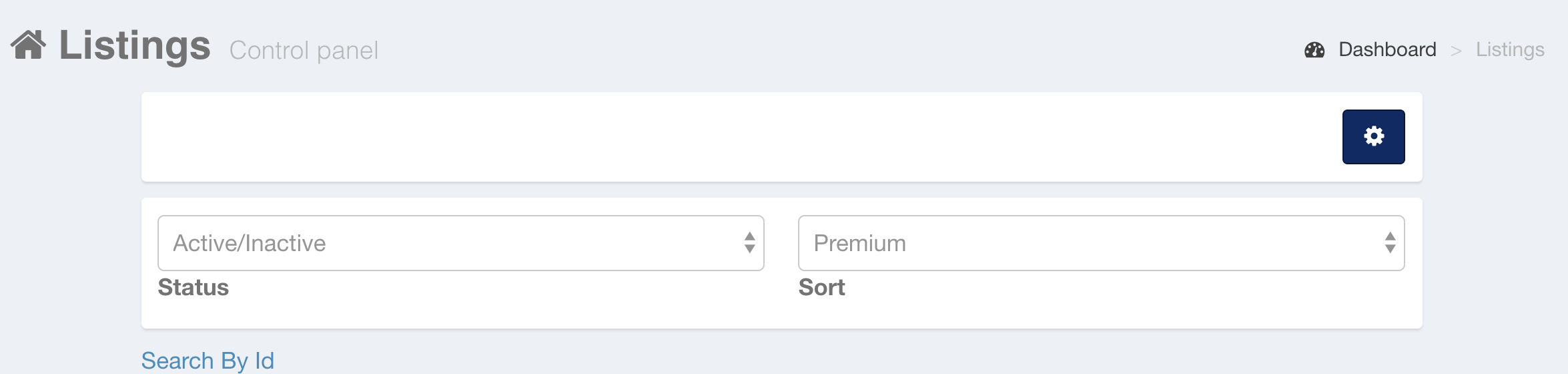
Additionally, we have a few different sorting tools for your homes within your account located at the top.
You can start with the status and listing level options:
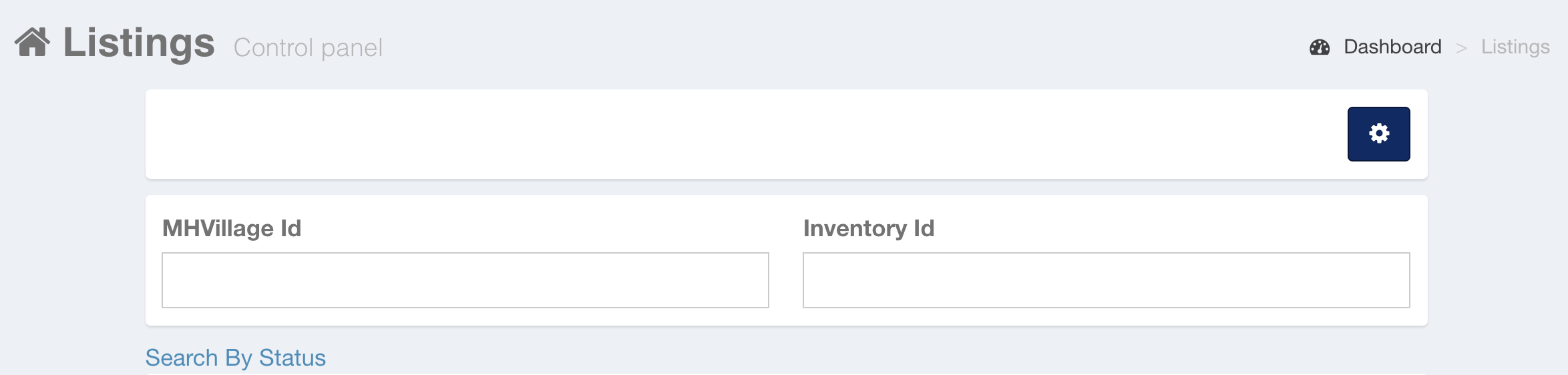
Or by selecting the blue text that says “Search by ID” you can search by the MHVillage ID or your Custom ID:
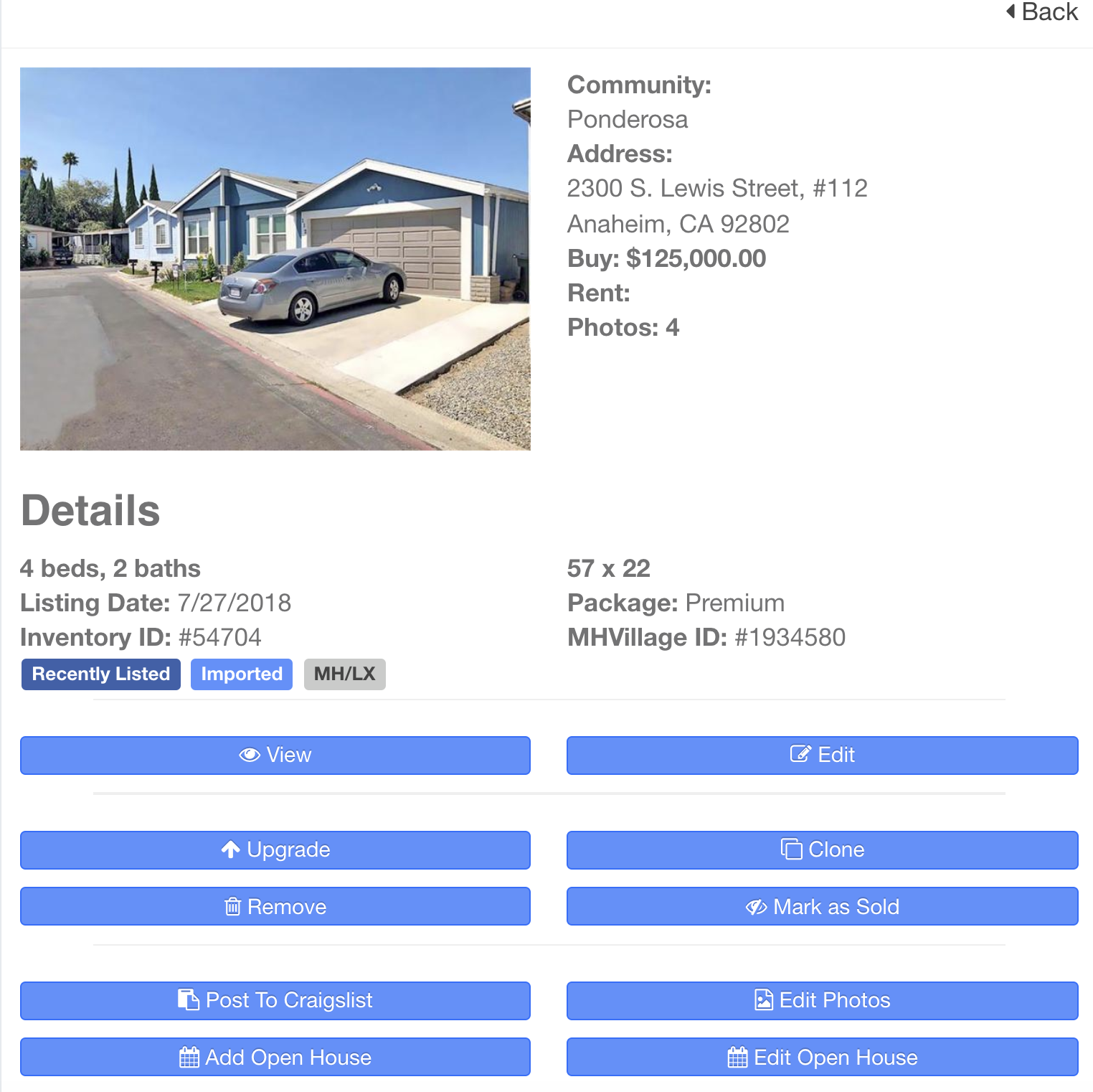
To edit or remove a home listing you simply select the home from the list and it will show you a list of quick editing tools to re-route to you to the editing process:
Sales Center
When you need to adjust the information about your Sales Center this option is also found on the left menu. The layout of the editing process has been streamlined. Once you select the Sales Center you will get a similar layout of quick links to the home and community editing process.
From here you can then quickly update the information and select the “Submit Option” at the bottom.
Communities:
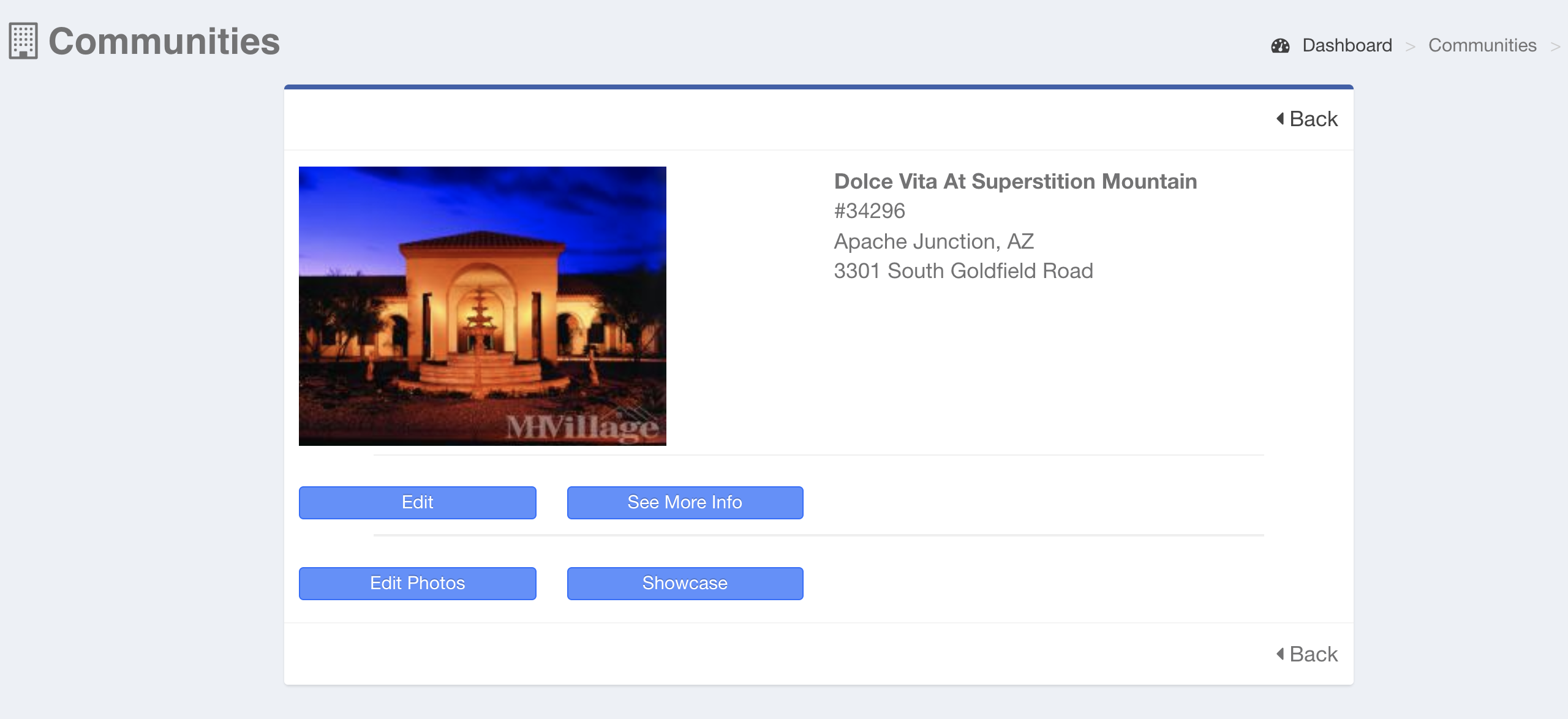
If you manage communities on MHVillage the editing process is just like it was before with the layout at the start matching the Homes and Sales Centers in the new Dashboard by providing some quick links after selecting the property.
Need More Time To Adjust?
While change can be scary and require a bit of adjustment at first, this new design will offer an efficient experience across all platforms.
However, if you do need a bit more time adjusting we have you covered. As we transition you can select the “View Legacy” option take you back to the old design. This option is in the menu on the left of the dashboard.
(Note: As mentioned above, if you manage multiple accounts on MHVillage admin features haven’t yet been implemented in the new design. For now, you can use the “View Legacy” option until we fully implement all of the required tools for your account.)
With any new product, there are bound to be a few tweaks here and there. We appreciate your patience and feedback as we continue to streamline your experience on MHVillage!
Registration is Open and Pre-SECO18 Workshops Included in Ticket Price
Registration is open and pre-SECO18 workshops are set for the Southeast Community Owners Symposium, Oct. 10-11 in Atlanta, Ga.
This year, the full lineup of Oct. 9 pre-SECO workshops are $100 in addition to the conference ticket price. Kathy Taylor of Hauck Homes and George Allen will offer an Oct. 8 Manufactured Housing Managers Training course, which is a separately ticketed offering.
After last year’s conference, SECO organizers conducted a survey of attendees and used that information to build topics that will be presented at the Atlanta Airport Marriott on Best Road.
Cedar Village in Carrollton, Ga., an all-ages community.
As the lineup of presenters is finalized, SECO18 offers this list of solo presentation and discussion topics:
More emphasis on newcomers and those interested in community ownership
More emphasis on women in the community business – lessons learned, management, and home sales
Meeting the needs of MH buyers – qualification, affordability, home choices
Community ownership succession
Marketing of new homes – generating traffic, social media, staging, sales center
Community management best practices
Reflections by industry icons on the future of the industry
Who’s doing what with chattel financing
Secret sauce for bringing new homes into your community – without going broke
Community financing – availability, LTV, DCR, 3-star vs. 5-star
A new Redman home
A Detailed List of Pre-SECO18 Workshops Have Been Announced – Tuesday Oct. 9
9 – 10:30 a.m. Renting Instead of Selling with Keith Campbell, Cole Phillips and Chuck Meek
Some community owners prefer to sell manufactured housing to fill vacant sites. Others prefer the rental model for its perpetual income stream. Hear from those who have successfully employed the rental model, discussing revenue, expenses, turnover, pros and cons.
9 – 10:30 a.m. (Room 2) Self-Storage with Steve Case, Paul Chase and Bob Love
If the daily work of managing tenant-occupied properties has reached a maximum, perhaps an accent or alternative is investment in self-storage facility. Discussion will cover how self-storage compares to park ownership, management, valuation and resale.
10:45 a.m. – 12:15 p.m. Social Media Bootcamp with Darren Krolewski, of MHVillage
If your idea of promoting your community involves newspaper ads, kick-down signs and radio, attend this workshop to address the advantages, and challenges, of today’s internet and social media alternatives – your own site, Facebook, Twitter, Instagram, MHVillage and others.
10:45 a.m. – 12:15 p.m. (Room 2) Technology in Communities with John Hemelgarn, of Rent Manager, and Randy Newby of Community Technology Services
Hear about the latest and greatest capabilities, features and options from one of the leading MHP/LLC property management software program providers. Basic concepts and advanced features will be covered on security camera installation and maintenance, IT support, and audio-video systems and more.
12:30-1:45 p.m. Pre-SECO18 Lunch
Clayton Savannah, a leading manufacturer of factory-built homes specifically designed for communities, is sponsoring the pre-SECO lunch this year. Hear about the newest options, features, and sales tips from Clayton Homes.
What’s involved in ordering the right home for a lot? Placing the home on the lot, blocking and leveling it, and connecting utilities. Attend a placement and setup of a home at a nearby manufactured home community.
2 – 3:30 p.m. Passive Investing in MHP/LLCs with Maria Horton and Jefferson Lilly
If owning and managing a manufactured home community seems like it would require more time than you have, or be outside your skill set, you might consider being an MH industry passive investor. Hear from community owners who manage dozens of communities owned by groups of investors.
2 – 3:30 p.m. (Room 2) Community Liability Issues with a panel of owners
What are the “gotchas” in MHP/LLC insurance coverage that you may be overlooking? What are your alternatives when a resident says your pet policy doesn’t apply to his emotional support pig or pit bull? Can a tornado/storm shelter pay for itself? What can you do to make your MHP/LLC residents feel better about dangerous weather?
3:45 – 5:15 p.m. Valuation of Manufactured Home Communities with Ben Braband, Jefferson Lilly and Steve Case
Valuing an income stream by applying a cap rate to NOI is pretty straightforward. However, what is a realistic revenue & expense estimate, cap rate, or estimate of value for vacant lots? Discussion will focus on park-owned homes — rented, under a lease to own contract, or land to be developed.
3:45 – 5:15 p.m. (Room 2) RV Parks with Heather Blankenship, David Gorin and Jayne Cohen
An alternative or complement business to manufactured housing community ownership may RV resorts with rental sites to folks who drive $500,000 motor homes. Some of the nation’s most knowledgeable RV park feasibility consultants and owner/operators will talk about the pros and cons of this interesting, and potentially lucrative, investment alternative.
Insurance, Service & Emotional Support Animals
What are the “gotchas” in MHP/LLC insurance coverage that are easy to may be overlook? What are the options when a resident says your pet policy doesn’t apply to an emotional support pig or pit bull? Can a tornado/storm shelter pay for itself? Discussion will cover what kind of dialogue will make community residents feel better about the potential for dangerous weather?
Rent Manager – Property Management Software
Attend this workshop to hear about the many latest and greatest capabilities, features and options of one of the leading property management software tools. Discussion will cover basic concepts of the software, as well as advanced features surely to impress any accountant, community owner, or investor.
Encouraging Skyline Champion Corporation Earnings Results for Fiscal First Quarter 2019
Skyline Champion Corporation earnings for first quarter fiscal 2019 results include a net sales increase of 32 percent to $322.3 million and a 19 percent uptick in total home sales, to 4,898 for the quarter, both compared to the same period last fiscal year.
On June 1, 2018, Skyline Corporation and Champion Enterprises Holdings, LLC, the parent company of Champion Home Builders, Inc., completed the previously announced combination of their operations. The combined company operates as Skyline Champion Corporation and is traded on the New York Stock Exchange under the ticker symbol “SKY”.
Due to the timing of the Combination and the adoption of Champion’s fiscal year reporting period, the first quarter fiscal 2019 results for Skyline Champion Corporation Earnings include three months of Champion’s results and Skyline’s results for the month of June. Results for the first quarter ended July 1, 2017 of the fiscal year ended March 31, 2018 are the results of Champion.
Full First Quarter Fiscal 2019 Highlights compared to First Quarter Fiscal 2018
Net sales increased 32% to $322.3 million
Total homes sold increased 19% to 4,898
Gross margin expanded by 230 basis points to 17.1%
Net loss of $0.9 million, compared to net income of $5.3 million, the year-over-year decline was due to increased SG&A and tax expense associated with the Combination
Adjusted EBITDA increased 109% to $22.7 million
Adjusted EBITDA margin expanded by 260 basis points to 7.1%
“I am excited to be reporting our results for the first time as Skyline Champion. The business performed well during the quarter driven by strong demand in most of our U.S. markets as well as Canada,” said Keith Anderson, Skyline Champion’s Chief Executive Officer. “I am pleased with our progress on the integration of our business and with the blending of our complementary cultures, providing a great opportunity to expand our role as one of the industry’s leaders. We are making progress toward achieving our targeted synergies.
“As we look forward and the market remains healthy, we are well positioned with $222 million of backlog at June 2018,” he said. “In addition, we continue to see positive developments on the financing front, with more competitive retail financing programs for both chattel and land home segments that should help drive improved order rates.”
Champion’s Bradford
First Quarter Fiscal 2019 Results
Net sales for the first quarter fiscal 2019 increased by 32 percent to $322.3 million compared to the prior-year period. The increase in net sales was driven by an increase in the number of homes sold as well as an increase in average selling price (“ASP”) per home sold. The number of U.S. factory-built homes sold by Skyline Champion in the first quarter fiscal 2019 increased by 20 percent to 4,536 with ASPs increasing by 15 percent to $58,600. Unit volume increased due to added capacity from the Skyline facilities in June 2018, as well as improved operating efficiencies throughout the organization. Home sales prices increased in order to offset rising material cost inflation while remaining price competitive and continuing to offer affordable housing alternatives to our customers. The number of Canadian factory-built homes sold increased by 13 percent.
Gross profit increased by 53 percent to $55.2 million compared to the prior-year period. Gross margin was 17.1 percent for the first quarter fiscal 2019, which was a 230-basis point improvement compared to 14.8 percent in the first quarter fiscal 2018. Our gross margin expansion was driven by increased volumes of homes sold and an increase in the average selling prices of homes sold. Skyline Champion also drove an increase in gross profit margins by offsetting a rise in material prices and labor costs with operational improvements and product rationalization.
SGA Expenses up 3% From Same Period Previous Fiscal Year
Selling, general and administrative expenses (“SG&A”) in the first quarter fiscal 2019 increased to $45.1 million from $26.8 million in the same period last year, primarily due to an increase in non-cash, equity-based compensation, transaction fees, integration and restructuring costs associated with the business combination. SG&A as a percent of net sales increased to 14.0 percent from 11 percent in the prior year period.
The net loss for the first quarter fiscal 2019 was $0.9 million, compared to net income of $5.3 million during the same period from the prior year. The decline in net income was driven by an increase in income tax expense as well as SG&A expenses related to the Combination. Skyline Champion’s effective income tax rate for the first quarter fiscal 2019 was impacted by the non-deductibility of certain transaction-related expenses and non-cash equity compensation.
Adjusted EBITDA for the first quarter fiscal 2019 increased by 109 percent to $22.7 million compared to the first quarter fiscal 2018. The increase was primarily caused by higher sales volumes, improved gross profit and the leveraging of fixed costs. The Adjusted EBITDA margin expanded by 260 basis points to 7.1 percent
As of June 30, 2018, Skyline Champion had $80.9 million of cash and cash equivalents and $30.5 million of unused borrowing capacity under its revolving credit facility.
View the Investor Relations section of Skyline Champion’s website for further discussion on financial results.
The Napa from Champion
About Skyline Champion Corporation
Skyline Champion Corporation (NYSE: SKY) was formed in June 2018 as the result of the Combination of Skyline Corporation and the operating assets of Champion Enterprises Holdings, LLC. The combined company employs more than 6,800 people and is the largest independent factory-built housing company in North America. With more than 65 years of homebuilding experience and 36 manufacturing facilities throughout the United States and western Canada, Skyline Champion is well positioned with a leading portfolio of manufactured and modular homes, park-models and modular buildings for the multi-family, hospitality, senior and workforce housing sectors.
In addition to its core home building business, Skyline Champion operates a factory-direct retail business, Titan Factory Direct, with 21 retail locations spanning the southern United States, and Star Fleet Trucking, providing transportation services to the manufactured housing and other industries from 10 dispatch locations across the United States.
Skyline Champion builds homes under some of the most well know brand names in the factory-built housing industry including Skyline Homes, Champion Home Builders, Athens Park Models, Dutch Housing, Excel Homes, Homes of Merit, New Era, Redman Homes, Shore Park, Silvercrest, Titan Homes in the U.S. and Moduline and SRI Homes in western Canada.
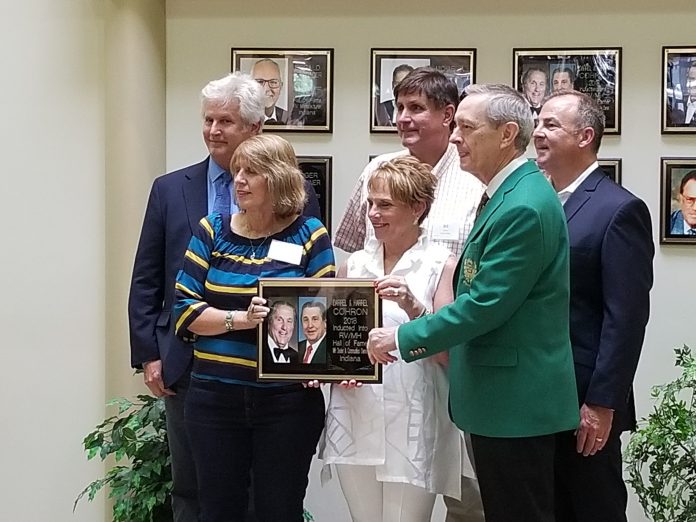
Karen Rhoades and Sheila Voelkel, family of Harrel and Darrel Cohron, hold the enshrinement plaque and stand in for photos with RV/MH Hall of Fame Chairman of the Board Joe Stegmayer. In the back row is Brad, Bill and Bob Cohron.
RV/MH Hall of Fame Induction Dinner Sparks Fond Memories, Draws Raw Emotion
More than 450 attended the RV/MH Hall of Fame Induction Dinner in Elkhart, Ind., Monday night, sharing many fond memories and ratcheting up the emotion for those being honored as “Titans of Industry”.
“These are people who have given their lives to what they love, as is the case with all halls of fame,” said Master of Ceremonies Gary Sieber, a media professor at Notre Dame. “Why wouldn’t they show emotion?”
Master of Ceremonies Gary Sieber speaks to association executive Gub Mix’s service to the manufactured housing industry.
A Few Words from the Inductees
“It’s meant so much to me to see some longtime friends who have meant so much to us, like Leo Poggione and Jess Maxcy,” said Carol Mix, who accepted the induction honors for her husband Gub Mix, a former association executive in Idaho, Utah, Nevada and Arizona. “He really wanted to be here but could not get cleared by his doctor to travel. He will recover soon, though, and he will be here next year!”
“If he was here, he would be working the room,” Carol Mix said later.
Rebecca Lenington, from the Pennsylvania RV and Camping Association, offered emotional thanks to all who have helped her achieve success doing the work she’s loved.
“It truly is my honor,” she said. “Working in an field that brings joy to so many people.”
Jim Scoular receives congratulations after being honored with the Darryl Searer Spirit Award.
New Darryl Searer Spirit Award
Jim Scoular, of Jimsco Homes in Sioux City, S.D., earned the annual and now re-named Darryl Searer Spirit Award. Scoular was a 2006 inductee to the Hall of Fame, and joined his father Ralph, among those honored in 1998.
Darryl Searer, president of the RV/MH Hall of Fame, said no one could be more deserving than Scoular for an award centered on support and enthusiasm for the hall.
“When it looked like the Hall of Fame may be a thing of the past, Scoular got back on the board of directors and did something about it,” Searer said. “Our financial worries are behind us thanks to this man’s concern and love for the hall.”
The RV/MH Hall of Fame will be debt free this year, Searer said, noting the effectiveness of the Kevin Clayton Challenge, which matched donations from others to pay off the organization’s debt. About 92 percent of the fundraising goal has been met, Searer said, and about 80 percent of those pledges have been paid.
Joe Stegmayer, CEO of Cavco Industries and Chairman of the Board for the Hall of Fame, lauded Searer’s leadership, all of which has been offered at no cost.
“Darryl has done so much and has never asked for a thing,” Stegmayer said.
The Cohron Twins
Brad Cohron, the third generation in his family to contribute to Cohron’s Homes and its seven Indianapolis-area communities, accepted the induction honors for twins Harrel and Darrel Cohron.
“They sold upwards of 500 homes a year in the ’60s and early ’70s, and they would get so busy at times Harrel would unplug all the phones to keep the salesmen focused on all the people in the office,” Jacob Cohron said. “Which meant Darrel was always hard at work building and operating the parks.”
The younger Cohron went on to describe the late Harrel’s would-be agenda had he achieved the nation’s highest office.
“Harrel would always say, if he ever became president of the United States, every house would have wheels on it,” he said.
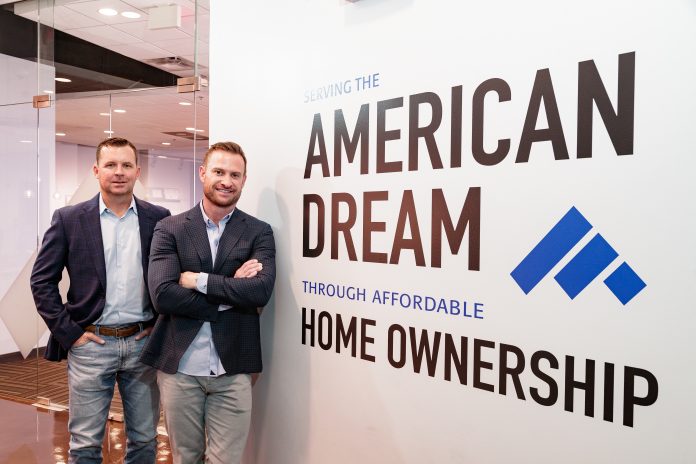
From left, George Dover and Cody Pearce of Cascade Financial Services, a national manufactured home lender.
Founders of Cascade Financial Look to Expand Market Share in Growing Sector of Housing
Cody Pearce and George Dover met in September 1997.
Both men were being hired to work for a small mortgage lender in Utah, with Cody moving to Boise, Idaho, start a retail branch for the company, George joining as the vice president of operations at the home offices.
The tandem spent the next two years working in close contact with George serving as a mentor to Cody, who was newer to the mortgage business.
“Over time it became apparent to both of us that with George’s operational expertise and my experience in production and sales that there was an alliance at hand that could work really well,” Pearce said.
Dover and Pearce agreed they should pursue a business partnership. It was only the two years later that the pair exited their respective roles in Utah and moved to Phoenix to launch an altogether new endeavor.
Little did they know what an endeavor it would be.
Photo Courtesy of ELS
The Move to the Desert
Dover and Pearce packed up what little they had, shared a U-Haul and moved their small families to Gilbert, Ariz., to found Cascade Financial Services.
“Everyone finds it humorous that we rented a house together for the first four months while we started the company,” Pearce said. “I suppose looking back it was unusual, but to us it just made sense. We were broke, living in a new state and we knew George and I would be working around the clock.
“So it made perfect sense to share expenses and make the strain for the hours worked easier on our families,” he said.
Although the two were friends, they had spent no time in close quarters. With the move to Arizona, it quickly became apparent just how different they were from each other, and how that could serve to their advantage.
“One of the first days in the rental house Cody started loading the dishwasher after dinner,” Dover said. “It wasn’t organized at all and it was obvious that he was never going to fit everything into the dishwasher.
“I just couldn’t take anymore so I stood up and I told him to step away, at which point I finished the job for him,” he added.
Pearce responded with a laugh, and recalls the look on his business partner’s face.
“He told me in no uncertain terms to never load the dishwasher again,” Pearce recounts. “I knew then and there that we could orchestrate the ideal partnership, for our business and for the people we serve.”
The Hot Housing Market
Arizona at the end of the last millenia, was a booming market in the housing industry. Conditions had fostered a significant amount of entrenched competition. It also was a time of rising interest rates, and the combination of that and a high level of competition created a difficult environment to get a foothold in the mortgage lending arena.
“As we worked on lead generation methods, we came to the realization that starting Cascade was proving to be much more of a challenge than anticipated,” Dover said. “Fortunately, as reality was setting in, we crossed paths with an industry contact who mentioned a new loan product that was gaining traction in many of the Sun Belt states.”
The product, which was a foreign concept to Dover and Pearce at the time, was a construction to perm loan for new manufactured homes being placed on real estate.
Pearce and Dover played with the idea, and kept an open mind about the new concept.
“Our initial research was very encouraging when we discovered that, at the time, there were well over 20 manufactured home retailers on Apache Trail in Mesa and Apache Junction,” Pearce said. “Wanting to understand the market and the demand for this product, we spent an August afternoon out on ‘The Trail’ speaking with retailers to gain perspective on the demand as well as to assess current lending competition in the market.”
Knocking on Doors
After visiting three or four retailers, the Cascade tandem changed the conversation.
“We had been asking asking retailers what they needed, and pretty quickly we were entering with a conversation about ‘what we can do for you’,” Pearce said. “Even though we really still had no idea how the product worked, just hearing the demand and desperation that existed for manufactured home loan products in 1999 had a big impact on us.”
While lenders were having liquidity issues, Pearce and Dover realized that they had just stumbled onto something big. They just had no idea at the time just how big.
Dover put his expertise to work. He occupied himself during the next several days dissecting and analyzing the loan product and creating processes needed to offer the product. Pearce continued to establish relationships with the retailers, and he began taking loan applications.
It was more than a new product. It was a new business, and the start of a new era in lending.
Courtesy of ELS
The Birth of Cascade as an MH Lender
While that original form of the construction to perm product was relatively short lived, Cascade had primed itself for a new mission. The mantra of “Servicing the American Dream Through Affordable Home Ownership” resonated with Pearce and Dover, and to fully embrace the concept Cascade Financial transitioned its lending platform to nationwide FHA and VA construction to perm loans for manufactured housing.
“Our mission statement is more than a slogan, it’s who we are,” Dover said. “It’s what our team members focus on, and we are fortunate to be able to work in such an incredible industry serving deserving consumers.”
Ryan Stum, Wayne Bond and George’s brother Gerron Dover joined the Cascade team in 2003. The added talent and leadership served as Cascade’s initial foray beyond the Arizona state line. Bond took over as CFO, alleviating George Dover of many of his primary responsibilities.
“That way George could work on continually improving processes,” Pearce said. “Ryan and Gerron moved to Texas and opened up that market for Cascade, which was a tremendous catalyst for growth. The three later they became equity partners and have been integral to the overall success of Cascade Financial.”
Carving a Path for Manufactured Home Lending
However, there were challenges.
The group’s ability to find what are called “take-out lenders” — large financial conglomerates that could assume a loan or loan portfolio — proved to be a constant issue in those early years.
Many of these lenders to whom Cascade sold their loans had eliminated manufactured housing from their offerings. This forced Cascade to continually look for liquidity, which became burdensome when what they wanted to be doing was originating loans for manufactured housing.
“It became apparent that we had to take control of our future. We need to have it in our own hands,” Dover said. “And the best way to do that was to become a Ginnie Mae issuer.”
Courtesy of Champion Homes
Enter Ginnie Mae and Untold Market Forces
It was 2007, and Cascade had just received its Ginnie issuer number. And just as quickly, the doorstep of the Great Recession appeared.
As lenders folded up or exited the MH market, Cascade went ahead with the plan to expand its footprint for manufactured home buyers.
It may have been counterintuitive, but for Cascade it worked.
“I was answering calls it seemed daily from a salesmen or a general manager of a retail business in some other state,” Pearce said. “They had heard good things from their friends in the industry and wanted to know when we were going to get licensed in their state. The demand for our loan products was there and we realized the incredible opportunity that lay ahead of us if we were to choose to accept it.
“For us, there was only one way forward. Growth,” he said.
Pearce said the challenge in any expansion effort is the need for service levels to remain a point of pride. Retailers and borrowers had built an expectation of what they would get from Cascade. The team in Gilbert, Ariz. always had been relationship focused. As a lender, Cascade built a “high-touch organization”. Industry partners expected Pearce and Dover to be accessible, and to maintain the small company feel even if they were to grow.
“This wasn’t and isn’t easy to do, and we certainly have had our share of growing pains, but we never forget how we got here and that our retailers and community partners are the reason,” Pearce said. “So, we are continually working on improving our service level, speed and efficiencies so that manufacturers, retailers and communities can continue to provide much needed affordable housing opportunities to consumers.”
Cascade’s In-House Service Platform
Along with the Ginnie approval came the need to create an in house servicing platform. So, of course, Dover built Cascade’s from scratch. He knew that creating a high-touch servicing department for borrowers would be critical to their success in maintaining payments and staying in homes.
“Our goal is to work for every opportunity for our clients,” Dover said. “Other traditional servicers just weren’t providing this type of high-touch effort, and we felt a responsibility to give our borrowers something better.”
Loan servicing became the game-changer Cascade and the industry needed. Immediately, the quality and performance of Cascade portfolios began to improve.
Courtesy of Champion Homes
A High-Touch Approach to Customer Service
“The current servicing leadership team and their group of professionals, in my opinion, is second to none in the lending industry,” Pearce said. “We are confident that our borrowers have the best servicing experience possible.”
A good example of this is Cascade’s FHA “compare ratio”, which puts their current government loan performance up against all other FHA loans, including mortgages for site-built homes. Cascade has a 78 percent compare ratio, which means their FHA loans default at 78 percent of the national average.
“This shows that manufactured home borrowers perform on par, and, in our case, better than other collateral types when serviced correctly,” Dover said.
The two, early in their careers, decided to work as closely as possible with regulators and elected officials. This would ensure the longevity of manufactured home financing, which is a clear benefit for Cascade. But these types of assertions — working closely with regulators and elected officials — can be more easily said than done.
How Cascade Financial Gradually Became a National Resource
Dover and Pearce recall the early 2000s at a meeting for the Mortgage Bankers Association in Washington, D.C. There was an “introduce yourself” type of question going around the room.
“George was responding to the question, and every head in the room seemed to spin for a closer look at the dumb guys who only financed manufactured homes,” Pearce said. “They couldn’t believe that an entity would do that with all of the subprime loans and home equity lines that were being offered at the time.”
George said he felt their industry colleagues at the time were unable to give Cascade any real credit as “real mortgage lenders”. Years later during the mortgage crisis, after the subprime and equity markets turned and spiraled, their peers saw Cascade’s growth while many entities in the room that day long ago were no longer in business.
“They went from kind of laughing at us, to taking us very seriously,” Pearce said.
The U.S. Capitol
When D.C. Comes Calling
Eventually, the Mortgage Bankers Association became a great ally and resource to Cascade. It has supported MH-positive consumer lending rules and regulations and been instrumental in placing Cascade in front of regulators and elected officials.
“We get to tell our story and to shine a light on the tremendous need for affordable housing finance in America,” Pearce said.
Shortly following Cascade’s advanced involvement with MBA , Pearce engaged in a similar way with the Manufactured Housing Institute, the nation’s lone industry trade organization, which he said has been a positive step for Cascade and the industry.
“MHI is the link for lenders and all aspects of our industry to work together to create positive outcomes for our consumers. With no secondary market for chattel financing, Cascade has worked closely with its peers to educate regulators, Congress, HUD and the GSEs,” Pearce said.
“Cody has really helped our industry tremendously in bringing his mortgage background and lending experience to manufactured housing,” Kevin Clayton, CEO of Clayton Homes, said during a presentation at the manufactured housing conference in Arizona. “His work in Washington and with individual customers nationwide is making a difference.”
Cascade’s Centerbridge Partnership
Centerbridge Partners, a private equity firm with a robust understanding and background in manufactured housing, approached Cascade in 2015 with the idea of providing capital to expand Cascade’s current lending platform to include chattel and non-government loans.
The timing, once again, seemed fortuitous.
In August 2016, Centerbridge acquired Cascade and the lender immediately built chattel finance options for retailers and manufactured housing communities across the country. By the end of 2018, Cascade will be licensed in all 50 states for originating and servicing their entire offering of loan products.
With nationwide shipments on the rise, MH becoming more and more mainstream as a viable option for much needed affordable housing in the U.S., and with the encouraging push into MH financing by government-backed corporations, Cascade’s outlook continues to be as bright as the desert sun.
“We have done a lot to get here, we are proud of that, but we have so much more than we need to accomplish,” Pearce said. “With a great partner in Centerbridge our path forward is clear.
“Over the years, despite ups and downs, we have not had to reduce the size of our team due to lack of volume,” he said. “This is something we are very proud of, and our team members know that we are going to do everything possible to continue this pattern. We are loyal to our team and they are loyal to our customers. This is why we continue to set the pace for service in the industry.”
ChoiceHOMESM Financing Launched for Focus on Manufactured Homes that Change Perceptions
Dennis Smith, Affordable Lending Manager for Single-Family Lending and Access to Credit at Freddie Mac.
In 1998, if you asked anyone to describe their perceptions of a telephone, you would get a pretty standard answer. Two decades later, today’s “phone” is barely recognizable visually. It contains features, applications and capabilities that couldn’t have been imagined back then.
Every so often, it’s useful to take a second look at a product or technology to see what changes have been brought to the market.
Manufactured housing is no exception, and Freddie Mac is working to help educate potential homebuyers about the realities of today’s manufactured homes. Though some borrowers may have dismissed them in the past, many are finding that second look worthwhile. That’s because there’s a new generation of manufactured housing that might just be the best option for first-time homebuyers, millennials, and empty-nesters looking to downsize.
In July, we launched our CHOICEHomeSM pilot, specifically tailored to a new type of high-quality manufactured home. These homes have features such as garages, permanent foundations, built-in porches and a 5/12 roof incline. Many of these homes also come with energy-saving features like double-pane windows and additional insulation.
These features illustrate a product that has evolved for the better, while remaining at a low price point that is affordable to low-income and working families.
At Freddie Mac, we believe that just as manufactured homes have evolved, manufactured home financing has to evolve as well. That means potential homebuyers should be able to enjoy conventional loan financing to purchase a manufactured home.
Photo Courtesy of Clayton Homes.
Conventional Financing for New Manufactured Homes
An important part of our mission at Freddie Mac is increasing access to mortgage credit across the country for affordable housing. For manufactured homes, the CHOICEHomeSM pilot does just that.
The nation is facing a shortage of affordable housing stock that has reached crisis levels, affecting millions of U.S. households. Safe and affordable housing is increasingly hard to find across large swaths of the nation. This shortage particularly affects millennials and baby boomers – the two largest generations in number – who want to find their first or their retirement home, respectively.
According to the U.S. Census Bureau, there will be 71 million young adults age 20 to 34 in the United States in 2019. Many of these young adults will be first-time homebuyers. All of them will drive the demand for housing, particularly affordable housing, for years to come. In addition, baby boomers will number an additional 72 million, many of whom are “empty nesters” and will be looking for an affordable home.
Simply put, the demand for affordable housing isn’t going away any time soon. And manufactured homes will have a crucial role to play.
The Need for Affordable Housing
Millions of America’s families rely on manufactured housing, especially in rural areas. Today, more than 22 million Americans live in manufactured housing and the need is only expected to grow. According to the U.S. Census Bureau, 321,000 new manufactured homes were shipped by manufacturers in the first quarter of 2018.
Freddie Mac has looked for innovative ways to increase liquidity in the manufactured housing space. Through the CHOICEHomeSM pilot, we hope to provide a scalable opportunity that brings together multiple industry players who support manufactured housing as high-quality, affordable housing stock.
These pilot participants — lenders, manufacturers, retailers, mortgage insurers and appraisers — are all integral parts of the lending process.
During this pilot, Freddie Mac will treat the loans it purchases on manufactured homes titled as real property in the same manner as single-family site-built homes. Access to conventional financing that eliminates many of the traditional manufactured housing requirements is a true win-win for lenders and borrowers. Both will benefit from a more streamlined mortgage experience that is faster and, more importantly, less expensive over the long term.
Courtesy of Buccaneer Homes, a product of Clayton Homebuilding Group.
The primary objectives around the CHOICEHomeSM pilot include:
Obtaining data that documents trends in loan value and overall performance so we can see how these homes retain their appraised value and how they perform generally;
Working with the industry to support the development of a standard product to finance manufactured homes for the long term. Through this pilot, we’re seeking feedback – and trying to see what works and what doesn’t work.
Increasing the purchases of factory-built housing loans characterized as real property;
Improving consumer perception by promoting well-made, factory built homes as a quality, modern, viable, affordable housing option; and
Leveraging the Freddie Mac Home Possible® product to expand access to credit for low- to-moderate income borrowers.
Freddie Mac is dedicated to improving America’s affordable housing finance ecosystem for the benefit of homebuyers, manufacturers, sellers and lenders. In our work to reimagine the mortgage experience, we want to be an active participant in the conversations about manufactured housing and support industry change.
It’s all part of our Duty to Serve underserved markets
Through our Duty to Serve effort, we’re tackling some of the nation’s most persistent housing challenges. We welcome this opportunity work with the industry to develop innovative solutions like the CHOICEHomeSM pilot and promote greater access to credit for affordable housing. It’s an important step forward in increasing responsible financing options for buyers of manufactured homes. We look forward to continuing our positive momentum in this important space. For more information about Duty to Serve, visit www.freddiemac.com/about/duty-to-serve/.
Dennis Smith is an affordable lending manager of Single-Family Affordable Lending and Access to Credit at Freddie Mac. He manages the manufactured housing initiatives that support Freddie Mac’s underserved markets plan.
American Financial Resources, Inc. offers conventional financing for manufactured homes via the newly introduced MH Advantage program from Fannie Mae®.
Lenders Begin to Get Onboard with Fannie Mae’s MH Advantage Program for Manufactured Homes
American Financial Resources now offers conventional financing for manufactured homes via the recently re-introduced MH Advantage initiative from Fannie Mae®.
The new mortgage program is for specially designated manufactured homes with features comparable to traditional single-family homes. Eligible homes will have features that include:
Drywall
Energy efficient appliances
Upgraded cabinets in kitchens and bathrooms
Porches
Garages
Eaves
Durable siding materials
and higher pitch rooflines
“With a shortage of affordable single-family homes in the U.S., manufactured housing is increasing in popularity,” said Bill Packer, executive vice president, American Financial Resources, Inc. “AFR continues its commitment to the growing manufactured housing community, and we are pleased to add Fannie Mae’s new MH Advantage program to our portfolio of financing options.”
Through MH Advantage, qualifying borrowers can secure financing with a down payment as low as 3 percent. Loans feature cancellable mortgage insurance and also can be combined with other Fannie Mae programs like HomeReady® or HFA Preferred™ mortgages.
“The goal of this initiative is to help bridge the gap in affordable housing by encouraging more consumers to consider manufactured homes as an alternative to traditional single family ‘site built’ homes,” Packer said. “AFR is proud to be among the first to offer any loan program that helps loan originators get borrowers into a home with features they want, at a price they can afford.”
The June Re-Launch of Fannie Mae’s MH Advantage Program
Fannie Mae in June re-launched the program designed to provide increased financing options for manufactured housing and close the gap between affordable housing and the traditional site-built residences.
MH Advantage-eligible homes are land-home financed and intended to become a seamless part of any single-family neighborhood.
Guild Mortgage Was First to Jump into MH Advantage Program
Guild Mortgage within days of Fannie Mae’s launch of the program announced its intent to provide 30-year loans for manufactured homes via the new program.
Borrowers qualify for a rate as low as 3 percent with a down payment.
“There is an increased interest in manufactured housing throughout the U.S. because of current housing shortages, both in the resale of existing homes, and future inventory based on forecasts of new housing starts,”Guild Mortgage President and CEO Mary Ann McGarry said. “Guild has been one of the top originators of loans for manufactured homes for some time and we are pleased to offer this new MH Advantage program with Fannie Mae. It comes at a critical time when many potential homebuyers are priced out of the market. This gives them a high-quality option with low down payment and a lower interest rate.”
More Detail on the Sponsored Manufactured Home Mortgage Programs
MH Advantage homes must be titled as real property and are factory-built manufactured homes that remain subject to the HUD Manufactured Housing requirements and must be permanently affixed to the land.
This is a new land-home mortgage option that offers affordable conventional financing when a new home is purchased through a retailer and is financed through a lender who is a Fannie Mae partner.
The need for more affordable housing and greater access to financing for affordable housing is the primary driver for the change. Entry level site-built homes have “become scarcer, smaller, older, and are more likely in need of major renovations,” according to a statement by Fannie Mae.
Home prices nationwide are increasing at a rapid pace, and attention toward modern, high-quality manufactured homes is a viable solution.
Fleetwood Homes
Changes Offered by MH Advantage
With the new financing option, prospective homebuyers get the design features they want at a price they can afford. Loans through the program are more attainable and flexible, opening the door to home ownership for millions of Americans.
MH Advantage Features Include:
Higher loan-to-value (LTV) ratios, up to 97%.
Waived 0.50% Loan Level Price Adjustment
Able to be combined with HomeReady, HFA Preferred, and other Fannie Mae mortgages
Appraisal and Underwriting Changes
MH Advantage provides underwriting and origination changes that streamline processes and creates a more straightforward transaction. This allows retailers to manage their MH portfolios with improved flexibility.
A manufacturer sticker helps appraisers identify an MH Advantage home, and provides use of MH appraisal guidelines and a Desktop Underwriter (DU) underwriting process similar to features found in standard MH loans.
Standard MH Program
Standard MH, which includes single- and double-wide homes that are ineligible for MH Advantage, offers an even more affordable alternative to site-built homes. This provides relief for millions of American households, especially in high-cost and rural areas.
Fannie Mae purchases mortgages secured by manufactured housing titled as real estate via approved lender partners using standard MH underwriting guidelines.
Steve Lefler and Modular Lifestyles Set the Stage for Energy Efficient and Net-Zero Residential Construction
Steve Lefler of Modular Lifestyles is creating homes and turning heads, often to far flung and out of the ordinary places.
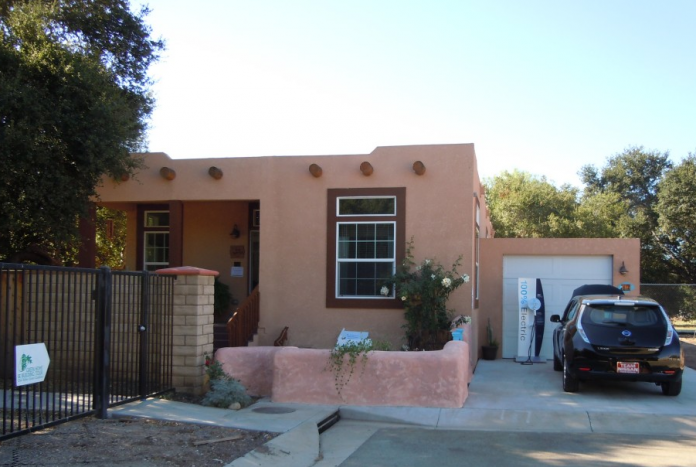
Lefler works with modular, manufactured and RV code homes to create highly energy-efficient homes. This includes one on-grid near net-zero energy home where he resides in Paso Robles near Sacramento, and another that toured the state for two years before going on display at the California State Capitol building.
The “Quest” home that ended up on the Capitol lawn was the result of a project Modular Lifestyles did with Cavco Corporation and Newport Pacific. The off-grid home has many energy-efficient features, including a photovoltaic (PV) solar energy system and propane to charge the deep-cell marine batteries, sustainable cork flooring, recycled furniture products, specialized insulation and an incinerator toilet that requires no running water.
So, the only thing required to live “off the grid” in a Modular Lifestyles Quest home is a location for the home and a water source, Lefler said.
“Factory-built houses are the most energy efficient form of housing,” said Lefler, who purchases his homes from Cavco and others from builders like Champion and Palm Harbor.
“They’re a sub-contractor now,” Lefler said of the original home builders. “I take the energy liability and put my own name on the house with a 4×6” metal plaque at the front door that says ‘Another Award Winning Modular Lifestyles house’.”
What is Net-Zero Energy?
A net-zero energy home is one that uses no more energy than it is able to produce.
Lefler works largely in California, where net-zero has moved from preference to a near mandate, with state law requiring all new residential structures to be net-zero by 2020.
The Lefler home in Paso Robles near Sacramento.
“My house was one of five homes chosen in the state of California for most energy efficient prior to net zero rules,” Lefler said. The home uses high grade materials, high R-value insulation, solar panels on the roof and a closet-full of rechargeable batteries that can store energy for later use or push out to the grid.
Down to a $400 output for well water, Lefler isolated the usage and was able to figure out how much more energy would be needed from solar to make the place truly neutral in energy consumption.
Given this, he sees his home as a model for what California residents will do in the very near future.
“I asked to go on the most stringent payment structure, by the hour, and did that in 2014 to be able to study and figure out how all this stuff works because everyone will have to operate by the hour before too long,” he said.
The Builder Put to the Test
When Lefler began his work in energy efficient housing, he resided in a site-built home in Laguna Beach, Calif.
“I kept getting calls from people saying ‘If your home is so great, why aren’t you living in it?’ I took that to heart, and we made the move,” he said. “The off-the-grid home in Paso Robles is now our full-time residence.”
Lefler constructs as many as 100 homes per year, including some 190- to 960-square foot extremely efficient “tiny homes”, which are adapted from Park Model RVs.
In Ojai, Calif., Modular Lifestyles partnered with a manufactured home builder to show how planned efficiencies can improve public health, safety and welfare by creating a positive environmental impact. The project focused on planning and design for…
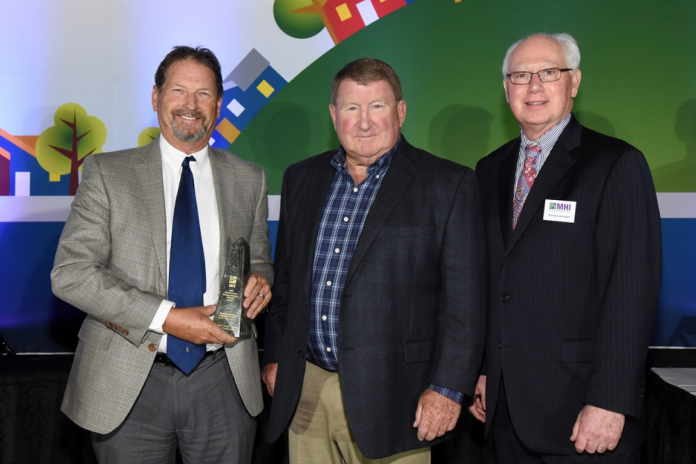
From left, Steve Lefler of Modular Lifestyles, Tom Sullivan of Newport Pacific, and Dick Jennison, President of MHI.
Modular Lifestyles has won multiple awards for its designs and construction, including the 2014 USGBC-C4 “Green Home Nomination” and the 2018 MHI National Energy Efficient Award for the Paso Robles home, as well as 2012 USGBC-C4 Taylor Ojai House Nomination for Green Home Award and both the 2011 and 2012 Ojai Valley Green Home Tour Participant Award.
For more information on energy-efficient and net-zero energy construction, contact Steve Lefler at Modular Lifestyles.
Oct. 6-8 at Avalon Hotel in Alpharetta, Ga.
Manufactured housing community owners have never had more information available to them — or more decisions to...
The Midwest Manufactured Housing Federation has announced that attendee registration is now open for the 2027 Louisville Manufactured Housing Show, returning to the Kentucky...
HUD’s Innovative Housing Showcase, MHI’s Homes on the Hill and Annual Meeting Begin Sept. 22
Two of the country’s largest builders of manufactured homes will...


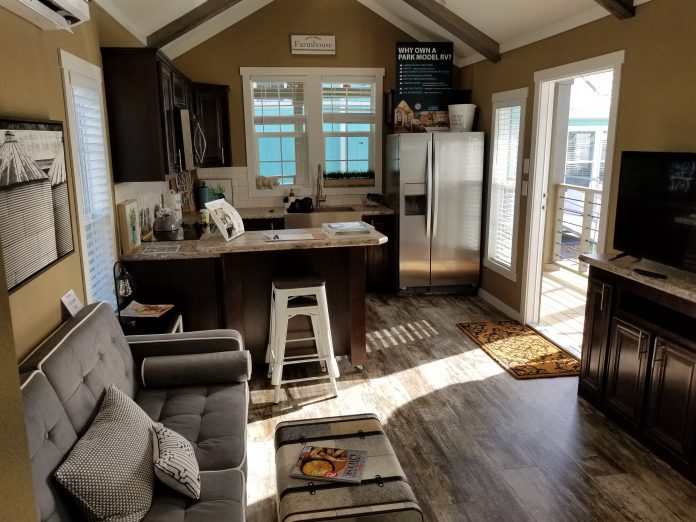
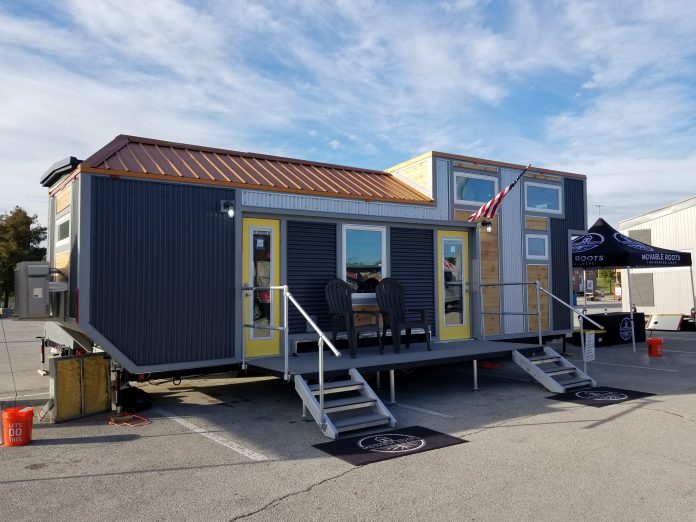
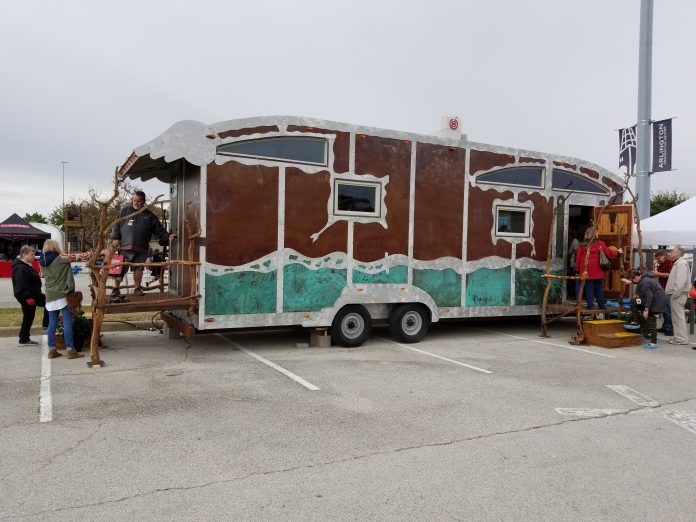 Austin. Champion will be joined by Clayton Homes’ Designer Series Tiny Homes, from architect Jeffrey Dungan.