The Florida Manufactured Housing Association Now Maintains Home Listings Through MHVillage
Florida Manufactured Housing Association, Inc. (FMHA), a not-for-profit organization dedicated to the promotion of manufactured home living in Florida, and MHVillage, the nation’s number one website for manufactured housing, have announced a partnership to maintain home listings on the FMHA consumer website, www.fmha.org.
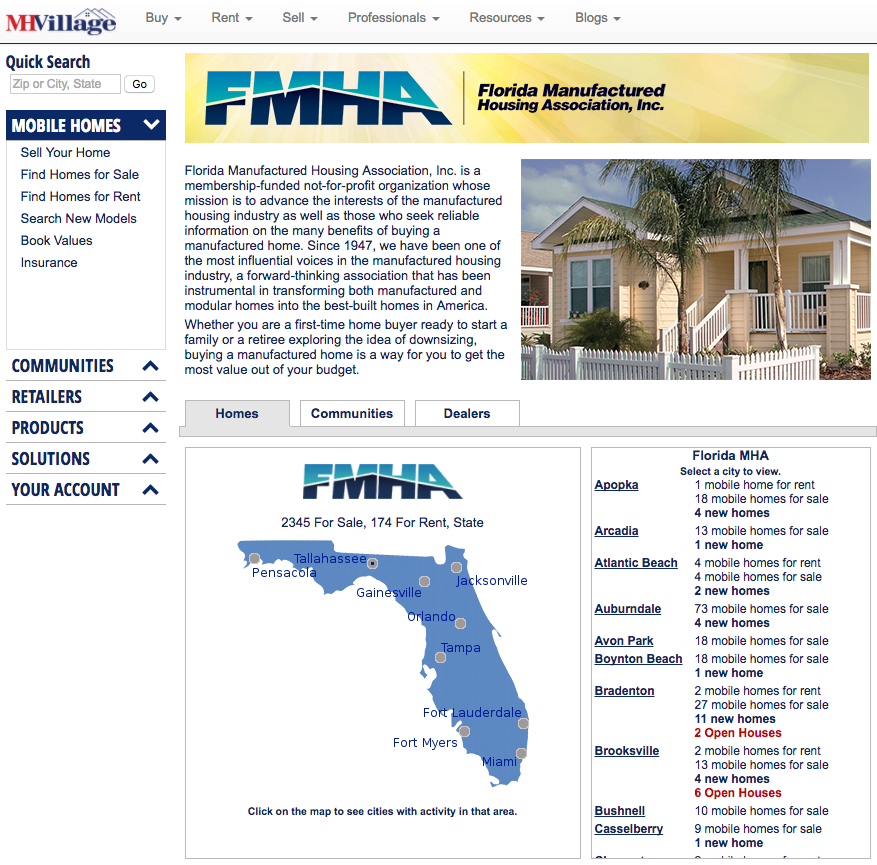
Florida Manufactured Housing Association Home Listings, Powered by MHVillage.
MHVillage is the largest and most active manufactured home listing service in the country. In 2017, MHVillage.com had more than 25 million unique visitors and delivered more than 1.2 million sales leads. With that, advertisers turned more than $3 billion in sales transactions last year.
FMHA’s partnership with MHVillage will enhance the value of FMHA membership by giving members a leg up in the marketplace and significantly increasing the number of prospective home buyers who will view Florida manufactured housing listings. At the same time, FMHA will broaden its marketing platform to allow the association to educate more consumers about the advantages of manufactured housing and the Florida lifestyle.
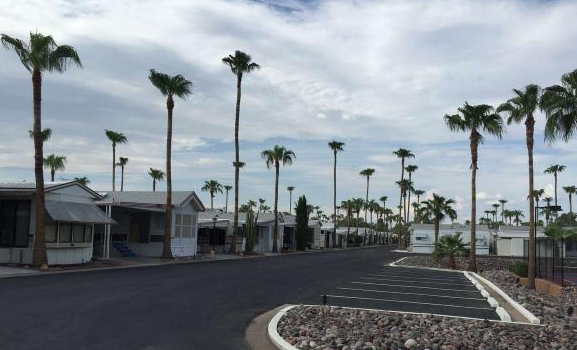
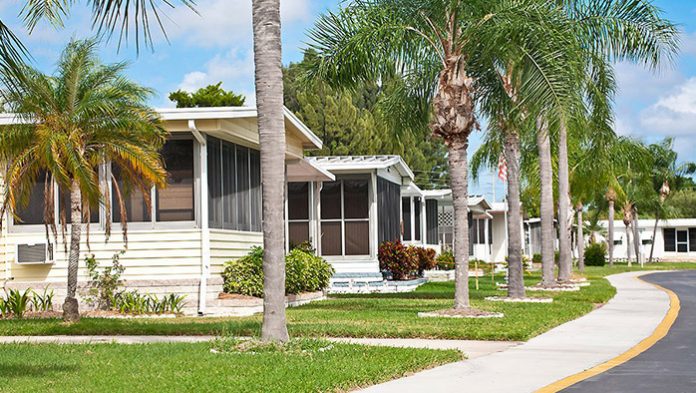
Vero Palm, an ELS property in Palm Beach, Fla. Photo courtesy of EquityLifeStyle.
Florida Manufactured Housing Association Member Benefits
“FMHA members will benefit in several ways from FMHA’s relationship with MHVillage. First, the home search on fmha.org will be streamlined and efficient so that site visitors will be able to readily find homes for sale or rent that meet their specific criteria,” FMHA Executive Director Jim Ayotte said. “Second, FMHA member home listings will be identified with an FMHA member logo on MHVillage. This identification will increase the credibility of the home seller and provide FMHA members with a competitive advantage.
The first-of-its-kind partnership between these two leading organizations is in step with the industry trend toward teaming and collaboration to achieve common goals and help raise the profile of manufactured housing.
Darren Krolewski is co-president and chief business development officer for MHVillage.
“Florida is a very important market for manufactured housing, and we value the relationship we’ve had with FMHA, its staff and members, throughout the history of our company,” Krolewski said. “This level of collaboration will benefit both home sellers and home buyers.”
How FMHA Members Will Navigate the Change
Transitioning to MHVillage for FMHA members who are existing MHVillage customers will be seamless. MHVillage will use the same data feeds to populate both the MHVillage and fmha.org websites. However, FMHA members who are not MHVillage advertisers will need to become customers of MHVillage to have their home listings searchable on fmha.org.
MHVillage has several options to accommodate the needs of professional home sellers starting at $49.95. To launch this new collaboration, MHVillage is offering a $50 account credit to FMHA members who have yet to advertise on MHVillage.
“We believe this partnership will show what can be done in other states and housing markets where a more streamlined and efficient listing service can help associations garner added attention from a highly targeted manufactured housing audience,” Krolewski said.
July JLT reports include information on 244 communities from 10 major markets
Datacomp, publisher of JLT Market Reports and the nation’s #1 provider of market data for the manufactured housing industry, today announced the publication of its July 2018 manufactured home community rent and occupancy reports for Colorado, Delaware, New Jersey and Wyoming.
Recognized as the industry standard for manufactured home community market analysis for more than 20 years, JLT Market Reports provide detailed research and information on communities located in 140 major housing markets throughout the United States, including the latest rent trends and statistics, marketing programs and a variety of other useful management insights.
What is Included in the JLT Reports for July 2018?
Datacomp’s manufactured housing market data published in the July 2018 JLT Market Reports includes information on 244 “All ages” and “55+” manufactured home communities located in 10 major markets in four states. Altogether, the reports include data representations for more than 62,000 homesites.
“In the July JLT reports, we’re seeing increases in occupancy in most markets and adjusted rent increases in all but one market in the four states,” Datacomp Co-President Darren Krolewski said. “We also added a new report for Gillette, Wyo., which offers information on a dozen communities with more than 1,800 homesites.”
Each JLT manufactured home community rent and occupancy report published by Datacomp includes detailed information about investment grade communities in the major markets, including number of homesites, occupancy rates, average mobile home community rents and increases, community amenities, vacant sites, and repossessed and inventory homes.
Housing Trends and Historical Recaps
JLT Market Reports also include management insights that rank communities by number of homesites, occupancy rates and highest to lowest rents. Established reports show trends in each market with a comparison of July 2018 rents and occupancy rates to July 2017, as well as a historical recap of rents and occupancy from 1996 to present date in most markets.
The July 2018 JLT Market Reports for Colorado, Delaware, New Jersey and Wyoming are available for purchase and immediate download online at the Datacomp JLT Market Report website at www.datacompusa.com/JLT, or they may be ordered by phone in electronic or printed editions at (800) 588-5426. Each fully updated report for mobile home communities is a comprehensive look at investment grade properties within a market, enabling owners and managers, lenders, appraisers, brokers and other organizations to effectively benchmark those communities and make informed decisions.
Elevator Pitches – What They Are and Why You Need One:
Elevator pitches are basically a 15- to 30-second soundbite that explains who you are, what you do and a little bit about your business. The idea is that you can deliver it to someone in the amount of time it will take an elevator to get you both where you’re going.
Elevator pitches for manufactured housing are different than sales pitches. It is about building excitement, rapport, or understanding.
You undoubtedly know what it is that you do. And you might not be networking with people in elevators. So why would you need elevator pitches for manufactured housing industry?
Three Reasons for Elevator Pitches for Manufactured Housing
The First Reason: The Chance Encounter
Having a short, simple, easy to understand description of who you are and what you do can come in handy in a number of situations. You never know when you’ll meet someone in your town whose company would be a great partner for your business. Or when you might run into a government official or need to speak at a town meeting.
Unfortunately, the manufactured housing industry is both frequently misunderstood and has a lot of industry-specific jargon. When you have an elevator pitch in your back pocket that people can easily understand, you easily get the conversation rolling.
The Second Reason: Know Thyself
You probably do know your job – too well. Ever talk to someone who is passionate about something dear to them? Ever find yourself lost in the conversation?
Note from the author: I feel like I can use this because I do CrossFit and talk about it – a lot.
I travel all across the country speaking to manufactured housing professionals from all aspects of our industry. If there is one thing I can tell you – our industry is passionate about what we do. We love it. In fact, people in our industry stay in manufactured housing careers for decades, their families become second and third generations in the business. The idea of an elevator pitch is forcing you to take the simplest, brightest, most interesting ideas and put them together in a quick sound bite. Can you describe what you do to someone and why it is important in 30 seconds? Give it a try!
The Third Reason: Consistency is Key
Do you have staff? If so, it is important for everyone to have a consistent message. An elevator pitch for manufactured housing staff that everyone understands, means they have a message they can give on short notice, without preparation. Everyone in your office is on the same page and can tell the same story about your business. Also, because it is short, an elevator speech is easy to learn and doesn’t come off as too scripted. The listener easily gets a feel for your business.
Crafting Elevator Pitches for Manufactured Housing
Solve a Problem
Manufactured homes solve a problem for many people. And this can be a great place to start. Whether it is affordable housing, safe family neighborhoods, active retirement communities, or supplies for manufactured homes, you provide an important service. Start there.
Use an Analogy
One of the best ways to promote understanding is to use an analogy. Use something simple that most people understand.
Be Willing to Change Your Pitch
You might not get your pitch perfect the first time. Try it out, practice it. See how your audience responds. Do they “get you?” Be willing to hone your elevator pitch until you have it just the way you want it. It may take a few tries. Be flexible.
Also, another great article here on the Insider blog is Ken Corbin’s Greeting Your Customer. It has additional information about how to make a great first impression.
Sam Zell's major publication of his manufactured housing industry experiences and insight.
Editor’s Note: What follows is a digital companion to a George Allen contribution to the August 2018 MHInsider print magazine (page 53-55) that encourages established manufactured housing industry professionals to write their career and life stories so they may be compiled into a memoir or autobiography.
This contribution was thoughtfully provided by Allen, given the summer print edition coverage of and distribution at the RV/MH Hall of Fame 2018 induction ceremonies in Elkhart, Ind.
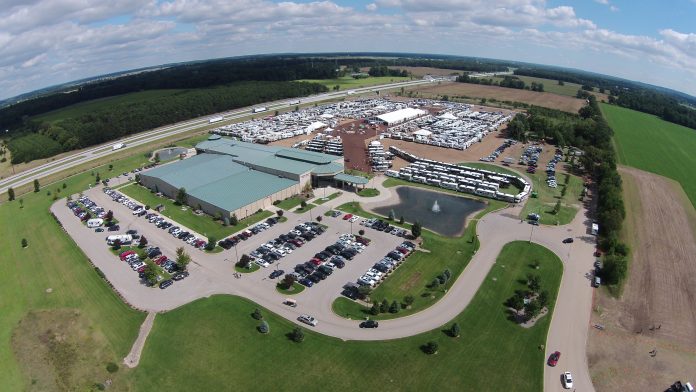
In addition to serving as a hall, museum and event space for the two industries, the on-site library houses original copies of industry publications, and sells many of them. Below, Allen provides expanded descriptions and explanations of each of the books mentioned in his magazine column.
Now to meet the manufactured housing industry authors, one at a time and in detail, from the perspective of George Allen
Kristian Jensen – ‘A Danish American’
I never met Kristian Jensen, Sr., but I’ve read and reread his slim volume, “A Danish American”. On one hand, its published crude, with no front material – beginning Chapter 1 on the first page – and no page numbers thereafter. On the other hand, it’s a most engaging read, much in the manner that he penned this 1996 letter to me:
“The purpose of the book is to encourage poor young men to go for it. I was poor, uneducated, but built a corporation worth over 60 million dollars, was President and Chairman of the Board for 42 years. Others can do the same with will-to-do, and hard thinking. (When) I see (someone) do the same, I have been amply rewarded.
“We moved into one of our parks in late 1963. A man in our industry said, ‘I thought Jensen knew better.’ I replied, ‘If a park is not good enough for the owner to live in, then it is not good enough.’ My wife and I are still living, happy and peacefully, in a factory-built home in a new converted park section, a garden grove for factory-built homes.”
Unfortunately, “A Danish American”has been out of print for more than a decade, and to the best of my knowledge, there are no plans to update and reprint this fine work.
Kristian Jensen, Sr., was succeeded in the manufactured housing business by his son Kristian Jensen, Jr., who, in turn, was inducted into the RV/MH Hall of Fame in 2009, a few years before his passing. Jensen Communities, headquartered in Connecticut, today is run by Kristian Jensen, III.
Here’s one of the most compelling paragraphs in “A Danish American”. It says a lot about the man, Kristian Jensen, Sr.
“When I started the business, I prayed to God to give me wisdom to do right to all people who gave me work. I never prayed for riches or success. I prayed for clear and good thinking or wisdom, to understand and be obedient to all laws. Always, God gave me good direction. He was always there to help when needed. I had no other place to go, when thinking about plans and construction of mobile home parks from 1948 to 1950, (as) there were no schools to teach it.”
And such is the tenor throughout Kris Jensen, Sr.’s. autobiography. I hope the Jensen family, someday, reproduces their patriarch’s autobiography. In my opinion, it’s a must-read for men and women coming into the manufactured housing industry and land-lease community asset class today!
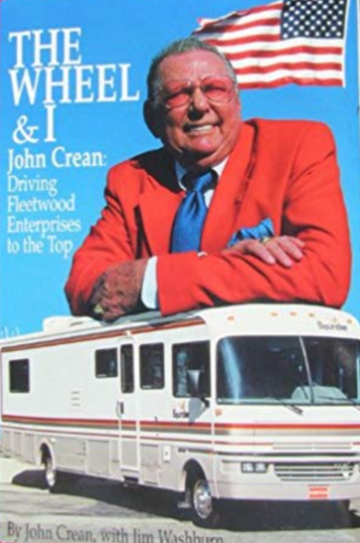
John Crean – ‘The Wheel & I’ and ‘My Life Driving Fleetwood Enterprises to the Top’
John Crean’s ‘The Wheel and I’
John Crean, founder of Fleetwood Enterprises, was a celebrity when I came into the manufactured housing and community business in 1978. But I never really got to know the man, until I read “The Wheel & I”, subtitled: “My Life Driving Fleetwood Enterprises to the Top”. A reader doesn’t have to look beyond the Forward to catch the flavor of John Crean. Here’s how his longtime friend Stan Freberg describes him…
“He is eccentric, ultra-conservative, ultra-kindhearted, ultra-rich, and a Freberg fan — qualities I… look for in a friend.”
And this, “His book traces his quirky life from (being) a World War II Merchant Marine, to hand-crafting a better Venetian blind for house trailers in his father-in-law’s garage, which led to his hand-building his first trailer – and creating Fleetwood Enterprises….”
Advice is not in short supply in “The Wheel & I”.How ’bout this gem on achieving business success:
“A piece of advice I’d suggest to anyone, is to learn your business on someone else’s dime. If you want to make widgets, go to work for a widget company. Do well and work cheap, and you’ll get promoted. As long as you learn how to make all the widgets, how to sell them, where to buy the material and everything else, then you can go off and take a crack at it yourself.”
And Crean shares many other business insights as he, with the help of co-author Jim Washburn, work their way through his life, e.g. “In display ads and photographs of our homes, we always used tiny women to model, to make the homes look larger.” p.214.
Then there’s this offering:
“It is always amazing to me to see the ways businesses find to throw money away. Instead of hiring consulting groups and commissioning endless studies, why not just get out there in the world and see what works? I got most of my ideas for what our product should be by traveling around the country talking to people who own Fleetwoods, and experiencing the product firsthand.”
As one might expect, Crean’s opinion of his successor Glenn Kummer (also an RV/MH Hall of Famer, circa 1996) is terse: “Thanks to Glenn’s shenanigans, I sold off my remaining Fleetwood shares when I was ousted, and am sitting on a boodle of money instead of a bunch of sinking Fleetwood stock.”
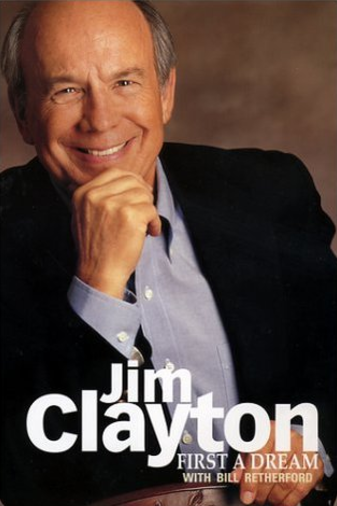
James Clayton – ‘First a Dream’
Anyone in the manufactured housing industry today knows, or knows of, James Clayton, the self-made Tennessee millionaire, some say billionaire, who sold Clayton Homes. Today, run by his son Kevin, Clayton is owned by Berkshire Hathaway company, and his 65-plus manufactured home communities are operated by YES! Communities, headquartered in Colorado.
Jim Clayton’s ‘First A Dream’.
My guess is Jim’s book has been read by more manufactured housing aficionados than all nine others together. Why? Because, it’s the only tome to go through two editions in short order, in 2003 and 2004. That’s no surprise, as Jim actively promoted the 514 page text at trade shows, industry meetings, everywhere – always announcing 100 percent of book-sale proceeds would go to the RV/MH Hall of Fame museum and library in Elkhart.
And, is this ever a tale to enjoy! Here’s from the review I penned, after reading the first edition in 2003: “The substance of ‘First A Dream’ is broadly based on Jim Clayton’s early life as a sharecropper’s son, student, fledgling pilot, radio show personality, country singer (At the Grand Ol’ Opry, no less!), young entrepreneur; and ultimately, successful businessman and banker. The book highlights four categories of personal insight and sageness:
His general, personal and business lessons learned, tips and principles
Pithy insights relative to marketing and sales “the Clayton way”
CMH-specific concepts and programs worthy of emulation
Here’s what Jim has to say about salespeople: “I believe introverts, those with a quieter, more thoughtful approach, sell more than extroverts do. Introverts listen better.” Heard of the acronym TEAM, and how it generally means: ‘Together Everyone Achieves More!’? Well, in Jim’s world it means: ‘Together Everyone Accomplishes More!’ The difference? There is one, but you’ll have to ask him.
Closing here, with an anecdotal personal story relative to this book. In my initial review, I criticized Jim for taking former employees to task, especially one who “… had been embezzling money to the tune of $3.8 million over eight years.” These personal revenge tales, in my opinion, interrupted the flow of his remarkable life story, prompting one to question his view on forgiveness. When Jim asked permission to include the review in the appendix of the second edition, I happily gave it – learning later, the new volume came out, sans the troublesome critique paragraph. Oh well…
Bottom line? As I summarized in the review, “Everyone who earns a paycheck, or receives a dividend check, from any HUD-Code manufactured housing-related business interest should study this book!”
Boris Vukovich – ‘Vukovich Photo-Autobiography’
I met Boris Vukovich one time, over lunch, when visiting his family’s firm, Colorado Real Estate Investments, now Ascencia Real Estate Holding Company. And what a memorable experience that was, as he shared the exciting tale of how he, and later his wife to-be Natasha emigrated from Serbia following their marriage by proxy. That story is well told in the photo-autobiography prepared by his sons, upon his passing a few years ago. And yes, the family firm is well into its third generation.
Darrel and Harrel Cohron – ‘The Trailer Twins’
I’ve known the Cohron twins since I started in the manufactured housing business in 1978. Identical twins Darrel and Harrel were singled out to me then, along with local community developer Bud Meyer, to be worthy mentors for anyone new and passionate about the manufactured housing and community business. And that they were, though in a quiet, unassuming manner. That is, except for Darrel, who’s the only one of the three mentors still living.
One day, back in the early 1980s, I asked Darrel, during lunch, about the wisdom of my buying a nearly empty 500-plus site manufactured home community my firm was managing in foreclosure. He could have easily stole the deal from me, but didn’t.
Rather, he simply confirmed the accuracy of my value estimate, and challenged me. “George, there comes a time in every businessman’s life when he has to decide whether to stay on the porch, or go out and run with the big dogs. I think this is that time in your life.” Well, my business partners and I acquired the property from the bank for $400,000 cash; and two years later, after doubling its physical and economic occupancy, sold it for five times that much, again in cash.
And that’s how business life was with the Cohron twins. No question about it, they were self-made, very wealthy businessmen in the manufactured housing arena. According to the 29th annual ALLEN REPORT in 2018, they own/operate in excess of 1,400 rental homesites in central Indiana, as well as a very active independent MH retail sales center on the northeast side of Indianapolis.
“The Trailer Twins”, as I understand it, was written with the assistance of family member Matt Cohron, who introduces his grandfather Darrel Cohron and great uncle Harrell in the foreword.
“They are amazing men, and anyone who knows them, will tell you a story or two or three our four, about their kindness, their generosity, and their love of pranks. Darrel and Harrel are colorful characters who are a lot of fun to be around. They also taught me a lot about the world of business, and the real world, about how to treat people, and how to take care of one’s family.”
Within the book, the first pearl of wisdom comes from Darrel. “We loved it. We still do. You have to. If you’re not in love with what you do, you’re just not ever gonna make it.”
Then there’s this sales gem from Woody, one of their longtime manufactured housing salesmen: “You always sell yourself first, then the product. Even if you happen to be a little higher priced than your competition, the customer will still buy from you if they like you.”
The Cohron brothers’ “success formula”?
“First, you never lie to a customer; and second, after a sale, you give good customer service, and follow up to make sure that the customer is satisfied.” Works for them; will likely work for you, me, all of us.
There’s more. “That is part of the secret of our success. We don’t keep anything bottled up. That doesn’t do anybody any good. Speak your mind and move on. We have been successful in business because we trust our guts and we trust each other.”
I still count Darrel as a special friend in the manufactured housing and community business. I especially like his personal bromide: “Our motto is get up early, stay late, (&) tell the truth.”
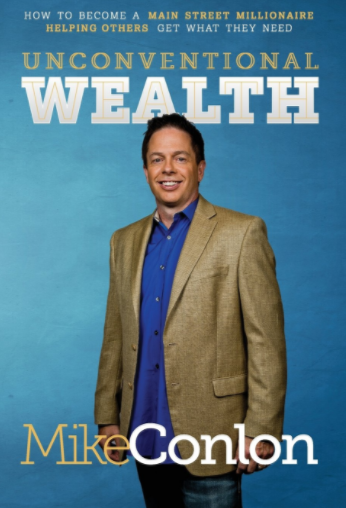
Mike Conlon – ‘Unconventional Wealth’
Mike Conlon’s ‘Unconventional Wealth’.
Unlike the other autobiographers, Mike Conlon is what I’ve come to identify as a “young wealth builder”, and at times, “a Young Lion” when he and other property portfolio builders outstrip everyone else acquiring/consolidating land lease communities.
Now, some of his experience and advice is too good not to share. Chapter 6 states “Don’t Ever Give Your Money to an African Businessman… a Condo Developer… a Thumper… Your Uncle… or a Timeshare Salesman.” This he underscores with the following quote:
“I’ll never forget sitting down in late 2008 to talk with a mid-level money manager from Louisiana, about an investment he made in a mobile home community Ponzi scheme. I was trying to buy one of the communities tied up in that scam, and was trying to find out what had happened with the investors. Seven investors lost over $3 million on this one community, and over 200 investors lost almost $75 million total amongst 20 or so communities.”
And how about this opinion of the world of wealth and opportunity today:
“The 55-plus generation has bankrupted the country and has no interest in having their taxes raised or taking one penny less in Social Security and Medicare, than they are currently entitled to receive. The wealth gap between the average household headed by a 65 year old and that of the household headed by the average 35 year old is the widest in U.S. history and has increased by five times since 2005!” So beware, those of you (us) who’re more than 65 years of age!
So, where are manufactured housing and communities in all this?
“Most M$M businesses aren’t pretty, but they make lots of money and their potential customer base continues to grow. I’m a prime example – a guy with a law degree making a lot of money in the mobile home park business. I wish I had ‘gone ugly’ a lot sooner in my career.”
Ouch! But at least he’s being honest in sharing his opinions about our industry. Guess the question that weighs and will continue to weigh on my mind is, if Mike hangs around until he’s in his 60s, and adds to his autobiography, will he continue to hold the same views, or wax more moderate?
Occasionally, as was the case with the Cohron twins, special attention should be paid to aggressive assertions, especially those going to print. No specifics on either, but let’s just say in Conlon’s case – when one quotes a particular real estate valuation formula, be sure to get it right before sending the manuscript to be printed and bound, for the whole world to see!
As much as I enjoyed reading Mike’s story, I look forward even more to the next chapter in his life. And I’ll tell you about it when I read it.
George Goldman – ‘The Road Less Traveled’
George N. Goldman’s ‘The Road Less Traveled’.
George Goldman was another longtime mobile home park owner/operator I considered, at times, a mentor. At other times, I wasn’t so sure. He was a smart operator, shrewd, and a risk taker; more so than my tolerance could bear.
Anyway, George owned income-producing communities in Illinois, Indiana, Wisconsin and Texas, and also, for awhile, had ownership in Woodall Publishing Company, distributing the largest directories of U.S. RV and mobile home parks.
Unlike any of the other autobiographies described here, George took me down memory lane, as he mentioned individuals, time and again I’d know in the MHBusiness. These include Dean Shively, Elmer Harrison, Merv Duckett, as well as personal friend David Alley, a civil engineer who with Ed Hicks and me co-authored “Development, Marketing & Operation of Manufactured Home Communities”, published by J. Wiley & Sons in 1994.
Here are three take-away quotes gleaned from “The Road Less Traveled”:
“If you are clever – and patient – you can always find a way.”
Advice from his Mother: “To always care for other people” and “If I did the right thing, everything else would ultimately work out just fine.”
“Never fall in love with a property.” Amen to that truism!
We’ve all heard tales of why Woodall’s mobile home park directory went under after 1976; here it’s documented:
“Then the Woodall ‘reps’ took off their inspector hats, donned their sales hats, and pitched some of the advertising opportunities to the park’s owner. Maintaining objectivity and independence in those two conflicting assignments was a constant challenge.”
George and a business partner taught mobile home park financing, even brokered such properties, before buying his first community: the former Shortridge Village in Indianapolis in 1971, then Long Acre MHCommunity in 1972.
The last third of George’s autobiography details his and wife Judy’s battles with serious health issues. To this end, they established a charitable foundation that endures to this day. This is a good example of ensuring one’s legacy lives on in the minds and memories of family members, friends, and those benefiting from the trust and foundation.
Al Schrader – ‘A Path to Million$’
Ah, one of my favorite stories to tell. Al Schrader and I have been friends for decades. Since he’s in Minnesota and I’m in Indiana, we don’t see each other often. But I was present at the RV/MH Hall of Fame in 2004 when he was inducted into that prestigious protector of MH & RV legacies. And I believe he was present during my induction in 2011.
What’s to like about Al’s autobiography? It’s comprised of 100 short stories in 100 chapters! And his stories touch on every part of his life as a youngster, college student, military veteran, family man, getting started in business, and his enduring love of Cadillac convertibles…
But the pithiest of Al’s writings have to do with the manufactured housing industry and communities, and where he sees them today. In fact, if some of this reads familiar, it’s likely because he’s been oft-quoted in MH trade publications
Here is Schrader in his own words:
“My main concern regarding the industry is the lack of overall growth on a national basis. Back in the early ’70s, manufactured homes represented one out of every four new homes built in this country. That ratio slid to an all-time low of one out of every 20 new homes. And even greater danger has been the lack of a positive image in the eye of the American public. How many times are the downtrodden, hard luck, poverty stricken, low lifes shown on TV and screen living in an old rusty trailer in a bad trailer park?
“We can’t seem to get away from this image, which is shared by the general public, but is far from the truth and represented by over 15 million people who actually live in a manufactured home. The lack of development of new, modern manufactured home communities is a main reason for this image problem, in part caused by increasingly prohibitive zoning laws fostered in the 1960s and 1990s.
“I truly think the industry is, in many ways, its own worst enemy. Many of the oldcrowd like to keep things the way they are, and resist change in every way. The lack of an industry wide image campaign is a prime example. Other trade groups have promoted their product with national television campaigns, and have changed images and promoted growth and sales. It takes big money, but it also takes great leadership.
“We’re an industry that provides quality housing for low income Americans, and have never taken any form of subsidy from the Federal government.
“Further, there are no Government-sponsored loan programs to help finance manufactured homes in land lease communities. Compare that with all other forms of government-favored housing, and you can quickly see why this industry has had growth issues.”
And that’s Al’s blunt and insightful take on manufactured housing and communities today. If you have an opportunity, read the rest of his autobiography.
George Allen – ‘SWAN SONG’
George Allen’s ‘Swan Song’.
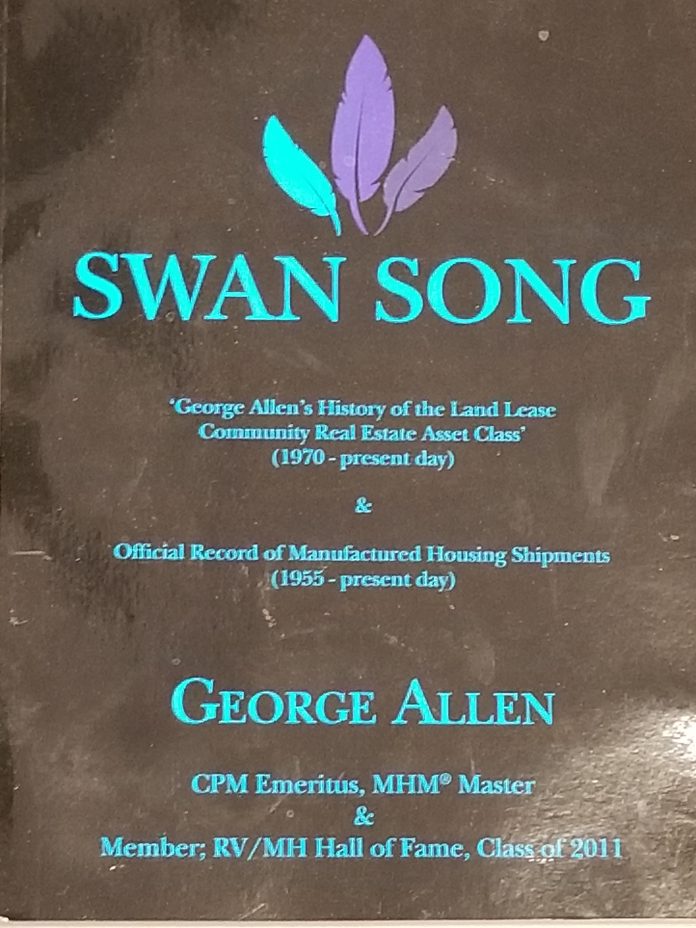
George Allen’s “SWAN SONG” is a semi-autobiographical work that also traces the history of land-lease communities from 1970 to present day, and serves as official record of manufactured housing annual shipment volumes from 1955 to present day. And yes, the title implies this 15th authored or edited book is one of the last from this pen
The book is replete with personal tales: “An Error to Die For…” is a true story of an errant NOI miscalculation that resulted in multiple deaths; “Lantern Hills Village” details going from $400K to $2.5 million in value in two years; there’s the predatory finance classic “Upside Down in a Mobile Home Park”; “The Florida Communities Story”; and “One Man’s Vision Realized!” is the true, never-before published story of beautiful Saddlebrook Farms in Grayslake, Ill. There’s even the poem, “A Toast to the Community Owner”!
The first edition of this book sold out in six months. A new desk reference second edition, now available, adds the 29th annual ALLEN REPORT; new Official Definition of Affordable Housing; a new Chapter 6: “History of ROC USA”; new risk management guidelines and the “MHFinance Retrospective”, a history of monetary cycles dating to 1950 prepared for the Federal Housing Finance Agency’s “Listening Sessions” during 2017.
To purchase a copy of this new edition of SWAN SONG, phone the Official MHIndustry HOTLINE: (877) MFD-HSNG or 633-4764 or RV/MH Hall of Fame.
Sam Zell – ‘Am I being Too Subtle?’
Who, in the manufactured housing industry and the land lease community realty asset class doesn’t know and respect Samuel Zell, chairman of the largest portfolio of such properties in the world. His recent Penguin Random House published autobiography, “Am I Being Too Subtle?”is the closest thing we have to a page turner among all 10 such books available to date. The suggestive subtitle “Straight Talk From a Business Rebel” sets the stage for what follows:
“In this book I share the story of how a restless curious boy who grew up in Chicago made it to the Forbes 400.”
“You could say I’m an investor, or an allocator of capital. But what I really am is an entrepreneur.”
“Some of my most lucrative investments seemed counterintuitive… manufactured home communities.”
“…learned a lasting business lesson: Where there is scarcity, price is no object.”
“…indifference to rejection is a fundamental part of being an entrepreneur.”
“Howard Walker…once said he felt like he was walking into the inside of a Juicy Fruit wrapper when he visited (our offices),” he wrote. “We invented business casual.”
“This has always been a fatal flaw in U.S. real estate: the volume of development has been related to the availability of funds, not to demand.”
“…a lot of people who get burned by depending on Wall Street analysts … discover quickly the advice they’re getting isn’t coming from a committed owner – it’s coming from a professional who is collecting a fee.”
In the final pages of the book, Sam takes time to identify nine key business philosophies. And he states his desired legacy: “He made a difference.”
There’s so much more to the book, but you surely get the idea. Want a copy? Simply go to Amazon and order one.
The RV/MH Hall of Fame will induct its latest members Aug. 3.
Get Your Ticket for the Annual Celebration in Elkhart
More than 400 manufactured housing and RV professionals will attend the Aug. 6 RV/MH Hall of Fame Induction Ceremony and Dinner in Elkhart, Ind.
Eleven members will be inducted for the first time in the organization’s history, with a pair of manufactured housing professionals entering as one: Twin brothers Darrel and Harrel Cohron, of Cohron Manufactured Homes, will be honored by their peers and other inductees, listed below:
Hall of Fame RV Inductees
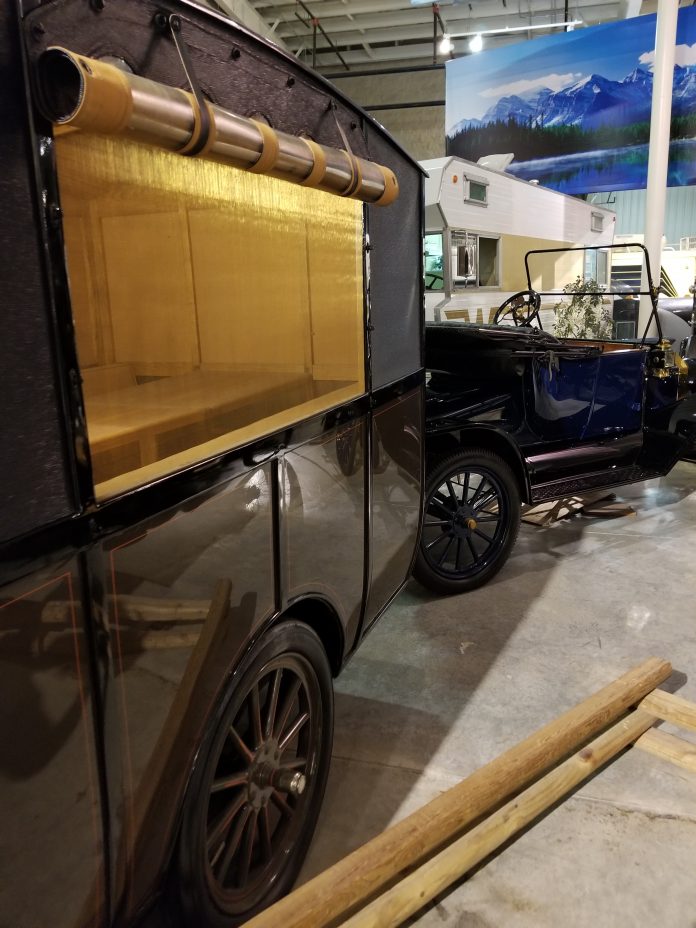
Classic RVs on display at the Hall of Fame in Elkhart, Ind.
— Derald Bontrager President & CEO Jayco Corporation — Roger Faulkner President – General Coach Canada — Gregg Fore President, Dicor Corporation — Rebecca (Becky) Lenington Executive VP, Pennsylvania RV and Camping Association — Daniel R Pearson President and CEO Pleasureland RV
Hall of Fame MH Inductees
— Michael A. Cirillo President, Star Management — John Evans California Manufactured Housing Institute — Gub Mix Idaho, Utah, Nevada and Arizona State MH Associations — Bill Wilson Cherry Hill Homes, Inc.
Make it a Full Day at the RV/MH Hall of Fame in Elkhart, Ind.
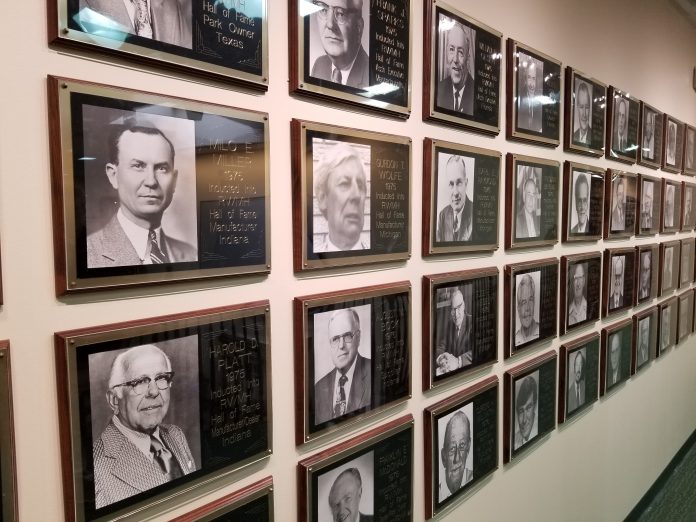
RV/MH Inductees honored in the hall.
“Congratulations to the 11 new honorees,” RV/MH Hall of Fame President Darryl Searer said. “All of them have had or are having outstanding careers and are richly deserving of this high honor.”
Inductees and guests attend free of charge. Other attendees can purchase a $150 ticket for the cocktail hour, dinner with beef filet and salmon, wine and the induction ceremony.
Founded in 1972, the hall has inducted nearly 400 industry pioneers, most typically with five being brought in from each of the RV and manufactured housing industries each year. Each potential inductee must have at least 25 years of experience in the respective industry, and be nominated by an industry professional.
The day’s events kick off with a golf tournament shotgun start at 8 a.m. followed by a luncheon, and finally the ceremonies and dinner.
Ceremony and Dinner Tickets Still Available
To make reservations for the induction dinner and/or the golf outing, visit rvmhhalloffame.org or by calling (574) 293-2344. To make reservations by mail or drop in: 2018 Induction Dinner RV/MH Hall of Fame 21565 Executive Parkway Elkhart, IN 46514
And stay tuned to MHInsider, the place to go for manufactured housing news, for ongoing coverage of the annual RV/MH Hall of Fame event.
Installers assemble a new multi-level Champion modular home.
InnovaLaB Finds Breakthrough in Land Development with Modular Housing
InnovaLaB, the former Kent County Land Bank, has 125 home-ready parcels in the city of Grand Rapids with big plans to develop the properties with modular homes, three of which were set just last week.
Three new modular homes were put on properties owned by InnovaLaB, the former Kent County Land Bank.
“The city has been working feverishly to solve not just the affordable housing situation, but the entire lack of housing in the city,” InnovaLaB Executive Director David Allen said.
Allen said Grand Rapids is among the U.S.’s least favorable cities in terms of housing availability per capita, rivaling other difficult to maneuver housing markets such as Seattle and Eugene, Ore.
Grand Rapids at any given time, Allen said, has about 100 homes for sale, priced from zero to $5 million. Homes deemed affordable, available for something near $200,000, are all the more difficult to find.
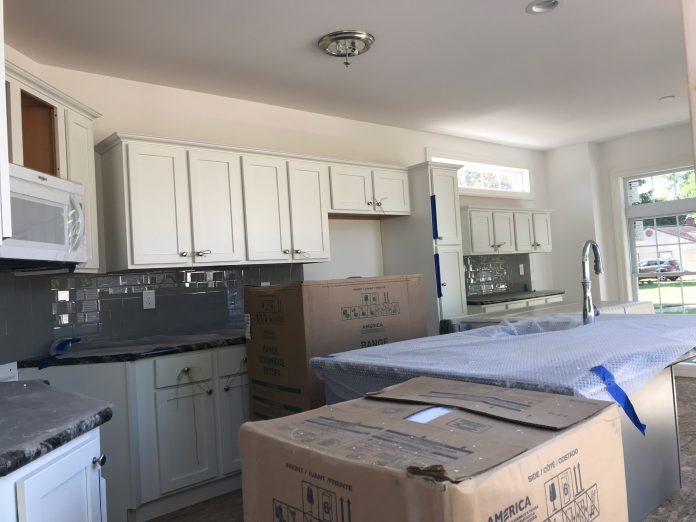
The nearly complete interior of a new modular home
How InnovaLaB Found Modular Housing
Solving these availability and affordability problems is what land banks do. And in recent conversation with Grand Rapids Interim City Manager Eric DeLong and Universal Forest Products CEO Matt Missad, one seemingly magic phrase was uttered to Allen: “You should look into modular, it’s not what you think it is.”
Allen agreed it was worth a look, and afterward reached out to Champion Homes’ Joe Kimmel, VP for the northeast region, an invitation was extended for Allen and his colleagues to attend the Louisville Manufactured Housing Show in January.
“Let me tell you, I was a skeptic,” Allen said of his approach to The Louisville Show. “I did not believe I would like what I found. I was telling myself all the way there, ‘You’re not going to like this’ and ‘I don’t think this is going to work’. Well, I was wrong. If I had a scale of 1-10, what I found was a 12. The homes I saw on display really exceeded my expectations and entirely changed my mind about what was possible.
“The quality, the design, everything, just so impressive,” he said.
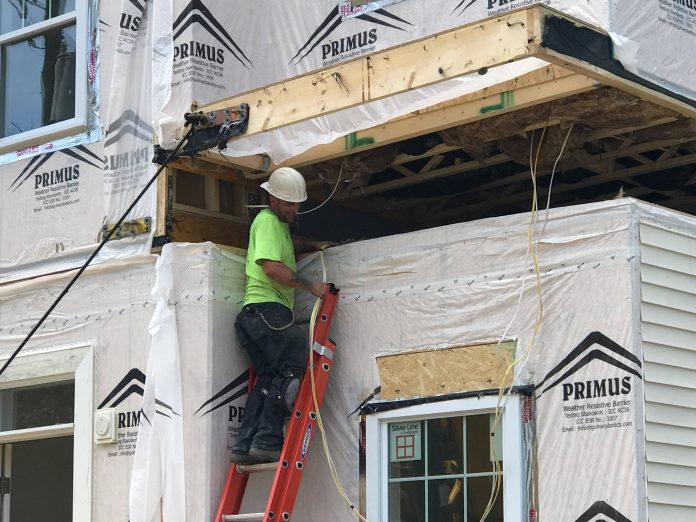
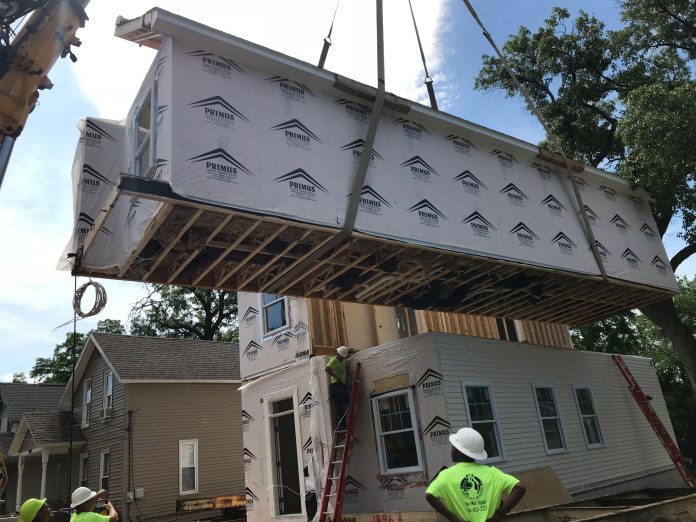
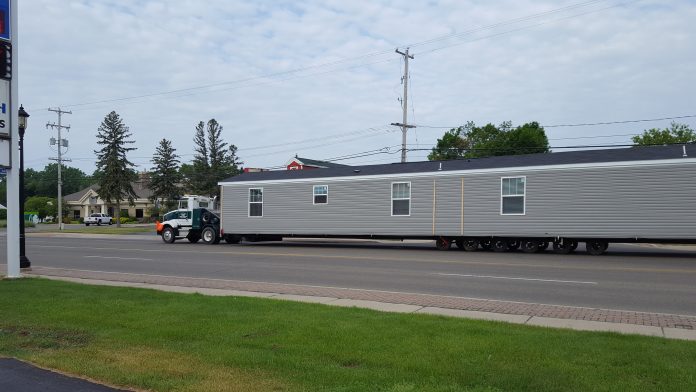
Install crews used a crane to place and assemble the new modular homes in Grand Rapids.
The Change Began at The Louisville Manufactured Housing Show
Champion Modular had just re-launched its popular brand All-American Homes, and already was churning out new models at its Strattanville, Pa., plant. The model home they set up was a hit at the show, and Allen came away from Louisville feeling he had an answer for the Grand Rapids housing market.
So , through weekly meetings in the spring with Champion, including with the company’s lead designer Roberto Kritzer, Allen landed on 13 new home designs he felt would provide a good fit for every one of those 125 municipal lots and many others county and statewide.
“We came up with the three unique designs specific to start this project, and those are the three homes we just put in,” Allen said.
In July, InnovaLaB had an entry level modular home put on Cooper Avenue SE, a mid-price home that sits on Herrick Avenue NE and a more high-end home for Sigsbee Street SE.
All three homes were ordered from Champion Modular’s plant in Strattanville, Pa., and all arrived ready to set on their foundations within four weeks. Each home came in at about 70 percent the cost of what its site-built counterpart would be.
The median price per square foot in the U.S. is $148, and in city of Grand Rapids it’s about $129 per square foot and $142 per square foot median in the metro area.
DeLong, the interim city manager, said he had some understanding of modular housing through his brother’s professional experience, and understood that the product had taken great strides in quality, design and aesthetics.
“I felt that modular was a viable solution to the affordable housing problem here, and I’m pleased to see this pilot program going so well,” DeLong said. “The land bank has been really sensitive to the quality of design and how a home will fit the neighborhood. I drove by the 1010 Cooper house, and I think it looks really great, and it’s an affordable option. That’s something that’s hard to do, and that’s is being done. InnovaLaB has launched a pilot with a lot of promise.”
How Buyers Can Get In a New Modular Home
InnovaLaB has plans to set up a modular home center inside their Grand Rapids offices so interested buyers can go get a better feel for the product and pick out home amenities — from cabinetry styles to countertop materials and more.
InnovaLaB Executive Director David Allen.
Potential buyers can treat these new modular homes as they would any other home for sale. When completed and priced, the homes will be listed on the Grand Rapids MLS and open for viewing and offers. However, a selection of the lots being used were supplied to InnovaLaB by the city of Grand Rapids with a qualification that buyers for a home on those properties are confirmed to earn at or below the area’s median income, which currently is about $62,000 annually for the household.
Allen said if developers — whether in the for profit or non-profit sector — can make the math work for the land, the only obstacle is people’s general perception of factory-built homes.
“There is a lot of stigma with modular and manufactured homes, and we’re taking on that stigma starting with modular, and we do have plans moving forward for manufactured housing as well,” Allen said. “There are places of need where manufactured is the solution, too, and those are programs we will be talking more about at a later time.
“But, with what we’re doing with modular right now, I think we’ll see rapid progress,” he said. “We’ve caught the attention of the governor, who is asking for regular updates. And similar infill sites are being identified throughout the state for this purpose.”
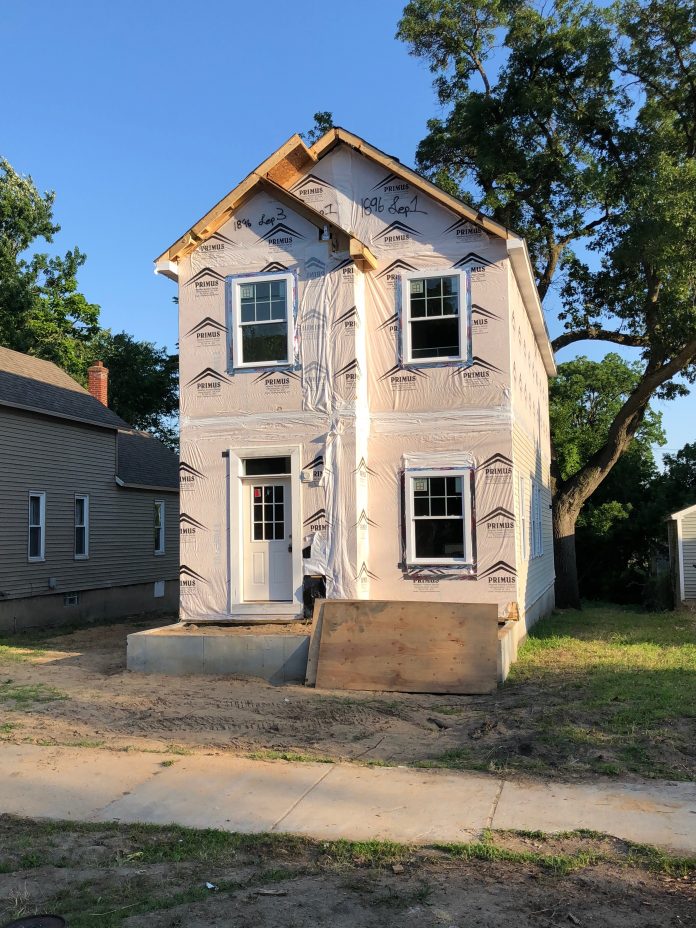
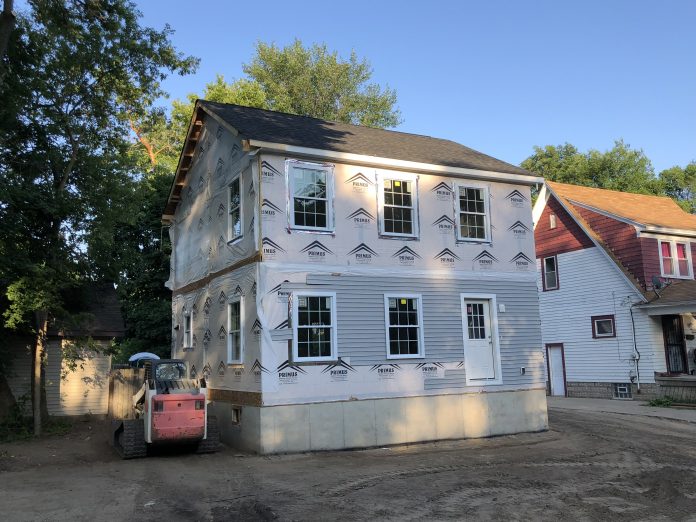
A newly installed two-story modular home in Grand Rapids, Mich.
The Word is Spreading About Modular for City Infill
InnovaLaB had a North Dakota expert on home siting and set up come in to work with a local team while dropping the new modular homes.
“It was great. At first it was entirely the North Dakota team doing the work and slowly our local guys got in there and were lending a hand,” Allen said. “By the the last home was set they were working 50/50, side by side. It was really great to see.”
Allen said the early success in Grand Rapids can inform similar projects in other parts of the state or country, including in Romulus, Mich. Romulus is in need of workforce housing and affordable housing to address construction and the permanent workforce needs related to a pair of distribution centers to be built.
Tim Keyes, the Romulus Economic Development Director, said the two distributions centers — for Amazon and Penske — will produce more than 2,000 jobs.
“We’ve had a lot of conversation internally about workforce housing,” Keyes said. “I’d love to see what my neighbors to the west are doing. It seems like a great concept and really could help us in making decisions for our housing needs.”
Year Over Year Home Shipments for May up 11.7 Percent
In May 2018, new manufactured home shipments increased 11.7 percent with 8,769 homes shipped. This is up from May 2017 when there were 7,848 homes shipped.
Total shipments for May 2018 are higher by 490 homes when compared to April 2018. Compared with May 2017, the trend is positive with shipments of single-section homes, up by 10.7 percent, and multi-section homes, up by 12.7 percent.
Total floors, which accounts for each section, shipped in May 2018 increased 11.9 percent to 13,598 compared to May 2017.
No Designated FEMA Units in May 2018 Numbers
Of the 8,769 homes shipped in May, there were no homes designated as FEMA units.
The seasonally adjusted annual rate (SAAR) of shipments was 95,522 in May 2018, down 1.2 percent from the adjusted rate of 96,729 in April 2018. The SAAR corrects for normal seasonal variations and projects annual shipments based on the current monthly total.
In May, 133 plants representing 37 corporations reported production data to the Manufactured Housing Institute, which is one more of each than in April 2018.
— Shipment Data Courtesy of the Manufactured Housing Institute (MHI)
Seabrook, N.H. — After voting overwhelmingly in favor of purchasing their community, homeowners in Seacrest Cooperative made resident-ownership a reality.
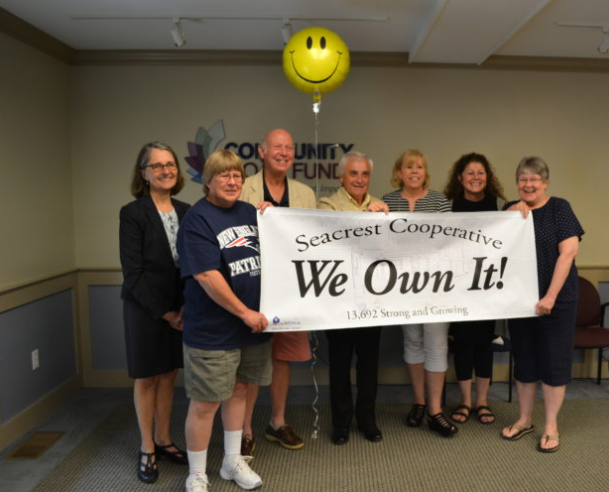
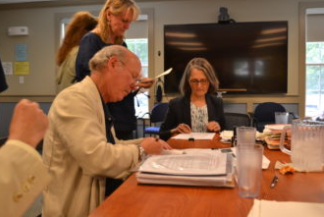
Resident Betsy Coggins joined Seacrest Board Members on June 27 as they signed the purchase papers for their community.
Residents purchased their 190-unit manufactured-home community, making it New Hampshire’s 125th resident-owned community (ROC) and the 21st in Rockingham County. The community was originally called Staples Mobile Home, Inc.
Resident Betsy Coggins was thrilled with the opportunity to purchase the park. She said she has many friends in other ROCs in N.H. and understood immediately what a great opportunity they had.
“It’s safety. It’s security,” she said. “We have control and say about what happens in the future.”
The co-op’s members, and their elected board of directors, worked closely for months with ROC-NH to make the purchase a reality.
Board secretary Nancy Lewis, treasurer Denise Tuccolo, and president Stuart Erbstein were some of the earliest supporters of resident ownership. At the first meeting where the possibility was put to the residents, Erbstein, who has a background in commercial real estate, told them buying the park was a no-brainer.
“We’re excited and relieved,” said Lewis. “It’s done! We own it and it feels great!”
Dave Palavanchuk, the co-op’s operation manager, said they will hit the ground running. He had already researched vendors for services like snowplowing, trash pickup, and landscaping.
Residents of Seacrest become the new owners of their community.
“We’ve been busy, but all this groundwork will still be making a difference 40 or 50 years down the road,” he said. “Our cooperative will always be an affordable place to live in Seabrook.”
They finalized the $11 million purchase June 27 with a mortgage from the Community Loan Fund.
Board Members will work with Michelle Supry of ROC-NH, a program of the New Hampshire Community Loan Fund, for the duration of their mortgage — at least 20 years.
Interim CFPB Director Mick Mulvaney addresses MHI members at the 2018 Legislative Fly-In
Manufactured Housing Institute Members Fly to D.C. for Round of Meetings on Capitol Hill
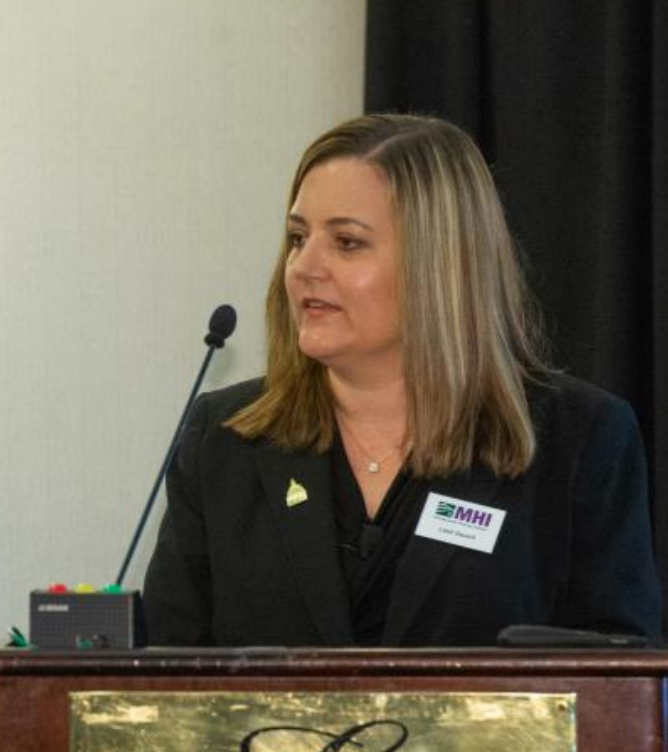
MHI’s Director of Government Affairs Lesli Gooch takes the podium at the 2018 Legislative Fly-In.
Members of the Manufactured Housing Institute, the only national trade organization representing factory-built housing, had its members from across the country descend upon Capitol Hill last week for the 2018 Summer Legislative Fly-In.
MHI members representing 19 states conducted nearly 100 meetings with Congressional offices of the U.S. House of Representatives and the Senate.
The Fly-In yielded immediate results, with the Bureau of Consumer Financial Protection Acting Director Mick Mulvaney telling attendees he will help ensure regulations do not stifle financing for manufactured homes. He also said members of Congress are asking that HUD Sec. Ben Carson expedite reforms on manufactured housing regulations.
Fly-In Attendees Have Access to Law and Policy Makers
The event in Washington, D.C. attracted top administration officials including Mulvaney and Federal Housing Administration Commissioner Brian Montgomery. In addition, FHA Chief of Staff Joe Gormley participated in a convening of MHI’s Technical Activities Committee to discuss concerns about the regulatory review pace and specific items that should be prioritized. Among these items are HUD’s regulation of add-ons, the on-site completion of construction rule, and the frost-free foundation proposal.
Capitol Hill visits were successful in demonstrating to Members of Congress the importance of manufactured housing as a critical source of housing for constituents.
MHI’s comprehensive advocacy strategy goes beyond the standard penning of emails and regulatory comment letters. The institute’s lobbying efforts work toward real-world understaning of issues and development of strong and lasting relationships with Congress and key administration officials.
Participants at the Fly-in, which is closed to the public, including media, offered a consistent message with viable requests in anticipation of tangible results.
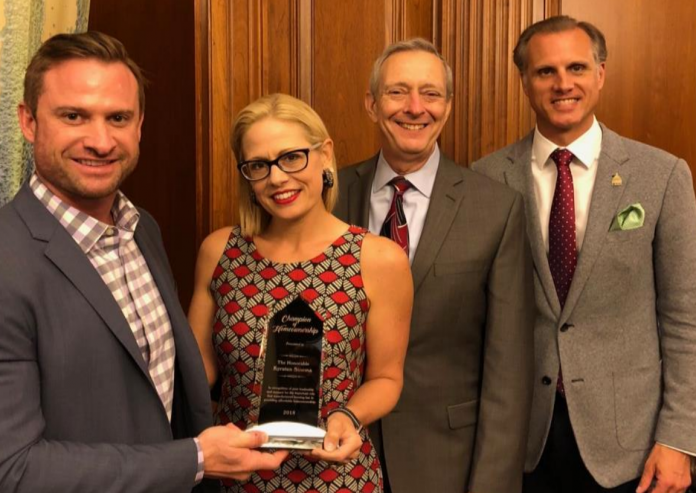
At left, Cody Pearce of Cascade Financial presents Rep. Kyrsten Sinema, D-Ariz., an award for her efforts at the Capitol as a “Champion of Homeownership” with Cavco’s Joe Stegmayer and Clayton’s Tom Hodges, chairman and vice chairman, respectively, of MHI’s Board of Directors.
MHI Honors Legislators with ‘Champion of Homeownership’ Awards
Several legislators were honored with awards for their being a “Champion of Homeownership”, including House Financial Services Chairman Jeb Hensarling, R-Texas; Sen. Joe Donnelly, D-Ind.; Reps Andy Barr, R-Ky., Bruce Poliquin, R-Maine., David Kustoff, R-Tenn., Chuck Fleischmann, R-Tenn., David Scott, D-Ga., Kathleen Rice, D-N.Y, and Kyrsten Sinema, D-Ariz.
Rep. Hensarling thanked members of MHI during his acceptance of the award, telling them manufactured housing is a noble profession.
“In my district we make and live in a lot of manufactured homes,” he said. “This is their version of the American dream and you make it happen. I was glad to champion this bill (Preserving Access to Manufactured Housing Act). Our work is not done until every American that wants a home gets one.”
MHVillage has been a part of this industry long enough to know what consumers have come to expect when buying a home or moving into a community. If your company manages multiple communities, this article will help you manage your managers with respect to lead management practices.
As the industry continues to grow we continue to see professionals from other industries join us. We also see more companies acquiring multiple communities and adding to their portfolios. These situations combined can provide obstacles when it comes to streamlining the management of the managers at each property.
According to Forbes, on average businesses waste 71 percent of their leads with only 27 percent of leads ever getting contacted and 35 to 65 percent never getting called at all.
Effective and efficient lead management is a key element when it comes to closing a sale of a home in a community or securing a valuable long-term resident. The more properties you have in your portfolio the more necessary a lead management strategy.
How and when is your next resident shopping?
Knowing how and when your customers are shopping are important details. This information helps refine your advertising, keeps your lead response time as short as possible and just, in general, better prepare your managers for the job at hand.
Some areas, depending on location, tend to get a lot of foot traffic, specifically on the weekend, while others might see a ton of website traffic and during the work week. To gather this information start with reviewing your website and online advertisements traffic. As for foot traffic, try extending your office hours 1 or 2 days of the week.
Fun Fact: The heaviest traffic on MHVillage’s mobile site is on Sundays, peaking at 8:00PM
Be prepared when your audience calls
Your managers need to have all of the information available and ready to give potential residents. Whether this is current digital PDFs with information that is easy to print or a sleek website to refer to that has accurate costs and contracts available. Having the necessary paperwork on hand and readily available shows your potential resident that you value their time and your community is organized and supportive.
Response time is everything
A large part of your plan for managing your managers should focus on the importance of response time. The closer your manager’s response can get to the 5-minute mark, the more likely they are to qualify and eventually convert a lead to a resident. There have multiple studies and research that has shown the age old “early bird gets the worm” adage remains a thriving bit of advice.
Most of us know the 5-minute mark has been proven to be 50 percent more likely to close a sale. Lately, we are getting closer to a 2 to 3-minute mark if possible. With the fast pace of our world consumers, in general, are getting more accustomed to instant gratification and instant response times. Making sure your managers plan and are supported to achieve satisfaction in this area.
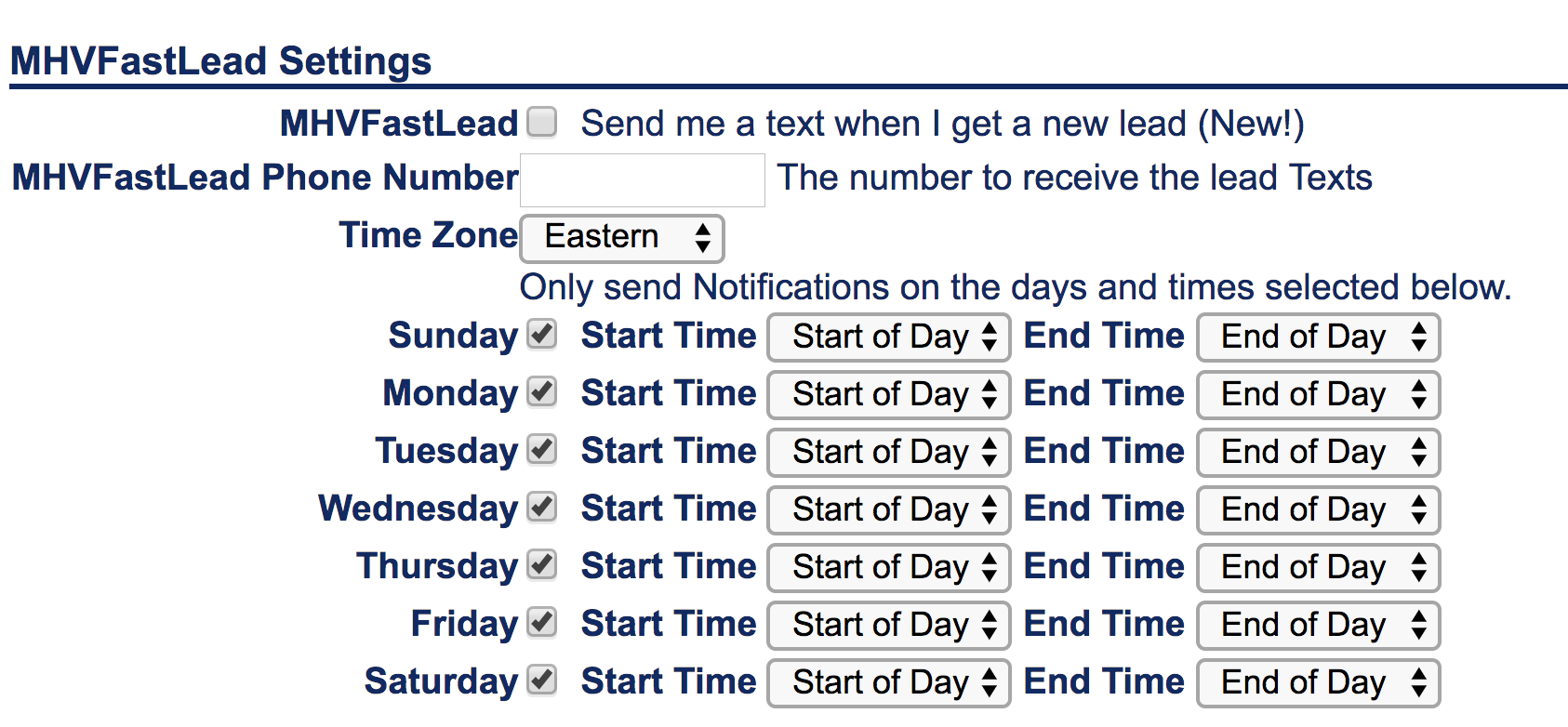
MHVillage offers the MHVFastLead which you can set up within your account. This feature allows you to receive a text notification from our website whenever we send you a lead. (Note the lead itself will still be sent to the email on the listing, this notification just lets you know we sent it!). This feature is also free and included in every account!
To set this up, simply log into your account and head to the “Update Account Information” page. The details and timeframe options are all listing there towards the bottom of the page.
How do your managers keep up?
A strategic plan and established system in place provide your team with support and tools to effectively meet the above goals.
“70 percent of the buyer’s journey is completed before they even get in touch with a sales rep”
Companies with multiple properties often establish a system where they categorize their leads by importance and reply in order. Another option would divide the different lead types and send them to different departments or sales reps in an effort to maintain the quick response time needed.
MHVillage sends the leads via email directly and in real time, but we also store them within the account. The lead section in the account also has the option to download them in spreadsheet form. This option lets you manage all of the leads generated from MHV in a convenient and easy to manage spreadsheet.
The art of following up
Following up is crucial in showing your potential residents that you care about them. Typically, a follow up via email can be the most effective. This is the case as long as you provide them with the information they need. Not only can an email follow up be convenient and faster it also provides a paper trail.
A good follow up email will contain the following key details:
Customer’s Name
Details about the home(s)
Additional home options that might be similar
Your direct contact information
Another tip would be to offer a time-sensitive incentive for the customer that would encourage them to reply sooner!
Hopefully, this information can help you and your team effectively manage the leads you receive your multiple properties.
If you have any additional questions about MHVillage and the lead management options we offer on our site, be sure and contact our customer service.
Oct. 6-8 at Avalon Hotel in Alpharetta, Ga.
Manufactured housing community owners have never had more information available to them — or more decisions to...
The Midwest Manufactured Housing Federation has announced that attendee registration is now open for the 2027 Louisville Manufactured Housing Show, returning to the Kentucky...
HUD’s Innovative Housing Showcase, MHI’s Homes on the Hill and Annual Meeting Begin Sept. 22
Two of the country’s largest builders of manufactured homes will...



 industry trend toward teaming and collaboration to achieve common goals and help raise the profile of manufactured housing.