Home Blog Page 2

Biloxi Show Shapes Up to be Bigger Than Ever in 2026

Image credit: Alabama Manufactured Housing Association

With more homes, more exhibitors, and more buzz than ever before, the 2026 Biloxi Show is expanding, and fast. 

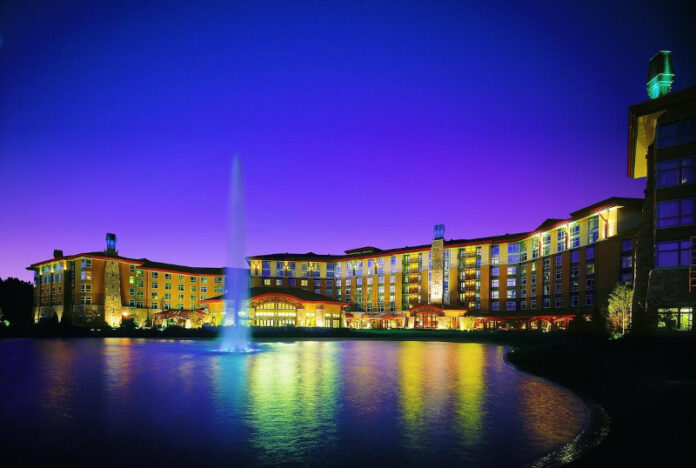
The Biloxi Manufactured Housing Show & Expo, which will take place from March 16-18, 2026, at the IP Casino Resort and Spa in Biloxi, Miss., will highlight the latest innovations and trends in the industry and will showcase the broad scope and vibrancy of manufactured housing options.

Previously known as the Tunica Show, the South Central Manufactured Housing Institute (SCMHI) composed of the Alabama Manufactured Housing Association and the Mississippi Manufactured Housing Association, oversees the unique industry event. 

“Interest is at an all-time high for attendees, exhibitors, and manufacturers for the Biloxi Show,” Jennifer Hall, executive director of the Mississippi Manufactured Housing Association, said. “Our exhibitor space has sold out — with a waiting list — and we’re gearing up to host a record-setting 56 homes in Biloxi.”

Interest is so high, in fact, that the display homes will be open to tour earlier than usual this year to meet the expected demand. Attendees will be able to start exploring the show’s models as early as 10 a.m. on Monday, March 16.  

What’s Coming to Biloxi in 2026?

The Biloxi Manufactured Housing Show & Expo, which has become the largest outdoor manufactured housing show in the country, is gearing up for another massive year with the following:

  • 56 model manufactured homes on display from 25 different factories across the country, all showing new varieties, floorplans, and trends for manufactured housing in 2026.
  • An industry update from Dr. Lesli Gooch, CEO of the Manufactured Housing Institute.
  • A seminar on practical AI for manufactured housing hosted by Darren Krolewski, co-president and chief business development officer of MHVillage/Datacomp.
  • Talladega Superspeedway representatives will be on hand to celebrate the ARCA Menards Series Manufactured Housing 200 race.
  • An assortment of food truck options will be available to all attendees for convenient dining.

“We’re expecting 3,000 attendees or more from across the U.S. and Canada… and we’re looking forward to demonstrating the forward momentum of manufactured housing in Biloxi,” Lance Latham, executive director of the Alabama Manufactured Housing Association, said. 

Industry professionals are encouraged to register as early as possible for the Biloxi Manufactured Housing Show & Expo. For more information on the event or to register online, visit biloxihomeshow.com/register. Registration is FREE for retailers, community owners and managers, transporters, and installers. 

The Biloxi Manufactured Housing Expo is an industry conference for manufactured housing professionals and is not open to the general public

Manufacturers Showing Homes in Biloxi

  • BG Manufacturing
  • Cavco Homes
  • Champion Homes
  • Clayton Homes
  • Franklin Homes
  • Kabco Builders, Inc.
  • Legacy Housing
  • Live Oak Homes
  • New South Quality Homes
  • Regional Builders Group
  • Sunshine Homes
  • Timber Creek Housing
  • TRU

MHInsider is the leader in manufactured housing news and is a product of MHVillage, the top marketplace for manufactured homes.

When it Comes to Ordering Homes, Location is Everything

big land marker drop an x home location column on home placement darren krolewski

Ask anyone what’s the number one rule of real estate, and they’ll likely tell you it’s location, location, location.

It’s a phrase often attributed to British real estate magnate Harold Samuel, who famously remarked that a property’s location was of such paramount importance that he felt it necessary to emphasize the point thrice.

While there’s some disagreement on who actually said it first, one can’t argue the undeniable impact of location. In our business, even when the desirable location of a community is well established, location is still an important consideration when it comes to your home purchase decisions. Every home on every site presents a chance to maximize its appeal to the homebuyer.

In one notable example of missed opportunity, a new development out west was struggling to make sales. At first look, this community had it all: terraced desert landscapes, breathtaking sunsets, and heavily-touted mountain views. For all intents and purposes, it should have been an unqualified success. Except that it wasn’t.

Unfortunately, the only place you could marvel at those breathtaking sunsets and mountain views was by standing on the commode of the primary bath, gazing forlornly out an 18-inch window. No one had considered location when they designed the homes, and the product was missing the mark. Not to mention the sunsets.

In this case, the solution was a costly fix that involved moving some homes, heavily discounting others, and ensuring the next generation of homes brought in offered majestic views from more than just the bath.

Some may argue that there is a price and time at which even the most unappealing home will sell. That may be true, but who wants to tie up their inventory credit line determining exactly what that is? All it takes is a little time and attention to the location of each home to help you turn sites faster, elevate your community, and stand apart from the competition.

The secret is site-specific home design. Well, it’s not much of a secret, really. Custom home builders and architects successfully use this philosophy to design homes for the unique characteristics of the lot on which a particular home will be built. It’s an approach that recognizes no two lots are exactly alike, even in the same subdivision. They consider things like views, noise sources, and orientation of the site to maximize the livability of each home and downplay any negatives.

The good news is you don’t need to be a builder of million-dollar custom homes to put these same techniques into practice. Many of these strategies can be adapted to manufactured housing, equally as successfully, within an established home ordering process and budget. The result is homes that live better, look better and sell faster.

Here are a few tips to recognize the untapped potential in every home you order:

Get Site Specific

Think of every home you order as a unique opportunity. Don’t just ask a manufacturer for their best-selling floor plans. That can certainly be a good starting point, but you should have a plan for every home you order. How will this home work on the site where it is being placed? How does it elevate your community? Does it enhance your streetscape? Are you meeting the needs of the market with this home in terms of size, price, and amenities? Every site has something worth accentuating, whether it’s a wooded perimeter or open green space. A few tweaks to the plan can turn unremarkable assets into standout features.

Walk Every Site

There’s nothing that beats standing in the middle of a vacant site to truly determine its highest and best use. What are the positives of that site? What aspects of the location might a buyer find unappealing? Taking a moment to walk the site can help you make better product decisions. If you can’t be there in person, get photos taken from the center of the site, facing out in each direction. Don’t forget to look at the approach to the site as well to maximize your street-facing elevation.

Let Nature Be a Neighbor

Is there an opportunity for any outdoor living space? If you are fortunate enough to have a site that backs up to water or woods, be sure to take advantage of it with window placement and the opportunity for a deck or patio. Even what one would consider to be an unremarkable homesite can benefit from access to a dedicated outdoor living area. Don’t close up outdoor access from the home. No one wants guests to have to walk through their laundry room when it’s time for a barbecue. A front or rear porch can greatly enhance the livability of a home.

Don’t Put All Your Eggs in One Basket

One successful home deserves another, right? That is, unless you picked the wrong home in the first place. The worst thing you can do is take one bad product decision and magnify it. Even a home that worked in one community or market may not work as well when brought to another. An unappealing floor plan or decor combination is challenging enough to sell, let alone when you ordered the same beige home with a green roof seven times. Let the market guide you. Give your product time to prove itself. Refine the plan as necessary until you get it just right.

Avoid Too Much of a Good Thing

There’s nothing quite like having a successful model you can’t reorder fast enough. You’ve managed to find the perfect home for your community and market, but now you risk too much of a good thing. Look at how you can adjust the street elevation by varying columns, dormers, exterior colors, and window placements to create differentiation in your community and reduce having too much of the same look. Simple floorplan variations by reversing layouts, swapping rooms, and decor options can give buyers a different interior impression of the same home while preserving its appeal.

Take Advantage of the Site Orientation

What is the orientation of the homesite? Would placing the kitchen or dining area at the front of the home enable the homeowner to capture morning light? Likewise, a south-facing orientation can afford more natural light for living areas. In warmer climates, minimizing west-facing windows and incorporating dormers could help to reduce cooling expenses. Are there any trees on the site that can be utilized for privacy or shade? A rear patio placed in full afternoon sun may be uncomfortably hot. A deck facing a busy street may go unused.

Minimize Potential Negatives

Not every homesite is perfect. Many times there may be less desirable views or site features that can be minimized through a thoughtful layout. You may not want to have the primary bedroom adjacent to a neighbor’s busy driveway when a floor plan can be reversed to afford more privacy. In the same way, you wouldn’t want to place the primary living space overlooking a high-traffic thoroughfare where noise levels may be a concern. Strategic room and window placement can help avoid noise sources and direct lines of sight from neighbors. Secondary spaces, such as utility rooms and closets, can be an effective buffer against less desirable views or sources of noise

Buyers recognize when a home “fits.” They appreciate views, comfort, privacy, and functional outdoor living spaces. Even if they can’t always articulate why one home feels more inviting than another, they gravitate toward homes that seem meant for their location rather than just randomly placed on the next available homesite.

Ultimately, site-specific home design encourages you to rethink your home ordering process. It’s about making considerate, intentional decisions that focus on the strengths of each homesite and address any potential limitations. In today’s housing market, adopting this philosophy can become a powerful differentiator for your community, enabling you to turn homes more quickly and competitively – one homesite at a time.

And that, like location, is everything.


MHInsider is the leader in manufactured housing news and is a product of MHVillage, the top marketplace for manufactured homes.

Michigan Hits New Strides in Bringing ‘Homes to the People’

outdoor park public display of manufactured home set up green grass blue sky michigan public park
A multi-section manufactured home is set up in a Michigan park for public display. Photos courtesy of the Michigan Manufactured Housing Association.

The Michigan Manufactured Housing Association in recent years has created a more street-level approach to showing the various types of homes that are built in a factory. While the success of home shipments going into Michigan is based on a number of factors, it’s clear that making a more direct appeal to a prospective homeowner has to help.

Michigan shipments of HUD Code homes have increased more than 30 percent year-over-year, while most other states have experienced single-digit growth.

“MMHA has been working very hard in recent years to utilize resources to ‘take the product to people, and people to the product,’” MMHA Executive Director John Lindley said. “By ‘product,’ I mean the homes and the communities. By “people,” I mean consumers and policymakers.”

michigan manufactured home display indoors novi home show
MMHA takes homes into the community and creates an opportunity for the public and public officials to learn more about the advantages of factory-built homes.
Some of the events MMHA has partnered in or hosted include:

The Manufactured Housing Showcase at the Novi Home Show near Detroit. For years, MMHA has worked with member manufacturers and retailers to showcase three to six homes per year in a range of sizes and price. In 2025, Lindley said the association added the Spring Novi Home Show, and has adopted a plant to keep contributing to that effort.

indoor trade show gathering manufactured housing professionals home show novi michigan
MMHA participates in a pair of events each year at the Novi Home Show.

“These events provide tens of thousands of consumers with the opportunity to tour multiple homes and interact with industry experts,” Lindley said.

The state association also has a presence at the Michigan State House Development Authority’s Building Michigan Communities Conference. The event brings more than 1,000 people in the housing sector together in downtown Lansing each year for educational sessions and an exhibit hall.

MMHA has been a sponsor of the event for several years, providing an opportunity for the association to promote the industry with an exhibit booth and a breakout session.

“We have utilized this opportunity to assemble industry panels with representatives from member manufacturers, retailers, community owner/operators, and finance experts,” Lindley said. “These panels have been well-attended, and coupled with the visibility created by the association’s exhibits, have resulted in increased understanding and knowledge of today’s manufactured homes and developments.”

The Capital MH Showcase was created in 2025, and occurs in time with the Building Michigan Communities Conference. MMHA worked with Champion to stage a pair of homes at a city park in Lansing. The location is a short walking distance from the conference and the State Capitol complex.

“Between conference attendees, state lawmakers, and staff, an estimated 200 stakeholders toured the homes and attended a reception,” Lindley said. “The success of this first attempt will lead to an annual event and growth in the number of displayed homes.”

Lindley said the Michigan Chapter of the American Planning Association, at its annual gathering of hundreds of community planners, has presented itself as a very specific and applicable audience for the manufactured housing industry to invest resources in an effort to eliminate bias against the product, the homes, and the land-lease community model.

“In 2023, we rented transportation and took attendees to two local communities for tours, brunch, and discussion with industry experts,” Lindley said. “In 2024, we again had a panel presentation from the industry.”

Finally, at the Northwest MI Housing Summit, MMHA has built a similar strategic partnership.

The event, hosted each year by Housing North, provides an opportunity to expose leaders in the housing space to today’s manufactured homes and communities. The association has a moderated panel discussions, and is presenting a bus tour in coming years to expose attendees to two communities and a regional retail location.

“Cumulatively, I believe these efforts are working to chip away at those stigmas that live today… especially among local units of government,” Lindley said. “All corners of Michigan are suffering from a housing supply and affordability crisis, and as we continue to educate decision-makers and consumers through initiatives like these, more and more are looking to manufactured and modular housing as the solution we already know they represent.”


MHInsider is the leader in manufactured housing news and is a product of MHVillage, the top marketplace for manufactured homes.

New Cavco Home Finds Ideal Spot in Indiana

interurban neighborhood indiana factory-built home infill cavco industries new home attainable housing
An exterior shot of the new Cavco home installed in an Indiana neighborhood. Photos courtesy of Turnkey Communities.

A newly built home from Cavco Industries, a model that debuted at the 2025 Louisville Show, has been purchased and placed by a developer in Sheridan, Indiana.

Adam McNeil, of Turnkey Communities, identified a vacant parcel on Hinesley Road, placed the home, and stated it has already sold.

“This house has turned out really good,” McNeil said. “I’ve received a lot of feedback, everyone was really impressed and surprised by the fact that it was built in a factory.”

cavco modular interior living space factory-built home interurban infill indiana
The living space in the new Cavco home, unveiled last year at The Louisville Show.

A single-story modular home, the new offering was listed at $385,000. It has three bedrooms, two bathrooms, and a sleek, modern layout that brings contemporary living to Hamilton County’s quiet countryside.

The 1,670-square-foot home sits on a modest lot with mature trees. It comes with a covered porch and a spacious back deck for relaxing or entertaining. Inside, the open-concept floor plan features a bright kitchen with an island, pantry, and breakfast bar. It has stainless steel appliances, a double vanity in the primary bath, and a well-placed laundry room.

“I’ve had that lot for a few years and we had been wondering what we were going to do with it,” McNeil said. “When I saw this house I knew this was the one we were going to do, and when you add a garage on to it, it really is something.”

interior cavco factory-built home indian interurban infill
The interior of a new Cavco home installed in an interurban Indiana neighborhood. Photos courtesy of Turnkey Communities.

The home was designed with energy efficiency in mind, and includes electric forced-air heating and central air conditioning. A 24-foot by 24-foot, two-car attached garage, and concrete drive.

With property taxes under $750 per year and no homeowners association fees, the listing offers an affordable entry into new construction in the area.

At about $231 per square foot, the home is competitively priced for a new build in Sheridan’s growing housing market. The sale underscores rising interest in factory-built homes that combine low maintenance with suburban comfort.


MHInsider is the leader in manufactured housing news and is a product of MHVillage, the top marketplace for manufactured homes.

Cavco Unveils New Structure for Product Offerings

cavco manufactured homes display six distinct product lines
Cavco, one of the industry's largest home builders, introduced a reorganized product line at the 2026 Louisville Manufactured Housing Show.

During the 2026 Louisville Manufactured Housing show in January, Arizona-based Cavco Industries unveiled six new structured product lines that organize the home builder’s models into segments to make the buying experience easier for customers.Ca

halo display cavco industries new manufactured homes the louisville show

Cavco operates with 33 plants and roughly 100 retail stores nationwide, including its latest acquisition, American Homestar.

The six distinct product lines were created “to deliver a consistent buying experience… so customers can find the home that best fits their lifestyle and budget,” the company stated in a release to MHInsider.

“This initiative reflects a broader commitment to our retailers and consumers,” Cavco Vice President of Sales Eric Coulter said. “We’re listening, we’re learning, and we’re building a product strategy that supports them, not just today, but as the market continues to evolve.”

Cavco’s new product lines will provide consistency nationwide, categorized in a simple, user-friendly format.

Halo: The Confident Choice
Most price-sensitive homes available without compromising quality
Banner: Room to Live. Space to Grow
Lifestyle homes combining cost efficiency with high-value features
Ovation: Expect More
High-value homes designed to inspire and elevate
Reserve: Unmistakably Yours
Luxurious living in a manufactured home with a custom-built aesthetic
Discovery: Create New Possibilities
Precision-crafted modular homes with thoughtfully created designs
Signature: Style Without Limits
Custom-built style with factory-built efficiency

ovation manufactured home from cavco on display indoors at the louisville show in january 2026

“This product line structure does not change the actual products being made in our plants,” Cavco President Bill Boor said. “Our plant teams know what products work best for their local markets and market positioning, and those decisions remain at the plant, consistent with our operating philosophy. Now, anything they choose to produce fits within this new structure and can be effectively marketed and sold.”

Cavco Senior Vice President of Marketing and Communications Colleen Rogers said the reorganization of product lines is a natural progression following last year’s national brand restructuring, bringing a variety of historic and acquired brands under the Cavco name by locale.

“On a national level, it simplifies our vast product offering and provides instant clarity on the value proposition of each line and where it fits in our product lineup,” Rogers said. “And, as we know, clarity builds confidence and reduces friction in the sales process for our retailers and our homebuyers.”


MHInsider is the leader in manufactured housing news and is a product of MHVillage, the top marketplace for manufactured homes.

Manufactured Housing Gains Vertical Anchoring for Added Stability

manufactured homes in a community setting aerial photo

Suppliers and builders within manufactured housing are now making industry professionals aware of a new vertical anchoring system for factory-built home foundations, aiming to strengthen stability and safety in high-wind areas, though the change is not currently mandatory under federal rules.

The recommendation, introduced in November, encourages installers using a “pan-system” or alternative foundation systems in Wind Zone I to include vertical anchors in new home installations. Companies, including Minute Man Anchors, Oliver Technologies Inc., and Tie Down Engineering, collaborated in the development of the updated guidelines for the approach to improve performance against wind uplift and shifting.

Under the guidance, installers are urged to follow the manufacturer’s instructions, which now include vertical anchoring as an optional enhancement. The approach goes beyond federal requirements set by the U.S. Department of Housing and Urban Development installation and safety standards.

Standard installation practices for homes using traditional block-and-tie-down systems remain unchanged. For pre-owned homes, installers may continue to rely on existing manufacturer or state standards without modification.

Industry experts say the recommendation reflects a growing effort within manufactured housing to promote stronger, more resilient installation practices, particularly in regions that experience periodic high winds.

While the new vertical anchoring guidance is voluntary, many installers and foundation manufacturers are expected to adopt the measure as a best practice in 2026 and beyond.


MHInsider is the leader in manufactured housing news and is a product of MHVillage, the top marketplace for manufactured housing.


Work Smarter, Not Harder

textured wall vertical accent brown woodsy lighted space plants
MSI Surfaces makes an acoustic wall panel that absorbs sound and makes a beautiful, natural-looking backdrop.
earth tone ceramic start tile in sand interior design natural elements
Examples of star-shaped designs in earth tone ceramic tile.

Smarter, not harder. That is a phrase my photographer loves to remind me of when I make 10 trips of art and decor into a home when I could have had the same results in five trips… if I had planned properly. It’s the same for manufactured housing. Success relies on finding smarter, more efficient ways to build homes, instead of making it harder.

This is especially true in the design and decor choices we tend to make in our homes. It’s easy to bring a picture of something you saw in a magazine and ask “Why can’t we offer that?” without thinking of the changes that would create in the building process. I know the designers who are on staff for the various manufacturers deal with that every day. A sales person brings in an image or an idea and says a competitor or luxury home builder is doing this, so we need to…, or XYZ is asking for this in our homes. From there, the designer is supposed to help the plant find a source for this product, quickly, that is kept in stock, that can be purchased for $20 instead of the $100 everyone else is paying. We have the best of the best who make miracles like this happen every day. Every year, I am amazed at what innovative, creative design decisions are being made in our homes.

Gone are the days of consumers settling for dog bowl lighting fixtures and plastic faucets. They want what they see on HGTV and on Pinterest, or that item that someone dreamed up using AI. Here are some of the looks and products that I am seeing that are available to our industry, and some that will be coming soon. These are high on style, but efficient in how they can be added to our homes.

Color

interior design kitchen pendant lighting suzanne felber lifestylist
Natural light and pendant lighting in a kitchen space with calming, natural colors.

Color is a big story not only in manufactured housing, but in site-built housing as well. The farmhouse white and black interiors and exteriors are quickly fading, and consumers are looking for a warmer, more inviting place to call home. It isn’t possible for consumers to walk all of our homes professionally furnished, so when they walk into a home that has no color, they can’t understand what that home will look like with some accent walls, area rugs, and artwork.

Lighter wood tones with a golden hue, and soft earthy greens are what you will see more of in 2026, and cream or bone colors over harsh white on walls and trim.

Biophilic Design

great green kitchen wall tile texture lighting design elements 2026 BCI
Photos courtesy of Basic Components.

Incorporating plants and other earthy elements into your homes is no longer a trend, it has become a basis of design. Have you noticed that floor plants and trees are back? But not a $29 faux Ficus — think cactus, olive trees, and fiddle leaf fig trees that might be more expensive, but will keep a home from looking like everyone else’s.

Lifestyled Tip

natural elements plants stone glass decor living room lighting soothing tones sofa pillows celing fan
The natural elements, color, and lighting all contribute to creating a soothing space, such as in this home designed for Palm Harbor in the Pecan Valley floor plan. Photo courtesy of Suzanne Felber/Lisa Stewart Photography.

Invest in a photo of the home when it is properly furnished and “lifestyled” if you can’t afford to stage the home. Have it made into a 36- by 48-inch mounted poster that the potential buyers can see when they enter the home. That will give them a reference point to help them understand where furniture might go, and how color can make the house become a home.

Texture with Tile

accent wall tile green dal tile sitting space music
A green vertical DalTile accent provides texture and color in a common space.

Texture is one of the biggest stories moving into 2026. You will be seeing a lot more of it on walls and in tiles. Tile is one of those areas where exciting things are happening. In the past, manufactured housing didn’t do enough volume to create tiles just for us, but now, with the continued evolution of the homes we offer, we will see a lot more tile. Going back to the concept that we have to keep the building process efficient, keep a lookout for new tile styles in different sizes. This will make grouting and cutting almost obsolete.

It comes down to a math problem — what size tile can we use to have the fewest cuts? DalTile is supplying more of the smaller-sized tiles with a mesh back that will place perfectly, and are easy to install. Textured wall tiles are becoming even more important, and curves are in. Also, 15-inch by 30-inch and 24-inch by 24-inch tiles are becoming more popular and more affordable. These are ideal for bath spaces and will become more important in the future. 

The Mansfield Park tile collection by Basic Components is a tile collection curated specifically for the manufactured housing industry. The colors and sizes are wonderful and very affordable. The company knows the needs of the industry, and is getting ready to launch a very exciting new size that will be a first. I have a feeling other housing sectors will be paying attention and following our lead. This, again, is a great example of knowing the opportunities factory-built housing offers. The industry can bring current design trends to the market in a form that will help efficiency in the plants without giving anything up. You heard it here first!

Curated Collections

bedroom natural tones acoustic wall tile MSI
Natural tones in a bedroom aided by MSI’s acoustic wall design.

The thing I hear most when I am staging homes in retail center is “My home will never look like this.” I hear that much more often than “Can I afford this?” Our customers love the creativity they see in professionally merchandised homes, but are not sure they can achieve the same look.

An old and new, curated look is what consumers are seeing and trying to achieve in their own homes — not everything matches, but it coordinates. Ask your designers to come up with some “storyboards” that show a collection of your options used in different ways. You can create these easily in Canva, then make Pinterest boards that are easily accessible to consumers looking for design ideas.

Knowledge is Power

Thanks to partners like  Basic Components, the manufactured housing industry is finally getting away from being elusive with the knowledge and resources that make us unique. We are getting access to information that helps us gain a better understanding of the trends and ideas from around the world. BCI holds a very well-attended annual design conference that is built around a simple belief: “The designers are the experts. They are the ones shaping the homes, influencing product standards, and ultimately defining how families experience the spaces they live in.”

It is beneficial that a group like Basic Components brings tools, resources, and global material insights that help industry designers continue to lead in the field instead of requiring them to individually go out and gain insight on their own. A highlight of the gathering is always a trend report on worldwide designs by Emily Holle from MSI Surfaces. She attends a lot of the international design shows, and brings back that information for attendees of the design conference.

When we bring the world to our designers, the entire industry thrives.


MHInsider is the leader in manufactured housing news and is a product of MHVillage, the top marketplace for manufactured homes.

Wisconsin Project Aims to Become Nation’s First ‘Dementia Village’

dementia village site plan manufactured home village wisconsin

A rural patch of land in Sheboygan County, Wisconsin, is being transformed into what local organizers hope will be the nation’s first dementia village — a residential neighborhood designed so people living with dementia can “live as usual” while receiving on-site support.

Livasu, pronounced “Li-VAY-Su”, will be built on nearly 80 acres with a plan for 124 individually owned, adaptable homes arranged around a village center with amenities intended to serve homeowners and welcome the wider public. Amenities are to include a restaurant, grocery store, theater, gym, spa, hobby spaces, and walking paths.

The community will have round-the-clock care available, including on-site support staff. Livasu will not look to replace or add health care services, but will be intentional about giving the residents privacy, independence, and family life while providing caregiving services.

‘Living As Usual’

Mary Pitsch, co-founder of Dementia Innovations, said after years of working with county residents  — helping to improve public understanding and helping to improve the lives of families impacted by dementia — that she felt there was a lot more to be done. She initiated a public-private partnership focused on dementia crisis situations that then led to the idea for Livasu, a derivation of the phrase “Living as usual.” There were many county residents looking for help with continuing to manage their current lives in unison with managing the cognitive changes. Too many people were left to manage on their own because they weren’t ready for a residential care facility, she said.

“We just weren’t doing a great job as a county responding to the needs of a segment of our population,” Pitsch said. “We changed how we look at those crisis responses. We did a lot of training and changed our emergency protocols. But we knew more could be done. How do we change these situations from even happening?”

The answer was by looking at the environment in which the person with dementia was living.

Organizers say the Sheboygan County village shares concepts of care with a successful dementia-friendly community in Europe — the Hogeweyk village in the Netherlands — and is intended as an alternative to traditional institutional settings.

Pitsch said the focus is to foster a resident’s abilities rather than disabilities.

“We started putting ideas together. We knew what we wanted. We wanted something that feels like a regular neighborhood, but one for people with dementia,” she said. “It gives them an environment that allows the person with dementia to take some risk.”

Backers say the village model allows people with cognitive impairment to keep routines, relationships, and dignity while reducing the need for restrictive interventions. Integrating public amenities and encouraging interaction with the broader community will normalize the lives of those living with dementia and offer family members new choices for long-term living arrangements, including allowing couples to remain together, a frequent challenge in conventional memory-care settings.

wisconsin dementia village concept streetscape manufactured housing
One of the early renderings for a unique village concept in Wisconsin. Images courtesy of Livasu.

The Livasu plan grew out of local collaboration that began with a 2018 Dementia Crisis Task Force in Sheboygan County. That grassroots partnerships included law enforcement, emergency medical services, social workers, hospital personnel, and the county 911 emergency call center.

This partnership evolved into a non-profit model, Dementia Innovations, where the mission is education, community collaboration, and supporting a “dignity of risk” lifestyle for people living with dementia.

The Wisconsin Housing Alliance is one of the partners in the project.

“Our logo and tag line says ‘The Voice of Factory-Built Housing.’  With groups like Dementia Innovations utilizing manufactured housing in their projects, we don’t need to speak as loudly,” Wisconsin Housing Alliance Executive Director Amy Bliss said. “I am so proud of Mary and her team of people dedicated to solving a community need.  In addition, I am proud of Cavco-Dorchester and North Country Homes for taking on a project that required a good deal of energy, thoughtfulness, and hard work to make these homes tailored to meet the needs of those with dementia.”

Todd Metz from Cavco, said The Ivy is set to serve as the community’s model home and as an office. Site preparation, including extensive construction, has been underway since the fall of 2025, he said.

The goal is to have 20 homes ready for the spring/summer of 2026. In all, the community will have more than 120 homes with a combination of single-section and multi-section homes.

“Many entities would have walked away because it was something new and different,” Bliss said. “In this case, the industry stepped up and found a way to support this cause.  I wish all industry members started with a yes when presented with unique projects such as this.”

“It was all about how we could get the most benefit,” Pitsch said. “We wanted to create good walking paths, but in a tighter area. It is winter here much of the year, so longer walks aren’t great and we wanted be realistic about how much of the property would need to be maintained through seasonal weather.”

Why A Village?

A conceptual site plan circulated by the group shows concentric neighborhoods, a centralized village hub, and barrier-free grounds designed for small, familiar routes, and community interaction. The homes — all manufactured homes — are owned by the resident and made adaptable to changing needs.

The $13 million development is being funded through a capital campaign, lining up partners that include regional banks, foundations, architects, and builders.

The village concept has personal roots for many involved. Organizers and early supporters frequently cite family caregiving experiences as motivation. Jim Holmes, whose wife Patti died after a long struggle with dementia, told reporters that the idea of letting people remain “free to do whatever they want” helped inspire the project. Local news coverage has highlighted multiple 
families and volunteers who say they want better alternatives for their loved ones than the options they have encountered.

Community buildings, infrastructure, a model home, and new resident homes all began coming into Livasu at the end of 2025 and will continue through the year.

“We are building a part of a larger community the same way people build libraries and other community spaces,” Pitsch said. “We are really trying to change the culture for how we care for people with dementia. We’re trying to be as flexible as we can be for the homeowners.”


MHInsider is the leader in manufactured housing news and is a product of MHVillage, the top marketplace for manufactured homes.

House Advances Bill to Restore HUD Authority

u.s. house of representatives house floor vacant .gov image
Floor of the U.S. House of Representatives.

HR 5184 Continues to Receive Substantial Support, Passes 263-147

The U.S. House of Representatives on Jan. 9 voted 263-147 to pass H.R. 5184, which looks to restore full regulatory authority for manufactured housing to the U.S. Department of Housing and Urban Development.

The bill passed in subcommittee and the House Committee on Energy and Commerce approved the change to the U.S. Department of Energy’s role to an advisory capacity when it comes to energy standards for the construction of manufactured homes.

Rep. Erin Houchin of Indiana and Housing Subcommittee Chairman Mike Flood of Nebraska introduced the bill. The Affordable Housing Over Mandating Efficiency Standards — otherwise known as the Affordable HOMES Act — moves to the Senate.

“As demand for affordable homes has surged, so have unnecessary costs, making the dream of homeownership slip further out of reach for Americans. The Affordable HOMES Act takes a practical approach by cutting red tape and regulations that contribute to pricing American families out of owning a home, which will increase supply and lower costs,” Rep. Houchin said. “I’m proud to see the House take an important step toward restoring the American Dream with the passage of this bill.”

The bill repeals Section 413 of the Energy Independence and Security Act of 2007, and ensures that the DOE’s final rule on Energy Conservation Standards for Manufactured Housing will have no force or effect. Section 413 directed the DOE to establish energy efficiency construction standards for manufactured housing, an abrupt change from the long-standing authority of HUD to decide on federal construction standards for manufactured homes via the HUD Code.

“This legislation is essential to our work to cut red tape and lower costs for hard-working American families. The Affordable HOMES Act cuts redundant regulations to help restore the American Dream of home ownership for millions of families,” Congressman Brett Guthrie (KY-02), chairman of the House Committee on Energy and Commerce, said. “Thank you to Congresswoman Houchin for your work to lead the Affordable HOMES and support our communities.”

Twenty-one members were absent and/or did not vote on the bill, while 206 Republicans voted for the change, and were joined by 57 Democrats.

MHI CEO Lesli Gooch said that today’s manufactured homes are built with advanced, factory-controlled processes and often exceed the energy efficiency of site-built homes. She said modern manufactured homes are built to high energy performance standards, with over 50 percent of new manufactured homes being ENERGY STAR certified and all exceeding current HUD efficiency standards.

“The industry has consistently advocated for meaningful updates to enhanced energy standards that appropriately reflect the unique characteristics of manufactured housing. Restoring a streamlined, effective regulatory framework under HUD will advance those goals and deliver lasting impacts across affordability, energy efficiency and housing access nationwide,” Gooch said. “We, alongside Americans pursuing homeownership, thank Rep. Erin Houchin and Rep. Jake Auchincloss for their bipartisan leadership and support, and we commend the House of Representatives for passing H.R. 5184, a critical step to achieving the dream of owning a home.”

MHInsider is the leader in manufactured housing news and is a product of MHVillage, the top marketplace for manufactured homes.

Senator Introduces Bill to Declare National Housing Emergency

Manufactured Housing under new administration

Intends to ‘Use Full Force of the Government’ to Build 4 million Homes


U.S. Senator Elissa Slotkin (D-MI) on Jan. 8, 2026, introduced the National Housing Emergency Act of 2026. The bill requires the President to declare a national housing emergency and invoke the Defense Production Act to incentivize housing production and build 4 million homes.

senator slotkin speech national housing emergency
U.S. Senator Elissa Slotkin, from Michigan, has introduced a bill to declare a National Housing Emergency.

To achieve this, the legislation will boost domestically produced materials to support the construction and rehabilitation of housing, push states and localities to cut red tape that currently stand in the way of building middle-class housing.

In June 2025, Senator Slotkin called for a national housing emergency in her Economic War Plan speech. This legislation is a concrete follow up to that call.

“There is nothing more fundamental to the American Dream than owning your own home, and it has become increasingly difficult for middle class Americans to do this,” Slotkin said. “The United States is in a housing crisis, and we need to act now. That’s why my bill declares a national housing emergency, cuts regulations that get in the way and uses the full weight of the U.S. government to increase our housing supply by 4 million homes.”

The National Housing Emergency Act of 2026 declares a housing emergency that will continue until 4 million homes are built. The bill would do the following:

  • Uses the full strength of the U.S government through the Defense Production Act to direct domestic industries to produce essential materials (lumber, steel, manufactured housing) and services to speed up housing development and rehabilitation.  
  • Creates a new housing standard by choosing how the federal government gives out money. No one gets a blank check: It rewards pro-growth communities with federal dollars and holds accountable communities that refuse to grow.  
  • Pushes states and localities to cut red tape and make way for more housing. It compels state and local governments to change local laws like allowing commercial properties to get turned into housing, eliminating single-family zoning or allowing for accessory dwelling units (“in-law suites” or “granny flats”). 
  • During the emergency, the bill institutes a freeze for states or localities from passing laws, rules or regulations that imposes a burden on the construction or rehabilitation of housing during the period of the emergency.

Slotkin’s office has posted a summary of the bill, as well as the full text.

In the full text, manufactured housing is called out twice. Firstly, that all manufactured homes would continue to be built to the HUD code, and secondly that local governments allow manufactured housing in all residential areas. It also calls for “reducing minimum lot size requirements.”


MHInsider is the leader in manufactured housing news and is a product of MHVillage, the top marketplace for manufactured homes.

EVENTS

hall of fame elkhart mh rv

Introducing the 2026 RV/MH Hall of Fame Inductees

Aug. 17 Induction Dinner in Elkhart to Honor Five from Each Industry In August, the RV/MH Hall of Fame will celebrate the 2026 class of...
MHI CE expo hall vegas manufactured housing meeting

Manufactured Housing Industry Convenes in Las Vegas for MHI’s 2026 Congress and Expo

More than 1,500 manufactured housing professionals are expected in Las Vegas April 7-9 as the Manufactured Housing Institute’s Congress and Expo returns to the...

Biloxi Show Shapes Up to be Bigger Than Ever in 2026

With more homes, more exhibitors, and more buzz than ever before, the 2026 Biloxi Show is expanding, and fast.  The Biloxi Manufactured Housing Show &...