Byron Stroud of Skyline Champion is the winner of MHInsider's Advocacy Award for 2023.
In Recognition of the Highest Achievements in Manufactured Housing
Each of the 2023 MHInsider Industry Award winners will receive our “Crystal Home” award.
Byron Stroud has a long track record of success in marketing and sales dating back to his time with Whirlpool. Based in Michigan, Stroud has worked with Champion Homes, and what became Skyline Champion Corporation, for decades, creating and building relationships with manufactured home buyers within community operations and development. His relentless work with the Midwest Manufactured Housing Federation to coordinate the annual Louisville Manufactured Housing Show has been a prime reason for the event’s success. He also advocates for the industry on the national level, working closely with the Manufactured Housing Institute in Washington, D.C., and in efforts to support local markets.
What do you view as the biggest accomplishment of your career?
My greatest achievement concerns the thousands of people I have met and worked with over 50 years of developing business relations with company associates, customers, prospects, and industry partners made possible by the few great companies I’ve been honored to represent. Most fortunately, for almost 30 years, it has been Champion, a company with leadership that is committed to the sales and marketing operating principles of “Building Strong Relationships” while we act with integrity and respect. I also appreciate the work with and the support of industry organizations, including MHI at the national level and the many state associations, each led by directors and staff who work so diligently every day to help make our industry companies more successful in providing affordable housing to happy homeowners across North America.
What work or life skill do you give the most credit for your achievements?
The life skill that I most credit for taking advantage of these opportunities granted is attitude, waking up every day positively motivated to support our products, processes, and people to perform in a way that ensures our factories have the volume of orders needed to keep thousands of employees with families that rely on their steady incomes building homes every workday.
MHInsider is a publication of MHVillage and is the premier source of manufactured housing news with a national audience of manufactured housing professionals dedicated to producing and delivering high-quality, affordable, off-site built housing.
Dee Pizer’s support of the manufactured home community sector includes guest speaking at MHI meetings, mentoring women in the industry, and volunteering her time whenever asked to assist other community owners and property developers throughout the country. The time Pizer gives new community owners and operators at these meetings has been a tremendous help in the industry. Her reputation and success make her a great source of information. She helped change the perception of manufactured housing as a “male-dominated” industry. She has been essential to the growth and success at Zeman Homes, yet more so in many ways to the continuing success of the community segment.
What do you view as the biggest achievement in your career?
I started in this industry as a secretary in the sales department in 1983. I was a single mom with three sons and no college education. My main goal was to do a good job so I could keep my job and feed my kids. The trajectory of my life did not seem to be anything more than where I already was. But being able to reach such a pivotal position as CEO of Zeman Homes and oversee approximately 11,000 sites at our high point was and will always be my greatest achievement.
What work or life skill do you give the most credit for your achievements?
I do not think there is just one skill, but several that are more about attitude and the way you approach things: First, I never said “That’s not my job.” I did or learned everything that came my way. Eventually, you are a well-rounded, knowledgeable asset to your company. Second, I prepare in advance for every day, for every project or meeting as if it was your first and you have that need to impress everyone. Third, be passionate about what you are doing, give it your all, and understand every piece of the puzzle.
MHInsider is a publication of MHVillage and is the premier source of manufactured housing news with a national audience of manufactured housing professionals dedicated to producing and delivering high-quality, affordable, off-site built housing.
In Recognition of the Highest Achievements in Manufactured Housing
Each of the 2023 MHInsider Industry Award winners will receive our “Crystal Home” award.
Ted Boers established Datacomp Appraisal Services in 1987 to serve a need he saw in the Manufactured Housing Industry. At the time, manufactured homes were valued using the book approach. As a former loan originator, Ted understood that location was a significant and critical factor in determining value for all housing options, including manufactured homes. To address this need, Ted started Datacomp Appraisal Services and offered comparable-based appraisals to lenders financing manufactured homes, first in Michigan and subsequently across the country. With the help of his partners and team members, Datacomp continued to grow, to launch MHVillage as a sister company, and to add other products and services for the benefit of the industry and its customers.
What do you view as the biggest achievement in your career?
As I look back over the last 30-plus years, I am certainly pleased that our companies were able to make a positive difference in the manufactured home industry and in the lives of our team members. The availability of financing is obviously is critical to both home buyers and home sellers and financial institutions should always be concerned about the value of their collateral.
What work or life skill do you give the most credit for your achievements?
I do not claim to have any significant life skills other than perhaps common sense. However, I was taught by my Christian, immigrant, parents to serve others and to treat co-workers, customers, and employees the way you want to be treated. I would hope that our employees and our customers would agree that we have done that.
MHInsider is a publication of MHVillage and is the premier source of manufactured housing news with a national audience of manufactured housing professionals dedicated to producing and delivering high-quality, affordable, off-site built housing.
Every community has its charm — the one thing that sets it apart from the rest.
The manufactured housing industry plays the vital role of providing affordable housing options to people across the United States. With economic pressures at an all-time high, the need for growth and evolution in sustainable business practices becomes even more essential amongst those providing and needing affordable housing.
By design, communities must be built with key considerations taken into account. And any goiod community’s success hinges on two major environmental, social, and governance (ESG) factors: risk mitigation and resilience.
Conservice — a utilities management firm that supports the manufactured housing industry — has built a community of owners and operators (as well as their residents/tenants) along with partnerships with local utility providers and government entities to manage utilities for their properties. From Bill-to-Boardroom™, it’s important to use the utility data you already track each month to make better decisions for your communities. Conservice has been doing just that for over 20 years and has learned a thing or two about building better communities as a result.
Making a sustainable community is good for everyone. But in case you need another reason, we’re giving you five ESG considerations that significantly impact the manufactured housing industry in building stronger, more resilient futures for your communities.
Energy Efficiencies Lower Costs and Risks
Manufactured homes are inherently more sustainable due to carefully engineered designs with less waste in mind. We know that by adopting energy-efficient building practices and materials, our homes can reduce energy consumption, lower overall utility costs, and minimize carbon footprints.
Research also shows that environmental responsibility is important to 81 percent of consumers – and that Gen Zers (people born after 1997) are the generation that places the highest value on sustainability. As more of these younger people enter the real estate and rental market, sustainable features and amenities are becoming vital selling points. But it’s not just younger potential residents; the data indicates that 61 percent of all renters are willing to pay a premium for sustainability.
Manufactured housing companies that prioritize environmental sustainability also reduce operational risks by lowering energy costs and ensuring compliance with increasingly stringent environmental regulations.
We call that a win-win.
Thanks to emerging ENERGY STAR Benchmarking, Building Performance Standards, and other local/state regulations, monitoring and tracking those requirements for all of your properties is slowly becoming a requirement, so we handle all of that on behalf of our customers.
Investing in People and Community Increases Resiliency
Building a community is no small task. Building a better community involves people. Better communities ensure well-maintained and safe communities, fair and transparent pricing, and consistent opportunities for residents to participate in making the community a better place.
By investing in the people of a community with amenities such as playgrounds, green spaces, community gardens, and community centers, a shared sense of belonging is created that improves the overall quality of life for a stronger, more resilient people base.
Governance and Financial Reporting Drive Transparency and Risk Management
Managing governance practices, including relationships in what may seem like unlikely places, drives transparency and risk mitigation. Regulatory requirements and ethical sourcing of materials better positions the manufactured housing market to address disruptions in supply chains and helps communities adapt to changing markets.
With the right governance structures in place, companies are better prepared for, well, any crises that comes their way. Whether economical or natural, companies can weather the storm by sharing their goals and involving their communities in the goal of making and keeping processes.
Community Planning and Disaster Preparedness IS Resiliency Planning
Better communities care about the sustainability and longevity of their investments. Companies that wish to build better communities prioritize resilient community planning and disaster preparedness by designing communities that are less vulnerable to natural disasters, such as hurricanes or flooding, and implementing emergency response plans to protect residents in times of crisis.
Investing in resilient infrastructure, such as elevated foundations, stormwater management systems, and backup power sources can help manufactured home communities withstand adverse events and ensure the safety and well-being of residents. Proactive disaster preparedness not only mitigates risks but also demonstrates a commitment to the welfare of the community.
Find Partners in Seemingly Unlikely Places
Better communities are built by involving everyone. It’s been said that when you take care of your people, they take care of your investment. What better way to take care of your communities than by connecting them? By building a bridge between your communities and different perspectives, enhanced relationships with regulators, and diversity in staffing you get innovation and adaptability.
For decades, Conservice has partnered with their customers to receive, audit, and ensure that correct payment for utilities is sent to local utility providers. That data then carries through seamlessly to all of our other service offerings, including feeding into our ESG platform for clients to monitor their ESG goals and make better decisions on behalf of those communities.
We partner with local utility providers, regulators, and communities to best serve local needs. We even partner with our competitors! Integrating with other software platforms helps make the communities we support better places.
The strategic move for manufactured housing is also the move that just makes sense for long-term success. By focusing on energy efficiency; investing in amenities; enhancing governance and financial reporting transparency; building up resilience; and building partnerships in unlikely places, companies in manufactured housing can truly build resilient, prosperous, and better communities for the future.
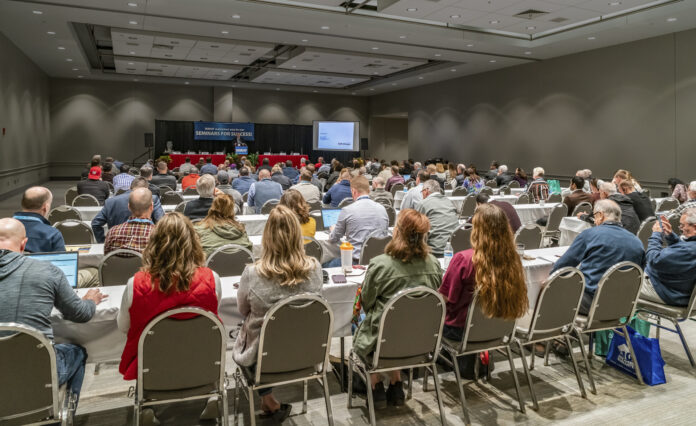
Organizers for the 2024 Louisville Manufactured Housing Show have announced the educational seminars for the three-day event taking place from Jan. 17-19 at the Kentucky Exposition Center in Louisville.
Now in its 63rd year, the show hosted by the Midwest Manufactured Housing Federation (MMHF) is the precursor to the spring and summer selling seasons. The show once again will bring together thousands of manufactured housing professionals under one roof and offer them the support and resources needed to make 2024 a strong sales year for their business.
“The education and expert insights at the 2024 Louisville Show can’t be gained anywhere else,” MMHF President Eric Oaks said. “We think our attendees are going to benefit from these seminars as a way to grow their businesses and stay ahead of the competition.”
Ken Corbin, industry leader and consultant, organized this year’s educational seminars for a wide range of manufactured housing professionals, from manufacturers to builders and developers to community owners.
Read below for the full schedule of educational seminars:
Wednesday, Jan. 17
8 a.m. — State of the Industry
Join the MMHF state executive directors for up-to-the-minute commentary and analysis of relevant industry trends, challenges and opportunities.
9 a.m. — 10 Key Steps to Inventory Management
Start the year off right with valuable insights on effectively managing your most valuable asset: your home inventory. Speaker and consultant, Ken Corbin, leads a fast-paced, interactive presentation on how to sell more homes, generate more revenue per sale and replenish your inventory with the right homes for today’s buyer.
10 a.m. — Consumer Lender Panel
Consumer financing is the lifeblood of our business. In this ever-evolving market, learn about where consumer finance is headed in 2024 from a panel of the industry’s experts. Bring your most pressing consumer finance questions and discover how the latest programs can help you assist more consumers in fulfilling their dream of home ownership.
Thursday, Jan. 18
8 a.m. — Manufacturer Panel
Hear all about the new designs, colors, features, and floor plans that will be shaping consumer preferences in 2024. The Louisville Show is the kick-off to the 2024 selling season. Don’t miss this informative discussion with the Show’s manufacturers and make sure you’re positioned for success in this competitive market.
9 a.m. — National Advocacy with MHI
The Manufactured Housing Institute (MHI) is the voice of the manufactured housing industry in Washington. As the only trade organization representing all aspects of our business, they’ll share insights with a national perspective and inform on legislative activities that affect us all.
10 a.m. — Builder and Developer Panel
We are affordable housing. This panel of leading experts will share how they’re helping buyers achieve the American Dream of home ownership through residential developments using factory-built homes.
11 a.m. — Sales, Marketing, and Media All-Stars
Be ready and take notes as this powerful panel of the industry’s top marketers share their best strategies and tactics to help industry professionals generate greater demand, close more sales and stay ahead of the competition.
Friday, Jan. 19
8 a.m. — Risk Management Panel
In business, risks are factors that can lower profit and even cause an organization to fail. This informational program will share the fine details on what you can do to help minimize exposure, control risk and reign in potential liabilities. If you’re a community owner or retailer, don’t miss this important session!
9 a.m. — Property Technology and Management
The Louisville Show closes out its education program with an essential session in property management and operations technology. Discover how innovative platforms and modern tools can help you create efficiencies, reduce expenses and operate your business more productively.
“Everyone that attends The Louisville Show — manufacturers, builders and developers, suppliers, community owners and managers, and all other industry professionals — will get something out of our seminar lineup this year,” MHVillage Co-President and show manager Darren Krolewski said.
The Louisville Show once again will take place at the Kentucky Exposition Center, where industry professionals can view more than 40 of the latest model homes from the top manufacturers in the industry. Attendees at The Louisville Show can view more factory-built homes than any other indoor event in the nation, as well as learn from industry leaders as they share their expertise and insights for 2024 and beyond.
“Everyone that attends The Louisville Show — manufacturers, builders and developers, suppliers, community owners and managers, and all other industry professionals — will get something out of our seminar lineup this year.”
MHVillage Co-President and show manager Darren Krolewski said.
Due to extensive remodeling that will be underway at the Crowne Plaza during the event, it’s important for attendees to visit TheLouisvilleShow.com/Hotel for special group rates for The Louisville Show and save on the cost of their trip.
For more information about the event, as well as to sign up for email announcements, visit TheLouisvilleShow.com.
The Louisville Show is an industry trade event not open to the general public.
Managing manufactured housing communities can be tough work. Creating accurate key performance indicators (KPIs) can streamline your management processes and give you peace of mind as your portfolio grows. When growing my portfolio of nearly 3,000 lots, at times it felt like I was building the boat as I was sailing it. If I had implemented these KPIs sooner, I could have saved myself some significant headaches. This article will share with you what I think are the most important metrics you should monitor to feel confident about your manufactured housing community management.
Occupancy
Occupancy metrics are our most important, we instill this to our entire team daily in every meeting. If my staff have multiple “to-do’s” that pop up and they don’t know what to tackle first, we always want them to prioritize the “occupancy” related tasks first. When evaluating occupancy, our metrics can be broken down into these five KPIs:
Heads in beds; total number of occupied units vs. total number of lots in the park
Number of days vacant – on homes for sale and homes under renovation
Number of showings completed
Number of applications received
Number of homes sold vs. number of homes available
We dive deep into each failing or “red” metric on our dashboard to discover the root issue with our operations. For example, a high number of showings and a low number of applications received could indicate condition issues with the home we are trying to sell.
Collections
We know that no matter what occupancy looks like, we will likely collect 90-95% of our anticipated revenue each month with relative ease. 95% is a great start, but that still means that we are chasing 5-10% of our tenants each month. To address our tenants with overdue rent, we use a “full-court press” approach, this includes reaching out via most methods possible. Our top KPIs for evaluating collections include:
Percentage of amount billed we’ve collected
Number of tenants that paid vs. the total number of tenants in the park
Total tenants 60+ days delinquent
Total “cash-for-keys” offers made
We compare each of these metrics with the numbers from previous years during this same time of the month in order to track trends and ensure we are moving in the right direction. We also track the total collection attempts, and the forms of these attempted communications to more effectively strategize future scenarios.
Water and Sewer Recapture
I’ve learned the hard way not to mess around when it comes to your water/sewer expense recapture. We monitor ‘slippage’ by daily tracking of Metron farnier master meters and Metron submeters under each home. We aim for a 90% utility recapture rate, however some months are worse than others, usually based on the weather. In order to avoid pouring money down the drain, we track utility slippage constantly via these KPIs:
Daily meter readings (Master meters and submeters)
Monthly financial review of the utility income and expenses
Number of water leaks per year
We watch the usage numbers and compare them to the averages month over month to ensure large spikes don’t throw us off budget. When a spike occurs, we are usually notified within minutes so the leak can be identified quickly to avoid large slippage costs.
Property Condition
Property conditions are extremely important for the tenant experience. Poorly maintained manufactured housing communities will not only drive good tenants out, they will also make the property less valuable. Identifying, tracking, and resolving rule violations can be a daunting task for a part time on site manager. Monthly drive-through videos are a great approach so off site personnel can escalate action items as they see fit. Our KPIs for maintaining property condition are:
Number of new violations per lot
Number of violations fixed from the prior month, per lot
Annual number of violations per lot
We have found that the constant offenders are better off living somewhere else. Keeping track of these above metrics tells our operations manager the story of who is a good fit for our community and who is not. We also randomly inspect each property every 2-3 months as this has been the best way to hold our onsite management accountable.
Budget and Actual
How do your projected values compare to your operating realities? Are your numbers different? Why? Here are a few KPIs we track for every project to help us stay on track with the returns we’ve projected before purchase:
Pro forma projections vs. the operational realities on each…
Revenue
Expenses
Net Operating Income (NOI)
CAPEX (capital improvements)
Investor distribution amounts
Tracking our budget vs. actual differences is likely a large part in why our underwriting today for new projects is usually more accurate than it was when we first started buying mobile home parks over 7 years ago. Experience compounds and what gets measured, gets done.
I hope these KPIs give you a starting point to developing your own dashboard with your most important metrics. Knowing is the first step towards fixing. Red metrics are present in every organization, the key is being able to identify them and resolve them in a timely manner. Accountability is critical, we spend 80% of our time on the failing red metrics and 20% of our time on what’s green. KPIs allow you to track your team and create accountability standards based on results rather than ‘to-do’ lists. Peace of mind is invaluable and having the right KPIs in place can get you one step closer.
Andrew Keel is the CEO of Keel Team Mobile Home Park Investments. Hecurrently owns and self-manages just under 40 communities across 16 states. His business model includes buying value-add communities, fixing the deferred maintenance and holding them long-term with agency financing. Please visit KeelTeam.com for more information.
Fed Chairman Jerome Powell takes questions during the Dec. 23 media conference.
Rates Remain, May Come Down in ’24
The Federal Reserve in its Dec. 13 meeting again opted to pause further hikes on interest rates. Analysts believe rates could come down in 2024 and concerns about a potential recession also seem to be abating.
Recent consumer and production index numbers have been flat or minimal. The recent meeting makes pauses from the Fed twice in the last three meetings, with a quarter-point hike in July. This follows a record 10 consecutive rate hikes beginning in March of 2022. That streak included four consecutive three-quarter point hikes during the second and third quarters of last year.
The Fed wants the market to reach maximum employment with a 2 percent inflation rate, which is another 1.2 below the current rate. Inflation had been as high as 9 percent.
“The Committee will continue to assess additional information and its implications for monetary policy. In determining the extent of any additional policy firming that may be appropriate to return inflation to 2 percent over time, the Committee will take into account the cumulative tightening of monetary policy, the lags with which monetary policy affects economic activity and inflation, and economic and financial developments,” the Committee stated in its release on the rates decision.
What To Know About The Federal Reserve
The Federal Reserve, commonly referred to as the Fed, plays a vital role in shaping and maintaining the stability of the United States economy. Established in 1913, the central bank is responsible for conducting monetary policy, supervising and regulating financial institutions, and promoting overall economic stability.
At the core of the Fed’s responsibilities lies its control over monetary policy. The Federal Open Market Committee, comprised of members from the Federal Reserve Board and regional Federal Reserve Bank presidents, determines the course of this policy. By adjusting interest rates and managing the supply of money and credit in the economy, the Fed aims to foster conditions that support maximum employment, stable prices, and moderate long-term interest rates.
One of the primary tools used by the Federal Reserve to influence monetary conditions is the manipulation of the federal funds rate. This interest rate, the rate at which banks lend reserve balances to each other overnight, serves as a benchmark for various lending rates throughout the economy. By raising or lowering the federal funds rate, the Fed can influence borrowing costs for businesses and consumers, thereby affecting spending and investment levels.
The Federal Reserve also acts as a supervisor and regulator of financial institutions to ensure the safety and soundness of the banking system. It conducts regular examinations of banks and implements regulations to protect consumers and maintain the stability of the financial system. The Fed’s oversight extends to a wide range of institutions, including commercial banks, savings associations, credit unions, and holding companies.
In times of financial crisis or economic turmoil, the Federal Reserve serves as a lender of last resort. During the 2008 financial crisis, for example, the central bank implemented a range of emergency measures to stabilize the banking sector and support credit markets. It provided liquidity to financial institutions, expanded its balance sheet through large-scale asset purchases (known as quantitative easing), and introduced innovative lending facilities to address the severe market dislocations.
Total nonfarm payroll increases slightly outpaced expectations in November.
Total nonfarm payroll employment increased by 199,000 in November, and the unemployment rate went down to 3.7 percent, the U.S. Bureau of Labor Statistics reported in early December.
The job gains were most prevalent in the areas of health care and government. It also increased in manufacturing, reflecting the return of workers from a strike. Employment in retail trade declined.
Health care added 77,000 jobs, above the average monthly gain of 54,000 over the prior 12 months. Over the month, job gains continued in ambulatory health care services, hospitals, and nursing and residential care facilities.
Government employment increased by 49,000 in November, in line with the average monthly gain of 55,000 over the prior 12 months. Employment continued to trend up in local government and state government over the month.
Manufacturing rose by 28,000 in November, reflecting an increase of 30,000 in motor vehicles and parts as workers returned from a strike. Employment in manufacturing has shown little net change over the year.
The labor force participation rate was little changed at 62.8 percent and has been essentially flat since August.
In November, average hourly earnings for all employees on private nonfarm payrolls rose by 12 cents, or 0.4 percent, to $34.10. Over the past 12 months, average hourly earnings have increased by four percent. In November, average hourly earnings of private-sector production and nonsupervisory employees rose by 12 cents, or 0.4 percent, to $29.30.
In November, the number of persons not in the labor force who currently want a job was 5.3 million.
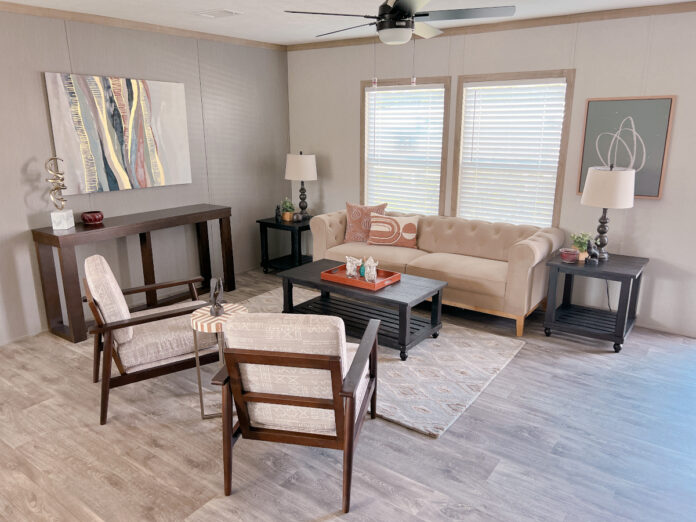
The Sterling model from Clayton attracts a new buyer with modern styling. The design uses warm colors, mixed materials, and open leg furniture. Buyers have been excited to call this home. All photos by Lisa Stewart Photography.
2024 Home Design Trends
Someone said recently that they were excited to have the housing market “get back to normal”. I didn’t have the heart to tell them that those days are long gone. With the rapid advances in technology, artificial intelligence, and how we receive information daily, those days are a memory. Reviews.org found that most people reach for their phones to check emails, TikTok, and texts over 144 times a day for over four hours and 25 minutes. It sounds like a lot, but that is less than two minutes per phone check.
When I started thinking about design trends and where the world is going, I thought a great place to start would be to ask the artificial intelligence source Chat GPT what it saw in its crystal ball.
This was the response…
“Interior design trends are constantly evolving, and new trends emerge each year based on various factors, including societal changes, technological advancements, and evolving design aesthetics.
“To stay up-to-date with the latest interior design trends for 2024, I recommend consulting interior design magazines, websites, and experts who regularly track and report on emerging trends in the field. You can also follow interior design influencers and professionals on social media platforms like Instagram and Pinterest to get a sense of what’s currently popular in the world of interior design. Additionally, visiting design shows and exhibitions can provide insights into upcoming trends in the industry.”
As a design influencer and professional who has visited quite a few design, building, and lifestyle-focused conferences this year, I have a lot to share. It has also been a great learning experience to have “LifeStyled” over 100 manufactured housing model homes this year. Being in homes hearing about what consumers think, and what their likes and dislikes are has been a huge advantage. Here are the trends I see being important as we move into 2024.
Artificial Intelligence vs Practical Knowledge
The design world is buzzing about artificial intelligence, and how it will impact the design community. As we found when we used Chat GPT to find design trends in the future, artificial intelligence can share what has been out there in the past, but can’t predict the future. There will still be a need for professionals who have had hands-on experiences with consumers and products to accurately predict where we will be heading into 2024 and beyond.
Where artificial intelligence can be useful is in designing new products. It is all about giving the right prompts and information to the service to be able to get something useful in return, and sometimes that doesn’t even work. MidJourney and other AI applications are a great way to try out new ideas or make mood boards without having the expense of designing a physical product.
Meaningful Design
The days of disposable incomes are long gone. Even if people are in the enviable position of having won the lottery, or otherwise having more cash than they need, consumers are thinking twice about how they spend. Are they likely to use that extra cash to buy a second home they can share with family and friends or to take that European vacation they have always dreamed about?
Meaningful design refers to the creation of products, services, or experiences that have a deep and significant impact on individuals and society. It goes beyond aesthetics and functionality to consider the emotional, cultural, and ethical dimensions of design. This will continue to be one of the top trends throughout the next decade.
In meaningful design, the focus is on addressing real needs and improving people’s lives. It involves understanding the context, values, and aspirations of the users or stakeholders and incorporating those insights into the design process. By doing so, designers aim to create solutions that resonate with people on a deeper level and evoke positive emotions or experiences.
Overall, meaningful design goes beyond surface-level aesthetics and functionality to create experiences that connect with people’s emotions, values, and aspirations, while addressing real needs and making a positive impact in the world.
Curated Collections
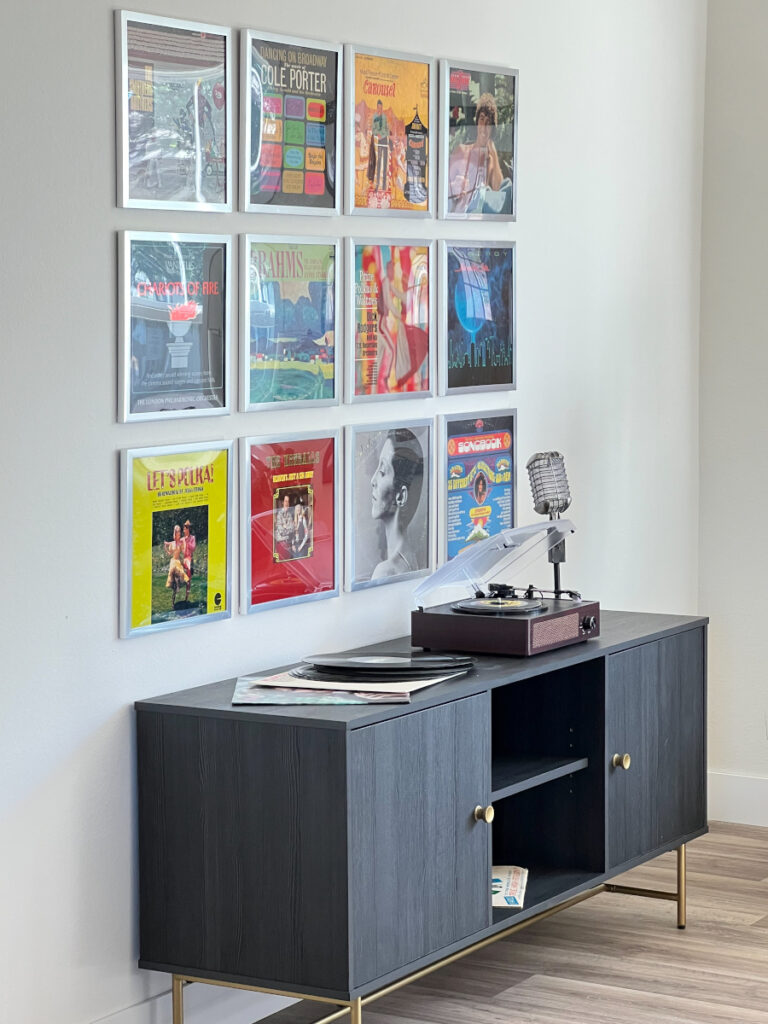
Maximalism is replacing that stark, minimalist look that we have been seeing the past few years. A word of caution — this is not an easy look to execute. More isn’t always better. What we see are carefully chosen objects that all relate and make a collection that is easy on the eyes. A mass of items that are pulled out of your warehouse just because they are paid for aren’t necessarily a collection, and is likely to turn off buyers.
Modern vs. Contemporary
Cold, contemporary spaces with white walls, abstract designs, and everything new are being replaced with modern spaces that can still have clean lines, but mix in warmer colors. Green, like living plants and similar warmth in the artwork, rugs, and accessories is bringing the natural world inside. The black and white farmhouse that we have seen for years is being replaced with a “Modern Farmhouse” that has warmer wood tones on floors and cabinets, adding texture, as well as furniture that you aren’t afraid to use.
Kitchen Colors
Color is back! In 2024, you will see a lot more colorful cabinets, countertops, and even appliances coming to a kitchen near you. An affordable way to use this trend in your homes is to add color with countertop appliances, pots, and linens. These are easily replaced but make your home on-trend.
Living Large in Small Spaces
Consumers are learning how to live in a smaller space without sacrificing their lifestyle of choice. The scale of furniture and accessories is critical to make a smaller space function well and not look crowded. The use of area rugs add color and anchors a space. Open-armed chairs, and sofas that show some leg are great ways to make a room more inviting. “Drink Tables” are replacing full-size end tables. Think about traffic flow when you are designing a room.
Separation of Space
With all of us working more at home, we have started to value our privacy more than ever. We create “Zoom Rooms” where the entire household doesn’t have to hear an online conversation, and where we can avoid the dog wanting to go out. We are seeing more study halls, too, that actually use a hallway to create a place for kids to do their homework or for a parent to create new Pinterest ideas.
Community Living
This is a huge growth area that our industry has owned for years, but site-built buyers and consumers are just now discovering the value of community living. There is an explosion in site-built “Build to Rent” communities where the homes most often are styled like townhomes with a narrow floorplan and at least three stories. There is little or no yard. A new community on a busy, noisy interstate highway in Dallas has four to six attached homes in each building and start at more than $3,000 a month. Our industry offers well-designed homes on a lot with no shared walls, no wasted spaces for stairs inside the homes, and a chance to own your own home while renting the lot. Which sounds like a better value and quality of life to you?
Precision Cooking
Consumers no longer settle for appliances that just turn on or off. They are looking for energy-efficient ways to cook that will extend the shelf life of their food. Consumers demand appliances that are affordable and functional. Appliance manufacturers are phasing out coil burners, and replacing them with glass top ranges that have come down in price and are more efficient. As we deal with global warming, having refrigeration that will keep the right temperature and humidity in them is critical. Beko Appliances just introduced HarvestFresh, which uses three-color technology to stimulate the daily sun cycle, preserving vitamins in fruits and vegetables, for a greater nutritional benefit and to keep produce fresh for up to 30 days.
Go Organic
We are reaching a tipping point where organic foods and products are the first choice of most consumers, and they aren’t shy about asking. People want to know what is in their food, and where it came from. Building products that are used in and outside our homes need to be eco-friendly, and we need to let consumers know that upfront. Low VOC (Volatile Organic Compounds) products are becoming a standard, and off-gassing is something that consumers have become increasingly aware of and worried about.
The manufactured housing industry has a huge opportunity in front of it in 2024 and beyond. Consumers are looking for better solutions, and we are poised to be their first choice for well-designed, affordable housing.
The national manufactured housing sector has been on an upswing for the past several years, and properties in the Northeast have posted similarly strong performance. While the bulk of the supply growth for the industry occurs in rapidly growing population centers in the South and the Southwest, the sector continues to expand in the Northeast, and the region is posting healthy operations performance.
There are some signs of slowing at the national level that emerged during the first half of this year, which should set the stage for relative outperformance in the Northeast region, which has been less reliant on rapid growth than in other parts of the country.
Elevated Occupancy Levels Highlight Strength of Demand, Stability of Operations
The first measurement of property performance that most operators and investors look at is the occupancy rate, and current totals showcase a very strong market. The national occupancy rate ended the first half of 2023 at 94.4 percent, ten basis points higher than one year earlier. The rate has been trending higher for the past several years, first breaking through the 90 percent threshold in 2017. Occupancy at the national level has increased in ten of the past eleven years, rising from about 85 percent from 2010-2012 to nearly 95 percent today.
In the Northeast region, long-term occupancy trends have been far more stable. The rate ended the second quarter at 94.3 percent, and the rate has held steady between 94 percent and 95 percent for the past five years.
Top states for occupancy in the Northeast region include Maryland and Virginia, where occupancy levels are 98.7 percent and 97.7 percent, respectively. Pennsylvania has the largest inventory of units in the Northeast, and the current occupancy rate in the state is 93.7 percent. Our team worked on the sale of three communities in Pennsylvania during 2023 that were all 95% occupied or higher. These communities ranged in size from 75-202 pads and were owned by long-term operators. During the tenure of their ownership occupancy did not dip below 90%, and always had a waitlist of prospective tenants. In all three cases, the buyers were looking to expand and add additional density to the communities as the affordable housing need in Pennsylvania is dire. This trend is set to continue as occupancy in Pennsylvania has increased by 30 basis points in the past 12 months, setting the stage for additional increases in the year to come.
Shipments of New Units Down Following Rapid Increases in Recent Years
The cost of all forms of housing has pushed higher over the past several years, increasing demand for less costly alternatives, including manufactured housing communities. One result of these trends has been a surge in the shipment volume of manufactured housing units. In 2022, more than 112,000 manufactured housing units were shipped within the United States, up more than 80 percent from one decade earlier.
To this point in 2023, shipment volumes have come down from their cyclical peak. During the first half of this year, 44,000 manufactured housing units were shipped, 29 percent lower than the total during the same period in the previous year.
The Northeast region typically accounts for some of the lowest inventory growth in the country. During the first half, shipments to the Northeast region reached approximately 4,000 units, down from 4,900 units one year earlier. Pennsylvania and New York combined to total more than 1,700 units, followed by Virginia (525 units), West Virginia and Maine (375 units each).
There are many different factors to consider when looking to invest in a manufactured housing community. There are great opportunities across the United States that will appeal to investors for different reasons. The Mid-Atlantic through the Northeast remains an excellent opportunity to explore investments in the manufactured housing space.
Oct. 6-8 at Avalon Hotel in Alpharetta, Ga.
Manufactured housing community owners have never had more information available to them — or more decisions to...
The Midwest Manufactured Housing Federation has announced that attendee registration is now open for the 2027 Louisville Manufactured Housing Show, returning to the Kentucky...
HUD’s Innovative Housing Showcase, MHI’s Homes on the Hill and Annual Meeting Begin Sept. 22
Two of the country’s largest builders of manufactured homes will...