Two Dozen House Reps Urge Appropriations Committee to Act on Standards Recommendation
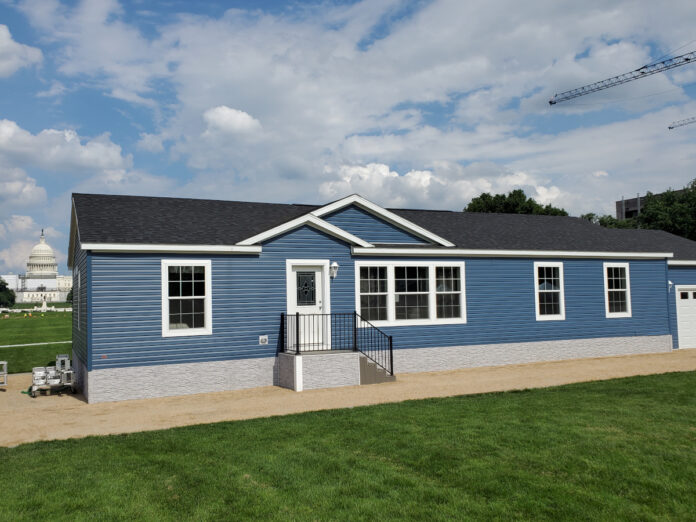
The Manufactured Housing Institute reported recently in a newsletter to members that Rep. Ralph Norman of South Carolina sent a letter to the House Appropriations Committee urging it to include the manufactured housing energy standards limitation amendment he sponsored be included in the Fiscal Year 2024 Energy and Water Appropriations bill.
The language has been adopted by voice vote during House considerations on the topic.
“Manufactured housing is truly one of the best opportunities for helping families make the dream of home ownership a reality,” Norman stated in the letter. “As a representative of South Carolina, a state with the largest proportion of manufactured housing in the country, I cannot allow ill-advised DOE energy standards to inappropriately threaten the affordability of these homes.”
The letter was signed by 23 other law makers:
Rep. Andy Barr of Kentucky
Rep. Larry Bucshon of Maryland
Reps. Tim Burchett, Diana Harshbarger, Andrew Ogles, and John Rose of Tennessee
Reps. Bill Posey Byron Donalds of Florida
Rep Earl L. Carter of Georgia
Rep. Jeff Duncan of South Carolina
Rep. Scott Fitzgerald of Wisconsin
Rep. Mike Flood of Nebraska
Rep. Lance Gooden, Troy E. Nehls, Randy K. Weber, Sr., and Pete Sessions of Texas
Rep. French Hill of Arkansas
Rep. Michael V. Lawler of New York
Rep. Dan Meuser of Pennsylvania
Rep. Mary E. Miller of Illinois
Rep. Alex X. Mooney of West Virginia
Rep. Ann Wagner of Missouri
Rep. Rudy Yakym III of Indiana
“The Manufactured Housing Institute appreciates the leadership of Rep. Norman and the support of other House members to promote homeownership affordability for manufactured homes and to protect the 50-year framework under which HUD has exclusive jurisdiction over the establishment of strong safety and construction standards for manufactured homes, including with respect to energy efficiency,” MHI stated in its newsletter. “We strongly urge Congress to include this solution in the final spending package.”
Is the name of the seller the same name on the title?
Many states require a bill of sale with the title transfer application. If the bill of sale has a different name for the seller than what is listed on the title, the state will send the paperwork back without transferring the title into your name.
Additionally, if something is written in the wrong section of the title, the application could be rejected. For example, if the original owner/seller accidently signs in the wrong spot, and you fail to catch the error and send it to the state to transfer title into your name, the state will return the application requesting a signed affidavit from the original owner explaining the error and how it was corrected. Now you need to track down the original owner.
Finding the Title Holder
Locating the original owner can be timely and costly. Often the address on the title is not the current address and you have to spend time tracking down the where the current owner lives. Has he or she moved to a different state. Is he or she alive?
If you locate the current owner and that person is till alive, it can go one of three ways:
They are not willing to help you
They are willing to help if you compensate them
They are willing to help without compensation
If the current owner is deceased, you will not be able to provide the state with the requested affidavit. When the current owner is deceased, the state has estate guidelines they need to follow to successfully transfer the title. Now you’re writing to the deceased current owner’s family and asking them for help on the home you purchased from a seller whose name was not on the title.
As you can imagine, this is going to be a difficult conversation.
In the Case of Duplicates
Have you asked yourself if the title they are showing you is the most current title? If you do not receive the most current title, you cannot transfer the title into your name.
Before you purchase a home, take the time to complete a VIN check. Most states have a website where you can type in the number and some of the basic information on the home will appear. Look for the current issue date of the title and make sure it matches with the title you will be getting when you purchase the home.
Tracy Renna is the founder and CEO of MH Title Brokers LLC. Renna assists attorneys, title agencies, dealerships, and many other affordable housing specialists. She serves Florida’s rapidly expanding affordable housing market by solving mobile home title problems throughout the Sunshine State.
Dune's smart water submetering solution fits in the palm of your hand.
For manufactured home communities all over the country, water metering proves to be an ongoing challenge in many respects. Besides the accuracy and efficiency of water metering solutions on the market today, there’s also the question of introducing modern technology into the equation while keeping costs down for both park owners and homeowners.
A new startup, Dune Labs, was founded by Garo Sarkissian and has entered the manufactured housing market with a clamp-on smartmeter, aptly named “Dune,” which markets itself as an IoT solution to measure, analyze, and ultimately make more efficient use of water in manufactured home communities.
Using Dune Labs’ smartmeter solution provides benefits for both park residents and owners/managers. The resident is charged for the exact amount of water used at their property, and the owner/manager is provided with actionable insights and leak alerts that, over time, can result in added monetary savings for both parties.
Those insights and alerts are provided directly from the submeters in real-time to park owners and managers via their property management software, so they can repair leaks and advise residents on water conservation tactics.
“It’s a very owner friendly structure that helps property managers,” Sarkissian said in an interview with the MHInsider.
And with the millions of homes in manufactured home communities, the opportunity for a unique submetering solution like Dune’s seems limitless.
“It’s programmable and flexible enough to help us understand exactly what the water use is. We use all kinds of algorithms, but essentially we’ve programmed this thing to know what is a toilet flush and what is a shower, versus a dishwasher and hand washing,” Sarkissian said. “The granularity we have is really impressive.”
The CEO, who founded without external venture capital funding, added that the meter flags unusual usage that stands out from day-to-day expected patterns from any given home.
“There is a lot of recovery in toilet leaks. You also can tell if someone has an indoor greenhouse, for instance. These usages stand out,” he said.
Of course, entering the manufactured home industry can present its own challenges — but they’re challenges that Sarkissian is eager to face.
“There are so many customers out there, and we have a unique technology,” Sarkissian said. “In this situation it’s not a mindset where we need to get as big as possible as soon as possible. This is something that’s never been done this way, and it’s important to do it right.”
Take, for example, the challenge that comes from entering a state like California, where water often costs more than electricity on a monthly basis. Marketing a submetering solution there takes on a different form based on the demand for water in that market.
Regardless of the market, Dune Labs promises zero or very little capital investment is needed for community owners to get started with the Dune submeter solution. And since Dune clamps onto existing plumbing systems and provides as much accuracy as in-line metering solutions, the cost savings can begin almost immediately after installation.
Dune customers sign a four-year contract, with the monthly cost at around $11 a month, which Sarkissian notes is usually made up by the amount of water saved with Dune’s help.
Since the beginning, customers have received Dune positively.
“The overall impact has been great,” Cristian Sosa, managing director of Cooper Cardinal, said. “The water usage of all our tenants has gone down since being installed, which results in lower water and sewer bills for us.”
The future for Dune in the manufactured housing industry seems bright. With an upcoming appearance at The Louisville Show and plans to keep expanding their multi-family operations, communities across the country will have the chance to see Dune for themselves and bring water savings to their park.
Jerome Powell after the most recent FOMC meetings.
A Review of Housing, Jobs, and the Value of the Dollar
At the end of January, the Federal Reserve board again maintained its current guidance for monetary policy, with inflation waning and the labor marketing remaining strong.
During the last two years, the Fed has raised rates by 5.25 percentage points and reduced securities holdings by about $1.3 trillion.
“The Fed’s monetary policy actions are guided by our mandate to promote maximum employment and stable prices for the American people. My colleagues and I are acutely aware that high inflation imposes significant hardship as it erodes purchasing power, especially for those least able to meet the higher costs of essentials like food, housing, and transportation,” Jerome Powell, the chairman of the Federal Reserve, said in his statement following the meetings. “We are highly attentive to the risks that high inflation poses to both sides of our mandate, and we are strongly committed to returning inflation to our 2 percent objective.”
Housing starts to end 2023 were down 4.3 percent to a 1.46 million annual rate, but ahead of the prevailing consensus expectation of 1.425 million. Housing starts are up 7.6 percent versus a year ago. Manufactured homes claim about 9 percent of annual home starts.
“While the data have been choppy, it seems that developers may have finally found their footing as we closed out the year in what had been a challenging environment for sales,” First Trust Advisers Chief Economist Brian Wesbury stated in a letter to subscribers. “This likely has to do with the recent move in mortgage rates, driven by the widely held belief that the Federal Reserve will cut short term interest rates multiple times in 2024.”
The first jobs report of the year reminded us of the labor market’s resilience, adding 353,000 jobs during the period, more than double the number a majority of analysts anticipated.
The Bureau of Labor Statistics said payroll employment increased by an average of 255,000 per month in 2023. December job growth was revised to the upside, significantly, as well. In January, job gains occurred in professional and business services, health care, retail trade, and social assistance.
Wages were up 0.6 percent on the month and 4.5 percent for the year. Unemployment remained at 3.7 percent.
Most analysts now believe a rate cut won’t come until mid year.
Clayton, a leading national builder, has partnered with the Georgia Manufactured Housing Association to provide a glimpse of what is possible with off-site built residential developments.
The infill project showcases Clayton Built® CrossMod homes in a development by Iron Horse Communities. The stakeholders said the effort may be a first of its kind project at least within the core of the Atlanta metro area.
CrossMod homes make the most of factory homebuilding technologies and efficiencies and combines it with features commonly seen in site-built construction. The unique approach to homebuilding and delivery provides a unique experience for the buyer.
The homes are uniquely positioned to help increase housing inventory while tackling restrictive urban zoning policies that have limited the acceptance of off-site built housing in the past.
“Atlanta is an example of a city allowing innovative housing solutions to help promote the Yes In My Back Yard (YIMBY) movement, which advocates for increasing housing supply in cities where housing has become unaffordable, and provide a path for attainable homeownership,” Clayton Director of Industry and Community Affairs Ramsey Cohen said. “It is critical that we find ways to increase attainable homeownership in cities across the nation, and the acceptance of CrossMod in Atlanta is a major step toward accomplishing that goal.”
The two Clayton CrossMod homes in Atlanta are eBuilt™ homes, which are built to the U.S. Department of Energy’s Zero Energy Ready Home™ specifications and are estimated to save homeowners up to 50 percent on annual energy costs, allowing homeowners to save more money over the lifetime of the home.
The city of Atlanta allows off-site built homes within city limits so long as the homes are secured to a permanent foundation. This zoning ordinance is an example of flexible legislation that can increase attainable homeownership opportunities in high-growth cities across the country.
As the housing shortage in the United States persists, home builders like Clayton are identifying innovative solutions to help families achieve homeownership. CrossMod homes are built off-site in home building facilities and finished on-site with a foundation, garage, and porches.
Urban infill solutions allow single-family home builders like Clayton to develop previously vacant properties within established neighborhoods, opening up more housing opportunities in densely populated cities without putting a burden on existing infrastructure and resources. The two homes, which match the scale and aesthetics of existing homes in the area, blend seamlessly into the surrounding neighborhood.
“Every Clayton CrossMod home begins at a Clayton home building facility. This allows us to achieve the efficiencies of off-site construction, a benefit that we pass down to customers in the form of cost savings,” Clayton CrossMod Business Development Manager Andrew Bryant said. “CrossMod homes add another tool to a developer’s tool belt and allow them to bring homes to the market fast. By building the home off-site, we can promise homebuyers a quality home in a shorter period of time. Once the home is built, it’s finished on the property. The customer ends up with a home that’s indistinguishable from a site-built home.”
CrossMod homes are built to HUD code and blend the best of off-site and site-built construction. Each CrossMod home in Atlanta took only one day to build before they were set by crane on their final sites. With CrossMod, developments can be completed at a more efficient pace, resulting in more quality-built homes at attainable price points. CrossMod homes also finance and appraise just like site-built homes.
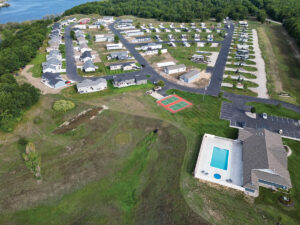
It’s not the secluded woodland setting, the nearby lakes, hiking and biking trails, and golf courses that set this special property apart. It’s the fact that James R. Dougherty, president of Community Management Group, Inc., decided to take an old, bare-bones manufactured home community and transform it into a gorgeous hybrid retirement community with both RV and manufactured home sites.
Hybrid RV and MH communities are common in warm weather states, as are retirement communities. But in Michigan, this combination is very rare, and adding all these features together makes The Bluffs on Manistee Lake a one-of-a-kind gem.
How Did The Bluffs Come About?
When Dougherty was in school, he studied accounting and became a CPA. Later, he purchased an apartment complex in Kalamazoo, Mich., as an investment property. The attorney he used to close on that complex was the attorney for the Blank Communities at the time and suggested that he look at manufactured housing communities. He took the advice, and over the years, Dougherty has had a number of communities. He still owns Ashbury Ridge just south of Indianapolis and Palm Gardens in Harlington, Texas.
The success of the RV/MH hybrid model in Texas inspired him to try the same in scenic Michigan. In late fall of 2018, The Bluffs opened and began selling homes. Due to the later start, they missed the RV season that year but were able to open those spaces to vacationers in the spring of 2019. COVID, which hit the following year, delayed some home sales but sparked the demand for RV sites.
“It’s built nicely for motorhomes because the sites were originally built for single-section homes, so they are gigantic RV sites,” Dougherty said. “And these sites have been very popular.”
The Bluffs has 51 sites for manufactured homes and 44 spaces for RVs. The community also has 150 additional sites that are ready for expansion. But it’s not just the RV spaces that have that extra touch. Nearly every home has an attached garage, and all homes sit on a six-inch foundation with drop siding to achieve more of a residential neighborhood appeal.
“We’ve stayed here (at The Bluffs) twice in our motorhome,” seasoned RV traveler Dennis Gruschow, a guest at the community in 2022, said. “We were so impressed with all aspects of the location and amenities that we purchased a seasonal home here. Barry, the on-site manager, has been incredibly helpful and knowledgeable. He’s truly an invaluable asset to the community.”
The success is not surprising.
“We’re nearly full on the home side now,” Dougherty said.“We currently have two available sites and four model homes in place.” The Bluffs has a lot to offer its residents, including a large pool and hot tub, a beautiful clubhouse, and a location near the quaint town of Manistee for shopping and touring.
The RV sites are offered to seasonal and weekly guests from mid-April to the end of October. When asked if the expansion sites would be MH or RV, Dougherty said, “The engineering is already done if they’re going to be homesites, but given the response to the RV sites, we’re going to give some continued thought to what that mix should be between home and RV sites.
“So, yes, the whole hybrid thing has worked out,” he said. “At least to this point. It’s turned out really nicely; I’m pleased with it.”
National Zoning Atlas Unveils Market-to-Market Analysis of Housing Rules
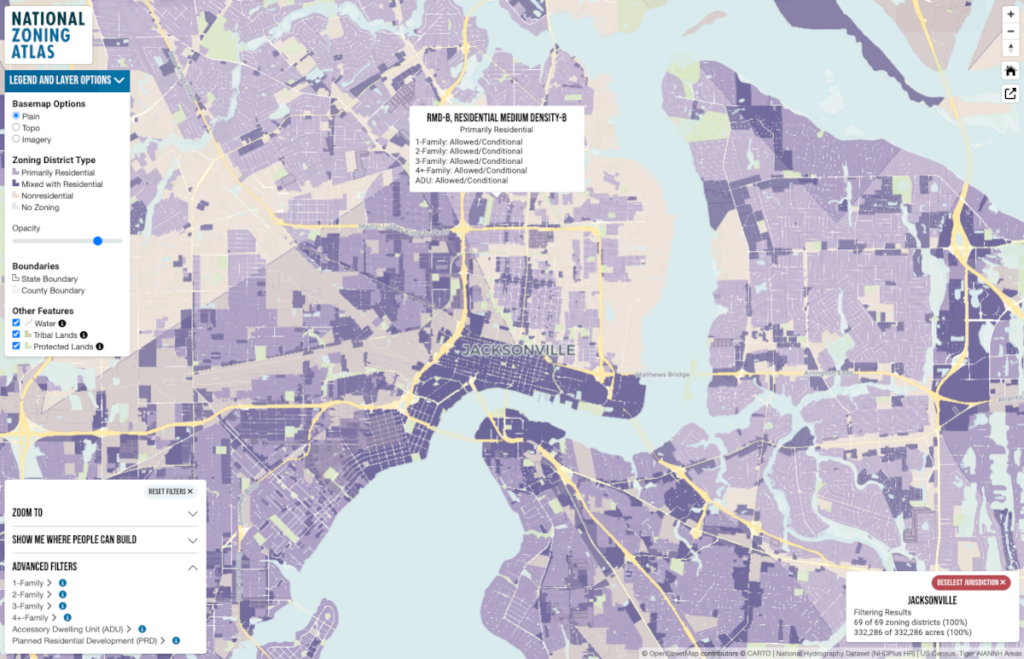
The National Zoning Atlas is a grassroots project that aims to centralize and demystify the complex interworkings of overlapping, often opposing, and otherwise counterproductive housing rules and regulations on the local basis across the country.
In Connecticut, the NZA shed light on regulatory factors, particularly how race and income variables intersect with zoning policies. Meanwhile, in Montana, there has been a notable increase in affordability, particularly since the onset of the pandemic, bringing about what stakeholders describe as “powerful housing reform.”
This transformation, they assert, is directly linked to the comprehensive analysis conducted by the NZA team. The National Zoning Atlas has now extended its influence to 25 states, as it continues to spearhead fine-grain analysis and spur new initiatives. Among its key focuses is a meticulous examination of the presence and utility of manufactured housing.
Diana Drogaris works with Cornell University and is the outreach coordinator and legal counsel for the National Zoning Atlas.
“We’re at a different point in this trajectory at each site,” Drogaris said during a recent interview with MHInsider. “It depends on resources, whoever found us first, and also their own goals and capacity to accomplish those goals.”
The NZA is led by Sara Bronin, a professor of the Cornell planning and law faculty. Starting just a year ago with a core staff of four, the organization has grown significantly, adding team members to facilitate in-house project completion, including a focus toward an ongoing effort in Wyoming.
“Our new team members have enabled us to grow and finish some projects in-house,” Drogaris said. The organization also secured a grant targeting the 10 most populous areas that lacked coverage, extending the NZA reach and impact.
Tracking Efforts in the Early States
A small group of people in New Hampshire who are interested in how housing serves the needs of the state’s residents undertook a study within the NZA to better understand the origins of the state’s housing pains.
“New Hampshire is experiencing an affordable housing crisis in large part do to exclusionary or restrictive zoning,” said Sarah Marchant, chief of staff for New Hampshire Community Loan Fund. “People have a very difficult time understanding zoning, because it’s a complicated issue,” Marchant said. “We’re hoping this atlas can make communities more curious about their housing landscape and help them understand how the layers of zoning can limit both availability and affordability.”
Max Latona, a philosophy professor and the executive director for the Center for Ethics in Society at St. Anselm College, helped lead the effort to map New Hampshire’s local residential zoning laws.
The effort involved studying the zoning for the state’s 269 jurisdictions, which holds 2,139 districts. “It took months and months of hard work from about a dozen people including interns, analysts, and subject matter experts reading over 23,000 pages of code and collecting over 400,000 pieces of data,” Latona said.
“The Atlas covers all different kinds of housing. And then we looked at all the dimensional regulations for each, including parking requirements.”
The team also took a special look at manufactured housing in the state. What the team found was that fewer than 10 percent of New Hampshire municipalities allow manufactured homes to be placed on less than one acre, either on a single lot or within a manufactured-home park. They are now taking a closer look at those rare communities to see if there are opportunities to bring new manufactured homes there.
“Most communities in New Hampshire have restricted anything other than large-lot, single-family homes,” Marchant said. “Even if communities don’t outright prohibit manufactured homes, they often restrict them by default through front and side setbacks, minimum lot sizes or other dimensional requirements.”
Marchant and Latona said they came to learn of the National Zoning Atlas from what they described as “a stirring presentation” from Bronin on the Desegregate Connecticut project and its interaction with the NZA.
Connecticut was the first state to complete its zoning map through the NZA, followed by New Hampshire, Hawaii, and Rhode Island, and regional releases in Montana, Tennessee, and Virginia. The heart of the NZA’s mission is the digitizing, demystifying, and democratizing of zoning information. “Solving our national housing crises will necessitate a multi-pronged reimagining of how and where we build,” Drogaris emphasized.
“An improved clarity around zoning is a powerful tool in that tool box.”
The “democratizing” part of the project extends well through collection and publication. As new facets of the research are completed and new team members come on, important questions arise.
“What are we going to do with the analysis, and how are we going to present it?” Drogaris posed. “This will be a continuing conversation as the project expands.”
The NZA’s work in Connecticut in 2020, for instance, brought to light deeply embedded issues in the state’s zoning practices, leading to a commitment to desegregate.
Notably, 90 percent of all residential zoning in the state goes to single-family dwellings, with less than four percent allocated to multifamily structures or developments.
The NZA operates largely through organizing statebased teams working alongside centralized zoning and GIS analysts, with current initiatives well underway in the states previously discussed as well as in Vermont, California, and Georgia.
Public access to the national map will showcase data from the four completed states as well as areas with notable progress such as Long Island, N.Y., and Massachusetts. These viewpoints allow stakeholders to utilize reliable information on an individual or small-team pace, as well as to coordinate, connect, and collaborate, supported by the NZA platform, with interested parties in other states and localities. The project also helps manufactured housing professionals evaluate and address zoning challenges comprehensively.
Manufactured housing professionals turned their attention to The Louisville Manufactured Housing Show at the Kentucky Exposition Center in Louisville, Jan. 17-19. The 40-plus show homes and 170 exhibitors in the service and supply sector were on hand to demonstrate the latest industry trends.
Attendees a new layout to the show floor, staging homes in a horseshoe-shape across the span of the show floor with service and supply exhibitors set up in a prominent position in the center of the space.
Top Trends at Louisville 2024
Large Porches, Warmer Colors Bring Outdoors In
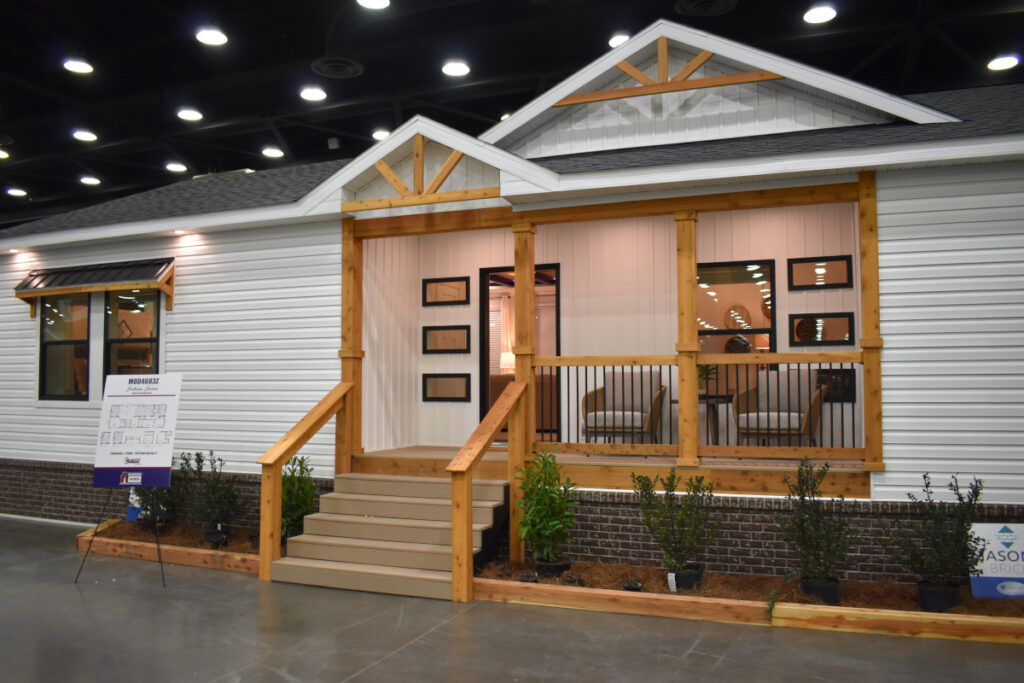
Many of the homes on display at The Louisville Show in 2024 had porch and deck space, and this year’s theme for that transition and outdoor space was to go big, bigger, and biggest.
The Sahara Series from Adventure offers a fine floorplan, ample natural light, and comfortable front porch.
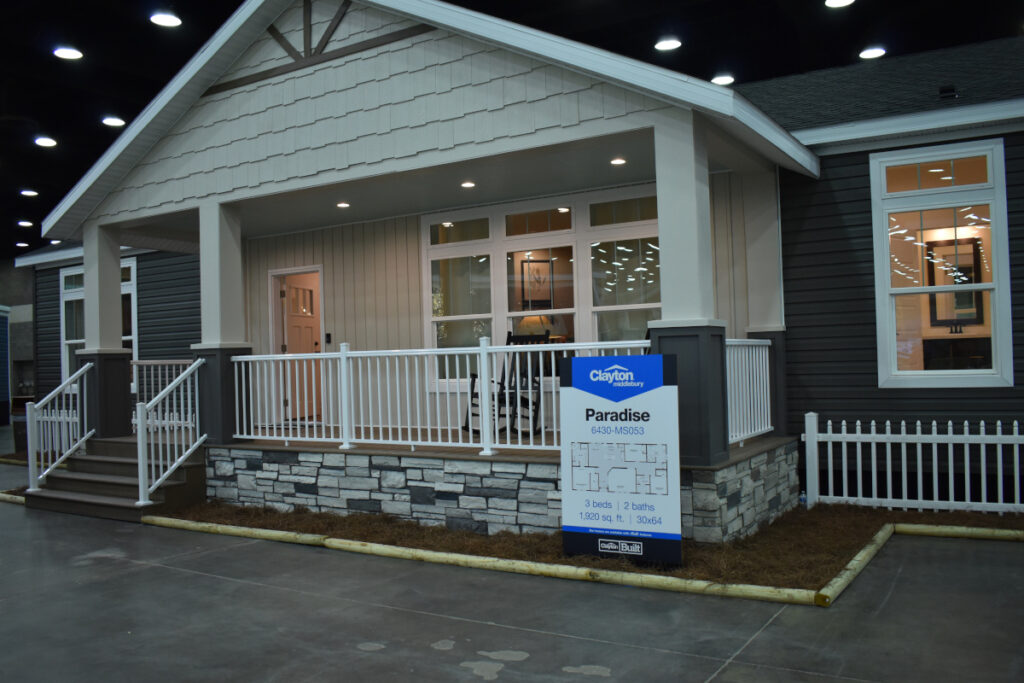
Clayton showed the Paradise series among its homes a The Louisville Show, this one with a broad front porch.
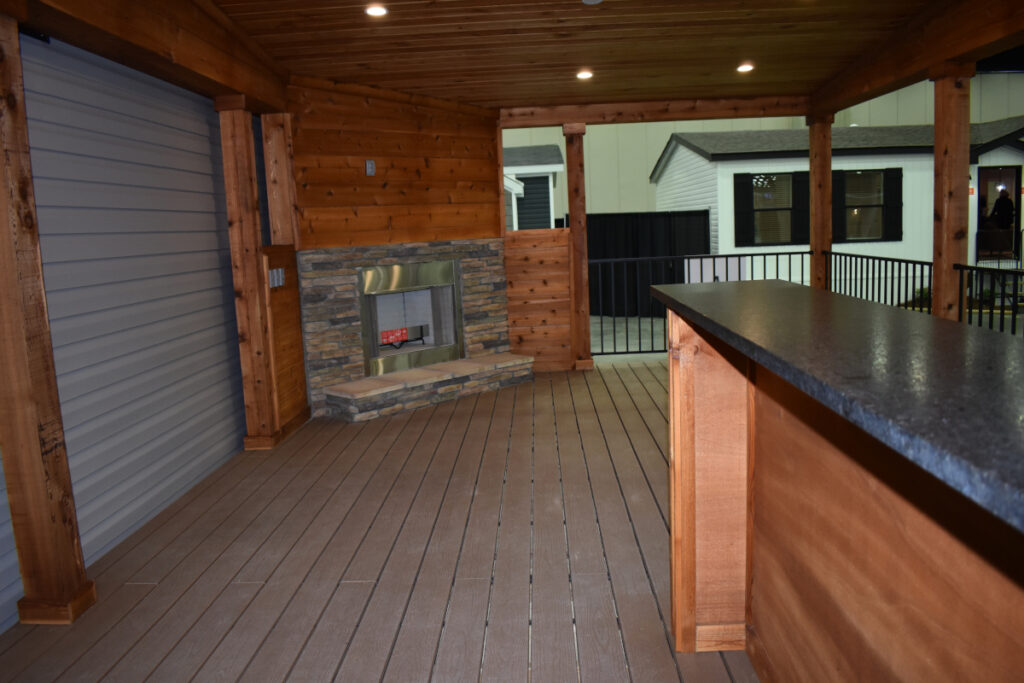
Skyline took the porch and deck space to a new level at the 2024 Louisville Show, with its rollout of the Skyliner II and all of that outdoor space with a fireplace and a wet bar, too.
Warm Colors, Natural Features
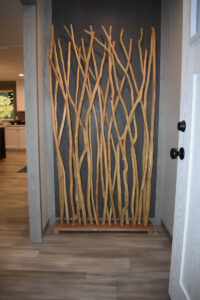
Adventure Homes, in the Reynolds model it showed in Louisville, lower left, used warm, natural colors in its cabinetry, trim, and decor, a tend seen throughout the show. Clayton in the Pulse model used natural features in the dining area and entry to welcome guests.
2024 Was Another Great Year in Louisville
For more than 60 years, The Louisville Show has been the early year kickoff to the home sales season, prepping industry professionals by showing the latest trends in home features and community living.
The Louisville Show is put on by the Midwest Manufactured Housing Federation — a consortium of executives from Illinois, Indiana, Ohio, Michigan, and Kentucky.
Attendees at The Louisville Show listen in on an education panel covering consumer lending
“We were in education sessions early to start the day, and have been through the show floor. We are really having a good time this year,” Bonita Johnson, of GBH Properties, said. “We came last year and are excited to be back.”
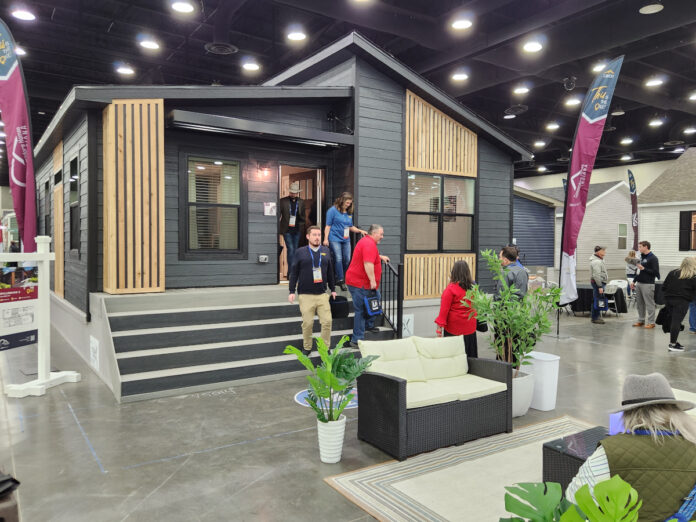
Cavco Industries set up a small village of homes, complete with landscaping and street signs. Among the homes Cavco is showing is its new duplex home, the first ever certified by the U.S. Department of Housing and Urban development. The Milenian 2, another of the company’s models, is drawing attention for its architectural features including a wood slat element, as well as SmartSide exterior siding from LP Building Solutions.
The home show will continue to open each morning on topics including home building, developing with off-site built homes, technology, risk management, sales and marketing, and national advocacy.
“The feedback we’ve received early in the process of programming the show has been very positive, from the builders bringing in homes to our sponsors, exhibitors, and attendees.,” MHVillage Co-President and Chief Business Development Officer Darren Krolewski said.
Each of the 2023 MHInsider Industry Award winners will receive our "Crystal Home" award.
In Recognition of the Highest Achievements in Manufactured Housing
The fourth annual MHInsider Industry Awards tell a decades-long story of hard work, ingenuity, perseverance, and a passion for innovative thought and business leadership. The manufactured housing professionals at Datacomp and MHVillage, through MHInsider magazine, are honored to be able to recognize these colleagues awarded for their high achievements.
Our MHInsider editorial board assisted in selecting among more than 80 candidates for the Industry Awards. Deliberations continued among our internal team and external advisors until a shortlist of nominees was reached in four categories.
We employed the volunteer efforts of more than a dozen state and regional manufactured housing industry association directors to conduct a vote on the secure voting platform, eBallot.
So congratulations to all of the winners. Thank you all for the work you do!
The annual Influencer Award honors individuals who, by their presence and authentic implementation of ideas, have created widely held business practices and wholesale improvement for the industry. The 2023 MHInsider Influencer Award winner is George Allen.
MHInsider Leadership Award
The Leadership Award honors individuals who have earned the highest levels of industry achievement through their corporate or organizational leadership approach. The 2023 MHInsider Leadership Award winer is Dee Pizer.
MHInsider Visionary Award
MHInsider’s Visionary Award honors those who have brought to market the coolest concept or product, the idea that makes the job easier, the offering better, the customer experience more meaningful. The 2023 MHInsider Visionary Award winner is Ted Boers.
MHInsider Editorial Board
George Allen Barry Cole Kevan Enger Suzanne Felber Dawn Highhouse Maria Horton Darren Krolewski John Neet Karl Radde Patrick Revere TC Sheppard
MHInsider Awards Honorary Judges
Amy Bliss Ron Breymier Andrea Greene Randy Grumbine Jennifer Lassen Jennifer Hall Logan Hanes Jess Maxcy Marla McAfee DJ Pendleton Leo Poggione
MHInsider is a publication of MHVillage and is the premier source of manufactured housing news with a national audience of manufactured housing professionals dedicated to producing and delivering high-quality, affordable, off-site built homes.
In Recognition of the Highest Achievements in Manufactured Housing
Each of the 2023 MHInsider Industry Award winners will receive our “Crystal Home” award.
George Allen is mostly retired but continues to write and do select projects through EducateMHC. He has owned and fee-managed land-lease communities dating back to 1978. Since 1988, he has authored and edited 20 texts having to do with manufactured housing, including his autobiography. Allen was honored by the Manufactured Housing Institute as Industry Person of the Year, is a founding board member of its National Communities Council division, and remains the sole Emeritus member of MHI. He also is an RV/MH Hall of Fame enshrinee, with the Allen Community Collection of books as a feature in the museum library. He is a retired lieutenant colonel of the U.S. Marines, having served a 13-month combat tour in the Republic of Vietnam, and served during Desert Storm. Allen and his wife Carolyn have two children, six grandchildren, and three great-grandchildren.
What do you view as the biggest achievement in your career?
Identifying and providing recognition to land-lease community owners/operators nationwide via the annual Allen Reports, communication through the monthly Allen Letters, and the bimonthly Allen Legacy column in MHInsider magazine. I also value the national camaraderie of 30 annual Networking Roundtables as well as political recognition and advocacy of the realty asset class through the National Communities Council. Finally, the contributions toward professional property management training for on-site and regional community managers via Manufactured Housing Manager certification classes and designation.
What work of life skill do you give the most credit for your achievements?
Being nurtured by an entrepreneur/businessman father, earning Eagle Scout rank in Boy Scouts of America, meeting Carolyn in college, being commissioned as a USMC officer, experiencing combat firsthand, and working up through levels of management via several companies before starting my own in 1980, and always managing using Christian principles.
MHInsider is a publication of MHVillage and is the premier source of manufactured housing news with a national audience of manufactured housing professionals dedicated to producing and delivering high-quality, affordable, off-site built housing.
Oct. 6-8 at Avalon Hotel in Alpharetta, Ga.
Manufactured housing community owners have never had more information available to them — or more decisions to...
The Midwest Manufactured Housing Federation has announced that attendee registration is now open for the 2027 Louisville Manufactured Housing Show, returning to the Kentucky...
HUD’s Innovative Housing Showcase, MHI’s Homes on the Hill and Annual Meeting Begin Sept. 22
Two of the country’s largest builders of manufactured homes will...