The U.S. economy added nearly double the number of jobs anticipated in September.
Consumer Spending Follows Suit
The September jobs report surprised with nearly double the gains analysts anticipated, picking up more than 336,000. The consensus was for something in the neighborhood of 150,000. The unemployment rate came in at a steady 3.8 percent, up 0.1.
Average wages were up 4.2 percent year over year and down 0.2 month over month.
“Some might interpret these data as a reason to take the risk of a recession off the table, but we don’t agree,” Brian Wesbury, chief economist at First Trust Advisors said in a letter to readers. “The labor market is often a lagging indicator and we expect the economy (real output) to noticeably weaken before employers stop hiring, on net.”
The Federal Reserve likely anticipated another jobs report with numbers under 200,000, and the “hot report” will change the conversation. There are growing concerns that yields are surging as the economy continues to be slow to respond to increased rates. The FOMC meets again in November.
In September Jerome Powell, chairman of the Fed, said it would continue to look for softening in the job market.
“Evidence that the tightness in the labor market is no longer easing could also call for a monetary policy response,” Powell said.
Consumer Spending Up 0.7 Percent
Consumer spending also surprised analysts, doubling expectations. September spending was up 0.7 percent month-to-month and 3.8 percent year-over-year.
Advance estimates of U.S. retail and food services sales for September 2023, adjusted for seasonal variation and holiday and trading-day differences… were nearly $705 billion, up 0.7 percent from August and up 3.8 percent from September last year.
Total sales for July 2023 through September 2023 were up 3.1 percent from the same period a year ago. The July 2023 to August 2023 percent change was revised from up 0.6 percent to up 0.8 percent.
Retail trade sales were up 0.7 percent from August 2023, and up 3 percent compared with the same month last year. Nonstore retailers were up 8.4 percent from last year, while food services and drinking places were up 9.2 percent from September 2022.
Unleash the Power of Artificial Intelligence for Your Property Marketing
If 2023 has been a year of anything, it’s artificial intelligence. Human history hasn’t seen a rise in popularity this profound since New Kids on the Block hit the road for the “Hangin’ Tough” tour.
Just as Aug. 29, 1997 was immortalized in the film “The Terminator” as the day computers become self-aware and decide to take out humanity, Nov. 30, 2022 will forever mark the day when artificial intelligence, or AI, began to reshape business as we know it. That’s when ChatGPT, a large language learning model-based chatbot developed by OpenAI, became available to the public. What’s happened since has been more dramatic than even Hollywood could imagine.
Not even a year later, a third of the companies in the annual McKinsey Global Survey say that their organizations are using generative AI tools regularly in at least one business function. In fact, according to Forbes, the market for AI products and services is projected to reach a staggering $407 billion by 2027.
The rush of enthusiasm to capitalize on AI-based products and services has been compared to the early growth of the internet, as businesses in every industry race to unveil innovative AI-based solutions to help their customers save time and deliver better results.
For the real estate and building industries, AI is already emerging as a game changer, offering numerous possibilities to automate routine marketing functions, improve response times, and better connect with prospects.
Here are some of the best ways that those entrusted with the marketing of homes and properties can use this emerging class of marketing tools to make everything more AI-some.
Let AI Talk to Your Prospects and Residents
One of the best applications for AI is handling repetitive tasks. Chatbot platforms such as Drift® use conversational AI to qualify prospects, respond to routine inquiries, and even schedule appointments. Just a few years ago, chatbots required massive databases of possible responses and significant setup to have relevant conversations with prospects. Now, AI-based analysis of millions of conversations has made it possible for chatbots like Drift to give incredibly realistic and helpful responses with minimal training. The end result is more productive community managers and sales agents, who can spend less time fielding basic inquiries and more time working with the most qualified prospects.
Let AI Help You Become a Better Content Creator
If you’ve ever struggled with writing a blog post or a listing description, AI is here to help. Tools like ChatGPT can be great for overcoming writer’s block by coming up with potential ideas, outlining topics, or turning a few bullet points into a short paragraph. A word of caution: AI writing tools can be decidedly generic, and not entirely original. Because these models learned by analyzing existing content, you should only use generated text as a starting point for your own writing and carefully fact-check any references. More robust content creation tools, like Jasper®, promise to avoid such limitations by combining multiple AI-models and learning your brand voice through analysis of your own previously written content and documents. Tools like Jasper are also better suited to create content for a greater range of use cases, such as blog posts, personalized emails, or ad headlines.
Let AI Decorate Your Model Homes
Nothing shows prospective buyers the potential of a home like one that has been professionally staged and decorated. According to a survey by the National Association of Realtors®, 82 percent of sellers reported that staged homes sold faster and at higher. Unfortunately, few marketing budgets allow for furnishing and decorating every home in inventory. That’s where AI staging tools like Virtual Staging AI come in. Virtual Staging AI overlays professional furnishings and décor into the photos of empty rooms you upload. While virtual staging services have been around for some time, AI has decreased turnaround and costs, making the staging of every home a virtual no-brainer.
Let AI Put You in the Video Business
A survey by Livestream found that 80 percent of consumers would rather watch a video than read a blog post. When you combine that with research by KISSmetrics that concluded that calls to action get 380 percent more clicks when placed in videos, there’s a strong case to be made for using videos in your marketing. Yet creating and editing videos can be incredibly time-consuming and require specialized software. Enter AI tools like Pictory, which promise to automate video production by helping you write scripts and turn your text or existing visuals into professional video content. Just upload video footage or photos and Pictory will help you edit it into videos that can be used on your website, social media, or email marketing.
Let AI Help You Become More Social
If you can’t envision what it would be like to turn over your social media accounts to AI, fortunately, there’s Buffer. This popular social media management platform offers a suite of tools to grow an engaged audience, determine what and when to publish, and automate your workload while keeping you in control. Buffer’s AI assistant helps to come up with ideas for social posts, repurpose content across multiple social networks and even translate social posts into other languages. The key phrase here is assistant. While it won’t fully run your social media accounts, it will help you improve your social media content and save you precious time in the process.
In just shy of a year since the public launch of ChatGPT, AI-driven tools have already shown the right stuff to become a transformative force for marketers. From enhancing customer interactions and lowering response times, to creating more relevant content, and increasing efficiency, AI promises to unlock new capabilities step-by-step in the ever-evolving field of marketing.
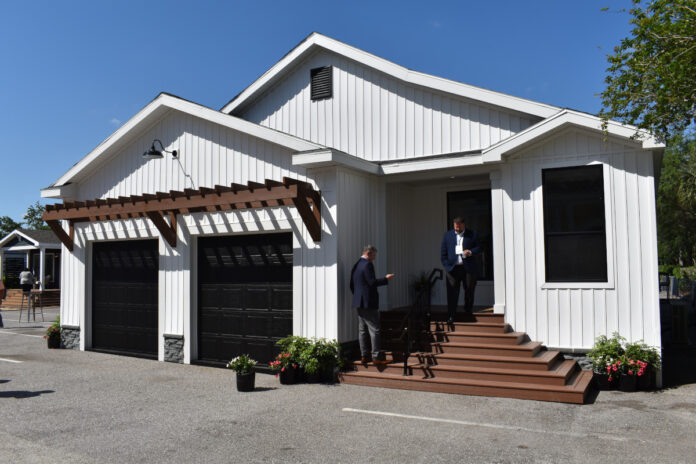
Skyline Champion shows a new home from its Genesis product line at the MHI Congress and Expo in Orlando during the spring of 2022.
The deal for Regional Homes, a builder with three manufacturing facilities in Alabama and 43 retail centers across the southeast, has been finalized by Skyline Champion Corporation for approximately $313 million.
“We are excited to announce the closing and to welcome Regional Homes to the Skyline Champion family,” Skyline Champion Corporation President and CEO Mark Yost said. “We believe Regional Homes is an excellent strategic fit given their customer-centric selling approach which goes together with our ongoing efforts to enhance our customers’ buying experience. Regional Homes’ strong presence in Alabama and Mississippi strengthens Skyline Champion’s market positioning as a leading provider of attainable housing solutions by expanding our captive retail and manufacturing distribution in this large region. We expect this transaction to generate solid returns over time with meaningful stakeholder value creation from day one, supported by Regional Homes’ attractive margin profile, its talented team, as well as available synergy capture.”
Regional Homes expands Skyline Champion’s presence in the South. Headquartered in Flowood, Miss., Regional Homes employs 1,200 people. Since its founding in 2006, Regional Homes has sold more than 30,000 manufactured homes and provided professional services including site preparation, installation, furnishing, and maintenance. It built about 5,000 new homes and had estimated revenue of $523 million in its last full year.
Heath Jenkins, the owner of Regional Homes, said Champion’s goals and operating style are an ideal fit for the company.
“This transaction provides a significant opportunity to make a positive impact for our customers and employees,” Jenkins said. “The team at Skyline Champion has been able to witness the unique culture we have developed at Regional Homes firsthand. Their leadership has shown tremendous support in our abilities, but most of all, our people — who are what make this company so special.
“I’m confident that with these alliances, we are on the path to something great,” he said.
The purchase price was approximately $313 million, net of cash acquired, plus assumed debt, primarily related to inventory floor plan liabilities, of $93 million. In addition to the purchase price, the transaction is subject to an earnout provision as well as customary net working capital adjustments. Skyline Champion funded the acquisition with cash on hand and $30 million of the company’s common stock.
Prefabricated housing is an industry on the rise in Europe.
Over the coming years it is projected to grow significantly, and more companies are setting their sights on this expanding market. Due to Europe’s growing need for affordable housing, cheaper and more energy-efficient options are being explored. This rise in demand is driving the industry toward an increasingly lucrative but also increasingly competitive market.
Some have begun to tap into the European market’s potential, with groups such as Volumetric Building Company, ilke Homes, and Ecoworks all taking steps to grow their presence there.
In the United Kingdom, manufacturing of prefabricated homes has taken off, too, with British manufacturer ilke Homes announcing 100 million euros in new equity investments, equivalent to $106.86 million. That is on top of the explosive growth the company has seen in the last few years. Tophat, another British builder, is establishing a massive new facility that, once it is completed in 2023, will produce up to 4,000 homes a year and employ up to 1,000 people. Running smoothly, this facility could produce one home every hour. Once completed, it will be the largest modular home facility in Europe, covering an area of 650,000 square feet.
Europe’s demographic and economic landscape is changing, with an influx of migrants into the continent coupled with its ongoing energy crisis. This has produced a demand for more homes, as well as demand to make them more energy efficient. Not only is the demand for factory-built housing rising, but European homeowners and landlords are looking for ways to make their pre-existing homes less of a financial burden.
For example, German construction company Ecoworks has begun retrofitting homes to retain heat better. It replaces old facades and roofs with prefabricated segments, ones that insulate much more effectively. In June 2022, Ecoworks raised 7.7 million euros in funding, which is equivalent to $8.23 million. With Germany’s high inflation rate and energy prices, demand for affordable and efficient homes is likely to grow substantially in the coming years.
As a manufactured housing industry insider, you understand that staying updated is crucial for maintaining a competitive edge. But with countless resources vying for your attention, how can you identify the most valuable ones?
I’ve handpicked a few of my podcasts on community ownership, operation and investing. These exceptional podcasts can provide invaluable knowledge, expert perspectives, and innovative strategies from thought leaders who shape the manufactured housing landscape.
As an active community investor and operator with over 2,500 homesites, these podcasts have helped me avoid costly “beginner mistakes” that could’ve equated to thousands of dollars.
So, plug in your headphones, relax, and allow these gems to guide you toward even greater success.
The Mobile Home Park Lawyer Podcast’ — Hosted by Ferd Niemann IV
Ferd Niemann is a soft-spoken experienced mobile home park investor and owner/operator based in Kansas City. He’s also a top-notch real estate attorney. This combination of business and legal knowledge gives The Mobile Home Park Lawyer Podcast a unique listening experience compared to the others on this list.
In addition to excellent investment advice, mini-series, case studies, and interviews with industry experts & property owners, Ferd dives deep into the less glamorous, yet no less important, legal topics like tax filings and business structuring. This combination of information has helped listeners succeed in their businesses while saving money on legal fees by learning from one of the foremost mobile home park lawyers in the country.
Mobile Home Parks In Real Life — Hosted by Ryan Narus
Ryan Narus started the Mobile Home Parks In Real Life podcast to share the “raw truth” about the MHP industry. As principal of The Archimedes Group, Ryan has spent more than a decade operating parks from the front lines. He felt that most voices were only sharing the “hyped up” version of the industry and wanted to give listeners a complete understanding of the affordable housing industry they’re getting into.
As you listen to Ryan, you’ll notice the self-help industry heavily influences him, and he loves sharing the skills he’s learned through that work. The show mixes monologues and interviews with short-form Mid-Month Wisdom (MMW) episodes, sharing the real-life challenges and tools needed to build a strong investing foundation. Ryan also offers one-on-one mentoring programs to new MHP investors serious about their investing goals.
Passive Mobile Home Park Investing — Hosted by Andrew Keel
I may be biased here, but this one is my favorite of the bunch. I target my podcast toward passive investors, you know, those looking to invest without being on the ground running what amounts to a small town or even city! We go through four key questions on this type of commercial real estate investing:
Why invest in communities?
How to invest?
What to look for when investing in manufactured housing?
How to vet a community operator?
And then, we end with a series of interviews with other rockstars active in the business. The listeners on Mobile Home Park Investing continually report how appreciative they are of the structure and tangibility of the information my guests and I share, plus they love that we’re actually in the trenches practicing what we preach. If you stop in to listen, I’m sure you’ll find as much value as they have!
Mobile Home Park Investors — Hosted by Jefferson Lilly
Mobile Home Park Investors started in 2015 and pushed out a ton of great content from 2016 to 2018. What sets this podcast apart is the combination of Jefferson Lilly’s experience and Brad Johnson’s expertise in financing, providing a comprehensive exploration focused on the business’s acquisition and financing aspects.
The Mobile Home Park Expert — Hosted by Glenn Esterson
How often do you hear from novice mobile home park investors? The MHP Expert Podcast provides that. The podcast follows the experience of potential investor Jason Sirotin – under the guidance of expert Glenn Esterson – where they discuss the meaning of investing in this space and the management aspects.
The MHP Broker’s Tips and Tricks To Investing — Hosted by Cole Phillips and Maxwell Baker
This podcast is a treasure trove of mobile park investing insights, hosted by the owner of the Mobile Home Park Broker, Maxwell Baker. Besides sharing insights as an investor in the space, Maxwell interviews seasoned investors in the industry, providing tips and tricks helpful to inexperienced and experienced investors alike.
The Immense Value of Manufactured Housing Industry Podcasts
Staying informed and connected is crucial for success in the dynamic world of manufactured housing investments. Podcasts have emerged as a powerful tool for listeners and hosts in the mobile home park space, offering unique benefits that can elevate your investment journey.
Let’s take a closer look at the immense value of podcasts for manufactured housing investors, highlighting how they serve as a catalyst for learning, networking, and growth in this niche asset class of commercial real estate investing.
Value for Listeners
Podcasts provide access to free education from industry experts who share their wisdom and insights, enabling listeners to expand their understanding of the sector and learn from the experiences of successful investors. Additionally, podcasts often present actionable information that can be applied to investment strategies, helping individuals enhance their skills, improve decision-making, and succeed in the competitive mobile home park investing world.
Value for Podcast Hosts
By sharing valuable insights and demonstrating expertise, hosts can connect with potential investors interested in the industry, attracting new investors who can bring time, money or a live deal to the table. Additionally, podcast hosts have the unique advantage of networking with current active operators and vendors. Conducting interviews with different perspectives and niches allows hosts to expand their network, learn from others, and discover new opportunities.
How to Select the Best Educational Podcasts as an MHP Investor
Podcasts offer a fantastic opportunity for real estate investors in the manufactured housing space to expand their knowledge and stay informed. To ensure you’re listening to the best content, consider these tips for finding high-quality podcasts that are worth your time:
Curate Your Podcast Playlist Mindfully: To prevent overwhelm and information overload, select podcasts that align with your interests and goals as a mobile home park investor. Focus on one or two and dedicate specific times for listening and learning. Take notes and allow yourself to fully absorb the information and apply it to your investment strategies.
Look for Credible Sources and Verified Information: While podcasts may not always undergo rigorous fact-checking, you can still find those with accurate and reliable content. Look for podcasts hosted by industry experts or feature knowledgeable guests who have a proven track record in the mobile home park investment space.
Consider Production Quality and Consistency: Although starting a podcast is relatively easy, not all podcasts will meet high-quality standards. Pay attention to the production value, consistency of episode releases, and overall professionalism of the show. This can indicate the host’s dedication to providing valuable content for their listeners.
Evaluate Objectivity and Balance: While it’s natural for podcast hosts and guests to have opinions, it’s essential to find shows that present balanced perspectives and avoid excessive bias. Look for podcasts that discuss various viewpoints and encourage critical thinking in their content.
By following these guidelines and listening to leading experts in the mobile home park investing space, you can confidently navigate the world of educational podcasts and make the most of this valuable learning resource as a manufactured housing investor. I’m confident that regular listening and application of the information these experts share can accelerate your growth exponentially.
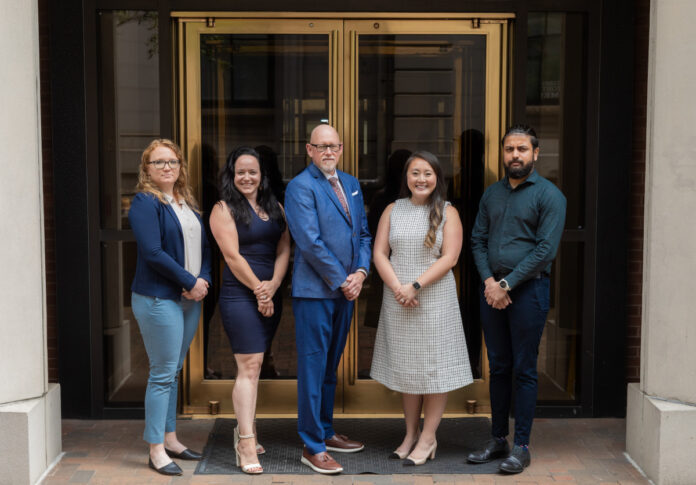
From left, Sr. Operations Manager Donja Robbins, Administration Team Lead Brandy Readling, Director of Communities Troy Suggs, Director of Business Development Elizabeth Smith, and Operations Manager Gaurav Patel.
In late 2022, a small group of seasoned professionals within one of the manufactured housing industry’s largest lenders took on a new task to help expand its volume of business with communities.
One of the first questions Troy Suggs asked this team after being moved into the director of c communities role at 21st Mortgage was “What can we do to expand the program?”
The lender was exploring opportunities in the segment, one which Suggs had minimal previous exposure. One area of opportunity quickly became apparent was related to targeting new community operators.
“In recent years we had gained the tendency to go for the ‘big fish’,” Suggs said. “The community lending program originally was designed to address the needs of the small community owners, actually, and we really wanted to get back to that.
“While our larger operators are greatly appreciated and critical to our success, what we decided was that no community was too small,” Suggs said. “We don’t need to go out prospecting just for clients who have 50 spaces to fill.”
The team revisited lists of potential customers that hadn’t been contacted in some time, and began calling prospects that operate fewer communities, prospects that manage fewer homesites, and have less turnover.
Meeting Market Demand
To help energize the sales efforts, Suggs brought in Elizabeth Smith as the director of business development to help work through some potential solutions.
Smith said it felt refreshing to reconnect with the smaller, privately-held community operators that make up so much of the affordable housing landscape in the United States.
“We had not been serving a good portion of the community space,” Smith said.
The results were immediate and dramatic.
“Year-over-year we did about 220 percent in January of ’23 compared with the previous January,” Suggs said. “We set a record, and we had the best Q1 we’ve ever had.
“There is a lot of opportunity for those smaller or midsize operators,” Suggs said.
Operational Adjustments to Save Time, Open Up Opportunities
In order to make time for the new sales efforts, and to ensure any loans originated could be serviced to 21st standards, there was a need for a broad operational analysis
“We had to dig into daily processes,” Suggs said.
One of the primary changes the community lending group made was to streamline the processing of applications and working with approvals.
“It’s not just a yes or no question,” Suggs said. “Too many requests from the community operators required a ‘director level’ or higher authority to make a decision.
“We expanded the team to elevate a pair of operations managers and empowered them with the ability to approve these requests on a more regular basis,” Suggs said. “They were already making recommendations into the process, so it kind of felt like the right thing to do. We are now well positioned to provide the best in service to both our larger operators and now a new set of smaller, to mid-sized operators.”
Working on Purchasing Homes
There also were obstacles on the purchasing end, working with manufactured home builders.
A manufacturer builds and ships a new home to a community, then it receives payment for the home. Approval for payment was taking a significant amount of time since approvals were not reviewed daily.
“Again, we wanted to expedite this process. We’re going to do this every day,” Suggs said. “We don’t want this house sitting at the yard for a week. No one does. This has made the plant-level operations so much better.”
Suggs said it felt like a lot of rapid change, but it all was managed by gaining consensus and making subtle adjustments, like getting more accustomed to traveling with the laptop and security devices required for approval.
“I’m all about service,” Suggs said. “It can be easy to focus on specific areas and lose the attention to detail on what’s needed for all parts of the business.”
Each incoming phone call will be answered within four rings, Suggs said. And each overnight call that is missed will be returned the following day.
“We re-committing ourselves to it and we are confident our community clients will receive the best possible service,” Suggs said. “We knew we needed to make some operational changes, and we’ve been successful in figuring out some of these efficiencies that have really paid off.”
New Information from Kansas, Kentucky, Illinois, Indiana, Missouri, Wisconsin
Datacomp, the publisher of JLT Market Reports and the nation’s #1 provider of market data for the manufactured housing industry, has published October 2023 mobile home park comps with occupancy, pricing, and other vital data on manufactured home communities from 13 markets in Kansas, Kentucky, Illinois, Indiana, Missouri, and Wisconsin.
Recognized as the industry standard for manufactured home community market analysis for more than 20 years, JLT Market Reports provide detailed research and information on manufactured home communities located in 187 primary housing markets throughout the United States. This includes the latest occupancy trends and statistics, marketing programs, and a variety of other useful management insights.
Datacomp’s manufactured housing market data is updated continually throughout the year, with the latest updates from specific markets and regions published on a monthly schedule.
What’s in JLT Market Reports?
Each JLT manufactured home community report from Datacomp has occupancy, pricing, and other detailed information about investment-grade communities in the major markets. The detailed information includes:
Number of homesites
Occupancy rates
Pricing and average increases
Community amenities
Vacant lots
Repossessed and inventory homes, and much more
Established reports show trends in each market with a comparison of October 2023 data to October 2022. In addition, JLT Markt Reports include a historical recap of pricing and occupancy from 1996 to the present date in most markets.
The October 2023 JLT Market Reports for 13 markets in Kansas, Kentucky, Illinois, Indiana, Missouri, and Wisconsin are available for purchase and immediate download online at the Datacomp JLT Market Report, or they may be ordered by phone in electronic or printed editions at (800) 588-5426.
Each fully updated report for mobile home communities is a comprehensive look at investment-grade properties within a market, enabling owners and managers, lenders, appraisers, brokers, and other organizations to effectively benchmark those communities and make informed decisions.
My father is my hero. He moves with a dedication to provide for his family in a way I believe is unmatched. I’ve seen him fill every role he possibly could to keep our family healthy, safe, and happy. Buying and selling homes, home sets, skirting, repairs, property management, trade shows… He’s done it all.
But perhaps his greatest achievement is this: He did it all without allowing himself to burn out.
Burnout is common in the labor market, including in the manufactured housing industry. Owners, managers, maintenance workers, and any other community roles are vulnerable to it. The impact is devastating and does not start and stop at your work. It invades every aspect of your life.
How Does Burnout Work?
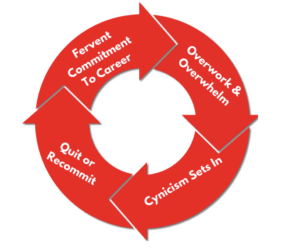
The real danger of burnout is that it works quietly and in a cycle. It is easy to ignore feelings of burnout until it becomes insurmountable. By learning the cycle, you can learn to break it.
Stage 1: Fervent Commitment to Career
Burnout is a paradox. It is a phenomenon that hits the most committed and passionate workers, rendering them unable to remain committed and passionate to their work. Those who care the most, burnout the most. Stage 1 is idealistic and full of hope. Those ideals lead to an unstoppable desire to work harder and bring more value.
Stage 2: Overwork & Overwhelm
The most dedicated workers have a constant drive to improve. While that dedication is impressive, it quickly leads to overload. The balance between work and home life disintegrates. There is always another task to complete, another skill to learn or improve on, and another idea to implement. Overwhelm sets in with the feeling of never doing enough, no matter how much you have done.
Stage 3: Cynicism Sets In
What do the best workers get? More work. Stage 3 of burnout is the first moment where a person might physically and emotionally feel that they are burned out. The cynical community owner/worker begins to feel that their efforts are not paying off. Each initiative makes little difference. Extra work is met with more tasks while others slack. Each gain in profit seems to be met with another expense. This stage can be marked by a strong sense of pessimism and isolation. There also is a noticeable increase of sickness and hospital visits.
Stage 4: Quit or Recommit
While the other stages may last for months, years, or even decades, stage 4 is rapid. At this point, the person is completely depleted on a physical, mental, and emotional level. There are only two decisions left: will they quit, or find a way to recommit to the manufactured housing field?
We have all heard stories of mom-and-pop communities that sold even though they seemed to have the potential to move forward with ease. Or property managers who walked out with hardly any notice, even though they were incredibly talented and dedicated to their community. When burnout has completely drained someone, it takes a drastic change in perspective or environment to make a turnaround.
How to Beat Burnout
Positive Coping
What do you do when you are stressed? Negative coping mechanisms eat away at your health and give space for burnout to grow. It may be taboo to discuss, but drug and alcohol abuse harms many community owners, workers, and their families. It is easy to slip into dangerous routines to avoid the demands of a job.
It is time to lean on positive coping strategies. Exercise, nutrition, passion projects, active hobbies, and other healthy stress relieving activities are vital to reducing burnout.
Self-Efficacy
Studies show that self-efficacy impacts levels of burnout in a similar way to resiliency. The more you believe in your abilities, the less likely you are to burn out. Do and say things every day to build and reinforce your confidence in your work. Doubt creates overwork and lack of efficiency. Self-efficacy creates targeted work and optimistic fueled objectives.
Mentors
Did you know that burnout is contagious? Vent sessions among burned out peers make it more likely for you to become burned out. It can be a literal lifesaver for you to find an experienced mentor. If you are an owner, this is your cue to find a mentor for yourself and also place your employees with mentors who can help them. The cost of a solid mentorship program often is less than the cost of turnover, attrition, hiring, and training.
Reduce Roles
The most committed workers hate delegating roles. They thrive on accountability and take pride in their work. That seems great, until the impact on their health becomes greater. When you begin to reach the later stages of burnout, it may be time to cut back on your roles. Find your strengths and the greatest sources of your joy at work, then hire and delegate the areas that bring you the most stress. Protecting your headspace may be more valuable to your business and life than the value of doing it all yourself.
Crushing Burnout for Good
The largest barrier to burnout is that most people do nothing about it. The manufactured housing industry has a wide variety of stressors from every angle. If you take one of these burnout busting strategies and apply it today, there’s no telling the positive gains you may have personally and professionally. Reduce burnout to empower yourself to make a larger positive impact on your communities.
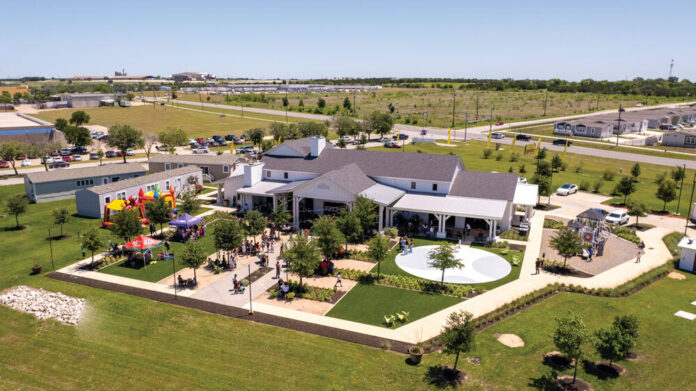
Loma Vista, a Roberts Communities property in Austin, Texas.
By Kellie Speed
Roberts Communities has set out to prove home ownership should be an attainable goal within everyone’s reach.
They offer affordably priced manufactured homes throughout Texas and Colorado. With in-house financing and homebuyer incentives, they are able to help prospective buyers achieve their dreams of becoming homeowners.
“We have a lot of pride in being able to create opportunity for people to own their house,” Scott Roberts, chairman and chief executive officer of Roberts Resorts and Roberts Communities, recently said in a phone interview. “A lot of our success has to do with the fact that we are breaking the mold with a heavy amenity package that creates a real sense of community.”
When they initially started, Roberts Communities had a mission statement of “Building communities and fulfilling dreams.”
“That was our mantra for a couple of years,” Roberts said. “We then took a closer look at it and decided to change it to ‘building community and fulfilling dreams,’ which has a very different meaning. Everyone here is family.”
Through difficult times, they stood by their residents.
“When Covid hit, we asked our clients to tell us their situation and we would customize a plan to help them stay in their home,” Roberts said. “It was a better offer than many, who, at the time, were offering a blanket $50 off rent. One person’s job might be impacted where another one’s isn’t. It proved to be a better business decision for us and better for our customer.”
Creating a Family
Roberts Communities has been in business for more than 55 years. Now in its second generation of operation, the Roberts family prides itself on maintaining long-term relationships not only with their residents and visitors, but also employees.
“When you walk into our sales communities, we promote the fact that our company has such longevity,” he said. “Most of the residents know me by face. We have such great home consultants on our team as well. They are so passionate. Many started from humble beginnings but are now making a great living. It’s a very different non-corporate environment.”
“The exteriors of manufactured homes are still lagging but once you walk inside, people are wowed by what they find,” he said. “There is also a big barrier to get people to consider manufactured housing because of the stigma often associated with it. We want people to know that our housing offers a quality community lifestyle.”
While they have a proven successful business model, about 30 to 40 percent of Roberts Communities’ sales have been through word-of-mouth.
“Our properties sell themselves,” Roberts said. “What makes us different is that you have to own the property, not rent it. Our customers come in with a minimum $10,000 downpayment. They are interested in becoming a part of the community. Many people cry when they are handed over the keys to their new home. It’s a very powerful thing to see.”
With the increased cost of living, Roberts says his communities offer significant savings to the homeowner.
“In Texas, there are incredibly high property taxes, but we pay the property tax for the homeowners,” he noted. “The housing market has gone up in price so much and with interest rates around 6 percent, it can be difficult for people to get into a home. The world is changing due to affordability. Manufactured housing offers a great opportunity for an affordably priced home.”
Giving Back, Building a Future
Roberts Communities knows the importance of giving back.
“We have been very fortunate to have a great track record,” Roberts said. “As a result, we give back to a lot of local charities, including senior communities. We offer back-to-school backpacks for residents’ kids that, filled with notebooks and crayons. We host a Christmas event where Santa has gifts for the kids. Right now, we are super motivated to create a strong after-school program where we help children get their homework done. They can work through math problems or spelling issues with tutors and teachers.”
This year, Roberts anticipates spending $20 million in new development. They focus their development efforts primarily in Texas in the markets of Austin, Dallas, and Houston, as well as in part of Colorado. He and his team also currently are looking to expand their development opportunities to other communities in Arizona and Utah.
“Our biggest challenge right now is being able to develop new communities with the cost of everything going up,” he said. “We used to be able to build a site for less than $10,000. Now, that site is $70,000. It’s still sticker shock. The cost of development and the ability to get capital from lenders or equity today is a challenge that faces the industry as a whole.”
Despite the challenges, Roberts Communities has a bright future ahead.
“We are looking at about 7,000 properties this year with another 2,500 in the pipeline,” Roberts said. “By 2033, our goal is to be 30,000 units to be built, not acquired. We will be the most active, privately owned company in the development space, and we are not lowering our expectations on sales. As long as there are great communities out there and the markets need us, we will keep developing.”
New Leadership Pursues Community Business, Strategic Partnerships
Sunshine Homes for 52 years has been selling spacious floorplans for land-home deals through its multi-state dealership network.
But times change.
Gary Dobbs is the new president of Sunshine Homes, taking over leadership of the Red Bay, Ala., builder in mid-2021 upon the retirement of his father-in-law John Bostick. He had been in sales, worked as the sales manager, and GM. He now finds himself operating in a market that’s transitioning from the traditional dealer network toward a greater number of home sales through communities.
“We just started this a few months ago,” Dobbs said. “We started a new plant in February of 2022. It’s been up for about a year. We were able to double our production, doing four to six a day, and the new plant can do four a day.”
The homes at the new plant will be more compatible with what a homesite in a manufactured home community can take, at a good price and built to last.
Dobbs said Sunshine is working with National Capital Group and Brent Harris of Southern Housing to arrange for sensible partnerships on the community side of the business that will augment their retail sales.
The new Arc line will be made in a 30,000-square-foot facility.
“We have both ends of the spectrum with big kitchens and bathrooms, but we were missing out on that lower price point,” Dobbs said.
Sunshine started in 1971 with Fred G. Bostick, and was carried through the decades by his aunt Harriet and then his son, John.
Michael Huffaker, who had been in sales and the CFO at Franklin Homes joined Dobbs to help run the company.
“We’re not looking to go sell to every developer or park owner out there, we’re looking for the right three or four relationships throughout the year. We can do something that’s very simple, it works for them and allows us to keep up with our dealer base,” Huffaker said.
Sunshine has beefed up the infrastructure on the homebuilding teams and the offices to help support the expanded business. They upped resources in training and salary for the homebuilding team, but also in the customer service team on the back end. Dobbs said they completely revamped the customer service approach, separating out efforts into three-state areas to make the queries more manageable.
“If I’m a sales guy and I know that it’s a better quality home and will have the best service on the back end, that’s a pretty easy decision,” Huffaker said. “We have to keep our identity. Quality has to be the first consideration.”
The company also added Brad Wit, an industry veteran.
“He’s an engineer, a problem solver,” Dobbs said. “He’s someone you can kick ideas around with.”
Sunshine has shown its commitment to innovation with the recent partnership with Beko, a top-selling appliance maker in Europe with that an expanding presence in the U.S. in recent years.
In a home the company showed at The Biloxi Manufactured Housing Expo the utility room included a stand-alone Beko freezer.
“It was a good fit for us when it came to appliances, and they have been a great partner,” Huffaker said. “We can see that we’ll be using more and more of Beko appliances over time. It’s a sleek-looking product, and it is priced right when you compare it against the higher-end options.”
Oct. 6-8 at Avalon Hotel in Alpharetta, Ga.
Manufactured housing community owners have never had more information available to them — or more decisions to...
The Midwest Manufactured Housing Federation has announced that attendee registration is now open for the 2027 Louisville Manufactured Housing Show, returning to the Kentucky...
HUD’s Innovative Housing Showcase, MHI’s Homes on the Hill and Annual Meeting Begin Sept. 22
Two of the country’s largest builders of manufactured homes will...