New Information from Arizona, Georgia, Nevada, New Mexico, North Carolina, Utah
Datacomp, the publisher of JLT Market Reports and the nation’s #1 provider of market data for the manufactured housing industry, announces the publication of its January 2023 mobile home park comps with occupancy and other vital data on manufactured home communities from 14 markets in Arizona, Georgia, Nevada, New Mexico, North Carolina, and Utah.
Recognized as the industry standard for manufactured home community market analysis for more than 20 years, JLT Market Reports provide detailed research and information on manufactured home communities located in 187 primary housing markets throughout the United States. This includes the latest occupancy trends and statistics, marketing programs, and a variety of other useful management insights.
Datacomp’s manufactured housing market data is updated continually throughout the year, with the latest updates from specific markets and regions published on a monthly schedule.
Depth of Reporting on Manufactured Housing Communities by Region
Reports on manufactured home communities in the South consider 986 communities with 248,412 homesites, with a total occupancy rate of 96 percent.
Reports on manufactured home communities in the Southwest consider 482 communities with 107,077 homesites, with a total occupancy rate of 95 percent.
Reports on manufactured home communities in the West consider 226 communities with 54,299 homesites, with a total occupancy rate of 97 percent.
What’s in JLT Market Reports?
Each JLT manufactured home community rent and occupancy report from Datacomp has detailed information about investment-grade communities in the major markets. The detailed information includes:
Number of homesites
Occupancy rates
Average community rents, and increases
Community amenities
Vacant lots
Repossessed and inventory homes, and much more
Established reports show trends in each market with a comparison of January 2023 rents and occupancy rates to January 2022. In addition, JLT Markt Reports include a historical recap of rents and occupancy from 1996 to the present date in most markets.
The January 2023 JLT Market Reports for 14 markets in Arizona, Georgia, Nevada, New Mexico, North Carolina, and Utah are available for purchase and immediate download online at the Datacomp JLT Market Report, or they may be ordered by phone in electronic or printed editions at (800) 588-5426.
Each fully updated report for mobile home communities is a comprehensive look at investment-grade properties within a market, enabling owners and managers, lenders, appraisers, brokers, and other organizations to effectively benchmark those communities and make informed decisions.
Datacomp, publisher of JLT Market Reports and the nation’s #1 provider of market data for the manufactured housing industry, announces the publication of its January 2021 mobile home rent comps, occupancy, and other vital data on manufactured home communities from 14 markets in Arizona, Georgia, Nevada, New Mexico, North Carolina, and Utah.
Recognized as the industry standard for manufactured home community market analysis for more than 20 years, JLT Market Reports provide detailed research and information on manufactured home communities located in more 187 primary housing markets throughout the United States. This includes the latest rent trends and statistics, marketing programs, and a variety of other useful management insights.
Datacomp’s manufactured housing market data published in the January 2022 JLT Market Reports includes information on investment-grade “all ages” and “55+” manufactured home communities. Altogether, the reports include data representations for 92,692 homesites.
Regional Trends in Manufactured Housing Community Rent, Occupancy
South region manufactured home communities show a year-over-year 4.3 percent increase in rent and a 0.5 percent increase in occupancy
West region manufactured home communities show a year-over-year 5.5 percent increase in rent and a 0.7 percent increase in occupancy
Southwest region manufactured home communities show a year-over-year 5.3 percent increase in rent and a 0.7 percent increase in occupancy
What’s in JLT Market Reports?
Each JLT manufactured home community rent and occupancy report from Datacomp has detailed information about investment grade communities in the major markets. The detailed information includes:
Number of homesites
Occupancy rates
Average community rents, and increases
Community amenities
Vacant lots
Repossessed and inventory homes, and much more
Established reports show trends in each market with a comparison of January 2022 rents and occupancy rates to January 2021. In addition, JLT Markt Reports include a historical recap of rents and occupancy from 1996 to the present date in most markets.
The January 2022 JLT Market Reports for 14 markets in Arizona, Georgia, Nevada, New Mexico, North Carolina, and Utah are available for purchase and immediate download online at the Datacomp JLT Market Report, or they may be ordered by phone in electronic or printed editions at (800) 588-5426.
Each fully updated report for mobile home communities is a comprehensive look at investment-grade properties within a market, enabling owners and managers, lenders, appraisers, brokers, and other organizations to effectively benchmark those communities and make informed decisions.
Kentucky Expo Center is the venue for the 2023 Louisville Manufactured Housing Show Jan. 18-20. Industry professionals only.
A Welcome Return for the Manufactured Housing Industry in Kentucky
The Louisville Manufactured Housing Show makes its grand return next week, with thousands of industry professionals making their way to Kentucky for networking, education, and to lay eyes on all the latest product and services being offered.
Last held in 2020 just weeks prior to the Pandemic shutdown, The Louisville Show is the jump start to the year, preparation for the spring selling season, and the event that provides the most factory-built homes to tour in a single space.
“The Louisville Show is legendary in the industry. It’s the place a lot of deals get done, it sets the tone for the year, it welcomes so many new players in the industry, and shows all the greatest innovations,” Show Chairman Eric Oaks said. “It’s a gathering everyone in the industry looks forward to each year, and having taken time off through the last couple of years, I feel this event is going to be something really special.”
In 2023, the show dates Jan. 18-20, and the event venue is once again the Kentucky Exposition Center, the second largest convention center in the Midwest (to McCormick Place in Chicago), and the sixth largest such venue in the United States. The 1.1 million square foot facility was opened in 1956 and continues to be among the top economic drivers for the city of Louisville.
The show runs from 8 a.m. to 5:30 p.m. local time the first two days of the show, and on Friday runs from 8 a.m. to noon, is open to industry professionals only, and is free of charge for non-exhibiting attendees. All attendees will be provided ample opportunity for networking with other attendees, exhibitors, sponsors, and organizers.
What We Will See at the KEC
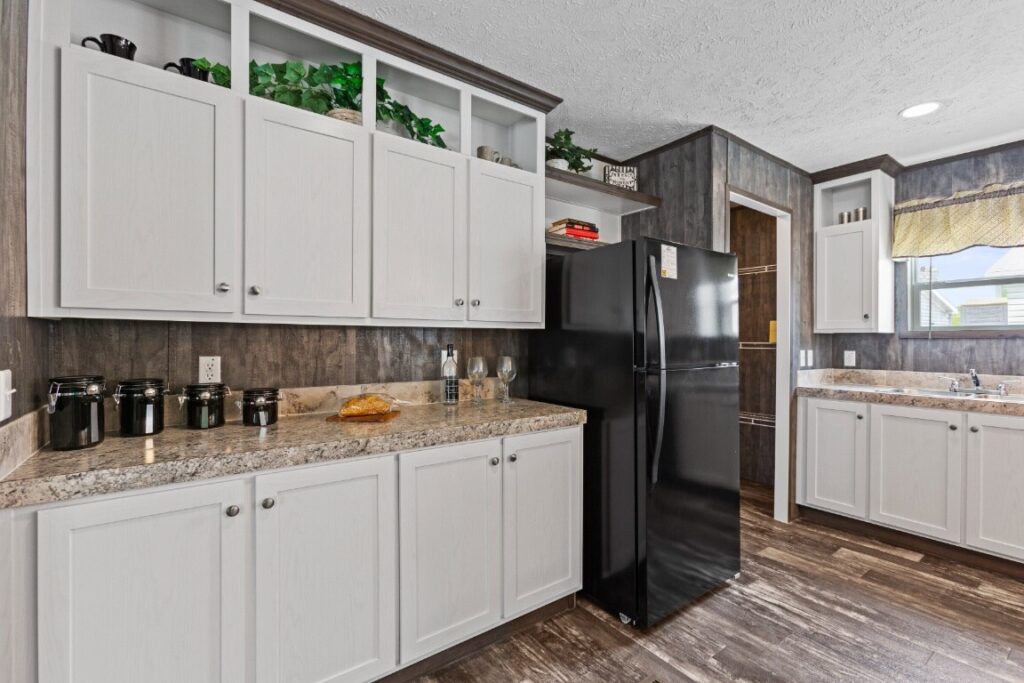
Interior details of Cavco’s Sandalwood XL, among the collection of homes to be on display for manufactured housing professionals attending The Louisville Show, Jan. 18-20 at KEC.
Organizers for the 2023 event have put together a compelling lineup of speakers, presenters, and panelists on a wide range of topics, from sales and lending, to marketing, community management, and more. Champion Homes CEO Mark Yost will be the keynote speaker, and rightfully so. Industry professionals who have seen Yost present readily note how easily he speaks off the cuff, is able to relay mounds of technical and financial information, and above all, keeps any talk lively and interesting.
More than 100 service and supply professionals will be set up and ready for questions and answers. And representatives from multiple manufacturers will be situated in and around more than two dozen homes on display, where industry professionals can tour, gather literature on the offerings, and ask questions about the new homes.
Among the builders that will have homes in Louisville is Cavco Industries, the nation’s third-largest builder of manufactured homes. It will have seven models to show, including new homes from the Fairmont and Fleetwood brands. The largest of the models is the 1,920 square-foot, four-bedroom, two-bath Sandalwood XL by Fleetwood, and the most efficient floor plan in the group is The Phoenix from Cavco with three bedrooms and two baths in a 990-square foot floorplan.
Other industry builders with homes at the show are Skyline Champion, Clayton, Adventure, Ritz-Craft, and Prime Factory Built.
The Louisville Show has been running for more than 60 years and continues to be one of the prime industry gatherings for manufactured housing professionals. It is organized by the Midwest Manufactured Housing Federation, which represents associations in the states of Illinois, Indiana, Kentucky, Ohio, and Michigan.
UMH Properties purchased its first manufactured home community from the newly created Qualified Opportunity Zone Fund.
The Freehold, N.J.-based real estate investment trust purchased a 186-homesite manufactured home community in Orangeburg, S.C. for $5.2 million. The community sits on 39 acres and is 42 percent occupied.
“This community is well-located and will benefit from our proven business plan,” UMH Properties President and CEO Sam Landy said. “The community has been acquired through the QOZF, in which UMH invested a portion of the capital gains realized earlier this year from the sale of Monmouth Real Estate Investment Corp. UMH will also earn fees for sourcing acquisitions and managing the QOZF.”
The purchase is UMH’s second in South Carolina.
In addition to seeking other opportunities to acquire existing communities requiring substantial capital investment that are located in qualified opportunity zones, Landy said the fund also will look to acquire development opportunities in qualified opportunity zones.
A qualified opportunity zone is an economically distressed community whereby new investments, under certain conditions, may be eligible for preferential tax treatment.
The fund was designed to allow for the deferral of taxes through 2026 on recently realized capital gains reinvested in the fund and to potentially obtain certain other tax benefits. Participating in the program allows UMH to stabilize short-term earnings, improve its position on capital gains, gain access to more deals, and continue to grow its relationship with federal and state governments.
“By providing quality affordable housing in opportunity zones, we will help make these areas even more attractive to employers who need housing for their employees,” Landy said.
UMH Properties is a public equity REIT organized in 1968. It owns and operates 132 manufactured home communities with approximately 25,000 developed homesites in New Jersey, New York, Ohio, Pennsylvania, Tennessee, Indiana, Maryland, Michigan, Alabama, and South Carolina. UMH also has an ownership interest in and operates one community in Florida, with 219 sites, through its joint venture with Nuveen Real Estate.
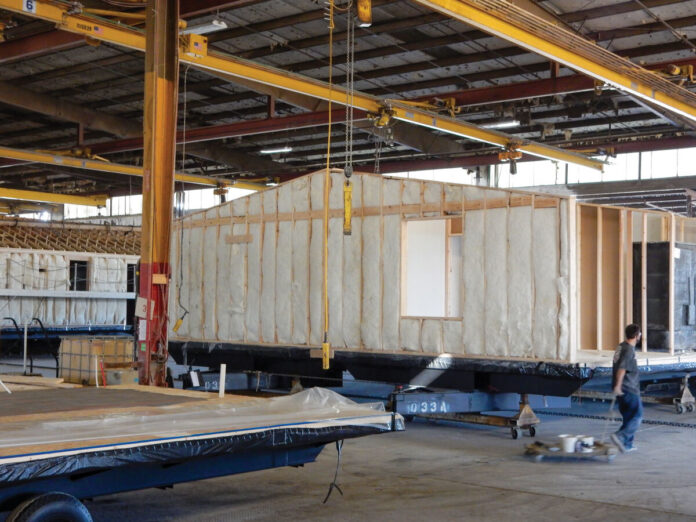
A Cavco team member works with a home down the factory line.
184,000-square-foot facility in Hamlet Expands Company’s Home Production Capabilities
Cavco Industries has opened its newest manufacturing facility, a home building plan in Hamlet, N.C., that will be known as Cavco Homes of North Carolina. The 184,000-square-foot plant will produce manufactured homes. The opening comes approximately seven months after Cavco acquired the facility from Volumetric Building Companies, which used the facility to produce multi-family residential and commercial projects, and has since moved that production closer to their markets in the Northeast.
Cavco is the third-largest U.S. builder of manufactured homes, with a 14 percent share of that market.
Cavco offered continued employment to previous VBC employees, including management staff, and additional employment opportunities are anticipated to become available with the expansion of its homebuilding production.
“At Cavco we are intensely driven to provide solutions to the pressing need for affordable homes,” said Bill Boor, president and chief executive officer of Cavco. “The addition of the Hamlet facility to our growing network of 27 plants across the country is a step forward on that path.”
Cavco has distribution points in 48 U.S. states and in Canada, through its 45 retail stores and 27 production plants. The company employs more than 6,300 people. In fiscal year 2022, the company delivered 16,700 homes, provided over $141 million in financing to homebuyers, and insured homes for more than 63,600 homeowners. It also provided claims assistance to about 5,600 homeowners.
“This has been a great opportunity to quickly bring new capacity online with an in-place and capable workforce. From the beginning, it was a primary objective for both VBC and Cavco that we maintain continuous employment for the people at the facility,” Boor said. “Through careful planning and coordination, we have been able to do so. We’re very excited about the important role Hamlet will play in Cavco’s future for many years to come.”
Palm Harbor Facility Builds 15,000th Home
Cavco’s Millersburg, Ore., production facility this year celebrated the completion of 15,000 homes since the plant opened in 1995. The plant makes the company’s Palm Harbor homes, including the Seavannah floorplan it was building at the time of the milestone. The home came off the line and was prepped and shipped to Homes Direct, a nearby dealer.
“We are extremely proud to reach this milestone as it speaks to the longevity and quality of our end-to-end manufacturing operations,” Forrest Barnes, the general manager at Millersburg, said. “We wouldn’t be here without our dedicated team of professionals – from the people who masterfully design these homes to those who skillfully build them to those who subsequently sell them to our customers. Every team member plays a vital role, and we celebrate them all.”
The first home produced by the plant was started on March 31, 1995, and the mission began to deliver quality, affordable housing to the Pacific Northwest, California, and Alaska.
New home designs like this 2,213 square-foot Seavannah offer much the market, with three bedrooms, two baths, a recessed covered porch, a great room, built-in linear fireplace, and nine-foot-tall ceilings.
The kitchen features an oversized island, wrap-around cabinetry, a raised serving bar and a storage pantry with a sliding barn door. A freestanding soaking tub, a walk-in tile shower with bench and double sinks provide a custom feel in the master bath. Laundry can be easily managed in the ultimate utility room that features a laundry tub, sink, and folding counter.
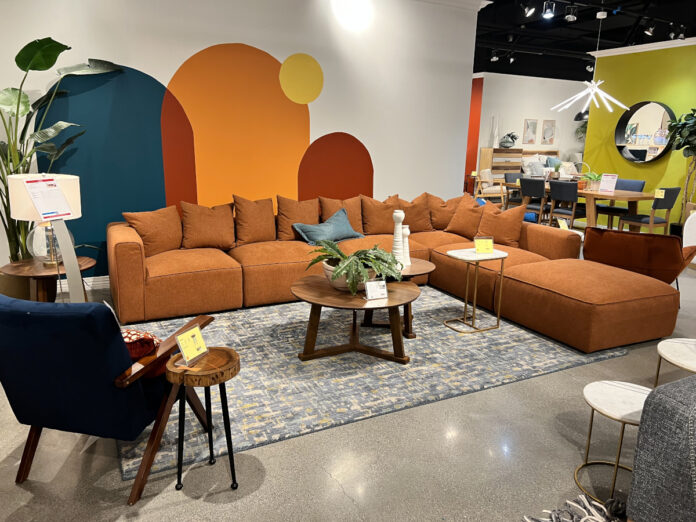
Desert colors are already being seen in design magazines, and major furniture stores. Photo by Lisa Stewart of Lisa Stewart Photography.
How is it possible that 2022 is almost in our rearview mirror? It feels like yesterday; we were thinking about what changes we might see in 2022. It’s exciting to see how many of the trends we thought might arrive this year have been embraced by consumers. Not only have these forward-thinking design trends become a reality, but they are also growing in relevance in the new year.
Significant shifts are coming to the look and feel of our homes, especially in the interiors in 2023. Softer, more complex palettes will replace stark white and gray rooms. One of the color seminars we attended even predicted that white kitchens would be a thing of the past by 2025. Be prepared to see warmer colors like bone, mocha, leafy greens, and dusty blues become the new neutrals and replace the whites and grays that have been so popular.
Desert tones will replace the cool colors we have seen for the last ten years. Instead, reds, oranges, terra cotta, cactus green, and sky blue will be the hot accent colors and looks for 2023.
The grays that have been so popular through the last decade are fading out, and white shiplap siding is shipping out, too. It is being replaced by smooth, natural, and lightly stained wood panels used in strategic locations that add a warm look to a room.
Design for a Healthier Home
Adding leafy greens to your environment makes it feel alive, even if the plants are not.
The pandemic brought a new focus on health and wellness, which will continue to stay strong throughout the next decade and beyond. Identifying products that are made of sustainable, renewable materials helps today’s buyers make educated decisions. With factory-built housing being one of the most energy-efficient building forms, our industry has an excellent opportunity to share the story of how we are helping the environment. There is also a renewed interest in locally sourced, made-in-America products.
The Green House effect is being seen everywhere. Biophilic Design, or using natural light, natural materials, and vegetation, is here to stay. Lighter natural woods that are pickled or just sealed are back. Bringing the outside in with color, accessories, and artwork will continue to grow in importance.
In 2022, The housing crisis entered an age of minimalism. As the lack of affordable housing continues, we will see smaller spaces and more multi-generational living environments. Furniture is scaled down with open legs and arms to give a more open feel to a smaller space. But, again, watch for every detail to make a statement, and less is more.
A Place to Sit
Authentic conversations are treasured again. Cozy, comfortable rooms where you want to sit and stay for a while continue to replace the cavernous great rooms that we have been embracing for years. Dining rooms are back at the top of the list of what homebuyers want. Post-COVID entertaining is more likely to happen at home than at a restaurant or gathering space. Stark, uncomfortable dining chairs are being replaced with upholstered, roomy ones that encourage you to sit down and stay for a while. Elegant bar carts and bar spaces are also back in vogue.
Kindness, Healing, and a Life Well Lived
Time-worn items add a feeling of history to a room. Bringing crafting tools out of the garage and into the decor is trending, the older and more used the better.
Craftivism is “a new social process of collective empowerment, action, expression, and negotiation.” Using crafts and craft projects to advance social causes will become essential to many. Shopping for products that support a specific cause, such as animal rescue, women’s causes, child welfare, and others, will become even more important and celebrated in the future. Flex spaces are becoming even more popular, and they don’t have to be huge spaces. A niche in a hallway or extra space off the utility room can give consumers a place to explore their inner passion.
Digital Design is popular in Europe and is heading this way. It is about seeing the world in a digital form and will be extremely popular in the teenage demographic and move to other ages in the future. Red looks purple on most computers, which has led to purple being seen more in products targeting this demographic — they are used to seeing the world on their computers. Small-scale workspaces, the ability to plug in, and new technology will bring us things we haven’t even thought about.
Hopefully, with the pandemic largely behind us, the interest in creating a home people want to spend time and entertain in will stay with us. In addition, there is a renewed interest in “living within your means,” and affordable housing is becoming a priority for younger homebuyers and our senior buyers too. The stigma that factory-built housing has carried with it for so long is finally fading away, and living in a factory-built home is now considered a wise decision. We will also see more downsizing where people decide to reduce their monthly expenses by moving into a more affordable home.
It feels good to be positive and looking forward to a year full of color, optimism, and living well.
Baywood, among the Pot Nets Communities of Delaware.
A Look Back at the Most Important Topics in Manufactured Housing
Capstone’s Kevan Enger is a seller-focused broker of manufactured housing communities.
Overall, the manufactured housing industry has had a good year in 2022. The level of new home production was up again and has plenty of room to climb. To say the industry, any industry, had good growth in 2022 is remarkable, as we will detail further in the sections to come.
Many employers have managed, somewhat surprisingly, to dodge and weave through the travails of the pandemic — lockdowns, illness, added health and safety regulations — and the labor market continues to rise from a slumber partially induced by obtuse government funding to would-be workers. Though hiring and training was a challenge in 2019 and continues to be, the labor market has righted itself enough to both buoy a tenuous economy and provide some amount of confidence for employers, especially in the manufactured housing industry, to be assertive and hire strategically for the long term.
That said, 2021 was a year that had its challenges. We will detail them from a general perspective, and provide some insight into how each challenge affected the manufactured housing industry specifically.
Inflation: From ‘Transitory’ to Entrenched
The hopeful talk of a “soft landing” died a quick death in the late summer. Year-over-year inflation rose above 9 percent mid-year and receded very mildly in August. Most analysts feel outsized inflation — pretty much anything more than 2 percent — will persist into the new year and 2024, though there is a minority pointing to the similarity of today’s trajectory with 1970s peak inflation, with the added benefits of the Feds’ recent historic measures to stave off inflation by raising rates, and cooling its activity in the bond market.
Admittedly, the reduction in late summer energy prices, including gasoline, helped level out inflation as fall was to settle in, before ticking up again on OPEC policy. Furthermore, critics are quick to point to the continued rise of core inflation as both the problem and the indicator of any significant progress. In the same month, inflation dropped 0.10 percent, energy, food, and shelter increased by 0.2 percent, and core inflationary (those excluding energy and food) marks rose 0.6 percent.
While we can acknowledge the benefits of lower energy and food prices, the “entrenched” nature of inflation today continues to keep many households up at night.
Economist KC Conway, in his presentation at the SECO Conference for Community Owners in October, noted that inflation pressure is difficult at home, and particularly daunting in the workplace.
“New construction is in a difficult spot with the anticipated cost overruns — maybe more than 32 percent in the next two years,” Conway said. “How do you plan a project and get a good loan with overruns?”
Sea Air Village in Rehoboth Beach, Del., is owned by Sun Communities.
Interest Rates: The Levers that Manage Consumer Spending
What happens when the cost of goods shoot up as quickly as they did in 2022? Coming off a roaring economy in 2021, and again, overfed by government spiffs, there was a glut of money in the system, and a rabid consumer appetite despite the seemingly “transitory” supply chain disruptions that created scarcity and drove up prices. Yes, the U.S. economy was bound to see some level of inflationary pressure, and when it does the Federal Reserve steps in to raise interest rates. The expectation is that gradual rate hikes that make it harder to access money, for a home or capital upgrades for instance, would slow spending, cool the economy, and flatten inflation without dropping the economy into a recession. Easier said than done. Where the Fed usually steps in, the Fed in 2022 probably should have jumped in, or dove head first. It’s easy to see now, and the Fed’s subsequent actions — raising rates to the tune of 75 basis points at three consecutive meetings for the first time ever — have shown its own careful approach of early-year hikes at 25 or 50 basis points could have used more weight.
Increased interest rates across all sectors means less profit and reduced investment. While the manufactured housing industry has been noted as being “recession proof”, there is only so much pain property owners and investors want to feel. And while every business person’s objective is to make money, the industry is equally motivated by providing houses, increasing homeownership, and that certainly is a more difficult proposition when our homebuyers who require financing find it harder and more expensive yet.
Conway said he anticipates a 4.5 to 5 percent 10-year treasury rate by mid-2024, and a 30-year mortgage at 8 percent.
He was critical of the Fed, saying the late, aggressive rate hikes are a blunt instrument for a problem that could have been better handled by sharpening a pencil and managing expenses, as he advised manufactured housing industry operators to do.
“The Fed should be encouraging the banks to lend,” Conway said. “But they’re discouraging lending.”
Lending in a New Market
We just covered increased interest rates, so the next obvious topic is finance and lending. Every home or community transaction gets more expensive under the specter of increased rates. The obvious bit of relief here is that the increased interest rates induced by the Federal Reserve have an equal impact on everyone. The price of buying any home in any neighborhood increased on scale, so the manufactured home continues to meet the same market need and can expect a somewhat similar market performance. The real story when it comes to lending for manufactured housing has less to do with increased rates than it does with general acceptance and availability of financing for manufactured homes, including a more robust secondary market where chattel loans are regarding in the same light at the conventional mortgage. Fannie Mae and Freddie Mac, for instance, have helped the industry with plenty of secured financing for communities — commercial real estate transactions — but have yet to embrace securitization for homes as personal property.
The Labor Market
The labor market is a two -sided coin. As mentioned earlier, it is strong enough to help buoy the economy against recession, gaining 263,000 non-farm payroll jobs in September, but remains vexing to employers who need to hire efficiently, effectively, and with confidence the plan will retain and grow talent.
So how is the labor market both good and bad? Well, in the fourth quarter, the labor market could be described as well balanced if not robust. Unemployment dipped to a satisfactory 3.5 percent. The difficulty is that the participation has been low and remains so. That is to say, there is a job for nearly everyone who wants a job, but there are still too many people who don’t want a job. That’s a cocktail of matters. Firstly, the middle of the labor force remains in a pandemic hangover. Younger workers and lower earners have had more cash on hand than ever, and even though most benefits have ended, some of the reserves remain. There are fewer retail, hospitality, and restaurant jobs both because there are fewer businesses in those sectors, and because fewer workers are interested in those positions.
“Restaurant, hospitality, retail workforce said we’re done,” Conway noted. “They’re going to get one of those remote jobs. If I were you, I’d think about building in home offices and getting some really good internet.”
Materials
The ability to reliably order materials at a reasonable cost for manufacturing or otherwise has been on shaky ground since the onset of the pandemic. There has been some softening with borders re-opening and trade regulating, but sourcing lumber, chips for electronics, windows, and all variety of tapes and plastics continues to be impossible at times and often costly and time-consuming. Unfortunately, any relief from supply chain solutions is being eroded by inflation throughout the economy.
Consolidation
The top operators in the business — whether in communities, homebuilding, or the service/supply sector — continue to be aggressive in growth through acquisition. In each edition of MHInsider, in The Happenings section, we detail a lengthy list of transactions, individual communities or small portfolios being acquired by the larger, national operators. Likewise, builders continue to fill out their offerings or shore up their presence by buying existing companies, most often continuing under the proven brand and market approach. While we’ve seen the headlines of million-dollar deals, there is plenty more opportunity for consolidation. The “industry is aging” is a conversation that often arises. Attention is being paid, and efforts are being made to ensure that vital resources — like haulers and set teams — continue in the marketplace under new leadership and ownership as necessary. For every seller there is the right buyer.
Expansion
The industry is expanding in every way. Builders are opening plants that haven’t seen homebuilding activity in decades, organizations throughout manufactured housing are investing in their teams, and community operators are following through on thoughtfully planning how new homes will be brought in on that adjacent land. Lenders are coming back to the industry as well, offering a variety of new programs and products for homebuyers and community operators. The ADU business is expanding as new states and municipalities on an increasingly regular basis are allowing the backyard or adjacent “cottages”. New HUD Code homes on a permanent foundation with a garage or porch, higher roof pitch, and interior energy and efficiency requirements now qualify for conventional mortgages. The CrossMod homes in a neighborhood setting are an emerging solution for many developers and buyers looking to the middle market. As manufactured housing professionals, the real measure of expansion we all want to see is in the percentage of national home starts, where we’ve been hovering around 10 percent for far too long, and need to grow toward 15 to 20 percent.
From left, Gordon Lintz, Cookie Larkin, Laura Dickerson, Patrick Birmingham, Kelli Rosenbalm, Wendy Noe, Suzanne Mickey, Jimmie Turner, Jody Charles, Dana Rowe, Kayci Long, Carla McDonald, MacKenzie Brown, and Kinsley Ulin present a check for regional cancer center.
The manufactured housing industry is a mission-driven industry with the overall goal of providing great places to live at the price points customers most need and want. Nearly every edition of MHInsider magazine, in the Happenings section, there is mention of a builder, community owner, or service provider doing something kind for a person or family who could use a little help, from U.S. military veterans to grade school students.
During the holiday season, from mid-November through the New Year, the level of giving goes up exponentially, to the point it makes it difficult to house in a traditional print publication. That’s a lot of industry giving!
So, we at MHInsider, decided we’d hold back a few stories and post them on the manufactured housing news blog where space and opportunity to connect with the audience abounds.
Thanks for all you do, including for giving back when it’s needed most.
Clayton Home Building Facilities Donate $68,000 to Cancer Center
Five East Tennessee home building facilities from Clayton Home Building Group®, a national builder of attainable housing, presented Morristown Regional Cancer Center with a $68,090.30 check for their Patient Assistance Fund. The center’s Patient Assistance Fund helps cancer patients and their families cover costs associated with treatment, medication, transportation, utility bills and other basic needs during and following their treatment.
During October and November, Clayton Home Building Group team members at Clayton Bean Station, TRU® White Pine, Clayton Supply Morristown I, Clayton Supply Morristown II, and Clayton Rutledge raised money for the fund, with their facilities and The Clayton Homes Foundation matching some or all of the team member contributions to comprise the final amount.
Since 2017, Clayton home building facilities have donated more than $180,000 to the fund. This year’s donation is the largest so far, with more facilities participating than ever before. Team members got creative with their fundraising efforts this year and held T-shirt and hardhat sticker sales, chili cook-offs, cutest dog contests, and even pie-in-the-face raffles.
“As a former patient at the Morristown Regional Cancer Center, it means so much to me to see my colleagues continue to support the center that helped me,” Jody Charles, a team member experience manager at Clayton Bean Station said. “I am now four years cancer-free, and the number of facilities involved in this project continues to grow every year.
“The effort and dedication that our team members have in raising money for the Cancer Center is simply phenomenal,” he said. “I am so proud of my fellow team members and to be a part of an organization that strives to give so much to our community.”
Morristown-Hamblen Healthcare System Chief Administrative Officer Gordon Lintz said the network is extremely thankful for the new partnership.
“The money they have raised will help numerous cancer patients and it’s impossible to describe the impact of this donation,” he said. “They’re truly impacting the lives of cancer patients in our community.”
YES Communities Residents Come Together to Brighten the Holidays
Sandhill Shores, a YES Community in Fort Pierce, Fla., hosted a Thanksgiving feast for residents with a simple stipulation; bring an unwrapped toy for children in the area. The donation box overflowed as residents graciously donated sports equipment, toys, and four bicycles to the Fort Pierce Police Santa Cop toy drive.
“Our residents and staff did not disappoint with this huge box of toys! I am so proud of everyone here,” Sandhill Shores Office Administrator Bridget Jones said.
Patrice Mitchell, culture ambassador for YES Communities said it speaks volumes about the residents to see an outpouring of generosity like this.
“At a meal to celebrate our residents, they selflessly brightened the holiday for others in the community,” she said. “You love to see it!”
YES Communities team members across the country host events in their communities. Holiday meals, giveaways, and celebrations bring residents together to cultivate relationships and create a family-friendly atmosphere.
RHP Properties Adopts Las Vegas Classroom
A $10,000 donation to a Las Vegas elementary school classroom will provide needed resources to promote academic success. The nation’s largest private owner of manufactured home communities is working with AdoptAClassroom.org to support Arturo Cambeiro Elementary School as it has with other schools in previous year.
“We are so thankful for the generous donation RHP has provided to our school,” said Chris Popek, principal of Arturo Cambeiro Elementary. “Our teachers work extremely hard at making learning enjoyable and engaging and I am excited to see them put extra instructional resources to use that the donation will fund.”
Clayton Partners to Empower People on a Path to Homeownership
With support from Clayton, the Hope Inside homeownership program will empower approximately 4,000 people with 7,000 homeownership services and resources.
Clayton, a national builder of attainable housing, and Operation HOPE, a national organization that equips people with financial tools and education, are partnering to help people reach their dream of homeownership.
Operation HOPE’s Hope Inside® homeownership program provides one-on-one coaching, workshops and other educational resources that help clients overcome common barriers to homeownership, including poor credit, lack of a down payment, existing debt and money management. The nonprofit also focuses on building generational wealth and encouraging entrepreneurship.
With support from Clayton, the Hope Inside homeownership program will empower approximately 4,000 people with 7,000 homeownership services and resources, putting them in a better position to purchase a home. Clayton’s funding also will help scale the Hope Inside homeownership program’s digital platform and expand the nonprofit’s coaching network, supporting more people for years to come.
“Operation HOPE’s partnership with Clayton enables us to equip even more people with the financial tools and education to secure a better future through homeownership, a critical component to building generational wealth,” Operation HOPE President and CFO Brian Betts said. “As we continue to help families through economic uncertainty and a complex housing market, these resources are needed more now than ever.”
Operation HOPE has been providing these crucial home-buying and homeownership services since 1992.
“Homeownership is one of the greatest avenues to wealth creation and ultimately lifts up entire communities,” Clayton CEO Kevin Clayton said. “We are proud to partner with Operation HOPE and do good by empowering more people with the tools to achieve homeownership.”
Zeman Homes Holds Food Drive
Shady Oaks, a family-friendly community in Minooka, Ill., held a food drive through thee local food bank on Nov. 3o. Despite the freezing temperatures that day, the staff and some of Shady Oaks’ families came out to help pack bags of food. The residents were so helpful and really appreciated this event. They packed meats, dairy, cereal, frozen goods, coffee, and more.
Cohron Manufactured Homes Provides for Elderly Residents
In early December, a couple in their 80s lost their home to a fire, and Cohron Manufactured Homes, which operates in the Indianapolis area, stepped in to help. Just a week later, the couple was able to move into their 2017 Clayton home where they would spend the holidays and New Year. Ronald Breymier, executive director for the Indiana Manufactured Housing Association called the effort unprecedented.
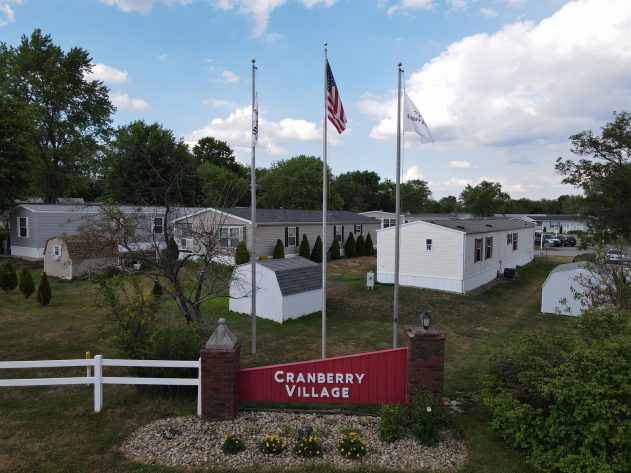
Cranberry Village in Cranberry Township, Pa., a UMH Properties community.
Already High Occupancy Increases in All Three States, Regional Reports Show Stability and Growth
December JLT Reports for mobile home rent comps in Ohio, Pennsylvania, and Tennessee are available now for purchase, including immediate download through Datacomp, the national leader in manufactured home valuation and community data.
JLT Market Reports provide detailed research and information on communities in 187 housing markets throughout the United States. These include the latest rent trends and statistics, marketing programs, and a variety of other useful management insights.
Datacomp maintains and provides the JLT Market Reports and is the nation’s #1 provider of market data for the manufactured housing industry. JLT Market Reports are recognized as the industry standard for manufactured home community market analysis.
The December 2022 manufactured housing market data published in JLT Market Reports for Ohio, Pennsylvania, and Tennessee include information from 13 markets on 341 “All ages” and “55+” manufactured home communities.
Altogether, the reports from the three states’ manufactured home communities include data representations for 64,419 homesites.
Regional Trends in Manufactured Housing Community Rent, Occupancy
Midwest region manufactured home communities show a year-over-year 5.7 percent increase in average adjusted rent and a 0.8 percent increase in occupancy rate.
Northeast region manufactured home communities show a year-over-year 4.6 percent increase in average adjusted rent and a 0.4 percent increase in occupancy rate.
Southern region manufactured home communities show a year-over-year 6 percent increase in average adjusted rent and a 0.7 percent increase in occupancy rate.
What’s in JLT Market Reports?
Each JLT manufactured home community rent and occupancy report from Datacomp has detailed information about investment-grade communities in the major markets. The detailed information includes:
Number of homesites
Occupancy rates
Average community rents, and increases
Community amenities
Vacant lots
Repossessed and inventory homes, and much more
JLT Market Reports also include management insights that rank communities by the number of homesites, occupancy rates, and highest to lowest rents. Established reports show trends in each market with a comparison of December 2022 rents and occupancy rates to December 2021, as well as a historical recap of rents and occupancy from 1996 to the present date in most markets.
The December 2022 JLT Market Reports for Ohio, Pennsylvania, and Tennessee manufactured home communities are available for purchase and immediate download online at the Datacomp JLT Market Report website, or they may be ordered by phone in electronic or printed editions at (800) 588-5426.
Each fully updated report for mobile home communities is a comprehensive look at investment-grade properties within a market, enabling owners and managers, lenders, appraisers, brokers, and other organizations to effectively benchmark those communities and make informed business decisions.
The five honorees in the 2022 MHInsider Industry Awards will receive an engraved "Crystal Home" award.
In Recognition of the Highest Achievements in Manufactured Housing
The third annual MHInsider Industry Awards honors the innovation, dedication, and perseverance of manufactured housing professionals from coast to coast. The team at Datacomp and MHVillage, through MHInsider magazine, are honored to be able to recognize these amazing colleagues awarded for the highest achievements in the industry.
Our 14-member editorial board assisted in selecting from more than 80 candidates for the MHInsider Industry Awards, carefully paring the list back to 21 of the most deserving nominees in five categories.
We employed the volunteer efforts of more than a dozen state and regional manufactured housing industry association directors to conduct a vote on the safe, and secure voting platform eBallot.
So, congratulations to all of the winners, and thank you for all you’ve done!
2022 MHInsider Industry Awards
MHInsider Advocacy Award
Honors efforts toward outreach and education that reach beyond professional position or title. The 2022 winner of the MHInsider Advocacy Award is Dick Ernst. Learn more about Ernst and his work in the industry.
MHInsider Influencer Award
Honors individuals who by their presence and authentic implementation of ideas have created widely held business practices and wholesale improvement for the industry. The 2022 winner of the MHInsider Influencer Award is Ed Evans. Read more about Evans and his work in the industry.
MHInsider Leadership Award
Honors individuals who have earned the highest levels of industry achievement through their corporate or organizational leadership approach. The winner of the 2022 MHInsider Leadership Award is Darryl Searer. Read more about Searer and his work in the industry.
MHInsider Legacy Award
Honors manufactured housing professionals whose overall career contributions are certain to create meaningful and lasting industry improvement and excellence. The 2022 MHInsider Legacy Award winner is Bruce Savage. Read more about Savage and his work in the industry.
MHInsider Visionary Award
Honors those who have brought to market the coolest concept or product, the idea that makes the job easier, the offering better, the customer experience more meaningful. The 2022 winner of the MHInsider Visionary Award is George Porter. Read more about Porter and his work in the industry.
The MHInsider Magazine Editorial Board
George Allen Paul Bradley Barry Cole Kevan Enger Stacey Epperson Suzanne Felber Dawn Highhouse Maria Horton Darren Krolewski John Neet Karl Radde Patrick Revere TC Sheppard
2022 MHInsider Awards Honorary Judges
Ken Anderson Amy Bliss Frank Bowman Ron Breymier Deanna Fields Andrea Greene Randy Grumbine Jennifer Hall Logan Hanes Jennifer Lassen Jess Maxcy Marla McAfee DJ Pendleton Leo Poggione
Take some time to look over the 2023 MHInsider Industry Award winners! MHInsider is a publication of MHVillage and is the premier source of manufactured housing news with a national audience of manufactured housing professionals dedicated to producing and delivering high-quality, affordable, off-site built homes.
Oct. 6-8 at Avalon Hotel in Alpharetta, Ga.
Manufactured housing community owners have never had more information available to them — or more decisions to...
The Midwest Manufactured Housing Federation has announced that attendee registration is now open for the 2027 Louisville Manufactured Housing Show, returning to the Kentucky...
HUD’s Innovative Housing Showcase, MHI’s Homes on the Hill and Annual Meeting Begin Sept. 22
Two of the country’s largest builders of manufactured homes will...