Federal Open Market Committee (FOMC) participants gather at the William McChesney Martin Jr. Building in Washington, D.C., for a two-day meeting held on June 14-15, 2022.
The Federal Reserve in its June meeting on Wednesday raised its key rate 0.75, the steepest single increase in 28 years.
“We at the Fed understand the hardship high inflation is causing. We are strongly committed to bringing inflation back down, and we are moving expeditiously to do so. We have both the tools we need and the resolve it will take to restore price stability on behalf of American families and businesses,’” Federal Reserve Chairman Jerome Powell said. “The economy and the country have been through a lot over the past two-and-a-half years and have proved resilient.
“It is essential that we bring inflation down if we are to have a sustained period of strong labor market conditions that benefit all,” he said.
Inflation remains well above the long-term goal of 2 percent. Measuring the 12 months ending in April, prices rose 6.3 percent. Excluding volatile food and energy categories, core prices rose 4.9 percent. In May, the 12-month change in the Consumer Price Index came in above expectations at 8.6 percent, and the change in the core CPI was 6 percent. Aggregate demand is strong, Powell stated in his remarks, but supply constraints have been larger and longer lasting than anticipated.
“Price pressures have spread to a broad range of goods and services,” he said.
Three manufactured homes on the National Mall June 7-12 drew the attention and the praise of Washington D.C. lawmakers and policymakers, as well as passersby.
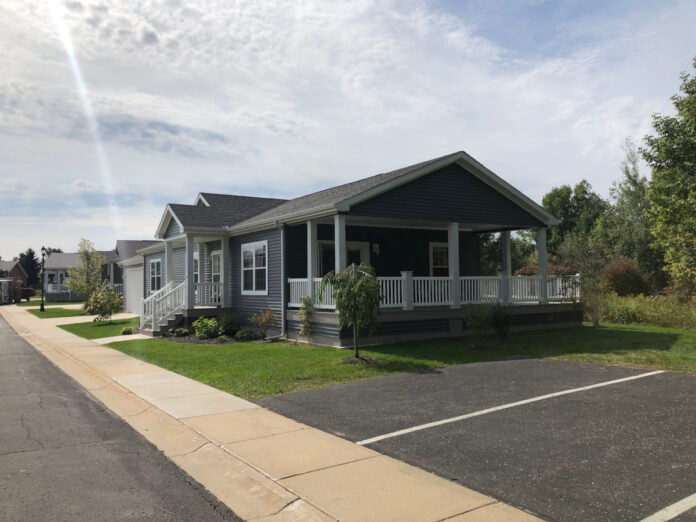
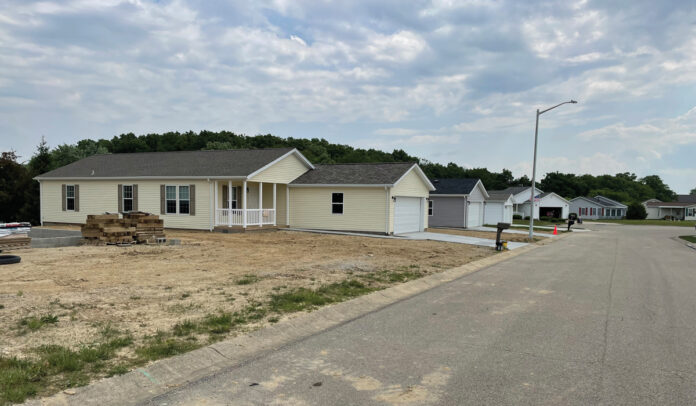
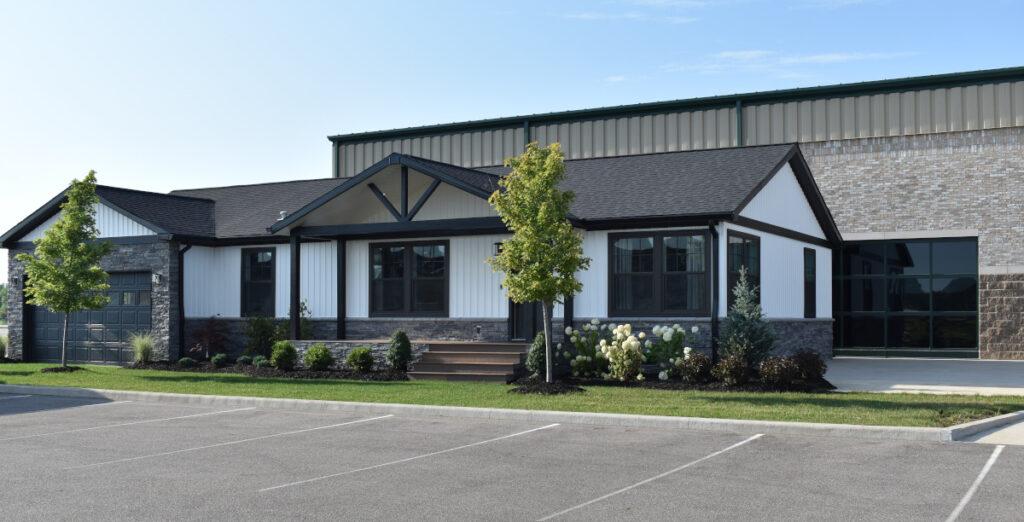
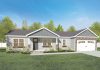
Cavco Industries teamed with UMH Properties to showcase a single-section manufactured home, and Skyline Champion Corporation brought out a pair of homes, one small-floorplan accessory dwelling unit, and a new CrossMod multi-section home with a pitched roof and attached garage.
“We made the decision to showcase our two homes because the country has a crisis and we have the solution,” Champion Homes Executive Vice President of Business Development Wade Lyall said. “Affordable, attainable housing is a crisis in our country and manufactured housing is the solution. We need improved zoning acceptance and better access to attainable financing solutions, and by showcasing with MHI we get a chance to show members of Congress the industry’s newest products that can help solve the affordable housing issue.”
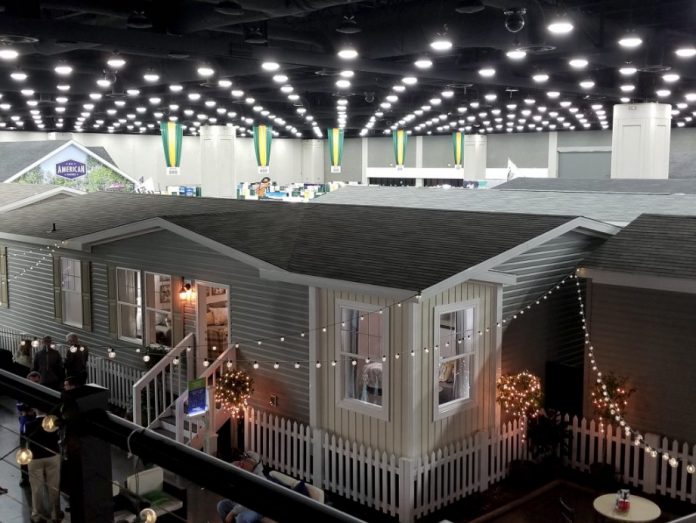
New homes built in the factory dominated the week, manufactured homes being joined in the second such showcase by panelized and modular homes. A 3D printer building homes, and alternative materials — such as container construction and system building — also were featured.
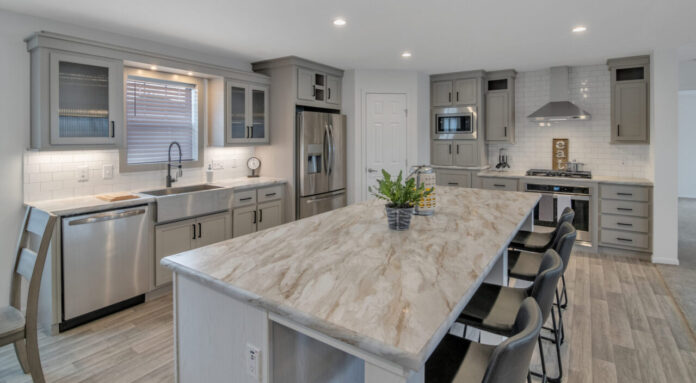
“When people come in the house, it speaks for itself,” MHI Chairman Leo Poggione said. “They walk in and they’re like ‘I can’t believe how beautiful this home is.'”
Mark Sickles, from the Virginia House of Delegates, said he wished more people knew about the manufactured housing industry the homes it produces.
“I think if more boards of supervisors and city councils saw these homes they would be more willing to change their codes to allow them to occur. It’s really beautiful,” Sickles said.
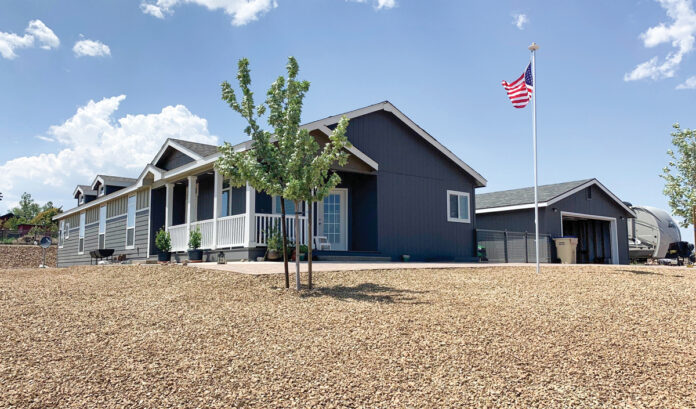
Skyline Champion brought a multi-section CrossMod home to the National Mall June 7-12 for Homes on the Hill and the Innovative Housing Showcase for National Homeownership Month.
June is National Homeownership Month
The Innovative Housing Showcase, hosted by the U.S. Department of Housing and Urban Development, is part of a push toward high-quality affordable housing solutions that also is a White House priority. The Manufactured Housing Institute, the national advocacy group for factory-built housing, joined HUD early in the week to host Homes on the Hill, an opportunity for its members to appeal to lawmakers from their home states or states in which they operate.
“I don’t know anywhere in the country, and I travel almost every week, that I’ve seen something like this that is that affordable,” HUD Secretary Marcia Fudge said in an interview with MHI.
“It is going to be a major part of the solution,” Fudge said of manufactured homes.
Lesli Gooch is CEO of MHI.
“Our industry came together to ensure that federal lawmakers, policymakers, and the public could see first-hand how manufactured homes are delivering on the American dream of homeownership,” she said. “Thousands of people toured our homes on the National Mall during the Innovative Housing Showcase and we appreciate HUD Secretary Fudge and her team for recognizing that our homes are making attainable homeownership a reality and for helping us share what we do with the nation.
“Manufactured homes are energy efficient, designed with today’s families in mind, and at a price point that is attainable for millions of Americans who would otherwise be struggling to find a place to call home,” Gooch added. “The three homes will now head to their final destination, making three families’ American dreams come true. This has been a perfect way to recognize the 20th Anniversary of National Homeownership Month.”
More from the Capitol
In addition to HUD Secretary Marcia Fudge, members of Congress and administration leaders from across the federal government were impressed by the quality, design, and attainable price point of the homes.
In her opening remarks kicking off HUD’s Innovative Showcase, Secretary Fudge said “today is the beginning of solving the country’s affordable housing challenge and recommitted her agency to utilizing innovative housing solutions to address the problem” including manufactured housing.
To ensure manufactured housing remains an affordable homeownership option, as part of this event MHI members from across the country blanketed Capitol Hill and met with their Senators and Representatives to further advance our industry’s policy priorities.
Manufactured housing professionals met with Congressional offices to talk about the need to update FHA’s Title I and Title II programs, ensure DOE’s energy standards do not become effective until they are revised and adopted as part of the HUD Code, and that federal efforts to preserve and develop manufactured housing communities include land-lease communities.
June 2022 JLT Reports, published by Datacomp, for mobile home rent comps, occupancy, and other vital data from Iowa, Nebraska, South Carolina, and Virginia shows continued steady growth in value for manufactured home community homesites.
JLT Market Reports provide detailed research and information on communities in 186 major housing markets throughout the United States. These include the latest rent trends and statistics, marketing programs, and a variety of other useful management insights.
Datacomp publishes the JLT Market Reports and is the nation’s #1 provider of market data for the manufactured housing industry. JLT Market Reports are recognized as the industry standard for manufactured home community market analysis.
June 2022 manufactured housing market data published in JLT Market Reports for Iowa, Nebraska, South Carolina, and Virginia include information on 163 “All ages” and “55+” manufactured home communities.
Altogether, the reports from Iowa, Nebraska, South Carolina, and Virginia manufactured home communities include data representations for 27,777 homesites.
Regional Trends in Manufactured Housing Community Rent and Occupancy
Midwest region manufactured home communities show a year-over-year 1.1% increase in occupancy and a 4.9% increase in adjusted rents.
Northeast region manufactured home communities show a year-over-year 0.4% increase in occupancy and a 3.5% increase in adjusted rent.
South region manufactured home communities show a year-over-year 0.7% increase in occupancy and a 4.1% increase in adjusted rent.
“June JLT Market Reports for manufactured home communities in Iowa, Nebraska, South Carolina, and Virginia show that the demand for affordable housing has remained high, with only a single market across the four states showing a decrease in occupancy compared year over year,” Datacomp Co-President and Chief Business Development Officer Darren Krolewski said. “As you would suspect, manufactured home community lot rents increased across the board, including double-digit increases in two markets.”
More About JLT Market Reports
Each JLT manufactured home community rent and occupancy report from Datacomp has detailed information about investment grade communities in the major markets. The detailed information includes:
Number of homesites
Occupancy rates
Average community rents, and increases
Community amenities
Vacant lots
Repossessed and inventory homes, and much more
JLT Market Reports also include management insights that rank communities by number of homesites, occupancy rates, and highest to lowest rents. Established reports show trends in each market with a comparison of June 2022 rents and occupancy rates to June 2021, as well as a historical recap of rents and occupancy from 1996 to the present date in most markets.
The June 2022 JLT Market Reports for manufactured home communities in Iowa, Nebraska, South Carolina, and Virginia are available for purchase and immediate download online at the Datacomp JLT Market Report website, or they may be ordered by phone in electronic or printed editions at (800) 588-5426.
Each fully updated report for mobile home communities is a comprehensive look at investment grade properties within a market, enabling owners and managers, lenders, appraisers, brokers, and other organizations to effectively benchmark those communities and make informed business decisions.
Several manufactured homes are coming to Washington D.C. not only for professionals and consumers but lawmakers too. This is part of MHI’s Homes on the Hill, held in conjunction with HUD’s Innovative Housing Showcase.
Homes on the Hill will take place June 7-12, 2022 to bring three manufactured homes to the National Mall in an effort to raise awareness of the value of factory-built homes as a whole.
The homes will be on full display so that the general public can see manufactured homes for themselves and catch up on the latest innovations being made to these affordable, stylish homes.
“Manufactured housing is an extremely affordable and accessible housing solution for millions of homeowners,” Darren Krolewski, co-president and chief business development officer for MHVillage, said. MHVillage is a gold sponsor for Homes On The Hill.
“Events like Homes On The Hill are great for raising even more awareness about just how great manufactured housing can be for those that aren’t in the loop,” Krolewski said.
All three manufactured homes are HUD-code certified and are some of the latest models built by Skyline Champion and Cavco Industries, two of the largest manufacturers in the industry.
This isn’t the first time manufactured homes have been hosted on the mall. The 2019 event included public comments from Dr. Ben Carson, former Secretary of Housing and Urban Development, highlighting the advantages of manufactured housing.
“When people realize that a manufactured house…looks just as good as a site-built home, costs 30-40 percent less, is more resilient when it comes to weather, all of these kinds of things are things that people don’t know,” Carson said at the 2019 event.
Carson added that he hoped Congress would notice these homes and place more emphasis on manufactured homes in their states.
Various members of the current administration, policymakers, and lawmakers will be present to view the homes and discuss opportunities for innovative and affordable housing. The events on the National Mall coincide with the June designation as National Homeownership Month. More information about Homes on the Hill is available on MHI’s website.
There are concerns in many parts of the industry about the changes, particularly in regard to implementation costs for manufactured homes — from the cost of materials to financing — and how it may affect availability for consumers who already rely on new energy-efficient manufactured homes as the best option for affordable home ownership.
Manufactured Housing Institute CEO Lesli Gooch said the new energy rules for manufactured homes shows a lack of understanding about the industry’s unique building and delivery process, and undermines the White House plan to “Ease the Burden of Housing Costs” that was announced days prior to DOE’s publishing.
“Manufactured housing is by far the most affordable homeownership option in America – and the industry is currently building quality affordable homes that are already energy efficient and resilient,” Gooch said. “Instead, the significant cost increases to actual manufactured homebuyers far exceed the speculative energy savings the rule claims will take place.”
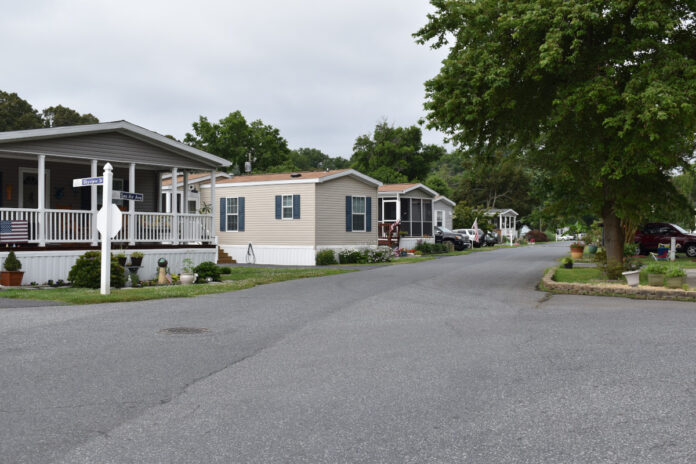
Manufactured homes in Dolce Vita, a community in Apache Junction, Ariz.
Manufactured homes have been regulated by the U.S. Department of Housing and Urban Development for more than 40 years. Industry leaders believe energy standards for manufactured homes should derive from the industry’s longtime primary regulatory body. A contingent of manufactured housing industry professionals convening with lawmakers will carry that message with them during the Innovative Housing Showcase and Homes on the Hill events June 7-12.
Energy efficiency is a strong point for manufactured homes, particularly homes built during the last dozen years. Nearly every builder of HUD-code homes has improved its standard energy efficiency and rolled out myriad options for products that help with sustainability in energy transfer and cost reduction.
Builders today pack every bit of R-value they can into a home, knowing it will be a prime tool in marketing the homes because it will help reduce monthly costs for the buyer. The industry hits the mark on efficient housing, including when it comes to energy, from the way materials are shipped and stored at a manufacturing facility, to efficiencies on the line, and the quality of products used within well-designed floorplans.
Wells Fargo Multifamily Capital in partnership offers insight in a two-part series on current market dynamics and how multiple factors are likely to impact commercial lending for manufactured housing communities. Part I follows, and part II will be posted here in the coming months following print publication in MHInsider Magazine.
We live in turbulent times with many cross-currents impacting the economy and commercial real estate. Unlike other recent economic cycles, white-hot inflation has moved into the headlines as the Federal Reserve Bank balances its dual mandates of price stability, moderate long-term interest rates, and full employment. The Consumer Price Index (CPI) is running at its highest level in four decades leading many to conclude inflation is no longer transitory.
Treasury rates have been on a steady rise in 2022 with the 10-year Treasury yield eclipsing 2%, marking a two-year high and an approximate 150 basis point increase from the Treasury’s all-time low of 0.51% in August 2020. In order to help borrowers prepare to face a higher interest rate environment, this article will be the first of a two-part series in which we take a look back at past economic cycles for insights, and then highlight alternatives borrowers should consider when assessing financing options and structures.
The Influence of the Fed
The Fed influences short-term interest rates through its open market committee (FOMC), which sets the federal funds rate — the interest rate applied on overnight loans from one financial institution to another. While they do not set market rates such as Treasury yields, changes in the federal funds rate along with the Fed’s policies and pronouncements are followed closely by market participants, and market rates along the yield curve respond accordingly. Besides setting the much-followed fed funds rate, the FOMC also establishes Fed monetary policy which, in order to provide market stability, authorizes the Fed to purchase securities (bonds). This is commonly known as quantitative easing. Through QE the Fed buys securities on the open market, providing a liquidity backstop and lowering the yield on bonds during times of capital markets upheaval like that which resulted from the COVID-19 outbreak in 2020. Many also will recall when the Fed utilized QE in 2009 as financial markets muddled through the Great Recession. QE aims to stimulate more lending and investment that keeps rates lower during times of market disruption than what market participants would normally demand. Using a similar strategy in March 2020, the Fed injected more than $700 billion in bond purchases, and in June 2020, it added monthly purchases of $120 billion of bonds – $80 billion in U.S. Treasury securities and $40 billion in mortgage-backed securities.
That program continued until December 2021 when QE began being phased out.
Inflation in the U.S.
The economy has rebounded following the sudden and severe recession experienced during the first half of 2020. The economy in 2021, as measured by Gross Domestic Product, grew at an annualized rate of 5.7%, marking the fastest rate of growth in a calendar year since 1984. However, inflation picked up throughout the year and the CPI grew by 7%, the largest calendar-year change in the cost of living since 1981.
At the end of January 2022, the 12-month inflation rate jumped to 7.5%. This resurgence of inflation appeared to force the Fed to reconsider its monetary policy and use of the term “transitory”. The Fed reduced its monthly $120 billion in bond purchases by half in December, and plans to curtail the entire strategy.
Given all of this, it is worth re-visiting historic averages for perspective and insight into the years ahead. In statistics, regression toward the mean is the concept that extreme measurements or outliers in a defined group will be closer to the average over time. Outliers in economic statistics occur during times of upheaval and then typically move closer to the average as more measurements are made. Because the 10-year Treasury is a common index used for fixed-rate loans, we should consider the following: Over the last 20-year and 30-year periods, the 10-year treasury yield has averaged 2.97% and 4.01%, respectively. These periods include a low rate (outlier) environment during the Great Recession and another during the COVID-19 pandemic. Inflation for decades had remained tame as the Fed prioritized maintaining a low inflation environment, and year-over-year CPI increases averaged approximately 2.5% over the past 30 years. By managing inflation, the Fed was also able to maintain price stability as shown below in the 20-year history of the 10-year treasury yield.
However, during the six months ending January 2022, monthly CPI increases averaged 6.4% and they are increasing at an escalating rate. While many have been predicting materially higher interest rates for years, we now appear to be facing the possibility of rates above historical averages for the next several years. Barring unforeseen capital market disruption in the coming years, we expect a further increase in long-term fixed rates and related Treasury indices. Of the Fed’s mandates, price stability has been its top priority in recent years. One reason for this may be that the Fed is comprised of members who remember the years of high inflation and economic instability experienced in the 1970s and early 1980s. Inflation is a political liability that impacts fixed and lower-income households particularly hard, and we believe the Fed will be willing to slow the economy to rein in inflation in a tight labor market. On top of increases in the fed funds rate, the market also has to absorb the impact of the removal of QE. With supply chain issues persisting and oil prices spiking due to geopolitical threats, there appears to be no immediate relief in sight for inflation.
Although we expect that over time there will be a tightening in interest rate spreads that will offset some of the increase in Treasury rates, we believe borrowers should assess their current loans and borrowing alternatives under the assumption that rates are going to be higher in the coming years. In part two of this series we will identify some key considerations to be weighed when reviewing your current and future financing strategies.
Tony Petosa, Nick Bertino, Erik Edwards, and Matt Herskowitz are loan originators at Wells Fargo Multifamily Capital, specializing in providing financing for manufactured home communities through their direct Fannie Mae and Freddie Mac lending programs and correspondent lending relationships.
The Biden Administration this week announced plans to close the housing gap in five years through a multi-pronged approach that includes creating improved financing for manufactured homes.
“The plan’s policies to boost supply are an important element of bringing homeownership within reach for Americans who, today, cannot find an affordable home because there are too few homes for sale in their communities,” the White House communication stated. “And it will help reduce price pressures in the economy, as housing costs make up about one-third of the market basket for inflation, as measured by the Consumer Price Index.”
Among the new financing mechanisms the White House intends to deploy with the goal to build and preserve more housing is for “manufactured housing (including with chattel loans that the majority of manufactured housing purchasers rely on), accessory dwelling units (ADUs), 2-4 unit properties, and smaller multifamily buildings.”
In addition, the administration is looking to expand programs for construction to perm loans, often used in the industry to begin construction and convert to a conventional mortgage upon completion and home placement.
The Manufactured Housing Institute issued a statement indicating the White House plans toward other industry priorities as well, including “keeping the HUD Code up to date, addressing zoning barriers, easing supply chain constraints, and addressing the shortage of construction workers.”
Land-Use Reforms
The White House plan intends to tie federal funding to local land-use practices, including planning and zoning efforts.
“One of the most significant issues constraining housing supply and production is the lack of available and affordable land, which is in large part driven by state and local zoning and land use laws and regulations that limit housing density,” the statement said.“Exclusionary land use and zoning policies constrain land use, artificially inflate prices, perpetuate historical patterns of segregation, keep workers in lower productivity regions, and limit economic growth.”
Materials and Labor
In the months ahead, the Biden Administration said it is “committed to working with the private sector to address near-term constraints to supply and production – with the goal of achieving the most completed housing units in a single year in 15 years.
The plan calls for U.S. Housing and Urban Development Secretary Marcia Fudge and U.S. Department of Commerce Secretary Gina Raimondo to meet with private sector organizations that face supply chain disruptions, as well as promote alternative building methods, and recruit more qualified labor to the construction and craft trades.
Champion Home Builders has agreed to acquire Manis Custom Builders for an estimated $10 million.
Skyline Champion Corporation, the parent company, and the largest publicly traded factory home builder in the country, said it expected to close the deal for the Laurinburg, N.C., company by month’s end.
Champion President and CEO Mark Yost said Manis will be a welcomed addition to the team.
“While working with founder Joe Manis and his team during this transaction, we learned that their core operating principles mirror our own,” Yost said.
Manis has led the organization that bears his name since 1983 and has set a standard for high quality. Manis builds 800-square foot to 2,000-square foot custom modular homes.
“With the addition of this 250,000 square foot campus in Laurinburg and Manis’ retail location in eastern North Carolina to our existing North Carolina campuses, we are now better able to serve customers throughout the region with cost-effective, streamlined product offerings that are greatly needed in the current economic environment,” Yost said. “We anticipate continuing to build out the approximately $15 million of backlog as we upgrade and re-tool portions of the plant.”
Champion operates from Troy, Mich., while the corporate entity, Skyline Champion, is headquartered in Elkhart, Ind.
The Federal Reserve in May made good on its promise last month to keep a keen eye on inflation by raising rates just enough to avoid a recession. The half-point boost doubles what the Fed did last meeting, and indicated continued hikes through the year equaling at least another point.
The half-point boost in the Fed’s benchmark rate is the largest single push in more than 20 years.
“In support of these goals, the committee decided to raise the target range for the federal funds rate to 3/4 to 1 percent and anticipates that ongoing increases in the target range will be appropriate,” The Fed said in a released statement.
Additionally, the Fed said it will begin reducing its holdings of Treasury securities and agency debt, and agency mortgage-backed securities, on June 1 as described in the “Plans for Reducing the Size of the Federal Reserve’s Balance Sheet” released in conjunction with this statement.
Further rate hikes will be managed with a wide range of information in mind, the statement said, including readings on public health, labor market conditions, inflation pressures and expectations, as well as other financial and international developments. The invasion of Ukraine by Russia is causing tremendous human and economic hardship. The implications for the U.S. economy are highly uncertain. The invasion and related events are creating additional upward pressure on inflation and are likely to weigh on economic activity. In addition, COVID-related lockdowns in China are likely to exacerbate supply chain disruptions.
“Inflation is much too high and we understand the hardship it is causing and we are moving expeditiously to bring it back down,” Federal Reserver Chairman Jerome Powell said.
Policymakers in Washington are keenly focused on ways to address the nation’s affordable housing supply shortage. The need for immediate solutions is only increasing — in 2021, home prices increased by more than 18% while “real” average weekly earnings for U.S. workers fell by more than 3%. With housing inventory at near historic lows and economists estimating more than five million homes are needed, finding ways the federal government can help spur additional affordable housing supply is at the top of the agenda. The Manufactured Housing Institute is working to ensure manufactured housing is well-positioned to be at the forefront of these deliberations.
Talk of Manufactured Housing at the Capitol
Last September, the Biden-Harris administration directed federal agencies to use “every tool available in government to produce more affordable housing supply as quickly as possible.” Manufactured housing supply was a leading component of this effort, with White House Press Secretary Jen Psaki highlighting the administration’s commitment to boosting the supply of manufactured housing. Beyond Washington, the plan included calling on state and local governments to reduce zoning and financing barriers to manufactured housing which “allows families to achieve homeownership and build wealth.”
This is a historic time for our industry when our efforts in Washington continue to yield attention at the highest levels of government to help more Americans achieve homeownership through manufactured housing. As a result of the White House directive, an inter-agency task force has been convened to look at federal homeownership financing programs and how they can better support the purchase of manufactured homes.
With current HUD Secretary Marcia Fudge pledging her support of manufactured housing at numerous congressional hearings, saying it is an “outstanding option,” MHI’s efforts to educate policymakers has positioned us to ensure federal efforts to increase the affordable housing supply in America will include changes in policy that support manufactured housing. In addition, to support by administration officials, MHI has worked to ensure that the benefits of manufactured housing are a topic at every affordable housing hearing that has taken place in the 117th Congress.
We are not just cultivating relationships with those congressional representatives that already know us.. We are taking our message about the quality and affordability of manufactured homes to congressional leaders, including many who have never seen a manufactured home but want more quality affordable homeownership options in their districts. Our efforts have yielded results and through our advocacy, we have support from congressional members on both sides of the aisle and from all parts of the country – saying at hearings that manufactured housing is “the most affordable homeownership option available nationwide” and “manufactured housing offers a safe and affordable, wonderful, place for a family to call home.”
Seize the Opportunity
Now is our time, and MHI is seizing the opportunity to advance key priorities to grow the market, including ensuring federal housing finance programs (FHA, Fannie Mae, Freddie Mac, USDA, VA) support manufactured housing; updating the HUD Code on a regular cadence; making sure efforts to increase energy efficiency standards for manufactured housing are feasible and cost-effective; moving the federal government to address local exclusionary zoning policies and enforce the preemption of the HUD Code; and supporting the preservation of land-lease communities.
In addition to our direct work with federal policymakers, MHI’s membership has served as a key grassroots connection to elected representatives and regulators. Since the beginning of the 117th Congress and the Biden Administration, we have generated more than 1,500 contacts to the administration and Congress. Our advocacy has resulted in the first update to the FHA Title I program in 40 years; the first comprehensive updates to the HUD Code in decades; the Senate telling HUD to expedite further updates to the HUD Code and further FHA financing reforms; House members telling the Department of Energy they do not support the proposed efficiency rule; and administration efforts to address lumber prices and supply chain shortages. MHI is also developing partnerships with key national housing and business coalitions to ensure industry priorities are embraced by the advocacy community so that our voice to policymakers is even stronger. Through these relationships, MHI has participated in numerous housing industry events, including the National Association of Realtors® December “Real Estate Forecast Summit: The Year Ahead.”
Build for the Future
MHI is continuing to build upon our momentum from 2021 so that we can continue to elevate housing innovation and expand attainable homeownership. We will continue to build relationships with federal policymakers and ensure the manufactured housing industry continues to be a part of the federal dialogue about addressing our nation’s housing challenges. Our access to Washington policymakers is as strong as ever and it is bolstered by the direct engagement from MHI members to their elected representatives to keep our issues at the forefront.
In addition to advocacy, we are committed to supporting our members with quality events, education, and information. Our upcoming in-person conferences will be packed with exceptional programming and networking opportunities. In addition, we are growing our resources for members, ranging from useful economic reports to interactive maps on topics like zoning and manufactured housing communities, to timely news and updates. MHI continues to gain momentum in Washington, not only due to our effective advocacy strategy but because of what is happening in the industry – the quality of our houses and our people. Together, with a strong voice and unified message, we will ensure federal policymakers support our industry’s growth so that the American Dream of homeownership can be a reality for more Americans.
More than 1,500 manufactured housing professionals are expected in Las Vegas April 7-9 as the Manufactured Housing Institute’s Congress and Expo returns to the...
With more homes, more exhibitors, and more buzz than ever before, the 2026 Biloxi Show is expanding, and fast.
The Biloxi Manufactured Housing Show &...