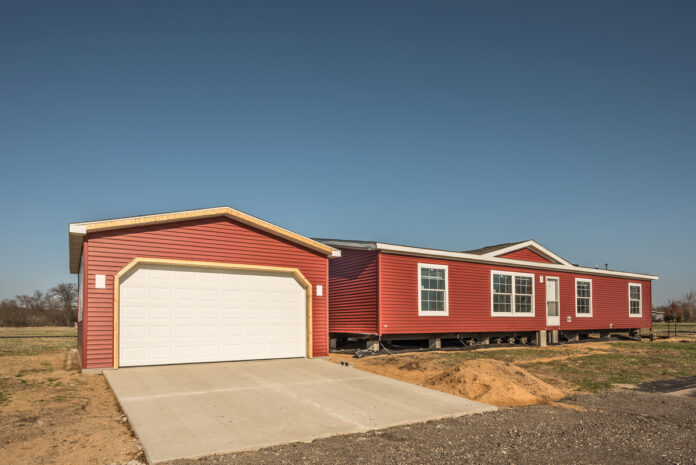
Dozens of Manufactured Home Models Expected to Display at 2023’s First Major Industry Event
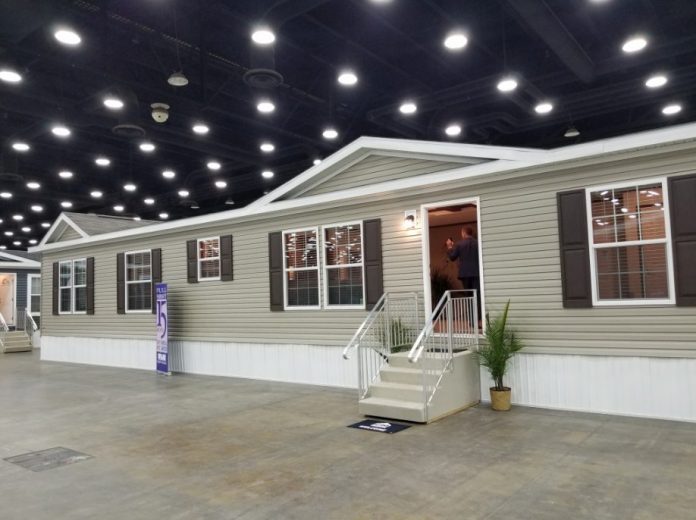
Save the date for The Louisville Manufactured Housing Show, which this year will take place from January 18 – 20, 2023 at the Kentucky Exposition Center.
The Louisville Show, known for being the nation’s largest indoor event for manufactured homes, also announced today that exhibitor applications are open.
Hosted in Louisville for over 61 years, The Louisville Show will showcase the latest lineup of new homes, products and services for manufactured housing professionals looking for the greatest innovations the industry has to offer. The event is hosted in partnership with the Midwest Manufactured Housing Federation.
“It’s been a long time coming; we’re excited to welcome manufactured housing professionals back to Louisville for the first time in three years to view the newest model homes and industry innovations,” Eric Oaks, MMHF Chairman, said. “This show is the year’s first major opportunity to browse these homes before the spring buying season fully starts, and we’re proud to be a part of it.”
The event will once again take place at the Kentucky Exposition Center in Louisville, Kentucky, where industry professionals can view dozens of the latest model homes from the top manufacturers in the industry. Attendees at The Louisville Show can view more factory-built homes than any other indoor event in the U.S.
Industry professionals interested in attending The Louisville Show can visit thelouisvilleshow.com to sign up for event updates and be the first to know when attendee registration opens.
Exhibitor Applications Now Open For 2023 Louisville Show
The Louisville Manufactured Housing Show will host dozens of exhibitors from across the entire manufactured housing industry. Exhibitors at the event range from manufacturers, retailers, suppliers, community owners/operators and other industry professionals all showing off their latest products, services, and announcements.
Exhibitors at The Louisville Show directly reach thousands of manufactured housing professionals and prospective customers ahead of the spring and summer buying seasons.
Manufactured housing professionals can book their exhibit space today by visiting thelouisvilleshow.com or calling (770) 587-3350.
“Because this is the first in-person Louisville Show in three years, we expect our exhibit spaces to fill up quickly due to extremely high demand,” Show Coordinator Trisha Ragoopath-Le said. “January is the perfect time to get in front of thousands of industry professionals, so we’re asking our manufacturer and supplier partners to book their exhibit spaces as soon as possible.”
The Louisville Show is an industry trade event not open to the general public. For more information about the event, visit thelouisvilleshow.com.
AboutThe Midwest Manufactured Housing Federation
The Midwest Manufactured Housing Federation is a trade-association dedicated to the promotion and advancement of the manufactured housing industry throughout Illinois, Indiana, Kentucky, Michigan and Ohio. The Federation holds the Louisville Manufactured Housing Show annually in Louisville, Kentucky.
A U.S District Court in Arizona has approved a $1.5 million settlement of the Securities and Exchange Commission action against Cavco Industries.
The SEC claim was related to 2017 trading directed by former CEO Joseph Stegmayer that resulted in “an unrealized gain of approximately $265,000 for the company”.
In a release from Cavco, the company stated the settlement comes without admitting or denying the findings of the consent judgment. Cavco agrees to an injunction against future violations of the antifraud and internal accounting control provisions of the Securities Exchange Act of 1934, as well as the $1.5 million penalty.
“The settlement resolves all claims in the action against the company. Daniel Urness, its former chief financial officer, is the only remaining defendant in the ongoing action,” the release stated. “Mr. Stegmayer settled the SEC claims against him last year.”
Bill Boor is the president and CEO of Cavco
“After working to resolve this matter for an extended period of time, we are very happy to have reached a settlement on reasonable terms,” Boor said.
Information on featured speakers and the schedule of events for SECO22 are now available.
Registration Remains Open for Community Owners, Managers to Experience Four Days of Programming, Networking
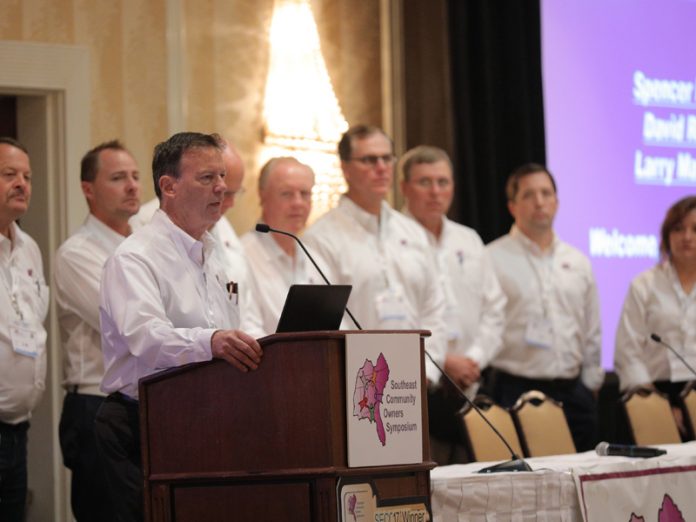
The SECO National Conference of Community Owners announced today its lineup of speakers for SECO22, along with the schedule of events for this year’s programming.
This year’s conference, which will take place at Stone Mountain Park in Atlanta, Ga., at the Atlanta Evergreen Lakeside Resort Oct. 3-6, 2022, will offer four days of sessions, panels, and roundtables from the industry’s top leaders and experts in all things manufactured housing.
“SECO has always been about making personal connections and fostering education with small to mid-size community owners and managers,” SECO Co-Founder and organizer Spencer Roane said. “We are thrilled to be back in Atlanta this year to continue the tradition in-person and share industry knowledge among fellow professionals.”
SECO22 Announces Speakers, Schedule of Events
SECO is proud to announce its speakers and sessions for the 2022 event, including:
Mark Yost, CEO of Champion Homes, our Keynote Speaker!
Judge Louis Levenson, “Parting is Such Sweet Sorrow: Legal Considerations in Evictions”
Commercial Real Estate Economist and Futurist KC Conway, CCIM, CRE, MAI
Ed. O Bridgman, President and CEO, EOB Consulting “The Next Frontier: Expanding Your Portfolio with RV Parks”
Ken Corbin, CallKenCorbin.com, “Communicating With Today’s Resident”
Darren Krolewski, Co-President, Chief Business Development Officer, MHVillage/Datacomp, “Back to the Basics: Can’t-Miss Marketing Fundamentals to Promote Your Community and Sell/Rent More Homes”
Kevin Thrash, Executive Vice President, American Commerce Bank, “Fly on the Wall Discussion of a Real Loan Committee”
Download the Whova App to Stay Connected at SECO22
Like in past years, SECO22 will make use of Whova to allow attendees to take full advantage of SECO22’s networking opportunities.
Attendees at the event can use Whova to network with other attendees, speakers, and sponsors, find a mentor, supplier, or business partner, plan social activities, post job openings tailored to event attendees, receive event updates, and stay in touch with connections after the event.
Attendees can find more information and download and register for Whova at secoconference.com.
After downloading, attendees should use their attendee email address when signing up in the app and choose a strong password, or sign up using a social media account. Once signed up, they will be taken directly to the event.
If asked for an event invitation code when accessing the event, attendees should check their email as the event invitation code will be emailed to all attendees prior to SECO22.
Those who have attended SECO in the past can log in using their existing credentials if they have used Whova during past SECO events.
What’s New at SECO22?
By attending SECO22, you’ll get to take part in networking roundtables, attend three receptions for entertainment and networking, experience SECO’s first-ever live music at the event, and attend all-time favorite SECO educational sessions to further your industry knowledge.
For the first time in five years, you’ll also have the chance to tour 16 on-site, display manufactured homes to see the latest developments in industry manufacturing. Manufacturers displaying homes at this year’s conference include Cavco, Clayton, Legacy Housing, Live Oak Homes, ScotBilt Homes, and Skyline Champion.
This year’s event is expected to draw hundreds of industry professionals from all over the country.
“We’re just a few days away from SECO22, so if you haven’t already registered for the event and booked your transportation and lodging, now is the time to act,” Roane said. “The room block at the Atlanta Evergreen Lakeside Resort is now sold out, and we’re now booking rooms at our secondary lodging location, the Inn at Stone Mountain Park. We recommend registering for SECO22 TODAY so that you can plan out your SECO week and take advantage of the top event for community owners and managers.”
Now in its 12th year, SECO has been a landmark conference “for community owners, by community owners,” providing the opportunity to learn, interact, network, and shop the latest manufactured housing offerings as well as building symbiotic relationships between community owners and street retailers. For more information on SECO22 and to register for the event, visit secoconference.com. SECO22 is an industry conference for manufactured housing professionals and is not open to the general public.
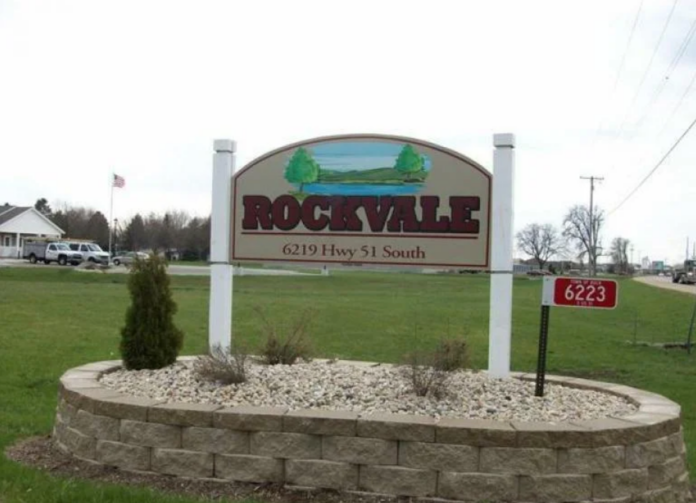
Rockvale manufactured home community in Janesville, Wisc.
5,232 Homesites in Mich., Minn., Wisc.
RHP Properties, the largest private owner and operator of manufactured home communities in the U.S., has acquired 50 communities, including 41 communities in Wisconsin, seven in Minnesota, and two in Michigan.
It plans to add more than 500 new manufactured homes to the new addition in the portfolio during the next five years, the company stated.
“This acquisition will make a difference for thousands of Midwest families, seniors, and others feeling the squeeze of today’s housing market,” RHP Properties CEO Ross Partrich said. “By growing our portfolio and delivering 500 new homes we are reinforcing a central part of our mission to offer homes people can afford in safe, community-focused, and well-managed environments.”
RHP said it plans to spend about $7.5 million in the first 18 months of ownership on utility upgrades, roadwork, and amenity upgrades, such as playgrounds and parks to improve infrastructure and lifestyle.
“We recognize all that Wisconsin, Minnesota, and Michigan have to offer,” Partrich said. “Wisconsin’s commitment to economic development and its recent infrastructure investment positions cities across the state for a strong job market, and we’re excited to invest and participate in communities where residents have the opportunity to thrive.”
Federal Open Market Committee (FOMC) participants gather for a a discussion on the economy and the monetary system.
In the face of continued inflationary pressure and a labor market walking a tight wire the Federal Open Market Committee has announced a hike on interest rates again, another 0.75 for a historic third consecutive meeting.
Inflation has slowed with the previous Fed rate hikes, at a rate of 0.1 in August coming off the mid-year high of 9.1 percent to a still much too high 8.3 percent. Meanwhile, the labor market has held its own, but unemployment ticked up from 3.5 to 3.7 percent as many job seekers re-entered the market.
Prices across the board are up, from energy and food to higher ticket items like cars and homes. The FOMC hopes the steady rate hikes that make obtaining financing a bit more expensive will help tame the market and create the least pain possible toward the goal of 2 percent inflation, and steady growth in labor and investment. If rates move too quickly, or too high, it could result in recession.
The Fed already this year had been more aggressive in raising rates than any time since the 1980s. The 2022 rate hikes — in March, June, and July, and now September — accounted for a 2.5 boost that now has rates hovering between 2 and 3.25. Most analysts believe the Fed will continue at some pace to raise rates to 4 or 4.5 percent by sometime next year.
But how much is too much?
“The deceleration in housing prices that we’re seeing should help bring sort of prices more closely in line with rents and other housing market fundamentals. For the longer term, what we need is supply and demand to get better aligned, so that housing prices go up at a reasonable level, at a reasonable pace, and that people can afford houses again… so we probably in the housing market have to go through a correction to get back to that place.”
Fed Chairman Jerome Powell
In addition to the rate hike, the Committee stated it will continue to reduce holdings of Treasury securities and agency debt, and agency mortgage-backed securities, as described in the Plans for Reducing the Size of the Federal Reserve’s Balance Sheet that was issued in May.
“In assessing the appropriate stance of monetary policy, the committee will continue to monitor the implications of incoming information for the economic outlook,” the FOMC said in a released statement. “The committee would be prepared to adjust the stance of monetary policy as appropriate if risks emerge that could impede the attainment of the committee’s goals. The Committee’s assessments will take into account a wide range of information, including readings on public health, labor market conditions, inflation pressures and inflation expectations, and financial and international developments.”
The interior of a new manufactured home from Cavco.
Is There Any Good News About Purchasing Chattel Loans on Manufactured Homes? Maybe
By Raymond Leech
Raymond Leech
As we all know, manufactured housing is one of the best sources of affordable housing available today and makes up to 10 percent of all of the nation’s housing stock. With the severe housing shortage in this country, estimated to be close to four million units by Freddie Mac, manufactured homes are valuable in closing this gap. But a large percentage of loans used to purchase these homes are chattel loans or personal property loans, and the conventional mortgage marketplace does not support chattel loans. This results in financing that has higher interest rates over shorter terms, and fewer consumer protections.
While Cascade Financial has been successful in creating a few securitizations in recent years, there are currently no other major investors that purchase or securitize chattel loans for manufactured housing. And the two Government-Sponsored Enterprises (GSEs), Fannie Mae and Freddie Mac, do not have policies or products in place to purchase them either.
But that could be changing.
What Are the Enterprises Doing on Chattel?
In April of this year, the Federal Housing Finance Agency (FHFA) released the Duty To Serve plans of Fannie Mae and Freddie Mac. Duty To Serve is a commitment by FHFA through Fannie Mae and Freddie Mac to provide financing in three key underserved markets: manufactured housing, rural housing, and affordable housing preservation.
DTS commenced in 2016 and the first plans were announced in 2018. A new plan is announced every three years. The one released in April is for 2022 through 2024.
But the 2022 plans got off to a rocky start, and one of the reasons is both GSEs had nothing to address support for chattel loans.
In a stunning development, the original DTS proposals to FHFA in May of 2021 were soundly rejected by many housing advocates such as the Lincoln Institute, the National Housing Conference, and National Community Stabilization Act. They told FHFA to hit “pause” as they did not believe the proposals met the spirit of the DTS commitment.
The advocates were upset that both GSEs were ending their plans to explore purchasing chattel loans, and disappointed in the goal levels set for rural, affordable housing preservation, and manufactured housing. FHFA listened and told Fannie Mae and Freddie Mac in January of this year to go back to the drawing board. And they did, and the new proposals were accepted in April.
But even with the improved proposals and more robust goals, do not expect significant changes regarding chattel financing in the next few years. However, there are some things happening.
Freddie Mac Duty to Serve Plans
In their April DTS plan, Freddie Mac announced a definite focus and goals for chattel loans in the next few years.
Freddie Mac committed to purchasing from 1,500 to 2,500 chattel loans as part of their DTS goals in 2024. Over the next two years, their plan is to complete a feasibility assessment of the requirements and processes needed to support chattel loan purchase, including underwriting, pricing, consumer protection, valuation, and risk management.
And if they are successful, they want to obtain FHFA approval to move forward with a loan option that could be introduced in 2024. The big challenges they point out are a lack of lender standardization, no standard underwriting practices, and no consistent approach to assessing property values.
Freddie Mac announced a focus on MH homes in Native American and Alaskan American communities, which have complicated land ownership rules due to trust or tribal issues. They also are working on efforts with nonprofit developers to expand the availability of manufactured housing. Additionally, they are focusing on expanding their outreach and loan purchases in resident-owned communities (ROCs) and nonprofit developer communities.
Fannie Mae Duty to Serve Plans
Fannie Mae’s plan does not include any specific goals for chattel financing by 2024. But they are still interested in exploring this area.
“We continue to work with our regulator (FHFA) to understand safety and soundness considerations and the viability of a chattel loan pilot program,” Fannie Mae said in a published statement.
So based on this, Fannie Mae may offer the chattel loan product via a pilot. Typically, pilots are done with selected lenders in specific markets. And pilots can be up to one or two years in length. So do not expect a chattel loan product available nationwide to lenders from Fannie Mae for several years at least.
Fannie Mae’s plan also includes efforts to develop products and strategies to purchase more loans in manufactured home communities. These communities feature homes built in factories and delivered to the community where residents own homes and lease the land from a community owner. They also announced that all loans in these communities must have 100 percent tenant site lease protections in place.
In addition, Fannie Mae announced that they are exploring how to purchase more loans from MHCs to finance rental units, and also allow residents who rent MH units to report their rental payment data to credit bureaus to help build up their credit profiles.
Some Good News
The good news for the manufactured housing industry is that both Fannie and Freddie are increasingly committed to the purchase of more conventional loans related to MH titled as real property, with Freddie planning to purchase from 5,800 to 7,500 loans each in the next three years and Fannie planning to purchase at least 9,300 loans annually in the next three years.
So, in summary, housing advocates were able to steer both Fannie Mae and Freddie Mac toward more robust efforts and goals in the manufactured housing marketplace. Freddie Mac is taking the lead on chattel financing efforts, and typically, once one GSE adopts a program or product, the other one will follow. This will be an interesting effort to examine during the next few years, and hopefully we will see progress down the road.
About the Author Raymond Leech has worked in the mortgage industry for the past thirty years, first with Fannie Mae and more recently, with Fairway Independent Mortgage Corporation. He has developed and managed construction and renovation mortgage products, but also worked on FHFA Duty To Serve efforts involving manufactured housing, rural, and affordable housing efforts.
The rise of manufactured housing began in the 1960s and continued as one of the predominant forms of housing developments until the late 1980s when local governments started to push back on adding more “trailer parks” to their cities. Zoning restrictions were enacted to prevent these kinds of developments in exchange for more dense housing such as apartments and condos. The real motivation behind these restrictions was more tax dollars from a “higher and better use” of the land. This basically translated into the higher you build, the more tax revenue you generate. As such, developers were highly incentivized to build this product type as government grants and tax breaks were plentiful during this time.
Ever since, these incentives have remained in place and local government officials have continued to preach “Not in My Backyard!” when it comes to allowing the development of manufactured housing communities.
‘Let Them Play’
Fast forward 30-plus years and the U.S. faces its biggest ever housing crisis. Housing prices have grown by 5, 10, even 20 times in some cities since the last wave of manufactured home communities were developed.
Labor and materials have become more and more scarce and expensive causing housing supply to leave a deficit estimated in the tens of millions nationwide. Affordable housing has become an oxymoron while all of these factors clearly point to the need for more manufactured housing.
Luckily, it seems like some governments are finally waking up.
Lawmakers in Arizona, Maine, Maryland, Massachusetts, and North Carolina are taking aim at local zoning restrictions against manufactured housing. Instead of using rent control, some states are looking to deregulate county and city zoning restrictions that prevent affordable housing; an attempt to switch the narrative to “Let Them Play!”.
Phases of Development
Over the last year, we have tracked over 15,000 sites being developed across Texas, Arizona, and the Southeast. As more investment moves into the space, we see land valuations rise as it progresses thru each stage of development. Understanding the stages of the development process and the value of each stage is very important.
First, there is “As-Is” — which is exactly what it seems — land with either no zoning or an agricultural designation. The fair market value of comps and makeup of the local regulatory environment weigh heavily on the valuation. Next, there is “Entitlement” — of which there are various levels. Limited Entitlements are used to describe areas without zoning within utility districts, whereas a project is Fully Entitled when the zoning and permitting of a project is complete. Today, in a market where lot rents are in the $500-$600/month, projects that are fully entitled are trading for $15k-$35k per lot. Then, there is “Build-To-Suit” — which comes into play once zoning and entitlements are completed. At this stage, a buyer has more autonomy over the development as long as it meets any setback or other zoning requirements. Savvy developers can set up a joint venture or partnership structure with larger equity groups. These deals can be structured as with a Right of First Refusal (“ROFR”) on the built asset or a more hands on JV structure that phases out the developers at checkpoints. Finally, there is “Stabilized” – which is the finished product from the development process. Developers that are trying to stabilize a property will need to make sure they can get an appropriate home allocation from a manufacturer. This will be crucial for bringing the community to stabilization. 21st Mortgage, Triad, Vanderbilt, and Cascade are chattel lenders that currently offer a competitive program for helping community owners finance inventory and end-users creatively finance the purchase of their homes.
New Tools for the Trade
As development is finally back in the MH industry, it is even more important that developers have the right tools to make these projects a success. If these communities are built the right way, more state and local governments should provide the necessary support for future manufactured housing developments. And since technology has changed so much since the last MH development wave, it is crucial that we use the availability of new technology to our advantage. Tools such as Land Vision, Zoneonomics, and Carta can be very helpful. Land Vision is a robust GIS mapping tool for zoning, parcel, flood maps, etc. It also allows you to upload your own maps, customizing the user experience. Zoneonomics is a great tool for looking “under the hood” of parcel zoning data. Zoneonomics is currently acquiring municipality data across many states and users can get 16 professional reports per month for $150. Finally, Carta helps GP’s manage LP interests and keeps the cap table organized. It is currently in beta stages for secondary trading market for LP interests. This could be the tool that provides liquidity for private equity markets.
Mitch Gonzalez is the director of land sales and development for Yale Realty and Capital Advisors, and previously ran a construction company providing general contracting services for brands such as Emcure Urgent Care, Jonna Properties, and Safeway Oil Company. Gonzalez has been the transaction manager on almost $70 million in closings, and now helps clients with land sales and development consulting.
Friendly Village, a Newport Pacific manufactured home community in Anaheim Hills, Calif.
Datacomp, the publisher of JLT Market Reports and the nation’s #1 provider of market data for the manufactured housing industry, announces the publication of its September 2022 mobile home park comps with occupancy and other vital data on manufactured home communities in California, Oklahoma, and Texas.
Recognized as the industry standard for manufactured home community market analysis for more than 20 years, JLT Market Reports provide detailed research and information on manufactured home communities located in 187 primary housing markets throughout the United States. This includes rent trends and statistics, marketing programs, and a variety of other useful management insights.
Datacomp maintains and provides the JLT Market Reports and is the nation’s #1 provider of market data for the manufactured housing industry. JLT Market Reports are recognized as the industry standard for manufactured home community market analysis.
The manufactured housing market data published in the September 2022 JLT Market Reports includes information on investment-grade manufactured home communities. Altogether, reports from the three states include data representations on 1,001 “All ages” and “55+” manufactured home communities with 205,549 homesites.
What’s in JLT Market Reports?
Each JLT manufactured home community market report from Datacomp has detailed information about investment-grade communities in the major markets. The detailed information on manufactured home communities includes:
Number of homesites
Occupancy rates
Average community rents, and increases
California rent control and next increase data
Community amenities
Vacant lots
Repossessed and inventory homes, and much more
JLT Market Reports also include management insights that rank communities by the number of homesites, occupancy rates, and highest to lowest rents. Established reports show trends in each market with a comparison of September 2022 rents and occupancy rates to September 2021, as well as a historical recap of rents and occupancy from 1996 to the present date in most markets.
The September 2022 JLT Market Reports for Texas, California, and Oklahoma manufactured home communities are available for purchase and immediate download online at the Datacomp JLT Market Report website, or they may be ordered by phone in electronic or printed editions at (800) 588-5426.
Each fully updated report for mobile home communities is a comprehensive look at investment grade properties within a market, enabling owners and managers, lenders, appraisers, brokers, and other organizations to effectively benchmark those communities and make informed business decisions.
Natalie Clark (right) and Claire Conti from Rent Butter talk with clients during an industry trade show recently in Arizona.
New Approach Allows Rental Applicants to Show All Sources of Income
Rent Butter wants its clients to rent better, streamlining internal leasing operations and enhancing the renter’s and community owner’s screening experience.
Company founders Chris Rankin, a developer, and Tom Raleigh, an attorney, had been working in multi-family housing, largely serving the middle market on Chicago’s west and south side. They were part of a real estate firm that grew from 100 to 10,000 apartments in five years and learned pretty quickly that they needed a more efficient way to screen and communicate with prospects and renters.
Truthfully, they had become somewhat accustomed to application acceptance on little more than a credit score, as well as a high volume of turnover and eviction. They were certain there was a better way.
“What are your biggest pain points? We interviewed 50 landlords and they all said the same thing,” Raleigh said. “How do I assess risk when the applicant’s credit score is really low… it made sense for us to tackle that issue.
“If they make stable income and make their rent payment on time, what does the credit score matter?” Raleigh asked.
A great majority of the people who apply have the ability to pay their rent, Raleigh said, but what Rent Butter customers are looking for is the willingness to pay.
“We call that the ‘Grit Factor’,” Raleigh said.
Rent Butter’s digital application runs on a mobile phone and gets approval from the applicant to share banking information with the owner looking to rent. It looks at instances of non-sufficient funds and overdrafts, it measures income stability, timely rent payments, and positive or negative trends in revenue and account balance.
“Really we give every landlord two reports,” Rankin said. “We give them the banking report, and credit behavior report. The real question is how they’re trending, not whether they have a 670 credit score but are they trending up to 720 or down to 550?”
“You can see the financial and credit trends are positive in this example,” he said. “The interface is easy to understand, and it really draws your eye to what’s important.”
They pull in info on defaults or late accounts that have yet to hit the credit score — 634 credit score six months later can be below 600 with a bad couple of months. All of the information flows into Rent Manager, for instance, and other large property management software solutions.
“The decades of hard work our industry has put into place has been very rewarding,” Raleigh said, for the property owner and management team, as well as the renter.
How Rent Butter Improves Resident Experience
“We make it really easy to apply,” Raleigh said. “Go on your phone and apply in five minutes.” The easier it is for someone to apply, the more applications the property owner will receive.
The more common rental application is five or six pages to look over. With Rent Butter, the applicant uploads an image of their ID card or driver’s license and completes the rest on their mobile phone in just minutes.
“Our ID verification tool is like airport technology at your property,” Raleigh said. “Their ID can be scanned and validated in real time.”
Pay stubs can be shared easily, and if no pay stubs are available, the user can provide secure access to their bank account.
“Connect your bank in real time, permission is granted and Rent Butter goes in to extract the needed data for the property owner,” Raleigh said. “It asks the applicant ‘Of all of these deposits, which ones are income?’ You click a box to confirm deposits that are earned income.
“Gig work and side hustles are included, so the applicant finally has a way to show their true income,” he said.
During the past few decades, the world has witnessed technology advance at breathtaking speeds. Look at the first Apple Macintosh computer from 1984, and then look at the newest iPhone America’s pocket. An iPhone 12 has enough processing power to guide over a million Apollo spacecraft to the moon, simultaneously. Technology is advancing at an almost incomprehensible speed, and while it can be challenging to keep up, it’s facilitating innovation in every industry nationwide.
The manufactured housing industry is no different. Modern manufactured homes are full of smart technology to help homeowners save energy, time, and money. Lenders can take applications online and issue approvals in minutes. Home manufacturers engineer the home building process to keep quality high and prices low for American home buyers. Did you know that the amount of waste from the construction of one single-section home can fit into a trash can? Compare that to the typical site-built home, and you’ll see how well-engineered a manufactured home is. Just the concept alone, building a home in a factory on an assembly line, is more advanced than building a home on a building site, out in the elements. And though it may not be as glamorous as a new home rolling off the assembly line, property insurance has its share of technological advances as well.
The key components to a great insurance product are ease, simplicity, and value. All 3 of which can be improved with modern technology.
The Digital Application
With any financial product (insurance, lending, or otherwise), the hardest step for the consumers is the first step, the application. A financial application is long, requires lots of information, asks for uncomfortable information, and when finished, offers no reward because there is still the very real possibility of denial. Though it cannot eliminate the negative aspects of the process completely, technology can help insurance companies alleviate much of the pain of the application process and keep home buyers happy during their new home purchase.
Have you ever seen a home buyer look at a paper insurance application? Their eyes get wide as they stare at endless boxes (usually not large enough for the answer), long questions, tiny print, and seemingly 100s of “initial here” and “sign here” boxes. Technology in the smartphone insurance application all but eliminates that initial negative reaction. Conditional logic technology allows the application to ask for only the information it needs to make a decision based on that customer – this means no extraneous questions. The application also has fewer questions per page. Studies that there is a dopamine release from the sense of completion every time a user moves to another page on an application, which keeps them happy and moving forward.
The digital application also allows for much easier follow-up from the insurance company. If a customer took a paper application home and never finished it, no one would ever know, and no one would be able to check on the status of the incomplete paper application. In the case of digital applications, however, follow-up opportunities are endless. Because the application gives their contact information at the onset, insurance companies can follow up with incomplete applications, and proactively reach out to the applicant to help them complete their application. According to a study by Brevet, it takes five follow-ups with a customer before a sale is made. Technology allows insurance companies to do this more effectively, thus allowing for more sales.
Technology in Underwriting
Once the applicant has submitted their application, underwriting begins. This is the process by which the insurance company determines the amount of risk in the policy, and how to price the premium to account for that risk. Traditionally, this is a very labor-intensive process that involves looking at various actuarial tables, going back and forth with the customer, performing many calculations, submitting data to supervisors, and finally submitting a decision to the applicant. This process can take anywhere from a few days to many weeks. Because of the length of underwriting, many customers are lost, either to other companies or they simply lose interest and move on.
To help convert more applicants to customers, insurance companies use technology to significantly speed up the underwriting process. Data is instantly taken from the application, analyzed, and sent to the underwriter. There are no manual calculations or need for various actuarial tables. The computer takes care of all of that. Advanced algorithms look at hundreds, if not thousands, of variables and determine risk with much more detail and accuracy than a human ever could. This is especially beneficial for manufactured housing because the underwriting algorithm can account for the unique profile of manufactured housing risk, which a human oftentimes cannot. The technology in insurance underwriting allows for a better insurance product for manufactured homeowners. Modern insurance companies, like CoverTree out of Michigan, are working tirelessly to create technologically advanced insurance products specifically tailored to manufactured homeowners, giving the manufactured housing industry a quality insurance product to go with its high-quality, high-value, homes.
Claims Processing Technology
And finally, there is the technology in the claims process. Most insurance customers will never reach this stage. But if they do, there is technology available to make filing a claim much less difficult than it has been traditionally. Modern insurance companies all have smart phone apps that allow the customer to file a claim, upload photos/video, even do virtual inspections with a claim adjuster. Technology also allows for much faster funds disbursement. Experiencing any sort of loss or damage to a home can be one of the most stressful times in someone’s life, and technology in the claims process makes that time less stressful.
AI – The Next Step in Insurance Tech
What’s next? Like every other industry, Artificial Intelligence (AI), also known as machine learning, is set to make a huge impact in the insurance space. Insurance AI will be able to analyze millions of data points in real-time and adjust policies and premiums for constantly changing variables. Smart insurance companies can learn from their customers’ losses and benefit from data-network-effects to improve pricing and experience moving forward. This will be a huge win for the manufactured housing industry. While human underwriters may come with biases towards manufactured homes, a machine will be able to see the material benefits without the inaccurate, outdated stigma associated with a manufactured home. The future of housing is a manufactured home, and we look forward to seeing insurance technology play a key role in the growth of the manufactured housing industry.
About the Author: Adarsh Rachmale is the co-founder and CEO at CoverTree, the first and only insurtech focused on middle America and manufactured homes. CoverTree offers state-of-the-art rating, data-driven pricing, and first-time residents can go online and completely purchase a policy in three minutes without having to talk to anyone.
Oct. 6-8 at Avalon Hotel in Alpharetta, Ga.
Manufactured housing community owners have never had more information available to them — or more decisions to...
The Midwest Manufactured Housing Federation has announced that attendee registration is now open for the 2027 Louisville Manufactured Housing Show, returning to the Kentucky...
HUD’s Innovative Housing Showcase, MHI’s Homes on the Hill and Annual Meeting Begin Sept. 22
Two of the country’s largest builders of manufactured homes will...