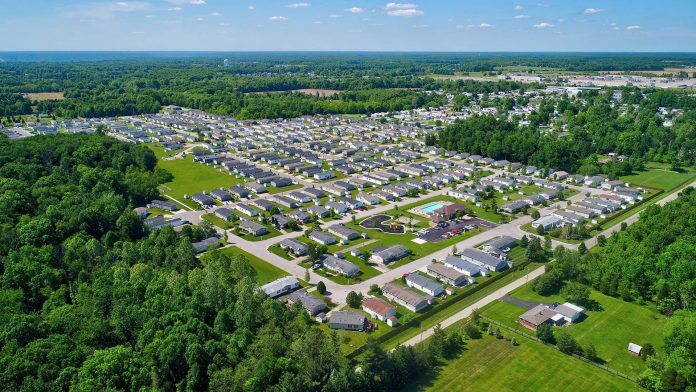
Competitive bid sale provide priority bidding to non-profit organizations, units of state and local government
The U.S. Department of Housing and Urban Development’s Office of Asset Sales will conduct a competitive bid HUD-held vacant note sale (HVLS 2022-1) on Nov. 10, 2021.
The sale will include approximately 1,730 reverse mortgage notes secured by properties where the borrower is deceased and not survived by a non-borrowing spouse. Consistent with the Biden-Harris Administration’s Sept. 1 announcement that more HUD-owned properties should be returned to future owner-occupancy, HUD will offer up to 50% of the notes in the multi-loan pools for bids first by eligible non-profit organizations and units of state and local government. Previous sales prioritized approximately 10% of the mortgage notes for this purpose.
“This sale provides greater opportunities for non-profits and local governments to purchase properties that can then be made available for affordable homeownership and support neighborhood revitalization,” said Principal Deputy Assistant Secretary for Housing Lopa P. Kolluri.
The sale seeks to increase affordable housing supply, expand opportunities for homeownership and rental housing, and revitalize communities through the disposition of these notes, including:
Selling properties to low- to moderate-income homebuyers at a price affordable to households earning less than 120% of the Area Median Family Income; and
Leasing properties at rents affordable to households earning less than or equal to 80% of the Area Median Family Income.
To encourage more non-profit organizations and local governments to participate in this and future sales, HUD is hosting a virtual training conference for such organizations on Sept. 29. The conference, “Expanded Opportunities for Participation,” will include presentations on the note sale process, technical considerations, and an overview of the mortgage notes and processes for the November sale.
HUD’s Office of Asset Sales is part of the Office of Finance and Budget in HUD’s Office of Housing. All mortgage notes to be sold through the Nov. 10 sale are for vacant and abandoned properties secured by Home Equity Conversion Mortgages assigned to HUD following the death of the borrower and any non-borrowing spouse where the time for heirs to come forward has elapsed.
The SECO National Conference of Community Owners has announced its programming schedule and lineup of speakers for SECO21, bringing the nation’s top manufactured housing experts together for a week of live online programming with over 50 sessions planned.
Now in its 11th year, SECO is a landmark conference “for community owners, by community owners,” providing opportunities to learn, interact, network and shop the latest manufactured housing offerings. The national event represents all parts of the manufactured housing industry, with an emphasis on small to midsize community owners.
“SECO has always prided itself on bringing the best of the best in manufactured housing community ownership to share what’s been working in their communities, and how others can implement those strategies,” SECO co-founder and organizer Spencer Roane said. “The event will feature over 60 educational sessions, over 100 speakers, over 35 sponsors and exhibitors, and hundreds of small to midsize community owners from across the country.”
SECO21 Schedule Offers Five Days of Unrivaled Community Owner Programming
SECO21 will offer five days of interactive programming for community owners and managers, including its Manager Monday workshop sessions geared exclusively for managers.
At SECO21, attendees can attend sessions such as:
Marketing Your Community on a Shoestring – The Most Effective Ways to Market Your Property with Limited or No Budget!
The Angry Resident – Working with Difficult People
Manufacturer Insights Panel
Managing Social Media
Considerations When Buying Distressed Parks
Acquisition Financing: What You Need to Know and Gather Up Before You Contact a Lender
Ask the Attorneys
Panel Discussion: Newcomers “Lessons Learned”
Due Diligence Land Mines
Best Practices for Website Optimization
The Rental Home Model
One-Minute Moneymakers
F.I.R.E.: Financial Independence, Retire Early! Swapping Salary for Spaces
Is an RV Park in Your Future?
Biden Tax Ramifications
Lease-Option MH “Financing”
And much, much more!
“Our returning attendees come back each and every year because of what they learn at SECO’s wide variety of events,” David Roden, another SECO planning committee member, said. “SECO21 has perhaps the most diverse event lineup in the conference’s history, and we can’t wait for everyone to come to this year’s event and learn from the best in the industry.”
In its second year as an online event, SECO’s new virtual event platform ensures that the event can host more sessions than ever, along with accommodating a record number of attendees.
“Shifting to virtual has only helped SECO in the long run,” SECO planning committee member Tom Lackey said. “We reached more attendees than ever at SECO20, our first virtual event, and we’re hopeful to keep that momentum going this year.”
Manufactured Housing All-Stars to Take the Mic at SECO21
SECO is proud to welcome the industry’s leading voices to share their insights and successes as community owners and managers, including:
George Allen, CPM Emeritus, MHM-Master, EducateMHC.com
Ed Barber, Principal, Iron Horse Interest Team
Mark Bowersox, President, Manufactured Housing Institute
Ken Corbin, President, CallKenCorbin.com
Kurt Kelley, President, Mobile Insurance
Darren Krolewski. Co-President, Chief Business Development Officer, MHVillage/Datacomp
Ryan Narus, Principal, Archimedes Group
Chris Nicely, President, ManufacturedHomes.com
Frank Rolfe, Co-Owner, Mobile Home University
Ekaterina Stepanova, Principal, M2K Partners
Don Westphal, Owner, Donald C. Westphal Associates
The full list of speakers and schedule of SECO21 sessions can be viewed here.
“SECO grew so much over the years that in 2020, our first year going virtual, we actually sold out of tickets,” Roane said. “That’s why we push for everybody to register as soon as they can, so they don’t miss out on all of the networking opportunities that SECO provides.”
SECO21 tickets are sold in four different tiers: Manager Monday tickets, which offers access to all Manager Monday workshop sessions, General Admission tickets for Tuesday – Friday sessions, VIP tickets which offer Tuesday – Friday session access and recordings of the main event, and All-Access tickets which grant full access to Manager Monday sessions, main event sessions, and full event recordings.
This year’s conference is once again a partnership with MHVillage, the leading marketplace for manufactured and mobile homes for sale.
For more information on SECO21 or to register online, visit secoconference.com. SECO21 is an industry conference for manufactured housing professionals and is not open to the general public.
About SECO National Conference of Community Owners
The SECO National Conference of Community Owners was founded 11 years ago by a small group of committed manufactured housing professionals and has been held each year near Atlanta. The gathering is dedicated to building an industry environment and culture that looks to share best practices and help form new ideas. SECO, a tax-exempt 501(c)(3) organization, was created for community owners, by community owners. All proceeds go toward planning and programming for the next year’s national gathering. Any excess revenue supports the Veterans Assistance Fund founded by SECO organizers in 2018 in support of veterans and first responders across the U.S.
The Texas Manufactured Housing Association met this week in Frisco, Texas, near Dallas, with a full day of programming for manufactured housing professionals on Monday. The luncheon speaker, Dr. John. S. Baen, a real estate professor at North Texas University, provided a spirited pep talk on the quality and value of manufactured housing.
“I believe in what you’re doing. This is the future. You’re looking at it,” he said.
Baen said city officials have very limited knowledge about manufactured housing and that it’s the industry’s job to educate them.
The professor also acknowledged the presence and pain of material costs and supply shortages, as well as the labor pains many industries are feeling.
“I don’t know when it’s going to get better, but it has to… we need to build better product and better advertising to promote our homes.”
Baen used a series of informational and often comical slides to impress upon the TMHA attendees that Texas stands to gain mightily if it can provide enough housing for all of the people drawn to the state.
“Let’s keep this in perspective,” he said. “A lot of people are escaping here.
“Millions of people have come across the Rio Grande. They could have chosen New Mexico, Arizona, California… but they know where Texas is,” he said.
He said while the birth and death rates balance each other out, the only way to increase population is through immigration and migration. Californians, in particular, are moving to Texas, and it’s not just individuals and families. Texas is drawing big business that will provide jobs, jobs for workers who will need housing.
“More people is more housing for you and me… Remember, you own the competition on price. Our houses are a 17th the cost of theirs,” Baen said of manufactured homes.
Dave Hegemann is the founder and president of London Computer Systems, or LCS, the provider of Rent Manager software. Photos courtesy of LCS.
An Ohio Boy in the ’80s Harnesses Latest Technologies for Family Properties
Dave Hegemann, like most kids his age, was simply looking for more time to spend with his friends outdoors during the summer.
“My dad had manufactured housing parks and campgrounds, and other properties that he rented,” Hegemann, founder of Rent Manager and President and CEO of London Computer Systems, recalls. “He used to do the books by hand, and I used to help him once I got old enough. It was my weekend thing. I couldn’t go out and play basketball or anything else until I was done.”
Someone had to collect readings, record usage, and calculate the proper charge. Utility billing was on a ledger, and required checks and re-checks. The rapid-fire keystrokes of the adding machine held off even calculators in office spaces and storefronts everywhere.
But by the mid- to late-80s, Hegemann had access to an Apple II, and had his eye on what a little company in Washington was doing with its software.
Hegemann hard-coded the first version of Rent Manager specifically for his father’s operation, but later received requests to rewrite the program for a larger property owner from London, Ohio. That initial bit of work inspired the name of Rent Manager’s parent company, London Computer Systems (LCS).
“I wrote the program for him, and about five other manufactured housing communities. I got into it, and it was a lot of fun. I basically wrote it in a summer,” Hegemann said. “That worked so well we thought we should bring it down to the Louisville home show.”
An Entry to the Industry in Louisville
Hegemann set up his computer at the Louisville Show in 1988. No one knew what property management software was. But they’d heard of the new desktop computers.
“Basically you were competing against doing the books by hand. There were no other solutions,” Hegemann said. “A lot of times people would come to the booth just to see the computer. Customers may have heard of a personal computer at that point, but hadn’t actually seen one.”
Hegemann said he felt the show would be a success for him if he could sell a single program. If he could find one customer, he’d keep course.
“I sold one program to the first guy I talked with… he spent about four hours with me, went away and kept coming back asking questions,” Hegemann said. “Eventually I just said, ‘Look you’re going to have to buy this thing’.”
Then there was the next hurdle: “I couldn’t process a credit card,” Hegemann said.
The headquarters of London Computer Systems and Rent Manager in Cincinnati, Ohio.
How Rent Manager Became a Business
Eventually, the card was run and the sale was made, but the divide between tech work and building a business was evident.
“I’d known how to write code, but I didn’t know how to sell it,” Hegemann said. “Because there was no internet, I just jumped on a plane and went to shows all over the place, talking to people directly. If someone bought the program and if something didn’t suit them, I’d hear about it at the next show, and I was able to make the product a lot better that way. It was a lot of fun.”
Much of the momentum with the product and the business happened prior to the advent of the web. The world was just figuring out software, how you should price it, and how it’s maintained.
Before most of the world knew Bill Gates, Hegemann was paying attention.
“I saw what Microsoft was doing, how they were writing software and how they would sell it over and over again, and that may seem obvious now, but it was novel in its time and that’s what I wanted to do.”
“With Dave’s leadership and imagination, Rent Manager has consistently added feature after feature and ehanced overall user experience… Dave and his team have embraced an open architecture of the product, which allows partner companies to use Rent Manager’s API to intergrate their applications.”
– Mike Cirillo, President of Star Management
One of the distinguishing factors about Rent Manager’s offering that may be rare in the marketplace is that the offering is built on a single code base, similar in nature to the way Microsoft was rolled out. The program starts out basic, and then you can turn on components as you go and become more sophisticated.
“We do this also because our product is used by all different property types, and you need to be able to service all of those needs,” Hegemann said. “When we’re working with a customer, we build up from the base offering with added features that address specific needs within an operation.”
Hegemann’s degree is in systems analysis, and he understood early on that he was “all in” with the software industry. The chance that his application of technology supports real estate was a matter of his surroundings, but it also became a preferred destination when the wide array of needs in the space became clear.
LCS Chief Operating Officer Brittany Christerson has been at Hegemann’s side for 12 years and has seen firsthand how his early industry experience impacts his leadership outlook.
“Because he grew up in the property management business, Dave is quick to remind us there is an urgency to our work,” she said. “He challenges us to look for ways to make the lives of property managers easier, and that in part comes from his early years working with his dad. We are constantly working to improve the quality and execution of our offerings because we know they have a real impact on our users.”
After building the program, Hegemann said he realized something important about his role.
“There was only so much that I could do by myself… it was about motivating people,” Hegemann said. “The most exciting thing to me became building a company and it took a long, long time to interview, ask good questions, recruit people and keep people.”
“You have to give people a feeling of ownership, with some latitude to have success on their own,” he said. “I learned that if your team is happy, they’re going to make your customers happy.”
Today, LCS products include the Rent Manager property management software, rmVoIP telephone systems and enterprise-level hosting solutions via the company’s Sentry Data Center. The Cincinnati-based company also provides complete network design, implementation, and support services. They even offer custom website development through its IT Services and Web Design Services divisions.
“Dave makes it a point to meet every new hire and regularly visits with all our teams because he wants employees to know that he truly cares about their experience,” Christerson said. “He has created a culture where we work hard, and we are proud of our work, but we also have a lot of fun.”
Rent Manager Integrated Technology Partners
One of the many ways Rent Manager has continued to grow with advancements in technology is through the creation of its Integrations Program. Users have freedom to seamlessly integrate any number of property management providers into their Rent Manager database. More than 100 technologies—ranging from utility management resources to digital payment processors — have joined the Integrations Program.
Manufactured housing providers include AmRent, AvidXchange, Metron, NetVendor, Purchasing Platform, and Zego. Visit RentManager.com/Integrations for a complete list of included technologies and services.
How to Work with Emerging Technologies
One of the primary tasks that engrosses his employees is early adoption and experimentation with new platforms and programs. Rent Manager, Hegemann said, has always been one of the first—if not the first—property management solutions made available in the “next” technology format, whether it’s Apple, DOS, Windows, the internet or mobile apps.
“That’s one of the things that I love so much—technology changes a lot and you really have to work to keep up with emerging platforms and to make your product all it can be in any of these environments,” Hegemann said. “Rent Manager has always been backward-compatible, from day one.”
Rent Manager’s customers are brought up to speed on all the changes, advancements and added options each year at the company’s user conference, which alternates cities every fall. This year’s Rent Manager Users Conference takes place Nov. 9-12 in Colorado Springs, Colo.
The event has become a product of its own for Rent Manager.
“Oftentimes, the conference is the first place we meet with our customers face-to-face. It’s when you learn how enthused and appreciative people are,” Hegemann said. “It’s a great morale thing for us, it creates a lot of energy, and we essentially plan the event year-round.”
There will be 71 user sessions at RMUC.21, presented by Rent Manager staff and industry authorities. Hegemann said he attends at least a portion of each session.
“I want to know that we’re on track and providing value for our customers,” he said.
Manufactured housing professionals industry-wide and nationwide continue to register for SECO, a professional trade show held virtually Sept. 27-Oct. 1, as organizers continue to shore up the annual gathering’s educational and networking schedule.
The SECO National Conference of Community Owners is in its 11th year, having met the first nine years each fall in the Atlanta area. SECO has grown from a small group of community owners, to one of the largest and most vital manufactured housing conferences on the industry circuit.
“SECO is hands down the best event in the MHC industry as it caters to people who have no experience in the industry all the way to people who have been in the industry for 30+ years,” SECO attendee Lewis Whitely, of Iron Horse Interests, said. “Everyone is there to there to connect and lend their particular expertise in a way that no other industry event offers.”
After SECO20 attracted nearly 500 attendees, SECO21 expects around 700 attendees to take part this year, which will be its second as a virtual event. Beyond attendance, SECO21 has several exhibitor and sponsorship opportunities still available for industry professionals and organizations.
This year’s conference is once again a partnership with MHVillage, the leading marketplace for manufactured and mobile homes.
SECO21 Speaker Topics, Schedule Come Together
The organizers for SECO21 have been building the education and networking aspects of the annual event. Additional topics, with information on presenters and panelists, will be announced in the days to come. Below is a sneak peek at some of the discussion items already finalized for the virtual event.
Why Buying at VERY Low Cap Rates May be Smart
Chattel Financing Terms
Ask the Attorneys
Lessons Learned by Newbies
MHC Broker Feedback
SECO21 also offers a series of mini TED-talks on topics as diverse as resident-owned communities, 3D-printed homes, and the RV/MH Hall of Fame. The event also will host fireside chats, roundtables, networking with exhibitors and sponsors, and a virtual cocktail hour.
The kickoff day for SECO21 is Sept. 27, Manager’s Monday, with a full lineup of community management-specific topics and discussions. Manager’s Monday topics include how to market a community on a shoestring budget, how to work with angry residents and difficult people, and a review of paperless solutions that reduce waste and expenses. Participation in Manager’s Monday costs $149 and requires a separate registration.
About SECO National Conference of Community Owners
The SECO National Conference of Community Owners was founded 11 years ago by a small group of committed manufactured housing professionals and has been held each year near Atlanta. The gathering is dedicated to building an industry environment and culture that looks to share best practices and help form new ideas. SECO, a tax-exempt 501(c)(3) organization, was created for community owners, by community owners. All proceeds go toward planning and programming for the next year’s national gathering. Any excess revenue supports the Veterans Assistance Fund founded by SECO organizers in 2018 in support of veterans and first responders across the U.S
Joe Stegmayer during a presentation in Indianapolis in September 2018.
The United States Security and Exchange Commission in the U.S. District Court of Arizona has filed a complaint against Cavco Industries as well as its former President and CEO Joe Stegmayer and former CFO Dan Urness alleging multiple instances of insider trading in 2017 and 2018 during partnership, merger, and acquisition talks with no fewer than four large organizations in the manufactured housing industry.
Urness and Stegmayer were “aware of Cavco’s Insider Trading Policy prior to 2017 and throughout the period of Cavco’s trading in Skyline, Nobility, Deer Valley, and UMH from March 2017 to October 2018” the complaint states.
The SEC complaint against Cavco was filed Sept. 2, 2021. It brings claims against the Cavco, Stegmayer, and Urness under the antifraud and internal account control provisions of the Securities Exchange Act of 1934. The complaint alleges that Cavco gained $260,459 in relation to the trades, and that Stegmayer saved more than $880,000 sales of Cavco shares prior to the announcement of the SEC investigation.
The SEC seeks an injunction and monetary penalties.
Cavco released a statement on the day the complaint was filed that said “The Company intends to vigorously defend itself against the allegations made by the SEC in the Complaint.”
Stegmayer stepped down as CEO and president in November of 2018 and remained the company’s director of strategic initiatives through January 2020. Urness served as interim CEO prior to Bill Boor assuming the role in April of 2019. Urness remained Cavco’s chief financial officer through February 2021.
First SEC Claim – Against Cavco, Stegmayer
Fraud in the Connection with the Purchase and Sale of Securities Violations of Section 10(b) of the Exchange Act and Rule 10b-5.
Second SEC – Claim Against Cavco
Failure to Devise and Maintain Sufficient Internal Accounting Controls in Violation of Section 13(b)(2)(B) of the Exchange Act.
Third SEC Claim – Against Stegmayer, Urness
Aiding and Abetting Cavco’s Failure to Devise and Maintain Sufficient Internal Accounting Controls in Violation of Section 13(b)(2)(B) of the Exchange Act.
Fourth SEC Claim – Against Stegmayer, Urness
Circumventing and Failing to Implement Internal Accounting Controls in Violation of Section 13(b)(5) of the Exchange Act.
Fifth SEC Claim – Against Stegmayer, Urness
Misleading the Auditor in Violation of Rule 13b2-2 under the Exchange Act.
Sixth SEC Claim – Against Stegmayer
Fraud in the Connection with the Purchase and Sale of Securities In Violation of Section 17(a) of the Securities Act, Section 10(b) of the Exchange Act, and Rule 10b-5 thereunder.
Long List of Policy Desires Draws in HUD, Includes 13 Mentions of Manufactured Housing
The White House on Sept. 1 sent out a detailed explanation of its plan to push for an increase in affordable housing, with multiple specific mentions on the value of manufactured housing and how off-site built homes provide a ready part of the solution to the U.S. housing crisis.
“The large and long-standing gap between the supply and demand of affordable homes for both renters and homeowners makes it harder for families to buy their first home and drives up the cost of rent,” the White House communication stated. “Higher housing costs also crowd out other investments families can and should make to improve their lives, such as investments in education.”
Manufactured Housing in White House Plan
The Biden-Harris plan for increasing the stock of affordable housing included 13 references to manufactured housing and its viability as a ready solution for lower- to mid-market homebuyers. Below are a pair of references that show consideration toward manufactured housing.
Work with state and local governments to boost housing supply by leveraging existing federal funds to spur local action, exploring federal levers to help states and local governments reduce exclusionary zoning, and launching learning and listening sessions with local leaders.
Boost the supply of manufactured housing and 2-4 unit properties by expanding financing through Freddie Mac. Along with Fannie Mae’s and the Federal Housing Administration’s (FHA) existing policies, these steps will enable more Americans to purchase homes, and increase the availability of rental units throughout the country.
U.S. Department of Housing and Urban Development Secretary Marcia Fudge has been relatively quiet on manufactured housing in comparison with her predecessor, Dr. Ben Carson. Shortly after the announcement of the White House plan, HUD also put out an email in support.
“President Biden promised the American people that his administration would dramatically expand our nation’s supply of affordable rental housing — and the actions announced today represent a significant down payment toward that commitment,” HUD Secretary Marcia L. Fudge said. “These actions will expand access to critical capital for state Housing Finance Agencies, empower local communities to build more affordable housing using the historic investments contained in the American Rescue Plan, and advance equitable housing policies such as inclusionary zoning practices. Moving forward, HUD and the Biden-Harris Administration will continue to pursue bold actions to create and preserve affordable homes for all Americans.”
The White House intends to work with HUD on re-emphasizing federal housing partnerships to bolster Low-Income Housing Tax Credits and to better support and incentivize Community Development Finance Institutions. It also will look to prioritize sales of FHA-backed housing toward homeowners rather than to investors.
“Even before the pandemic, 11 million families — or nearly a quarter of renters — paid more than half of their income on rent,” the White House communication stated. “Rent should be affordable for working families. That’s why the President’s Build Back Better Agenda calls for the historic investments that will enable the construction and rehabilitation of more than a million affordable housing units, reducing the burden of rent on American families.”
LinkedIn is the world’s largest professional network with 756 million members in more than 200 countries and territories worldwide. It is an online tool for you or your business to show the world your professional persona, and has the ability to expand your awareness, credibility, and brand.
The Microsoft-owned social media company wants you to succeed — follow their suggestions for improving your profile and business pages. But here’s some additional advice on succeeding:
Why Use LinkedIn?
Thought Leadership/Credibility
Attracting Business
Recruiting
Search Visibility
Groups
Thought Leadership and Credibility
Your personal LinkedIn page needs to be created and updated with careful consideration.
Add a profile picture—make sure the photo looks professional. It doesn’t have to be taken by a professional photographer, but a selfie inside your car won’t suffice.
Update all the basic information. Details like your industry and contact information are key.
Add work experience, your expertise, education, training, volunteering — anything that tells your story. This is where you build your brand and highlight your accomplishments.Ask others for skill endorsements and recommendations that add to your worth.LinkedIn is a business resource. Make sure to always engage with professional etiquette when using the platform. It’s important to maintain a good reputation. Personal opinions, including politics, religion, and rumors should not be shared.
Start Making Your Connections!
You can invite anyone to connect. At a networking event? Consider reaching out to all your new contacts through LinkedIn. The online platform will always give you reminders and suggestions to find additional connections. Put yourself out there and find meaningful connections to increase visibility.
Attracting Business
It’s time to create your business page. Business pages with complete information get 30% more weekly views.
Add your logo and a cover image that gives life and personality to your page. Your cover image could be a photo of your team, mission statement, anything that gives clarity to your company brand or story.
Include your company description, specialties, industry, website and more. The more details you include, the more people will find and connect with your company. Use relevant terms and phrases that describe your organization’s mission and purpose (LinkedIn members can search by keywords).
Grow your business page by inviting your personal connections to follow your business page.
Posting content to your business page is necessary to keep engaging, educating and marketing to your potential customers. Use graphics (posts with graphics lead to higher engagement), as well as videos, slide presentations, infographics, published articles, company news, team and staff testimonials, job postings, and trends. Consult your team to discuss possible content to use on your page. Be careful not to use only sales-related information. Consider creating a monthly calendar for your LinkedIn content.
Make sure you add the LinkedIn follow link to your website. It gives potential customers more education about you and your manufactured housing operation, as well as other ways to connect. Also, consider adding a link to your business page in your email signature.
Recruiting
Looking to hire your next company all-star on LinkedIn? Advanced search filters and keyword searches can make recruiting easier. You can refine your candidate search with 40+ filters, including location, job titles, companies, industries and more. Another great function is filtering for candidates that are “more likely to respond,” “open to work,” or have engaged with your company brand — all based on LinkedIn member signals. Through their LinkedIn profiles you can also assess candidates’ skill proficiency and be confident in their skills before reaching out.
If you have open opportunities at your workplace, make sure they are always posted to your business page.
Search Visibility
LinkedIn company and personal pages show up very high in online searches. Google shows previews of up to 156 characters of your profile, so make sure your business page description leads with powerful, keyword-rich sentences.
Groups
LinkedIn members can create or join groups to share and discuss industry topics. Consider how joining an industry or alumni group can help further your knowledge, expand your professional network and increase your credibility! To find groups, use the search bar on top of your profile page, pr search using industry terminology and find the search references to groups. You can also tell your connections what groups you recommend.
Consider the group descriptions, as well as connections from your network who are already members, to determine which groups are the best fit for you.
In the world of LinkedIn, it’s as much about what you know as who you know.
SCOTUS Rules Centers for Disease Control and Prevention Oversteps Authority
The United States Supreme Court in considering a challenge to the CDC eviction moratorium by the Alabama Association of Realtors ruled the federal body had overstepped its authority. The ruling allows the oft-extended moratorium to expire, reinstates owner and landlord rights in collecting rents, and puts scores of residents and tenants behind in payments in an increasingly vulnerable position.
The court ruled 6-3. Justices Stephen Breyer, Elena Kagan, and Sonia Sotomayor dissented.
“Our system does not permit agencies to act unlawfully even in pursuit of desirable ends”, the court said in its unsigned 8-page opinion. “If a federally imposed eviction moratorium is to continue, Congress must specifically authorize it.”
The halt on evictions for those who fell behind in rent and house payments amid COVID restrictions was initiated by lawmakers. However, the subsequent moratoriums, including a provisional moratorium, extended through the spring and summer were CDC actions. It had been set to expire July 31 when it was pushed to Oct. 3.
The White House issued a statement saying the eviction moratoriums issued by the Centers for Disease Control and Prevention saved lives by preventing the spread of the COVID-19 virus throughout the pandemic.
“The Biden Administration is disappointed that the Supreme Court has blocked the most recent CDC eviction moratorium while confirmed cases of the Delta variant are significant across the country,” the White House statement reads. “As a result of this ruling, families will face the painful impact of evictions, and communities across the country will face greater risk of exposure to COVID-19.”
Estimates vary between whether there are three or six million people behind in rental payments. Meanwhile, federal funding to help with housing woes resulting from the pandemic has been slow to arrive. Just over $5 billion of the $46.5 billion made available had been distributed through July.
At the onset of the pandemic, Fatima Dicko launched Sugar, an offering to automate home features and tasks. What already was strong demand for this service became a swift expansion as most Americans adjusted to full-time work/home life.
Dicko studied chemical engineering, went to the Stanford School of Business, and worked for Procter & Gamble prior to expanding her academic interest in technology into a full-time business.
“I’ve always been fascinated by this idea of taking existing technologies and combining them to make them better,” Dicko said.
As a student, she created a hyperlocal version of Craigslist for college campuses – ask for something you need in 15 minutes, and someone nearby who has what you need brings it to you.
“Campuses are kind of like these micro-communities, and if you could create these ways to connect, you can build this enhanced quality of experience,” she said. “If you were up late studying and needed an energy drink, someone is probably there to bring you one.”
Expanding the offering for metro centers is what Dicko was doing with Sugar at the time COVID-19 cases ramped up and people were asked to stay at home, often working and living in seclusion.
“I live in L.A. in a large apartment building in Koreatown,” Dicko said. “I realized I’d never connected with any of my neighbors and it really was like the college campus scenario.”
“One in four people continue to work remotely, and people are pretty lonely as well. What we decided to do is put a QR code in the building’s elevator, and within a few days we had half of the people in the building corresponding and finding ways to help each other and meet up safely,” she said.
They communicated through Sugar, a community engagement app, and a more interesting and interactive version of a web portal that allows residents to pay rent.
“If you partner the app and integrate it with smart hardware, such as a function that allows you to open your door on your phone, it’s going to get people into the app more often, increasing the level of engagement,” Dicko said. “And increased levels of resident engagement have been shown to create retention and successful referrals.”
Smart Homes and Communities, More Than Tech Tricks
What is a smart home?
While the technologies that drive a smart home continue to evolve, including the prevalence of 5G networks, features available on the market today already go well beyond what most consumers think of in terms of smart home features.
Fatima Dicko and her Sugar colleagues gather for an impromptu team photo.
“More and more technologies are enabling microtasks in the home to become fully automated. Software is being designed to allow residents to manage everything from the washer and dryer to the blinds and lighting all from within a single app” Dicko said.
Often, consumer demand for new home tech features derives from people traveling for vacation or work. Travelers tend to have an increased level of forward-thinking, high-tech experiences.
“They come back from trips and want to have the same tech-forward experiences at home,” Dicko said.
Dicko said creating a great user experience in a smart home is much more than coming up with an app.
“It’s about enabling new interactions and experiences that drastically increase the ease and simplicity of daily tasks,” she said.
“Not only can I unlock the door on my app, but I also can send a digital key,” Dicko said. “It’s a one-time entry over SMS so residents can share with others after setting expiration dates.”
And, more than smart homes, advanced intelligent homes are on the horizon. As data collection turns into systems that operate on artificial intelligence, our homes and communities will become exponentially easier to use and healthier places to live, places that are continually informed and improved upon in real time by our behaviors.
“We’re closer to that than we realize. The prop-tech industry is very exciting right now,” Dicko said. “People are starting to ask questions about what tech they’re using, why they use it, and how helpful it is. There is more and more data coming out that millennials, for instance, will pay another $10 or $15 per month for more tech-forward amenitites. So, owners are beginning to see these offerings from a fiscal perspective.”
Defining a Smart Home
Dvele builds modular homes with integrated technologies.
Matt Howland is the president of Dvele, a modular home builder that emphasizes technology-supported home conveniences and healthy living features. Dvele also is the developer of DveleIQ, a software platform creating more automated and user-friendly homes.
When asked about what a smart home is, Howland points to five levels of home technology, as well as a list of tasks those technologies can perform.
Five Features of a Smart Home from Dvele
Manual switches and modern thermostats: This is where most of today’s homes exist – manual switches to turn on lights, an integrated thermostat for environmental controls, and enough “sensors” to meet building code; detect fire and poisonous carbon dioxide or carbon monoxide levels.
Connected switches and devices: Many options from large scale builders fall into this category – lights and environmental controls that you can control from your phone via an app. This changes the human-home interface and allows remote control functionality but not much more. While helpful, it’s dated and will only become more obsolete as time passes.
Integrated systems: Integrated systems allow multiple devices to work together from a common interface and with some coordination. With the rapid rise of voice assistants, we’re quickly seeing Level 2 homes migrate to Level 3 with the addition of an Alexa or Google Assistant in the home. These hubs allow for multiple connected devices to be integrated into scenes and controlled together, in addition to the obvious integration of home controls. Many of the 10K+ systems also fall into this level with the integration of high-end AV assets.
Orchestrated systems: Orchestrated systems apply some level of “compute,” or the ability of a system to take multiple states of the home and change that environment based on a defined ruleset. This allows for an autonomous home functionality with the right programming. Think of an orchestrated home as a home powered by “if this then that” conditions. This has long been primarily done in hobbyist communities, but rarely makes its way into professional home automation solutions outside of some of the most expensive systems.
Intelligent systems: Intelligent homes are self-learning systems optimizing the health of the occupants, the building, and the planet. In order to build a truly intelligent home, two things are necessary that are not yet prevalent in homebuilding. The first is additional sensors for understanding the state of the home and how changes impact its state. The second is an intelligent, learning private system that connects the various inputs and modifies how it behaves to achieve the optimal state, a system that learns over time and adapts to its owners and external environment, making the home a better home tomorrow. Another key feature of an intelligent home is that it is software-defined, enabling the home to be upgraded as technology and systems advance.
“We’re excited to announce DveleIQ, our contribution to improving the smart home world, or in this case the intelligent home,” Howland said. “We’ve designed a software-first platform to ensure the customer’s new home is better tomorrow than it is today.”
DveleIQ uses sensors to monitor and improve air quality, to create conveniences like providing the perfect water temperature for the homeowner at any given time, track sleep patterns to automatically adjust lighting and temperature, reduce energy costs, improve privacy, and maintain the best operating condition for residential systems.
More than 1,500 manufactured housing professionals are expected in Las Vegas April 7-9 as the Manufactured Housing Institute’s Congress and Expo returns to the...
With more homes, more exhibitors, and more buzz than ever before, the 2026 Biloxi Show is expanding, and fast.
The Biloxi Manufactured Housing Show &...