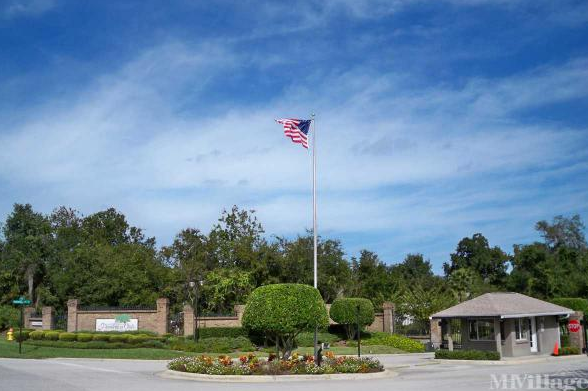
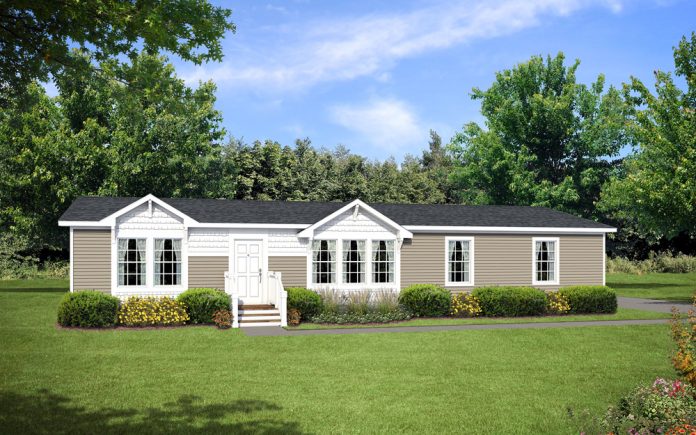
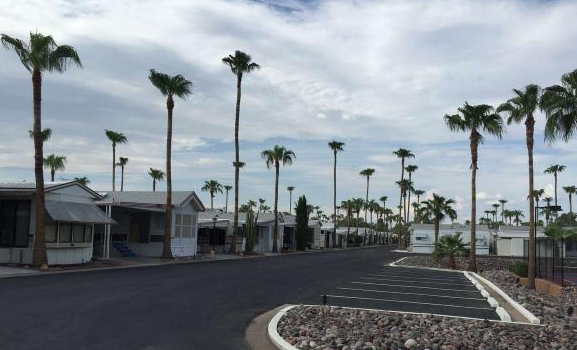
A manufactured home community near Salt Lake City, Utah.
January 2018 JLT Market Reports Include Information From Three New Markets in Arizona, North Carolina
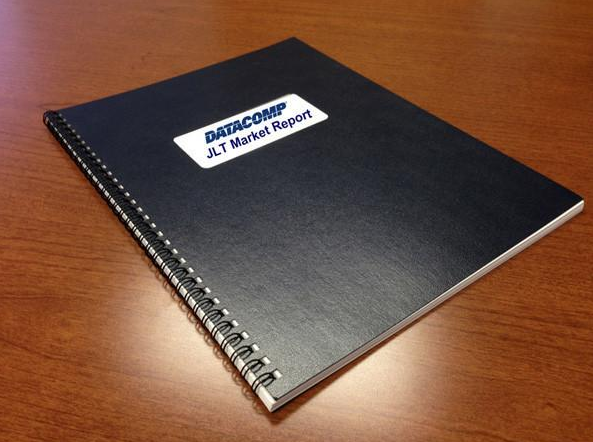
JLT Market Reports for Arizona, North Carolina, New Mexico, Nevada and Utah are available now.
Datacomp, the nation’s #1 provider of market data for the manufactured housing industry, today announced the publication of its January 2018 JLT Market Reports for manufactured home community rent and occupancy in Arizona, Nevada, New Mexico, North Carolina and Utah.
Recognized as the industry standard for manufactured home community market analysis for more than 20 years, JLT Market Reports provide detailed research and information on communities located in 135 major housing markets throughout the United States, including the latest rent trends and statistics, marketing programs and a variety of other useful management insights.
Datacomp’s manufactured housing market data published in the January 2018 JLT Market Reports includes information on 324 “All ages” and “55+” manufactured home communities located in Arizona, Nevada, New Mexico, North Carolina and Utah. Altogether, the reports include data representations for about 77,509 homesites.
2018 Reports Boast Three New Markets
“Our 2018 Arizona report includes valuable information from the new Flagstaff and Yuma markets that provide data on 24 additional communities representing nearly 3,500 homesites. The addition of Greensboro to the North Carolina reports means an additional 15 communities and more than 2,900 homesites for decision making on properties in North Carolina,” Datacomp Co-President and Chief Business Development Officer Darren Krolewski said. “We believe the expansion of reports from Arizona and North Carolina will further assist our customers in making solid business decisions in those markets.”
Each JLT manufactured home community rent and occupancy report published by Datacomp includes detailed information about investment grade communities in the major markets, including number of homesites, occupancy rates, average mobile home community rents and increases, community amenities, vacant sites, and repossessed and inventory homes.
JLT Market Reports also include management insights that rank communities by number of homesites, occupancy rates and highest to lowest rents. Established reports show trends in each market with a comparison of January 2018 rents and occupancy rates to January 2017, as well as a historical recap of rents and occupancy from 1996 to present date in most markets.
How to Obtain January 2018 JLT Market Reports
The January 2018 JLT Reports for markets in New Mexico, North Carolina, Nevada, Arizona, and Utah are available for purchase and immediate download online at the Datacomp JLT Market Report website at www.datacompusa.com/JLT, or they may be ordered by phone in electronic or printed editions at (800) 588-5426. Each fully updated report for mobile home communities is a comprehensive look at investment grade properties within a market, enabling owners and managers, lenders, appraisers, brokers and other organizations to effectively benchmark those communities and make informed decisions.
Agreement Creates Nation’s Largest Publicly Traded Factory-Built Housing Company
ELKHART, Ind. and TROY, Mich., Jan. 5, 2018 /PRNewswire/ — Skyline Corporation (“Skyline”) (AMEX: SKY) and Champion Enterprises Holdings, LLC (“Champion”), the parent company of Champion Home Builders, Inc., today announced that they have entered into a definitive agreement for the two companies to combine their operations. Under the terms of the agreement, Champion will contribute 100% of the shares of its operating subsidiaries, Champion Home Builders, Inc. and CHB International B.V., to Skyline. In exchange, Skyline is currently expected to issue approximately 47.8 million shares to Champion, representing 84.5% of the common stock of the combined company on a fully-diluted basis. Prior to closing, Skyline expects to declare a dividend to its existing shareholders of its excess net cash available for distribution under the agreement after certain transactional expenses.
Among the numerous benefits the combined company is expected to bring to all stakeholders include:
Significantly increased size and scale, with pro forma combined revenue of greater than $1 billion over the past twelve months*
Strong pro forma balance sheet and significant cash flow to support continued flexibility and long-term strategic growth
Significant annual synergies
The combined company will be known as Skyline Champion Corporation and trade on the NYSE American under the ticker symbol “SKY.” The Board of Directors will comprise eleven members, nine of which will be directors designated by Champion and two of which will be designated by Skyline. Upon closing of the transaction, Champion Chief Executive Officer, Keith Anderson, will serve as Chief Executive Officer of Skyline Champion Corporation. Additionally, Laurie Hough, Champion Chief Financial Officer, will serve as Chief Financial Officer of the combined company. Skyline anticipates nominating John Firth, current Chairman of the Board of Skyline, and Rich Florea, current Chief Executive Officer of Skyline, as Directors of the combined company and Art Decio, an original founder of Skyline and member of the Board of Directors since 1959, as a senior advisor to the combined company’s Board of Directors. Skyline Champion Corporation’s principal offices will remain in Elkhart, Indiana with additional executive offices in Troy, Michigan.
The business combination will create the nation’s largest publicly traded factory-built housing company, with greater than $1 billion in pro forma revenue over the past twelve months.* The combined company will have an expansive operational footprint throughout North America, with 36 manufacturing facilities, 24 of which are in the top 20 states for manufactured housing shipments. Skyline Champion Corporation will offer manufactured, modular and park model homes as well as commercial structures. Additionally, the combined company will have 21 owned factory-direct retail locations and provide transportation services to the manufactured housing industry from 10 locations across the United States.
It is anticipated that the transaction will generate significant annual synergies to be achieved through direct cost savings, reduced overhead costs and operational improvement opportunities. Additional synergies also are expected through cross-selling and distribution optimization by leveraging the combined company’s owned and independent dealer network.
Rich Florea, Chief Executive Officer of Skyline said, “The combination of Skyline and Champion represents a unique opportunity for two well-respected companies with strong brand history to come together and continue providing high-quality homes for customers, while also providing the greatest long-term value for shareholders. The combined company will have a strong presence throughout North America and will operate at a significant scale in addition to offering a broader choice of homes to customers. We believe Skyline Champion Corporation will be well positioned for impressive growth in the coming years, to the benefit of employees, shareholders and customers.”
Keith Anderson, Chief Executive Officer of Champion commented, “Getting to know the Skyline team has reaffirmed our belief that the two companies are a great fit for a combination. Both companies share a deep commitment to providing quality products and outstanding customer service. We will remain focused on executing our strategy as an even stronger company. I am particularly pleased that Art Decio has agreed to serve as a senior advisor to the Board. Art is a legendary figure in manufactured housing and we are fortunate to have the benefit of his lifelong commitment to quality and integrity in our industry.”
Art Decio, Skyline’s largest shareholder, has agreed to vote in favor of and fully support the transaction.
Art commented, “Champion and Skyline are tremendous brands in our industry, both dating back to the 1950s. Walter and Henry, Champion’s founders, built a tremendous company that will be a great partner with Skyline. Both Skyline and Champion share similar corporate cultures and have earned a reputation for uncompromising integrity across their relationships with communities, retailers, suppliers and customers. Skyline Champion Corporation will be well positioned to continue to grow and serve its customers with the best products the industry has to offer.”
The transaction, which is expected to be completed in the first half of 2018, is subject to the receipt of regulatory approvals and other customary closing conditions as well as the approval of Skyline shareholders. In connection with the transaction, Skyline intends to file with the SEC a proxy statement and other relevant materials and documents regarding the proposed transaction.
Jefferies LLC served as financial advisor to Skyline and Barnes & Thornburg LLP acted as Skyline’s legal counsel. Ice Miller LLP acted as legal counsel to Skyline’s Special Committee of the Board. RBC Capital Markets, LLC served as financial advisor to Champion and Ropes & Gray LLP acted as Champion’s legal counsel.
In connection with the transaction, Skyline and Champion have received a joint commitment from RBC Capital Markets, LLC and Jefferies LLC, contingent upon the closing of the transaction, to consolidate and upsize existing revolving credit facilities for use by the combined company.
About Skyline Corporation:
Skyline Corporation and its consolidated subsidiaries design, produce, and market manufactured housing, modular housing, and park models to independent dealers, developers, campgrounds, and manufactured housing communities located throughout the United States and Canada. The company has eight manufacturing facilities in seven states. Skyline Corporation was originally incorporated in Indiana in 1959, as successor to a business founded in 1951, and is one of the largest producers of manufactured and modular housing in the United States. For more information, visit http://www.skylinecorp.com.
About Champion Enterprises Holdings, LLC:
Champion Enterprises Holdings, LLC was formed in 2010 as the parent company of Champion Home Builders, Inc. which was founded in 1953. Champion Home Builders specializes in a wide variety of manufactured and modular homes, park-model RVs and modular buildings for the multi-family, hospitality, senior and workforce housing sectors. The company operates 28 manufacturing facilities throughout North America. Additionally, Champion operates a factory-direct retail business, Titan Factory Direct, with 21 retail locations spanning the southern U.S., and Star Fleet Trucking, providing transportation services to the manufactured housing industry from 10 dispatch locations across the United States. Champion is majority owned by funds affiliated with Bain Capital Credit (https://www.baincapitalcredit.com), Centerbridge Partners, L.P. (https://www.centerbridge.com), and MAK Capital. For more information, visit https://www.championhomes.com.
The Manufactured Housing Institute’s annual Winter Meeting will be held Feb. 4-6, this year at The Ritz Carlton in New Orleans!
Attendees have until Jan. 12 to register for the meetings and to book a room at a $100 discount.
A cross section of the manufactured housing industry will attend the three-day gathering in New Orleans, participating in meetings crafted to the varying needs of the MH professionals.
What follows is a schedule for the MHI Winter Meeting:
Sunday, Feb. 4
11:30 am Registration Opens
Noon – 2 pm Manufactured Housing Executives Council (MHEC)
2 – 3:30 pm PAC Board of Trustees
3:30 – 4:45 pm Suppliers Division
4:45 – 6 pm Manufactured Housing Educational Institute Board
As we round out the end of 2017 and move into the New Year, we thought we would share some interesting statistics about MHVillage. Let’s take a look at the MHVillage year in review covering who uses the site, how they shop, and of course, how many leads we generate.
Who Uses MHVillage?
Let’s take a look at some demographics about MHVillage.com users:
53.8% of people are over the age of 44
16.2% are between the ages of 35-44
18.1% are between the ages of 25-34
11.9% are between the ages of 18-24
It’s unsurprising that home shoppers are on the higher side of the age brackets. But here is something that may surprise you. Our MHVillage year in review shows that these folks are shopping on their tablets, desktop computers and phones. And more are on their phones than ever!
12% of people shop the site with a tablet
33% come to the site on a traditional desktop computer
A whopping 55% of people use their cell phones when shopping MHVillage
(Because better than 50 percent of users are shopping for homes with smartphones, I wrote an article this month on Mobile Devices and Trends for 2018.)
Naturally, Florida is a popular state for mobile home sales. There are 2,744 manufactured home communities in Florida that are featured on MHVillage, and presently there are 7,293 homes for sale in that state on our site. Other warm-weather states that are popular? California with 3,297 manufactured home communities and 1,984 home listings. Arizona boasts 937 communities and 1,943 home listings. And you can’t forget the Lone Star state. There are 2,517 Texas communities on MHVillage and 1,451 home listings!
How Many People Use MHVillage?
In the last year, the MHVillage.com network of sites generated more than 25 million visitors annually. That is more than the population of Florida! In fact, if visits were population, MHVillage would be the third largest state – just behind California and Texas.
Those visits resulted in 148 million page views. If those pages were in books, it would take more than 422,857 books to hold them all – requiring more than 13 miles of bookshelves. That is one big library!
Leads, Leads and More Leads
Manufactured home communities on MHVillage were viewed 18,676,041 times in the last year. These are folks looking for homes and becoming potential residents. We also generated 39,960,282 views on new and pre-owned home listings. This, of course, meant business for you.
MHVillage sent 5,126,578 emails last year. Of that, 803,241 were leads to home sellers and community managers (That’s more than the population of Norway!) But of course, not all leads are emails. MHVillage also sent sellers 284,208 phone leads. Users also print listings and download brochures, resulting in 44,685 print events. Many homebuyers print these off when they are getting ready to drive out and see a home!
MHVillage Year in Review – What’s Next?
As you might guess, we are not sitting back idly. We’ll be releasing a number of new features and tools in 2018 to help you grow your business. We can’t wait to share the new features with you, so check back soon!
Note: this article was written prior to December 31, 2017. A few stats were adjusted on 1/4/2018 to reflect better data.
A Manufactured Housing Vocabulary Primer – MH Industry Terms
MHVillage and its partner organization Datacomp cumulatively have 45 years of experience in the manufactured home industry. The leadership team of the two organizations boasts more than 500 years of industry experience.
We asked our team to consider the many MH industry terms. From jargon to acronyms and misnomers, we’ve come up with a list of very industry specific terms, including the lesser known and under appreciated vocabulary.
MH industry terms drum roll, please!
What does chattel mean?
Chattel: Chattel is an item of personal property. The term often is used in the manufactured housing sector in relation to finance of a home without consideration for the land it will sit on, as with a standard mortgage loan.
What is a cookie?
Cookie: A cookie is a 2×2’ cement pad, similar to a paving stone, that is placed on level ground in lieu of a full concrete pad foundation for a home. Cookies are prohibited in some colder weather climates because of changes to level ground that can occur from frost and freezing.
What is engineered wood?
Engineered Wood:Engineered wood is a wood-based composite made for specific applications — such as siding, trim, and soffit – with the benefit of increased strength and decreased weight when compared with natural wood products.
What is ESG?
ESG stands for Environmental, Social, and Governance, and it refers to a set of criteria used to assess the sustainability and ethical impact of a company’s operations.
What is an expando?
Expando: An expando is a room extension or similar type of home feature that is constructed in the factory with the home. It is transported inside the home, and pushed into place on the exterior of the home upon delivery and siting. Unlike “tip outs” that commonly are anchored to the interior of the home with braces or brackets, expandos push out of the home on all sides.
What are helical piles?
Helical piles, also called a screw piles, are used to drill into the ground under a manufactured home to secure its installation even in difficult soil conditions.
What is a marriage line?
Marriage Line: The line or lines where multi-section homes are joined. A double-wide would have one marriage line, and a triple-wide two and so on. The marriage line is where home sections are joined and finished on site.
What is a multi-section home?
Multi Section: The multi-section home is a combination or series of manufactured home sections, most often “double-wide”, each in the approximate footprint of the single-section home. Each section is delivered on a semi-truck and are positioned and joined on site. Manufactured homes are commonly sold in a pair of sections, three sections or four, which is referred to as a “Quad”.
What is a park model?
A park model is a seasonal structure built to American National Standards Institute “ANSI” standards for recreational and resort uses including within the outdoor hospitality industry.
What is a park-owned home?
A park-owned home is a home in a manufactured home community that is owned by the owner or owners of the community. Often, community owners will buy back homes from a resident when they leave, or will have to recover a home that’s been abandoned. Sometimes community owners make a strategic decision to own a designated percentage of homes in a community to maintain as pure rentals. More recently, community owners have begun to set up pure rental communities, often as a mains of gaining favorable financial backing from the government-sponsored agencies.
What is a pier?
Pier: Similar to a “ribbon”, a cement pier is poured into the ground in strategic locations to serve as a foundation for a manufactured home. Piers are used in place of a full concrete pad foundation, often to save on time and cost. This pier should not be confused with a metal pier, which is an aftermarket accessory with A-frame construction that is placed below a home’s chassis to anchor and stabilize the residence.
What is a pocket penetrometer?
A pocket penetrometer is a small, manual, hand-held device used to test ground soil density at a location where a concrete pad or home is being installed.
What is a quad in manufactured housing?
Quad: A Quad is a four-section manufactured home, sold to a buyer in four parts that are delivered and joined on site. The feature that separates a quad from a modular home is that each of the four section of a quad meet HUD code.
What is a ribbon?
Ribbon: Ribbons are poured strips of concrete that serve as the foundation of the home, often used to save on time and costs associated with pouring a full concrete pad foundation.
What is sidewall entry for a manufactured home?
Sidewall entry: Sidewall entry for a manufactured home refers to the main entry door being located on the long-side or awning side of the home rather than on the gabled or narrow end of the home, which is called “endwall entry”.
What is a single-section home?
Single Section: The single-section home is no more than 18-feet wide constructed in a linear fashion up to 90-feet in length, though most single-wide homes are purchased at approximately 1,080 square-feet (15×72’). Single-section manufactured homes typically are purchased for their affordability, and relative ease of mobility for trade or sale.
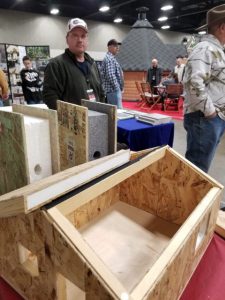
What is a SIP?
Example of a SIP from Backside of Nowhere LLC.
SIP: A SIP is a structurally insulated panel, built with a foam core sandwiched between a pair of structural facings, often made from oriented strand board (OSB). SIPS typically are designed for weight reduction, increased insulation and ease of installation as a wall, divider or similar architectural feature
What is siting?
Siting: Siting a home is the placement of a single-wide home, or joining and placement of a multi-section home. This includes leveling, anchoring the home to its piers, hooking up utilities, making exterior and interior finishes and ensuring code compliance.
What is submetering?
Submetering: Submetering typically is implemented with the water utility at a commercially owned property with a large number of tenants, including mid- to large-size manufactured home communities. It involves installation of a water meter for each resident or tenant space on a property and allows both tenants and owners to better track the usage and cost of a public utility.
What is a tag or tag-along?
Tag along – “Tag”: A tag or tag-along is an option on many manufactured homes plans that involves the purchase of an additional modular room – often a rear porch or extended entry – that is put on its own chassis and hooked up to “tag along” behind the home for delivery.
What is a tip out?
Tip out: A tip out is a room extension or similar type of home feature that is constructed in the factory with the home. It is transported inside the home, and pushed into place or “tipped out” once the home is delivered and sited. Tip outs commonly are anchored to the home on one side with braces or brackets, a feature than distinguishes them from expandos.
Editor’s note: Please feel free to send us at MHVillage a message on any definitions or new MH industry terms you’d like to see added to this blog. And thank you for reading the premier source for manufactured housing news!
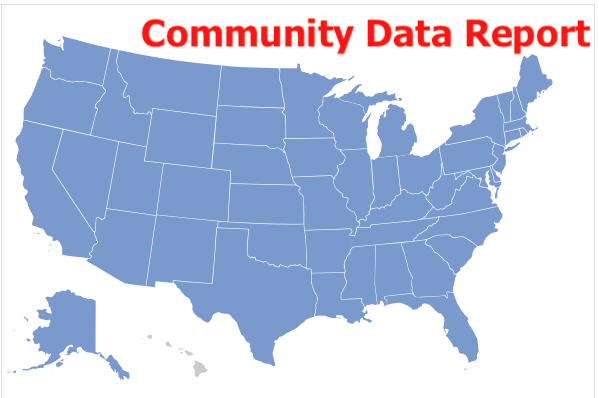
A Community Data Report from MHVillage can be valuable to many different kinds of professionals. Whether you provide a service, or are looking to acquire communities, knowing the current details is key.
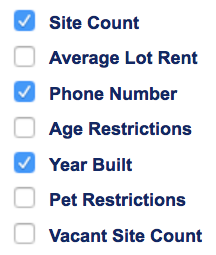
What sort of information comes with a community data report?
The base Community Data Report includes community names and addresses within the state selected. Beyond those details, you can customize additional information that makes sense for your business and purpose.
How do I receive the report?
Once you select the state and the details you need in your Community Data Report we send a downloadable CSV file containing the requested information.
(We also offer a sample report so you can be sure the formatting is as expected, ahead of time)
How did you gather the community information?
We work with the MHICAS system and MHVillage to gather information about communities.
We update our information regularly, in most cases during the last year. All data collected and reported has been in place for no more than three years. Additionally, our reports are sold “as is”. This is because we provide the reports electronically and for download. Therefore, returns are unavailable.
If you have any additional questions or if you would like to know the options available for custom reports, please contact us today!
JLT Manufactured Home Rent and Occupancy Reports for Ohio, Penn., Tenn. Include Information on 341 Communities in 12 Markets
Datacomp, publisher of JLT Market Reports, has published the December 2017 manufactured home community rent and occupancy reports for Ohio, Pennsylvania and Tennessee.
For 20 years, JLT Market Reports have been recognized as the industry standard for manufactured home community market analysis. Datacomp is the nation’s leading provider of market data for the manufactured housing industry.
JLT Market Reports provide detailed research and information on communities in 131 housing markets throughout the U.S. Reports include the latest rent trends and statistics, marketing programs and a variety of other useful management insights.
Datacomp’s manufactured housing market data published in the December 2017 JLT Market Reports includes information on 341 “All ages” and “55+” manufactured home communities. Altogether, the reports include data representations for more than 66,000 homesites in 12 markets.
Expanded Community Rent and Occupancy Reports
“In the latest Pennsylvania report, we’ve added information on 10 communities and more than 1,000 homesites in Gettysburg,” Datacomp Co-President Darren Krolewski said. “Likewise, in Ohio, we’ve added a Columbus report to the mix, with information on 45 communities and more than 8,300 homesites.”
Each JLT manufactured home community rent and occupancy report published by Datacomp includes detailed information about investment grade communities in the major markets, including number of homesites, occupancy rates, average mobile home community rents and increases, community amenities, vacant sites, and repossessed and inventory homes.
JLT Market Reports also include community rank by number of homesites, occupancy rates and highest to lowest rents. Established reports show a comparison of December 2017 rents and occupancy rates to December 2016. Additionally, reports provide a historical recap of rents and occupancy from 1996 to present date in most markets.
The December 2017 JLT Market Reports for Ohio, Pennsylvania and Tennessee are available for purchase and immediate download online at the Datacomp JLT Market Report website at www.datacompusa.com/JLT, or they may be ordered by phone in electronic or printed editions at (800) 588-5426.
Each fully updated report for mobile home communities is a comprehensive look at investment grade properties within a market. This enables owners and managers, lenders, appraisers, brokers and organizations to effectively benchmark those communities and make informed decisions.
About JLT Market Reports
For more than 20 years, professionals have trusted JLT Market Reports for timely and accurate management reports on land-lease communities. JLT Market Reports are published for 131 markets. They are recognized as the industry standard for manufactured housing industry data. In 2014, JLT & Associates merged its resources, skills and expertise with Datacomp, the industry’s oldest and largest national manufactured home appraisal company and number one provider of market data for the manufactured housing industry, and MHVillage, the premier website for advertising mobile homes for rent and sale nationwide. For more information, or to purchase complete JLT Market Reports, call (800) 588-5426 or visit www.datacompusa.com/JLT.
Here in the United States, 95 percent of Americans own a mobile phone of some kind. The share that owns smartphones is now 77 percent. (Pew Research) Our mobile devices have become part of our lives.
We wake up in the morning to the alarm on our phone and immediately check texts and emails. In fact, Americans check their phones 150 times per day. (*) And so, more and more households are choosing smart phones, tablets, and e-readers over traditional desktop computers.
Because phones and tablets are so portable, home buyers aren’t sitting still. No longer tied to a desk, folks are shopping for homes while they are at restaurants, waiting in grocery lines and driving around to look at potential homes. At home, people use phones while watching TV or using other devices.
And this trend continues to rise. Mobile shopping has grown year-by-year and is expected to continue on an upward trajectory.
Mobile Devices – What does this mean to you?
For one thing, it might change how you get your leads. We have seen a difference in how home buyers inquire about properties. On mobile devices, they are more likely to click-to-call than to type a long email. Texting is so popular that we added it as a feature to our mobile site earlier this year (The text leads are then emailed right to you).
It also should change how you respond to leads. In this new mobile-friendly world, people’s attention spans are shortening. They expect responses right away. They don’t want to wait.
Knowing that buyers aren’t the only ones using their phones, MHVillage added the MHVFastlead feature – so you know the minute a lead is sent.
Because more and more shoppers browse on their phones, we’ve been working hard at updating the mobile experience at MHVillage. We have programmers working constantly to improve the mobile interface. But don’t worry, we aren’t leaving you out of the mix! We’ve got some exciting announcements for our Professional users that will be coming out in 2018.
In October 2017, new manufactured home shipments increased 20.6 percent to 8,613 compared to 7,144 homes shipped in October 2016.
Total shipments for October 2017 are 13.5 percent higher than September 2017.
Compared with October 2016, the trend shows across-the-board increases, with shipments of single-section and multi-section homes up by 28.9 and 12.5 percent, respectively. Total floors shipped in October 2017 increased 17.9 percent to 12,775 compared to October 2016.
Where FEMA Homes Shipped in October
Nearly 600 homes of the 8,613 homes shipped in October were FEMA units. Three states received FEMA units in October: Alabama (141), Maryland (17) and Texas (434).
Shipments have increased each month this year when compared to last year. Shipments from January through October of this year total 77,034 homes compared with 67,055 homes in 2016, a 14.9 percent increase.
The seasonally adjusted annual rate (SAAR) of shipments increased to 91,761 in October 2017, up 6.1 percent from the adjusted rate of 86,495 in September 2017. The SAAR corrects for normal seasonal variations and projects annual shipments based on the current monthly total.
In conclusion, October 2017 saw 130 plants representing 35 corporations report production data, unchanged from September 2017.
In September of 2016, a young couple moved their manufactured home to McCrory, Arkansas, from a neighboring community.
Shortly after their move, the McCrory City Council passed an ordinance which stated no manufactured home could be sited in the city “unless it has a value established by a certified appraiser or a bill of sale of not less than $7,500.00.”
McCrory claimed the ordinance was necessary because it provided relief from over-crowding, was good for health and safety of McCrory residents, and promoted orderly growth in the community.
However, after the ordinance passed, the couple that had moved their home to McCrory was visited by the city’s police chief. He told them they’d have to move their home because it was valued at $1500 and did not comply with the city’s new valuation ordinance. Equal Justice Under the Law (“Equal Justice”), a D.C.-based legal aid organization, got involved and assisted the couple in filing suit against the City of McCrory.
Lawsuit Decries Practices Counter to Fair Housing
The 31-page, well- crafted original lawsuit labeled McCrory’s ordinance “a wealth-based banishment scheme, imposing a ‘fate universally decried by civilized people’” that essentially criminalized poverty.
The lawsuit asked for the Federal Court in the Eastern District of Arkansas to declare the ordinance unconstitutional.
Equal Justice was able to get the city to repeal the ordinance and according to a November 28, 2017 press release they finalized a settlement in the lawsuit.
JD Harper, who is Executive Director of the Arkansas Manufactured Housing Association has been following the case since its inception calls the case “a significant victory against zoning discrimination.”
He pointed out that the case has caused several other towns with similar ordinances to change their laws, too.
Editor’s note:MHVillageand theManufactured Housing Institutepartner on fair housing initiatives, and as part of that agreement, MHVillage will publish the MHI monthly fair housing update with this blog as well as its consumer blogwww.MHVillager.com.
Oct. 6-8 at Avalon Hotel in Alpharetta, Ga.
Manufactured housing community owners have never had more information available to them — or more decisions to...
The Midwest Manufactured Housing Federation has announced that attendee registration is now open for the 2027 Louisville Manufactured Housing Show, returning to the Kentucky...
HUD’s Innovative Housing Showcase, MHI’s Homes on the Hill and Annual Meeting Begin Sept. 22
Two of the country’s largest builders of manufactured homes will...






 Manufactured home communities on MHVillage were viewed 18,676,041 times in the last year. These are folks looking for homes and becoming potential residents. We also generated

 We update our information regularly, in most cases during the last year. All data collected and reported has been in place for no more than three years. Additionally, our reports are sold “as is”. This is because we provide the reports electronically and for download. Therefore, returns are unavailable.

 Here in the United States, 95 percent of Americans own a mobile phone of some kind. The share that owns smartphones is now 77 percent. (