Program Serves Government, Cooperative, Non Profit, Community Development Finance Institution, and Resident-Owned Efforts
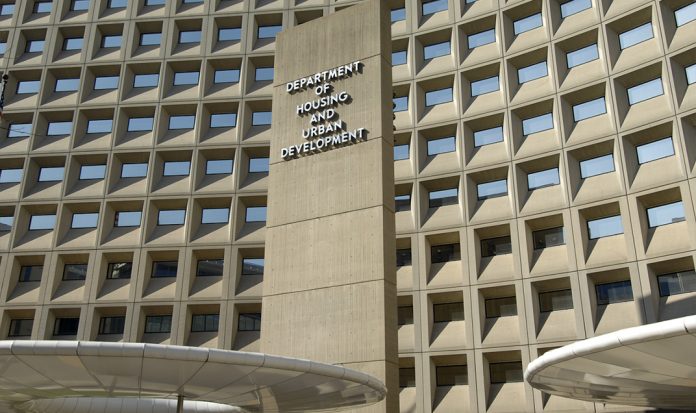
The U.S. Department of Housing and Urban Development has unveiled a new manufactured home community loan product that will provide an FHA-insured financing option for the purchase, refinance, and revitalization of manufactured home communities.
HUD, which announced the program to kick off the Innovative Housing Showcase on the National Mall, takes the action as a measure to “help entities to preserve, stabilize, and revitalize these vital sources of affordable housing.”
“Manufactured home communities offer a stable and affordable housing option for many families. Today, HUD is providing new resources for preserving and revitalizing these communities by providing FHA-insured financing to mission-focused groups to buy or refinance and revitalize manufactured homes,” HUD Acting Secretary Adrianne Todman said. “This is just one of many ways HUD is empowering residents, industry leaders, and governments to expand access to innovative, affordable housing solutions, particularly in rural communities.”
Mission-focused entities such as state, local, and tribal governments, cooperatives, non-profit entities and consortia, community development financing institutions, and Indian Tribes, will be eligible to use this program to finance the acquisition of or to improve existing communities, including making updates to common area resources and helping to maintain rent affordability.
The permanent financing tool complements HUD’s recently announced PRICE program, which offers competitive grant opportunities for investments in affordable manufactured home communities.
HUD stated that about 5,000 individuals and families, based on average community size, could benefit from the program within the next five years. The program leverages FHA’s Multifamily 223(f) program, which will now provide permanent mortgage financing for manufactured home communities that may have previously been ineligible, and for previously ineligible manufactured home cooperative borrowers to be eligible to acquire and obtain financing for existing communities.
“Today’s announcement is an important first step for a program that we hope will provide a meaningful path to both affordable manufactured home community creation and preservation,” Deputy Assistant Secretary for Multifamily Housing Programs Ethan Handelman said. “As we progress with the program implementation, we will continue to assess both its scope and entity eligibility.”
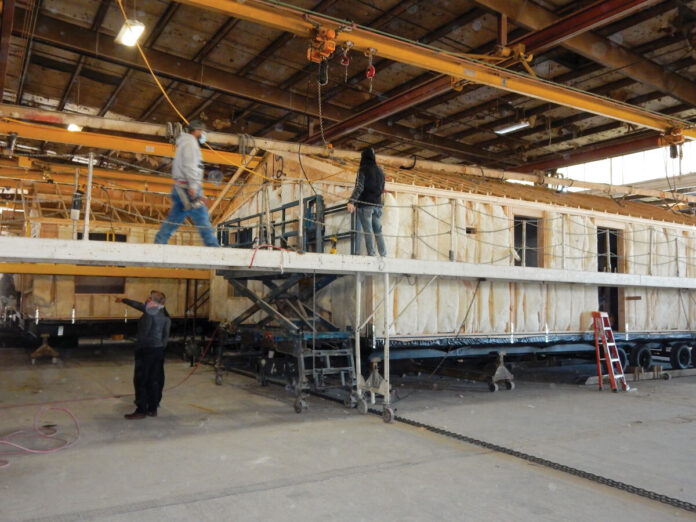
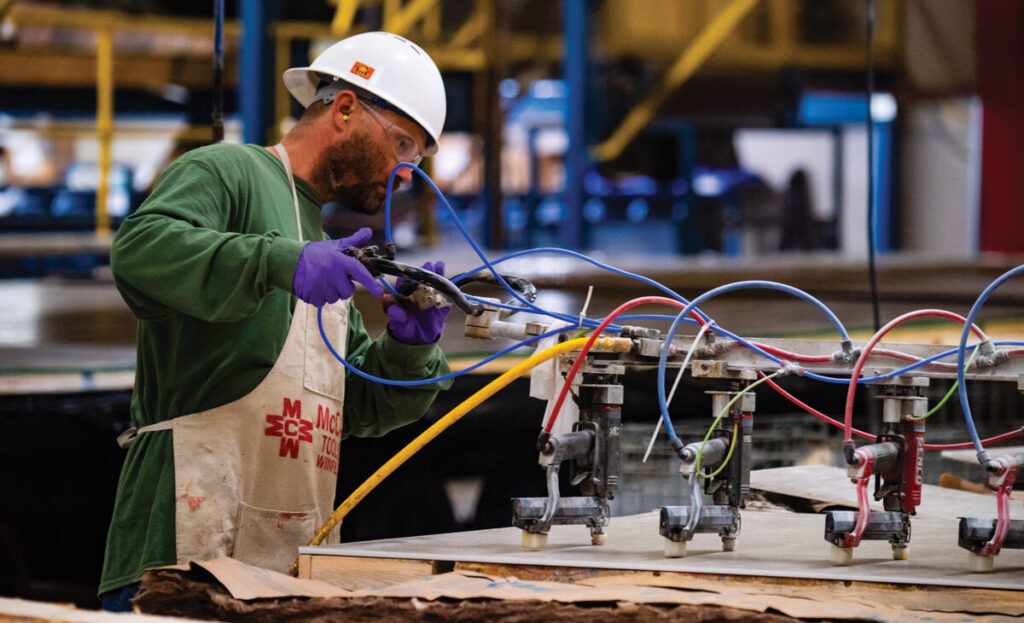
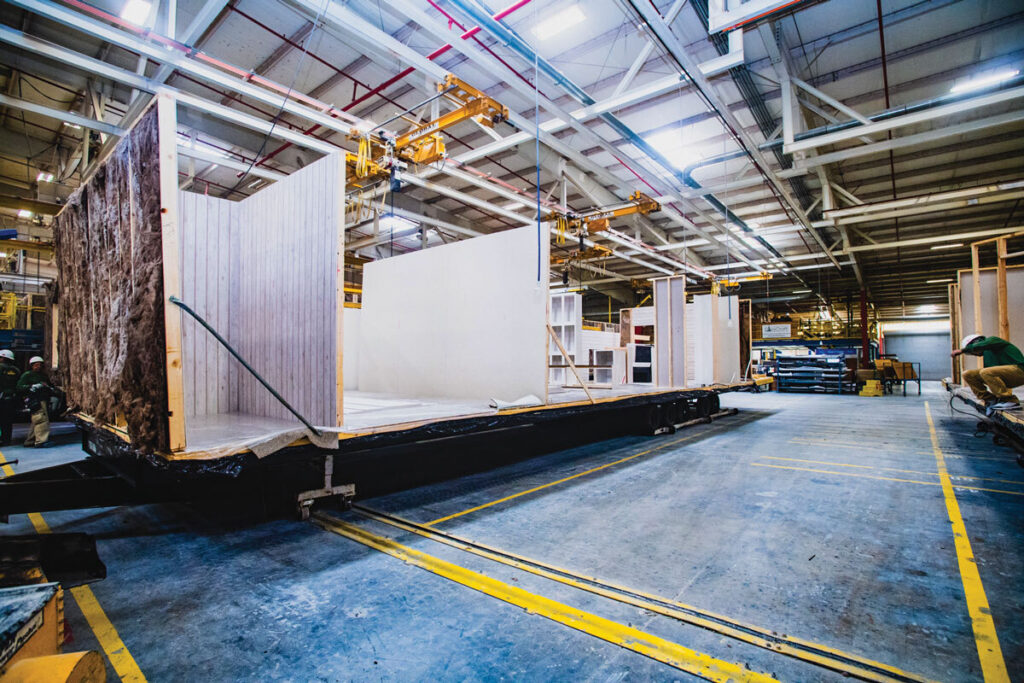
A new HUD-Code home under construction in the factory.
Manufactured Housing Professional Design Flexibility to Fit Consumer Preferences
When the U.S. Department of Housing and Urban Development receives Congressional approval to change the definition of manufactured housing and unveils its changes to the HUD Code, it likely will exclude the requirement that a manufactured home is constructed on a permanent chassis.
The key phrases here are “requirement” and “permanent”.
For years industry leadership contemplated removal of the requirement, and consensus began to build during and after the 2017 Congress and Expo in Orlando. The Manufactured Housing Institute’s Technical Activities Committee spent time investigating how the matter might be approached. Now it seems the sentiment has been embraced by a large swath of elected officials and others on Capitol Hill.
The White House in a policy and budget release in mid March said it “plans to explore updating the statutory definition of manufactured housing — for example, through amending the chassis requirement”.
What does the elimination of a chassis requirement within the HUD Code mean to builders and homebuyers?
Flexibility in home design and configuration as well as increased access for manufactured homes in neighborhood settings.
“Despite their efficiency advantage, manufactured homes face discriminatory barriers to fair competition with site-built construction,” Andrew Justus and Alex Armlovich asserted in a February 2024 piece published by the Federation of American Scientists. “Many state laws and local zoning codes restrict or exclude manufactured homes, often based on architectural features common only on manufactured homes, like the Congressionally-mandated permanent chassis.”
Removing the chassis requirement doesn’t mean the home can’t be built with the heavy steel foundation of the home. It means that manufactured homes can be built with lighter weight materials to the same structural integrity, allowing builders to construct homes that can more easily sit on a poured concrete basement, or to have multi-story homes.
Bill Boor is the president of Cavco Industries, one of the nation’s largest off-site home builders, and also serves as chairman of the board for the Manufactured Housing Institute.
“The change to the chassis requirements doesn’t mean permanent chassis homes would go away. In many applications a permanent chassis is likely to make the most sense,” Boor said. “This change would be another important step in the evolution of manufactured housing and it would represent a significant additional opportunity for the design of a new set of federally approved factory-built homes.”
The reason consensus is building toward this measure and others intended to “unleash” the potential of manufactured housing is because the nation faces a massive shortage of new homes, particularly homes that most buyers can qualify to finance. The U.S. has a shortage of four million homes today, with nearly every market in the nation facing housing shortages and increased housing costs.
Addressing the chassis requirement is among the most important industry measures being considered, alongside securing HUD as the industry’s sole regulator, expansion of FHA Title I financing for manufactured homes, tackling local zoning issues, protecting manufactured home communities and the residents of those communities.
This year, we celebrate 50 years since the passage of the National Manufactured Housing Construction and Safety Standards Act, which established the manufactured housing industry’s relationship with the U.S. Department of Housing and Urban Development. While this relationship has been tested over the years as the industry confronted the nuances, pace, and politics of the federal bureaucratic process, there is no question that having federal standards for the design and construction of manufactured homes has been a success.
Today, manufactured housing is the only type of housing that is subject to robust federal compliance and quality assurance regulations for health, energy efficiency, and durability, often more stringent than those for traditional site-built homes. Unlike other types of factory-built housing, manufactured homes can easily be shipped across state lines and our builders achieve time efficiencies and unparalleled economies of scale thanks to the partnership with HUD. Rapid construction and federal standards that ensure safety and quality are critical, especially while our nation seeks to address a severe housing supply shortage — and the 50-year successful partnership with HUD has made our industry poised and ready to help address this challenge.
Thanks to the industry’s partnership with HUD, manufactured housing has made the American Dream of homeownership attainable for millions of families. Manufactured home builders offer homebuyers brand new homes with the design features and efficiencies they want at price points they can afford. But it isn’t all about price. The partnership with HUD has resulted in homes that consumers love, especially compared to other housing choices at similar price points. According to MHI’s recent consumer research, residents of manufactured homes report exceptionally positive overall feelings about their homes and are strong proponents of manufactured housing. In addition, the top five features of manufactured housing cited by those considering homeownership through manufactured housing have been possible thanks to our partnership with HUD: affordability (70 percent), energy efficiency (53 percent), additional space (49 percent), stand-alone homes (46 percent), and outdoor space (45 percent). As our industry continues to innovate with new home styles and sizes, the federal building code makes it possible to put the dream of homeownership within reach today.
As the only national trade association representing all segments of the manufactured housing industry and nearly 90 percent of the manufactured homes produced today, MHI has worked to amplify the important role HUD Code manufactured housing has in helping to address the nation’s housing supply shortage and affordability challenges, and policymakers are now highlighting manufactured housing as an integral solution. Rapid construction and federal standards that ensure safety and quality are critical when our nation is seeking to address a severe housing supply shortage — and the 50-year successful partnership with HUD has made our industry poised and ready to help.
The most significant challenge facing the 50-year partnership with HUD is the imposition of building standards by other federal agencies, namely the Department of Energy. While MHI strongly supports energy efficiency for manufactured homes, HUD must remain our primary regulator. In fact, the statute we celebrate already specifies that HUD’s authority includes preemptive energy conservation standards. HUD has a 50-year track record in developing construction standards for manufactured homes and a proven testing, compliance, and enforcement regime. Going forward, HUD must defend its status as the industry’s primary regulator and ensure the process originally established by Congress whereby HUD is required to properly balance construction standards with homeownership affordability is continued. HUD must reject standards from other agencies and ensure all standards go through the process that has been successful since it was established 50 years ago.
As we look to the future, it is useful to look back at what Congress specified in the law as the purpose of our partnership with HUD and to take stock of our progress and opportunities.
Purpose 1: To protect the quality, durability, safety, and affordability of manufactured homes.
Today’s manufactured homes deliver outstanding quality and resiliency at attainable prices. The average cost of a manufactured home is up to 50 percent less per square foot than a site-built home and often much less expensive than renting an apartment. These savings allow more and more Americans to own their own home, even in the face of an ever-widening housing affordability gap. People choose manufactured homes for their affordability, but they also choose them for the design innovations and sustainable features that provide an exceptional living experience. Going forward, MHI and HUD should continue to be diligent to ensure that affordability remains a paramount consideration in any standards updates.
Purpose 2: To facilitate the availability of affordable manufactured homes and to increase homeownership for all Americans.
The need for quality, affordable housing has never been greater. Redfin reported that only 16 percent of home listings were affordable for the typical household in 2023. That is the lowest share on record and down from 21 percent in 2022. Manufactured housing is an important part of the solution and HUD is charged with facilitating its availability. More can be done to do so. Addressing local zoning and land planning ordinances that discriminate against manufactured housing is a critical component of making manufactured homes available for more people. Going forward, HUD must do more to exercise its broad preemption authority when local construction regulations or zoning, planning, or development policies adversely affect the placement of manufactured housing. Recently, MHI and HUD joined together to identify barriers to the placement for manufactured housing, which will also help identify policy changes to ensure manufactured homes are available to more people. Manufactured housing is an integral component to any plan to boost affordable housing supply. By supporting zoning reforms and by supporting expanded financing for manufactured homes in its FHA programs, HUD can help more Americans achieve homeownership through manufactured housing.
Purposes 3-7. To provide for the establishment of practical, uniform, and, to the extent possible, performance-based Federal construction standards for manufactured homes; to encourage innovative and cost-effective construction techniques for manufactured homes; to protect residents of manufactured homes with respect to personal injuries and the amount of insurance costs and property damages in manufactured housing, consistent with the other purposes of this section; to establish a balanced consensus process for the development, revision, and interpretation of Federal construction and safety standards for manufactured homes and related regulations for the enforcement of such standards; to ensure uniform and effective enforcement of Federal construction and safety standards for manufactured homes.
In 2021, HUD made the first major changes to the manufactured housing construction code in almost a decade and in 2022, it proposed the largest set of changes in over two decades. MHI urges HUD to prioritize the finalization of the 2022 proposed updates to the HUD Code with our suggested enhancements and to move forward with finalizing the subsequent sets of updates that have been approved by the Manufactured Housing Consensus Committee but are still pending HUD action. In addition to clearing out this decades-old backlog, MHI is calling on HUD to develop and implement a streamlined process for updating the HUD Code, to prevent future backlogs and create a process for regular future code revisions. MHI commends HUD for elevating the Office of Manufactured Housing Programs, which will help ensure a more regular cadence of code updates going forward.
Purpose 8. To ensure that the public interest in, and need for, affordable manufactured housing is duly considered in all determinations relating to the Federal standards and their enforcement.
Manufactured housing is the only type of housing that is subject to robust federal compliance and quality assurance regulations for health, energy, efficiency, and durability, often more stringent than those for traditional site-built homes. However, manufactured housing is excluded from a number of HUD’s affordable housing programs. As we look toward the future, MHI will continue to advocate for common sense changes to HUD’s affordable housing policies to ensure they include increased access to manufactured housing and is pleased to see some progress. For example, last October HUD issued a notice clarifying that manufactured housing units that are part of the community’s permanent housing stock are eligible for acquisition or direct home ownership assistance through the Community Development Block Grant program. MHI asks HUD to go one step further to complement these actions by carrying out the Congressional directive to issue guidelines to local CDBG recipients about how to assess the potential inclusion of manufactured homes in their affordable housing and community development plans.
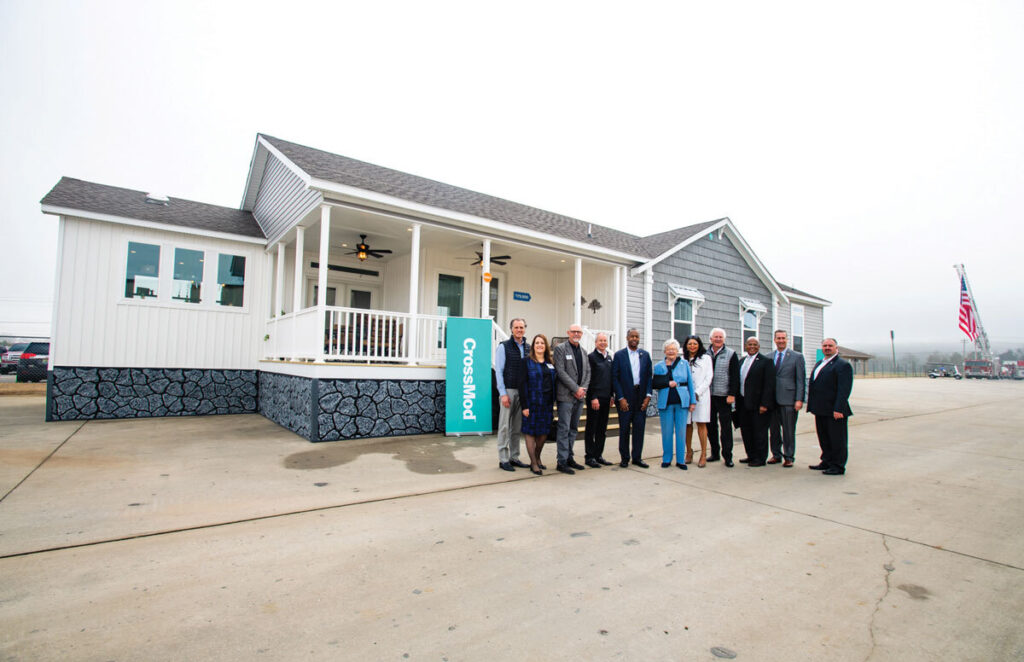
In the next 50 years, MHI will build on the momentum of the past and continue to elevate housing innovation and expand attainable homeownership, and strengthen our successful partnership with HUD. This June, HUD will host its fourth Innovative Housing Showcase on the National Mall for National Homeownership Month. For the first time, MHI is pleased to join HUD as a presenting sponsor of the showcase. We plan to celebrate our 50-year partnership and utilize the opportunity to demonstrate to the public and policymakers what sets HUD Code manufactured homes apart — quality, attainability, efficiency, and design that is scalable. Each year we have showcased the range of homes that can be built under the HUD Code — from single section homes to CrossMods, from ADUs to duplexes. We look forward to continuing to showcase housing innovation through HUD Code manufactured housing in 2024 and beyond.
Dr. Lesli Gooch is the CEO of the Manufactured Housing Institute, the national trade organization representing all aspects of the factory-built housing industries. Mark Bowersox is a seasoned trade association executive with experience leading nonprofits at both the state and national levels. In his role as president of MHI he is dedicated to elevating housing innovation and expanding attainable homeownership. Bowersox is a federally registered lobbyist and regularly speaks on behalf of MHI and the industry to a variety of constituency groups and industry associations.
JLT Market Reports provide detailed research and information on communities in 187 housing areas nationwide. These include the latest trends and statistics, marketing programs, and a variety of other useful industry insights.
Datacomp publishes the JLT Market Reports and is the nation’s #1 provider of market data for the manufactured housing industry. JLT Market Reports are recognized as an industry standard for manufactured home community market analysis.
May 2024 manufactured housing market data published in JLT Market Reports for Florida includes information on 762 All ages and 55+ manufactured home communities.
Altogether, the reports on Florida manufactured home communities include data representations for 206,094 homesites.
More About JLT Market Reports
Each JLT manufactured home community report from Datacomp has detailed information about investment-grade communities in the major markets. The detailed information includes:
Number of homesites
Occupancy rates
Average community rents, and increases
Community amenities
Vacant lots
Repossessed and inventoried homes, and much more
JLT Market Reports also include industry insights on communities by the number of homesites, occupancy rate, home types, and other important detail.
Established reports show trends in each area with a comparison of May 2024 reports to May 2023, as well as a historical recap of community information from 1996 to the present date in most markets.
The May 2024 JLT Market Reports for Florida manufactured home communities are available for purchase and immediate download online at the Datacomp JLT Market Report website, or they may be ordered by phone in electronic or printed editions at (800) 588-5426.
Each fully updated report is a comprehensive look at mobile home communities within that area, enabling residents, owners and managers, lenders, appraisers, and brokers to effectively benchmark communities and make informed decisions regarding potential sales, upgrades, or expansion plans.
The James E Forrestal Building, Washington, D.C. offices for the U.S. Department of Energy.
Legal action aimed at the U.S. Department of Energy in regard to new standards the department set in motion for the energy efficiency of manufactured homes has advanced in the courts but not before a section of the claim had been dismissed.
The Manufactured Housing Institute and the Texas Manufactured Housing Association filed the suit in February. Earlier this month, the Federal Court for the Western District of Texas considered a DOE motion to dismiss but allowed a majority of the claim while dismissing a portion of the filing that asserts DOE had failed to properly consider enforcement rules for any would-be violations.
“Part of our initial case was that the DOE failed to have a testing, compliance and enforcement regulation to complement the building standards,” MHI CEO Lesli Gooch said. “DOE realized that this was a problem, so it is now trying to finalize a rule it proposed late last year, after suspending the compliance date on its standards so that a testing, compliance, and enforcement rule could be formulated.
“MHI told the court that we would probably challenge those rules once they became final as finality is a necessary prerequisite to a challenge,” she said. “Of course we can’t know what the ultimate rule will be so we can’t say what our challenge would be.”
MHI and TMHA can amend their complaint after the DOE has completed its enforcement rule making process.
Remaining assertions in the filing, including that DOE had overstepped its regulatory boundaries by failing to consult with the U.S. Department of Housing and Urban Development — the industry’s primary regulator.
The court neglected DOE’s position that a ruling should wait until the the department has finished its enforcement rulemaking process, stating that “waiting until a new compliance date to bring this suit constitutes a sufficient hardship for the manufactured housing industry.”
CoverTree, an insurtech company in the manufactured housing industry, has gained $13 million in funding round with large investments from Portage, AV8 Ventures, Distributed Ventures, Detroit Venture Partners, Ludlow Ventures, and Annox Capital.
CoverTree plans to use the new capital to expand operations in multiple states in the sun belt and upper midwest.
Co-Founder and CEO Adarsh Rachmale is enthusiastic about the growing manufactured housing industry, stating that the investment validates CoverTree’s efforts to redefine the insurance experience.
“The funds will be used to innovate and expand the company’s reach, aiming to provide reliable and precise home insurance solutions,” Rachmale said.
CoverTree will introduce new products such as Maple, a software for managing resident insurance, Bonsai, a platform for binding and underwriting, and Sequoia, a system for automated underwriting and quoting.
Portage Co-Founder and CEO Adam Felesky has joined the company’s board of directors. This strategic move underscores Portage’s commitment to CoverTree’s success and brings valuable industry expertise to help guide the company’s strategic direction. By partnering with yet another organization, Markel, CoverTree seeks to transform the market segment through advanced coverage options, sophisticated pricing, and cutting-edge technology.
This strategic move underscores Portage’s commitment to CoverTree’s success and brings valuable industry expertise to help guide the company’s strategic direction.
“With the continually changing homeownership industry, we are excited to continue expanding our services to the growing manufactured housing industry… we believe this is the future of how all Americans will live,” Rachmale said. “This investment is a testament to the value we bring to homeowners by redefining the insurance experience.”
The new Encore home from Clayton at the Berkshire Hathaway Shareholders Meeting in Omaha, Neb.
Tennessee-based Company Aims to Provide Manufactured Home Collection with High-End Design, Energy Efficiency
Clayton, one of the nation’s largest factory homebuilders and a WarrenBuffett-held company, debuted its new Encore series homes at the annual Berkshire Hathaway Shareholders Meeting in Omaha, Neb., earlier this month.
Encore is billed as “the most elevated line of modern manufactured homes offered by Clayton” and features valuable options for the homebuyer including a variety of regional design aesthetics, the company stated.
Notable Enhanced Features from Encore
French doors
Glass cabinets
Pendant lighting
Quartz countertops
Tile backsplash
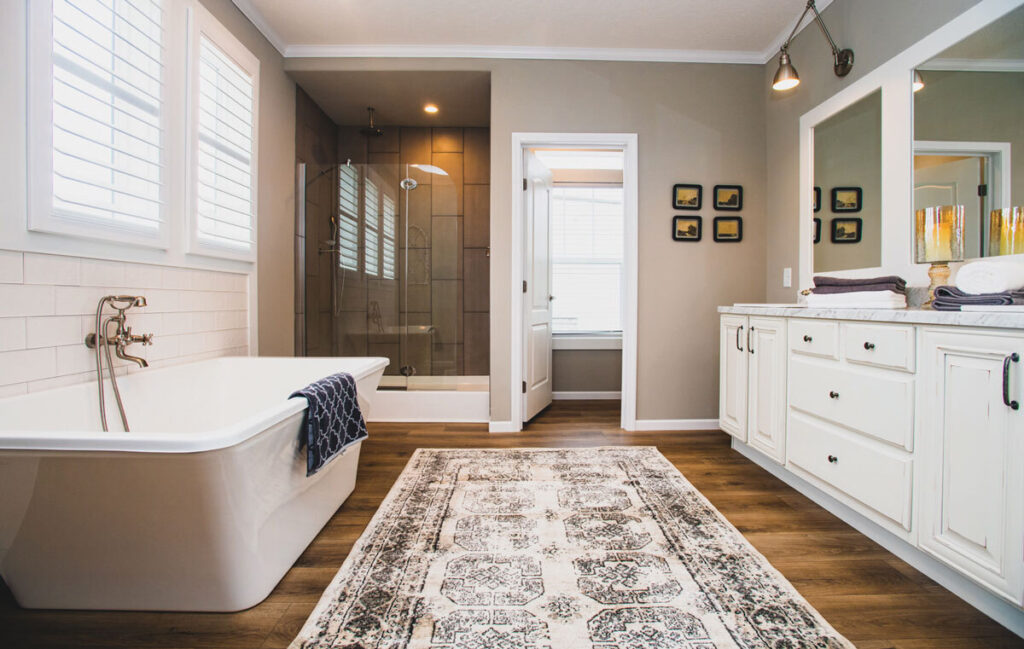
Free standing tub
Full glass and tile showers
“Encore blends expert craftsmanship and design personalization with energy-efficient features that can save homeowners money over the lifespan of their home,” Clayton’s National Production Manager Mike Comparato said. We are excited to offer a home line to our customers that integrates the latest high-end trends in interior design while continuing to deliver on our promise of energy-efficient, attainable homeownership.”
Encore homes are built to the US Department of Energy Zero Energy Ready Home™ specifications — called eBuilt by Clayton — estimated to save homeowners up to 50 percent in annual energy costs compared to other manufactured homes. This allows homeowners the potential to save thousands of dollars throughout the homeownership journey. eBuilt homes are optimized with energy-efficient features, including a Rheem® hybrid water heater, Lux® low-E windows with argon gas, ENERGY STAR® certified appliances, LED lighting throughout, an ecobee® smart thermostat, and additional insulation.
Clayton CEO Kevin Clayton said homes like Encore provide added attainability for potential homebuyers with high-end features that help perpetuate the value of the home.
“We are excited to offer these benefits because the important decision to buy a home depends on more than just the sales price – it’s about considering those long-term costs of homeownership,” Clayton said.
Like other manufactured homes, Encore floor plans are constructed in an indoor facility. By leveraging the off-site home building process, Clayton can achieve efficiencies in production that are passed down to customers in the form of cost savings.
Homebuyers are prioritizing affordability while also considering factors related to style and comfort, such as living spaces in and around their home, the company stated. By choosing Encore, homeowners can experience the beauty of attainable luxury in a way that “accommodates their budget and reflects unique tastes and styles”.
Jerome Powell makes post-FOMC meeting comments on May 1.
The Federal Reserve continues to monitor the economy, from inflation to jobs, production and wages, and in the FOMC’s recent May meeting opted again to hold rates in lieu of more information.
The committee’s ultimate goal is to reduce inflation from its current rate above 3 percent to 2 percent without pulling the economy into recession, something it’s been able to do to this point.
“In support of its goals, the committee decided to maintain the target range for the federal funds rate at 5.25 to 5.5 percent. In considering any adjustments to the target range for the federal funds rate, the committee will carefully assess incoming data, the evolving outlook, and the balance of risks. The committee does not expect it will be appropriate to reduce the target range until it has gained greater confidence that inflation is moving sustainably toward 2 percent.”
Inflation at its highest in the recent economic cycle was above 9 percent. The committee will meet again June 11-12.
Along with interest rates, the Fed uses a less blunt tool — its balance sheet — to influence the growth or cooling of the economy. On the heels of the COVID pandemic, the Fed increased activity in the bond market to help boost the economy, and now says it will ease what many economists call “quantitative easing.” Rather than cap purchases at $60 billion per month as it has been, the Fed will begin to cap at $25 billion in June.
What Factors Does the Fed Consider?
Though growth in gross domestic product has moderated from 3.4 at the end of 2023 to 1.6 percent during the first three months of 2024, the Fed continues to dive deeper in assessing private domestic final purchases that exclude inventory investment, government spending, and net exports. The committee has expressed that it feels closer-to-home-measure is a better indicator of cost pressure. That measure came in at 3.1 in the first quarter, unchanged from mid 2023.
Production
“Consumer spending has been robust over the past several quarters, even as high interest rates have weighed on housing and equipment investment,” Fed Chair Jerome Powell said in his post meeting comments. “Improving supply conditions have supported resilient demand and the strong performance of the U.S. economy over the past year.”
Powell said, given the conditions, it is unlikely to raise rates again and likely will begin to cut mid-year if the indicators remain stable.
The ISM Non-Manufacturing (services-focused) Index dropped to 49.9 in April, when analysts expected it would land at 52. A drop below 50 means a contraction in business. The ISM Manufacturing Index also showed contraction, dropping from above 50 for one month back down to 42.9 in April.
Labor
The jobs market continues to be stable, if waning, which is what the Fed wants to see; just more of it. Non-farm payrolls came in with an increase of 175,000 in April against the consensus expectation of 240,000 jobs, no small difference. Unemployment ticked up a 10th to 3.9 percent year-over-year. Regular take-home pay rose 0.2 percent and is up 3.9 percent in 12 months.
Home Sales
New single-family homes sales rose 8.8 percent in March, beating the consensus, and was up 8.3 year-over year.
The median price of new homes sold was $430,700 in March, down 1.9 percent from a year ago, First Trust Chief Economist Brian Wesbury stated in a newsletter to subscribers. The average price of new homes sold was $524,800, up 1 percent compared with last year.
“New home sales came in stronger than expected in March, driven by broad-based gains as more inventories give buyers a greater number of options to choose from. Notably, the 8.8 percent gain in March was the largest in more than a year,” Wesbury stated. “It looks like the upward trend in new home sales that began in 2022 as the economy reopened is still intact, though volatility in interest rates continues to play an outsized role.”
Likewise, the Manufactured Housing Institute this month reported an uptick in home shipments from March. The industry shipped 8,464 new homes in March, up 1.1 percent from the previous month and up 10.5 percent in 12 months.
21st Mortgage earned two Lender of the Year awards at MHI's Congress and Expo in Vegas.
‘Excellence in Manufactured Housing Awards’ from MGM Grand in Vegas
The Manufactured Housing Institute announced the 2024 Excellence in Manufactured Housing Award recipients during its Congress and Expo event at the MGM Grand in Las Vegas. The annual awards program honors MHI members in the manufactured and modular home building who provide outstanding products, customer service, creative solutions, and state-of-the-art homes.
This year the organization considered more than 80 submissions in 18 categories. The winners were chosen by peers and an independent panel of experts for their leadership and dedication to the manufactured housing industry during the last year.
The 2024 Excellence in Manufactured Housing Award winners, listed by category, are:
Manufacturer of the Year Awards
• Manufacturer of the Year (Three plants or fewer): Oak Creek Homes
• Volume Manufacturer of the Year: Clayton Home Building Group
Retail Sales Center of the Year Awards
• Retail Sales Center of the Year – East: Clayton Homes – Cookeville, Tenn.
• Retail Sales Center of the Year – West: Homes Direct of Oregon, LLC
Land-Lease Community Awards
Equity Lifestyle Properties earned a pair of community awards at the recent gathering in Vegas.
• Manufactured Home Community Operator of the Year: UMH Properties, Inc.
“UMH is proud to receive this award for a fourth time,” UMH Properties President and CEO Sam Landy said. “We have built an operating platform that delivers exceptional results year after year. We continue to acquire, improve, and expand our communities, which increases access to quality affordable housing in each market that we serve. I would like to thank our managers, maintenance staff, regional managers, vice presidents, directors and officers and all other staff members for our outstanding achievements.”
• Land-Lease Community of the Year – East: Equity LifeStyle Properties – Village Green
“Village Green’s essence lies in the serene atmosphere, stunning scenery, and abundant activities and events that foster the community feel among our residents, providing something for everyone,” remarked Jonathan Merkle, vice president of operations. “The acknowledgment from the Manufactured Housing Institute fills our entire team with pride. This award truly highlights the consistent efforts of our staff to ensure Village Green remains an extraordinary community for our residents.”
• Land-Lease Community of the Year – West: Equity LifeStyle Properties – Monte Vista Village
“Monte Vista truly offers something for everyone, but mostly it’s the friendly culture, the convenient location, and the many clubs and events that bring our residents and community together,” said Ryan Coslett, vice president of operations. “Being honored by the Manufactured Housing Institute makes our whole team very proud. This award recognizes the consistent efforts of our Monte Vista staff to provide and prioritize an exceptional experience for our residents.”
Supplier of the Year Award
• Supplier of the Year: Style Crest Inc
Lender of the Year Awards
• Lender of the Year (Floor plan): 21st Mortgage Corporation
• Volume Lender of the Year: 21st Mortgage Corporation
• Manufactured Home Community Lender/Broker of the Year: Yale Realty & Capital Advisors
Design Awards
• Manufactured Home Design (Multi-Section): Oak Creek Homes with The Swan
• Manufactured Home Design (Single Section): Oak Creek Homes with The Crane
• Modular Housing Design Award: Champion Homes with the Atlantic
• Manufactured Home Design (CrossMod®): Champion Homes with The Westridge
Industry Leadership Awards
• Leadership in Sustainability: Clayton Home Building Group
• Community Impact Project of the Year: Monmouth Mobile Home Park
“Our dedicated staff has worked hard to develop programs and work collaboratively with community partners to offer services and programs aimed at enriching people’s lives and providing assistance in various ways,” Monmouth Mobile Park Manager Dan Mandell said. “With a rich history dating back to the 1950s, MMHP has consistently demonstrated a commitment to giving back to the community and has, in recent years, spearheaded programs focused on resident education, alleviating food insecurity, and bolstering local community events.”
Country Living Pointe, A Flagship community near Sherman, Ky.
Expands Footprint Into Nashville, Enters Eighth State
Flagship Communities is set to acquire seven manufactured home communities with 1,253 homesites for a price of about $93 million. The deal is expected to close in mid May.
The purchase price, along with about $10 million in upfront capital expenditures, will be funded with the net proceeds from the REIT’s $60 million offering and the remainder funded with new debt financing.
“These acquisitions are the largest in the REIT’s history to date and represent a milestone for our business as we continue to execute on our stated growth strategy,” said Kurt Keeney, president and CEO of Flagship. “This is a generational opportunity to strategically expand our footprint into the adjacent Nashville market, as well as establish a presence in West Virginia, both markets that enable us to maximize existing synergies and leverage economies of scale.”
The Purchase Price represents a capitalization rate of 5.6 percent on year-one forecasted net operating income, and is expected to be accretive to the REIT’s adjusted funds from operations per unit diluted on a leverage neutral and stabilized basis.
Flagship stated that the transaction will increase its holdings to 82 communities with more than 15,000 homesites. It also strengthen the REIT’s presence in Tennessee while entering the core Nashville market, which is one of the fastest growing markets in the U.S. The Acquisitions also expand the REIT’s operations into West Virginia, which represents the REIT’s eighth contiguous U.S. state, and provides “significant growth opportunities to become a market leading owner.”
“We are excited to have sourced more off-market acquisitions through our long-standing industry relationships, providing the ability to establish a presence in Nashville, as well as West Virginia,” said Nathan Smith, Flagship’s chief investment officer. “The Acquisitions are comprised of high-quality properties that adhere to our acquisition criteria and also provide the opportunity to expand our presence along the I-40 and I-65 Interstate corridors, within easy driving distance to employment opportunities, hospitals, schools, shopping and recreational facilities.”
The West Virginia communities are located in Beckley, Milton, and Morgantown.
Oct. 6-8 at Avalon Hotel in Alpharetta, Ga.
Manufactured housing community owners have never had more information available to them — or more decisions to...
The Midwest Manufactured Housing Federation has announced that attendee registration is now open for the 2027 Louisville Manufactured Housing Show, returning to the Kentucky...
HUD’s Innovative Housing Showcase, MHI’s Homes on the Hill and Annual Meeting Begin Sept. 22
Two of the country’s largest builders of manufactured homes will...