Home Blog Page 55

Debt Collection Best Practices for Community Owners

debt collection best practices community owners

Editor’s Note: First installment of a 2-part overview on community owners’ best practices for debt collection, originally published in MHInsider magazine. Part II covers post-eviction debt collection.

best practices debt collection community owners
Ryan Fishman, The Fishman Group

As the owner or operator of a manufactured housing community, you’ve probably dealt with your share of delinquent payments. At first, a resident is just late – maybe a couple of days.

Eventually, you will experience the rent payment never comes. There’s no response to calls or knocks on the door, so you’re forced to pursue an eviction. Once you have possession of the home or site, you’re stuck carrying a loss you might never recoup.

This process forces you to perform a juggling act of financial, legal, and ethical considerations. Worst of all, you’re often expected to go through this process alone.

Don’t lose hope

With a set of standard operating procedures for your community, you can develop an effective collections process to mitigate these losses. By being proactive, you’ll avoid the heartaches and headaches often associated with post-eviction losses, boost your cash flow, and give your manufactured home community a competitive business advantage.

Setting the Record Straight

community owner debt collection
Clear communication with potential residents will help reduce delinquencies down the road.

We like to tell our clients the place to start is the start. That means comprehensive and standard credit screening protocols for prospective residents. It’s critical this process be structured and tightly maintained – it will help avoid more delinquent or defaulting residents down the road and improve your ability to collect post-eviction. There’s a long list of proactive steps that go into a strong policy, but ever-critical are minimum credit standards, legible paperwork, and the delivery of clear expectations before move-in.

The figures in your credit policy are a function of the level of risk your manufactured home community can take. This means evaluating your range of acceptable credit scores and determining what other key aspects of the prospective resident’s credit profile — like income, for example — are most consequential to you. Making these decisions on the fly can lead to serious errors in accepting residents with questionable reliability, and perhaps also denying potential customers with stronger profiles than initially evident. Standard procedures also help avoid turning the application process into a fair housing minefield.

It’s important that you are explicitly clear with your prospects as to what you expect out of them. This means laying out a clear policy when it comes to late payments or missed payments, and the specific steps you plan to take if they’re late or default. This will ensure there are no surprises when you take immediate and decisive action to protect your community’s best interests.

debt collection best practices community owners

Eviction

Evicting a resident is a laborious and, often, precarious process; for the purposes of this article, we will focus on how evictions tie into your ability to collect. First and foremost, find a landlord-tenant attorney to handle your evictions to avoid exposing yourself to any liabilities that may arise in exercising your right to pursue an eviction. Defaults and bankruptcies sometimes go hand-in-hand, thus without the proper filings you can easily find yourself in violation of federal law. Bankruptcies do not only slow down the eviction process, they often preclude you from later pursuing the balance owed.

It’s critical that residents understand that eviction does not exempt them from paying their balance. Follow through with your standard security deposit notice and make a demand for any additional balance that’s owed, including the past due rent, late fees, accelerated rent, releasing expenses, outstanding utilities, damages, clean up, court costs, statutory attorney fees, and other expenses legally permitted by federal, state, and local laws in your jurisdiction.

Often, defaulted residents have the mistaken understanding that once they are evicted, the slate is wiped clean. Not only is that not true, but, often, it can stall getting paid voluntarily post-eviction. It is critical your community staff makes clear to the resident that, if evicted, they will still owe you that money, and you will pursue anything that is not paid voluntarily.

Housing Policy Veteran Dana Wade Confirmed as FHA Commissioner

manufactured home loans dana wade FHA commissioner

Dana Wade has been confirmed to serve as commissioner of the Federal Housing Administration.

Federal Housing Administration Commissioner Dana Wade
FHA Commissioner Dana Wade

Wade has served as acting commissioner and was the assistant secretary from July 2017 to June 2018, where she oversaw over 2,400 employees and implemented enhanced risk management and monitoring of FHA’s $1.3 trillion portfolio.

Wade also served as a program associate director for general government at the Office of Management and Budget from December 2018 to December 2019.

She led budget oversight for six executive branch agencies with a focus on financial services, including HUD, and multiple independent agencies.

“I’m extremely grateful for this opportunity to hit the ground running during this critical time for our nation’s housing markets,” Commissioner Wade said.

In Congress, Wade served in senior roles including deputy staff director for the Senate Committee on Banking, Housing, and Urban Affairs and deputy staff director for the Senate Committee on Appropriations under Senator Richard Shelby, R-Ala. Wade holds an MBA from the Wharton School at the University of Pennsylvania and a bachelor’s in Economics from Georgetown University.

“FHA Commissioner Wade’s experience from important vantage points of federal housing policy gives her the perspective needed to successfully lead the Office of Housing and FHA at this critical time in our nation’s history, when strains are being placed on our federal housing support programs like never before,” Manufactured Housing Institute CEO Lesli Gooch stated. “We have no doubt that Mrs. Wade’s effective and steady leadership will help ensure HUD is positioned well to meet the housing needs of Americans struggling from the fallout of the COVID-19 emergency.”

U.S. Department of Housing and Urban Development Secretary Ben Carson also praised Wade’s work, and nomination confirmation.

“I want to congratulate Dana Wade on her confirmation by the United States Senate to serve as the commissioner of the Federal Housing Administration,” Carson stated. “Dana has been a tremendous asset to the department and the administration throughout her years of service, and I have full confidence in her ability to successfully lead FHA.”

FHA insures more than 8 million single-family mortgages, almost 12,000 mortgages for multifamily properties, over 3,700 mortgages for residential care facilities, and nearly 100 mortgages for hospitals.


Read more manufactured housing news from MHInsider, the premier trade magazine in the manufactured housing industry.

MHI, Skyline Champion Join President Trump on Regulatory Barriers

manufactured housing regulatory reform white house economic full housing review

A Good Day in D.C. for Manufactured Housing, Regulatory Reform

Mark Yost Skyline Champion Workforce Development
Skyline Champion Corporation President Mark Yost speaks at the Innovative Housing Showcase in June of 2019.

Skyline Champion President and CEO and MHI Board Member Mark Yost as well as MHI CEO Lesli Gooch joined an small group at the White House today where President Trump today spoke about the administration’s efforts to promote economic growth and prosperity by eliminating regulatory barriers.

MHI and its members are working closely with the Administration to prioritize manufactured housing as a critical unsubsidized affordable housing option.

“Under the Trump Administration, HUD’s approach to the regulation of manufactured homes has changed, ensuring the industry can support the ‘American Dream’ of homeownership for more people,” Yost said.

“I was honored to represent our industry at this event and look forward to continuing to work with the administration to ensure manufactured home builders are able to offer consumers the latest innovations, technologies, and features without regulatory impediments that limit availability and drive up costs for our customers.

Yost said the collaboration between the administration and the manufactured housing industry is commendable, with the acknowledgement and understanding of the critical service the industry satifisies toward meeting the nation’s affordable housing challenge.

Skyline Champion in Washington on Regulatory Advocacy

Skyline Champion is the largest publicly traded factory-built housing company in the country. Yost was invited to represent the industry and the organization last June to display a pair of furnished, HUD-code manufactured homes on the National Mall.

Skyline Champion leaders also have participated in roundtable discussions with HUD Secretary Ben Carson to carry out President Trump’s Executive Order directing federal agencies to work together to facilitate the production of affordable housing and alleviate regulatory barriers at the federal, state, and local levels.

Yost testified before the Senate Banking Committee last November and, as a result of his testimony, Congress passed legislation to support the inclusion of manufactured homes in state and local community development planning.

National Advocacy for Manufactured Housing

Manufactured homes on the national mall
MHI CEO Lesli Gooch and former MHI President Richard Jennison talk with FHA Director Mark Calabria.

Through the advocacy of MHI and its members, this administration has comprehensively reviewed HUD’s policies and regulations over manufactured housing and HUD has proposed the first extensive changes to the HUD Code in nearly a decade. The HUD Code has not been so broadly or substantially updated in years. Proposed changes include new standards for attached garages, carports, decks, and accessory buildings.

“This administration recognized early on that because the HUD Code had not been updated in decades and because regulatory oversight had become an impediment to cost and innovation, it was increasingly difficult for manufactured home builders to offer consumers the latest innovations, technologies, and features,” Gooch said.

“Not only is HUD making long-needed changes to our federal building code to support even greater innovations and efficiencies in our homes, but the administration is also looking at ways to eliminate regulatory barriers at the state and local level that limit the placement of HUD Code homes in communities where affordable housing is needed most. In addition, the Administration continues to make progress in ensuring government-sponsored financing programs are available for Americans seeking to purchase manufactured homes, including CrossMod homes.“

Further, at the direction of the administration, Fannie Mae, Freddie Mac, and the Federal Housing Administration have continued their efforts to improve access to financing for manufactured housing.

Response to COVID Crisis, Restrictions

During the COVID pandemic, the Administration acted quickly to resolve supply chain challenges by issuing its first-ever, industry-wide Alternative Construction letter allowing manufacturers to provide homes throughout the crisis.

MHI commends President Trump for taking the necessary steps to create a better regulatory environment for American businesses. The reversal of burdensome overregulation to support our national infrastructure will help ensure affordable housing is available in rural communities and across the country where it is most needed. MHI is committed to continuing our work with the Administration to create a better regulatory environment for the industry.

“We are extremely encouraged by the steps the administration is taking to change its approach to the regulation of manufactured home production,” MHI President Mark Bowersox said. “The efforts and dedication of this Administration to prioritize manufactured housing as a critical unsubsidized affordable housing option and its continued progress to make government-sponsored financing programs available for today’s manufactured homes will support more Americans becoming homeowners.”

Formica is a Household Name, Trending Up

Formica IBS 2020 vertical horizontal applications
Formica provided a display of residential and commercial, vertical and horizontal applications for its many new laminate designs at IBS 2020.

Formica Corporation and the mainstay material it created — laminate — have a 107-year story that in its highs and lows is somewhat of a mirror to the experience many have felt in manufactured housing.

It’s always been there, it’s always been valuable, it’s always been affordable, and through intention and necessity, it’s always been in a state of reinvention.

Swap out the phrase laminate and Formica for manufactured and mobile homes, and the accuracy remains uncanny.

Leanne Ford Formica Restored by the Fords
Leanne Ford from the HGTV show “Restored by the Fords” explains how she implements Formica for quality and affordability.

Leanne Ford is a Pittsburgh-based interior designer who has been featured in some of the top style and design magazines, and stars on the HGTV show “Restored by the Fords”. She also is a spokesperson for Formica’s bent toward utility, design, and versatility.

“My favorite question is ‘That’s Formica?’,” Ford said during a media tour at the International Builder’s Show in Las Vegas earlier this year.

“Formica really had its heyday in the ’60s, and though it’s always been here and been relevant, it seems to be making a comeback in the popular consciousness,” she said. “People have largely had this pre-conceived idea about what Formica is when really it can be anything you want it to be.”

All for $3 per square foot.

Find the Look with the Value

Renee Hytry Derrington is the Formica Group’s vice president of design. She said the company has long been known for residential kitchens, though approximately 70% of the company’s global business is in the commercial sector. 

“It was a clean surface, it’s a bright surface,” she said, one that really caught on in the post World War II boom in America.

They started by photographing or scanning natural materials — like different kinds of wood and stone — and have moved to artists creating watercolor designs, for instance, that they then scan and turn into a laminate surface for horizontal or vertical use.

Hytry Derrington started at Formica in 1989.

“We were strong in manufactured housing in the 80s,” she said. “At that time, color was coming into the kitchen more readily, and it was being used on countertops as well as cabinet finishes. That’s coming back with some of the FENIX® Collection, which is from a partnership out of Italy, in very sophisticated, soft touch colors,” she said.

Real scale versions of exotic granites and marbles came into the market in 2009, with the 180fx® collection, to help designers and contractors who yearned to maintain a certain look but were working on a reduced budget.

“For me, it was the perfect storm from the technology side and how that translates to print,” Hytry Derrington said. “And now, 10-plus years later, it was time for us to further express our individuality.”

Formica Watercolor Steel
Formica Watercolor Porcelain

Recent editions of the line include Watercolor Porcelain and Watercolor Steel, which are handpainted by an on-staff artist then scanned in full-size and high resolution before being printed, pressed, and finished.

“Formica laminate is an iconic solution for stylish, creative looks that can go in any home on any budget,” Ford said.

“The amazing array of patterns and colors offered allow us to showcase fresh ways to use laminate beyond the kitchen and throughout the home,” she added.

In June of 2019, Formica was purchased by Broadview Industries from the Netherlands, Owen Serey, head of public relations and communication for Formica, said.

“Broadview is also the parent company for Arpa and its industry-leading FENIX, from Italy, and Trespa, which is a Dutch company that does exterior cladding and decorative facades,” he said. “It’s been wonderful to share our combined design knowledge and innovative technologies to further strengthen each company’s place as a global design leader.”

SECO Announces Virtual Conference on Manufactured Housing

virtual SECO Schedule of presenters and panelists
Community owners meet Sept. 28 - Oct. 1 in a virtual setting.

Registration is Now Open for SECO20 National Conference of Community Owners

SECO20 will be a virtual event on a robust digital platform that in many ways will replicate the attendee, presenter, exhibitor experience so many manufactured housing professionals have come to appreciate and enjoy during the organization’s 10-year run.

The SECO National Conference of Community Owners was organized for community owners, by community owners with an annual conference in the Atlanta area that has grown to a national event representing all parts of the industry.

In recent years, SECO has attracted more than 400 attendees. Organizers anticipate attendance could increase in 2020 due to the virtual access and the limited number of industry events being held.

In addition to attending, individuals and organizations in the manufactured housing industry can benefit from unique exhibitor and sponsorship opportunities with SECO20.

For more than a decade, the committed group of manufactured housing professionals has assembled and dedicated itself to building an industry meeting in an effort to share best practices and form new ideas.

In 2020, the SECO National Conference of Community Owners again seeks to create a fresh and compelling experience this time in a virtual setting, and with all of the access and camaraderie attendees have come to expect.

SECO20 Virtual SECO

Dates for the Virtual SECO are Sept. 28 – Oct. 1

“We anticipate accommodating just as many attendees, if not more, for our first conference on a virtual platform,” SECO Co-Founder Spencer Roane said. “We want our attendees to be able to have continued access to the offerings that matter most to them, which includes interacting with industry exhibitors, as well as sitting in on educational panels and discussions, and being able to step aside for more personal interaction with other attendees.”

SECO20 Goes Virtual for COVID-19 Limitations

For months, COVID-19 and associated protocols have kept people at home, or in as limited circulation as possible. However, the manufactured housing industry is essential and work must continue in the safest way possible.

“While travel, and gathering as large groups may be difficult to impossible in the coming months, the essential work of our industry must continue and is continuing,” SECO Co-Founder David Roden said. “Just as we are required and compelled to do in the offices, in our communities, and in the field, we have to find the best possible way to keep industry momentum, productivity, and quality on the rise in a safe and healthy manner. And working on a virtual platform to share our intentions and ideas is a great way to do that.”

SECO20 will be held on video screens nationwide, with 2- to 3-hour segments that allow manufactured housing professionals to continue their daily work and get the industry interaction and experience they need to be successful.

SECO20 Topics In Development

  • Best practices in manufactured housing during COVID-19
  • Financing and options for raising capital
  • Marketing your community effectively
  • Selling versus renting homes
  • Case studies of successful communities
  • Tips for new land-lease community owners
  • Developing a new community (or renovating an existing one)
  • State of our industry and its future
  • Online reputation management
  • How to manage manufactured home community upgrades
  • 1-minute money makers
  • More to come!

For added information on registration, exhibiting, and sponsorship at the 2020 SECO National Conference of Community Owners Sept. 28-Oct. 1, go to secoconference.com.

Panama City Alters Housing Code to Allow Manufactured Homes

Panama City Housing Code
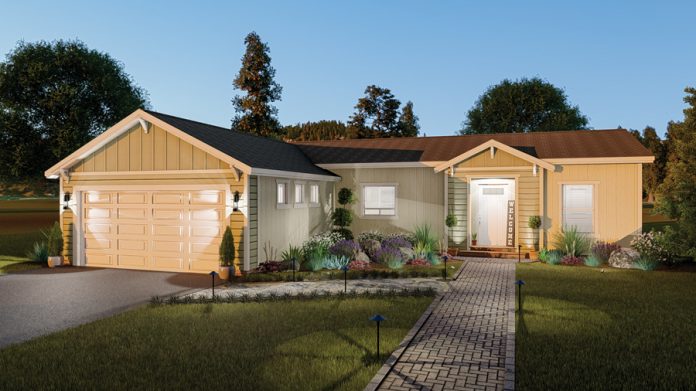
A new manufactured home from Clayton with residential design features now permitted in R1 and mixed-use districts of Panama City, Fla.

Legal Battle Results in Greater Access for Factory-Built Housing

Panama city housing code
FMHA Executive Director Jim Ayotte.

Panama City, Fla., voted recently to change its residential zoning code to allow “Residential Design Manufactured Housing” into all areas zoned for residential and mixed-use.

The Panama City Commission voted unanimously to approve the measure following months of legal maneuvering by the Florida Manufactured Housing Association and its attorneys.

Panama City Includes ‘Residential Design Manufactured Homes’ in New Single-Family Housing Code for All Districts Zone for Residential and Mixed-Use

“On June 23, the city commission unanimously approved Ordinance 2740, which defines a Residential Design Manufactured Home as a home complying with the Fannie Mae MH Advantage™ or Freddie Mac CHOICEHome® mortgage program,” FMHA Executive Director Jim Ayotte said in a statement.

The conflict began, Ayotte said, last September when FMHA notified Panama City officials that it believed the land-use code, which prohibited manufactured homes in residential districts, was discriminatory and in violation of Florida law.

The notification and request for a change was accompanied by a records request to help document the case. City officials acknowledged during a November meeting with FMHA that the city land-use code might have been discriminatory. At the time, however, the city made no discernable effort to change the code.

Florida Association Files Complaint Against Municipality

FMHA then filed a lawsuit against the city for violating the state’s public records law.

The city acknowledged it failed to comply, which provided FMHA an opportunity to attempt a negotiated settlement to avoid further litigation.

As part of the proposed settlement, FMHA requested the city to amend its land use code to allow Residential Design Manufactured Homes in residential and mixed-use districts.

Ayotte said the FMHA is preparing to meet with the city’s community development director to discuss potential opportunities for a home demonstration project.

“A demonstration project will help educate the public and neighboring government officials about the attractive, quality, and affordable workforce housing available through the Fannie Mae and Freddie Mac manufactured home mortgage programs,” Ayotte said.

2020 RV/MH Annual Induction Dinner Postponed until Dec. 3

2021 hall of fame Induction class sign
The RV/MH Hall of Fame is located in Elkhart, Ind.

In an emergency meeting, the RV/MH Hall of Fame executive committee voted to postpone the Annual RV/MH Hall of Fame Induction Dinner until Dec. 3. The ceremony had been scheduled Aug. 3.

“I have had better days, but we need to do what needs to be done. And postponing the Induction Dinner amid the continuing coronavirus pandemic is the appropriate course of action,” RV/MH Hall of Fame President Darryl Searer said.

Hall of Fame induction dinner
From left, Jess Maxcy, Maria Horton, Rick Robinson, Dick Jennison and Lesli Gooch are among the 420 attendees from 25 states who came to Elkhart Aug. 5 to honor the RV/MH Hall of Fame class of 2019.

In the decision, the executive committee believed the atmosphere to celebrate at the later date would be much more positive, hopefully with fewer concerns for health and safety, and with an overall feeling of peace of mind.

“And the class of 2020 inductees agreed. As it is their day, I have spoken with the inductees and the overwhelming vote was to move the date towards the end of the year,” Searer stated. “They all thanked us for agreeing to move the date.”

For more details or to make reservations, please visit: www.rvmhhalloffame.org/rsvp or call the Hall of Fame at (574) 293-2344 or 800-378-8694.

2020 Development Trends for Manufactured Home Communities

manufactured home community greenfield project

A Planner’s Perspective

Home Appearance greenfield projects
Professional Planner Donald Westphal

Owners and operators of manufactured home communities are seeing interesting developments in three areas of the business.

  • New Greenfield Projects
  • Community Expansions
  • Older Community Upgrades

Greenfield Projects

The need for new communities is great in most parts of the country. After years of vacancies in communities, most desirable existing communities are at or near capacity, resulting in an increasing demand for new projects. Unfortunately, zoning new sites is difficult. Sewer and water availability in desirable locations where zoning is attainable is rare. Many available zoned sites are in undesirable or difficult locations. And public opposition to new communities continues to come from the “trailer park” perception.

Construction costs are rising, but so is the value of the finished project. As a result, it is important to take advantage of unique ways development costs can be minimized by using knowledgeable manufactured housing community planners and engineers.

manufactured home community greenfield project
Photo courtesy of Zeman Homes.

Community Expansions

It is often easier to expand an existing community than to start anew. Zoning in many cases is less difficult since it is an expansion of an existing use. And hopefully, the existing community is well managed and cared for and will generate minimal opposition. If not, it is important to bring it up to respectability before seeking approval to expand. The expansion also can provide an opportunity for existing residents to upgrade to a new home in the expansion area, allowing for the removal of less attractive older homes. New home sales in the expanded community provide an additional profit center for the owner. Additional utility services may be available from the local supplier or attainable through the expansion of the existing on-site facility. The addition of new sites to the existing community may not require a significant increase in overhead, another benefit to expansion. Care should be exercised to the disruption to existing residents caused by construction activities and some up-grade in the community amenities is advisable to minimize residence concerns.

Greenfield project manufactured home community planning
Photo courtesy of Zeman Homes.

Community Upgrades

Upgrading an existing community is a win-win for the owner, the residents, and the industry. The community already is properly zoned and in a great location. Making the community more attractive and livable should be welcomed by residents and neighbors alike. On the negative side, some communities have rezoned undesirable properties making the addition of newer homes difficult. However, many of our more progressive state associations have tackled this matter and made the practice unlawful. Often municipalities require reconfiguration of home-sites to conform to the existing regulations regarding setbacks and lot sizes. Fortunately, many states allow for lot reconfigurations to reflect the rules that were in effect when the community was originally constructed. Michigan and Indiana are two states with that advantage. Many times, residents become concerned about their future. However, if the owner has the foresight to get its image in order first — entrance upgrades, street improvements, refreshed structure appearance, and landscaping — it can stimulate residents to upgrade their home and home-site appearance.

Revisions to the community’s “Guidelines for Living” in a reasonable time frame will assist in that effort.

All three of the options discussed, if properly done, will give the industry a much-needed image boost and ready the market for expansion.

Donald C. Westphal, Associates, LLC, winner of seven Community of the Year Awards, has a 50-year history of planning great Manufactured Communities and is still enthusiastically serving the industry. Learn more at www.dcwestphal.com.

MHI 2.0 is Leading the Industry to a Better Future

MHI 2.0 manufactured housing industry
All-American Homes.

At MHI, we believe that manufactured homes are the future of housing in America. 

New MHI Leadership Financing for Manufactured Housing
MHI CEO Dr. Lesli Gooch

The launch of MHI 2.0 in January saw a change to our organizational leadership structure and a new strategic approach for elevating our industry. MHI’s strategy to grow the manufactured housing market encompasses three areas of opportunity where our Association can best support the industry’s efforts to create more options for Americans in need of quality, affordable housing.

Grow the Market

The need for high-quality, affordable housing has never been greater and manufactured housing presents one of the most viable, common-sense solutions to creating more affordable housing stock throughout the country. MHI, along with our industry and state association members, has laid the groundwork for this unprecedented time by consistently challenging federal state and local barriers that limit access to manufactured housing. Growing the market for manufactured housing is the core mission of MHI 2.0, and we’d like to share with you our pillars for ensuring the success of that mission and securing a better future for housing in America.

MHI 2.0 Adventure Homes interior
The interior of a new model from Adventure Homes.

Tell Our Story

We don’t have to tell you the people and companies who make up this industry are some of the best in the world—you’ve experienced it up close at our meetings and events. You also know our industry makes some of the most quality, affordable homes in the country. Yet, misconceptions about manufactured housing have created challenges that have been difficult to overcome and affected how our industry is handled by regulators.

Telling our story is key to setting the record straight and introducing people to the benefits of owning a manufactured home. Here in Washington, D.C., MHI is using every opportunity to interact with the U.S. Department of Housing and Urban Development (HUD), the Administration and Congress to share our story, with great success. So far in 2020, HUD has made a number of changes and proposals to its regulation of manufactured housing to alleviate federal, state and local regulatory barriers to this affordable homeownership option including calling for a Deputy Assistant Secretary of Manufactured Housing and updating the HUD Code.

MHI 2.0 Ben Carson MHI talk
HUD Secretary Ben Carson addresses manufactured housing professionals at the MHI Congress & Expo in New Orleans.

As a member of the President’s cabinet and the nation’s housing spokesman, HUD Secretary Ben Carson is an advocate for what manufactured housing offers – quality homes, built with the features consumers want, at affordable prices.  In Congressional Committee hearings, in media interviews, and in conversations about affordable housing, Secretary Carson is constantly reminding the country about the value and sustainability of manufactured housing. These actions by Secretary Carson and HUD are a direct result of MHI and our members effectively telling the positive benefits of manufactured housing as an affordable homeownership option.

MHI also tells our story through communications to our members. Every week, MHI publishes a newsletter to our Federated States Division, updating them on happenings around the country and in Washington, D.C. We also provide our members with valuable research, interact with the media and provide analysis on new information as it becomes available. Keeping the industry well-informed, through distributions like our biweekly MHI News & Updates, is crucial to ensuring our members are prepared with the most up-to-date, accurate information available to help share our industry’s story.

Engage Our Members

To keep our members updated and engaged, MHI facilitates numerous networking opportunities throughout the year, including member-only meetings, industry-wide events, and educational programming. In 2019, more than 2,400 industry leaders attended seven MHI events designed to create connections and involve our members. Through these events, MHI is able to engage with its membership and hear first-hand about what is happening in the industry. These member interactions are an important part of MHI’s effective strategy to grow the market and we welcome the opportunity to discuss the issues that are important to our members. For a full calendar of events and offerings, visit our website at www.manufacturedhousing.org.

Develop Our Team

MHI understands that growing the market requires highly knowledgeable and qualified people at every touchpoint throughout the manufactured home buying process. Because MHI represents every segment of the manufactured housing industry, we are constantly expanding our offerings to ensure our members have the tools and resources necessary to succeed. We offer members a variety of educational opportunities and accreditations through the Manufactured Housing Educational Institute (MHEI) – each tailored to suit individual segments of our industry. From installation to community management accreditation to the latest issues and trends, our organization is committed to providing the tools to ensure our industry is providing consistent, exceptional service. In December, MHI and MHEI announced the launch of our Accredited Community Manager (ACM) 2 course. This curriculum builds upon the information and resources learned in ACM 1 and offers additional tools needed for success. The program is offered both in-person and online and offers guidance for managers on how to keep sites full and treat residents fairly. To learn more about MHI’s educational offerings, visit https://www.manufacturedhousing.org/education/.

MHI 2.0 member engagement
MHI members and meeting guests talk during a recent MHI event.

MHI also holds a variety of educational workshops and makes presentations at dozens of state association meetings and other industry events across the United States. We also offer webinars to expand and grow industry knowledge on a diverse range of topics including Fair Housing, Government Affairs Initiatives, and much more. Further, MHI offers a variety of ways to keep members informed about our work in Washington and issues relevant to manufactured housing—including a bi-weekly newsletter exclusively for members and webinars on key industry topics.

MHI is delivering tangible value and results for its members so they can stay ahead of the momentum and thrive. We are committed to creating opportunities for members to learn about the latest topics impacting the industry by presenting engaging speakers and panels, offering educational programs and conducting cutting-edge research. In addition, MHI is making it possible for the industry’s collective voice to be heard so that policymakers at the federal, state and local levels partner with us to help the industry prosper.

If you have questions, please reach out to MHI’s Advocacy and Communications Team at mhigov@mfghome.org or 703-558-0675.

Datacomp Publishes JLT Reports for Colo., Del., NJ, Wyo. Communities

JLT Reports for Colorado, Delaware, New Jersey, Wyoming

Datacomp published July 2020 JLT Market Reports for manufactured home communities in Colorado, Delaware, New Jersey, and Wyoming, which include mobile home rent comps, occupancy, and other vital up-to-date data.

JLT Market Reports provide detailed research and information on manufactured home communities in 184 U.S.housing markets. Reports include the latest rent trends and statistics, marketing programs, and a variety of other useful management insights.

Datacomp’s JLT Market Reports are the nation’s #1 provider of market data for the manufactured housing industry. JLT Market Reports are recognized as the industry standard for manufactured home community market analysis.

July 2020 manufactured housing market data published in JLT Market Reports for Colorado, Delaware, New Jersey, and Wyoming include information on 240 “All ages” and “55+” manufactured home communities.

Altogether, the reports from the four states’ manufactured home communities include data representations for 62,673 homesites.

Regional Trends in Manufactured Housing Community Rent and Occupancy

  • The West region manufactured home communities show a year-over-year 0.9% increase in occupancy to 95% as well as a 4.5% increase in adjusted rents year-over-year. 
  • Northeast region manufactured home communities show a year-over-year 0.2% increase to 94% as well as a 2.9% increase in adjusted rents year-over-year.

“Looking at the July 2020 JLT Market Reports, the stability of the industry and the value provided in affordable housing is made evident by the consistently strong occupancy rates in varying markets,” Datacomp Co-President and Chief Business Development Officer Darren Krolewski said. “The sustained high occupancy rates also show that the very moderate increases in rent are in line with market demand.”

What’s in JLT Market Reports?

Each JLT manufactured home community rent and occupancy report from Datacomp has detailed information about investment grade communities in the major markets. The detailed information includes:

  • Number of homesites
  • Occupancy rates
  • Average community rents, and increases
  • Community amenities
  • Vacant lots
  • Repossessed and inventory homes, and much more

JLT Market Reports also include management insights that rank communities by number of homesites, occupancy rates, and highest to lowest rents. Established reports show trends in each market with a comparison of July 2020 rents and occupancy rates to July 2019, as well as a historical recap of rents and occupancy from 1996 to present date in most markets.

The July 2020 JLT Market Reports for manufactured home communities in Colorado, Delaware, New Jersey, and Wyoming are available for purchase and immediate download online at the Datacomp JLT Market Report website, or they may be ordered by phone in electronic or printed editions at (800) 588-5426.

Each fully updated report for mobile home communities is a comprehensive look at investment grade properties within a market, enabling owners and managers, lenders, appraisers, brokers, and other organizations to effectively benchmark those communities and make informed business decisions.


EVENTS

hall of fame elkhart mh rv

Introducing the 2026 RV/MH Hall of Fame Inductees

Aug. 17 Induction Dinner in Elkhart to Honor Five from Each Industry In August, the RV/MH Hall of Fame will celebrate the 2026 class of...
MHI CE expo hall vegas manufactured housing meeting

Manufactured Housing Industry Convenes in Las Vegas for MHI’s 2026 Congress and Expo

More than 1,500 manufactured housing professionals are expected in Las Vegas April 7-9 as the Manufactured Housing Institute’s Congress and Expo returns to the...

Biloxi Show Shapes Up to be Bigger Than Ever in 2026

With more homes, more exhibitors, and more buzz than ever before, the 2026 Biloxi Show is expanding, and fast.  The Biloxi Manufactured Housing Show &...