Home Blog Page 75

Fannie Mae Looks to the Future of Manufactured Housing with MH Advantage

MH Advantage

MH Advantage Expands Access to Manufactured Housing

When we began implementing our Duty to Serve Underserved Markets plan in January, Fannie Mae called manufactured housing one of the largest affordable housing opportunities in the country. With starter home prices rising, and affordable homes increasingly in need of major repairs, we know that manufactured housing is a critically important piece of the affordable housing puzzle. And we believe that, with the right support, it can be a key component in tackling the affordable housing crisis.

Since that launch, Fannie Mae’s manufactured housing team has been hard at work building the foundation for our efforts in the coming years. And we’ve already rolled out some exciting initiatives.

MH Advantage

Design, Materials, Add Ons Help Define MH Advantage

MH AdvantageTM is the most visible result of our efforts so far, and it represents one of the biggest changes to the way we approach financing for manufactured housing in years.

Initially announced in June 2018, Fannie Mae developed the program to encourage the broader use of manufactured housing as an affordable alternative to site-built homes.

MH Advantage offers attractive terms that have typically been available to site-built homes in the past, like down payments as low as three percent and reduced mortgage insurance requirements, to buyers of eligible manufactured homes.

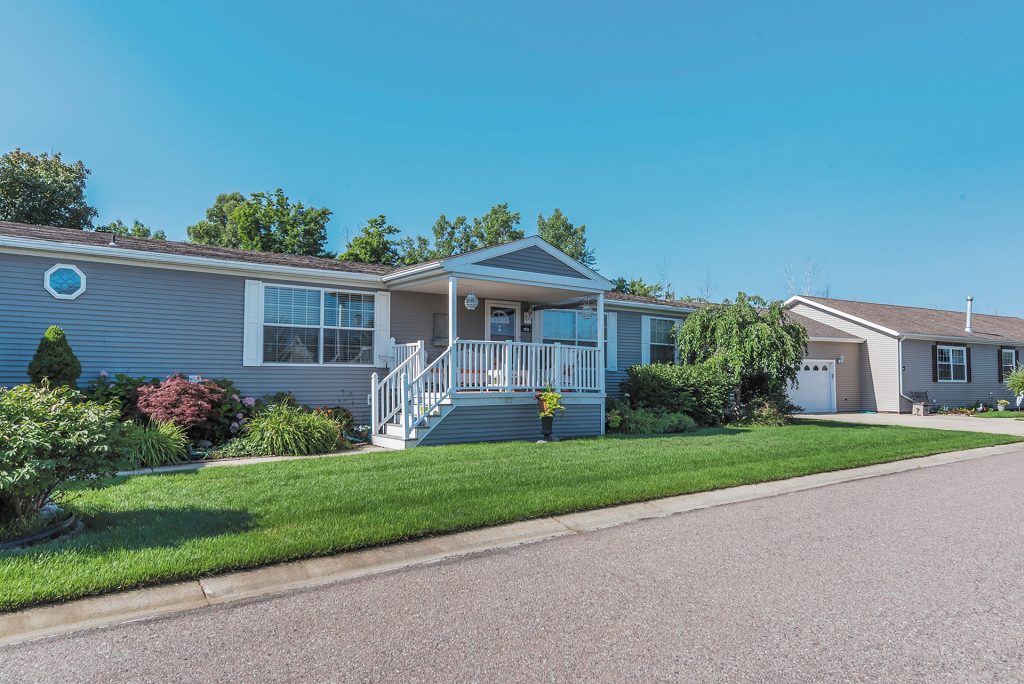
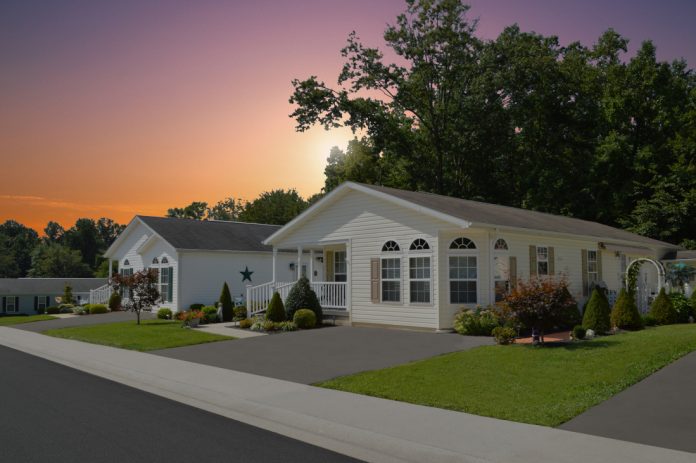
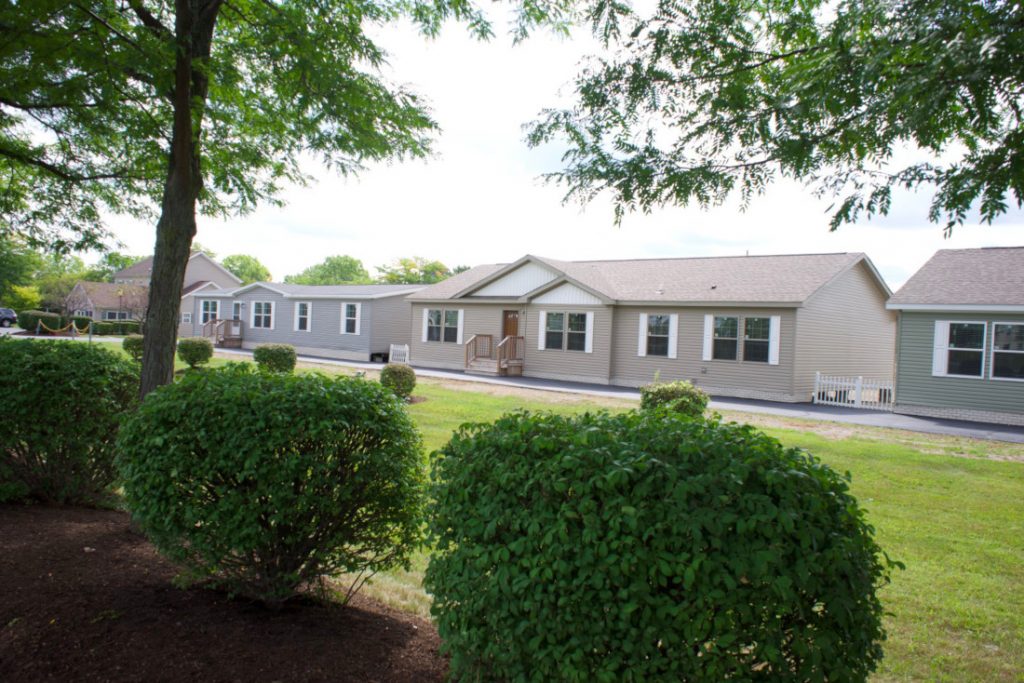
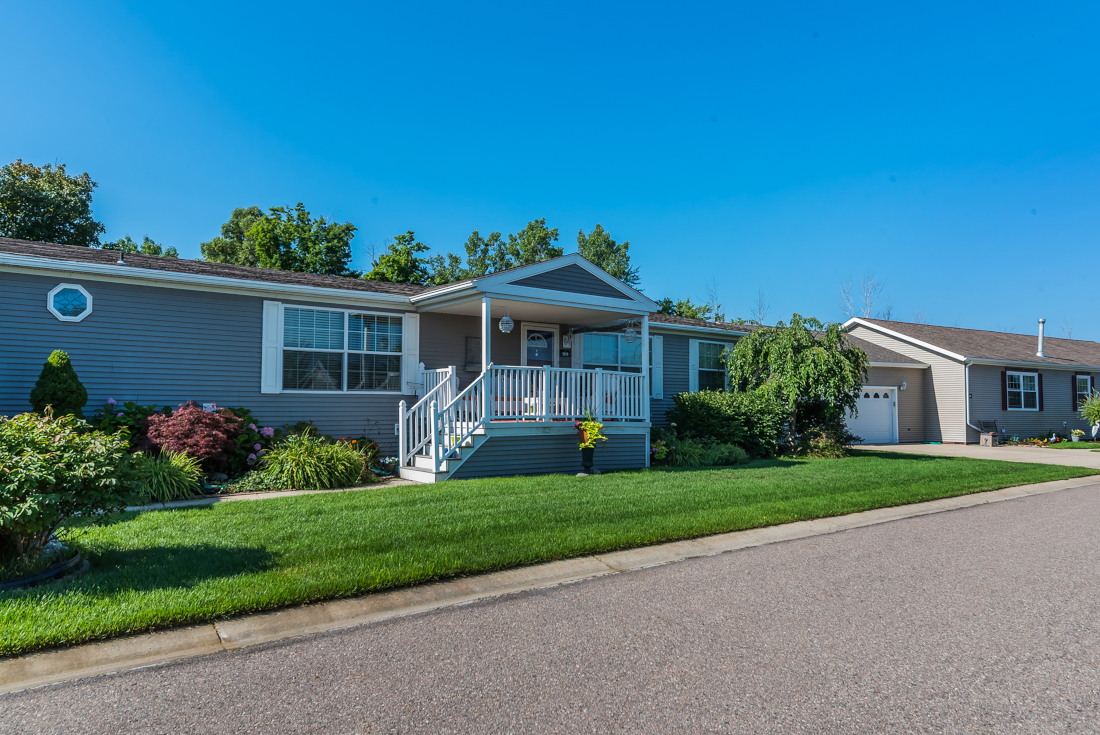
What makes homes MH Advantage-eligible is a list of characteristics, developed by Fannie Mae in consultation with manufactured housing industry stakeholders, that help manufactured homes blend into more traditional neighborhoods:

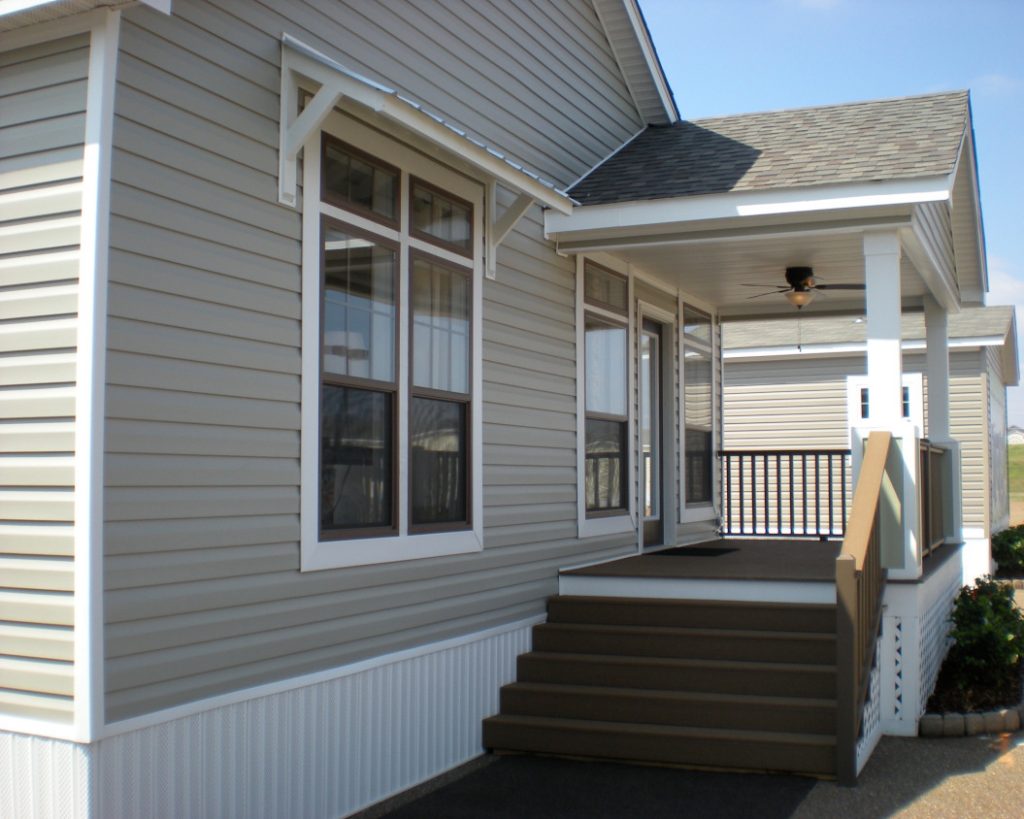
  • Construction elements, including durable siding materials.
  • Roof treatments distinct from traditional manufactured homes, including higher pitch rooflines.
  • Options for garages, porches and other desirable features.

Not only will these more generous terms and enhanced features make these manufactured homes more appealing and affordable for borrowers, MH Advantage also puts manufactured housing on more even financial footing with their site-built counterparts.

In addition to creating a new and appealing offering, we also put a lot of focus on the lenders. Knowing that a complicated origination process would be a deal-breaker for many lenders, we took the time to ensure that originating these loans would be quick and simple for loan officers. Our expectation is that these efforts will make manufactured home financing more broadly available, making it easier for homebuyers to purchase manufactured homes.

Positioning MH Advantage for Success

While there was a lot of enthusiasm about MH Advantage at launch, we quickly discovered that there were several aspects of the program that needed fine-tuning. With the help of our industry partners, we identified some parts of MH Advantage that we could update to make it more successful.  

Our Selling Guide will be adjusted with requirements that will provide new direction to MH Advantage appraisers:
  • When possible, appraisers will be instructed to use MH Advantage comparable sales for MH Advantage appraisals.
  • If comparable MH Advantage homes are not available in the marketplace, then the appraiser will use the best and most appropriate other sales available, including sales of site-built homes.

These adjustments, as well as a handful of other revisions to the program, will make it easier to build and finance these homes and spur activity in what we believe is a promising opportunity for Fannie Mae and the manufactured housing industry.  

As before, the initiative is open to all manufacturers who make HUD-certified manufactured housing and there’s no cost to join.  For more information, and to see how to participate, visit FannieMae.com/manufacturedhomes or contact MH_Notices@fanniemae.com.

Exploring Chattel Finance

While Fannie Mae currently only supports manufactured housing titled as real property, our Duty to Serve plan also encourages us to carefully and deliberately consider a chattel loan pilot that would take place over the next two calendar years.  Earlier this year, our regulator, FHFA, approved a limited Fannie Mae pilot to purchase chattel loans that will help us better understand the complexities of the marketplace.

This pilot is an extension of the research we have done to inform our possible efforts in chattel lending, which also includes a paper titled Key Legal Distinctions between Manufactured Home Chattel Lending and Real Property Lending. The paper, which is available on our website, will be critical in guiding our chattel lending strategy, as will the other research we are conducting in accordance with our Duty to Serve plan.

We have also invited lenders to share data on chattel loans, so we can see how they are structured and how they perform.  Within Fannie Mae, we have gathered a diverse group of stakeholders across the organization to assess the risks and opportunities associated with chattel.  This group helped to develop a preliminary set of standards and principles that will inform Fannie Mae’s activities in the chattel space.

While it’s too early to say whether any new Fannie Mae offerings will be developed from this pilot, we are excited to learn more about this type of loan that constitutes so much of manufactured home financing today.

Fannie Mae and the Future of Manufactured Housing

September marks nine months since Fannie Mae has been actively working to figure out how to advance manufactured housing under our Duty to Serve plan, but as much as we’ve done so far, this is only the beginning.

I can’t predict what the next two years will bring, but I’m looking forward to continuing work with the committed partners I’ve met in the manufactured housing industry.

Together, we’ll make homeownership accessible to more borrowers across the country.

Create Success in Manufactured Home Communities

Mobile Home Community

Success in Manufactured Home Communities
Michael Power of MHC Investors.

Six Keys to Dynamic Change: Create Success in Manufactured Home Communities

  1. Awareness

Employees need to be aware of the need for change. That onus is on us, as managers, to create the awareness need for success in manufactured home communities.

  1. Desire

Employees require a desire to support change. In other words, the desire to improve the community, see the results of their actions, earn residents’ appreciation and desire to keep the job. The motivation must come from somewhere.

  1. Knowledge

What needs to change and how to go about it? It simple, and comforting, to say change is needed. How you come by the knowledge of what change needs to be made and how it can be done is a much higher standard. Owners and managers are responsible for identifying and implementing change through their knowledge base.

Success in Manufactured Home Communities

  1. Ability

The change must be actionable. Often this comes in the form of a single operating platform on a company-wide basis. Working for clients, our MHCinvestor.com platforms…

  • Break down all aspects of on- and off-site management into tasks
  • Lays out the most efficient method to complete tasks
  • Measures the highest likelihood of success
  1. Reinforcement

  • The corporate office must support the staff by sending out a monthly calendar and a blast email to all managers the day before a critical business elements, such as…
  • Non-payment notices
  • Resident inspections
  • Twice weekly maintenance to-do list creation
  • Court filing

Of course, the manger must follow up and acknowledge receipt of communications, and agree to complete the associated tasks. Follow this with a short briefing on results from the tasks.

For success in manufactured home communities, the corporate office also reaches out to the manager if a task is incomplete. There is a need to reinforce compliance and notify the regional manager when necessary. The regional manager can call and schedule a visit or conversation.

  1. Loyalty

The corporate office is responsible for the support of the regional manager’s efforts. This is a response to the support of company policy regional managers provide.

Any manager need to express dedication to uniform application of resident policies, collection policies and the zero-tolerance policy. The on-site manager is expected to support company policy versus arbitrary sympathy toward resident issues or complaints. Of course, empathy is encouraged toward all residents. However, solutions for personal or homeowner problems for a land-lease resident must be summoned by the residents themselves within their own support network.


SECO Offers Financial Assistance for Veterans

financial assistance for veterans

Helping One Veteran Leads to Financial Assistance Fund

The Southeast Community Owners (SECO) announced a new program during its annual conference in October. SECO’s Veterans Assistance Fund is designed to give financial assistance for veterans living in mobile home communities.

SECO is a nonprofit 501(c)3 that serves the needs of small- and mid-size community owners with its annual conference. More than 400 community owners attended the 2018 conference in Atlanta.

David Roden, SECO co-founder and owner of Mountain View Estates in Rossville, Ga., started the Veterans Assistance Fund with Ron Cobb, Dave Jackson, Steve Quick, Blake Hodge, Max Baker, Steve Case, and Maryuri Barberan. The idea came about after Roden encountered a U.S. military veteran who lived in his park. The veteran used an oxygen machine, and had trouble breathing during the heat of summer. He needed help buying another air conditioner for his living room.

financial assistance for veterans
Lend a hand to a veteran in need through SECO’s new Veterans Assistance Fund.

Community Owners Raise Money for New Fund

To help other veterans living in manufactured housing communities, the committee began soliciting to get the Veterans Assistance Fund off the ground. Funds from the SECO website’s Classified Ads section and donations from SECO business and community owners have provided about $3,000 of seed money so far, Roden said.

Financial Assistance for Veterans

This is how the fund works.

Community owners can provide aid for veterans who live in their community. Perhaps there’s a need for a handicap-accessible toilet, or a wheelchair ramp, or grab bars. Make a request and the committee will decide whether to provide the funds. Veterans must furnish proof that they were honorably discharged. Widows of veterans also qualify for aid, Roden said.

Spencer Roane, owner of Pentagon Properties and co-founder of SECO, said the fund “reflects the attitude of small community owners everywhere of helping those who have served our country through military service.”

Veterans Assistance Fund“We hope that those owners who attend the SECO conference will submit requests to provide any assistance whatsoever to the veteran residents of their communities,” Roane said.

For more information about the Veterans Assistance Fund, send an email to contact@secoconference.com.

You also can email Maryuri Barberan at maryuri@roane.com, or call her at (404) 355-5978.

The Pitfall and Promise of Park-Owned Homes

Promise of Park-Owned Homes
Photo courtesy of Rickert Properties.

If Properly Managed, the Promise of Park-Owned Homes Can Be Significant

By Robert Blum and Alexander Rindner of Springfield Communities

As relative newcomers to the industry, we notice a wide gulf separating large park owners from those operating on a more modest scale of say, 200 lots or fewer. There are noticeable attributes that characterizes smaller community owners. One of those is a tendency to incorporate the promise of park-owned homes into their business model as a strategic choice to generate higher annual income.

However, difficulty may arise when the time comes for these owners to sell. Those park-owned homes may represent a challenge for attracting quality buyers. The severity of that challenge will depend on the choices the park owner has made.

Promise of Park-Owned Homes
Robert Blum, Springfield Communities
Promise of Park-Owned Homes
Alexander Rindner, Springfield Communities

We are a highly flexible family office representing something of an ideal buyer for many smaller park owners. In our ongoing search for acquisitions across Florida and the Southeast, we come across many parks that we cannot acquire. Often this solely is due to how the park owner has implemented park-owned homes.

In this article, we highlight two major pitfalls that small park owners must avoid with respect to park-owned homes, so as to extract maximum value from their park in the long term.

The Promise of Park-Owned Homes

Promise of Park-Owned Homes
A manufactured home community in Davie, Fla.

The desirability of including park-owned homes is a matter of personal preference and circumstances.  

Indeed, many small park owners possess a talent for leveraging the promise of park-owned homes as rentals. There is the owner-operator who is unafraid to roll up the sleeves. That person has to the tools to realize much higher gross income generated by park-owned homes.

For many small owners, incorporating a manageable number of park-owned homes can turn a sleepy real estate investment into a cash-flow machine.  

The Big Picture

The larger buyers to whom a small owner will one day want to sell may view the strategy differently.

It is well-known that certain buyers will be very sensitive to parks that have very high percentages of park-owned homes. Many buyers prefer the homeowners on a land-lease due to management level or other concerns.

However, even those buyers willing to consider parks with large numbers of park-owned homes will need the seller to have operated in a way that retains flexibility and autonomy.

The Promise of Park-Owned Homes
Park-owned homes should be managed to favor the long-term viability of the property rather than short-term returns.

Pitfall #1: Purchase Arrangements with Long Terms

A buyer of your park likely will want some degree of flexibility when it comes to park-owned homes.

Regarding flexibility, a common pitfall we see small owners fall into is entering into lease-to-own or lease-option-to-purchase arrangements with residents that have very long terms. In general, these arrangements can be positive in the eyes of a buyer who is sensitive to park-owned homes. They put the residents on a path toward home ownership. And achieve the goal of generating steady lot rental income.

However, in order to retain flexibility, park owners must resist any urge to lock themselves into arrangements with 15 or even 10 year terms. It is preferable the term be shorter. Ideal is between five and seven years or less. This is true even if it means earning less on the potential promise of park-owned homes.

Indeed, avoid encumbering a home with a purchase arrangement for that long term. It is even preferable that the home simply remain a pure rental.

Some small owners are apparently of the view that, if the term of the purchase arrangement is long, the resident will have a greater chance of defaulting and the owner will get to start over again with a new tenant. Such a view is both inconsistent with the values at the heart of the manufactured housing industry and short-sighted. It impinges upon the flexibility that buyers seek in a new property acquisition. Not to mention the tenant is ill-served.

Promise of Park-Owned Homes
Northville Crossings, a Sun Community in Michigan

Pitfall #2: Third Party Investors

In addition, buyers seek autonomy over park homes. Small community owners looking to improve the park with new homes or fill vacant lots might be tempted to have third-party investors outlay the capital required to accomplish that goal.

That third-party investor becomes responsible for lot rent. This provides the park owner with a reliable source of income without having to chase multiple tenants. Yet these benefits only accrue to the park owner in the short to medium term. From the broader investing community’s point of view, these homes are basically considered owned by the park. But the park owner does not reap the reward of the higher gross income that typically accompanies park-owned homes.

In addition, a third-party investor who controls a significant number of homes has a great deal of leverage over the park. Should the park owner want to sell, strong buyers will not be interested in essentially partnering with this third-party investor.

Conclusion On the Promise of Park-Owned Homes

Park-owned homes can be a great source of revenue for small owner-operators who don’t mind rolling up their sleeves to earn the extra income they provide. They also can drastically limit a park owner’s exit options and hurt the overall valuation of a park. Small park owners should consider the bigger picture and long-term consequences when they implement a strategy of including park-owned homes in their parks.

Robert Blum and Alexander Rindner are principals of Springfield Communities, a division of Avery Management, a multi-generation family office based in the New York City area.

Louisville Show Registration Open

In its 60th Year, Louisville Show Registration Now Open, Event Jan. 30 – Feb. 1 at the Kentucky Exposition Center

The 2019 Louisville Show registration is now open to attendees, in what is certain to be a defining year for the event and the industry nationwide.

Held at the Kentucky Expo Center, the 2019 Louisville Show had its earliest sellout in memory. Organizers filled all model home and service/supply exhibitor space by fall.

This year’s show will provide attendees 48 model homes to tour, with representatives from each company to answer questions. The service/supply exhibitor area will have 120 vendors.

How Is The Louisville Show is Organized?

The Louisville Manufactured Housing Show is the industry kickoff each year. The show is put on by the Midwest Manufactured Housing Federation and produced by Show Ways Unlimited. This year, industry consultant Ken Corbin and MHVillage/Datacomp Co-President Darren Krolewski programmed the presentation and panel session. These will cover a variety of topics of interest, from finance, to sales, management and regulatory trends.

Louisville Show Registration open
Sales representatives show a new Redman Home model at the 2018 Louisville Home Show.

Who Goes to The Louisville Show?

The Louisville Show attracts a national audience, with a concentration from Ohio, Illinois, Indiana, Kentucky and Michigan. The show is host to manufacturers, retailers and dealers, brokers, and all variety of service and supply professionals, from hardware to financial services. The midwest association directors also convene at The Louisville Show for an annual meeting, and other association directors attend as well.

The Louisville Show Registration Open Now
Louisiana Pacific shows its shield and siding products in the service/supply exhibitor area of the 2018 Louisville Manufactured Housing Show.

Where to Stay for The Show

Many people who attend The Louisville Show Stay at The Crowne Plaza, which is a quick shuttle ride from the airport. Also, the hotel location directly adjacent the Kentucky Expo Center is a primary benefit. The Crowne Plaza has complimentary 24-hour shuttle access to the airport, as well as free wi-fi service in every room. Louisville is a great city for entertaining clients, and has many other places to stay in close proximity to the Expo Center.

A Word From Louisville Show Chairman Byron Stroud

FMHA Workforce Development Initiative
Byron Stroud, Show Chairman for The Louisville Show in 2019

“Louisville is a great central geographic location. The venue is conveniently located very near the international airport and across the street from ideal lodging. In addition, there’s free parking and a space that allows us to bring the entire show inside during the winter months. It’s a very comfortable environment.

“It is the industry’s longest running event, and it’s been there in good years and bad. Those bad years are a testament to some of the state associations stepping up to make sure it continues and is able to lend support for manufactured housing professionals when sales are rising and opportunity can be realized.”

How to Use UTM Codes to Better Track Your Internet Marketing Investment

utm-codes

What is a UTM Code?

UTM stands for  “urchin tracking module”. It is a short line of text you attach to a web site link that helps track individual user behavior and overall performance of your internet advertising campaigns through Google Analytics. The UTM code is made of destination url, source, medium and campaign name.

Why Use UTM Codes?

UTM Code
UTM Codes allow the user to gain specific insight on individual user habits and preferences.

UTM codes track visitors who click on the link and how they interact with the website.

This can result in extremely valuable insights about audience behavior.

Once the UTM codes have been implemented and the campaign has run for a few days, review the results in Google Analytics under “Acquisition”, then “Campaigns”.

Within this section of Google Analytics, users can analyze the performance of their campaigns. In other words, it details where traffic originates and how you may be able to get more of it.

  • What advertising websites are driving traffic?
  • What email campaigns are generating leads and/or appointments?
  • How effective are the various re-marketing campaigns and associated landing pages?
  • Did the campaign generate the necessary Key Performance Indicators (KPIs)?
  • What is the bounce rate?
  • How long did users stay on the page?

Answers to these questions can help allocate revenue, optimize campaigns and understand user behavior.

What is In a UTM Code?

  • Destination URL: Where website traffic is going to
  • Source: Where traffic came from (MHVillage, Facebook, Twitter, LinkedIn…etc)
  • Medium: How the traffic gets to the website (pay-per-click, website, social…etc)
  • Campaign Name: Why the traffic is coming to the website (promotion name…etc)

For example, the image below shows a website link with UTM codes that goes to the MHVillage professional blog, with visitors who came from a Facebook pay-per-click campaign named fb-mhv-pro-blog.

UTM Code

Creating a UTM Code

UTM CodeFortunately, there is a UTM code generator to help append these codes to a url using Google’s URL builder. This tool breaks out the necessary elements into fields and then auto creates the UTM code.

When creating the campaign names for the UTM codes, there are a few best practices.

UTM Code Best Practices

Be Consistent

When creating a campaign name, medium and sources, it is a best practice to use all lowercase letters because UTM codes are case sensitive.

For example, if a campaign uses both “mhv-Facebook” and “mhv-facebook” as campaign names, Google Analytics will record this Facebook campaign name as two different campaigns. This could create reporting issues.

Create a naming convention system

Implementing a naming convention for campaign names can help with keeping UTM codes consistent.

For example, if one person creates a UTM code and enters the source/medium as “twitter/cpc”, but another person creates a UTM code and enters the source/medium as “twitter.com/cpc”, this will create two different campaigns in Google Analytics.

A naming convention would declare that all UTM codes for Twitter use source/medium “twitter/cpc”, instead of “twitter.com/cpc”.

Use hyphens or dashes

UTM CodeGoogle recommends using hyphens or dashes over underscores and spaces, because using spaces or underscores can cause problems when the Googlebot crawls the website.

Plus, it also makes it easier to read campaign names in Google Analytics.

Again, being consistent is important. For example leaving out a dash can also create a new campaign.

Use a URL shortener

If the UTM code that was created makes the url too long or unappealing for users, there is an option to convert the link to a short link by using a url shortener. A url shortener is an online application, such as bitly, that converts a regular url into a condensed format.

For example, the UTM code website link, https://mhinsider.com/?utm_source=facebook&utm_medium=cpc&utm_campaign=fb-mhv-pro-blog, would become, .

Bitly has a great Chrome extension. After a login, click on the bitly icon. It will auto-generate a short link of the webpage that a user is on.

The use of UTM codes may involve a little more setup work for the marketing team. But they will pay off with improved insights about the results from your advertising campaigns, and hopefully allow you to help your customers make better decisions.

Sun Communities Invests in Ingenia Communities, Australian Market

Sun and Ingenia Communities

Sun Communities, Inc. Makes Strategic Investment in Ingenia Communities, a Leading Owner and Operator of Manufactured Housing and Recreational Vehicle Communities in Australia

Sun Communities, Inc. has announced a strategic investment in Ingenia Communities Group.

Ingenia is a leading owner, operator and developer of senior manufactured housing communities and holiday resorts in Australia. Sun communities also will involve itself in a development joint venture with the Australian company.

Sun is a real estate investment trust based in Michigan. It owns and has an interest in manufactured housing and RV communities nationwide and in the UK.

Sun Communities will invest approximately $54 million for a 9.9 percent ownership stake in Ingenia Communities. Additionally, the two will form a 50/50 joint venture to grow a manufactured housing community development program in Australia.

Ingenia has strong earnings growth in recent years. It has a large existing acquisition and development pipeline. Also, Ingenia has development the joint venture poised to capitalize on the positive trends.

Sun and Ingenia Communities
A Sun Community. Photos courtesy of Sun Communities.

Ingenia Communities benefits from Sun Communities’…

  • Meaningful initial capital investment
  • Ongoing financial support through the joint venture
  • and the ability to leverage experience of the leading owner, operator and developer of manufactured housing and recreational vehicle communities

Australia has fragmented interests in both industries. Meanwhile, traditional housing, becomes increasingly expensive.

During the past 20 years, median home prices in key Australian capital cities have appreciated about 300 percent. Furthermore, there is a limited supply of high quality communities in Australia.

Industry fundamentals and Australian demographic trends provide long-term support for the sector’s growth prospects. The 55+ population may grow at twice the rate of the rest of the population. Therefore, Australian has a need for affordable senior housing.

Australian Market Primed for Growth Seen in U.S.

“We are extremely excited about investing in and alongside Ingenia and believe this venture provides a unique opportunity for Sun to strategically invest in the Australian MH and RV sector,” Sun Chairman and CEO Gary Shiffman said.

“Ingenia is a market leading operator, owner and developer of an attractive portfolio of communities across Australia. We have been actively monitoring the Australian market for some time given the sector’s similarly attractive attributes to the North American market,” he said. “The Australian MH and RV sector is early in its growth cycle, is primed for consolidation, benefits from strong demographic trends and has very favorable supply and demand dynamics.”

Sun Communities has spent considerable time with the Ingenia board of directors and management teams. As a result, Sun has found the business model and culture to be highly compatible with its own.

Shareholders will get an attractive opportunity to benefit from the growth potential of an emerging leader in the Australian sector and benefit from an opportunity for Sun to leverage its expertise to help accelerate that growth.

“We are pleased to be partnering with Ingenia’s strong and proven management team as they continue to grow their platform which has the largest development pipeline in Australia,” Shiffman added.

Sun Ingenia Communities

Ingenia Communities Welcomes Sun to Australia

Simon Owen, managing director and CEO of Ingenia Communities Group, said the partnership and venture bodes well for industry direction in Australia.

“Working with a leading operator who has a long history in the mature North American market and is aligned strategically and economically with our objectives will allow Ingenia to accelerate growth as we leverage our platform and pipeline,” Owen said.

Upon completion of the investment, Mr. Shiffman will join Ingenia’s board of directors. Ingenia will manage the development and operations of the communities in the joint venture.

About Ingenia Communities
Ingenia Communities Group (ASX: INA) is a leading operator, owner and developer of a growing portfolio of lifestyle and tourism communities across key Australian urban and coastal markets. Ingenia has a diversified portfolio of 61 rental, lifestyle and holiday communities, comprised of over 7,000 income producing sites and a development pipeline of over 3,000 sites.

About Sun Communities
Sun Communities, Inc. is a REIT that, as of September 30, 2018, owned, operated, or had an interest in a portfolio of 370 communities comprising over 127,000 developed sites in 31 states and Ontario, Canada. For more information about Sun Communities, Inc., please visit www.suncommunities.com.

Cavco Industries Announces Executive Leadership Changes

Joe Stegmayer during a presentation in Indianapolis in September 2018.

Today, Cavco Industries, Inc. announced executive leadership changes. The Company’s Board of Directors has appointed Daniel Urness as President and Acting Chief Executive Officer, effective immediately. In his new role, Mr. Urness will be responsible for day-to-day leadership of the Company. The Company also announced that Joshua Barsetti, the Company’s Chief Accounting Officer, will assume the duties of principal financial officer for purposes of financial filings and certifications.

William Boor, Chairman of the Company’s Audit Committee, a member of the Company’s Compensation Committee and an independent member of the Board since July 2008, will assume the duties of non-executive Chairman of the Board.

Daniel Urness has worked for and on behalf of the Company for nearly 20 years in numerous leadership positions and has long been part of the Company’s Chief Executive Officer succession plan. Most recently, Mr. Urness served as Cavco’s Executive Vice President, Chief Financial Officer and Treasurer until August 2018, when he resigned from that position to work more closely with the Company’s home building production facilities to gain additional experience as part of the Company’s succession planning efforts. As Executive Vice President, Mr. Urness played a key role in advancing Cavco’s operational initiatives, which established the foundation for the Company’s successes.

“The Board fully supports Cavco’s current strategy and is confident that Dan Urness is the right person to build on our Company’s success,” commented Mr. Boor. “We are fortunate to have Dan return to our executive leadership team as our new President and Acting Chief Executive Officer,” he added.

Joseph Stegmayer, former Chairman, President and Chief Executive Officer, commented that “Dan Urness is a great choice to lead Cavco. He is a strong leader, with the ability to connect with customers, partners and teammates. His institutional knowledge of our Company and significant industry experience will ensure a smooth leadership transition. I look forward to continuing to serve the Company in my new role.”

SEC Filing

Stegmayer Steps Down

The Company also announced that it had received a subpoena from the Securities and Exchange Commission’s Division of Enforcement (“SEC”) requesting certain documents relating to, among other items, trading of the stock of another public company. Subsequent to sending the Company a subpoena, the SEC sent a subpoena for documents and testimony to Joseph Stegmayer, regarding similar issues. The Company has initiated an independent investigation and intends to cooperate fully with the SEC’s investigation. Please see Part II, Item 1, Legal Proceedings section of the Company’s quarterly report on Form 10-Q for the period ended September 29, 2018, filed with the Securities and Exchange Commission contemporaneously with the issuance of this press release, for additional information regarding this matter.

Mr. Stegmayer stepped down from his position as Chairman, President and Chief Executive Officer of the Company after an internal investigation, conducted by independent legal counsel, identified certain violations of Company policy related to securities trading activities conducted by Mr. Stegmayer. The Board’s decision to transition Mr. Stegmayer to a non-executive role allows the Company to retain his deep industry and operational experience.

“The Board took actions that it believes to be in the best interest of the Company and its stakeholders,” commented Mr. Boor. “Cavco remains a strong Company and is well positioned for the future under Dan’s leadership.”

Daniel Urness, President and Acting Chief Executive Officer

Mr. Urness, 50, was previously Cavco’s Executive Vice President, Chief Financial Officer and Treasurer from April 2015 until August 2018. Previously, Mr. Urness served as Cavco’s Vice President, Chief Financial Officer and Treasurer from January 2006 to April 2015 and as a director and/or officer of certain of Cavco’s major subsidiaries, including Palm Harbor Homes, Inc., Fleetwood Homes, Inc., CountryPlace Acceptance Corp. and Standard Casualty Company. Mr. Urness was also Cavco’s Interim Chief Financial Officer from August 2005 to January 2006, Corporate Controller from May 2005 to August 2005, financial consultant to the Company from June 2002 to May 2005 and Controller from May 1999 to June 2002. Prior to joining Cavco, Mr. Urness served as manager and staff at Deloitte & Touche LLP for approximately six years.

Joshua Barsetti, Principal Financial Officer
Mr. Barsetti, 38, has served as Cavco’s Chief Accounting Officer since August 31, 2018. Previously, Mr. Barsetti served as the Company’s Senior Director of Financial Administration from August 2017 to August 2018 and as the Company’s Director of Internal Audit from October 2014 to August 2017. Prior to joining Cavco, he served as the Director of Financial Reporting at Universal Technical Institute (“UTI”) from November 2013 to October 2014 and previously served as UTI’s Audit Manager and Senior Audit Manager from May 2011 to November 2013. He held various internal audit positions at Viad Corp. from September 2005 to May 2011, most recently as an Internal Audit Manager. Mr. Barsetti holds a Bachelor’s degree in Accounting from Northern Arizona University and is a registered Certified Public Accountant.

William Boor, Chairman of the Board
Mr. Boor is Chief Executive Officer of Great Lakes Brewing Company, a large craft brewery in Cleveland, Ohio, a position he has held since September 2015. From December 2014 to September 2015, Mr. Boor was principal of MIB Holding Co LLC, a mining development company. From 2007 to 2014, Mr. Boor served in various executive positions with Cliffs Natural Resources, Inc. (“Cliffs”), most recently serving as Executive Vice President – Corporate Development and Chief Strategy/Risk Officer and President-Ferroalloys.  Among other roles prior to Cliffs, Mr. Boor held the position of Vice President, Corporate Development at Centex Corporation.  During that tenure, Cavco was a subsidiary of Centex, and Mr. Boor worked on the Cavco strategy and its eventual spin-off in 2003.  Mr. Boor earned a Master of Business Administration degree from Harvard Business School and is a Chartered Financial Analyst.

About Cavco Industries, Inc.
Cavco Industries, Inc., headquartered in Phoenix, Arizona, designs and produces factory-built housing products primarily distributed through a network of independent and Company-owned retailers. The Company is one of the largest producers of manufactured homes in the United States, based on reported wholesale shipments, marketed under a variety of brand names including Cavco Homes, Fleetwood Homes, Palm Harbor Homes, Fairmont Homes, Friendship Homes, Chariot Eagle and Lexington Homes.

The Company is also a leading producer of park model RVs, vacation cabins, and systems-built commercial structures, as well as modular homes built primarily under the Nationwide Homes brand. Cavco’s mortgage subsidiary, CountryPlace Mortgage, is an approved Fannie Mae and Freddie Mac seller/servicer, a Ginnie Mae mortgage-backed securities issuer that offers conforming mortgages, non-conforming mortgages and home-only loans to purchasers of factory-built homes. Our insurance subsidiary, Standard Casualty, provides property and casualty insurance to owners of manufactured homes.

Datacomp Releases November 2018 JLT Manufactured Home Market Reports for Idaho, Oregon, Minnesota, Washington

JLT Reports for Alabama and Georgia

November 2018 JLT Manufactured Home Market Reports have info on 297 communities from 10 major markets

Datacomp, publisher of JLT Market Reports and the nation’s #1 provider of manufactured housing industry market data, announces the publication of its November 2018 JLT Manufactured Home Market Reports for 10 markets in Idaho, Oregon, Minnesota and Washington.

Recognized as the industry standard for manufactured home community market analysis for more than 20 years, JLT Market Reports provide detailed research and information on communities located in more than 160 major housing markets throughout the United States. This includes the latest rent trends and statistics, marketing programs and a variety of other useful management insights.

Datacomp’s manufactured housing data published in the November 2018 JLT Manufactured Home Market Reports includes information on 297 “All ages” and “55+” manufactured home communities located in 10 major markets in the six states. Altogether, the reports include data representations for 51,040 homesites.

The November 2018 JLT Manufactured Home Market Reports includes a new Boise, Idaho, market report. The Boise market report adds 19 previously unreported communities with a total of 3,522 homesites.

“Industry rents and occupancy have demonstrated sustained growth in all markets. We see a slight dip in occupancy among retirement communities in one Oregon market,” Datacomp Co-President Darren Krolewski said. “The November reports provide a valuable snapshot of the performance among manufactured home communities in portions. In addition, the inclusion of a new Boise report maintains our intention to expand our geographic footprint toward access to useful industry data nationwide.”

Detailed Information You Receive in the JLT Market Reports

Each JLT manufactured home community rent and occupancy report includes detailed information about investment-grade manufactured home communities in major markets.

Information includes:November 2018 JLT Market Reports
  • Number of homesites
  • Occupancy rates
  • Average mobile home community rents and increases
  • Community amenities
  • Vacant sites
  • Repossessed and inventory homes

Established reports show trends in each market, with a comparison of November 2018 rents and occupancy rates to November 2017. In addition, there is a historical recap of rents and occupancy from 1996 to the present date in most markets.

The November 2018 JLT Manufactured Home Market Reports for 10 markets in Idaho, Oregon, Minnesota and Washington are available for purchase and immediate download online at the Datacomp JLT Market Report, or they may be ordered by phone in electronic or printed editions at (800) 588-5426.

Each fully updated report for mobile home communities is a comprehensive look at investment grade properties within a market. They enable owners and managers, lenders, appraisers and other industry professionals to effectively benchmark communities and make informed decisions.

CFPB Asked To Change Regulations to Support Financing for Manufactured Housing

Financing for Manufactured Housing
CFPB Acting Director Mick Mulvaney speaks during the MHI Summer Fly-In in Washington, D.C.

The Manufactured Housing Institute Penned a Letter to the Consumer Financial Protection Bureau Asking to See Change that Supports Financing for Manufactured Housing

Financing for Manufactured Housing
Dr. Lesli Gooch, MHI Chief Lobbyist

The Manufactured Housing Institute (MHI) hosted Mick Mulvaney, acting director of the Consumer Financial Protection Bureau, at the Legislative Fly-In in Washington, D.C., this summer.

Acting Director Mulvaney expressed a willingness to work with MHI to address regulations that hinder financing for manufactured housing. Following the Fly-In, MHI sent a letter to the bureau in response to Mulvaney’s comments.

At Mulvaney’s recommendation, MHI’s letter stressed the importance of prompt implementation of Section 107 of the “Economic Growth, Regulatory Relief, and Consumer Protection Act” (Pub. L. 115-174 § 107), regarding the definition of loan originator and the need for adjustments to the Home Ownership Equity and Protection Act’s (HOEPA) “high-cost mortgage” triggers.

MHI Asks For ‘No-Action Letter’

MHI asked the bureau to issue a “No-Action Letter” confirming that it will not pursue administrative action against any retailer or seller while it revises its regulations to be consistent with the new law. The recently passed definition clarifies that manufactured housing retailers and sellers are no longer considered mortgage originators simply because they provide customers with some assistance during the mortgage loan process.

Regulations need to be changed to be consistent with the law. And, such changes will take time because they have to go through a formal rule-making process. A “No-Action Letter” would provide cover for retailers and sellers who want to immediately take advantage of the flexibilities offered by the new law.

Also, MHI requested that the bureau make immediate adjustments to the “high-cost” thresholds for smaller-dollar manufactured home loans under HOEPA, so these loans are not unfairly swept under this designation simply due to their smaller size.

MHI will continue to utilize its relationships with administration officials and manufactured housing champions in Congress to advocate for these changes. At MHI’s June 2018 Legislative Fly-In, members of Congress were asked to contact Acting Director Mulvaney about them. MHI raised these issues again with Mulvaney and his leadership team, stressing that both requests will spur lending for manufactured housing without impacting existing consumer protections.

MHI said it will continue to pursue these and other legislative and regulatory changes that support improved availability of financing for consumers interested in purchasing a manufactured home.

EVENTS

hall of fame elkhart mh rv

Introducing the 2026 RV/MH Hall of Fame Inductees

Aug. 17 Induction Dinner in Elkhart to Honor Five from Each Industry In August, the RV/MH Hall of Fame will celebrate the 2026 class of...
MHI CE expo hall vegas manufactured housing meeting

Manufactured Housing Industry Convenes in Las Vegas for MHI’s 2026 Congress and Expo

More than 1,500 manufactured housing professionals are expected in Las Vegas April 7-9 as the Manufactured Housing Institute’s Congress and Expo returns to the...

Biloxi Show Shapes Up to be Bigger Than Ever in 2026

With more homes, more exhibitors, and more buzz than ever before, the 2026 Biloxi Show is expanding, and fast.  The Biloxi Manufactured Housing Show &...