MHInsider Social Media Channels Cater to Industry Professionals
MHVillage recently launched new MHInsider social media channels. The new social channels will provide greater breadth of industry knowledge, analysis and resources for manufactured housing professionals.
What Happens to MHVillage Social Media Channels?
All existing MHVillage social media channels will continue to bring items of interest for homeowners and residents. Those social channels – Facebook, Instagram, Twitter, Pinterest – now will be able to provide more relevant content for customers we share with our professional partners.
MHInsider Social Media Channels Draw from Professional Blog, Industry Partners
Division of the audiences allow MHInsider social media channels to create a much-improved audience experience. Content through MHInsider social media channels will include recent blog posts from The MHInsider blog for professionals. The content covers community, builder/retailer, events, trends and insights, as well as tips and advice.
In addition, MHInsider social media channels will include industry insight from MHVillage partners, other industry experts, industry-related news accounts and information from other industries that impact manufactured housing.
The MHInsider Facebook page. Like and follow, today, and use our social media channels to sign up for magazine delivery. Stay informed through the manufactured housing industry’s premier publication.
MHInsider Social Media Channels Tagged @TheMHInsider Include a Presence on:
“MHVillage strives to continually improve engagement with specific audiences related to factory-built housing and land-lease communities,” MHVillage Vice President of Marketing Mark Dollan said. “The division of our social channels will certainly help us create highly relevant content for all of our audiences while providing a more meaningful content experience for professionals.”
@TheMHInsider Is a Key Resource for Event Information
Join @theMHinsider in the Twitterverse for more information on the manufactured housing industry.
Specifically, MHInsider social media channels will help point professionals to customized resources. This includes enhanced notice and detail on industry events nationwide. Those manufactured housing industry trade shows and events will include large national to regional gatherings, as well as state association meetings.
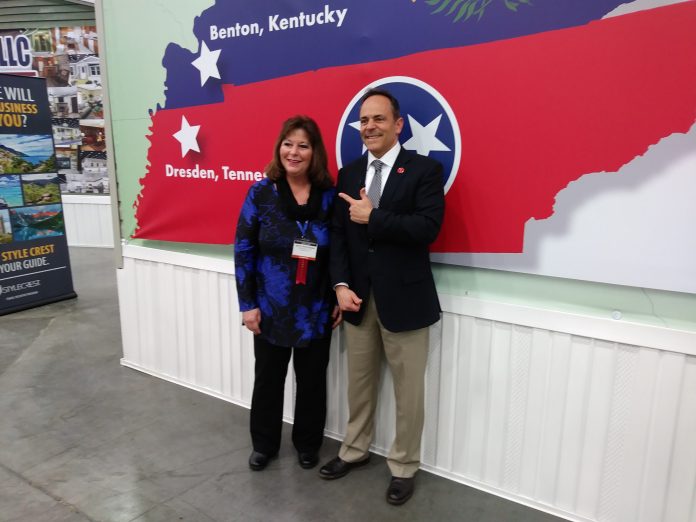
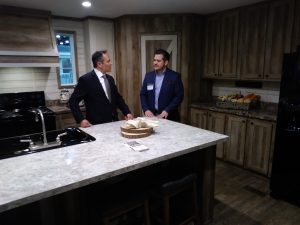
At The MHInsider Facebook page, followers can find an overview of Kentucky Gov. Matt Bevin’s tour of The Louisville Show as well as information on succession planning for community owners and many other great topics and photos.
In the Twitterverse, @theMHinsider offers a reminder to register for The Tunica Show and gives a sneak peek at the new, and very highly polished, Clayton Homes “Prefabulous” campaign. And the Instagram presence for MHInsider provides a look at MHE Inc. with access to a leadership profile. Followers also will see a shot of a check presentation to American Red Cross of East Tennessee.
So, take a good look at the new MHInsider social media channels, and be sure to follow, like, comment, tweet and share!
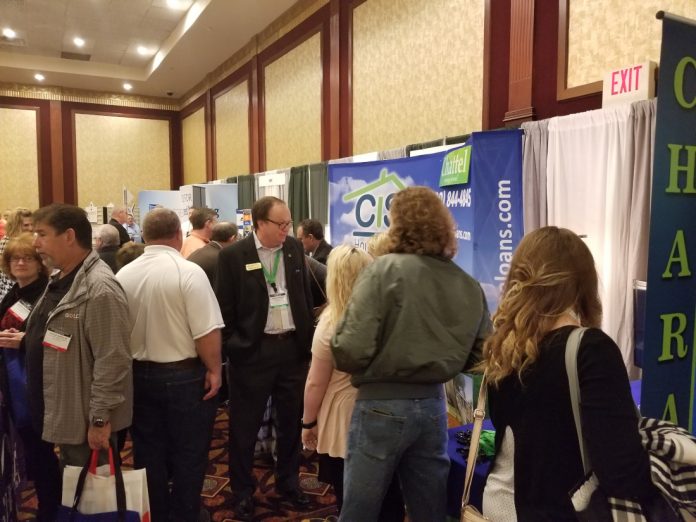
Manufactured Housing professionals at the 2018 Tunica Show peruse the exhibitor area inside Hollywood & Resorts Hotel and Casino.
Don’t Miss The 2019 Tunica Show – March 26-28
Attendee registration is open for the southeast’s premier manufactured housing event, the 2019 Tunica Manufactured Housing Show, in Tunica, Miss.
The annual event displays more new model homes than any other show in the industry, with 70 homes from 24 builders open to tour on site. In addition, the 2019 Tunica Show hosts more than 100 service and supply exhibitors who will talk about their contributions to the industry and answer attendee questions.
Organizers expect 2,300 manufactured housing industry professionals from approximately 500 organizations to be in attendance. The venue for the 2019 Tunica Show is the Hollywood & Resort Hotel and Casino.
Coming off a big year for the Tunica Show in 2018, organizers anticipate record numbers with industry enthusiasm and production on the rise.
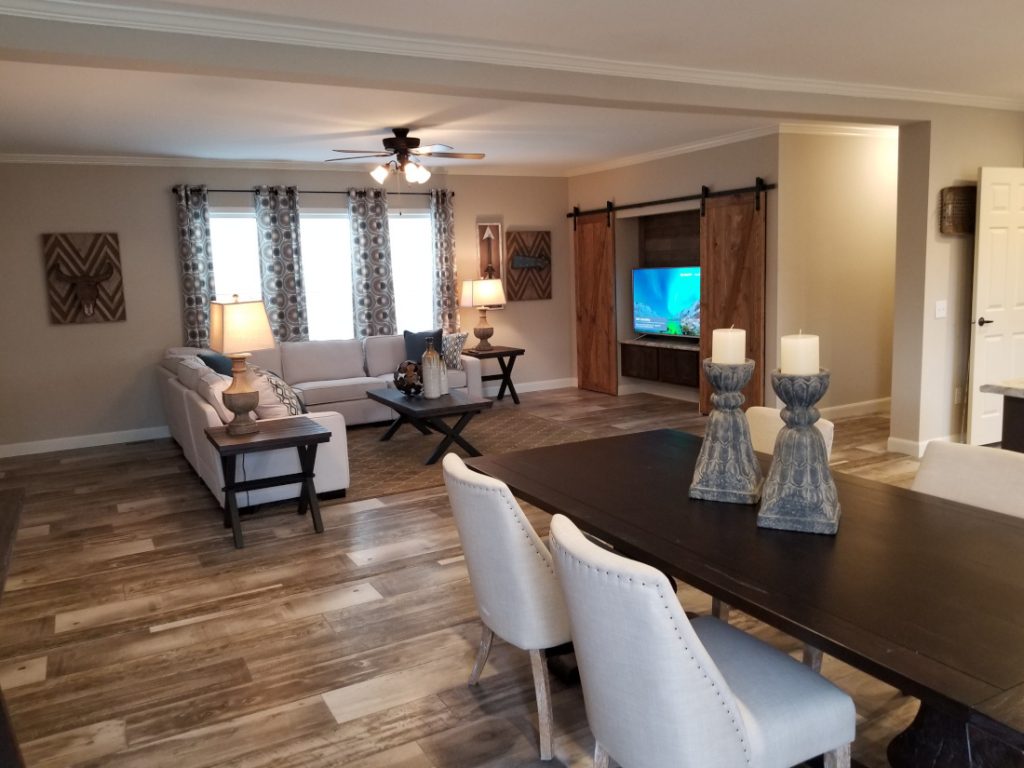
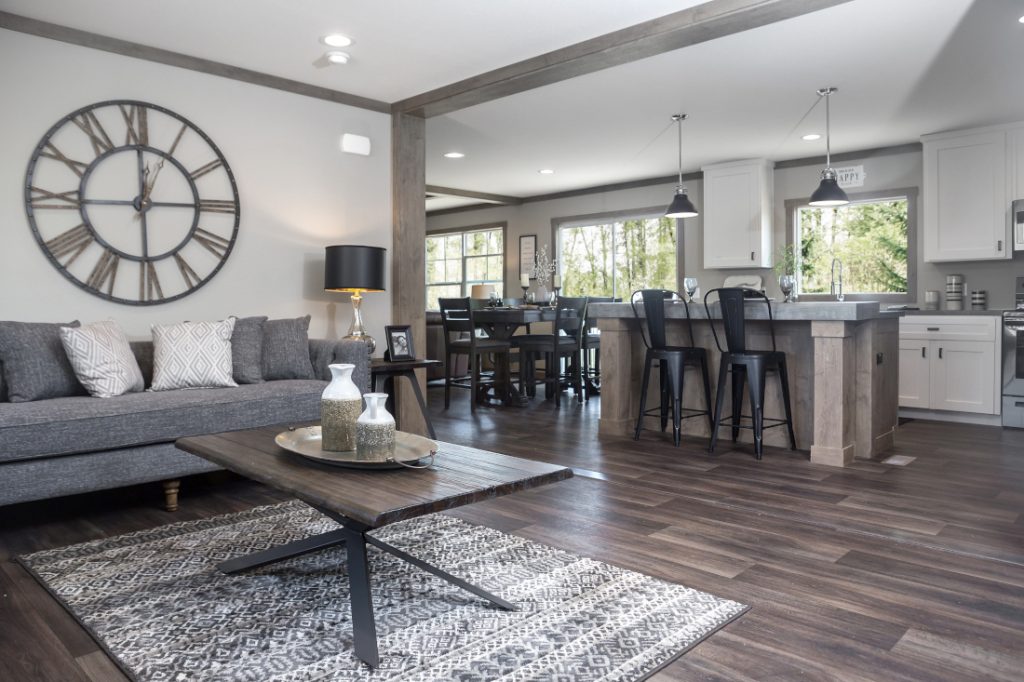
The interior of a model home by Sunshine Homes at The Tunica Show in 2018.
What Can I Expect to Find at the 2019 Tunica Show?
The 70 new model manufactured homes provide a sneak peek at the latest technology, conveniences, efficiency, and state-of-the-art design modifications that have been developed during the past year.
Tunica’s showcase of homes unveils a firsthand view of new product for a variety of professionals in the manufactured housing industry, including:
Platinum Homes shows its models during The Tunica Show in 2018.
Retailers
Builders
Developers
Community owners/operators
Transporters/Installers
Suppliers
Non-profit directors
State association heads
Financiers and Brokers
Shoot for the Prize at the 2nd Annual Tunica Show Golf Outing
The 2019 South Central Manufactured Housing Institute Tee-Off, presented by Sunshine Homes, welcomes Tunica attendees! Join 2019 Tunica Show colleagues for an afternoon on the course at the River Bend Links Golf Course. The golf outing begins Monday, March 25 at 1 p.m. Food is provided, as well as a cash prize for the top three teams. Golf registration $60 covers green fees, cart and food. Hole sponsorships are still available.
New Prefabulous® TV Spot Dispels Prefab Home Myths, Showcases Value of Modern Off-site Construction
Clayton Homes today launched what likely is the biggest image campaign in the history of the manufactured housing industry. The new version of the Prefabulous® TV spot is a 60-second commercial that ties together “prefab” homes and “fabulous” value and lifestyle.
One of the largest home builders in the nation, based in Maryville, Tenn., Clayton in the fall of 2017 initiated the campaign with regional spots that aired during college football games, among other places.
The 2019 Prefabulous® television advertising campaign takes aim at showcasing the modern prefab home and educating the public nationwide about the benefits of off-site construction.
With the average price of a new site-built home with land in 2018 nearing $400,000 according to the U.S. Census Bureau, prefab homes offer an attainable solution starting under $200,000 in most markets plus cost of land.
A new homeowner walks through her Prefabulous® experience as off-site construction takes place in this 60-second commercial.
Behind the Scenes at Prefabulous®
“There really is a deficit of available homes for families today,” Clayton VP of Retail Marketing Carl Hill said during a behind-the-scenes mini documentary of the Prefabulous® TV spot.
New homes built off site come at a lower cost because of the efficiencies involved with a climate-controlled facility.
Every Clayton Built® home comes from an ISO 14001 certified facility, away from the damage and delays that can be caused by rain and seasonal weather.
Bulk purchases of building material and name-brand appliances translate into cost savings. Also, off-site efficiencies through production line assembly help aid material recycling and aid reducing the waste.
“The way we build our homes is not just different,” Hill said. “But it’s a smarter way to build.”
The materials seen in the Clayton TV commercial came from a Clayton facility. This allowed producers to re-create a Prefabulous home for the set, the Clayton VP of Marketing Mike Duncan said.
The Concept for the New Prefabulous® TV Spot
Clayton captured the Prefabulous® TV spot production in a mini-documentary.
Called “Prefabulous”, the campaign is part of Clayton’s mission to elevate the manufactured housing industry. The ad challenge the outdated myths that create misconceptions around this innovative, efficient construction method.
The Prefabulous® TV spot takes the viewer inside the set of a home building facility and follows a family through a beautiful Clayton Built® home as it’s being constructed, highlighting high-end features and modern design.
“Homes built off-site offer higher quality, more value and a smart solution to the affordable housing crisis in America,” said Kevin Clayton, CEO of Clayton Homes. “This campaign was created to help more families realize they can attain a beautiful, quality home without sacrificing modern amenities.
“Off-site construction can make the dream of homeownership a reality by leveraging innovative building practices, automation and bulk purchasing power,” he said.
Building in a factory provides unique access to quality housing at a variety of income levels.
Available prefab home features:
Permanent foundation with porch
Open floor plan concept
Upgraded all-wood cabinets and farmhouse sink
ecobee3 lite smart thermostat and energy efficient appliances
Wide plank flooring and drywall interior
“Clayton is uniquely positioned to bridge the affordability gap using both on-site and off-site home construction methods,” said Clayton. “Our goal as a company and industry is to democratize luxury and provide attainable homeownership for all families.”
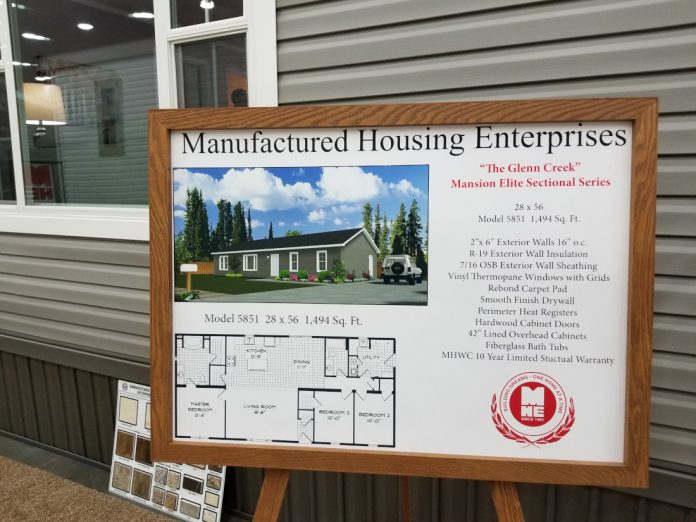
MHE Inc., shows "The Glenn Creek" model home during The Louisville Show in 2018.
Daughter of Founder Claims Succession of MHEI Following Passing of Jim Newman
Mary Jane Fitzcharles, chief operating officer of Manufactured Housing Enterprises Inc.
Mary Jane Fitzcharles, CEO of Manufactured Housing Enterprises Inc., has doubled the size of the family owned business since 2014, which was a pivotal time for the home builder and the family.
Built up from farmland beginning in 1965, Fitzcharles’ father, Jim Newman, was the catalyst until his untimely death in 2014. Waiting in the wings was his daughter, who had long worked for Ohio’s largest manufactured home builder, but only reluctantly saw herself as the organization’s leader.
“He really was preparing me to run the business, and I never realized it,” Fitzcharles said of her father, with whom she enjoyed a loving and redeeming relationship. “When dad passed, I not only lost a father and a boss, he was also a best friend. Dad and I were very close.
“I never looked at it in a way that I would or wouldn’t run it,” she said. “I took each lesson that he taught with the idea that I was a lucky recipient of his knowledge.”
A Lifetime at the Plant
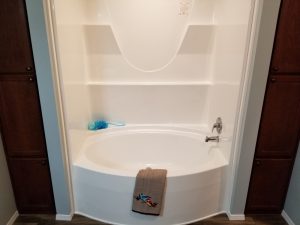
A master bath shower and tub cabinet from MHE Inc.
Fitzcharles grew up at the MHE plant. The family home with all nine kids was located in front of the business until 1971. When they moved, the original home became the “curtain shop,” where linens were made by Mary Jane’s grandmother for the homes they built.
Mary Jane started working at the plant in 1980, sweeping and cleaning, mowing the yards, painting shelves and baling scrap.
She began work in the office when she was a freshman in high school. Mary Jane worked each summer, and upon graduation in 1984 started full time.
“I worked in several different areas, just going wherever anyone needed me…. in HR, service, parts, answered phones, filed,” she said. “I moved around and got a little taste of a lot of different areas. And then I was transferred to the upstairs offices to be dad’s secretary, to be the office manager, and work in our accounting department.”
An Experience Learning in Life
Mary Jane’s education involved attending a vocational school during her high school years and being taught by her father.
“It seemed like every day there was a new lesson learned,” Fitzcharles said. “It has always been a conversation piece at work that being taught by Jim Newman was better than any college education you could get. The hands-on education he provided has been priceless to all of us at MHE.”
Jim never attended college, and was very successful in business. A college education was not important to him or necessary for any of his employees, Fitzcharles said. All nine of the Newman kids worked at the plant at one time or another. Mary Jane’s sister, Charlie, continues to work in quality control and dispatch.
Still, Fitzcharles at one point took on added work, for a time, beyond her father’s knowledge.
“I went to work for a trucking company, dispatching four hours a night without telling him. I needed more money,” she said. “But when they offered me a promotion to manage the terminal and go full time, this would conflict with my work hours at MHE so I had to tell my dad … and he gave me a raise to $10 per hour.”
A spacious open floor plan in one of MHE Inc.’s new homes.
Taking the Leadership Role with MHE
MHE produced more than 1,200 floors in 2018, an uptick of about 20 percent from the year prior. In that mix, 45 percent are single-section homes. Thirty eight percent are multi-section, and 17 percent of what the company builds is modular.
“We build five floors a day, working Monday through Friday. I am a big believer in family time, so we don’t have our people work on Saturdays or Sundays,” Fitzcharles said. MHE employs 150 workers.
“From the weekends when I was little, we would have to go through and clean the shop, sweep and make sure the place was in good shape for Monday when the workers came back in … Now, each department is responsible for its own cleanup. How the process has changed and the homes themselves have changed over time,” Fitzcharles said with a laugh.
Taking Hold of Sales and Production
A modular home from MHE Inc.
While most of her experience prior to her father’s death was in accounting, the last four-plus years have been a rush of learning the production and sales side of the business.
“If I had it to do over and could pick the office or the factory, I wouldn’t have changed it. But I would have spent a little more time in the production facilities,” Fitzcharles said. “Learning the finance side of the business in detail first has been very good for me and for all of us at MHE.”
However, she credits Vice President Nathan Kimpel and several other key employees at MHE for their patience and the education they’ve provided her during her transition to leadership in manufactured housing.
“I have such an amazing team with me,” Fitzcharles said. “They all have been very good to me. It’s really humbling that so many people stood by me and have helped to make MHE a continued success. I don’t think it could have happened without the good Lord and so many people on my side.”
MHE Homes in the Production Environment
The MHE facility is more than a dozen structures on 80 acres of the original property. Originally, it was a parcel where her father would sell pre-owned mobile homes and used cars.
“He sold used mobile homes and thought, ‘Gosh, if I can sell used mobile homes, I can build new ones.’ He built Plant No. 1, became incorporated and started building new homes,” she said.
Cafe dining in a new MHE Inc. manufactured home.
A Business About Family
Mary Jane Fitzcharles and her husband Terry have two sons and six grandchildren. Throughout the course of her day, she has her mind on family. She thinks about her childhood, her father, about the families of MHE employees. And, of course, she thinks about the families who will buy and live in MHE homes.
“Dad was a very positive person and he taught all of us that you have to keep a positive attitude. He was always a believer in no-debt, and we’ve been able to sustain that, which I feel good about. He always said if you take care of the little problems, you won’t have very many big problems. I have a good relationship and an ‘open door’ policy with our employees, and the dealers know they can call me anytime. I feel communication is an important piece of the puzzle at MHE.”
About The Louisville Manufactured Housing Show
Mary Jane said she attended The Louisville Show for the first time in about 2009. Her father urged her to go again at least one more time. On a normal year, she would have stayed back at the office and kept things running while the others were at the show.
“The year before he died he told me I needed to go to the show in January,” she said. “They always say that people kind of know when they’re going … and then that following May he was gone.”
While she continues to verse herself on the nature of production and sales, Mary Jane Fitzcharles has goals of her own. Goals that would make her father proud.
“It was a real challenge when Dad passed away to take over that part, but I jumped in with both feet. We have a great team out there and they’ve helped me tremendously,” Fitzcharles said. “I want to continue growing our business. Since 2014 we’ve doubled our production here, and I want to continue with that pace or more. But more so, we need to make sure we continue to make a high-quality, affordable product and provide a great place to work.”
“I can’t say I ever really thought about going anywhere else. I’ve always really enjoyed my work. I like the challenge and it’s great to come to work every day. But did I ever think I’d be where I’m sitting today? Never.” — MHE Inc. CEO Mary Jane Fitzcharles.
Kentucky Gov. Matt Bevin with Betty Whittaker, executive director of the Kentucky Manufactured Housing Institute.
Gov. Bevin Visits Kentucky Expo Center for Record Setting Louisville Show
Kentucky Gov. Matt Bevin has a vision for his state. A generation or two from now, when people think of the center of engineering and manufacturing excellence in the United States, he wants them to think of Kentucky.
He shared his vision during the Louisville Manufactured Housing Show, the Midwest’s premier industry event. Bevin gave a brief speech before touring a few model homes on the showroom floor. He made clear that his vision, if it becomes reality, will impact the manufactured housing industry in multiple ways.
Kentucky Governor Tours New Manufactured Homes in Louisville
Gov. Bevin tours a home built in Benton, Ky., with Eric Coulter of Champion Homes.
The manufactured housing industry already is experiencing several years of growth. That trend may continue, if the record-setting year at The Louisville Show is any indication.
In Gov. Bevin’s remarks, he indicated that Kentucky is in position to take a leadership role in manufacturing and advanced engineering.
When asked to think of the country that exemplifies engineering and manufacturing excellence in Europe, people around the world invariably answer “Germany”, Bevin said. But when asked to think of the state that exemplifies engineering and manufacturing excellence in the United States, people give several answers. There’s no frontrunner.
“Nobody owns it the way Germany owns it,” he said. “And if nobody owns it, what does that mean? That means it’s available for ownership. I want (Kentucky) to own it. We’re well on our way.”
Gov. Bevin Wants to Cut Kentucky’s ‘Red Tape’
For Bevin, a businessman before he was a governor, the first step is attracting manufacturers. To attract manufacturers, the state has been boosting its workforce development, streamlining its tax structure and cutting red tape.
Cutting red tape — simplifying rules and regulations — not only makes it easier for companies to sell their products in Kentucky, it makes it easier for them to produce them there. Bevin referenced a manufactured-home plant that Champion built in Benton, Ky., in 2016, a plant that he’s visited in the past.
“Your product is as fine a product as exists in the marketplace,” Bevin told his audience of manufactured housing professionals. “Last year 2,600 prefabricated homes were brought into Kentucky. We’d like to see more. What will drive that is demand, and demand comes from an environment where people want to live.”
Kentucky Can Leverage Natural Resources, Infrastructure
He listed some of Kentucky’s advantages over its neighboring states. It produces more automobiles than any other state on a per-capita basis. It trails only Washington state in aerospace and aviation production. It’s already a leader in pharmaceutical and medical-device production. It has lots of arable land, excellent weather, more miles of navigable waterways than most states, and plenty of roads, railways and shipping hubs.
Despite these advantages, neighboring states like Tennessee and Indiana have outgrown Kentucky in terms of population.
“We have more natural advantages than they do, but they have more than 2 million more people,” he said. “What’s the difference? It’s tax policy. It’s business policy. It’s getting your financial house in order.
“Imagine 2 million more people. It would transform our entire housing industry. We have room for them, and the ability for them to have quality of life.”
A Closer Look at Affordable Housing
The cost of affordable housing in Kentucky is 30% lower than the national average, Bevin said.
“This is a part of the country that benefits well from prefabricated homes,” he said. “These homes are widely used, but could be so much more so.”
Bevin likened the job of putting Kentucky on a firmer financial foundation to cleaning a barn after a long, hard winter. He has to shovel out a lot of the crap that’s piled up.
“It’s not fun, it’s not easy, but that’s alright,” he told his audience. “You can help us by telling us what we need to shovel out. What’s under the feet of your industry?”
Workforce Development for Manufactured Housing
MHInsider asked Bevin how Kentucky’s workforce development programs can help the manufactured housing industry.
Bevin listed skilled-trades training and apprenticeship programs in high school and work-ready scholarships for all ages. Many of those are paid for, at least in part, by $100 million the state has offered in workforce development and training programs.
He said there are five broad employment areas in Kentucky with the greatest number of open jobs. Those five areas — health care, information technology, logistics, advanced manufacturing, and construction — encompass 60 disciplines, including construction trades such as carpentry.
Strategic Partnerships Key to Workforce Development
About two years ago, the state government offered $100 million in workforce development for those industries. They had to compete for them, however. In order to compete, they were required to include the local business community, local high school and local post-secondary school (including four-year universities, technical and trade schools) in their requests for funding, Bevin said.
Requests for funding reached $540 million, he said.
“We got to select the top 18% or so,” Bevin said, but “we wouldn’t fund all of any idea, no matter how good. We want local skin in the game, from the business community and local government. People who have a vested interest in something get better results.”
The state’s $100 million was matched by $150 million of local and private money.
“These are just seeds going in the ground right now,” Bevin said. “We’re at the very front end of starting to see anything out of that pipeline, but it’s coming.”
He said the state will continue to invest in workforce development programs.
Veterans an ‘Untapped Marketplace’
Bevin mentioned another “untapped marketplace” of employees for industries like manufactured housing: Kentucky’s two major military installations. Every year, 6,000 people leave the military out of Fort Campbell and Fort Knox. Many of these highly skilled, highly disciplined people will go back to their home states, but many might be tempted to stay in Kentucky.
“How can we connect these folks to your industry?” Bevin asked the audience.
Representatives from Fannie Mae and Freddie Mac update manufactured housing professionals on chattel lending for homes during the The Louisville Show.
Midwest Cold Snap Can’t Keep Crowds Away
Paul Fato and his wife Judy are among the 3,575 registrants to help set a Louisville Show attendance record, the top opening day in the gathering’s 60-year history — even amid some of the coldest temperatures in decades.
The Louisville Show is organized and attended by manufactured housing professionals primarily from Ohio, Indiana, Michigan, Illinois and Kentucky. Each of those states are wrestling with temperatures near zero, with the more northerly states enduring wind chill temperatures that dip to -50.
Paul and Judy Fato, community owners and retailers from West Virginia, celebrated their 52nd wedding anniversary at The Louisville Show.
The Fatos operate The Meadowlands manufactured home community and Twin Oaks Home Sales in West Virginia. The couple came to The Louisville Show to shop for homes, primarily for the independent dealership.
“I look for something that’s a bit different,” Paul Fato said. “There is a Commodore home with a slanted roof that I have my eye on. I’m going to be picking up one of those. And we’ll keep a lookout for other interesting features that will provide variety on the lot and something that will catch the eye of a homebuyer.”
He said 2018 was a good year, and he anticipates 2019 to match if not exceed last year’s sales. The Fatos, celebrating their 52nd wedding anniversary at The Louisville Show, said they skipped an annual late year trip to Florida and had the best ever fourth quarter for sales.
“We have a very competitive market,” Paul Fato said. “There are two Clayton dealers within six miles of my retail center. But that’s good, because it brings people to the area to shop for homes.”
A new model home from Commodore draws attention at The Louisville Show.
Louisville Show Attendance Signals an Energized Industry for 2019
“The number of attendees Wednesday morning to open the show were stronger than we’ve experienced even during the best years,” said Dennis Hill, who heads Show Ways Unlimited, which produces The Louisville Show and other manufactured housing trade shows. “Our opening education sessions were standing room only and very well received.”
The sessions – on finance, marketing and purchasing – held an audience of 200-plus attendees. Meanwhile, the other 3,300-plus professionals toured the new model homes and mingled with service and supply exhibitors.
Joe Viglione, from Fairmont Homes, said the presence of retailers among The Louisville Show attendance is stronger than he’s experienced in his three-plus decades in the business.
“Retailers tend to start showing up about 10 or 11 o’clock on opening day. This year they were here first thing. That means they came the day prior, which signals to me a great deal of enthusiasm toward purchasing this season.”
The service and supplier exhibit area at The Louisville Show was humming early in the morning on opening day.
The Drive Down From Chicago
Jim Hynd, sales manager for AERT, based in Springdale, Ark., drove to Louisville from Chicago. He braved the cold to be among the record Louisville Show attendance in preparation for entering the industry.
“We’re looking to provide advanced decking and railing solutions for manufactured housing,” he said. “I’m here to take a look at what’s available now and how we might fit in.”
The Louisville Show is a manufactured housing industry trade show and is not open to the public. Attendance includes special guests and industry professionals in the areas of manufacturing, retail sales, community ownership and management, financial services and product supply.
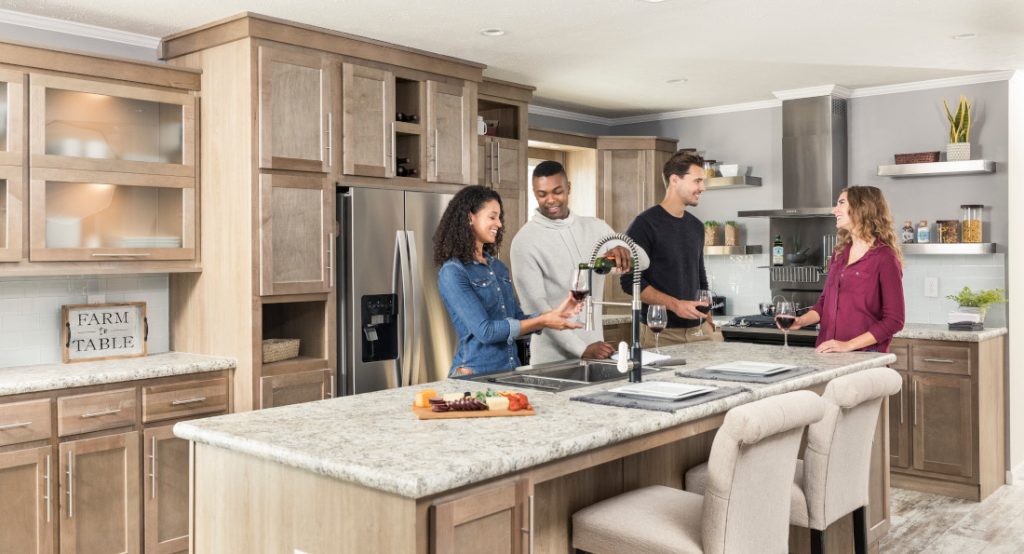
The updated Ultimate Kitchen from Champion. Photo courtesy of Champion Homes.
MHInsider Takes Look at Home Trends at The Kickoff for the 2019 Trade Show Season – The Louisville Show
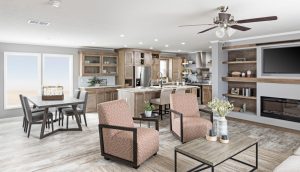
Open, airy and light-filled kitchen, dining and living space. Photo courtesy of Champion Homes.
Every January, The MHInsider magazine for manufactured housing professionals strives to bring readers the latest and most relevant home trends, offerings and products for the coming season.
In researching our annual home trends piece, we had conversations with dozens of sources from a variety of manufacturers. We asked what new offerings they could point to that came from customer need, whether that customer is a homeowner or home seller.
After all, each one of us is in the solutions business. And each new model at The Louisville Show has that signature mark that is an important step up in lifestyle offering, home efficiency or general comfort.
So take a look, prepare for what you’ll see in Louisville, and get ready for a great sales season!
The Ultimate Kitchen III from Champion Homes is unveiled at The 2019 Louisville Home Show.
Champion Homes Ups the Ante with Ultimate Kitchen Series
Ultimate Kitchen 3 continues the offerings that have built a reputation of sleek design and cutting-edge amenities.
The latest edition provides more innovation, from its European-inspired industrial styling to its state-of-the-art conveniences.
UK3, as it’s come to be known, features:
A cooking station equipped with a stainless steel slide-in range
Easy to access front controls
Stainless steel backsplash
Folding chrome utility racks
and a slim, Euro-style range hood
“The way we designed this package allows us to be very flexible. It can go into any home, any size, any configuration. We can make all of these beautiful new features work to the greatest of their ability in the space the customer most desires,” said Roberto Kritzer, Skyline Champion Corp.’s vice president of design.
“We are working toward implementing this new kitchen package in the newest models each day,” Kritzer said. “This kitchen goes into manufactured homes, modular homes. We’ve already put it in park models and community series homes.”
The Ultimate Kitchen from Champion has gained a dedicated following. Photo courtesy of Champion Homes.
Champion floats stainless steel shelves for added storage space, as well as a raw, utilitarian look that contrasts nicely with the warmth of the Shaker-style cabinetry. The look continues its blend of texture and color with clean lines by assigning modern cabinet pulls, glass subway tile backsplash and stainless steel appliances from Whirlpool.
“I’m excited about the all-new UK3 that our design team has created. They have integrated several trending features into this design that new homebuyers are looking for,” said Mark Yost, Skyline Champion’s executive vice president.
UK3 boasts improved utility through ample storage space in the cabinets, drawers, and cubbies. LED accent lighting behind the frosted glass of overhead cabinets opens the room with subtle hues that showcase the profile of nicely stored stemware.
The Farmhouse Sink Remains Relevant
And, what would the offering be without that amazing farmhouse sink?
“You will see features that really have only been seen in upper-scale site-built homes … recessed LED mirrors, super islands, pot filler sink,” Skyline Champion Director of Community Sales Byron Stroud said of the plumbed-in flex-neck faucet. “It reaches over the range so you can fill a large pot without having to carry it.”
The sink also has a designated straining basket, drying rack and cutting board. It contains a protective bottom rack to help prevent scratches. And the focal point of the sink is the black and brushed nickel faucet that provides the flex neck user experience.
Kritzer said “less is more” remains at play, despite the introduction of so many new features.
“We wanted to keep that open feel. The stainless steel shelves do this. And the nice blend between contemporary and modern, it works very well with the overall theme of clean lines and an open feel,” Kritzer said. “We managed to maintain the feel we wanted, but create a look that you really only have seen in very expensive kitchen configurations.
“The response has been phenomenal.”
Interior design and comfort in a new Adventure home. Photo courtesy of Adventure Homes/Johnston Photography.
Adventure Homes Unveils Nevada Series
Adventure Homes, a manufacturer based in Garrett, Ind., plans to use the Louisville Manufactured Housing Show to introduce its Nevada Series of homes to the general public.
General Manager Rich Rice said the Nevada Series is for people who “want to get the high-end look without the high-end price.”
The Nevada homes will include a drywall finish, which is trending for buyers who are interested in the more traditional site-built residential look.
“You won’t find anybody who will offer a drywall product as inexpensive as ours,” Rice said.
He said homebuyers these days want the affordability of a manufactured home but with more of those same high-end features common in a site-built home. Hardwood cabinets, painted finishes, high ceilings and a variety of carpet and wall color top the list.
“The more we can mimic site builders, the better our sales will be,” Rice said. “It’s almost like we’re taking the mobile home out of the house.”
However, some sales truisms are unchanged, he said. Kitchens and bathrooms always sell houses, for example. But changing customer expectations push manufacturers to add features like white and gray cabinetry.
‘Gray is the New Beige’
Photo courtesy of Adventure Homes/Johnston Photography.
“There’s a quote: ‘Gray is the new beige,’” Rice said. “Not that everybody wants it, but it should be represented in your offerings.”
Contemporary home buyers like an abundance of windows throughout the house. Many fall in love with a welcoming entrance, which can include bold accent colors, sidelights and transom windows over the door, he said.
There also are evolving ideas about use of space. Bedroom space often was sacrificed in the past for larger dining and living rooms. But now larger bedrooms are in vogue. In response, designers are finding ways to maximize space in the home’s communal areas — installing an eating island and removing the dining table, for example. Parents also want “bonus space” in the house — a place they can send their kids to get some peace and quiet, Rice said.
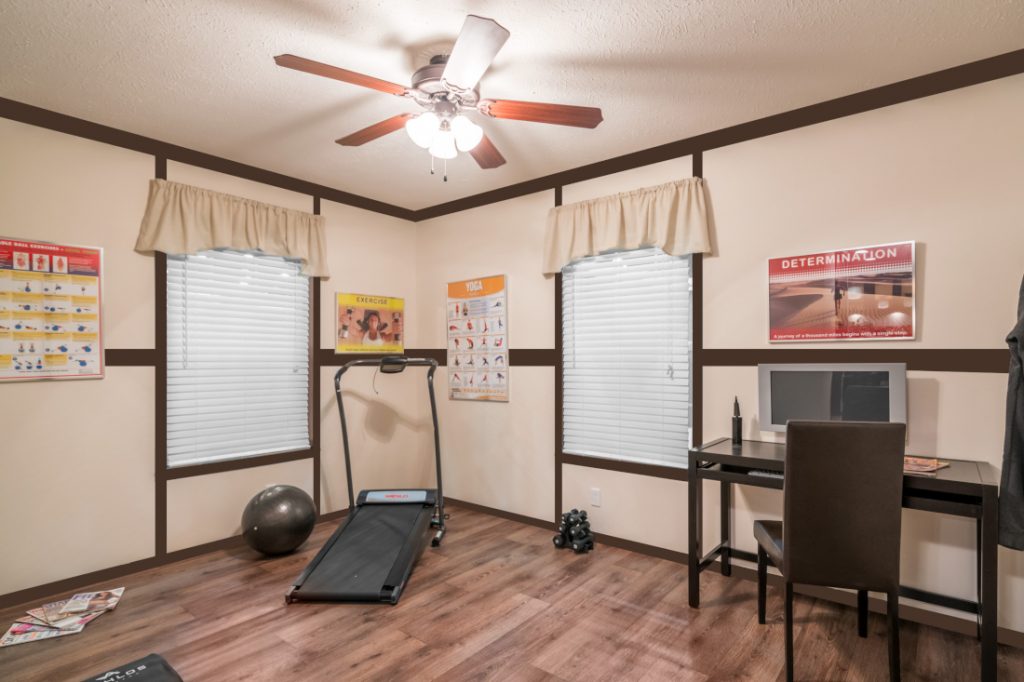
A versatile room for workout or office time, from Adventure Homes. Photo courtesy of Adventure Homes/Johnston Photography.
Fleetwood Homes Looks Toward Clean, Simplified Designs
Where Fleetwood Homes are manufactured, builders are working on simplified designs that have a clean look and are easy to maintain for a new homeowner. Those design decisions will show up in the company’s 2019 models, including those on display at the Louisville Show.
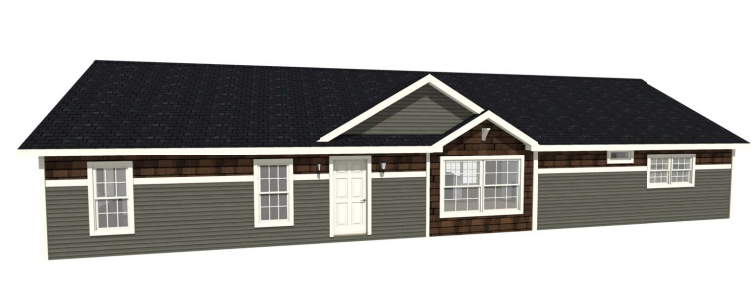
Rendering provided by Fairmont Homes/Cavco.
“I think you’ll see this year, not only in our product but with the industry backlog, the homes have gotten a bit simpler,” Fleetwood Homes National Design Manager Russell Bratcher said.
As an example of simplification, last year Fleetwood brought a three-box modular home to the Louisville Show. This year they’ll have a two-box mod. It’s a little easier to build and a little easier to set up. It’s also easier to maintain.
“We’ll have straight-line cabinets, more clean lines, like a craftsman look in the molding rather than those heavy profiles in crown molding and such,” Bratcher said. “On our products, we are going back to more of a straight-line look that’s easy to install and will have fewer if any service issues.”
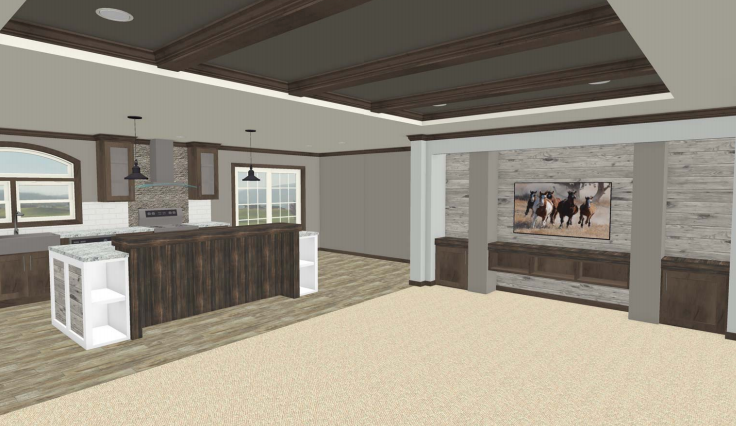
Interior rendering provided courtesy of Fairmont Homes/Cavco.
Go For The ‘Vintage Look’
Vintage looks with a combination of matte and shiny finishes will create some “eye candy,” he said. Improved wood grains in linoleum flooring have made its use much more common. And greens and blues are coming back to dominate the color schemes, Bratcher said.
“Large-tile showers are still trending, and large, wide windows throughout add some pop, too,” Bratcher said.
Cabinet colors continue to trend toward lighter, with whites and grays. There is less of the hardwood look with browns and cherry color.
“We’ll still mix some of that in, but as an accent rather than a whole,” Bratcher said. “It’s all about mixing the colors for texture. Back in the day, if you had white appliances, you would have all white appliances. But the design approach today is more with thoughtful mixing and matching of, say, stainless and black.”
Fleetwood Homes in Lafayette, Tenn., will show three homes at Louisville, including a single- and multi-section home from the Sandalwood line. Fairmont Homes, another builder under the Cavco family of brands, will show one multi-section home, one single-section home and a modular model.
Bratcher said energy is high in the industry, including among the builders and retailers in his network.
“As a company, we’re anticipating continued growth,” he said. “When business was tough, we were doing more customization. We were more willing to move a window or a door to sell a manufactured home. But the orders have been so high, and we anticipate them going up again in 2019. We’re really working on that efficiency in production.”
NXT Homes, a new line from Clayton Homes on display at The Louisville Show.
Clayton Homes Gets More Design-Intensive for 2019
Flex space has become a primary initiative among designers at Clayton Homes, which operates 40 manufacturing facilities nationwide.
“We have this concept toward a flex space in floor plans. This is a space that’s not designated as a bedroom or anything else,” said Clayton Homes Lead Designer Ashley Skowron. “Some people might make it a bedroom, but it also may be a craft room or office, or playroom for the kids.”
Skowron said Clayton has begun to emphasize a more centralized, team approach for design decisions. Part of that initiative means a lot of travel, touring facilities and meeting with retailers in most markets.
“The flex room is something that retailers really have done well with,” she said. “People say it’s great for the kids … to have a den or extra space from the main living area, but when the parent becomes an empty nester, you can repurpose the room for another need.”
A windowed shower stall with luxury fixtures from Clayton Homes. Photo courtesy of Clayton Homes.
And while the farmhouse look remains relevant among home trends for many builders and buyers, Clayton is finding ways to regionalize the aesthetic.
“We have five or six different farmhouse-style homes right now rolling through different facilities,” said Corporate Communications Manager Audrey Eason. “All drywall, hard surfaces, big open windows, kitchen island, stylistic light fixtures, shiplap and other texturing.
“So you have plants that supply a particular region and they can stylize it in a way that really fits the culture, the expected look for that region,” she said. “Every region has its own farmhouse look.”
Modern Architecture, Style Choices On the Rise
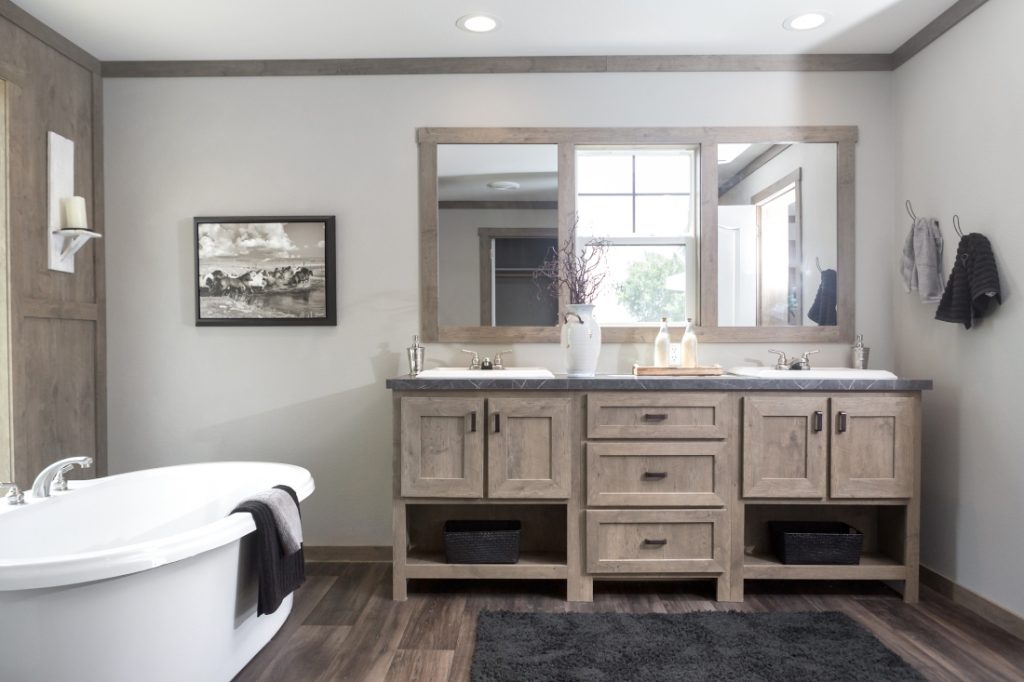
The luxurious master bath is a major part of 2019 new home trends. Photo courtesy of Clayton Homes.
Skowron points to NXT Homes, a new series out of Athens, Texas. She sees it as an indicator of design preferences steering toward more modern looks.
“That home follows suit, with the light and bright cabinets and natural oak color trim, the increase in linoleum,” she said. “The NXT Homes models really are pushing forward the trends we may see take hold during 2019.”
Each home uses canned lighting, for instance, rather than decorative globe lighting.
“There will be more shiplap wallboard, open shelves, marble surfaces, bold colors, a bit of brushed brass in the mix,” Skowron said. “Low maintenance products are something we are always mindful of, for ease of use and lifestyle improvements.”
Technology comes to play in the new models too, particularly those with modern features. The Clayton Series homes and the NXT Homes all will be appointed with ecobee smart thermostat systems, for instance. Some will have smart doorbells and built-in surround sound.
“The same design intent typically goes in both single- and multi-section homes, too,” she said. “We take features out of one home and can push it into a different floor plan, which includes a powder room, his and hers closets, flex space … all of these features are in the single-section as well as the multi-section home.”
January JLT Market Reports include information on 413 communities from 14 major markets in six states
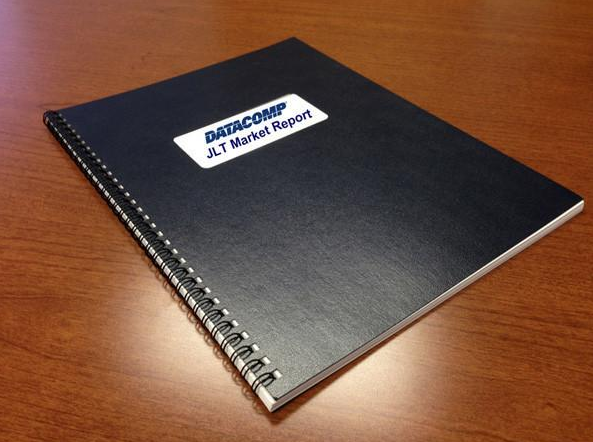
Datacomp, publisher of JLT Market Reports and the nation’s #1 provider of market data for the manufactured housing industry, announces the publication of its January 2019 manufactured home community rent and occupancy reports for 14 markets in Arizona, Georgia, North Carolina, New Mexico, Nevada and Utah.
Recognized as the industry standard for manufactured home community market analysis for more than 20 years, JLT Market Reports provide detailed research and information on communities located in more than 170 major housing markets throughout the United States. This includes the latest rent trends and statistics, marketing programs and a variety of other useful management insights.
Datacomp’s manufactured housing data published in the January 2019 JLT Market Reports includes information on 413 “All ages” and “55+” manufactured home communities located in 14 major markets. Altogether, the reports include data representations for 95,682 homesites.
Courtesy of EquityLifestyle Properties
Manufactured Housing Community Occupancy on the Rise
“Ten of the 14 major metros in our JLT Market Reports for January experienced overall growth in occupancy, and each of the six states represented experienced occupancy growth,” Datacomp Co-President Darren Krolewski said. “A dozen of the 14 major metros in January’s reports also showed increases in average adjusted rent, and state-by-state adjusted rent increases averaged more than 3.8 percent compared with January 2018.”
Each JLT manufactured home community rent and occupancy report includes detailed information about investment-grade communities in major markets. Information includes number of homesites, occupancy rates, average mobile home community rents and increases, community amenities, vacant sites, and repossessed and inventory homes.
Established reports show trends in each market, with a comparison of January 2019 rents and occupancy rates to January 2018. In addition, there is a historical recap of rents and occupancy from 1996 to present date in most markets.
The January 2019 JLT Market Reports for 14 markets in Arizona, Georgia, North Carolina, New Mexico, Nevada and Utah are available for purchase and immediate download online at the Datacomp JLT Market Reports site, or they may be ordered by phone in electronic or printed editions at (800) 588-5426.
Each fully updated report for mobile home communities is a comprehensive look at investment-grade properties within a market, enabling owners and managers, lenders, appraisers, brokers and other organizations to effectively benchmark those communities and make informed decisions.
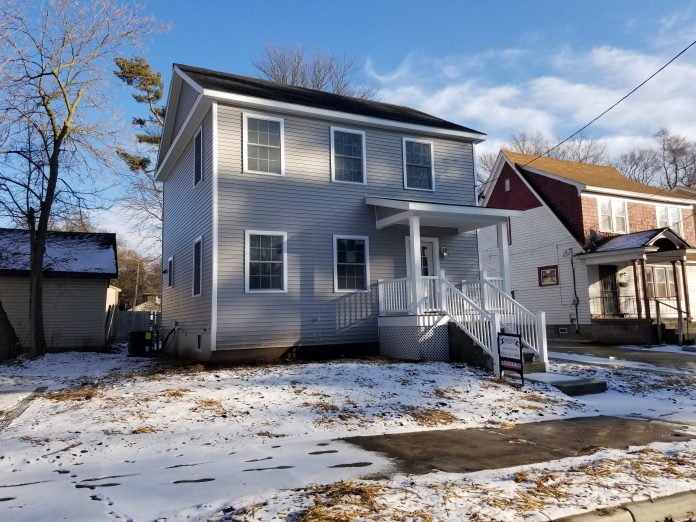
The Creston, a new modular home from Skyline Champion Corporation, is among the most popular models they sell. This home sits on the 1000 block of Cooper Avenue SE in Grand Rapids, Mich.
Modular Home Placement for Middle Market Infill to Proceed in Michigan
InnovaLaB, the former Kent County (Michigan) Land Bank, will spend much of 2019 ramping down projects under supervision of the county. Yet, the organization will continue with the Michigan Land Bank in the implementation of modular housing to meet middle market demand.
“The state land bank contracted with us to do modular,” InnovaLaB Executive Director David Allen said. “The state is not going to let that go to the wayside. It’s very important work.”
The Kent County Board of Commissioners voted 11-8 on Dec. 20 to dissolve the county effort. It pointed to “mission creep” as the primary reason for dissolution. In 2009, the organization began to assist the county in clearing land titles. Its focus has been on tax-foreclosed properties following the economic downturn. However, when the land bank rebranded to InnovaLaB and began placing modular homes, it raised some concerns.
“…based on the improved real estate market in Kent County, information received from stakeholders during the 2018 review, the ability to reestablish a land bank should economic conditions falter in the future, the termination of the current land bank is warranted, as KCLB has completed its original mission,” county commission meeting minutes stated.
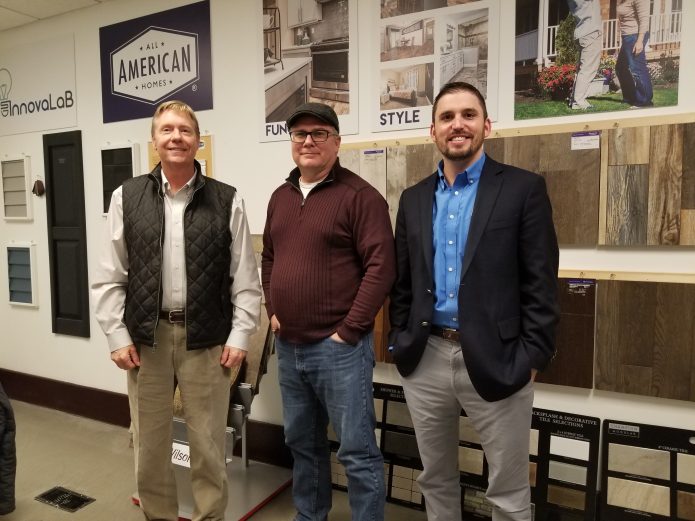
From left, Steve Payne of Champion, David Allen from InnovaLaB and Dan Grant of Champion, in the former Kent County Land Bank’s home center.
Skyline Champion Homes Provides Modular Construction for Land Bank Homes
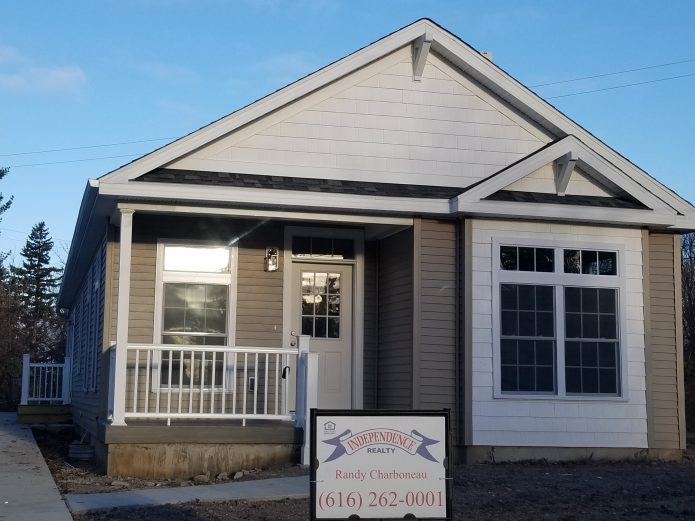
Skyline Champion Corporation provides InnovaLaB with modular homes to create city infill. The partnership prepared land for, and installed, three new homes last year. They plan to drop another 13 modular residences in the next several weeks, some of which are duplex homes.
The idea is to use modular construction and take advantage of construction and cost efficiencies through building indoors. Single family homes for less than $200,000 are difficult to find in the Grand Rapids area. Prices have gone up about 13 percent in the last year, further leaving homebuyers searching for affordable solutions. The modular equivalent of a site-built home can provide a new dwelling to fit middle-market demands.
Champion Modular’s plant in Strattanville, Pa. constructed and delivered the three homes. And all arrived ready to set on their foundations within four weeks. Each home came in at about 70 percent the cost of what its site-built counterpart would be.
InnovaLaB is under contract with the Michigan Land Bank to provide affordable modular housing across the state.
Median Home Prices Per Square Foot
The median residential price per square foot in the U.S. is $148, and in city of Grand Rapids it’s about $129 per square foot and $142 per square foot median in the metro area.
During the summer of 2018, InnovaLaB and Champion installed the three homes in different neighborhoods in the southeast and northeast parts of Grand Rapids, Michigan’s second most populated city. Those modular homes are available on the area’s multi-list service and can be located and obtained by an individual with or without help from an agent.
The steady increase in home prices, even with slowing increases during the last six months, has placed a great deal of attention on factory-built homes, including modular.
“Modular really has gained a lot of traction,” Steve Payne, director of business development for Skyline Champion, said. “Modular is a very effective system, and you can do a lot with it.”
The limitations to a modular product really only depend on the parcel where the home is being placed, he said.
A new single-family modular residence dropped in July on the 1800 block of Herrick Avenue NE.
‘Mission Creep’ Comes from Plan to Provide Affordable Housing
InnovaLaB’s new name and branding, as well as its contract with Champion and work outside of Kent County, were the primary components of what county commissioners saw as “mission creep”. Commissioners in favor of the dissolution of the land bank noted that the organization was to clear messy titles, not provide affordable housing.
About two-thirds of the 20 county residents who spoke during public comment at the Dec. 20 meeting supported the continued work of InnovaLaB. They cited need for non-profits to have continued protection to support their mission of providing affordable housing. However, others cited undue competition with commercial developers, builders, brokers and agents.
John Francis, of Grand Rapids, represented the Commercial Alliance of Realtors in his comments. According to public record on the meeting, Francis conveyed the sentiment that the land bank violates free and open markets. He said the organization fulfilled its promise, and should be dissolved.
How Does the Operational Change of InnovaLaB Impact the City of Grand Rapids?
Grand Rapids City Manager Mark Washington penned a letter to Kent County Administrator Waymon Britt asking the for reconsideration of the land bank’s dissolution.
Grand Rapids city manager points to unfinished projects under agreement between the two local governments:
7 active agreements with KCLB between 2013 and 2018
187 parcels under KCLB ownership within the City of Grand Rapids
24 affordable housing units to be delivered under the 2016 and 2017 agreements
10 strategic development parcels of concern in the city
21 properties to be converted to the city from KCLB under the 2018 agreement
Washington said the city deserved more time to consider the implications of discontinuing the land bank’s work.
“The partnership between the City of Grand Rapids, Kent County and Kent County Land Bank Authority has produced positive housing outcomes for our community,” Washington told MHInsider. “This work is not done. We have nearly a year left under the current agreement and several affordable housing projects are not yet completed. “I am concerned about the future since the majority of the Land Bank’s work has been in the city of Grand Rapids,” he said. “The conversation to dissolve the land bank progressed so quickly… I requested the county consider a year rather than six months to wind down the affairs, and the County agreed to this.” Washington said the City will take the year to address current and future development opportunities and identify strategies that will improve affordable housing. Also, it will consider other land banking strategies independent of Kent County.
“It is too early to know how we will move forward on these matters without engaging the city commission in a public discussion,” Washington said. “I anticipate having a briefing with the city commissioners during the regularly scheduled meeting on January 29.”
We Know When You Attend the 2019 Louisville Manufactured Housing Show Jan. 30 – Feb. 1, You’ll Need Some Places to Take Your Clients. Here Are a Few Tips!
Why not grab your favorite clients and take them to one of these Louisville hot spots to eat and drink in downtown? From the Crowne Plaza, most spots are just an 8- to 13-minute drive.
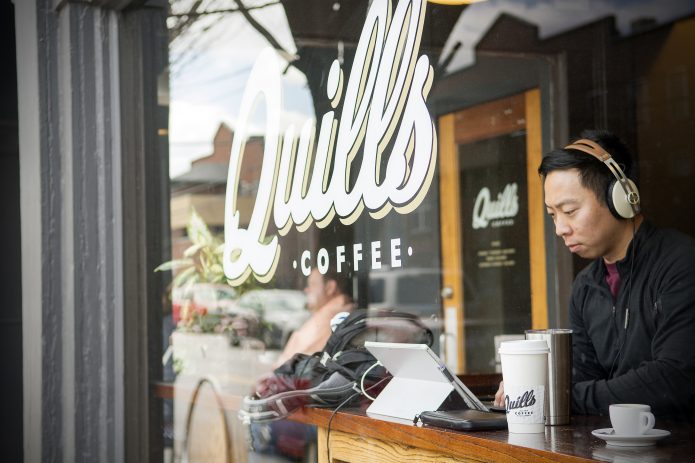
A remote worker gets a cup of coffee and completes a few quick tasks. All photos courtesy of the Louisville Tourism.
Daytime Excursions to Louisville Hot Spots
Grab coffee or brunch before your day of exploration, or step out for a lunch break at one of these loved locations.
Quills Coffee Firehouse: Strongest coffee and tea in the city, say reviewers. Delicious pastries as well — try their homemade take on Poptarts!
Highland Coffee Co.: Try their vegan chocolate mini bundt cakes, on-tap kombucha or something off their classic coffee menu.
Harvest Restaurant: Open in the mornings only on weekends, this popular spot — called “eclectic” by reviewers — features stratas (breakfast casseroles), smoked pork belly and pretzel croissants.
Wild Eggs: An open and friendly space featuring daily grits specials, pomegranate mimosas and classics old and new. Reviewers say any wait is worth it.
The Café: An enchanting and tucked-away gem. Great for a classic, hot and affordable breakfast or lunch — try their cake!
Louisville Hot Spots for Small Group Networking
Bourbon, especially in an Old Fashioned, is the classic drink in Louisville. You’ll miss out if you don’t have a taste. But Louisville’s drink scene is actually quite diverse. Anyone for a Mint Julep or Kentucky Mule?
Plan a VIP reception, or just stop in, at Down One Bourbon Bar.
No matter your drink choice, try toasting your client at one of these hot spots:
Down One Bourbon Bar & Restaurant: Alongside classic, affordable American fare, this bar features over 160 bourbons. You’re bound to find something you’ll like. A quick walk from Doc Crow’s, you could stop by both to check off two spots on your “Urban Bourbon” tour.
Buck’s Restaurant & Bar: A little more upscale, this spot is covered in flowers. Perfect for showing your client a bit of “old world” class.
Galaxie Bar: Tacos, craft cocktails or beer more up your alley? This spot features global-inspired fare, Wednesday night trivia and weekend dancing.
Holy Grale: Housed in an old church, this spot serves up beers from around the world, prioritizing local fare and a community atmosphere.
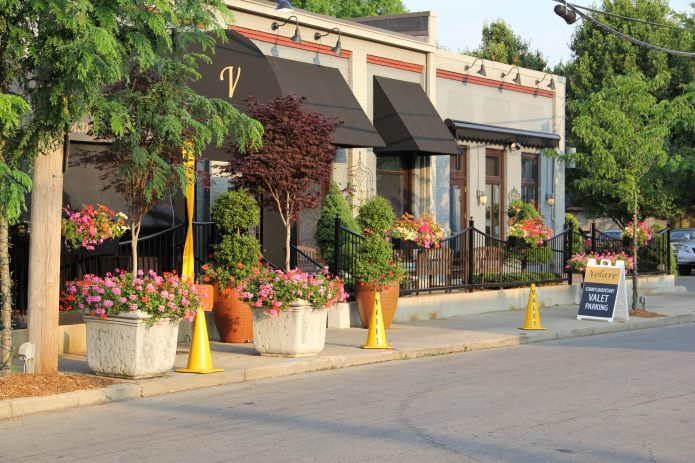
Volare is a classic fine dining hot spot in Louisville.
For a Big Night in Louisville
Want to host a party or presentation in a larger space? Need a restaurant that easily accommodates large groups? These Louisville hot spots fit the bill.
Volare Italian Ristorante: Elegant, cozy, perfect ambiance — oh and the food is some of the best Italian fare you’ll experience, according to reviews. Call ahead and it should be easy to reserve a spot for a larger group.
Havana Rumba & Tapas Bar: Plenty of tapas, cheap margaritas and specialties such as bacon-wrapped dates. With Monday night’s half-off tapas deal, you can’t go wrong with this place. Call ahead to reserve a spot for a larger group.
Lilly’s Bistro: Offering seasonal fare and handpicked cocktails, this spot is perfect for a party of 20 or fewer. Contact Jeff to plan your menu and reserve the back room.
Proof on Main: Inside Louisville’s 21c Art Museum and Hotel, this restaurant also features locally sourced fare. A variety of conference rooms can fit parties of 10 to 400. Your clients can enjoy art, artisan cocktails and, of course, bourbon.
The Wine Studio: Give your clients an immersive experience by renting this unique spot. Guests can network on the patio attended by a wine steward and watch a chef prepare their meals (menu chosen by you). Call 502-636-0783 for more info.
Oct. 6-8 at Avalon Hotel in Alpharetta, Ga.
Manufactured housing community owners have never had more information available to them — or more decisions to...
The Midwest Manufactured Housing Federation has announced that attendee registration is now open for the 2027 Louisville Manufactured Housing Show, returning to the Kentucky...
HUD’s Innovative Housing Showcase, MHI’s Homes on the Hill and Annual Meeting Begin Sept. 22
Two of the country’s largest builders of manufactured homes will...