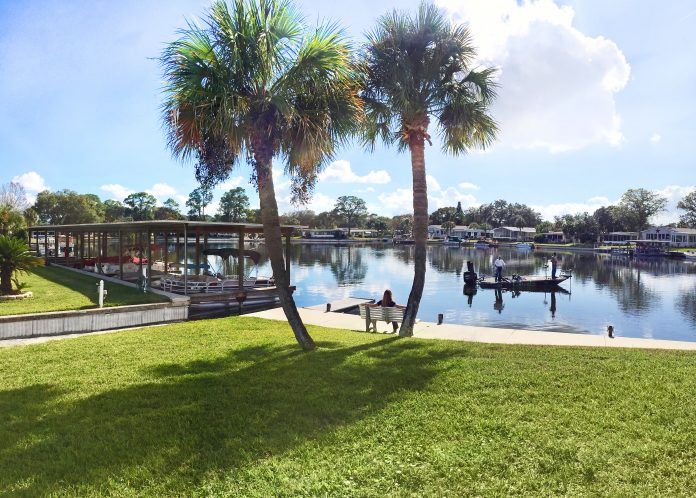
The NCC Fall Leadership Forum takes place each November at the Westin Michigan Avenue in Chicago. Photo courtesy of Westin Michigan Avenue.
NCC Fall Leadership Forum Open Registration Begins Wednesday at 4 p.m., with Opening Reception that Night and a Full Schedule of Activities Thursday through Friday Morning
The National Communities Council, a division of the Manufactured Housing Institute, hosts community operators, service providers, brokers and lenders Wednesday through Friday in Chicago for its 6th Annual NCC Fall Leadership Forum.
Summary of Activities for NCC Fall Leadership Forum
Thursday, Nov. 8
9 – 10:15 a.m.: Trends for Manufactured Home Communities with Dr. Henry H. Fishkind. 10:15 – 11 a.m.: Legislative & Regulatory Update with Dr. Lesli Gooch of MHI. 11:15 – 12:15 p.m.: The Crisis: Managing Residents, Regulations and the Media in 2019 and Beyond. 12:15 – 1:15 p.m.: Networking Lunch sponsored by UMH Properties. 1:30 – 2:30 p.m.: State of the Market – Community Financing Trends in 2018 & Beyond with an industry panel. 2:45 – 3:30 p.m: Determinants of Site Rent: An Economist’s Analysis with Charles E. Becker, Ph.D., Duke University. 3:30 – 4:30 p.m.: Today’s Chattel Lending Environment with a moderator and industry panel.
Friday, Nov. 9
9 – 10 a.m.: The Future of Social Media for Manufactured Housing with Crystal Washington, CSP, Technology Strategist & Certified Futurist. 10 – 10:45 a.m.: Selling More Homes & Marketing Your Community with Lisa Lane, Four Leaf Properties. 11:00 a.m. – Noon: Resident Relations: The Role of Customer Service with an industry panel.
Photo courtesy of Westin Michigan Avenue.
MHI Designed NCC Fall Leadership Forum with Executives in Mind
Event organizers said the forum becomes larger each year, generating networking opportunities and resulting in more business deals.
NCC Fall Leadership Forum offers a strategic look at high-level issues facing the community segment of the manufactured housing industry, with participants from across the country
The event is designed to allow executive professionals to engage and connect with their peers. All attendees benefit from being presented with insight on the latest industry trends and activities. Furthermore, the event will capitalize on what has been a strong year in the manufactured housing industry, with the prospect of a bright 2019 ahead.
The NCC Fall Leadership Forum looks to minimize time out of the office and maximize education and interaction with peers and potential clients.
Thursday’s full day of programming will open with breakfast. That night features an evening reception at 360 CHICAGO in the John Hancock building.
Chicago-based REIT Equity Lifestyle Properties Expands Three Communities in Arizona, Texas
Equity LifeStyle Properties is expanding in interesting ways, bringing more manufactured homes to RV properties in a fashion that creates a destination lifecycle for customers.
The company has more than 400 properties with nearly 154,000 sites across the country. With that, Equity LifeStyles owns one of the nation’s largest networks of real estate.
While ELS has a near-equal mix of manufactured housing communities and RV resorts/campgrounds, it is currently leading the trend of blending the two models into a single community.
One of the home styles available at ELS’ Lake Conroe property.
Ron Bunce, senior vice president for 150 ELS properties in the company’s western markets, oversees several blended communities. Included in his territory are three properties in Texas and Arizona currently undergoing this type of mixed property expansion.
“What we continue to see from our RV customer is an interest in staying connected to their destination property and the relationships they have built there,” Bunce said. “Traveling by RV and managing multiple destinations can become challenging, leading many to prefer the conveniences of a manufactured home in the resort they previously enjoyed in their RV.”
Chicago-based Equity LifeStyle Properties became a public company in 1993. At the time, it had a portfolio of 41 manufactured home communities. For many years, the company’s core business consisted of retirement communities in Sunbelt destinations. Yet, through extensive property acquisitions during the recent 15 years, ELS entered the RV business, a property type that continues to be a valuable component of the company’s operations.
Fortunately, the addition of RV appears a natural fit for the company.
“The business models of MH communities and RV communities are very similar,” Bunce said. “We saw it as a logical combination of property types because they are operationally similar, as is our customer base among the communities.”
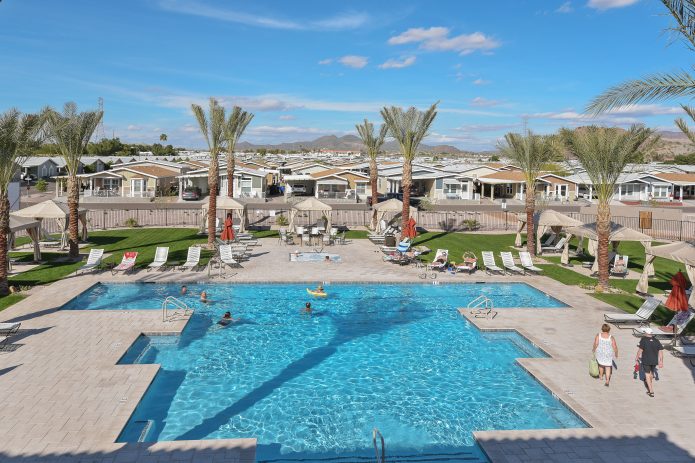
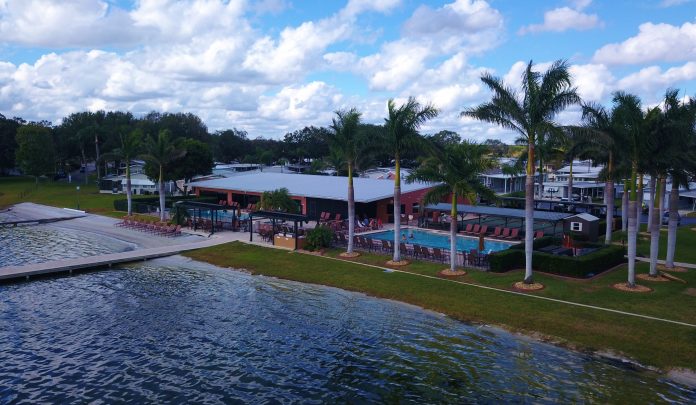
The pool at Monte Vista in Mesa, Ariz.
The Expanding Properties
ELS purchased a pair of Mesa, Ariz., RV resorts in 2004 from separate owners. Both properties are in the midst of expansion projects, bringing a sizable MH component to each of the resorts.
ViewPoint RV and Golf Resort has a mix of more than 2,000 sites that hold RV, park models and manufactured homes.
“Our expansion project at ViewPoint has added 235 manufactured home sites so far, with another 200 planned,” Bunce said. “It’s a unique community in that it features 27 holes of golf. We have an 18-hole championship golf course, with an additional 9-hole executive par-3 course.”
ViewPoint also offers the resort-style amenities you might expect: swimming pools, tennis club and softball fields.
“We have softball players ranging in age from 55 to 90, including some in their 80s who throw a mean fastball. It is truly something impressive,” Bunce said.
“There are hundreds of people in the tennis club, and we have great pickle ball courts and a fitness center,” he said. “There are 50 different club and hobbyist groups at ViewPoint. That’s why our customers either come back year after year or decide to stay for good. They want to socialize, have fun and be creative.”
Monte Vista Village Resort
The other ELS expansion property in Mesa, Ariz., is Monte Vista Village Resort. It is a community with nearly 950 sites, including 115 manufactured housing expansion sites.
“Our target customer is the retiree or Baby Boomer group,” Bunce said. “And we found that a 1,300-square-foot, 2- or 3-bedroom home appeals to that buyer. Many will spend the winter months with us, and some will decide to stay year round.
“Traditionally, our customers have been in a time in their lives when they are looking to sell their home, often in a northern part of the country. They visit our resort and find the house, community atmosphere, social engagement and, of course, the weather they’re looking for here,” he added. “Increasingly, we’re now also seeing people who already live in the Phoenix area coming to us for those same reasons.”
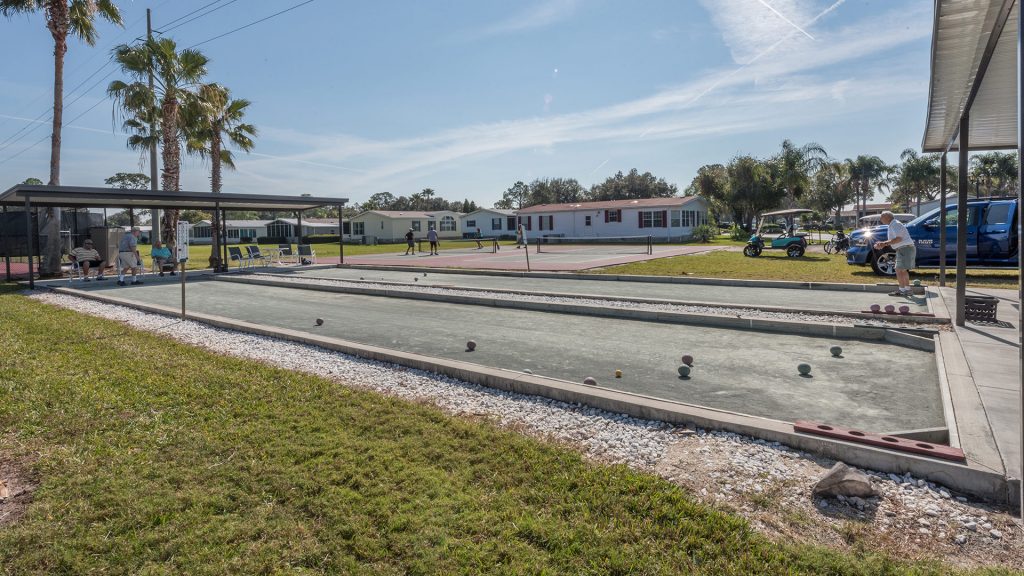
The community shares common space and amenity packages similar to ViewPoint. However, rather than golf courses, it offers lawn bowling, billiards, horseshoe pits and extensive crafting facilities. This includes dedicated rooms for lapidary arts, silversmithing, woodworking and pottery.
A Lakeside Village North of Houston
A view from the community at Conroe Lake in Texas.
ELS purchased the Thousand Trails network of campgrounds in 2008. Among the more than 80 properties in the portfolio was Thousand Trails Lake Conroe, a lakeside campground about an hour north of Houston. Since then the company completed an expansion project for the property. It incorporates additional RV sites, as well as 50 new manufactured home sites.
“Our manufactured homes in the property have been very popular,” Bunce said of Thousand Trails Lake Conroe. “We sold out the first 50 MH sites and we just started a project adding another 67 RV sites.”
Additionally, the property features lake access that draws many visitors. Residents bring small watercraft to enjoy on the popular 21,000-acre swimming, fishing and boating lake north of Houston.
“Having access to the lake is very important to our customers,” he said. “We offer a number of boat slips for residents and guests, as well as a boat launch on the property. There’s also a covered outdoor social area, an indoor lodge, a large swimming pool with cabanas, tennis courts, a fitness center and dog park.”
Equity LifeStyle Properties purchases homes from many manufacturers. However, its recent western expansion projects have resulted in a focus on Cavco products for both manufactured homes and park models.
ViewPoint RV and Golf Resort in Mesa, Ariz.
The Future of Growth at Equity LifeStyle Properties
Acquisitions also contribute to portfolio growth at ELS. Through the first seven months of this year, the company acquired four properties in Florida, adding nearly 1,900 sites to the portfolio. Of these, three were manufactured housing communities.
The other key element to the ELS growth and investment strategy is development.
Expansion properties under consideration are evaluated for…
Market conditions
Demographic trends
Zoning and entitlements
and infrastructure requirements
In all cases, ELS seems intent on making additions and changes that its customers find favorable. Bunce said the company is able to gauge interest from website activity and social media, but also heavily weighs customer sentiment and satisfaction through one-on-one conversations, meetings with homeowners’ associations and responses to customer satisfaction surveys.
“We have a lot of different ways to measure and ensure we’re responsive to our customers,” Bunce said.
Among those measurements is likely the company’s solid history of occupancy growth. Occupancy in ELS manufactured home communities sits at nearly 95 percent, and the company has had 35 consecutive quarters of occupancy increases across the portfolio.
“We work hard to ensure we’re providing the lifestyle offerings our customers are looking for,” Bunce said.
Favorable Trends for Equity LifeStyle Properties
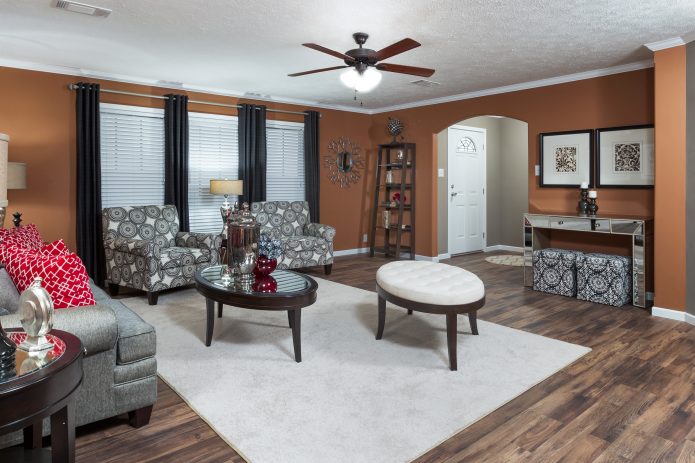
The kitchen and living area of a home in the Lake Conroe property.
Equity LifeStyle Properties has positioned well to take advantage of demographic trends during the next several years. Approximately 70 percent of its properties cater to Baby Boomers. Ten thousand Boomers will turn 65 each day for the next 12 years, according to the Pew Research Center.
Manufactured home shipments are up 50 percent in five years, and recently achieved an 11-year single month sales peak. This is an industry-wide measure of success mirrored by trends with ELS properties.
“We continue to see a strong home resale market, which is a key indicator of demand for the homes in our communities,” Bunce said.
In addition, the characteristics of the RV side of the business also are positive. ELS numbers show there are about 9 million RVers in the country and about 1.5 million RV sites. Furthermore, industry trends such as the growing popularity of peer-to-peer RV rentals are positively impacting the amount of time RVers spend in those campgrounds.
“Meanwhile, our hybrid RV and MH communities are positioned to attract customers in all segments of the RV-to-MH lifecycle. From the weekend camper to the snowbird to the full timer… and, in many cases, the former RVer who prefers to purchase a manufactured home in their favorite resort,” he said.
With its very first property purchased in 1969, ELS will celebrate its 50th anniversary next year.
“We’re very proud of our history of providing quality communities and RV resorts for our customers,” Bunce said. “We have a lot to celebrate.”
Michigan Manufactured Housing Association presents awards to 6 exceptional members
Industry Members Recognized at Annual Conference in Novi
The Michigan Manufactured Housing Association (MMHA) presented its 2018 Member Awards on Oct. 11 at its annual conference at the Suburban Collection Showplace in Novi, Mich. The awards were presented by MMHA Board President Richard Winkelman:
Best Model Home Staging
The Best Model Home Staging award was given to HomeFirst/Brookside. HomeFirst/Brookside’s entry showcased one of its brand-new model homes that is contemporary, trendy and truly comparable to a stick-built home. Danya Mallad accepted the award.
Danya Mallad from HomeFirst/Brookside accepts the Best Model Home Staging award presented by MMHA Board President Richard Winkelman
Best Manufactured Home Community Event or Activity
The award for Best Community Event or Activity went to Highland Greens and M. Shapiro Management.
Highland Greens organized a “back to school” raffle for all elementary-school-aged children within the community. They managed to make every child who entered a winner. Over 50 backpacks were given away, filled with school supplies. The award was presented to Debbie Robbins and Jeannie Barrett.
Debbie Robbins and Jeannie Barrett accept the award for Best Community Event or Activity.
Best Member Sales Event or Activity
Sun Communities of Western Michigan was awarded Best Member Sales Event or Activity. Sun Communities held open house events at six different communities in Western Michigan and promoted them using digital marketing. The result was over 9,000 clicks to their landing page, hundreds of in-person community visits, and multiple home sales. Heather Rector accepted the award.
Sun Communities of Western Michigan was awarded Best Member Sales Event or Activity. Heather Rector accepted the award.
Best MMHA Member Website
Best Member Website award went to Preferred Homes. The new website for Preferred Homes is www.preferredmobilehomes.com, and is an easy-to-navigate site filled with beautiful home photos, floor plans, homeowner testimonials and financing information. Rose Graham accepted the award.
Rose Graham accepted the Best Member Website award, which went to Preferred Homes.
Exceptional Customer Service Award
The winner of the newly added category for Exceptional Customer Service was presented to Capitol Supply & Service. Capitol Supply & Service has generously donated the installation of equipment and materials to families in need living in manufactured housing communities. These special cases were brought to Capitol’s attention by community managers, school districts and news station agencies. The award was presented to Claudia Elliott.
The newly added category for Exceptional Customer Service was presented to Claudia Elliot of Capitol Supply & Service.
Best Manufactured Housing Community Manager Award
The only award given to an individual is for Best Community Manager. The 2018 winner was Kitty Cole of Sherwood Forest. Kitty Cole has been community manager of Sherwood Forest in Ionia, Mich., for the past three years. She is a lifetime Ionia resident, as well as former business owner, and an active Chamber of Commerce member. The award was presented directly to Kitty Cole.
The 2018 winner for Best Community Manager was Kitty Cole of Sherwood Forest.
The MMHA Member Awards program is designed to recognize the exceptional leadership, marketing and communications efforts of its members, and to enable members to display the award as a point of pride and accomplishment. For photos and more information about these exceptional manufactured housing industry members, visit www.michhome.org.
Brand management an oft overlooked aspect of manufactured home sales
A strong and positive identity increases rental rates and final selling prices. It also decreases rental vacancies and accelerates the speed at which you sell.
But what is your brand?
It’s not your logo, website and other marketing assets. While critical to your brand identity, those are the visual representations of your brand, not the brand itself. Your brand is your promise to your residents. It is every interaction your employees have with current and prospective residents, and is every interaction those residents have with your community.
Your brand is what sets you apart from competitors and alternative housing solutions. Most importantly, your brand is what your customers say it is.
So how do you ensure residents and prospects know your brand and admire it?
Your Brand Promise: Get the Details Right
Start with your promise to residents. As the manager of a manufactured housing community working on brand, your first duty is to make sure your community makes good on the brand promise.
Just as no amount of marketing can turn a one-bedroom house into a two-bed, two-bath home, presenting your manufactured home community as the high-quality, less expensive alternative among housing options is entirely negated by a first impression of a community that is improperly maintained.
A thorough, regular and consistent community inspection program key to creating long-term, positive associations with your brand
With regular inspections, you not only ensure compliance with regulatory and corporate standards, you can catch problems (like a small leak in a rental home) before they become big problems (like gushing pipes into the street).
Clearly, you want to reduce overall risk and keep residents safe and happy in their homes. Even better, with a well-maintained property, current residents become your key brand voice. If they’re satisfied with the upkeep in and around their home, they will tell their friends.
Conversely, they will tell anyone who listens if they’re dissatisfied.
Technology to Support Community Quality and Brand Management
While performing regular inspections for compliance-related factors and for things that contribute to overall brand image — like landscaping and curb appeal in common spaces — might sound like a lot of work, modern digital inspection platforms actually can make this process easier and more effective. There are several such apps on the market. HappyCo’s property inspection app is available for iOS and Android.
If an inspection app is intuitively designed and easy to use, it can significantly improve the speed and quality of data collection over pen-and-paper inspections, especially if it makes use of mobile device cameras.
To be sure, improving the quality of your inspections is an investment. However, the return on that investment really can pay off. Remember, your brand is influenced by every interaction your employees have with residents, as well as the quality conditions of your manufactured community. In this way, ensuring your residents wake up to a beautiful, friendly community is a mandate for a better brand.
MHE’s Glenn Creek on display at The 2018 Louisville Show
Talk About Customization
From fashion to food to furniture, millennials want everything about their lives and their image to be customized to them. What’s great about manufactured housing is that it offers a capacity for customization that is unparalleled in most other parts of the housing market.
Yet, the benefit of manufactured housing has yet to be fully embedded in the minds of most millennials. Broadcast this message loud and clear, particularly if your manufactured homes are in a region that has competing product. This includes apartments, condos, tiny homes and site-built single-family residences.
Customization will set your community apart in the minds of many customers, particularly millennials. It shows that you cater to individual needs. It’s this kind of differentiated positioning that forms the essence of branding.
We are in a housing market where millennials spend thousands for closet-sized spaces. Manufactured housing, again, is an opportunity to deliver a win-win. Photos and videos are the key to delineating differences between a manufactured housing community and a big-city studio. Show the customer that for near half of what they’re paying for an urban apartment in an old building, they can live in a beautiful new manufactured home.
Catch the Customer’s Attention
In today’s market, the first impression of your brand often is online. So, when it comes to attracting prospective residents, that means putting care into designing your website. Residents need to feel like they’re going to have a comfortable experience before they see a home. And having a clean website with a modern user interface and welcoming language goes a long way toward bringing people in.
Digital marketing has long been the key in an effective brand strategy for home sales and apartment rentals. A 2017 study of homebuyers from the National Association of Realtors reports that 42 percent of people search on the internet as the first step toward purchasing a home. That number surely is even higher for millennials, the so-called internet “natives” who represent the majority of renters today and a rapidly increasing percentage of homebuyers.
Millennials Are The Emerging Homebuyers
With 18-29 year olds representing the biggest segment of the manufactured housing market, at 23 percent, mastering today’s digital tools to communicate your brand to this new generation of homebuyers has become high-stakes business. Create a meaningful experience through targeted advertisements.
Modern property managers have a host of tools to help them create standardized, sleek websites and ads. Beautiful web templates abound to help you showcase your community’s strengths, most of them at extremely affordable costs. Google Adwords makes it easy to narrow down and precisely target the markets and individuals most likely to buy. It serves messages tailored to their home-search patterns. Facebook and other social media sites help you convert current buyers or renters into evangelists for your brand. And review sites provide the opportunity to publicly address any problems and demonstrate you are a caring, responsive community manager or home seller. Of course, MHVillage has myriad advertising opportunities and a sophisticated and focused manufactured housing audience.
Also, the feel of a well-made business card and a solid brochure shouldn’t be discounted. Offering a potential customer something to read and admire before and after a tour is another excellent way to keep your housing solutions top of mind.
Attract new faces to manufactured communities
Strategic brand management can help bring entire new demographics of customers to your communities and to your homes. The key is to make a promise that resonates with the groups you’re trying to target — and then follow through on it.
Unfortunately, branding isn’t a one-time, “set-it-and-forget-it” activity. It requires diligent upkeep. This starts with physically maintaining your property but encompasses all the interactions between residents and the community and its employees. Brand management isn’t easy, but get it right and you’ll have a clear competitive advantage.
Jennifer Tyson is VP of Marketing at HappyCo, a San Francisco-based technology company that builds mobile and cloud solutions to enable real-time property operations.
August Home Shipments First 9,000-Plus Month Since ’07
In August 2018, new manufactured home shipments increased 7.9 percent to 9,091 homes. That is compared with the 8,425 homes shipped in August 2017.
Total August home shipments improved by 2,340 homes when compared to the prior month of July 2018.
Compared with August 2017, the trend is positive with shipments of single-section homes up by 6 percent and multi-section homes up 9.5 percent. Total floors shipped in August 2018 increased 8.5 percent to 14,174 compared to August 2017.
No FEMA Units Included in August Total
Of the 9,091 homes shipped in August, there were no homes designated as FEMA units.
The seasonally adjusted annual rate (SAAR) of shipments was 98,104 in August 2018, up 5.8 percent from the adjusted rate of 92,694 in July 2018. The SAAR corrects for normal seasonal variations and projects annual shipments based on the current monthly total.
In August, 133 plants representing 37 corporations reported production data to the Manufactured Housing Institute. The reporting numbers were consistent with those from July 2018.
In its Quarterly Price Index Report on Home Values, FHFA Explores How Manufactured Homes Retain Value
In an experimental price index for manufactured homes, the Federal Housing Finance Agency shows manufactured homes retain value in a nature similar to other housing.
“With this HPI report, FHFA is making information about these indexes available for the first time,” the report states. “The indexes are largely experimental at this stage. The manufactured homes data used in forming these series include information for homes titled as real estate and not chattel.”
In Cooperation with Freddie Mac and Fannie Mae under ‘Duty to Serve’
FHFA used special loan data from Freddie Mac and Fannie Mae to produce a pair of new indices. The first is a purchase-only index, which accounts for purchase values. The second an all-transactions index that takes into account manufactured home appraisal values.
The approach for the new manufactured home value indices uses the same methodology employed by FHFA in creating its long-running quarterly house price index. However, the new indices to shed light on how manufactured homes retain value pools national data on the homes. The 40-year HPI uses state-by-state data.
FHFA reported that the difference derives from limited access to data sets in regard to the purchase of manufactured homes.
The base year for both indices is 1995, with an arbitrary weighted value of 100 assigned at that point.
FHFA Purchase Only for Manufactured Home Value Retention
The home values trend in a very similar fashion. We see a bit more annual volatility among the early data set on manufactured homes. Notice how the nearly identical peaks in the third quarter of ’07 result in similar volatility in the site-built data? Clearly, the first quarter of 2012 shows a deeper trough for the manufactured home data.
FHFA All Transaction for Manufactured Home Value Retention
So, on the all-transactions set that includes home appraisals, the shape stays largely the same with a bit less volatility between 1995 and the height at 2007, then both products tend to rattle a bit more on the down trend.
“In general, the figures suggest that manufactured homes have seen price trends broadly similar to those of other homes. According to the purchase-only series, since 1995, prices have risen by roughly 120 percent for manufactured homes vs. 140 percent for other homes,” the report states.
“Although the manufactured homes index had a lower trough, it has been steadily converging on the traditional site-built series, as evidenced by its larger gains over the past four years,” it said.
Data Sets Relative to MH Index Weighted for Metro Representations
FHFA put together a third snapshot comparison of the two home types. Manufactured homes tend to have less presence in metro areas. Consequently, the agency weighed the data to eliminate geographic differences.
“To provide more of an apples-to-apples comparison of price trends, a new index for manufactured homes is calculated with a dataset that up-weights transactions in metropolitan areas,” the report states. “The new sample reflects roughly the same proportion of transactions in metropolitan areas relative to FHFA’s traditional (purchase-only) sample.”
Notice the gap between the non-manufactured and manufactured property indices that grows slightly when comparing the first and last figures.
In conclusion, similar indices may be offered in coming months and years. However, they’re likely to be produced less frequently than the standard HPI, the report states.
Please feel free to post comments in regard to what you read and see here. Is there any feedback for the FHFA? Let us know your thoughts and we can pass them on for you.
SECO18, the symposium for Southeast Community Owners, started its Wednesday afternoon educational session with a presentation titled “Lessons Learned by New Community Owners”.
About 400 manufactured housing professionals registered for SECO attendance, a record in the symposium’s nine-year history.
The goal was for new community owners to share the good, the bad and the ugly of their experiences, and to share them with people who are considering becoming community owners themselves.
Kim and Rusty Reeve
Kim and Rusty Reeve of Dallas, Texas, bought a community in Glencoe, Ala., about a year and a half ago. The purchase had some positives, including a golf course, about 13 wooded acres, a gentle slope (which turned out to be a curse and a blessing), the ability to expand, low taxes and a great school system.
However, after the purchase they found years of deferred maintenance, failed sewer lines, trees that needed to be trimmed, bad roads, utilities that needed to be repaired and some major excavation that needed to be done. They also inherited a manager who didn’t want to change, and who left the park without a word while they were on vacation. Finding skilled labor was another problem.
“Murphy was sort of behind every corner for us,” Rusty said, referencing Murphy’s Law: If something can go wrong, it will.
To get the cash flow going, they decided to purchase four older units and rehab them, as well as improve the park’s appearance. They also developed some great relationships with community residents, who hadn’t seen improvements in decades.
What did they do right? The Murphys…
Acted quickly when the park hit the market
Established excellent relationships with city officials, local utilities and building inspectors
Sought mentoring from successful community owners
And changed the name of the park to Briarmeade Estates
And what they wish they would have known? Managing a property when you live out of state is difficult. Rehabbing homes and deferred maintenance are expensive. Old employees might be resistant to change. Be prepared for unexpected surprises.
Amy McMahan
Amy McMahan said her and her husband’s community, Stone Oaks in Longview, Texas, fell into their lap about 11 months ago. She said make sure you’re on the job site when contractors are making repairs.
“You may think they know exactly what you want, but they don’t,” she told the audience of manufactured housing professionals at SECO.
She had some other advice: Use non-local banks. Local banks don’t want to deal with “trailer parks”. Go door-to-door and get to know every tenant. They want to feel like the vital part of the community that they are. The McMahans put on a party for tenants, with free food and games. The tenants were flabbergasted by the attention, she said.
Tim Manson
Tim Manson started AM Partners with a partner in April. Based in South Carolina, they bought their first park, an 86-lot community, in Virginia. Due diligence, he said, cannot be too detailed. For example, he thought he was buying a 98-lot park, but three weeks before closing he discovered it was an 86-lot park.
Manson also put emphasis on the importance of getting to know your tenants. He wanted to build a playground, but discovered about half the community didn’t want one.
“Don’t assume you know what’s going to improve your tenants’ life until you have conversations with them,” Manson said.

Another surprise: his biggest tenant issues were with renters, not homeowners.
“The demand for this product is endless, but a large percentage of that demand is not the kind of tenant you want,” Manson said.
“It’s important to not always be available,” he said. “You have to have boundaries with your tenants. Learn what conversations you should have, and at what time those conversations are appropriate.”
And finally: empower your property managers. Pay them right, and make sure they’re the right person to manage that property.
The kitchen in a new Fairmont Home by Cavco. Photograph courtesy of Fairmont Homes.
Cavco’s CountryPlace Mortgage Gains Traction with REvive program
CountryPlace Mortgage now offers community owners a fresh way to finance new homes for their communities.
“REvive is custom-tailored to the community owner,” CountryPlace Consumer Lending Division President Jack Brandom said. “It’s designed specifically for strategically minded community owners to help them put new homes in their communities, whether they’re filling vacant sites, expanding or upgrading some of the community-owned homes.”

Brandom says the new financing platform is all about offering more inviting terms for communities, particularly small to midsize owners and operators.
REvive offers a unique term of up to 11 years. Also, the initial year’s payments are based on interest alone.
“We have teamed with Cavco’s manufacturing group to provide the communities with lines of credit and the first year payments are interest only,” Brandom said. “We also advance up to 80 percent of the gross invoice, including freight, and factory-installed air conditioning.”

Photo courtesy of Lexington Homes
Other Terms Associated with REvive:
Kitchen with free-standing island in The Duke, a new home by Fleetwood. Photograph courtesy of Fleetwood Homes.
Annual five-home purchase minimum
All brands from Cavco, Fleetwood, Palm Harbor, Fairmont, Friendship, Chariot Eagle and Lexington Homes
Principal and interest payments start after first year
Attractive interest rates
As a result, REvive allows a community to get new homes for an attractive payment. This enables owners to generate a positive cash flow when they lease or rent the home. The home can remain on the REvive program if the community rents the home, or sets up a lease-to-own agreement.
Benefits Smaller Owners and Residents Who Want a New Model Home
The interior living space of a new Cavco home. Photo courtesy of Cavco Industries.
The new homes from Cavco and all of its brands can fill empty sites, improve the street appeal of the community, replace aging homes or be part of a community expansion program.
“It really is a program regularly requested by community operators who have less access to capital than some of the bigger portfolio owners,” Brandom said. “If you’re an owner who has a limited number of sites, it can be hard to find long-term capital to buy homes.”
REvive has seen an increase in demand during the last six months as word has spread.
Furthermore, the program is receiving growing attention for community expansion. Brandom also said a rising number of multi-section home purchases complement the purchase of single-section units.
CountryPlace has a license to do business in 37 states, Brandom said. The contact person for the REvive program is Steve Mehrer, director of community lending for CountryPlace. Call Mehrer at (972) 763-5102.
SECO 18 has grown from a small group of community owners meeting in a hotel room to a regional industry event that now attracts attendees from more than a third of the country.
“We have outgrown every venue we’ve been in for the last nine years,” said Spencer Roane, owner of Pentagon Properties and SECO co-founder.
SECO 2018 attendees at the Welcome Reception in Atlanta.
200 community owners
150 sponsors, exhibitors and vendors
Manufactured professionals from 20 states
“As you can imagine, there are a lot of people here from Georgia, but there also is a large presence from Florida and other surrounding states,” Roane said.
During the welcome session on Wednesday morning, organizers asked who had been at the event and who was a fist-time attendee. More than half of the room at the Atlanta Airport Marriott raised their hand as first-time attendees.
“This is such a great gathering,” community owner and SECO 18 organizer Tom Lackey said. “It’s all about connecting, meeting people and learning. I love seeing all the new people here. It’s very encouraging and we’re looking forward to two great days of programming.”
SECO 2018 Continues Through Thursday
Tuesday programming for pre-SECO events included a number of talks and featured a live home installation demo at an area manufactured home community, led by Cole Phillips of Phillips Investment Properties.
October JLT reports include information on 293 communitiesfrom 10 major markets in Six Midwest States
Datacomp, publisher of JLT Market Reports and the nation’s #1 provider of manufactured housing industry market data, announces the publication of its October JLT reports with manufactured home community rent and occupancy information for 10 markets.
October JLT reports include information from Illinois, Indiana, Kansas, Kentucky, Missouri and Wisconsin.
Recognized as the industry standard for manufactured home community market analysis for more than 20 years, JLT Market Reports provide detailed research and information on communities located in more than 160 major housing markets throughout the United States. This includes the latest rent trends and statistics, marketing programs and a variety of other useful management insights.
Summary Detail on October JLT Reports
Datacomp’s manufactured housing data published in the October JLT Reports includes information on 293 “All ages” and “55+” manufactured home communities located in 10 major markets in the six states. Altogether, the reports include data representations for 75,190 homesites.
A new market to the 2018 October JLT reports is Champagne/Urbana. The added information includes 13 new communities representing 2,830 homesites.
“Our data shows growth across the board in all markets in October 2018 reports,” Datacomp Co-President Darren Krolewski said. “This includes adjusted rent growth, as well as occupancy increases. This is true with only one small exception, for 55+ communities in the Kansas City market. That one market was only down slightly in occupancy and continues to perform very well.”
Each JLT manufactured home community rent and occupancy report published by Datacomp includes detailed information about investment-grade manufactured home communities.
JLT Market Reports Include Information on:
Number of homesites
Occupancy rates
Average mobile home community rents and increases
Community amenities
Vacant sites
Repossessed and inventory homes
Furthermore, established reports show trends in each market. Each month will have a comparison of current data to the same markets in the previous year. Additionally, there is a historical recap of rents and occupancy from 1996 to present date in most markets.
The October 2018 JLT Market Reports for 10 markets in Illinois, Indiana, Kansas, Kentucky, Missouri and Wisconsin are available for purchase and immediate download online at the Datacomp JLT Market Report, or they may be ordered by phone in electronic or printed editions at (800) 588-5426.
More than 1,500 manufactured housing professionals are expected in Las Vegas April 7-9 as the Manufactured Housing Institute’s Congress and Expo returns to the...
With more homes, more exhibitors, and more buzz than ever before, the 2026 Biloxi Show is expanding, and fast.
The Biloxi Manufactured Housing Show &...