New Skyline Champion Plant to Create about 200 Jobs
Leesville, La., is known as “the best hometown in the world”. And the little city in Louisiana is about to get even better with the opening of a new Skyline Champion manufactured housing plant.
The new Skyline Champion plant will be the only manufactured housing facility in the state of Louisiana.
A 127,000 square-foot Skyline Champion Corporation plant will open January 2019. Facility will begin production in the spring. The idle facility is a former Pioneer Housing Systems plant. Skyline Champion Corporation will reconfigure and automate the facility to include updated manufacturing techniques.https://mhinsider.com/off-site-built-partners-champion-quartz/
The new facility will allow Skyline Champion to:
Create 200-plus jobs over the long term and add to its 7,000-plus North American team
Increase capacity to meet growing demand in the affordable housing sector
Increase market share by offering greater convenience and affordability to customers in Louisiana and surrounding states
“It’s an honor to be the only operating manufactured housing facility in the state of Louisiana,” Chief Executive Officer Keith Anderson said. “We are thrilled to bring our high-quality, cost-effective homes to an even wider customer base. As well as to offer the exceptionally skilled local workforce with hundreds of new jobs.”
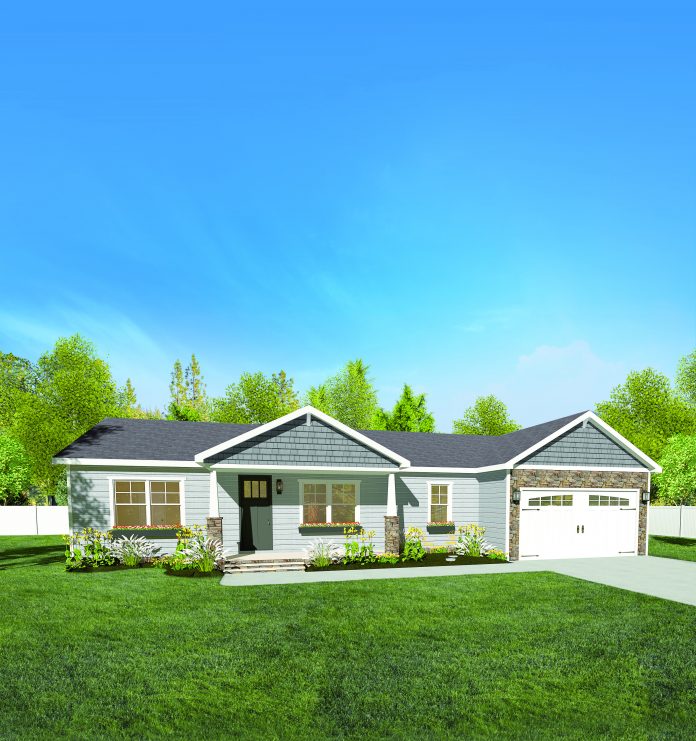
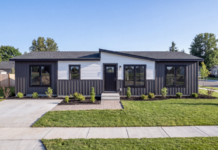
Champion’s Bradford Model.
New Plant to Provide More Affordable Homes for the Region
“The facility’s location will allow us to provide better value due to reduced transportation for the future homebuyers of Louisiana, east Texas, south Arkansas and south Mississippi,” said Wade Lyall, vice president of the southern region. “We are strongly committed to providing affordable housing to the residents of this great state and we look forward to building long-lasting relationships with the City of Leesville, the Louisiana Economic Development Corporation, local Retailers, and the LA Housing Commission.”
$12 Per For Each of the New 4 Million Shares Offered by Legacy Housing
Legacy Housing Corp., trading under the symbol LEGH, announced pricing of its initial public offering of four million shares of common stock at a public offering price of $12 per share.
The Dallas-based builder is the fourth largest producer of manufactured homes in the United States. It is a recognized leader and innovator in the manufactured housing industry.
The gross proceeds of the offering, before deducting underwriting discounts and commissions and other offering expenses payable by Legacy Housing, are expected to be $48 million.
All Common Stock in Offering from Legacy Housing
Legacy Housing has granted underwriters a 30-day option to purchase up to an additional 600,000 shares of common stock at the IPO, less underwriting discounts and commissions.
Legacy Housing intends to use the net proceeds of the offering to expand its retail presence in the southern United States and surrounding geographic markets, provide financing solutions to select housing community-owner customers, repay debt and pursue possible acquisitions, and use the remainder for working capital and general corporate purposes.
The common stock is expected to begin trading on The Nasdaq Global Select Market on Dec. 14, 2018, under the ticker symbol “LEGH.” The offering is expected to close on Dec. 19, 2018, subject to satisfaction of customary closing conditions.
The offering is being made through an underwriting group led by B. Riley FBR Inc., Oak Ridge Financial and National Securities Corp., which are acting as joint book-running managers for the offering.
A registration statement relating to the shares being sold in this offering was declared effective by the SEC on Dec. 12, 2018. This offering is being made only by means of a prospectus. Copies of the final prospectus related to this offering may be obtained, when available, from: B. Riley FBR, Inc., Attention: Prospectus Department, 1300 14th Street North, Suite 1400, Arlington, Va., 22209, or by phone at (800) 846-5050 or by email at prospectuses@brileyfbr.com; Oak Ridge Financial, Attention: Joseph Sullivan, 701 Xenia Avenue South, Suite 100, Golden Valley, Minn., 55416, or by phone at (800) 231-8364 or by email at jsullivan@oakridgefinancial.com; or National Securities Corporation, Attention: Marguerite O’Brien, 200 Vesey Street, 25th Floor, New York, NY 10281, or by phone at (212) 417-8164 or by email at prospectusrequest@nationalsecurities.com.
About Legacy Housing Corporation
Legacy Housing builds, sells and finances manufactured homes and “tiny houses”. Homes are sold through a network of independent retailers and company-owned stores and are sold directly to manufactured housing communities.
The company is the fourth largest producer of manufactured homes in the United States. The ranking is determined by number of homes manufactured via information from the Manufactured Housing Institute and IBTS. Legacy offers customers an array of quality homes ranging in size from approximately 390 to 2,667 square feet.
The homes consist of one to five bedrooms and one to 3 1/2 bathrooms. Legacy homes range in price, at retail, from approximately $22,000 to $95,000.
QUESTION: How can we improve community image with good home appearance and home siting?
Professional Planner Donald Westphal
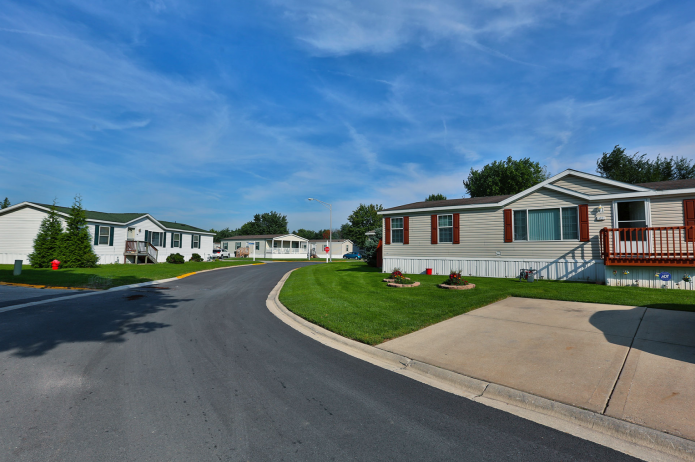
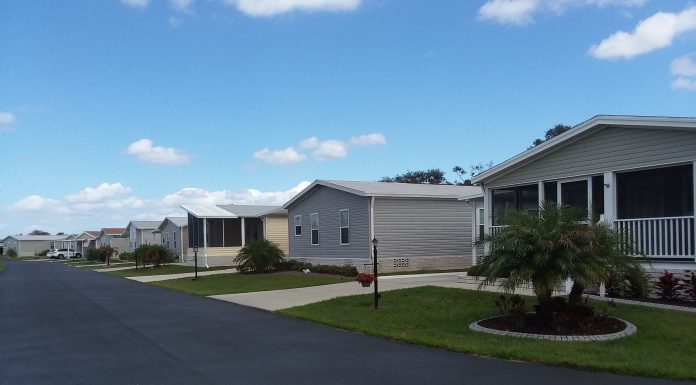
Nearly all manufactured homes today have an acceptable appearance when set on a subdivision lot or in a land-lease community with the long face of the home parallel to the street. Most of these homes are displayed in shows and sales centers “broad set”, in order to capitalize on that more attractive-looking face.
Unfortunately, many of these same homes function poorly and lack curb appeal when placed on the narrow lots found in many subdivisions and most land-lease communities.
Cost Considerations Often Play Against ‘broad set’ Homes
Cost considerations related to lot width often rule out the possibility of broad-setting homes in most communities. However, four actions can be taken to improve community appearance with little or no added cost.
First, be certain that homes on corner lots are placed with the front door and yard facing the street. This consideration must be made in the initial planning of the community and can be accomplished by either spinning corner lots ninety degrees, as shown in the sketch, or making provisions for the utility risers to accept a home with a reverse floor plan.
Second, require in the community guidelines that all homes have some attractive treatment on the street-facing end of the home. This can be accomplished by requiring one or more of the following:
a minimum amount of window area
an eyebrow roof or bay window
a porch or entry covering if the home has a street-facing entry door
a garage or carport in front of the home
I have driven through many communities where the end of the home facing the street was a solid wall of vinyl or hardboard siding, and the attractive side of the home was not visible from the street.
Third, see that the placement of homes on the lots results in a uniform front setback from the street. Many communities are designed with the utility risers placed very close to the rear of the homesite. This requires the home to be placed to the rear of the homesite to cover the sewer and water risers. As a result, there are marked differences in the front setbacks and a lack of continuity in the streetscape.
Many designers now place the utility risers further forward on the homesite so that the shorter multi-section homes can be placed closer to the street without making riser location adjustments.
Fourth, off-street parking should be designed so that landscaping can be placed along the front of the home. Many communities are designed with the parking in front of the home, making it impossible to landscape there. Some developers design the parking in tandem along the side of the home. This allow for a future carport or garage. Also, it reduces the number of cars parked off-street adjacent to the curb and results in fewer cars in the streetscape.
An attractive streetscape in your community will not happen by accident. Some developers require plot plans for each home placement in the community. This can help make certain that the home and homesite all add to the positive appearance of the community.
A Historical Look at the Need for Workforce Housing
In 2002, the Urban Land Institute assembled a panel of experts to discuss the growing shortage of affordable workforce housing. The ULI defines workforce housing as that which is affordable to those who live on between 60 and 120 percent of the area median household income.
Many families in this group fail to qualify for federal entitlement programs. Yet, they still have inadequate income to support their housing needs.
The ULI meeting divided into small groups to identify regulatory barriers and possible solutions. One panel’s solution involved workforce housing where local governments donate or sell property at reduced prices. Another panel urged greater marketing efforts to encourage affordable housing development. One panel suggested expanding state and local first-time homebuyer tax credit programs to help cover down payments.
Another solution was to offer property tax abatements as a tradeoff for the development of workforce housing. The panel said that expedited permit processes for affordable housing projects could reduce costs and make such developments more profitable.
Older manufactured and mobile homes, sometimes repossessed, can be refurbished for much-needed workforce housing.
Local building codes for site-built housing often add time and expense to projects, but do little to improve quality or safety of the units. Manufactured housing – with its faster, semi-automated, protected building processes – can greatly speed this up. Building permit fees for land-lease communities might only apply to the infrastructure, and not necessarily to the factory-built units themselves.
Another ULI panel suggested that linking fees to unit size would make smaller, more affordable housing more attractive to developers.
Development opportunity could come about through changes to local zoning laws. Allowing some existing commercial properties to be redeveloped as workforce housing rezoning requests conditional on workforce housing.
One of the panels recommended that localities use their comprehensive plans to link commercial zones with residential zones, fostering less zoning segregation and more affordable housing options. Similarly, if a commercial developer makes a special request for a reasonable exemption from the building code or approval of zoning for manufactured housing, the approval can come with a requirement for workforce housing to be built into the project.
Institute ‘Request for Proposal’ to Encourage Workforce Housing
Another suggestion: As part of major redevelopment proposals, local governments could require that workforce housing be a part of the “request for proposal” process. A result of this could be that financial and density bonus incentives that are part of inclusionary policies could be expanded to cover low- and moderate-cost housing, in addition to affordable units. Other regulatory incentives that could be used include shared parking opportunities, mixed-use zoning, flexible zoning and fee waivers or reductions.
With the relatively low interest rates, home buyers with sufficient down payments and fair-to-good credit scores have been able to purchase new and repossessed homes in many markets for some time now. And some forward-looking, factory-built home manufacturers have been offering housing structures that are built at low cost but also meet the needs of heavy use for families.
Yet still, there is a need for access to families with fair-to-medium credit and minimum down payments, especially in markets where there is good employment.
In the past, this need was provided by a regular supply of new family land-lease communities. However, with the high rate of defaults on home financing that started in the early 2000s, there has been very little in the way of new community development – largely limited to a few senior resort-style communities in select areas.
In many parts of the country, there has been a lack of housing for low- and moderate-income families, in tandem with prolonged job losses and an only recent economic upturn.
A natural gas field in upper plains of the United States.
North Dakota and Texas ‘Man Camps’
Much of the early recovery job growth was tied to the “man camps,” as they’re called, at the oil reserves in North Dakota, south Texas and other areas, which were built and operated under the direction of the production companies.
Long rows of oil-field housing are a great example of how building in a factory can be an efficient solution. And yet there are myriad sectors in major markets that need timely delivery of quality, affordable housing.
Even in less intense workforces, there are shortages in affordable local housing for working families. These housing needs could be met through the judicious use of manufactured homes and housing communities. This is true particularly when the owners can provide self-financing or lease-to-own programs for consumers with low credit scores and a lack of sizable down payments.
The emerging demand for affordable workforce housing may be the first indicator of the ability of manufactured housing land-lease communities to provide for this need.
So, how did they do it?
Refill Community Vacancy with Workforce Housing
New manufactured housing land-lease communities are being built to meet high family housing demands in northwest North Dakota and parts of south Texas. In other areas, a number of community owners purchased and installed used and repossessed homes. Those homes were offered for occupancy with a “lease-to-own” option. This is based on the landlord’s estimation of the buyer’s creditworthiness.
Monthly home lease payments for lower-cost used or repossessed homes – primarily single-section, post-1976 homes – often were below costs of area apartments, and resulted in successfully filling vacant communities.
The availability of home finance when the dwelling is sited on a leased homesite is among the most important items for an investor to scrutinize. At the present time, shorter-term loan amortizations at higher interest rates than for site-built homes are generally the case. Lowering the homesite lease terms may offset the potential for higher monthly home payments. Converting the property into land-home combinations for conveyance as real property may be another option. Additional methods may apply, but financing terms on a “par” with site-built homes may be forthcoming.
No matter where it exists, the need for affordable housing for workers with families located near their jobs continues to grow. As viable housing options increase for working families, so too will the breadth, depth and balance of the workforce. Organizations that are willing to push for lower-cost, factory-built homes in combination with some of the newer lease-to-own strategies have been able to meet these vital needs.
About Edward Hicks
Edward “Eddie” Hicks, principal consultant with Consultants Resource Group, can be reached by phone at (813) 300-6150. Hicks has more than 45 years of experience as an MH retailer, manufacturer, developer and real estate broker, assisting clients with their community development, financing and acquisition needs. For more information, email Hicks at easteddie@aol.com, or visit www.mobilehomepark.com, www.factorybuilthome.com or www.fha207m.com.
Community Owner Inspired by His College Experience
A college scholarship paid for Ron Cobb’s books and tuition for four years. Without it, he would have been unable to attend college. Years later, he decided to give back and create a scholarship program of his own.
Cobb and his wife Jeanette own Logan’s Crossing Manufactured Home Community in Dallas, Ga., about 25 miles northwest of Atlanta. About a decade ago, Cobb decided to start offering scholarships to school-age children in his community. There are many children who live in Logan’s Crossing, an all-ages community with about 400 residents. Many of them get to school from the bus stop in front of the main office, Cobb said.
Cobb approached the Paulding Education Foundation, which seeks to promote educational opportunities in Paulding County, Ga. He proposed that Logan’s Crossing create and fund a scholarship program that the foundation would administer, and the foundation agreed.
A Community Education Partnership is Born
The partnership between the foundation and the Paulding County School District is crucial to the success of the scholarship program, he said.
“The cooperation between the school board and education foundation gives them access to school records, which gives me a way to verify that children are eligible,” Cobb said. “If I had done this on my own, the school system would have been unwilling to share with me the attendance and grade records of students, and I would have had to depend on parents or students to tell me.”
Getting the Georgia scholarship program from idea to reality was not as easy as Cobb originally assumed.
“There are an awful lot of contingencies you have to deal with,” he said, but “we have most of the kinks worked out.”
To qualify for a scholarship, a student must be a resident of Logan’s Crossing for the full academic year. The recipient must go to class in Paulding County School District (or an accredited college or technical school in Georgia), and must have achieved either perfect attendance or an average grade of B or better.
Community Recognition of the Georgia Scholarships
Typically, the Cobbs dole out $1,000 to $1,500 a year in scholarship money to a handful of students. The most they’ve paid in one year is $5,000 to nine students. The local newspaper covers the scholarships every year, running pictures of the awardees. The program saw its first college degree last year, when a Logan’s Crossing student graduated from Georgia Southern University.
“I wanted to give back to the community, and it has worked out well,” Cobb said. “(Logan’s Crossing) has been recognized in ways I never anticipated.”
Logan’s Crossing Offers Scholarships for Students Who Meet the Following Requirements
Grammar school
$50 for perfect attendance for the entire school year.
Middle school
$75 for perfect attendance for the entire school year.
High school
$100 for perfect attendance for the entire school year; $100 for earning a diploma or GED, regardless of age; $250 for maintaining at least a B average for the entire school year.
College
$1,000 for each year a student is awarded a Georgia Hope Scholarship. Up to four awards per student.
Technical school
$1,000 for each year a student maintains at least a B average for the full academic year. Up to two awards per student.
Logan’s Crossing residents Cheyanna Jones, Dakota Pinson and Mobato and Mohau Mbesa were all given scholarships for the 2017-18 school year.
Countryside Estates in Muncie, Ind., a UMH community. Photo courtesy of UMH Properties.
Refusal to Act on Proposals for Manufactured Home Community Amounts to Discrimination, UMH Properties’ Complaint Contends
New Jersey-based UMH Properties, a manufactured housing community ownership group, has filed a complaint against the Village of Coxsackie in the State of New York alleging the local government has engaged in activities that are based on discriminatory motive, create a disparate impact against protected classes in the community, and perpetuate segregation.
The complaint, filed Oct. 1 in U.S. District Court, stems from an attempt to build a development for a 330-site manufactured home community. The site is 18 miles south of Albany near the banks of the Hudson River in Central New York State.
Defendants in the complaint are the Village of Coxsackie, Coxsackie Village Mayor Mark Evans and the Village Board of Trustees.
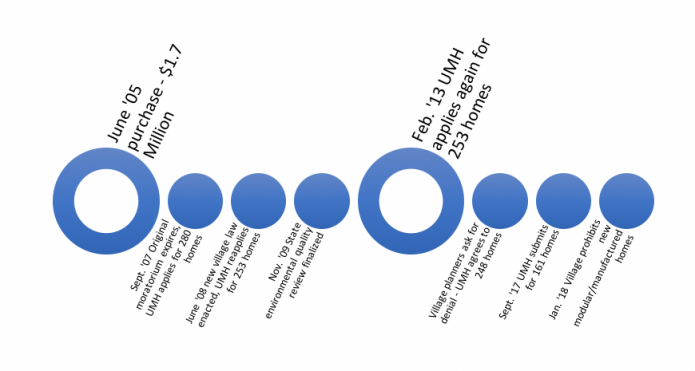
UMH Properties initially applied for the construction of Mountainview Estates in 2005. This was after a year of planning and the subsequent real estate purchase. The village has raised a variety of concerns to stall the applications during the course of more than a dozen years.
In August 2005 a moratorium on all development began while the village asserted its need for trustees to reconsider the zoning code. The moratorium was to last two months. However, it was in place for approximately three years. The village also voiced concerns about rare owl habitat, and had conversation about village sewer and water capacity.
How Does Discrimination Apply?
“The crux of the case is the fair housing causes of action,” Craig Koster, UMH Properties’ General Counsel said. “The denial or refusal to even act on the application is discriminatory and has caused a disparate impact on racial minorities and families with children. We’ll be relying on statistics, expert testimony and other evidence to prove that discrimination is at play.
The Village has “been very clear about the feelings they have for the ‘type of people’ who they believe live in [manufactured home] communities and what it will do to the village,” Koster added.
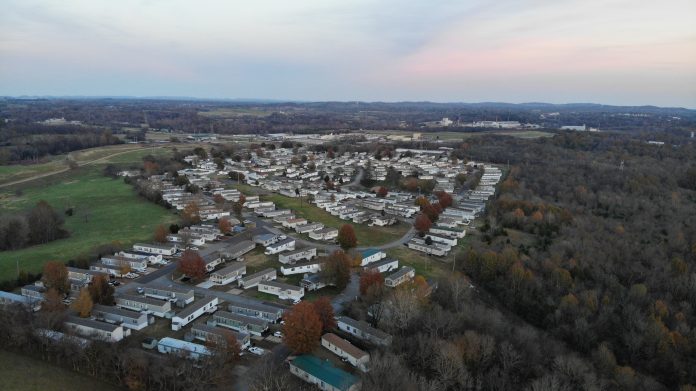
An aerial view of the expansion to Memphis Blues, a UMH property in Tennessee. Photo courtesy of UMH Properties.
How UMH Landed in Coxsackie, N.Y.
Sam Landy is president and CEO of UMH Properties. UMH is a public real estate investment trust that has been in operation for more than 50 years. It owns 115 communities in eight states in the eastern and Great Lakes regions of the United States.
Landy said he had completed a pair of successful community expansions in Pennsylvania at the time he began his search. His interest was real estate along the eastern seaboard that would be ideal for an entirely new community, something that’s been a rarity in recent years.
About 315 new manufactured home communities have been built nationwide during the last 16 years, MHInsider research shows. Compare that number to the 2,645 new communities constructed during the prior 15 years, including 395 communities built during 1986-87 alone.
So, when Landy came across a property owner looking to sell in New York, he thought he might have the right spot.
“It’s flat and beautiful,” Landy said of the 180 acres in Greene County. “It was for sale by a farmer who wanted just a couple things. He didn’t want a whole bunch of contingencies. We did ask for 60 days to check city water and sewer capacity, as well as zoning.”
Zoning for the community was in place, and water and sewer capacity were manageable.
“They both came back relatively fine, but there was nothing to indicate a problem,” Landy said.
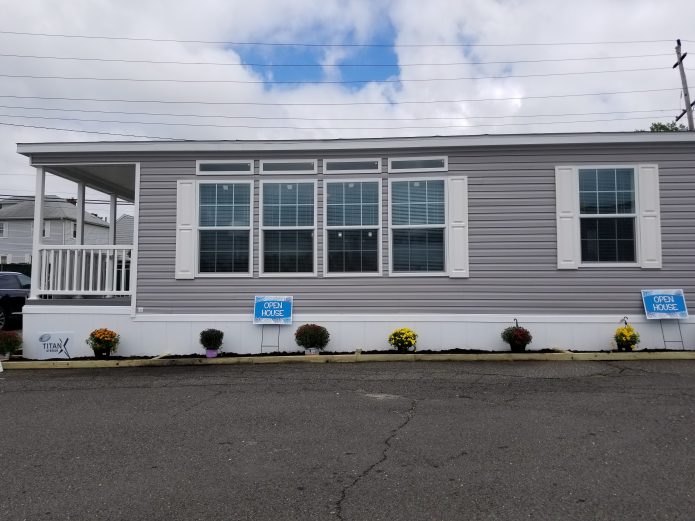
A new Redman home on display during a UMH Properties annual meeting in September. The home was placed in a UMH community in Pennsylvania.
A Site Visit and a Model Home
Landy walked the property with the then-village mayor and township supervisor.
“I told them all what we were going to do, showed them pictures and assured them it would be a very nice community,” Landy said.
UMH purchased the property. Landy set up a model home to provide tours for interested buyers and potential residents. Invitations went out to village officials and the general public. However, no Coxsackie office holder came to see the home.
A short time later, in October of ’05, a local news outlet reported on the proposed manufactured home community, and residents began to lodge complaints about the project.
Village Support Wanes for UMH’s Proposed Community
“Village Trustee Joseph Zanchelli wrote a letter to the editor and in a sharp departure from initial support for the project, he explained that the residents UMH would attract were undesirable,” the complaint states.
It continues, “Zanchelli stated: ‘[i]f you need help to better visualize what I’m talking about, just watch virtually any episode of ‘Cops’ and that should be enough to show you what one of UMH’s developments are actually like, in my opinion.”
Village residents have expressed concern about increased crime and declining property values, and used “coded language” that relies on stereotypes about minorities and low income families with children, the complaint states.
A timeline of events for UMH Properties in Coxsackie, N.Y.
Resident Launches ‘Keep Coxsackie Charming’ Page
JD Fielding is a village resident and business owner who opposes the UMH development. He started a Facebook page entitled “Keep Coxsackie Charming”, as well as a petition against UMH’s plans. The page has since been taken down.
“I want to make very clear that our opposition to UMH’s project within the village of Coxsackie is strictly due to antiquated water infrastructure, an almost completely maxed out school district, and because of the size of their project, and what that would possibly mean for Fire/EMS services, traffic, and crime rates,” Fielding said in a written statement to MHInsider.
“At no time ever has any person speaking on my behalf, or that I am ever aware of … used what is alleged to be ‘coded language’,” he stated.
Fielding said the UMH complaint is frivolous. He feels the intent of the claim is to put pressure on the village to bend its recently instituted housing density rules, he said. And Fielding characterizes the citation of Zanchelli’s statement about watching “Cops” in the UMH complaint as “laughable”.
“How that proves to be any proof of racial bias is beyond me,” he stated.
Village of Coxsackie Mayor Mark Evans declined comment. He cited the ongoing case and being named a defendant in the UMH filing.
The Need for Affordable Housing in Greene County
The civil complaint filed by UMH Properties asserts that the Village of Coxsackie has a need for affordable housing. Affordable housing is a particular need for area families with children.
Homes with three or four bedrooms in village limits that list for less than $200,000 typically are found on foreclosed properties, the claim states. And those homes require substantial amounts of work. There are three apartment complexes that meet the need, but one is senior housing and another has no vacancy. The third provides 24 residences.
The intent for the Mountainview project was for 50-homes per phase. The development would include a clubhouse, swimming pools, tennis courts and walking trails. Homes would sell for between $75,000 and $125,000. Approximately a quarter of the homes would be owned by the community and available for rent.
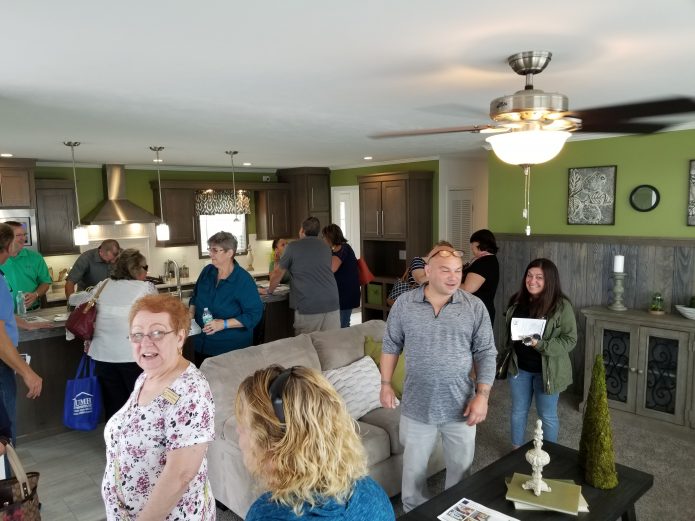
Guests tour a model home during a UMH Properties meeting in New Jersey during September 2018.
“We’re in dire need of affordable housing in New York State and a project like the one UMH has proposed would meet the need for a lot of our residents,” Capenos said.
Capenos said he is unaware of another disparate housing filing being levied in New York.
Capenos said developers are well accustomed to having projects “thwarted or stalled” by local governments.
“I grew up the son of a developer, and I’ve seen this my entire life. It’s nothing new for any type of development. You are going to have opposition and you’re going to have challenges,” Capenos said. “That’s why this can be so frustrating, because you see there’s such a need. There’s a need everywhere for housing, including manufactured housing. Manufactured housing meets a great need.”
He works for Haylor, Freyer & Coon as a risk management consultant, within the insurance part of the business working exclusively in manufactured housing.
How the Owls Came to Impact the Proposals
A primary point of pride among residents of Coxsackie is the local, rare owl population. When the state ordered a closer look at the proposed site, the habitat for short-eared owls came into question.
In 2006, as part of an application for variance from the village development moratorium, a required environmental quality review showed that the UMH property either includes or sits near habitat for the endangered short-eared owl. The short-eared owl population is declining nationwide, particularly throughout the northeast.
“So, that raises the question about how much land we need to give to the county for an owl preserve,” Landy said. “That’s what came out of the environmental review.”
Consequently, UMH resolved to purchase 57.2 acres on an adjacent hillside. A portion of the new land will be used for owl habitat if a development plan for Mountainview is approved.
Concerns About Sewer Capacity
The village has been working with the state on an Order on Consent since 2009 to operate and correct its inflow and infiltration capacity. Failure to produce a work plan for the problem twice has resulted in Department of Environmental Conservation citations, once in 2010 and again in 2012.
“The village repeatedly asserts that its failure to act on, or failure to approve, UMH’s applications to build a manufactured home community is due to the sewer-related moratorium as imposed by the Order of Consent,” the UMH complaint states.
Landy said throughout study and negotiation in regard to sewer capacity, UMH has offered to construct and maintain its own onsite treatment facility for the proposed community. It also offered to pay $10,000 per home site toward infrastructure upgrades. The village has called for UMH to wait.
The current village plan calls for a completion of the village sewer by 2020, a driving force for which is the pending completion of a new county jail.
Yet, a new village law approved in January redefines the rules for manufactured home parks. It requires each home site to be no less than 10,000 square feet, more than double the previous standard.
“That would reduce our number of home sites to 80, which is economically unviable,” Landy said.
UMH President Sam Landy speaks to some of his regional managers during a September 2018 meeting in New Jersey.
MH Advantage Expands Access to Manufactured Housing
When we began implementing our Duty to Serve Underserved Markets plan in January, Fannie Mae called manufactured housing one of the largest affordable housing opportunities in the country. With starter home prices rising, and affordable homes increasingly in need of major repairs, we know that manufactured housing is a critically important piece of the affordable housing puzzle. And we believe that, with the right support, it can be a key component in tackling the affordable housing crisis.
Since that launch, Fannie Mae’s manufactured housing team has been hard at work building the foundation for our efforts in the coming years. And we’ve already rolled out some exciting initiatives.
Design, Materials, Add Ons Help Define MH Advantage
MH AdvantageTM is the most visible result of our efforts so far, and it represents one of the biggest changes to the way we approach financing for manufactured housing in years.
Initially announced in June 2018, Fannie Mae developed the program to encourage the broader use of manufactured housing as an affordable alternative to site-built homes.
MH Advantage offers attractive terms that have typically been available to site-built homes in the past, like down payments as low as three percent and reduced mortgage insurance requirements, to buyers of eligible manufactured homes.
What makes homes MH Advantage-eligible is a list of characteristics, developed by Fannie Mae in consultation with manufactured housing industry stakeholders, that help manufactured homes blend into more traditional neighborhoods:
Construction elements, including durable siding materials.
Roof treatments distinct from traditional manufactured homes, including higher pitch rooflines.
Options for garages, porches and other desirable features.
Not only will these more generous terms and enhanced features make these manufactured homes more appealing and affordable for borrowers, MH Advantage also puts manufactured housing on more even financial footing with their site-built counterparts.
In addition to creating a new and appealing offering, we also put a lot of focus on the lenders. Knowing that a complicated origination process would be a deal-breaker for many lenders, we took the time to ensure that originating these loans would be quick and simple for loan officers. Our expectation is that these efforts will make manufactured home financing more broadly available, making it easier for homebuyers to purchase manufactured homes.
Positioning MH Advantage for Success
While there was a lot of enthusiasm about MH Advantage at launch, we quickly discovered that there were several aspects of the program that needed fine-tuning. With the help of our industry partners, we identified some parts of MH Advantage that we could update to make it more successful.
Our Selling Guide will be adjusted with requirements that will provide new direction to MH Advantage appraisers:
When possible, appraisers will be instructed to use MH Advantage comparable sales for MH Advantage appraisals.
If comparable MH Advantage homes are not available in the marketplace, then the appraiser will use the best and most appropriate other sales available, including sales of site-built homes.
These adjustments, as well as a handful of other revisions to the program, will make it easier to build and finance these homes and spur activity in what we believe is a promising opportunity for Fannie Mae and the manufactured housing industry.
As before, the initiative is open to all manufacturers who make HUD-certified manufactured housing and there’s no cost to join. For more information, and to see how to participate, visit FannieMae.com/manufacturedhomes or contact MH_Notices@fanniemae.com.
Exploring Chattel Finance
While Fannie Mae currently only supports manufactured housing titled as real property, our Duty to Serve plan also encourages us to carefully and deliberately consider a chattel loan pilot that would take place over the next two calendar years. Earlier this year, our regulator, FHFA, approved a limited Fannie Mae pilot to purchase chattel loans that will help us better understand the complexities of the marketplace.
This pilot is an extension of the research we have done to inform our possible efforts in chattel lending, which also includes a paper titled Key Legal Distinctions between Manufactured Home Chattel Lending and Real Property Lending. The paper, which is available on our website, will be critical in guiding our chattel lending strategy, as will the other research we are conducting in accordance with our Duty to Serve plan.
We have also invited lenders to share data on chattel loans, so we can see how they are structured and how they perform. Within Fannie Mae, we have gathered a diverse group of stakeholders across the organization to assess the risks and opportunities associated with chattel. This group helped to develop a preliminary set of standards and principles that will inform Fannie Mae’s activities in the chattel space.
While it’s too early to say whether any new Fannie Mae offerings will be developed from this pilot, we are excited to learn more about this type of loan that constitutes so much of manufactured home financing today.
Fannie Mae and the Future of Manufactured Housing
September marks nine months since Fannie Mae has been actively working to figure out how to advance manufactured housing under our Duty to Serve plan, but as much as we’ve done so far, this is only the beginning.
I can’t predict what the next two years will bring, but I’m looking forward to continuing work with the committed partners I’ve met in the manufactured housing industry.
Together, we’ll make homeownership accessible to more borrowers across the country.
Six Keys to Dynamic Change: Create Success in Manufactured Home Communities
Awareness
Employees need to be aware of the need for change. That onus is on us, as managers, to create the awareness need for success in manufactured home communities.
Desire
Employees require a desire to support change. In other words, the desire to improve the community, see the results of their actions, earn residents’ appreciation and desire to keep the job. The motivation must come from somewhere.
Knowledge
What needs to change and how to go about it? It simple, and comforting, to say change is needed. How you come by the knowledge of what change needs to be made and how it can be done is a much higher standard. Owners and managers are responsible for identifying and implementing change through their knowledge base.
Ability
The change must be actionable. Often this comes in the form of a single operating platform on a company-wide basis. Working for clients, our MHCinvestor.com platforms…
Break down all aspects of on- and off-site management into tasks
Lays out the most efficient method to complete tasks
Measures the highest likelihood of success
Reinforcement
The corporate office must support the staff by sending out a monthly calendar and a blast email to all managers the day before a critical business elements, such as…
Non-payment notices
Resident inspections
Twice weekly maintenance to-do list creation
Court filing
Of course, the manger must follow up and acknowledge receipt of communications, and agree to complete the associated tasks. Follow this with a short briefing on results from the tasks.
For success in manufactured home communities, the corporate office also reaches out to the manager if a task is incomplete. There is a need to reinforce compliance and notify the regional manager when necessary. The regional manager can call and schedule a visit or conversation.
Loyalty
The corporate office is responsible for the support of the regional manager’s efforts. This is a response to the support of company policy regional managers provide.
Any manager need to express dedication to uniform application of resident policies, collection policies and the zero-tolerance policy. The on-site manager is expected to support company policy versus arbitrary sympathy toward resident issues or complaints. Of course, empathy is encouraged toward all residents. However, solutions for personal or homeowner problems for a land-lease resident must be summoned by the residents themselves within their own support network.
Helping One Veteran Leads to Financial Assistance Fund
The Southeast Community Owners (SECO) announced a new program during its annual conference in October. SECO’s Veterans Assistance Fund is designed to give financial assistance for veterans living in mobile home communities.
SECO is a nonprofit 501(c)3 that serves the needs of small- and mid-size community owners with its annual conference. More than 400 community owners attended the 2018 conference in Atlanta.
David Roden, SECO co-founder and owner of Mountain View Estates in Rossville, Ga., started the Veterans Assistance Fund with Ron Cobb, Dave Jackson, Steve Quick, Blake Hodge, Max Baker, Steve Case, and Maryuri Barberan. The idea came about after Roden encountered a U.S. military veteran who lived in his park. The veteran used an oxygen machine, and had trouble breathing during the heat of summer. He needed help buying another air conditioner for his living room.
Lend a hand to a veteran in need through SECO’s new Veterans Assistance Fund.
Community Owners Raise Money for New Fund
To help other veterans living in manufactured housing communities, the committee began soliciting to get the Veterans Assistance Fund off the ground. Funds from the SECO website’s Classified Ads section and donations from SECO business and community owners have provided about $3,000 of seed money so far, Roden said.
Financial Assistance for Veterans
This is how the fund works.
Community owners can provide aid for veterans who live in their community. Perhaps there’s a need for a handicap-accessible toilet, or a wheelchair ramp, or grab bars. Make a request and the committee will decide whether to provide the funds. Veterans must furnish proof that they were honorably discharged. Widows of veterans also qualify for aid, Roden said.
Spencer Roane, owner of Pentagon Properties and co-founder of SECO, said the fund “reflects the attitude of small community owners everywhere of helping those who have served our country through military service.”
“We hope that those owners who attend the SECO conference will submit requests to provide any assistance whatsoever to the veteran residents of their communities,” Roane said.
If Properly Managed, the Promise of Park-Owned Homes Can Be Significant
By Robert Blum and Alexander Rindner of Springfield Communities
As relative newcomers to the industry, we notice a wide gulf separating large park owners from those operating on a more modest scale of say, 200 lots or fewer. There are noticeable attributes that characterizes smaller community owners. One of those is a tendency to incorporate the promise of park-owned homes into their business model as a strategic choice to generate higher annual income.
However, difficulty may arise when the time comes for these owners to sell. Those park-owned homes may represent a challenge for attracting quality buyers. The severity of that challenge will depend on the choices the park owner has made.
Robert Blum, Springfield CommunitiesAlexander Rindner, Springfield Communities
We are a highly flexible family office representing something of an ideal buyer for many smaller park owners. In our ongoing search for acquisitions across Florida and the Southeast, we come across many parks that we cannot acquire. Often this solely is due to how the park owner has implemented park-owned homes.
In this article, we highlight two major pitfalls that small park owners must avoid with respect to park-owned homes, so as to extract maximum value from their park in the long term.
The Promise of Park-Owned Homes
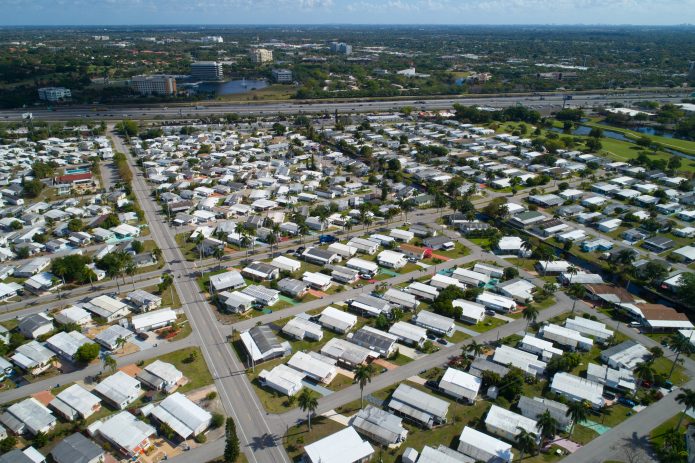
A manufactured home community in Davie, Fla.
The desirability of including park-owned homes is a matter of personal preference and circumstances.
Indeed, many small park owners possess a talent for leveraging the promise of park-owned homes as rentals. There is the owner-operator who is unafraid to roll up the sleeves. That person has to the tools to realize much higher gross income generated by park-owned homes.
For many small owners, incorporating a manageable number of park-owned homes can turn a sleepy real estate investment into a cash-flow machine.
It is well-known that certain buyers will be very sensitive to parks that have very high percentages of park-owned homes. Many buyers prefer the homeowners on a land-lease due to management level or other concerns.
However, even those buyers willing to consider parks with large numbers of park-owned homes will need the seller to have operated in a way that retains flexibility and autonomy.
Park-owned homes should be managed to favor the long-term viability of the property rather than short-term returns.
Pitfall #1: Purchase Arrangements with Long Terms
A buyer of your park likely will want some degree of flexibility when it comes to park-owned homes.
Regarding flexibility, a common pitfall we see small owners fall into is entering into lease-to-own or lease-option-to-purchase arrangements with residents that have very long terms. In general, these arrangements can be positive in the eyes of a buyer who is sensitive to park-owned homes. They put the residents on a path toward home ownership. And achieve the goal of generating steady lot rental income.
However, in order to retain flexibility, park owners must resist any urge to lock themselves into arrangements with 15 or even 10 year terms. It is preferable the term be shorter. Ideal is between five and seven years or less. This is true even if it means earning less on the potential promise of park-owned homes.
Indeed, avoid encumbering a home with a purchase arrangement for that long term. It is even preferable that the home simply remain a pure rental.
Some small owners are apparently of the view that, if the term of the purchase arrangement is long, the resident will have a greater chance of defaulting and the owner will get to start over again with a new tenant. Such a view is both inconsistent with the values at the heart of the manufactured housing industry and short-sighted. It impinges upon the flexibility that buyers seek in a new property acquisition. Not to mention the tenant is ill-served.
That third-party investor becomes responsible for lot rent. This provides the park owner with a reliable source of income without having to chase multiple tenants. Yet these benefits only accrue to the park owner in the short to medium term. From the broader investing community’s point of view, these homes are basically considered owned by the park. But the park owner does not reap the reward of the higher gross income that typically accompanies park-owned homes.
In addition, a third-party investor who controls a significant number of homes has a great deal of leverage over the park. Should the park owner want to sell, strong buyers will not be interested in essentially partnering with this third-party investor.
Conclusion On the Promise of Park-Owned Homes
Park-owned homes can be a great source of revenue for small owner-operators who don’t mind rolling up their sleeves to earn the extra income they provide. They also can drastically limit a park owner’s exit options and hurt the overall valuation of a park. Small park owners should consider the bigger picture and long-term consequences when they implement a strategy of including park-owned homes in their parks.
Robert Blum and Alexander Rindner are principals of Springfield Communities, a division of Avery Management, a multi-generation family office based in the New York City area.
Oct. 6-8 at Avalon Hotel in Alpharetta, Ga.
Manufactured housing community owners have never had more information available to them — or more decisions to...
The Midwest Manufactured Housing Federation has announced that attendee registration is now open for the 2027 Louisville Manufactured Housing Show, returning to the Kentucky...
HUD’s Innovative Housing Showcase, MHI’s Homes on the Hill and Annual Meeting Begin Sept. 22
Two of the country’s largest builders of manufactured homes will...