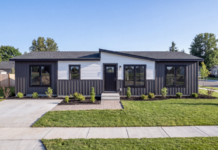
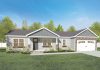
Held at the Kentucky Expo Center, the 2019 Louisville Show had its earliest sellout in memory. Organizers filled all model home and service/supply exhibitor space by fall.
This year’s show will provide attendees 48 model homes to tour, with representatives from each company to answer questions. The service/supply exhibitor area will have 120 vendors.
How Is The Louisville Show is Organized?
The Louisville Manufactured Housing Show is the industry kickoff each year. The show is put on by the Midwest Manufactured Housing Federation and produced by Show Ways Unlimited. This year, industry consultant Ken Corbin and MHVillage/Datacomp Co-President Darren Krolewski programmed the presentation and panel session. These will cover a variety of topics of interest, from finance, to sales, management and regulatory trends.
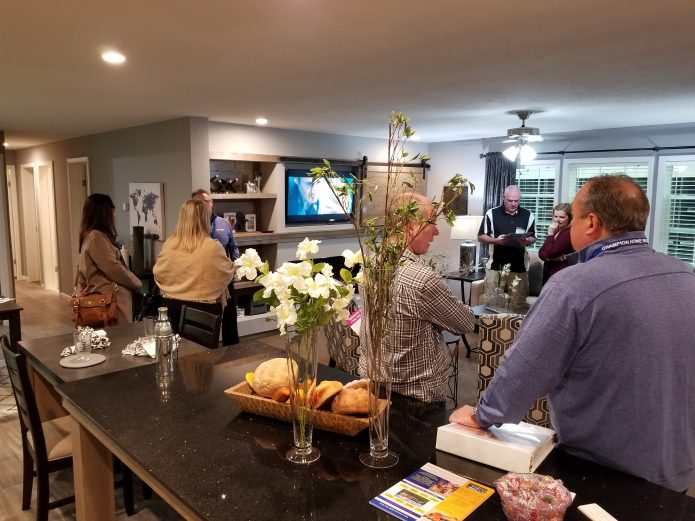
Sales representatives show a new Redman Home model at the 2018 Louisville Home Show.
Who Goes to The Louisville Show?
The Louisville Show attracts a national audience, with a concentration from Ohio, Illinois, Indiana, Kentucky and Michigan. The show is host to manufacturers, retailers and dealers, brokers, and all variety of service and supply professionals, from hardware to financial services. The midwest association directors also convene at The Louisville Show for an annual meeting, and other association directors attend as well.
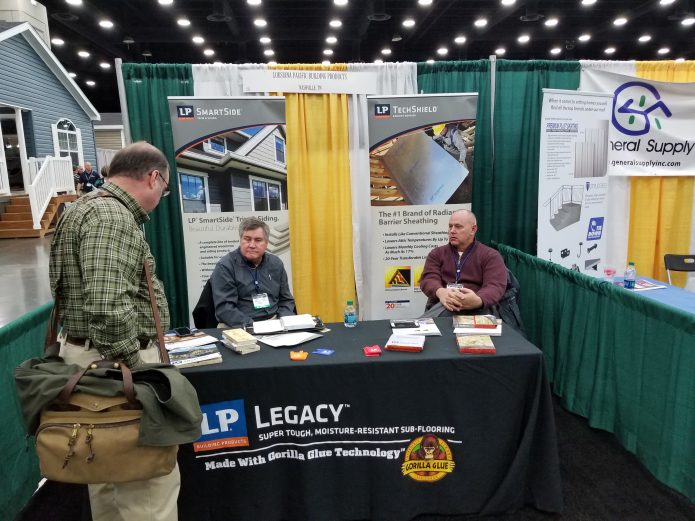
Louisiana Pacific shows its shield and siding products in the service/supply exhibitor area of the 2018 Louisville Manufactured Housing Show.
Where to Stay for The Show
Many people who attend The Louisville Show Stay at The Crowne Plaza, which is a quick shuttle ride from the airport. Also, the hotel location directly adjacent the Kentucky Expo Center is a primary benefit. The Crowne Plaza has complimentary 24-hour shuttle access to the airport, as well as free wi-fi service in every room. Louisville is a great city for entertaining clients, and has many other places to stay in close proximity to the Expo Center.
A Word From Louisville Show Chairman Byron Stroud
Byron Stroud, Show Chairman for The Louisville Show in 2019
“Louisville is a great central geographic location. The venue is conveniently located very near the international airport and across the street from ideal lodging. In addition, there’s free parking and a space that allows us to bring the entire show inside during the winter months. It’s a very comfortable environment.
“It is the industry’s longest running event, and it’s been there in good years and bad. Those bad years are a testament to some of the state associations stepping up to make sure it continues and is able to lend support for manufactured housing professionals when sales are rising and opportunity can be realized.”
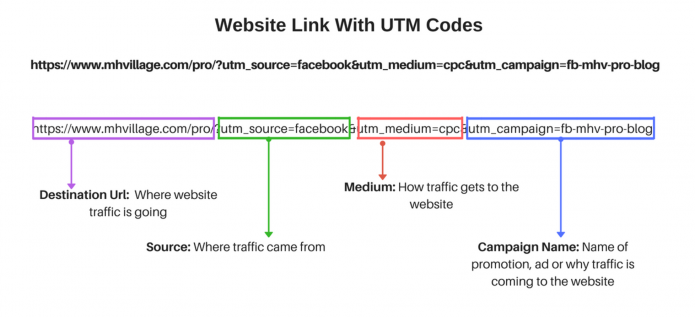
UTM stands for “urchin tracking module”. It is a short line of text you attach to a web site link that helps track individual user behavior and overall performance of your internet advertising campaigns through Google Analytics. The UTM code is made of destination url, source, medium and campaign name.
Why Use UTM Codes?
UTM Codes allow the user to gain specific insight on individual user habits and preferences.
UTM codes track visitors who click on the link and how they interact with the website.
This can result in extremely valuable insights about audience behavior.
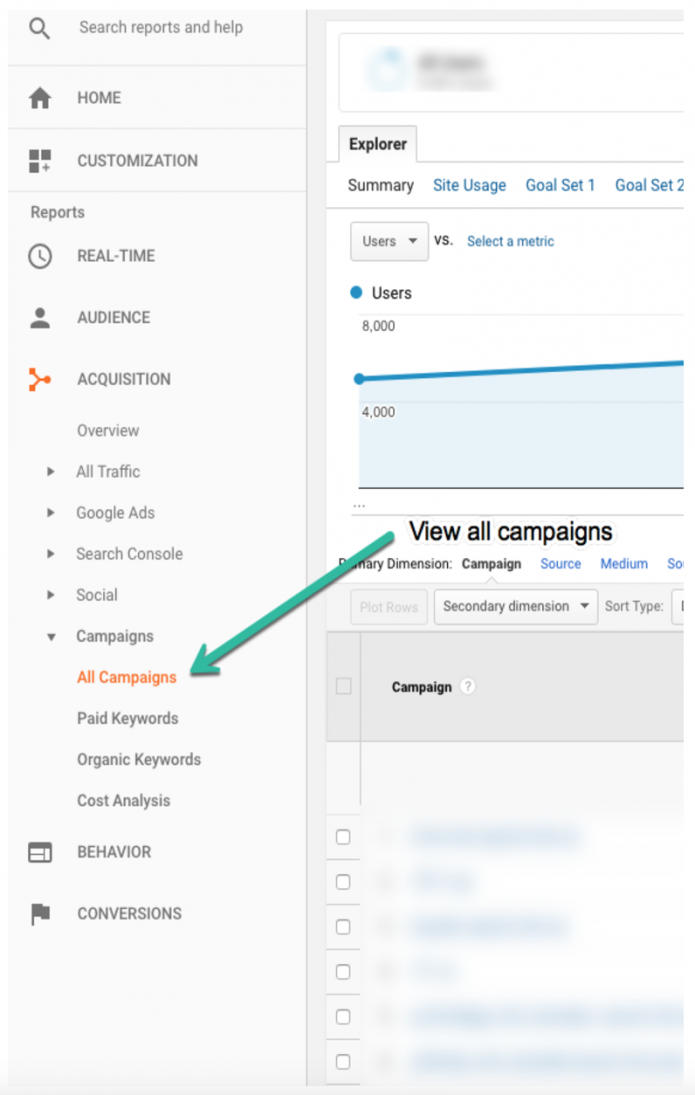
Once the UTM codes have been implemented and the campaign has run for a few days, review the results in Google Analytics under “Acquisition”, then “Campaigns”.
Within this section of Google Analytics, users can analyze the performance of their campaigns. In other words, it details where traffic originates and how you may be able to get more of it.
What advertising websites are driving traffic?
What email campaigns are generating leads and/or appointments?
How effective are the various re-marketing campaigns and associated landing pages?
Answers to these questions can help allocate revenue, optimize campaigns and understand user behavior.
What is In a UTM Code?
Destination URL: Where website traffic is going to
Source: Where traffic came from (MHVillage, Facebook, Twitter, LinkedIn…etc)
Medium: How the traffic gets to the website (pay-per-click, website, social…etc)
Campaign Name: Why the traffic is coming to the website (promotion name…etc)
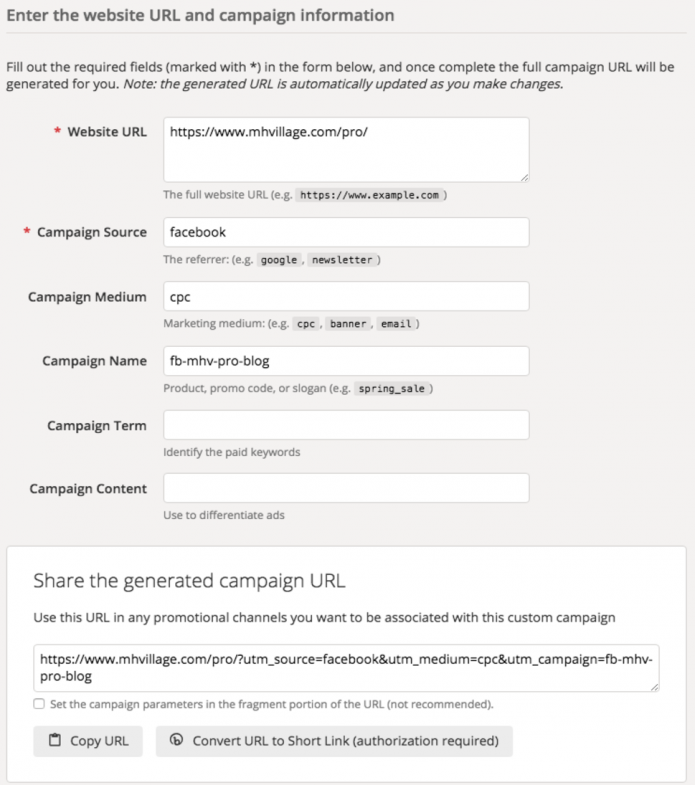
For example, the image below shows a website link with UTM codes that goes to the MHVillage professional blog, with visitors who came from a Facebook pay-per-click campaign named fb-mhv-pro-blog.
Creating a UTM Code
Fortunately, there is a UTM code generator to help append these codes to a url using Google’s URL builder. This tool breaks out the necessary elements into fields and then auto creates the UTM code.
When creating the campaign names for the UTM codes, there are a few best practices.
UTM Code Best Practices
Be Consistent
When creating a campaign name, medium and sources, it is a best practice to use all lowercase letters because UTM codes are case sensitive.
For example, if a campaign uses both “mhv-Facebook” and “mhv-facebook” as campaign names, Google Analytics will record this Facebook campaign name as two different campaigns. This could create reporting issues.
Create a naming convention system
Implementing a naming convention for campaign names can help with keeping UTM codes consistent.
For example, if one person creates a UTM code and enters the source/medium as “twitter/cpc”, but another person creates a UTM code and enters the source/medium as “twitter.com/cpc”, this will create two different campaigns in Google Analytics.
A naming convention would declare that all UTM codes for Twitter use source/medium “twitter/cpc”, instead of “twitter.com/cpc”.
Use hyphens or dashes
Google recommends using hyphens or dashes over underscores and spaces, because using spaces or underscores can cause problems when the Googlebot crawls the website.
Plus, it also makes it easier to read campaign names in Google Analytics.
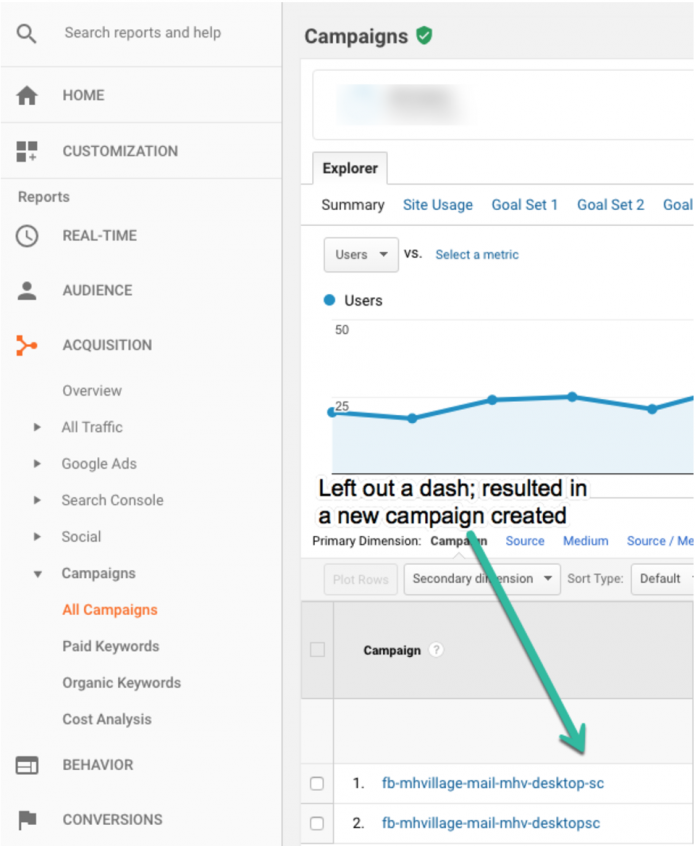
Again, being consistent is important. For example leaving out a dash can also create a new campaign.
Use a URL shortener
If the UTM code that was created makes the url too long or unappealing for users, there is an option to convert the link to a short link by using a url shortener. A url shortener is an online application, such as bitly, that converts a regular url into a condensed format.
For example, the UTM code website link, https://mhinsider.com/?utm_source=facebook&utm_medium=cpc&utm_campaign=fb-mhv-pro-blog, would become, .
Bitly has a great Chrome extension. After a login, click on the bitly icon. It will auto-generate a short link of the webpage that a user is on.
The use of UTM codes may involve a little more setup work for the marketing team. But they will pay off with improved insights about the results from your advertising campaigns, and hopefully allow you to help your customers make better decisions.
Sun Communities, Inc. Makes Strategic Investment in Ingenia Communities, a Leading Owner and Operator of Manufactured Housing and Recreational Vehicle Communities in Australia
Sun Communities, Inc. has announced a strategic investment in Ingenia Communities Group.
Ingenia is a leading owner, operator and developer of senior manufactured housing communities and holiday resorts in Australia. Sun communities also will involve itself in a development joint venture with the Australian company.
Sun is a real estate investment trust based in Michigan. It owns and has an interest in manufactured housing and RV communities nationwide and in the UK.
Sun Communities will invest approximately $54 million for a 9.9 percent ownership stake in Ingenia Communities. Additionally, the two will form a 50/50 joint venture to grow a manufactured housing community development program in Australia.
Ingenia has strong earnings growth in recent years. It has a large existing acquisition and development pipeline. Also, Ingenia has development the joint venture poised to capitalize on the positive trends.
A Sun Community. Photos courtesy of Sun Communities.
Ingenia Communities benefits from Sun Communities’…
Meaningful initial capital investment
Ongoing financial support through the joint venture
and the ability to leverage experience of the leading owner, operator and developer of manufactured housing and recreational vehicle communities
Australia has fragmented interests in both industries. Meanwhile, traditional housing, becomes increasingly expensive.
During the past 20 years, median home prices in key Australian capital cities have appreciated about 300 percent. Furthermore, there is a limited supply of high quality communities in Australia.
Industry fundamentals and Australian demographic trends provide long-term support for the sector’s growth prospects. The 55+ population may grow at twice the rate of the rest of the population. Therefore, Australian has a need for affordable senior housing.
Australian Market Primed for Growth Seen in U.S.
“We are extremely excited about investing in and alongside Ingenia and believe this venture provides a unique opportunity for Sun to strategically invest in the Australian MH and RV sector,” Sun Chairman and CEO Gary Shiffman said.
“Ingenia is a market leading operator, owner and developer of an attractive portfolio of communities across Australia. We have been actively monitoring the Australian market for some time given the sector’s similarly attractive attributes to the North American market,” he said. “The Australian MH and RV sector is early in its growth cycle, is primed for consolidation, benefits from strong demographic trends and has very favorable supply and demand dynamics.”
Sun Communities has spent considerable time with the Ingenia board of directors and management teams. As a result, Sun has found the business model and culture to be highly compatible with its own.
Shareholders will get an attractive opportunity to benefit from the growth potential of an emerging leader in the Australian sector and benefit from an opportunity for Sun to leverage its expertise to help accelerate that growth.
“We are pleased to be partnering with Ingenia’s strong and proven management team as they continue to grow their platform which has the largest development pipeline in Australia,” Shiffman added.
Ingenia Communities Welcomes Sun to Australia
Simon Owen, managing director and CEO of Ingenia Communities Group, said the partnership and venture bodes well for industry direction in Australia.
“Working with a leading operator who has a long history in the mature North American market and is aligned strategically and economically with our objectives will allow Ingenia to accelerate growth as we leverage our platform and pipeline,” Owen said.
Upon completion of the investment, Mr. Shiffman will join Ingenia’s board of directors. Ingenia will manage the development and operations of the communities in the joint venture.
About Ingenia Communities Ingenia Communities Group (ASX: INA) is a leading operator, owner and developer of a growing portfolio of lifestyle and tourism communities across key Australian urban and coastal markets. Ingenia has a diversified portfolio of 61 rental, lifestyle and holiday communities, comprised of over 7,000 income producing sites and a development pipeline of over 3,000 sites.
About Sun Communities
Sun Communities, Inc. is a REIT that, as of September 30, 2018, owned, operated, or had an interest in a portfolio of 370 communities comprising over 127,000 developed sites in 31 states and Ontario, Canada. For more information about Sun Communities, Inc., please visit www.suncommunities.com.
Joe Stegmayer during a presentation in Indianapolis in September 2018.
Today, Cavco Industries, Inc. announced executive leadership changes. The Company’s Board of Directors has appointed Daniel Urness as President and Acting Chief Executive Officer, effective immediately. In his new role, Mr. Urness will be responsible for day-to-day leadership of the Company. The Company also announced that Joshua Barsetti, the Company’s Chief Accounting Officer, will assume the duties of principal financial officer for purposes of financial filings and certifications.
William Boor, Chairman of the Company’s Audit Committee, a member of the Company’s Compensation Committee and an independent member of the Board since July 2008, will assume the duties of non-executive Chairman of the Board.
Daniel Urness has worked for and on behalf of the Company for nearly 20 years in numerous leadership positions and has long been part of the Company’s Chief Executive Officer succession plan. Most recently, Mr. Urness served as Cavco’s Executive Vice President, Chief Financial Officer and Treasurer until August 2018, when he resigned from that position to work more closely with the Company’s home building production facilities to gain additional experience as part of the Company’s succession planning efforts. As Executive Vice President, Mr. Urness played a key role in advancing Cavco’s operational initiatives, which established the foundation for the Company’s successes.
“The Board fully supports Cavco’s current strategy and is confident that Dan Urness is the right person to build on our Company’s success,” commented Mr. Boor. “We are fortunate to have Dan return to our executive leadership team as our new President and Acting Chief Executive Officer,” he added.
Joseph Stegmayer, former Chairman, President and Chief Executive Officer, commented that “Dan Urness is a great choice to lead Cavco. He is a strong leader, with the ability to connect with customers, partners and teammates. His institutional knowledge of our Company and significant industry experience will ensure a smooth leadership transition. I look forward to continuing to serve the Company in my new role.”
Stegmayer Steps Down
The Company also announced that it had received a subpoena from the Securities and Exchange Commission’s Division of Enforcement (“SEC”) requesting certain documents relating to, among other items, trading of the stock of another public company. Subsequent to sending the Company a subpoena, the SEC sent a subpoena for documents and testimony to Joseph Stegmayer, regarding similar issues. The Company has initiated an independent investigation and intends to cooperate fully with the SEC’s investigation. Please see Part II, Item 1, Legal Proceedings section of the Company’s quarterly report on Form 10-Q for the period ended September 29, 2018, filed with the Securities and Exchange Commission contemporaneously with the issuance of this press release, for additional information regarding this matter.
Mr. Stegmayer stepped down from his position as Chairman, President and Chief Executive Officer of the Company after an internal investigation, conducted by independent legal counsel, identified certain violations of Company policy related to securities trading activities conducted by Mr. Stegmayer. The Board’s decision to transition Mr. Stegmayer to a non-executive role allows the Company to retain his deep industry and operational experience.
“The Board took actions that it believes to be in the best interest of the Company and its stakeholders,” commented Mr. Boor. “Cavco remains a strong Company and is well positioned for the future under Dan’s leadership.”
Daniel Urness, President and Acting Chief Executive Officer
Mr. Urness, 50, was previously Cavco’s Executive Vice President, Chief Financial Officer and Treasurer from April 2015 until August 2018. Previously, Mr. Urness served as Cavco’s Vice President, Chief Financial Officer and Treasurer from January 2006 to April 2015 and as a director and/or officer of certain of Cavco’s major subsidiaries, including Palm Harbor Homes, Inc., Fleetwood Homes, Inc., CountryPlace Acceptance Corp. and Standard Casualty Company. Mr. Urness was also Cavco’s Interim Chief Financial Officer from August 2005 to January 2006, Corporate Controller from May 2005 to August 2005, financial consultant to the Company from June 2002 to May 2005 and Controller from May 1999 to June 2002. Prior to joining Cavco, Mr. Urness served as manager and staff at Deloitte & Touche LLP for approximately six years.
Joshua Barsetti, Principal Financial Officer
Mr. Barsetti, 38, has served as Cavco’s Chief Accounting Officer since August 31, 2018. Previously, Mr. Barsetti served as the Company’s Senior Director of Financial Administration from August 2017 to August 2018 and as the Company’s Director of Internal Audit from October 2014 to August 2017. Prior to joining Cavco, he served as the Director of Financial Reporting at Universal Technical Institute (“UTI”) from November 2013 to October 2014 and previously served as UTI’s Audit Manager and Senior Audit Manager from May 2011 to November 2013. He held various internal audit positions at Viad Corp. from September 2005 to May 2011, most recently as an Internal Audit Manager. Mr. Barsetti holds a Bachelor’s degree in Accounting from Northern Arizona University and is a registered Certified Public Accountant.
William Boor, Chairman of the Board
Mr. Boor is Chief Executive Officer of Great Lakes Brewing Company, a large craft brewery in Cleveland, Ohio, a position he has held since September 2015. From December 2014 to September 2015, Mr. Boor was principal of MIB Holding Co LLC, a mining development company. From 2007 to 2014, Mr. Boor served in various executive positions with Cliffs Natural Resources, Inc. (“Cliffs”), most recently serving as Executive Vice President – Corporate Development and Chief Strategy/Risk Officer and President-Ferroalloys. Among other roles prior to Cliffs, Mr. Boor held the position of Vice President, Corporate Development at Centex Corporation. During that tenure, Cavco was a subsidiary of Centex, and Mr. Boor worked on the Cavco strategy and its eventual spin-off in 2003. Mr. Boor earned a Master of Business Administration degree from Harvard Business School and is a Chartered Financial Analyst.
About Cavco Industries, Inc.
Cavco Industries, Inc., headquartered in Phoenix, Arizona, designs and produces factory-built housing products primarily distributed through a network of independent and Company-owned retailers. The Company is one of the largest producers of manufactured homes in the United States, based on reported wholesale shipments, marketed under a variety of brand names including Cavco Homes, Fleetwood Homes, Palm Harbor Homes, Fairmont Homes, Friendship Homes, Chariot Eagle and Lexington Homes.
The Company is also a leading producer of park model RVs, vacation cabins, and systems-built commercial structures, as well as modular homes built primarily under the Nationwide Homes brand. Cavco’s mortgage subsidiary, CountryPlace Mortgage, is an approved Fannie Mae and Freddie Mac seller/servicer, a Ginnie Mae mortgage-backed securities issuer that offers conforming mortgages, non-conforming mortgages and home-only loans to purchasers of factory-built homes. Our insurance subsidiary, Standard Casualty, provides property and casualty insurance to owners of manufactured homes.
November 2018 JLT Manufactured Home Market Reports have info on 297 communitiesfrom 10 major markets
Datacomp, publisher of JLT Market Reports and the nation’s #1 provider of manufactured housing industry market data, announces the publication of its November 2018 JLT Manufactured Home Market Reports for 10 markets in Idaho, Oregon, Minnesota and Washington.
Recognized as the industry standard for manufactured home community market analysis for more than 20 years, JLT Market Reports provide detailed research and information on communities located in more than 160 major housing markets throughout the United States. This includes the latest rent trends and statistics, marketing programs and a variety of other useful management insights.
Datacomp’s manufactured housing data published in the November 2018 JLT Manufactured Home Market Reports includes information on 297 “All ages” and “55+” manufactured home communities located in 10 major markets in the six states. Altogether, the reports include data representations for 51,040 homesites.
The November 2018 JLT Manufactured Home Market Reports includes a new Boise, Idaho, market report. The Boise market report adds 19 previously unreported communities with a total of 3,522 homesites.
“Industry rents and occupancy have demonstrated sustained growth in all markets. We see a slight dip in occupancy among retirement communities in one Oregon market,” Datacomp Co-President Darren Krolewski said. “The November reports provide a valuable snapshot of the performance among manufactured home communities in portions. In addition, the inclusion of a new Boise report maintains our intention to expand our geographic footprint toward access to useful industry data nationwide.”
Detailed Information You Receive in the JLT Market Reports
Established reports show trends in each market, with a comparison of November 2018 rents and occupancy rates to November 2017. In addition, there is a historical recap of rents and occupancy from 1996 to the present date in most markets.
The November 2018 JLT Manufactured Home Market Reports for 10 markets in Idaho, Oregon, Minnesota and Washington are available for purchase and immediate download online at the Datacomp JLT Market Report, or they may be ordered by phone in electronic or printed editions at (800) 588-5426.
Each fully updated report for mobile home communities is a comprehensive look at investment grade properties within a market. They enable owners and managers, lenders, appraisers and other industry professionals to effectively benchmark communities and make informed decisions.
CFPB Acting Director Mick Mulvaney speaks during the MHI Summer Fly-In in Washington, D.C.
The Manufactured Housing Institute Penned a Letter to the Consumer Financial Protection Bureau Asking to See Change that Supports Financing for Manufactured Housing
Dr. Lesli Gooch, MHI Chief Lobbyist
The Manufactured Housing Institute (MHI) hosted Mick Mulvaney, acting director of the Consumer Financial Protection Bureau, at the Legislative Fly-In in Washington, D.C., this summer.
Acting Director Mulvaney expressed a willingness to work with MHI to address regulations that hinder financing for manufactured housing. Following the Fly-In, MHI sent a letter to the bureau in response to Mulvaney’s comments.
At Mulvaney’s recommendation, MHI’s letter stressed the importance of prompt implementation of Section 107 of the “Economic Growth, Regulatory Relief, and Consumer Protection Act” (Pub. L. 115-174 § 107), regarding the definition of loan originator and the need for adjustments to the Home Ownership Equity and Protection Act’s (HOEPA) “high-cost mortgage” triggers.
MHI Asks For ‘No-Action Letter’
MHI asked the bureau to issue a “No-Action Letter” confirming that it will not pursue administrative action against any retailer or seller while it revises its regulations to be consistent with the new law. The recently passed definition clarifies that manufactured housing retailers and sellers are no longer considered mortgage originators simply because they provide customers with some assistance during the mortgage loan process.
Regulations need to be changed to be consistent with the law. And, such changes will take time because they have to go through a formal rule-making process. A “No-Action Letter” would provide cover for retailers and sellers who want to immediately take advantage of the flexibilities offered by the new law.
Also, MHI requested that the bureau make immediate adjustments to the “high-cost” thresholds for smaller-dollar manufactured home loans under HOEPA, so these loans are not unfairly swept under this designation simply due to their smaller size.
MHI said it will continue to pursue these and other legislative and regulatory changes that support improved availability of financing for consumers interested in purchasing a manufactured home.
The Rio Grande adding rug, pillows and Fall accessories. Credit Lisa Stewart Photography.
Design for the Season to Sell Manufactured Homes
It’s magic. Just like when the magician moves scarves through the air, moving and adding seasonal decor to your homes and clubhouses can make sales reappear. Sales can leap if you design for the season.
This is true even after a home has been in inventory for longer than you had wished.
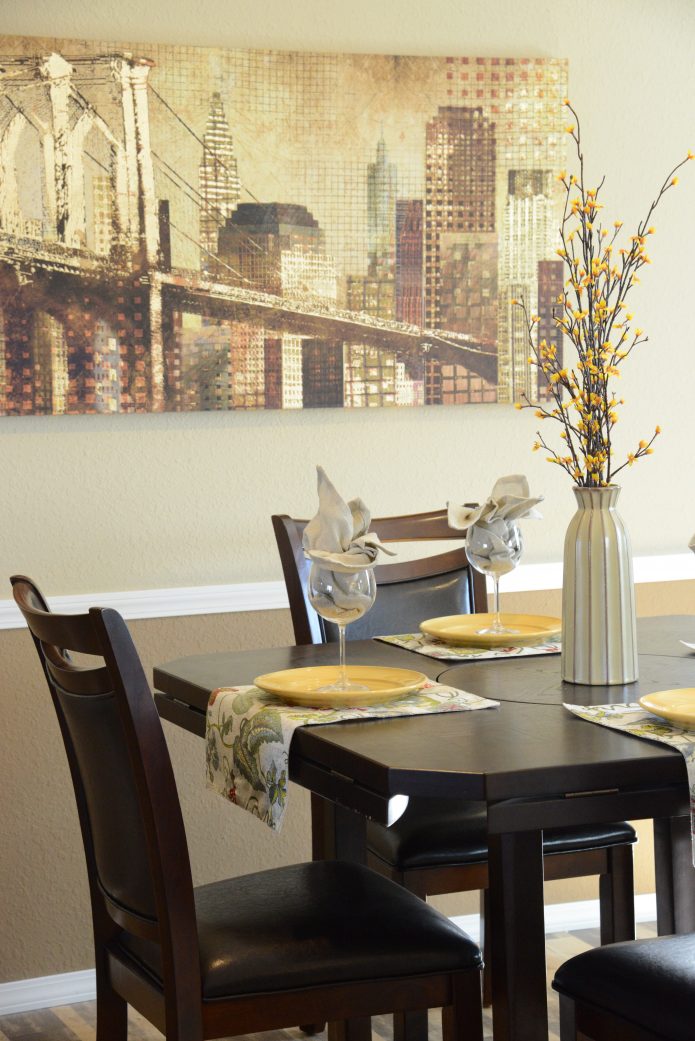
The dining area with larger artwork, table set, and ready for Spring image. Lisa Stewart Photography.
Clayton Homes of Desoto, Texas, asked The Lifestylist Brands to update its existing homes. They asked that we use as much of the existing decor as possible.
Yes, this seems like a tall order, but it’s something that good interior designers and merchandisers can make work each day.
Rearranging furnishings and decor expends a great deal of energy. However, an earlier, important step in the process is to rid the home of dated, damaged furniture and decor. To keep that old stuff only makes the home look and feel used. Rather, we want to show the beautiful new home it is!
Work Only With the Best Options You Have
It’s so easy when you are busy selling homes to forget what happened to the leg of a sofa, or for upholstery to get stained or faded and remain on the floor. And many times, it’s difficult to buy something new. So what do you do?
Our goal at The Lifestylist is to get customers excited about moving into a new home, a place no one has ever lived, a place where the owner can start a new life. It’s important that the home looks as fresh as your customers’ dreams.
Customers look for bright, open floor plans. So now more than ever, it’s important that curtains are pulled open, blinds are up and windows are washed.
We want to fill your home with natural light!
Every lamp in the home is turned on in the months when we are short on daylight. And every lamp and fixture should use an LED bulb. Energy-efficient bulbs cost a little more off the shelf, but they last for decades. And you can take them from house to house as places sell.
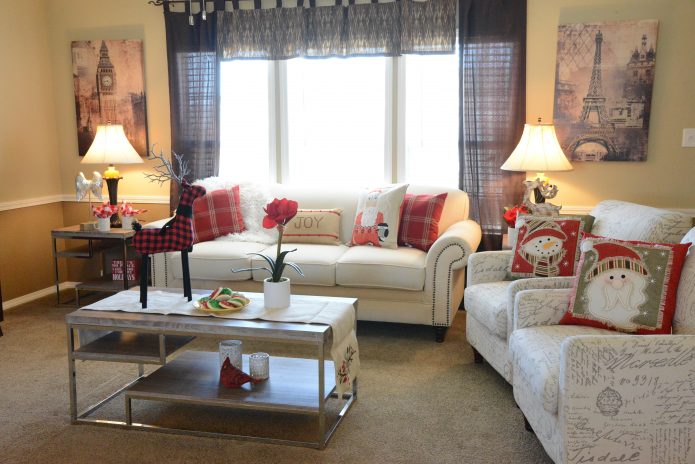
Christmas-themed pillow covers are easy to change out after the holidays. Photo credit Lisa Stewart Photography.
Re-staging for the Season
In the process of re-staging the Clayton homes, we decided to take a little extra time to stage a few homes for the holidays. We did a two-day professional photo shoot for images that could be used on social media, in advertising and for editorial opportunities.
Plan photos that will be useful so you can have them ready upon request. For Instagram, you will need a square shot, yet advertising or your website might need more overall room shots. On other social media, where images are small by comparison, it’s better to have a focal point in a room that is easy to view.
We decided to do staging with the Rio Grande model for Fall, Halloween and Thanksgiving. And we used the Drake for Winter and Christmas. This gave us plenty of opportunity to design for the season with different looks and styles that could appeal to a range of buyers. And it worked well, because the models come at two distinctly different price points.
Area Rugs and Pillows Help to Design for the Season
For the Rio Grande, the first thing we did was add color and texture to the main room. Area rugs are an easy and inexpensive way to add color, and with so many of our homes having rooms with wood or tile flooring, it’s good to achieve a warmer and more inviting look.
Area rugs also offer an easy way to seasonalize your home — use a rug with darker, warmer colors in the cooler months, and change out to a sisal or lighter green colored rug in the summer.
Pillows provide yet another easy and inexpensive way to change the look of your homes. It’s fun to have cases sewn that allow you to change out looks and easily store away out-of-season designs.
Our first priority always is to sell homes, not decor kits. So we want to make sure that the staging helps accent the important attributes of the home, rather than being the focal point. In the Rio Grande, we decluttered the open shelves above the kitchen cabinets and took everything but a few focal pieces off the countertops and island.
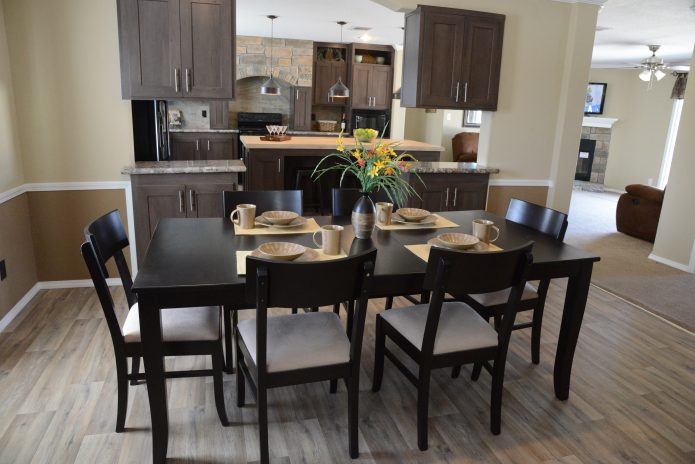
The Fall themed tabletop adds personality to the entire home Image. Credit Lisa Stewart Photography.
Develop a Theme that Helps Design for the Season
Pick a theme that is consistent throughout the home for a clearly well thought-out decor. The last thing you want is the impression that you’re designing randomly with items you found in a storage closet.
We like to pick not more than three colors to focus on, so the palette doesn’t get too busy or steal attention from the home. For the autumn theme, we went with those lovely fall colors, foliage and foxes. During Halloween time, we found cute vintage accessories and key orange accents in each home. And for Thanksgiving, we went with a theme of giving thanks and reminding people how appreciative we are of their business.
Most importantly, notice that a lot of items were used in all three looks. We simply changed out the main themed items.
How to Work with a Centerpiece
Don’t forget tabletops when you want to seasonalize your homes. It’s hard to believe how many models overlook this very important part of the home: plates, napkins, and placemats add texture and color to a room that might only have wood floors, wood furniture and painted walls.
The Drake model was a perfect example of a home that was full of hand-me-down furniture and decor items that not only hurt the look of the home, but made it feel dark.
We pulled out some cream upholstery from another home, as well as chrome cocktail and end tables. The results were amazing. This change helped the home to sell quickly, and orders were placed for custom homes as well.
Using large artwork also helped this home feel upscale and updated … and this was wall art stored away in a closet that came to us at no cost.
Winter Grays for a more contemporary look. Credit Lisa Stewart Photography.
Try a Vintage Look in Your Next Redesign
For Christmas, we did a vintage RV/mobile home theme that was a huge hit.
Did you know that vintage-styled mobile homes are trending? You’ll be seeing a lot of this during the 2018 holiday season. Nearly every recent furniture market we tour notes this practice.
For the winter wonderland, we used a very cool color palette of grey and cream, which had a rich and contemporary feel.
Just like every retail store you visit, we need to keep our homes looking updated and providing customers a reason to come back. By using a design for the season and taking the time and investment to photograph your hard work, you’ll keep traffic up and sell more homes.
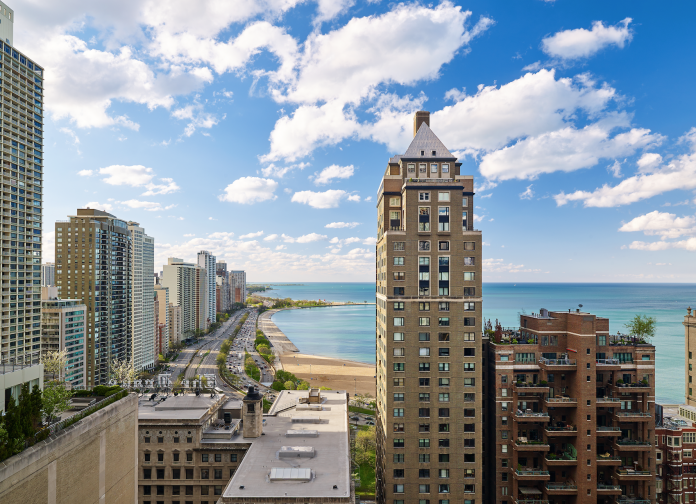
The NCC Fall Leadership Forum takes place each November at the Westin Michigan Avenue in Chicago. Photo courtesy of Westin Michigan Avenue.
NCC Fall Leadership Forum Open Registration Begins Wednesday at 4 p.m., with Opening Reception that Night and a Full Schedule of Activities Thursday through Friday Morning
The National Communities Council, a division of the Manufactured Housing Institute, hosts community operators, service providers, brokers and lenders Wednesday through Friday in Chicago for its 6th Annual NCC Fall Leadership Forum.
Summary of Activities for NCC Fall Leadership Forum
Thursday, Nov. 8
9 – 10:15 a.m.: Trends for Manufactured Home Communities with Dr. Henry H. Fishkind. 10:15 – 11 a.m.: Legislative & Regulatory Update with Dr. Lesli Gooch of MHI. 11:15 – 12:15 p.m.: The Crisis: Managing Residents, Regulations and the Media in 2019 and Beyond. 12:15 – 1:15 p.m.: Networking Lunch sponsored by UMH Properties. 1:30 – 2:30 p.m.: State of the Market – Community Financing Trends in 2018 & Beyond with an industry panel. 2:45 – 3:30 p.m: Determinants of Site Rent: An Economist’s Analysis with Charles E. Becker, Ph.D., Duke University. 3:30 – 4:30 p.m.: Today’s Chattel Lending Environment with a moderator and industry panel.
Friday, Nov. 9
9 – 10 a.m.: The Future of Social Media for Manufactured Housing with Crystal Washington, CSP, Technology Strategist & Certified Futurist. 10 – 10:45 a.m.: Selling More Homes & Marketing Your Community with Lisa Lane, Four Leaf Properties. 11:00 a.m. – Noon: Resident Relations: The Role of Customer Service with an industry panel.
Photo courtesy of Westin Michigan Avenue.
MHI Designed NCC Fall Leadership Forum with Executives in Mind
Event organizers said the forum becomes larger each year, generating networking opportunities and resulting in more business deals.
NCC Fall Leadership Forum offers a strategic look at high-level issues facing the community segment of the manufactured housing industry, with participants from across the country
The event is designed to allow executive professionals to engage and connect with their peers. All attendees benefit from being presented with insight on the latest industry trends and activities. Furthermore, the event will capitalize on what has been a strong year in the manufactured housing industry, with the prospect of a bright 2019 ahead.
The NCC Fall Leadership Forum looks to minimize time out of the office and maximize education and interaction with peers and potential clients.
Thursday’s full day of programming will open with breakfast. That night features an evening reception at 360 CHICAGO in the John Hancock building.
Chicago-based REIT Equity Lifestyle Properties Expands Three Communities in Arizona, Texas
Equity LifeStyle Properties is expanding in interesting ways, bringing more manufactured homes to RV properties in a fashion that creates a destination lifecycle for customers.
The company has more than 400 properties with nearly 154,000 sites across the country. With that, Equity LifeStyles owns one of the nation’s largest networks of real estate.
While ELS has a near-equal mix of manufactured housing communities and RV resorts/campgrounds, it is currently leading the trend of blending the two models into a single community.
One of the home styles available at ELS’ Lake Conroe property.
Ron Bunce, senior vice president for 150 ELS properties in the company’s western markets, oversees several blended communities. Included in his territory are three properties in Texas and Arizona currently undergoing this type of mixed property expansion.
“What we continue to see from our RV customer is an interest in staying connected to their destination property and the relationships they have built there,” Bunce said. “Traveling by RV and managing multiple destinations can become challenging, leading many to prefer the conveniences of a manufactured home in the resort they previously enjoyed in their RV.”
Chicago-based Equity LifeStyle Properties became a public company in 1993. At the time, it had a portfolio of 41 manufactured home communities. For many years, the company’s core business consisted of retirement communities in Sunbelt destinations. Yet, through extensive property acquisitions during the recent 15 years, ELS entered the RV business, a property type that continues to be a valuable component of the company’s operations.
Fortunately, the addition of RV appears a natural fit for the company.
“The business models of MH communities and RV communities are very similar,” Bunce said. “We saw it as a logical combination of property types because they are operationally similar, as is our customer base among the communities.”
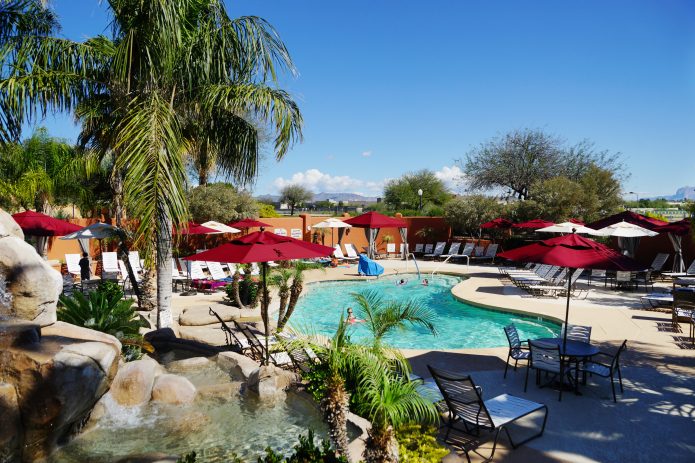
The pool at Monte Vista in Mesa, Ariz.
The Expanding Properties
ELS purchased a pair of Mesa, Ariz., RV resorts in 2004 from separate owners. Both properties are in the midst of expansion projects, bringing a sizable MH component to each of the resorts.
ViewPoint RV and Golf Resort has a mix of more than 2,000 sites that hold RV, park models and manufactured homes.
“Our expansion project at ViewPoint has added 235 manufactured home sites so far, with another 200 planned,” Bunce said. “It’s a unique community in that it features 27 holes of golf. We have an 18-hole championship golf course, with an additional 9-hole executive par-3 course.”
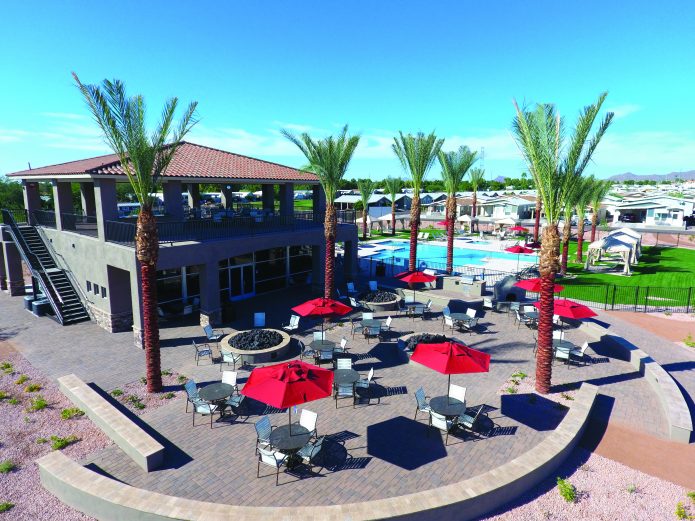
ViewPoint also offers the resort-style amenities you might expect: swimming pools, tennis club and softball fields.
“We have softball players ranging in age from 55 to 90, including some in their 80s who throw a mean fastball. It is truly something impressive,” Bunce said.
“There are hundreds of people in the tennis club, and we have great pickle ball courts and a fitness center,” he said. “There are 50 different club and hobbyist groups at ViewPoint. That’s why our customers either come back year after year or decide to stay for good. They want to socialize, have fun and be creative.”
Monte Vista Village Resort
The other ELS expansion property in Mesa, Ariz., is Monte Vista Village Resort. It is a community with nearly 950 sites, including 115 manufactured housing expansion sites.
“Our target customer is the retiree or Baby Boomer group,” Bunce said. “And we found that a 1,300-square-foot, 2- or 3-bedroom home appeals to that buyer. Many will spend the winter months with us, and some will decide to stay year round.
“Traditionally, our customers have been in a time in their lives when they are looking to sell their home, often in a northern part of the country. They visit our resort and find the house, community atmosphere, social engagement and, of course, the weather they’re looking for here,” he added. “Increasingly, we’re now also seeing people who already live in the Phoenix area coming to us for those same reasons.”
The community shares common space and amenity packages similar to ViewPoint. However, rather than golf courses, it offers lawn bowling, billiards, horseshoe pits and extensive crafting facilities. This includes dedicated rooms for lapidary arts, silversmithing, woodworking and pottery.
A Lakeside Village North of Houston
A view from the community at Conroe Lake in Texas.
ELS purchased the Thousand Trails network of campgrounds in 2008. Among the more than 80 properties in the portfolio was Thousand Trails Lake Conroe, a lakeside campground about an hour north of Houston. Since then the company completed an expansion project for the property. It incorporates additional RV sites, as well as 50 new manufactured home sites.
“Our manufactured homes in the property have been very popular,” Bunce said of Thousand Trails Lake Conroe. “We sold out the first 50 MH sites and we just started a project adding another 67 RV sites.”
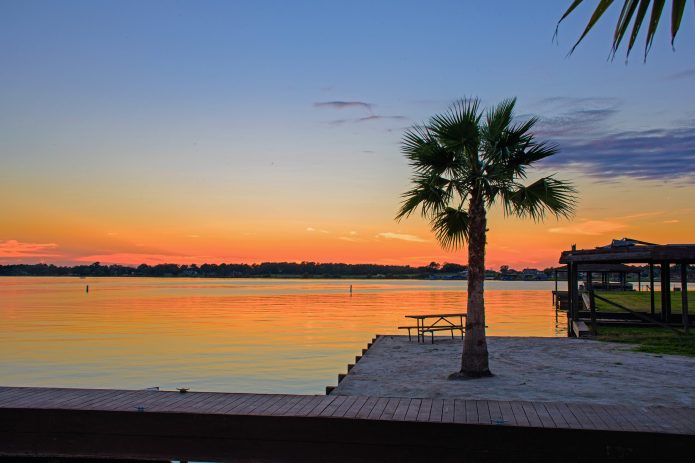
Additionally, the property features lake access that draws many visitors. Residents bring small watercraft to enjoy on the popular 21,000-acre swimming, fishing and boating lake north of Houston.
“Having access to the lake is very important to our customers,” he said. “We offer a number of boat slips for residents and guests, as well as a boat launch on the property. There’s also a covered outdoor social area, an indoor lodge, a large swimming pool with cabanas, tennis courts, a fitness center and dog park.”
Equity LifeStyle Properties purchases homes from many manufacturers. However, its recent western expansion projects have resulted in a focus on Cavco products for both manufactured homes and park models.
ViewPoint RV and Golf Resort in Mesa, Ariz.
The Future of Growth at Equity LifeStyle Properties
Acquisitions also contribute to portfolio growth at ELS. Through the first seven months of this year, the company acquired four properties in Florida, adding nearly 1,900 sites to the portfolio. Of these, three were manufactured housing communities.
The other key element to the ELS growth and investment strategy is development.
Expansion properties under consideration are evaluated for…
Market conditions
Demographic trends
Zoning and entitlements
and infrastructure requirements
In all cases, ELS seems intent on making additions and changes that its customers find favorable. Bunce said the company is able to gauge interest from website activity and social media, but also heavily weighs customer sentiment and satisfaction through one-on-one conversations, meetings with homeowners’ associations and responses to customer satisfaction surveys.
“We have a lot of different ways to measure and ensure we’re responsive to our customers,” Bunce said.
Among those measurements is likely the company’s solid history of occupancy growth. Occupancy in ELS manufactured home communities sits at nearly 95 percent, and the company has had 35 consecutive quarters of occupancy increases across the portfolio.
“We work hard to ensure we’re providing the lifestyle offerings our customers are looking for,” Bunce said.
Favorable Trends for Equity LifeStyle Properties
The kitchen and living area of a home in the Lake Conroe property.
Equity LifeStyle Properties has positioned well to take advantage of demographic trends during the next several years. Approximately 70 percent of its properties cater to Baby Boomers. Ten thousand Boomers will turn 65 each day for the next 12 years, according to the Pew Research Center.
Manufactured home shipments are up 50 percent in five years, and recently achieved an 11-year single month sales peak. This is an industry-wide measure of success mirrored by trends with ELS properties.
“We continue to see a strong home resale market, which is a key indicator of demand for the homes in our communities,” Bunce said.
In addition, the characteristics of the RV side of the business also are positive. ELS numbers show there are about 9 million RVers in the country and about 1.5 million RV sites. Furthermore, industry trends such as the growing popularity of peer-to-peer RV rentals are positively impacting the amount of time RVers spend in those campgrounds.
“Meanwhile, our hybrid RV and MH communities are positioned to attract customers in all segments of the RV-to-MH lifecycle. From the weekend camper to the snowbird to the full timer… and, in many cases, the former RVer who prefers to purchase a manufactured home in their favorite resort,” he said.
With its very first property purchased in 1969, ELS will celebrate its 50th anniversary next year.
“We’re very proud of our history of providing quality communities and RV resorts for our customers,” Bunce said. “We have a lot to celebrate.”
Michigan Manufactured Housing Association presents awards to 6 exceptional members
Industry Members Recognized at Annual Conference in Novi
The Michigan Manufactured Housing Association (MMHA) presented its 2018 Member Awards on Oct. 11 at its annual conference at the Suburban Collection Showplace in Novi, Mich. The awards were presented by MMHA Board President Richard Winkelman:
Best Model Home Staging
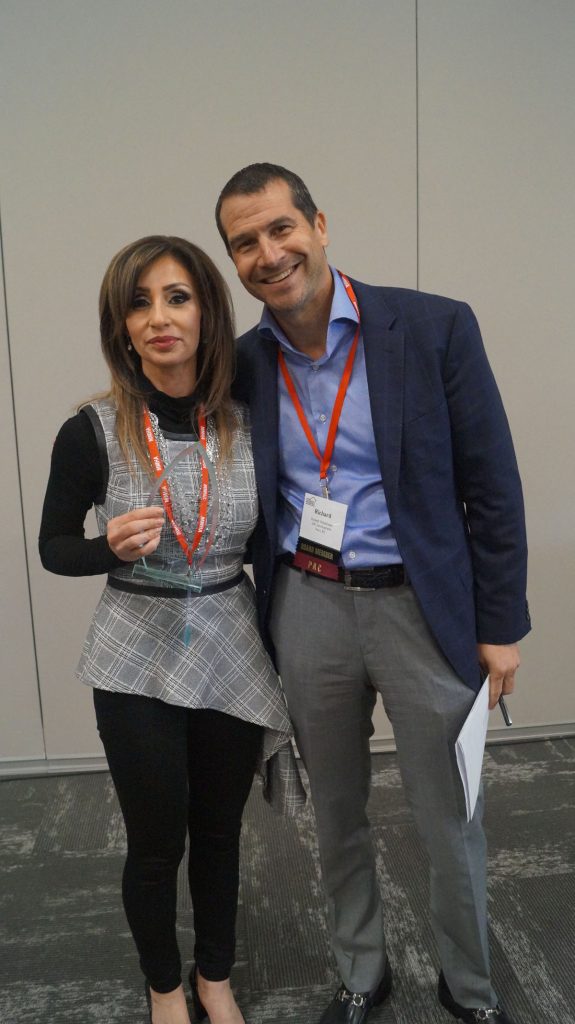
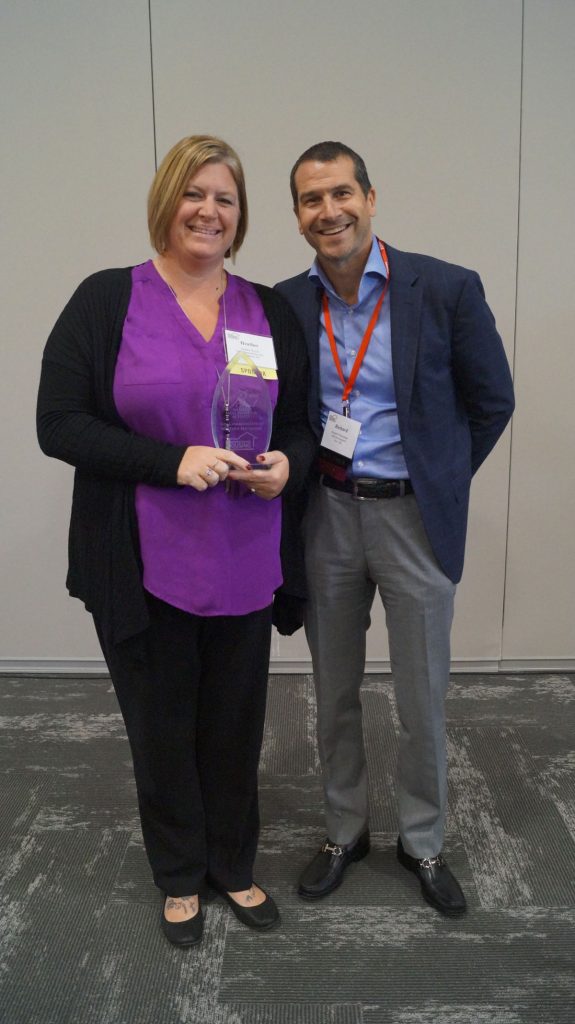
The Best Model Home Staging award was given to HomeFirst/Brookside. HomeFirst/Brookside’s entry showcased one of its brand-new model homes that is contemporary, trendy and truly comparable to a stick-built home. Danya Mallad accepted the award.
Danya Mallad from HomeFirst/Brookside accepts the Best Model Home Staging award presented by MMHA Board President Richard Winkelman
Best Manufactured Home Community Event or Activity
The award for Best Community Event or Activity went to Highland Greens and M. Shapiro Management.
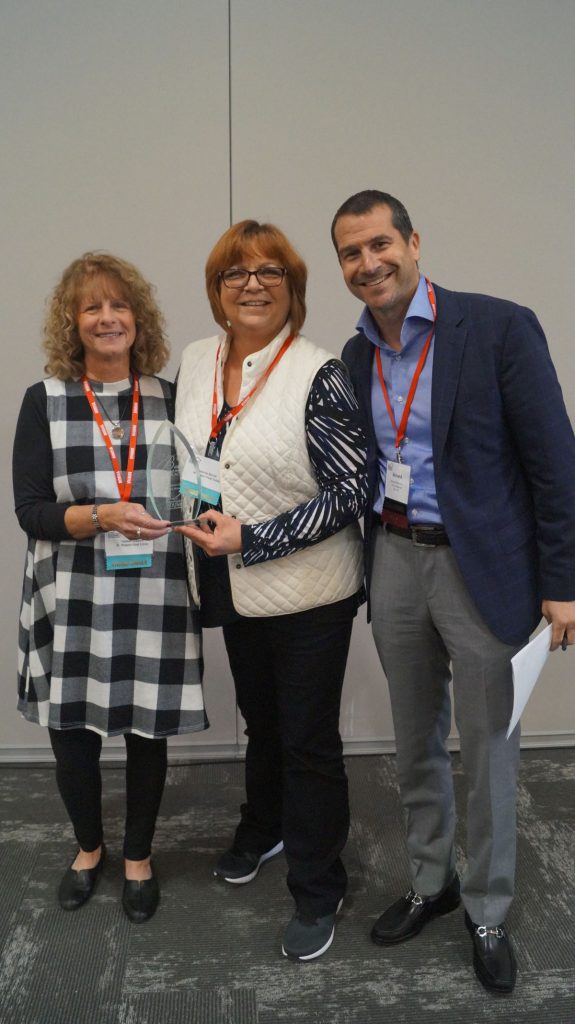
Highland Greens organized a “back to school” raffle for all elementary-school-aged children within the community. They managed to make every child who entered a winner. Over 50 backpacks were given away, filled with school supplies. The award was presented to Debbie Robbins and Jeannie Barrett.
Debbie Robbins and Jeannie Barrett accept the award for Best Community Event or Activity.
Best Member Sales Event or Activity
Sun Communities of Western Michigan was awarded Best Member Sales Event or Activity. Sun Communities held open house events at six different communities in Western Michigan and promoted them using digital marketing. The result was over 9,000 clicks to their landing page, hundreds of in-person community visits, and multiple home sales. Heather Rector accepted the award.
Sun Communities of Western Michigan was awarded Best Member Sales Event or Activity. Heather Rector accepted the award.
Best MMHA Member Website
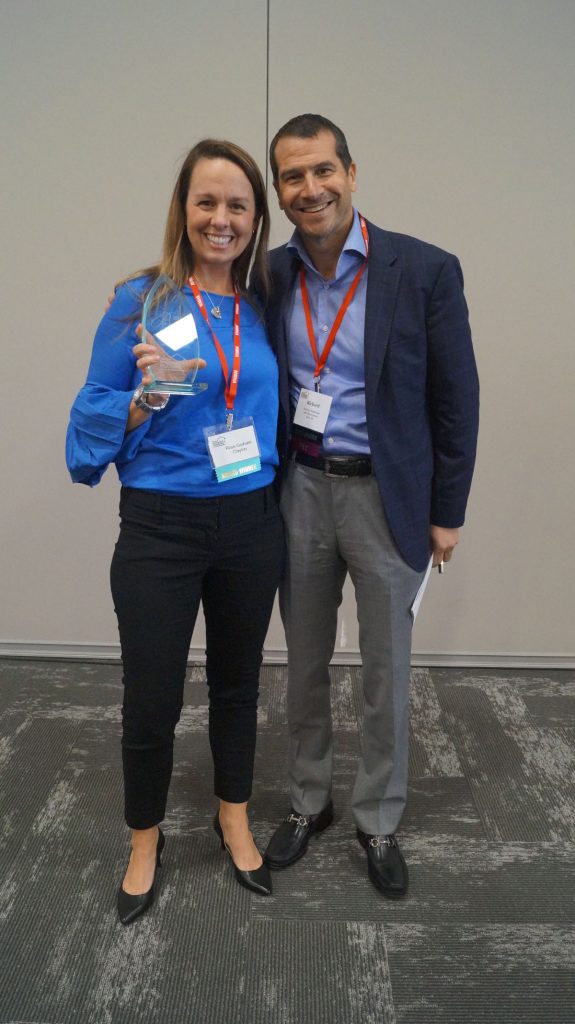
Best Member Website award went to Preferred Homes. The new website for Preferred Homes is www.preferredmobilehomes.com, and is an easy-to-navigate site filled with beautiful home photos, floor plans, homeowner testimonials and financing information. Rose Graham accepted the award.
Rose Graham accepted the Best Member Website award, which went to Preferred Homes.
Exceptional Customer Service Award
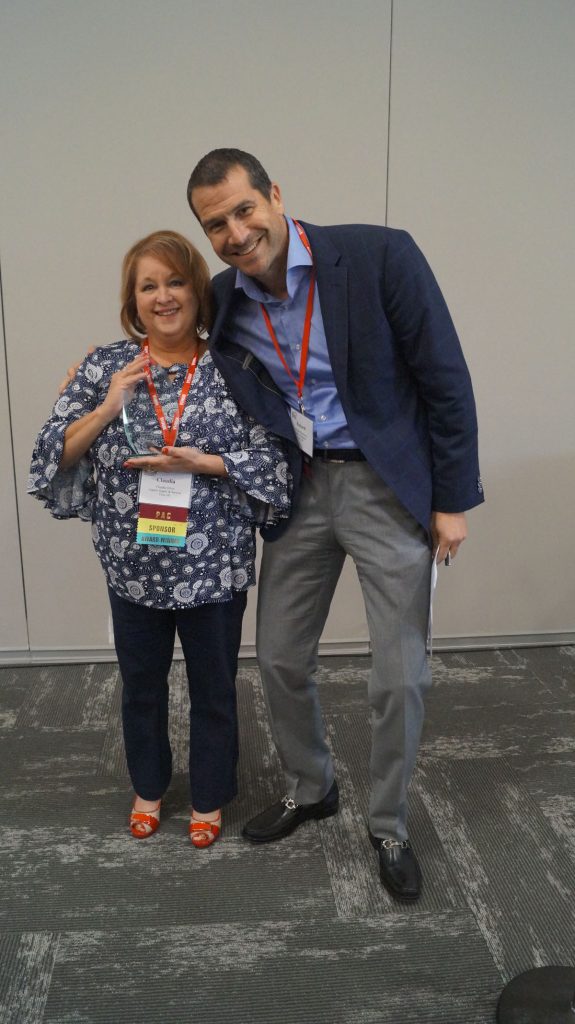
The winner of the newly added category for Exceptional Customer Service was presented to Capitol Supply & Service. Capitol Supply & Service has generously donated the installation of equipment and materials to families in need living in manufactured housing communities. These special cases were brought to Capitol’s attention by community managers, school districts and news station agencies. The award was presented to Claudia Elliott.
The newly added category for Exceptional Customer Service was presented to Claudia Elliot of Capitol Supply & Service.
Best Manufactured Housing Community Manager Award
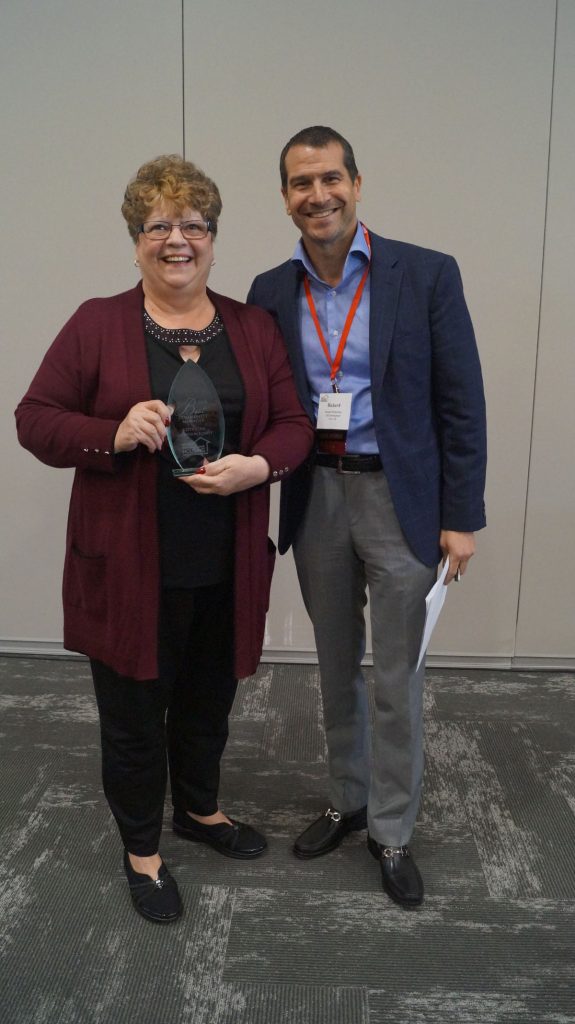
The only award given to an individual is for Best Community Manager. The 2018 winner was Kitty Cole of Sherwood Forest. Kitty Cole has been community manager of Sherwood Forest in Ionia, Mich., for the past three years. She is a lifetime Ionia resident, as well as former business owner, and an active Chamber of Commerce member. The award was presented directly to Kitty Cole.
The 2018 winner for Best Community Manager was Kitty Cole of Sherwood Forest.
The MMHA Member Awards program is designed to recognize the exceptional leadership, marketing and communications efforts of its members, and to enable members to display the award as a point of pride and accomplishment. For photos and more information about these exceptional manufactured housing industry members, visit www.michhome.org.
Oct. 6-8 at Avalon Hotel in Alpharetta, Ga.
Manufactured housing community owners have never had more information available to them — or more decisions to...
The Midwest Manufactured Housing Federation has announced that attendee registration is now open for the 2027 Louisville Manufactured Housing Show, returning to the Kentucky...
HUD’s Innovative Housing Showcase, MHI’s Homes on the Hill and Annual Meeting Begin Sept. 22
Two of the country’s largest builders of manufactured homes will...