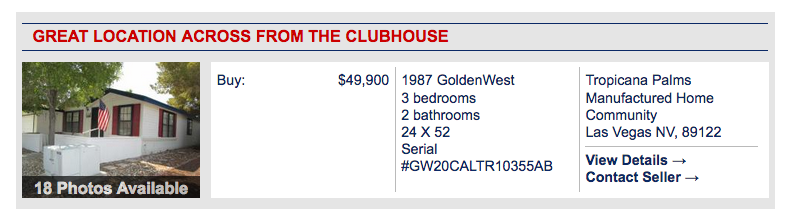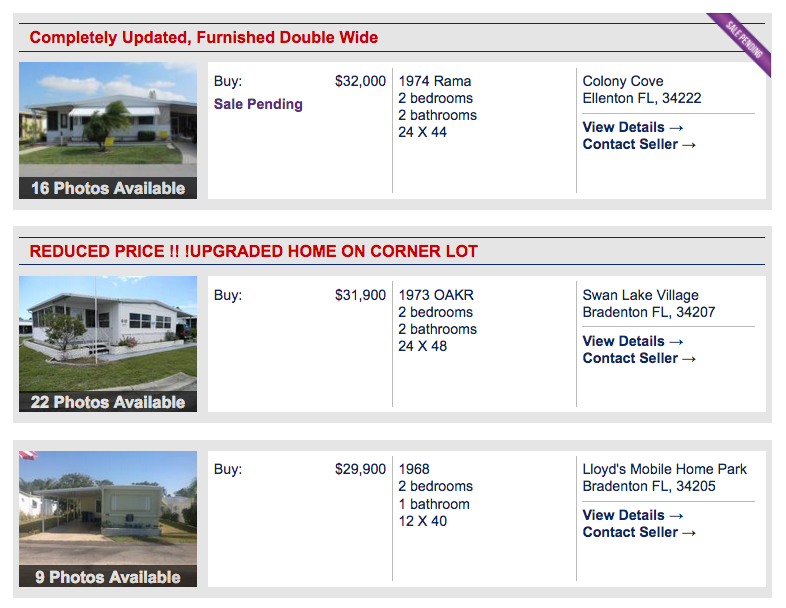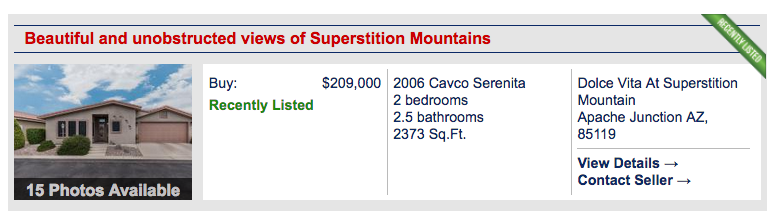
We have been watching the consumer market trends when it comes to online shopping and there has been a huge spike in the use of mobile devices being on our site over the last few years.
The numbers above are from last year and it’s only growing higher, because let’s be honest, we all use our phones for practically everything now. If not to check our email or social media outlets, it’s to look for a good place to eat for dinner that night, or send a quick text to the friend you are meeting.
Let’s also remember that online shopping is taking over too. Buyers are not only shopping for clothing, home goods and power tools, they are shopping for their next home via their phone as well!
98% of home buyers found mobile devices to be valuable tools in the home search process.
So, how do you ensure you and your company are ready for this trend?
Make sure your website and your online content are mobile-friendly.
These days most website development companies or platforms include the mobile version, but if you are having your website designed or maintained by a professional company then you will want to check with them to insure your site looks great on mobile devices too.
MHVillage has been working on this the last few years by launching our MHVillage App for professionals (if you haven’t tried it yet, you should!) and our site now offers mobile-friendly services to home shoppers and buyers.
Also, remember that while the design of your site and its capabilities with mobile devices is important, your content is key too. Making sure your phone numbers, website and email contacts are up to date is essential. Another big one is keeping your home descriptions and photos current. Out of date information can turn off online shoppers.
Finally, If you have any questions or would like more assistance with your home, company or community listings on MHVillage, we are here to help, so don’t hesitate to give us a call!
Datacomp Releases 2017 JLT Manufactured Home Community Rent and Occupancy Reports for Florida Markets
Datacomp published its May 2017 manufactured home community rent and occupancy reports for the state of Florida.
The Florida reports now include communities 31 major markets, including new counties of Bay, Escambia and Leon. Datacomp is the nation’s #1 provider of market data for the manufactured housing industry.
Recognized as the industry standard for manufactured home community market analysis for more than 20 years, JLT Market Reports provide detailed research and information on communities located in 130 major housing markets throughout the United States, including the latest rent trends and statistics, marketing programs and a variety of other useful management insights.
Datacomp’s manufactured housing market data published in the May 2017 JLT Market Reports includes many of the major markets for mobile homes in Florida. Together, these manufactured home rent and occupancy reports track 752 “All Ages” and “55+” communities. This encompasses a total of 208,881 homesites.
Details on JLT Rent and Occupancy Reports
Each JLT manufactured home community rent and occupancy report includes detailed information about investment grade communities in the major markets. Information includes homesite numbers, occupancy rates, average community rents and increases, amenities, vacant sites, and repossessed and inventory homes.
The reports also include insights that rank communities by number of homesites, occupancy rates and highest to lowest rents. Detailed reports show trends in each market with a comparison of May 2017 rents and occupancy rates to May 2016. Additionally, the reports provide an historical recap of rents and occupancy from 1996 to present date in most markets.
The May 2017 JLT Market Reports for Florida are available for purchase and immediate download online at the Datacomp JLT Market Report website at http://www.datacompusa.com/JLT, or they may be ordered by phone in electronic or printed editions at 800.588.5426. Each fully updated report for mobile home communities is a comprehensive look at investment grade properties within a market. This enables owners and managers, lenders, appraisers, brokers and organizations to benchmark communities and make informed decisions.
About JLT Market Reports For more than 20 years, countless professionals have trusted JLT Market Reports for timely and accurate management reports on land lease manufactured home communities. JLT Market Reports published for 90 markets nationwide are the industry standard for MH industry data. In 2014, JLT & Associates merged its resources, skills and expertise with Datacomp, the industry’s oldest and largest national manufactured home appraisal company and number one provider of market data for the manufactured housing industry, and MHVillage, the premier website for advertising mobile homes for rent and sale nationwide.
OKEMOS, Mich. — Michigan ranks fifth in the nation in new home shipments for the first quarter of 2017, with 1,261 new homes shipped, an increase of nearly 80 percent from the 702 Michigan home shipments recorded in the first quarter of 2016, according to the Manufactured Housing Institute (MHI).
“Our members are seeing interest and sales of new homes like they haven’t experienced in almost a decade.” – Darren Ing, director, Michigan Manufactured Housing Association.
For comparison, in 1996, Michigan received more than 12,000 new home shipments. In 2010, 325 new homes delivered to the state.
“The Michigan market has come back tremendously over the past years and communities are playing a large role in that,” said Tim Kuhn, sales manager for Clayton Homes.
One MMHA member in particular — AJR Development — is especially pleased with the renewed interest in manufactured homes.
“In 2017, we licensed a 90-site expansion called Emerald Park in our flagship community, Ridgewood, located in Milford, Michigan. We opened in May of 2017 with more than 20 lots pre-sold. Demand remains very strong. We are seeing double digit monthly home sales in the $85,000-100,000 range.” – Jerry Ruggirello, managing member, AJR Development.
Reverberations of increased sales go beyond community expansions. For example, HomeFirst, in Birmingham, Mich., needed to hire more people. “As a result of the large increases in traffic across our entire portfolio, we added three home specialist staff to our sales offices to meet the demands of the incoming traffic,” said Danya Mallard, vice president of sales and marketing for HomeFirst.
“With the level of quality product being presented by manufacturers, we expect interest and sales to continue to grow,” Ing said.
MMHA is dedicated to educating the public about the benefits of manufactured and modular home living, connecting people interested in finding a community or home with its members. The Michigan Manufactured Housing Association is one of Michigan’s oldest trade associations. MMHA is a nonprofit association representing the manufactured home industry in Michigan. MMHA works to improve the image of manufactured and modular housing by educating consumers, media and government about the quality, affordability, design and beauty of the homes. For more information, visit the Michigan Manufactured Housing Association at www.michhome.org. Contact MMHA by mail at 2222 Association Drive, Okemos, MI 48864-5978 or by phone at (517) 349.3300.
Press Release Provided By:
All Seasons Communications
Gretchen A. Monette, gmonette@allseasonscommunications.com
Phone: (586) 752-6381
May Shipments increase 15.2 percent year-over-year
In May 2017, 7,848 new manufactured homes were shipped, an increase of 15.2 percent from May 2016, according to the Manufactured Housing Institute, the national trade organization representing the factory-built housing industry.
Shipments decreased month-to-month, down 8.9 percent from April 2017, a difference of 643 homes.
Compared with the same month last year, the trend reflected gains across the board, with shipments of single section and multi-section homes up by 15.1 percent and 15.3 percent respectively. Total floors shipped in May 2017 were 12,156, an increase of 15.5 percent compared with May 2016.
Adjusted annual shipments also up
The seasonally adjusted annual rate (SAAR) of shipments was 89,412 in May 2017, up 9.4 percent from the adjusted rate of 81,767 in April 2017. The SAAR corrects for normal seasonal variations and projects annual shipments based on the current monthly total.
The number of plants reporting production in May 2017 was 129 and the number of active corporations was 35. Compared to the previous month, both the number of plants and active corporations were unchanged.
Kevin Bupp will tell you he’s in a better place today than he was just three years ago.
That’s saying something for a guy who’s spent two decades in real estate and has learned to find the right seller so he can buy and capitalize on single-family homes, commercial properties and apartment buildings.
There are worse fates.
Sales consultant Ken Corbin and community owner Brian Spear chat during opening day of the Networking Roundtable.
And, Kevin wears a big smile, readily sharing his joy about where he and his associates have landed.
“We’re still small fish in a medium sized pond, because the industry is still not as large as it could be,” said Bupp, a resident of Clearwater, Fla., and co-owner with Charles DeHart and Brian Spear of Sunrise Capital Investors. “Manufactured is all we focus on now.”
Bupp and his partners who invest in mobile home parks look to purchase and improve communities.
Some of the communities Sunrise purchases have homes that pre-date the 1976 HUD regulatory change. However, most are small- to mid-size communities with homes from the 1980s and ’90s, some newer.
Their mobile home investment targets represent a middle-market niche that larger investors and owners overlook, though less so in recent years. And a good portion of how they get there is by focusing on how to find the right seller.
Value-add Niche in Mobile Home Park Investing
“We’re really value add guys,” Bupp said. “We are really good at taking a community that is in distress, but in a good market, and taking out the bad elements, bringing in some improvements and making things work.”
It’s a niche that’s gaining stability and wider recognition all the time, largely because the ROI doesn’t lie.
“It took us a year to buy the first park, then it’s been one or two in those in between years,” Charles DeHart said. “In the last 18 months, we’ve purchased six parks.
“We have five more parks currently in contract (pending sale) that represent 430 spaces,” he said.
Sunrise has raised more than $2 million in cash during the last two years from the attraction of 10 dedicated outside investors, and they look to raise $3-5 million more to purchase another six parks – perhaps 800 land-lease spaces – during the next 12 months.
It’s not BIG business investing, but it’s been shown as a way to steadily grow wealth. And, if you ask the Sunrise and similar mobile home park investors, it’s a way to improve affordable housing stock – for the metro area and for the park residents.
“We’re in a niche that allows us to earn a very reasonable return for our investors,” DeHart said. “And also provide quality housing for people who may be coming into home ownership for the first time in their lives or even in their family’s history.”
Find the Right Seller – How it’s done
They don’t buy through a broker. Brokers typically want to work with higher volume investors, and also make sizable commissions. Rather, Bupp and DeHart delve into county records within a geographic area of interest. They find out where the communities are and who owns them. If they’re fortunate, they find a phone number for the owner.
After that, its sales 101; they make cold calls, employ heavy use of direct mail and sometimes put out bandit signs.
“We typically have five or six unique owners in the system at any given time, and check back with them three to four times per year,” DeHart said. “It’s not just finding the right seller, it’s about finding the right seller at the right time.”
Often, they’re in front of a prospective seller before the owner of a property realizes they’re in a good position to sell. So, checking back often is key to being in the right place at the right time.
Help From a ‘Trainee Broker’
They work some of the prospects themselves, but commonly put out a post to acquire a “trainee broker” who can visit communities of interest, take photos and notes, and possibly make an introduction to get talks underway. That trainee broker also learns how to access county records that are unavailable online, and does this on their own time and earns a commission when a sale is made.
In training these brokers, Sunrise is creating more than a strategy, more than a company brand. They’re helping to build an industry. Along those lines, the three operate Mobile Home Park Academy, which teaches others how to do what Sunrise does. Charles and Kevin host a podcast on the topic, and also are in the final throes of writing a book on how to invest in mobile home parks.
“At Sunrise Capital, we intend to be in the business for a long time. We really enjoy it, it’s lucrative and we appreciate being able to provide a critical affordable housing segment,” Bupp said. “We only buy stuff that makes sense. If we only buy one community in a year, that’s good with us. It will be the one we want to buy.”
The marketing and advertising world is ever-changing, and something we hear quite a bit is that you have to keep on top of the next generation, making sure everything is new, exciting and changing with the time.
While these are important factors, in our industry it’s also important to maintain and customize your advertising to the generations that are looking to retire!
Provide key details about your community, home, or the general area. What is ideal for a retirement-age buyer? Here are some items you want to include:
Is your community an “Age Restricted” community?
Some communities require their homeowners to be 55+ in an effort to maintain an environment suitable for this demographic that’s looking to retire. This is important to add to your community listing and your home listing. It is also helpful to note if your community allows exceptions to this rule.
Does your community allow pets?
Not only do you want to include in your advertisements if the community allows pets, but it is helpful to detail specific restrictions. Some allow cats but not dogs. Some allow cats and dogs but only certain breeds or dogs of a certain weight. All of these details are incredibly important since no one wants to leave behind their furry family member!
Is the home accessible?
Some homes have modifications added to allow more accessibility for an individual who has a disability. If your home or the community has any specific features that would be helpful or useful for someone in this position be sure and include this in the description.
What is the community like?
We all have our own idea of what our “perfect” retirement environment would be. Is your community on the waterfront with access to fishing, or walks through a wooded path? Or maybe your community is a social one with planned activities and a game room. Either way letting the buyer looking to retire know what the atmosphere of the community provides can be essential.
What is the area like?
Similar to the including details about the community, accessibility to grocery stores, shopping malls, cultural events and other local attractions are great details to provide your buyer.
While these tips might sound simple to include, they can make the difference in turning that interested shopper into a buyer!
‘Mobile Home Gurl’ Finds Her Niche in Mobile Home Investment
In her own words, the woman known to some as “Mobile Home Gurl” is an entrepreneur, a dreamer, a thinker. A doer.
She started investing in real estate with single family homes, but her mind was captivated and heart captured when she immersed herself in the world of mobile home investment. And she’s taken quite a few of us on the ride with her, in her blog and in the book “Adventures in Mobile Homes” and others.
Rachel Hernandez, as she also is known, operates in the vicinity of San Antonio, Texas.
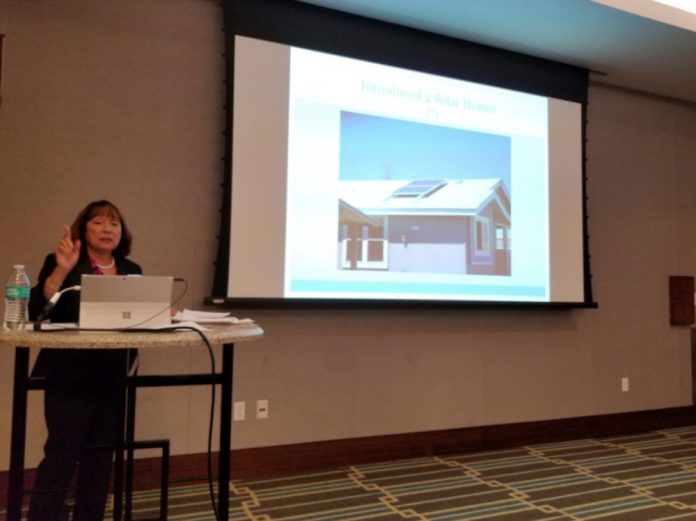
Rachel Hernandez, “Mobile Home Gurl”, addresses the audience at a recent author’s seminar.
She prefers to buy locally to regionally, and rather than looking for parks she has concentrated on purchasing individual mobile homes. More recently she has leaned on securing the land they sit on. Or a good parcel where the home can be placed.
“I focus on the area first and then find the deals,” Hernandez said. “As an experienced investor, I’ve learned to find motivated sellers. Usually, I can tell over the phone whether a seller is motivated or not.”
Strategy Talk from Mobile Home Gurl
Most of the deals Hernandez pursues are unadvertised. She has an education and background in sales and marketing, and networking is among her greatest strengths. She leverages that capability and relies on her industry interactions and relationships to find opportunity.
Her first deal took about a year to complete, and she continues to take it relatively slow. She purchases one or two homes at a time, and puts her “sweat equity” into them.
“Usually, I get them up to apartment standards,” Hernandez said. “New carpet and paint at a minimum.” She fixes the leaks, fills any cracks or holes and gives a thorough cleaning. Then she offers the home on a rent-to-buy plan.
“Most people appreciate this hybrid as it’s not like a mortgage where you’re locked in, but at the same time you’re not just renting,” she said.
Her mobile home investment inventory is on the rise, to the point where she owns in quantity what would be a small mobile home community. Hernandez does receive regular offers to partner, but has resisted the urge to purchase an entire community outright. She remains on the lookout for land, and does work in communities buying both homes and pads, operating just on the fringe from that investor who looks to buy or infill on a larger scale.
She Meets the Challenge
And while she appreciates having all of the particular on paper, she mostly “follows her gut” when deciding what to pursue and what to leave alone.
“It’s more the person than the price. If the person I’m talking with on the phone does not seem trustworthy, or seems like they’re covering something up… I back off immediately,” she said. “No matter how good the deal sounds, an untrustworthy seller is a deal breaker for me.”
“I imagined buying a home, filling it and moving on to the next deal,” she said. “Though I did this for many years without many issues, I started taking back more homes as my inventory grew.”
A rent-to-own resident loses a job, goes through a divorce or wants to move closer to family, and sometimes the only solution is to reclaim the home and find someone new for it.
“I knew taking homes back was part of the business. But I didn’t plan on it being a large one,” Hernandez said. “So, I had to learn to work with contractors. There was no way I could fix up all these homes myself.”
Another difficulty has nothing to do with residents and everything to do with one of her favorite parts of the vocation… the prime location.
“Unfortunately, sometimes local ordinances may place more scrutiny on mobile home parks, as an asset class,” she said. “There’s still that mindset.”
The not-in-my-back-yard attitude, the general concern of reduced property values, and the perceived threat of residents who pay less tax than many for the same municipal services, often can be difficult issues to navigate when looking to obtain rezoning or a new use permit – regardless of the great need for more affordable housing.
All Part of the Journey
The take-back and fix-up strategy, as well as the municipal hurdles, have resulted in another of her books, this one entitled “Real Estate Investing Sucks: How to Deal with Change and Find Success as a Real Estate Investor”.
“I document my entire experience,” Hernandez said. “I persist, know what I want and keep going. Success takes time.”
You’ve heard the term “Investment Grade Property”. That label increasingly is being applied to entities in the manufactured housing sector.
In our new series on community investment in today’s market, MHVillage will shed some light on the dynamics at play in conducting due diligence on a property.
A general surge in employment, rising home prices – particularly in sizable metro areas – and the largest demographic of aging Americans are all playing into the demand for affordable housing. This has professionals involved in mobile home park investing eyeing a wide range of manufactured housing options. From massive trusts to the niche investor, mobile home parks and manufactured home communities have become the apple of the eye for many.
Manufactured housing real estate investment trusts in the U.S. during 2016 posted a return of 28.5 percent, 9.7 percent better than apartment REITs and more than 15 points better than single-family home REITs during the same period.
Big Mobile Home Park Investing Moves Toward Finding Best Deals Before Market Levels
From Bellingham, Wash. to Newnan, Ga., Jon Harrison scans the map for just the right patch of land. He talks to brokers, owners and investors, scours county records and relies on whatever information he can gain from inside sources.
All in the name of finding the prime manufactured home community.
Harrison isn’t looking for his retirement place. He’s not looking for the simple yet ideal coastal getaway for the family. He works for Inspire Communities, not the largest of the community owners, but certainly entrenched in the top quarter of the industry.
A former broker himself, Harrison is in acquisitions, and always is looking for the perfect mix of placement and amenities that can be a great home for 200 hundred residents or more – and no less important, a stellar portfolio addition for the company owners and investors.
Start your summer sales strong by advertising your Open Houses on MHVillage.
Are you or your community having an Open House? Open Houses can bring a lot of potential buyers through your door, but they do require a fair amount of work. Make sure you are getting the most foot traffic possible by adverting your event on MHVillage.
Here’s how it works:
You can add an Open House to any of your MHVillage listings for just $2.95 per day.
We’ll display a bright red banner showing the dates of your event. When buyers click on your listing, we show the times, dates and an additional section for your specific details about the event.
Plus, we move your listing to the top of the page in that area and send an email to buyers who have been watching your listing to let them know about your event.
To add an Open House to your home listing:
Log into your MHVillage account and go to View/Change/Remove Listings section. Click “Add Open House” on any home. You can select the days and times of the event, and when you would like to start advertising it. Your home will appear at the very top of all searches in your home’s area until your open house is finished. Once the event is finished, there is nothing to do. The extra advertising falls off automatically.
If you have questions, please contact our customer service team. We are happy to help!
More than 1,500 manufactured housing professionals are expected in Las Vegas April 7-9 as the Manufactured Housing Institute’s Congress and Expo returns to the...
With more homes, more exhibitors, and more buzz than ever before, the 2026 Biloxi Show is expanding, and fast.
The Biloxi Manufactured Housing Show &...